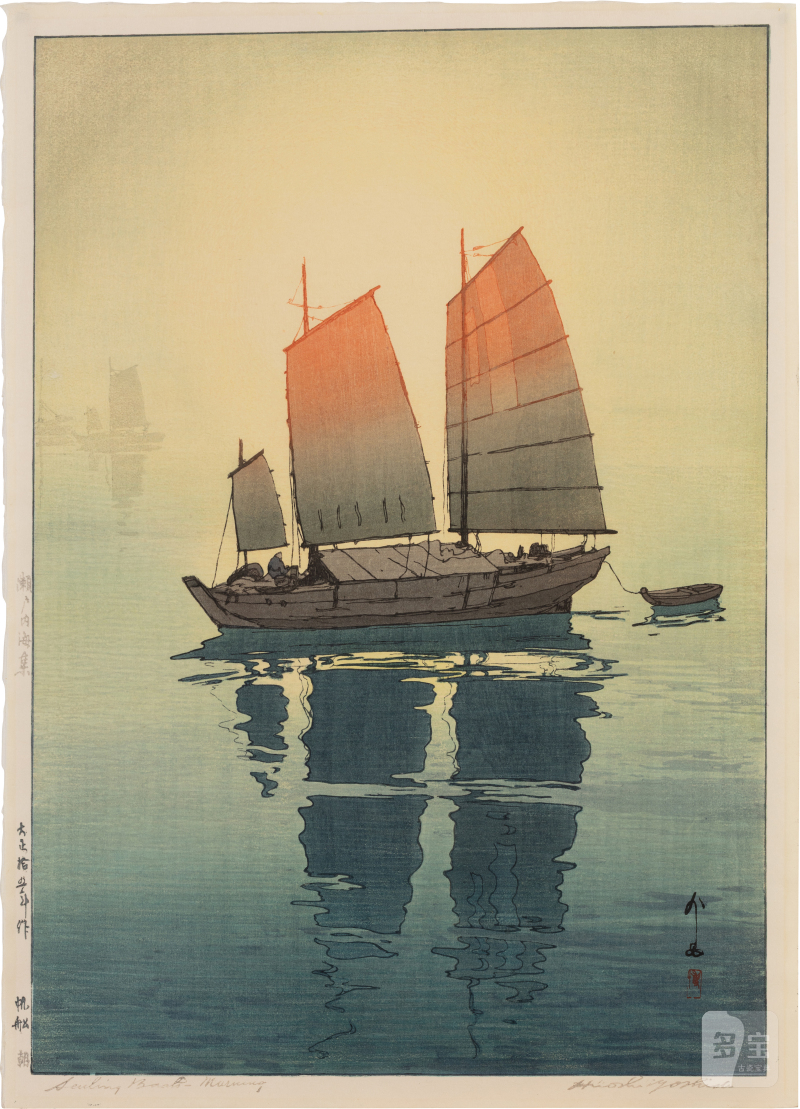

Lot 457 Yoshida Hiroshi (1876-1950) | Sailboats: Morning (Hansen, asa) | Showa period, 20th century
落槌价
****
成交价
****
| 拍卖公司 | 苏富比 |
|---|---|
| 拍卖时间 | 2026年06月12日 |
请安装多宝古瓷宝典APP,查看高清无损大图
拍品信息
拍品名称
Yoshida Hiroshi (1876-1950) | Sailboats: Morning (Hansen, asa) | Showa period, 20th century
起拍价
EUR 2,000
估值区间
2,000 - 3,000 EUR
尺寸
未知
品相
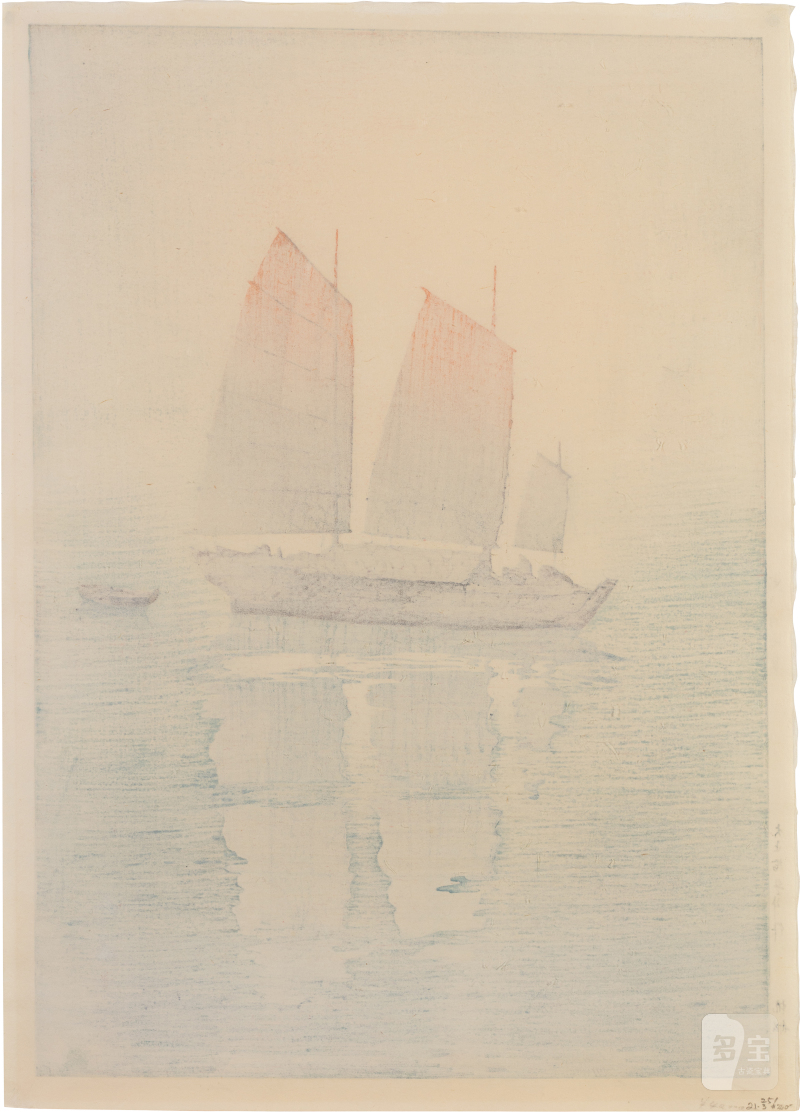
Good impression of the posthumous printing, good colour, some slight toning particularly to the edges of the margins, a small hole in the upper left edge patched from verso, the reverse with small pencil annotation to the bottom right corner.
If a condition report is provided to assist you with assessing the condition of the lot, it is for guidance purposes only. Such condition report may not refer to all faults, restoration, alterations, or adaptations because Sotheby's is not a professional conservator or restorer but rather a condition report is a statement of subjective, qualified opinion genuinely held by Sotheby's. For these reasons, any such condition report is not an alternative to taking your own professional advice regarding the condition of the lot. Prospective buyers should also refer to the Guide for Buyers at Auction which includes important notices concerning the type of property in this sale.
If a condition report is provided to assist you with assessing the condition of the lot, it is for guidance purposes only. Such condition report may not refer to all faults, restoration, alterations, or adaptations because Sotheby's is not a professional conservator or restorer but rather a condition report is a statement of subjective, qualified opinion genuinely held by Sotheby's. For these reasons, any such condition report is not an alternative to taking your own professional advice regarding the condition of the lot. Prospective buyers should also refer to the Guide for Buyers at Auction which includes important notices concerning the type of property in this sale.
更多信息
woodblock print, from the series Inland Sea (Seto Naikai shu), printed signature in Roman script Hiroshi Yoshida, and in in Japanese Yoshida, sealed Hiroshi, titled to the lower left margin as above, dated Taisho jugonen saku (made in 1926), posthumous printing
Vertical dai oban: 54 x 38.9 cm., 17 ¾ x 12¾ in.
图录
说明:This design exists in six variants, each denoting a different time of day or atmospheric condition: Sailboats: Morning, Sailboats: Forenoon, Sailboats: Afternoon, Sailboats: Mist, Sailboats: Evening, and Sailboats: Night. Yoshida had previously treated the subject of boats at sail in the Seto Inland Sea (Seto naikai) in three earlier prints published by Watanabe Shōzaburō (1885–1962); the blocks for these, however, were lost in the fires that swept Tokyo following the Great Kanto Earthquake of 1 September 1923.¹
Returning to the subject, Yoshida worked on a larger print size and explored the expressive possibilities of variant printings – an approach that attracted considerable critical praise at the time.² In Sailboats: Morning, rosy dawn light suffuses the upper part of the sails. The technical precision with which Yoshida renders the effects of changing light across different times of day and shifting weather conditions accounts in large part for the series’ sucess. The enduring sentiment of passage and repose, which embody the themes of journeying and travel so intrinsic to Yoshida’s work, most certainly added to its appeal.
For further reference on the different variants of this design, see Carolyn M. Putney et al., Fresh Impressions: Early Modern Japanese Prints (Ohio, 2013) 266-d – 266-I, cat nos. 257-262.
1. Ogura Tadao et al., The Complete Woodblock Prints of Yoshida Hiroshi, (Tokyo, 1987) ps. 56-60, nos. 40-45.
Vertical dai oban: 54 x 38.9 cm., 17 ¾ x 12¾ in.
图录
说明:This design exists in six variants, each denoting a different time of day or atmospheric condition: Sailboats: Morning, Sailboats: Forenoon, Sailboats: Afternoon, Sailboats: Mist, Sailboats: Evening, and Sailboats: Night. Yoshida had previously treated the subject of boats at sail in the Seto Inland Sea (Seto naikai) in three earlier prints published by Watanabe Shōzaburō (1885–1962); the blocks for these, however, were lost in the fires that swept Tokyo following the Great Kanto Earthquake of 1 September 1923.¹
Returning to the subject, Yoshida worked on a larger print size and explored the expressive possibilities of variant printings – an approach that attracted considerable critical praise at the time.² In Sailboats: Morning, rosy dawn light suffuses the upper part of the sails. The technical precision with which Yoshida renders the effects of changing light across different times of day and shifting weather conditions accounts in large part for the series’ sucess. The enduring sentiment of passage and repose, which embody the themes of journeying and travel so intrinsic to Yoshida’s work, most certainly added to its appeal.
For further reference on the different variants of this design, see Carolyn M. Putney et al., Fresh Impressions: Early Modern Japanese Prints (Ohio, 2013) 266-d – 266-I, cat nos. 257-262.
1. Ogura Tadao et al., The Complete Woodblock Prints of Yoshida Hiroshi, (Tokyo, 1987) ps. 56-60, nos. 40-45.
常见问题
拍品的品相状况如何?
Good impression of the posthumous printing, good colour, some slight toning particularly to the edges of the margins, a small hole in the upper left edge patched from verso, the reverse with small pencil annotation to the bottom right corner.
If a condition report is provided to assist you with assessing the condition of the lot, it is for guidance purposes only. Such condition report may not refer to all faults, restoration, alterations, or adaptations because Sotheby's is not a professional conservator or restorer but rather a condition report is a statement of subjective, qualified opinion genuinely held by Sotheby's. For these reasons, any such condition report is not an alternative to taking your own professional advice regarding the condition of the lot. Prospective buyers should also refer to the Guide for Buyers at Auction which includes important notices concerning the type of property in this sale.
If a condition report is provided to assist you with assessing the condition of the lot, it is for guidance purposes only. Such condition report may not refer to all faults, restoration, alterations, or adaptations because Sotheby's is not a professional conservator or restorer but rather a condition report is a statement of subjective, qualified opinion genuinely held by Sotheby's. For these reasons, any such condition report is not an alternative to taking your own professional advice regarding the condition of the lot. Prospective buyers should also refer to the Guide for Buyers at Auction which includes important notices concerning the type of property in this sale.