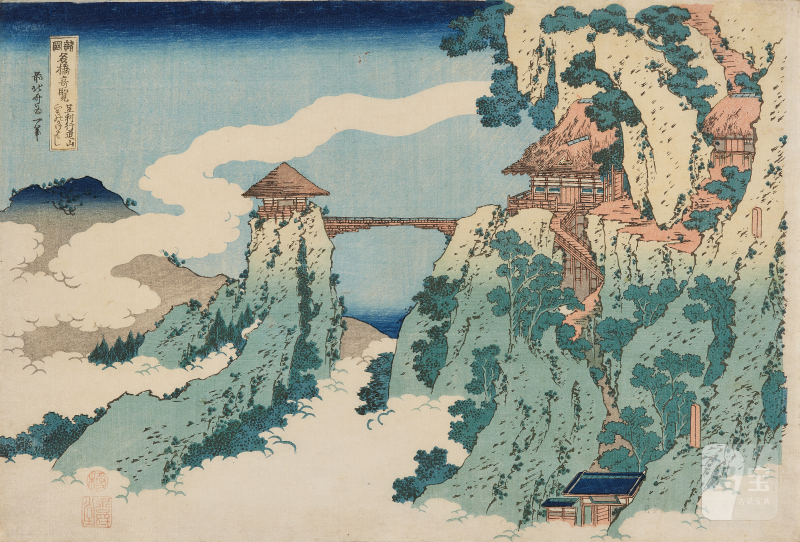

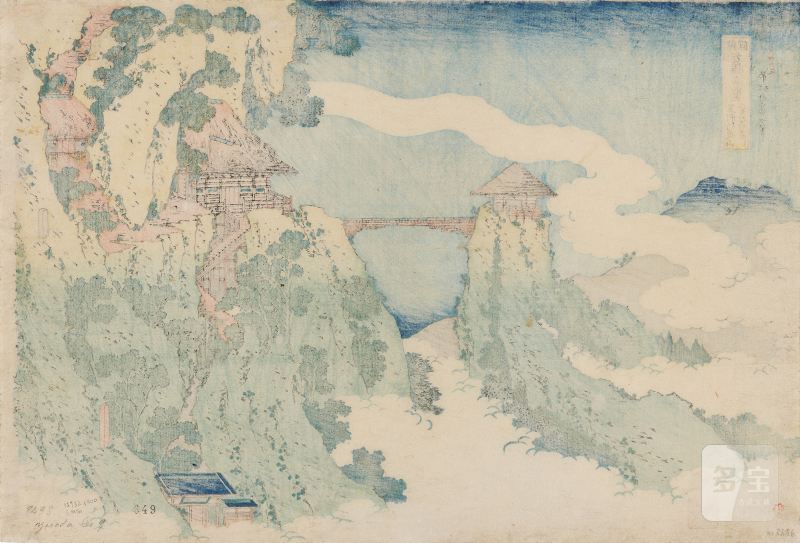
Lot 206 Katsushika Hokusai (1760-1849) | The Hanging-cloud Bridge at Mount Gyodo near Ashikaga (Ashikaga Gyodozan Kumo no kakehashi) | Edo period, 19th century
落槌价
****
成交价
****
| 拍卖公司 | 苏富比 |
|---|---|
| 拍卖时间 | 2026年06月11日 |
请安装多宝古瓷宝典APP,查看高清无损大图
拍品信息
拍品名称
Katsushika Hokusai (1760-1849) | The Hanging-cloud Bridge at Mount Gyodo near Ashikaga (Ashikaga Gyodozan Kumo no kakehashi) | Edo period, 19th century
起拍价
EUR 20,000
估值区间
20,000 - 30,000 EUR
尺寸
未知
品相
如欲了解本拍品狀況的更多資訊,請聯絡 jon.adjetey.consultant@sothebys.com
更多信息
woodblock print, from the series Remarkable Views of Bridges in Various Provinces (Shokoku meikyo kiran), signed Saki no Hokusai Iitsu hitsu (Brush of Iitsu, the former Hokusai), censor’s seal kiwame (approved), published by Nishimuraya Yohachi (Eijudo), circa 1834, 1st state; with collector's seal of Gerhard Pulverer to verso
Horizontal oban: 38.6 x 26.3., 15¼ by 10⅜ in.
来源:Gerhard Pulverer (b. 1930)
展览:Doitsu Puruvera korekushon ukiyo-e hanga meihinten [Masterpieces of Ukiyo-e from the Pulverer Collection], exhibited at the following venues:
Matsuzakaya Department Store, Osaka, 27th December 1990 - 8th January 1991
Matsuzakaya Department Store, Ginza, 24th - 29th January 1991
Royal Academy of Arts, London, Hokusai: Prints and Drawings, 15 November 1991 - 9 February 1992.
著录:Narazaki Muneshige, ed., Hizo ukiyo-e taikan, Puruvera korekushon [Ukiyo-e Masterpieces in Western Collections: The Pulverer Collection] (Tokyo, 1990), monochrome pl., cat. nos. 38-48.
Doitsu Puruvera korekushon ukiyo-e hanga meihinten [Masterpieces of Ukiyo-e from the Pulverer Collection] (Tokyo, 1990), p. 47, cat. no. 1-65.
Matthi Forrer, Hokusai: Prints and Drawings (London, 1991), cat. no. 37.
图录
说明:Hokusai returned to the subject of bridges throughout his career. Between 1816-17, he depicted various types of bridges in the fourth volume of Hokusa’s Sketches (Hokusai manga), and also produced a large-format print One Hundred Bridges at a Glance in 1823. He was commissioned to make this series by his publisher Nishimuraya Yohachi in around the spring of 1834, following the success of his Tour of Waterfalls in Various Provinces (Shokoku taki-meguri) published a year earlier. The series comprises a total of eleven prints - a rather unusual number for a print series, suggesting perhaps that a print was either added to an original set of ten; or that twelve were intended and only eleven were produced.1
In each of the designs, the expanse of the bridges provide counterpoint to grand views of nature and a sense of wonder embellishes many of the scenes depicted. Two of the bridges were no longer extant during the time of production; using earlier material from eighteenth century gazetteers, as well as local pictures, Hokusai accentuated key features of the bridges to depict not just actual bridges, but awe-inspiring views. Many of the bridges and locales had strong literary associations, such as the Eight-plank Bridge (Yatsuhashi) of Mikawa (see Lot 214), the semi-historical bridge that zigzagged over irises in the Tale of Ise (Ise monogatari); and the Pontoon Bridge at Sanno (see Lot 209), which was made famous in the medieval Noh play of eponymous title Funabashi, or ‘Boat Bridge’.2
Mountain mists coil around this breathtaking view of a wooden bridge spanning a mountain pass at Gyodozan, north-west of Ashikaga in Shimotsuke province. The bridge connects the Joinji Temple with a small tea-room pavilion perched precariously atop a rocky outcrop. Stone markers to the right of the footpath delineate the temple precincts. In early impressions, the white band of mist is clearly rendered against a finely gradated sky, with the distant mountain peak overprinted in blue and the central rocks shifting from green at the base to yellowish-brown at the summit.3
1. Timothy Clark, ed., Hokusai: Beyond the Great Wave (London, 2017), pp. 154-161.
2. ibid.
3. Matthi Forrer, Hokusai: Prints and Drawings (London, 1991), cat. no. 37.
Horizontal oban: 38.6 x 26.3., 15¼ by 10⅜ in.
来源:Gerhard Pulverer (b. 1930)
展览:Doitsu Puruvera korekushon ukiyo-e hanga meihinten [Masterpieces of Ukiyo-e from the Pulverer Collection], exhibited at the following venues:
Matsuzakaya Department Store, Osaka, 27th December 1990 - 8th January 1991
Matsuzakaya Department Store, Ginza, 24th - 29th January 1991
Royal Academy of Arts, London, Hokusai: Prints and Drawings, 15 November 1991 - 9 February 1992.
著录:Narazaki Muneshige, ed., Hizo ukiyo-e taikan, Puruvera korekushon [Ukiyo-e Masterpieces in Western Collections: The Pulverer Collection] (Tokyo, 1990), monochrome pl., cat. nos. 38-48.
Doitsu Puruvera korekushon ukiyo-e hanga meihinten [Masterpieces of Ukiyo-e from the Pulverer Collection] (Tokyo, 1990), p. 47, cat. no. 1-65.
Matthi Forrer, Hokusai: Prints and Drawings (London, 1991), cat. no. 37.
图录
说明:Hokusai returned to the subject of bridges throughout his career. Between 1816-17, he depicted various types of bridges in the fourth volume of Hokusa’s Sketches (Hokusai manga), and also produced a large-format print One Hundred Bridges at a Glance in 1823. He was commissioned to make this series by his publisher Nishimuraya Yohachi in around the spring of 1834, following the success of his Tour of Waterfalls in Various Provinces (Shokoku taki-meguri) published a year earlier. The series comprises a total of eleven prints - a rather unusual number for a print series, suggesting perhaps that a print was either added to an original set of ten; or that twelve were intended and only eleven were produced.1
In each of the designs, the expanse of the bridges provide counterpoint to grand views of nature and a sense of wonder embellishes many of the scenes depicted. Two of the bridges were no longer extant during the time of production; using earlier material from eighteenth century gazetteers, as well as local pictures, Hokusai accentuated key features of the bridges to depict not just actual bridges, but awe-inspiring views. Many of the bridges and locales had strong literary associations, such as the Eight-plank Bridge (Yatsuhashi) of Mikawa (see Lot 214), the semi-historical bridge that zigzagged over irises in the Tale of Ise (Ise monogatari); and the Pontoon Bridge at Sanno (see Lot 209), which was made famous in the medieval Noh play of eponymous title Funabashi, or ‘Boat Bridge’.2
Mountain mists coil around this breathtaking view of a wooden bridge spanning a mountain pass at Gyodozan, north-west of Ashikaga in Shimotsuke province. The bridge connects the Joinji Temple with a small tea-room pavilion perched precariously atop a rocky outcrop. Stone markers to the right of the footpath delineate the temple precincts. In early impressions, the white band of mist is clearly rendered against a finely gradated sky, with the distant mountain peak overprinted in blue and the central rocks shifting from green at the base to yellowish-brown at the summit.3
1. Timothy Clark, ed., Hokusai: Beyond the Great Wave (London, 2017), pp. 154-161.
2. ibid.
3. Matthi Forrer, Hokusai: Prints and Drawings (London, 1991), cat. no. 37.
常见问题
拍品的品相状况如何?
如欲了解本拍品狀況的更多資訊,請聯絡 jon.adjetey.consultant@sothebys.com
这件拍品的流传来源是什么?
Gerhard Pulverer (b. 1930)
这件拍品曾在哪些展览中展出过?
Doitsu Puruvera korekushon ukiyo-e hanga meihinten [Masterpieces of Ukiyo-e from the Pulverer Collection], exhibited at the following venues:
Matsuzakaya Department Store, Osaka, 27th December 1990 - 8th January 1991
Matsuzakaya Department Store, Ginza, 24th - 29th January 1991
Royal Academy of Arts, London, Hokusai: Prints and Drawings, 15 November 1991 - 9 February 1992.
Matsuzakaya Department Store, Osaka, 27th December 1990 - 8th January 1991
Matsuzakaya Department Store, Ginza, 24th - 29th January 1991
Royal Academy of Arts, London, Hokusai: Prints and Drawings, 15 November 1991 - 9 February 1992.
这件拍品被哪些著录书籍记载?
Narazaki Muneshige, ed., Hizo ukiyo-e taikan, Puruvera korekushon [Ukiyo-e Masterpieces in Western Collections: The Pulverer Collection] (Tokyo, 1990), monochrome pl., cat. nos. 38-48.
Doitsu Puruvera korekushon ukiyo-e hanga meihinten [Masterpieces of Ukiyo-e from the Pulverer Collection] (Tokyo, 1990), p. 47, cat. no. 1-65.
Matthi Forrer, Hokusai: Prints and Drawings (London, 1991), cat. no. 37.
图录
Doitsu Puruvera korekushon ukiyo-e hanga meihinten [Masterpieces of Ukiyo-e from the Pulverer Collection] (Tokyo, 1990), p. 47, cat. no. 1-65.
Matthi Forrer, Hokusai: Prints and Drawings (London, 1991), cat. no. 37.
图录