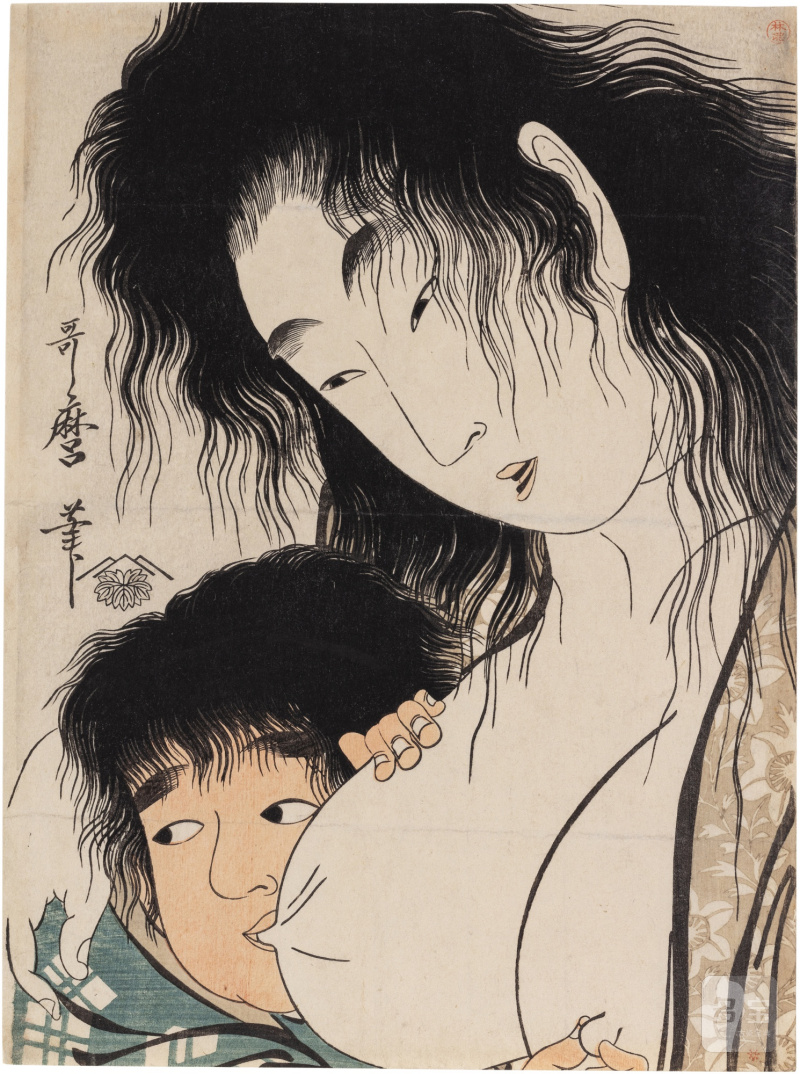

Lot 237 Kitagawa Utamaro (1754-1806) | Yamauba and Kintaro | Edo period, 19th century
落槌价
****
成交价
****
| 拍卖公司 | 苏富比 |
|---|---|
| 拍卖时间 | 2026年06月11日 |
请安装多宝古瓷宝典APP,查看高清无损大图
拍品信息
拍品名称
Kitagawa Utamaro (1754-1806) | Yamauba and Kintaro | Edo period, 19th century
起拍价
EUR 20,000
估值区间
20,000 - 30,000 EUR
尺寸
未知
品相
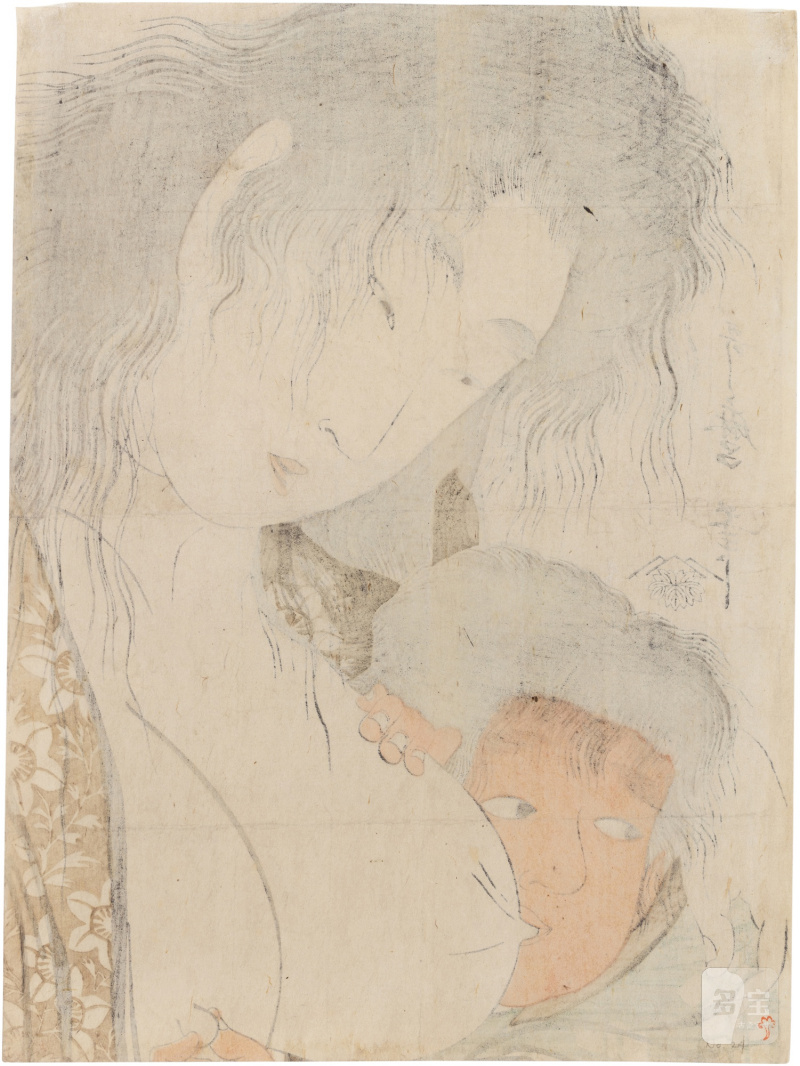
Very good impression, some slight fading to colours, horizontal centrefold and two further horizontal fold marks with some restorations, near top and bottom edge, thin backing, trimming to each side, the reverse with top left and right corners taped to mount, small pencil inscription to the bottom right corner of verso.
If a condition report is provided to assist you with assessing the condition of the lot, it is for guidance purposes only. Such condition report may not refer to all faults, restoration, alterations, or adaptations because Sotheby's is not a professional conservator or restorer but rather a condition report is a statement of subjective, qualified opinion genuinely held by Sotheby's. For these reasons, any such condition report is not an alternative to taking your own professional advice regarding the condition of the lot. Prospective buyers should also refer to the Guide for Buyers at Auction which includes important notices concerning the type of property in this sale.
If a condition report is provided to assist you with assessing the condition of the lot, it is for guidance purposes only. Such condition report may not refer to all faults, restoration, alterations, or adaptations because Sotheby's is not a professional conservator or restorer but rather a condition report is a statement of subjective, qualified opinion genuinely held by Sotheby's. For these reasons, any such condition report is not an alternative to taking your own professional advice regarding the condition of the lot. Prospective buyers should also refer to the Guide for Buyers at Auction which includes important notices concerning the type of property in this sale.
更多信息
woodblock print, signed Utamaro hitsu (Brush of Utamaro), published by Tsutaya Juzaburo (Koshodo), circa 1801-03; with collectors' seals of Hayashi Tadamasa, Henri Vever and Gerhard Pulverer
Vertical oban: 34 x 25.4 cm, 13⅜ by 10 in.
来源:Hayashi Tadamasa (1853-1906)
Henri Vever (1854-1942)
Sotheby’s, London, Highly Important Japanese Prints, Illustrated Books and Drawings, from the Henri Vever Collection: Part I, 26 March 1974, Lot 214
Gerhard Pulverer (b. 1930)
图录
说明:Traditionally depicted with bright red skin, Kintaro, later known as Sakata no Kintoki , is one of the most well known heroes of Japanese folklore. He was raised on the isolated slopes of Mount Ashigara by a mountain witch, or yama-uba. Utamaro typically portrays the yama-uba as a wild, beautiful woman looking after the mischievous infant.
As many as fifty works on this subject by Utamaro are known, far exceeding those by other artists. Ranging from the humurous, sentimental and erotically charged, the reasons for Utamaro’s high output are not clear, although the public must have responded well to it. It is possible that this subject would have been safe from censorship, making it attractive from the publisher’s perspective.1
A similar impression of the same print is in the collection of the Museum of Fine Arts, Boston, accession number RES.51.18, go to:
https://collections.mfa.org/objects/321109
For another example of a print by Utamaro of the same subject, see Sotheby's, London, Masters of the Woodblock: Important Japanese Prints, 21 July 2022, Lot 11, go to:
https://www.sothebys.com/en/buy/auction/2022/masters-of-the-woodblock-important-japanese-prints/kitagawa-utamaro-1754-1806-yamauba-kissing-kintaro
1. Shugo Asano and Timothy Clark, The Passionate Art of Kitagawa Utamaro, (London, 1995), nos. 386-91, pp. 226-227.
Vertical oban: 34 x 25.4 cm, 13⅜ by 10 in.
来源:Hayashi Tadamasa (1853-1906)
Henri Vever (1854-1942)
Sotheby’s, London, Highly Important Japanese Prints, Illustrated Books and Drawings, from the Henri Vever Collection: Part I, 26 March 1974, Lot 214
Gerhard Pulverer (b. 1930)
图录
说明:Traditionally depicted with bright red skin, Kintaro, later known as Sakata no Kintoki , is one of the most well known heroes of Japanese folklore. He was raised on the isolated slopes of Mount Ashigara by a mountain witch, or yama-uba. Utamaro typically portrays the yama-uba as a wild, beautiful woman looking after the mischievous infant.
As many as fifty works on this subject by Utamaro are known, far exceeding those by other artists. Ranging from the humurous, sentimental and erotically charged, the reasons for Utamaro’s high output are not clear, although the public must have responded well to it. It is possible that this subject would have been safe from censorship, making it attractive from the publisher’s perspective.1
A similar impression of the same print is in the collection of the Museum of Fine Arts, Boston, accession number RES.51.18, go to:
https://collections.mfa.org/objects/321109
For another example of a print by Utamaro of the same subject, see Sotheby's, London, Masters of the Woodblock: Important Japanese Prints, 21 July 2022, Lot 11, go to:
https://www.sothebys.com/en/buy/auction/2022/masters-of-the-woodblock-important-japanese-prints/kitagawa-utamaro-1754-1806-yamauba-kissing-kintaro
1. Shugo Asano and Timothy Clark, The Passionate Art of Kitagawa Utamaro, (London, 1995), nos. 386-91, pp. 226-227.
常见问题
拍品的品相状况如何?
Very good impression, some slight fading to colours, horizontal centrefold and two further horizontal fold marks with some restorations, near top and bottom edge, thin backing, trimming to each side, the reverse with top left and right corners taped to mount, small pencil inscription to the bottom right corner of verso.
If a condition report is provided to assist you with assessing the condition of the lot, it is for guidance purposes only. Such condition report may not refer to all faults, restoration, alterations, or adaptations because Sotheby's is not a professional conservator or restorer but rather a condition report is a statement of subjective, qualified opinion genuinely held by Sotheby's. For these reasons, any such condition report is not an alternative to taking your own professional advice regarding the condition of the lot. Prospective buyers should also refer to the Guide for Buyers at Auction which includes important notices concerning the type of property in this sale.
If a condition report is provided to assist you with assessing the condition of the lot, it is for guidance purposes only. Such condition report may not refer to all faults, restoration, alterations, or adaptations because Sotheby's is not a professional conservator or restorer but rather a condition report is a statement of subjective, qualified opinion genuinely held by Sotheby's. For these reasons, any such condition report is not an alternative to taking your own professional advice regarding the condition of the lot. Prospective buyers should also refer to the Guide for Buyers at Auction which includes important notices concerning the type of property in this sale.
这件拍品的流传来源是什么?
Hayashi Tadamasa (1853-1906)
Henri Vever (1854-1942)
Sotheby’s, London, Highly Important Japanese Prints, Illustrated Books and Drawings, from the Henri Vever Collection: Part I, 26 March 1974, Lot 214
Gerhard Pulverer (b. 1930)
图录
Henri Vever (1854-1942)
Sotheby’s, London, Highly Important Japanese Prints, Illustrated Books and Drawings, from the Henri Vever Collection: Part I, 26 March 1974, Lot 214
Gerhard Pulverer (b. 1930)
图录