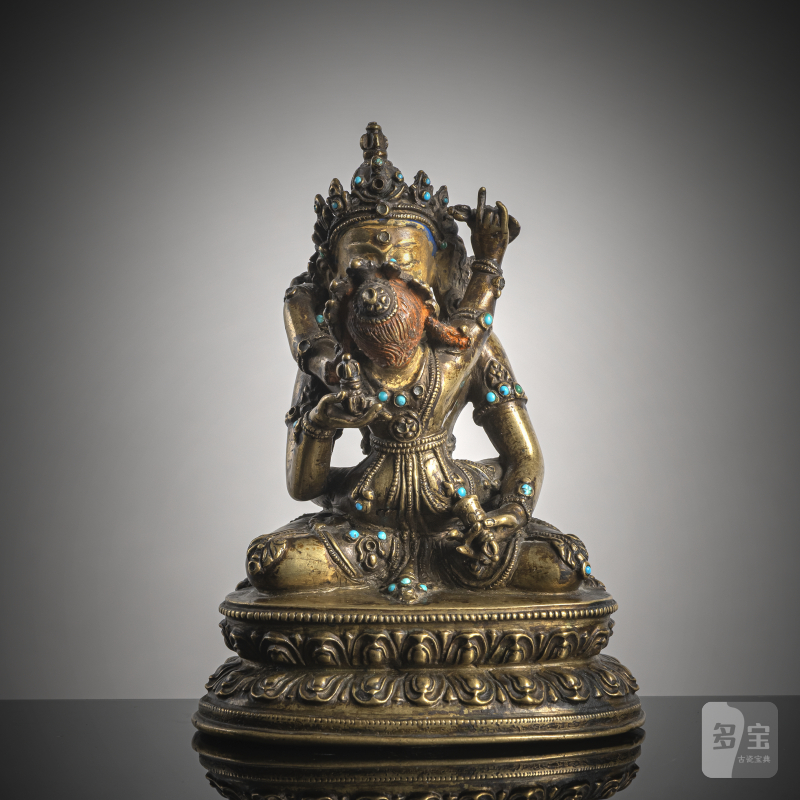

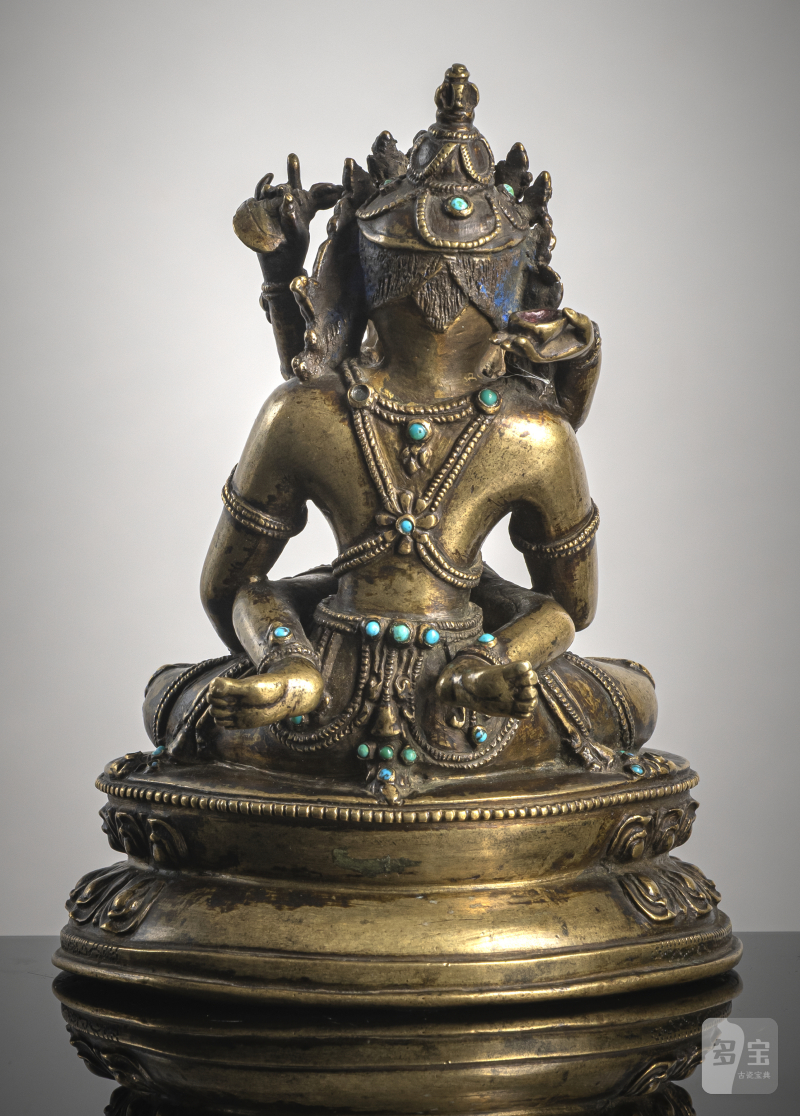


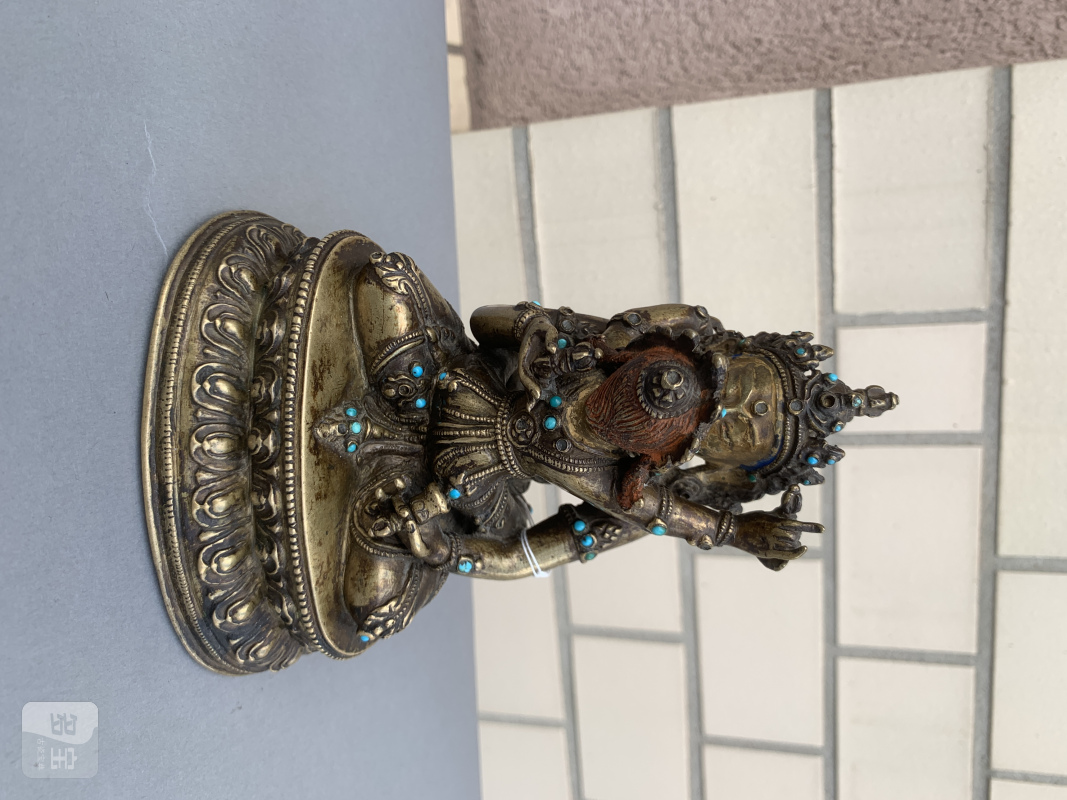
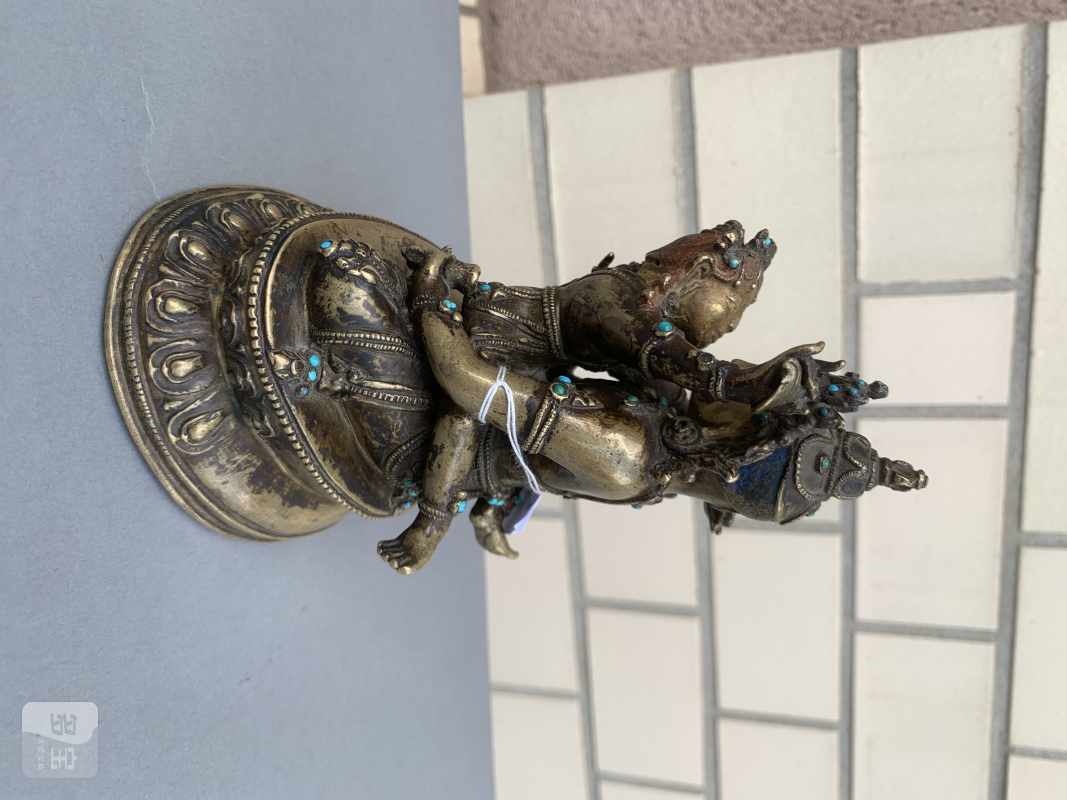

Lot 535 A FINE AND RARE BRONZE FIGURE OF ADIBUDDHA VAJRASATTVA AND HIS CONSORT
落槌价
****
成交价
****
| 拍卖公司 | 德国纳高 |
|---|---|
| 拍卖时间 | 2026年07月13日 |
请安装多宝古瓷宝典APP,查看高清无损大图
拍品信息
拍品名称
A FINE AND RARE BRONZE FIGURE OF ADIBUDDHA VAJRASATTVA AND HIS CONSORT
起拍价
EUR 30,000
估值区间
30.000 - 50.000
尺寸
未知
品相
未知
更多信息
Description:
Tibet, 15th cent.
H. 15,4 cm
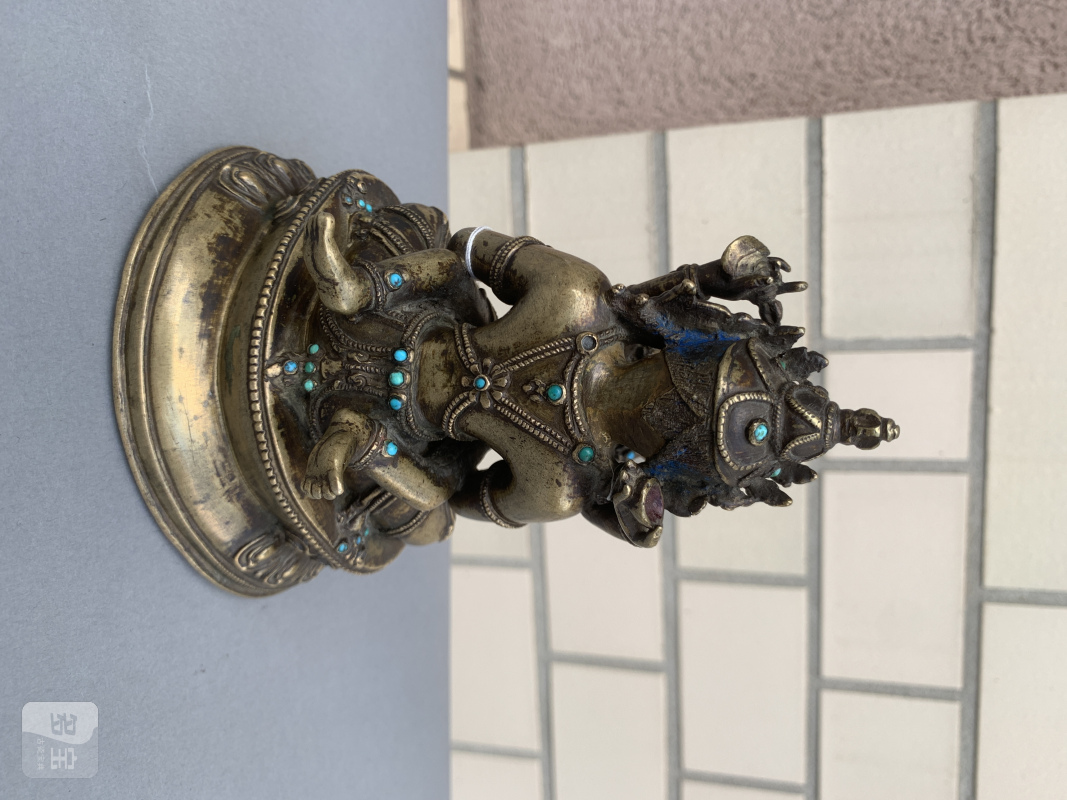
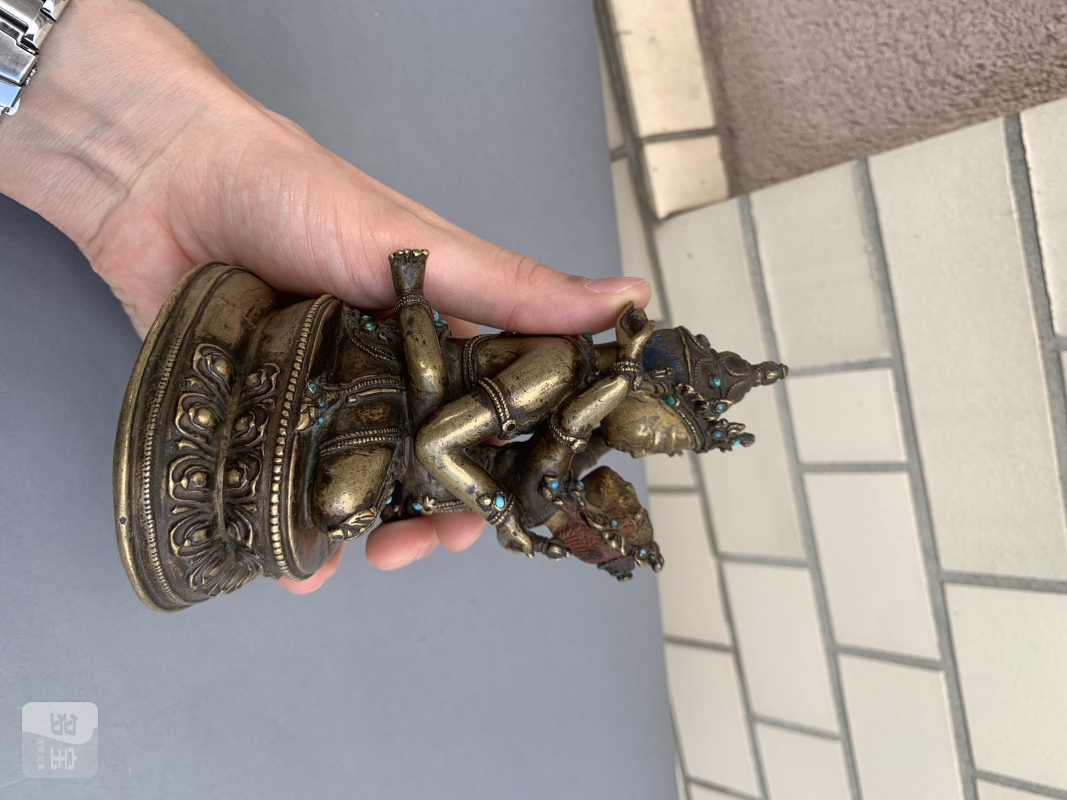
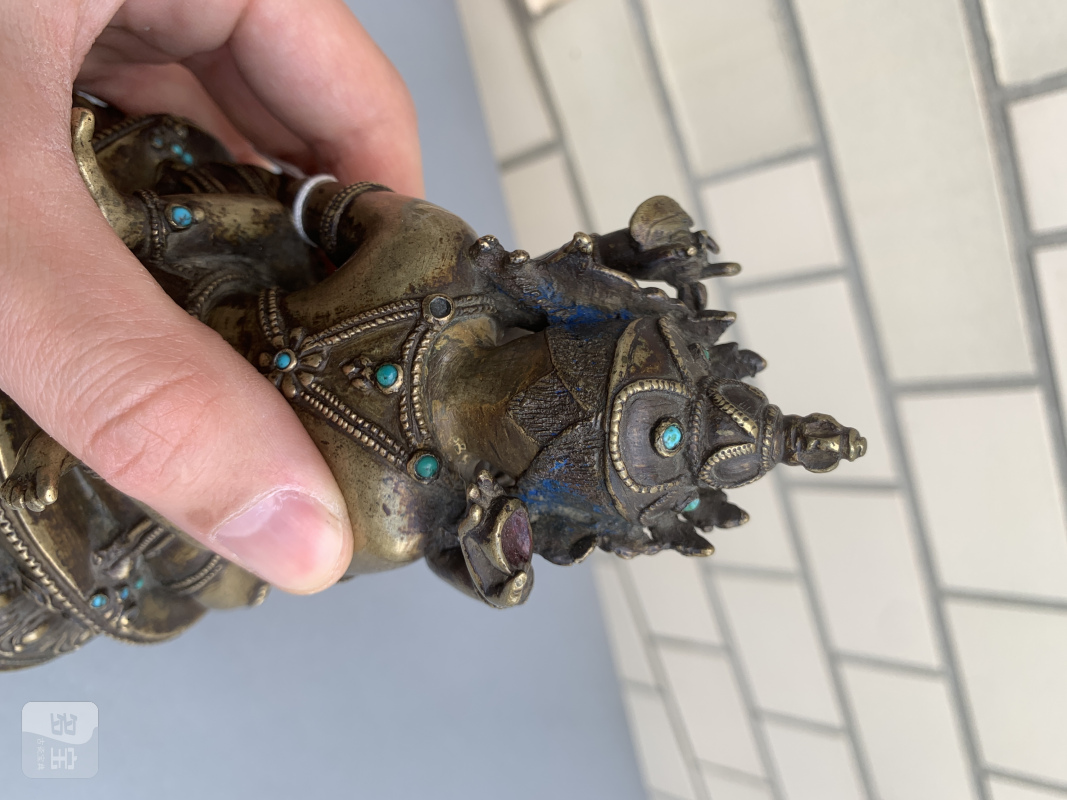
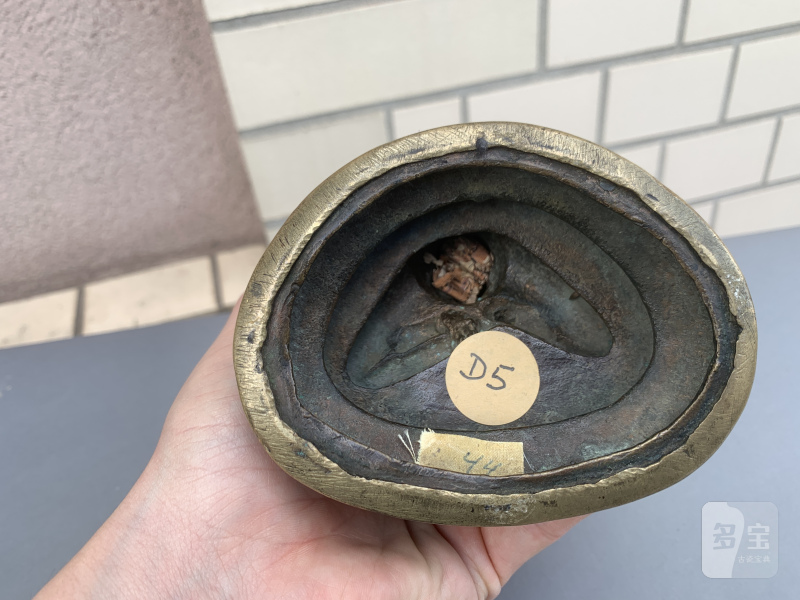
Seated in vajrasana on a lotus base, embracing his consort who is seated on his lap with her legs around his middle, his hands holding the vajra and ghanta, wearing dhoti, jewellery lavishly set with turquoise beads, his cold-gilded face displaying a serene expression with downcast eyes below arched eyebrows, raised urna at his forehead, elongated earlobes with ear ornaments, his blue coloured hairdo combed in a chignon topped with a half-vajra and secured with a tiara, his consort with karttrika and kapala, wearing bone-skirt, her face with serene expression and a red colored hairdo, unsealed.
An old private collection from southern Germany, acquired before 2000
Vajradhara is a central figure in Vajrayana Buddhism, particularly in the Sarma schools of Tibetan Buddhism, and represents the Primordial Buddha, the source of all other Buddhas. He is also known as the Adi-Buddha, the personification of the Dharmakaya, or the Body of Truth of Enlightenment. Vajradhara is depicted with a vajra (thunderbolt) and a bell, symbolising energy and emptiness - Minor traces of age
Tibet, 15th cent.
H. 15,4 cm
Seated in vajrasana on a lotus base, embracing his consort who is seated on his lap with her legs around his middle, his hands holding the vajra and ghanta, wearing dhoti, jewellery lavishly set with turquoise beads, his cold-gilded face displaying a serene expression with downcast eyes below arched eyebrows, raised urna at his forehead, elongated earlobes with ear ornaments, his blue coloured hairdo combed in a chignon topped with a half-vajra and secured with a tiara, his consort with karttrika and kapala, wearing bone-skirt, her face with serene expression and a red colored hairdo, unsealed.
An old private collection from southern Germany, acquired before 2000
Vajradhara is a central figure in Vajrayana Buddhism, particularly in the Sarma schools of Tibetan Buddhism, and represents the Primordial Buddha, the source of all other Buddhas. He is also known as the Adi-Buddha, the personification of the Dharmakaya, or the Body of Truth of Enlightenment. Vajradhara is depicted with a vajra (thunderbolt) and a bell, symbolising energy and emptiness - Minor traces of age