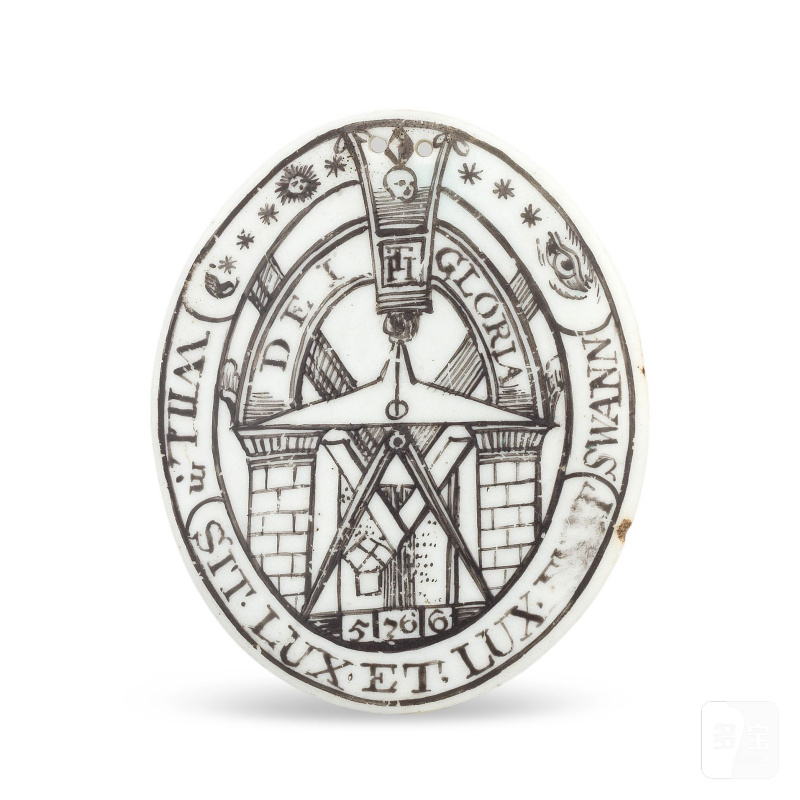

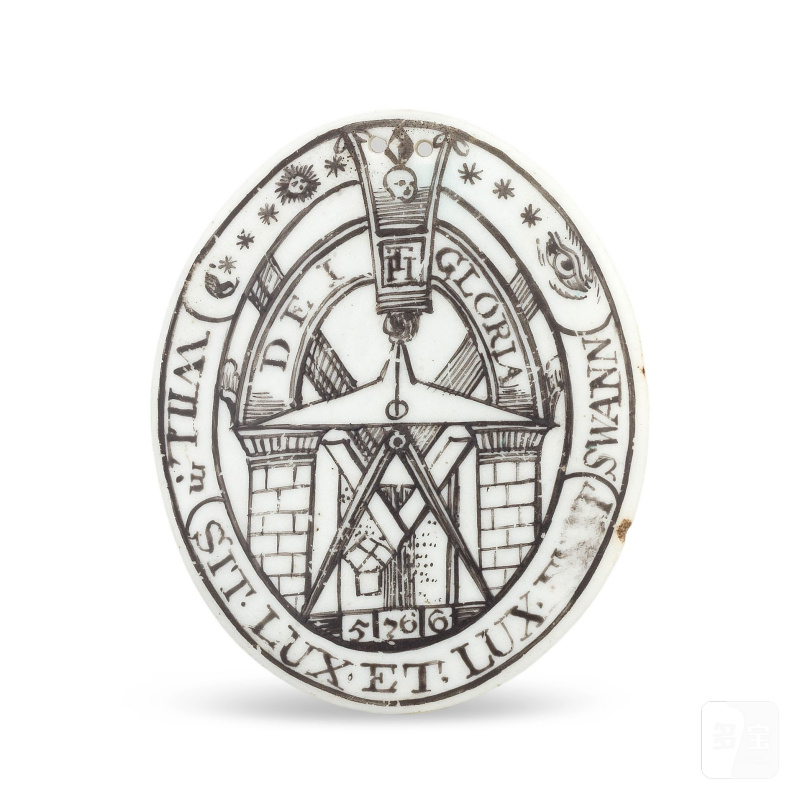
Lot 101 An extremely rare Liverpool Masonic medallion or 'jewel' attributed to Philip Christian, probably dated 1766
落槌价
****
成交价
****
| 拍卖公司 | 邦瀚斯 |
|---|---|
| 拍卖时间 | 2026年07月01日 |
请安装多宝古瓷宝典APP,查看高清无损大图
拍品信息
拍品名称
An extremely rare Liverpool Masonic medallion or 'jewel' attributed to Philip Christian, probably dated 1766
起拍价
GBP 1,000
估值区间
未知
尺寸
未知
品相
未知
更多信息
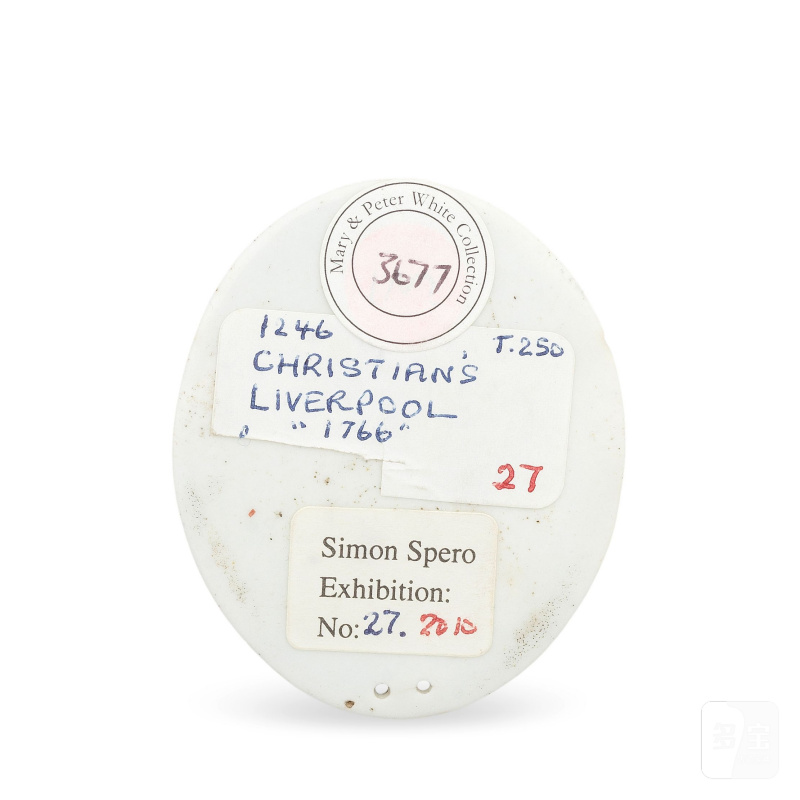
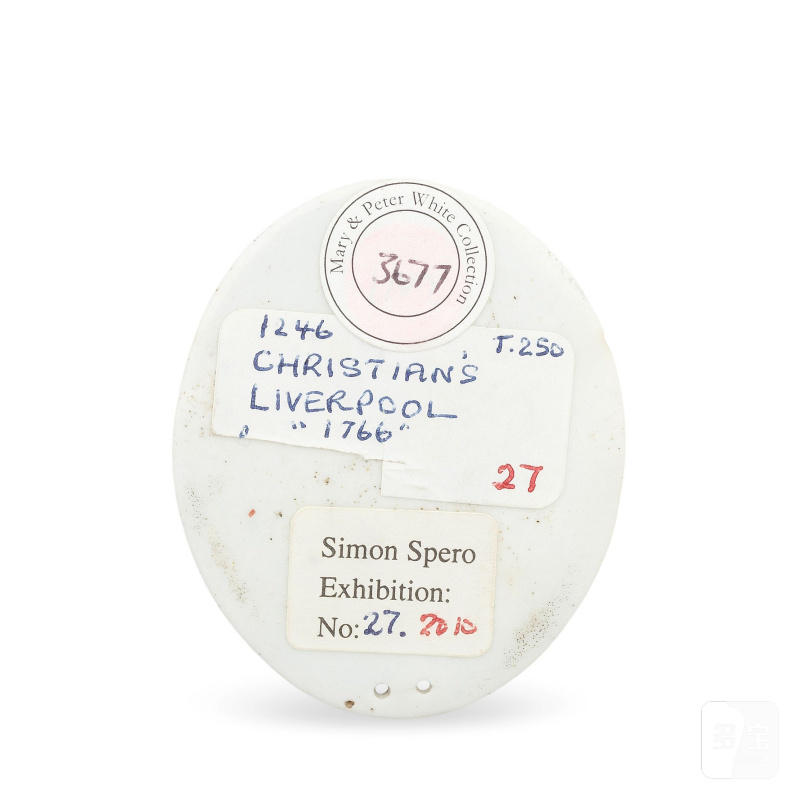
Of oval shape, pencilled in black with a variety of Masonic insignia below an arch inscribed 'DEI GLORIA', a 'TH' device on the keystone, the date '5766' below, within a frame decorated with the sun, moon and seven stars, inscribed 'WILLm SWANN' and with the motto 'SIT LUX ET LUX FUIT' below, pierced for suspension, 5.8cm high
Footnotes
Provenance
Bonhams, 2 December 2009, lot 173;
Simon Spero exhibition, 2010, no.27
Literature
Hillis, Maurice, Liverpool Porcelain, 2011, p.271, fig.6.130
White, Mary, People at the Whites' House, Vol.5, 2024, p.239
Small medallions or 'jewels' bearing Masonic symbols such as this were issued in various materials including silver and enamel, but are exceptionally rare in porcelain. Several families named Swann or Swan resided in Liverpool, including a William Swann who married Mary Mann in Liverpool on 23 February 1763. Whoever it was, Hillis states that the arrangement of symbols indicates that he was a Royal Arch Mason.
Several different Masonic dating systems exist and in eighteenth-century England this usually involved adding 4,000 years to the Gregorian year, thus the year 1766 is written as 5766. Less frequently, 4004 years were added, so some ambiguity arises here. If the 4004 code was intended this medallion would date to 1762, pre-dating Philip Christian's takeover of the factory at Shaw's Brow following the death of Richard Chaffers in 1765, see Maurice Hillis, , 2011, p.273. Whilst Philip Christian was a Roman Catholic and prohibited from becoming freemason's, Maurice Hillis suggests that this would have put him under no obligation to turn down an order.
Footnotes
Provenance
Bonhams, 2 December 2009, lot 173;
Simon Spero exhibition, 2010, no.27
Literature
Hillis, Maurice, Liverpool Porcelain, 2011, p.271, fig.6.130
White, Mary, People at the Whites' House, Vol.5, 2024, p.239
Small medallions or 'jewels' bearing Masonic symbols such as this were issued in various materials including silver and enamel, but are exceptionally rare in porcelain. Several families named Swann or Swan resided in Liverpool, including a William Swann who married Mary Mann in Liverpool on 23 February 1763. Whoever it was, Hillis states that the arrangement of symbols indicates that he was a Royal Arch Mason.
Several different Masonic dating systems exist and in eighteenth-century England this usually involved adding 4,000 years to the Gregorian year, thus the year 1766 is written as 5766. Less frequently, 4004 years were added, so some ambiguity arises here. If the 4004 code was intended this medallion would date to 1762, pre-dating Philip Christian's takeover of the factory at Shaw's Brow following the death of Richard Chaffers in 1765, see Maurice Hillis, , 2011, p.273. Whilst Philip Christian was a Roman Catholic and prohibited from becoming freemason's, Maurice Hillis suggests that this would have put him under no obligation to turn down an order.