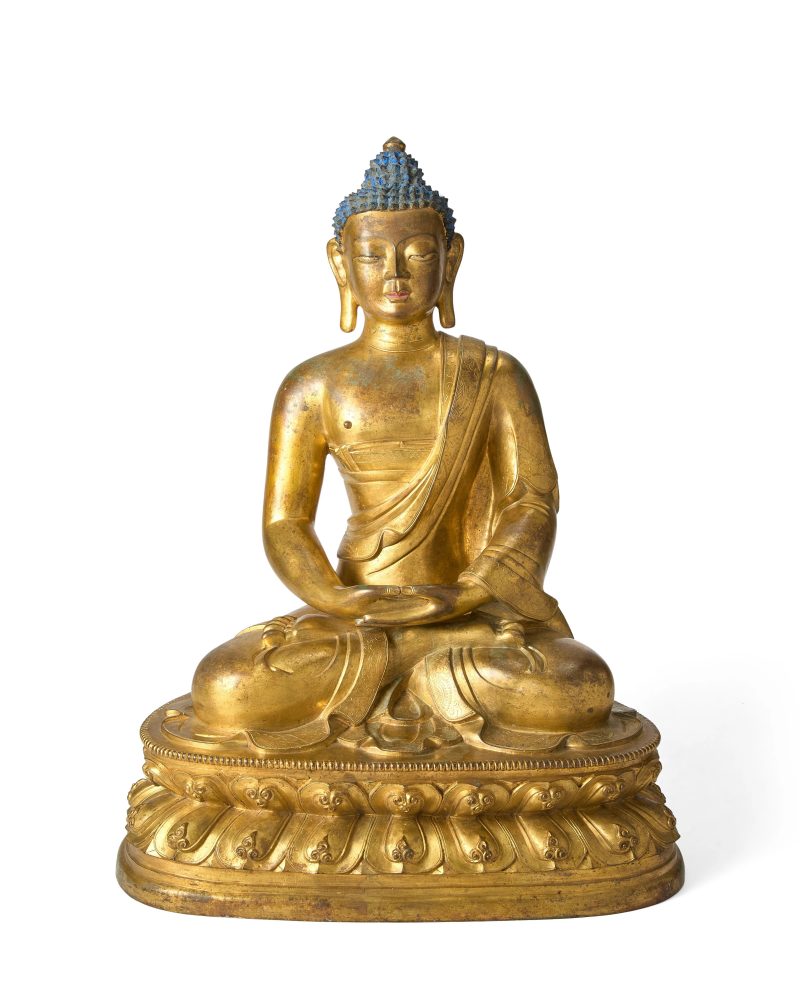

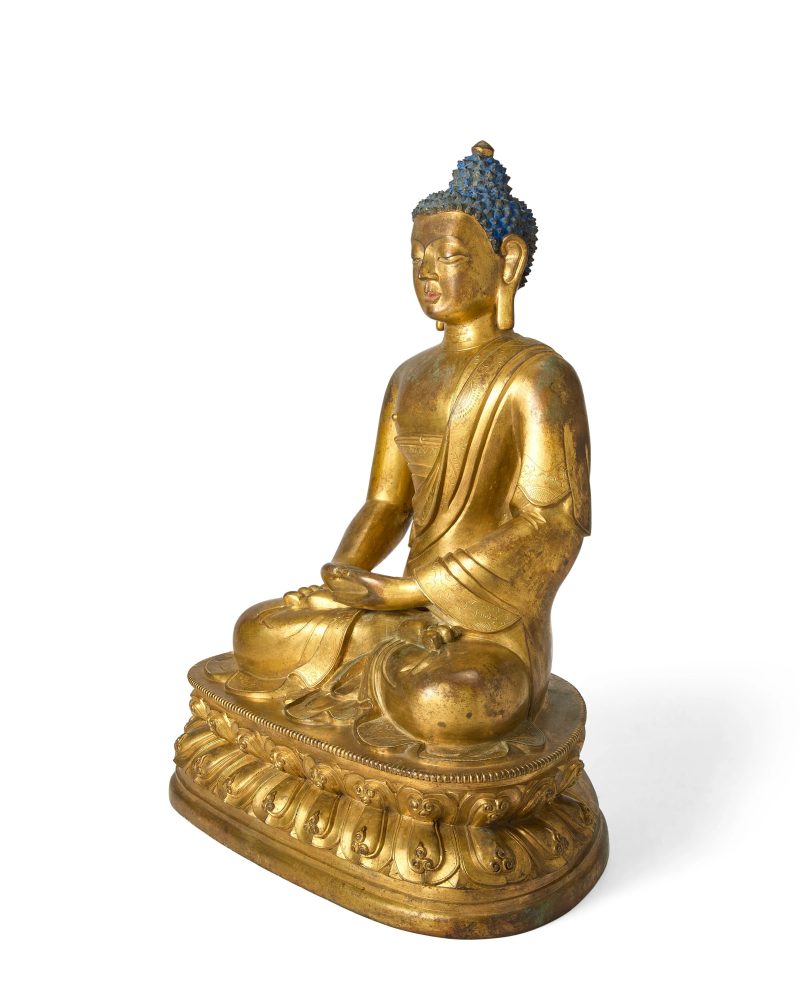
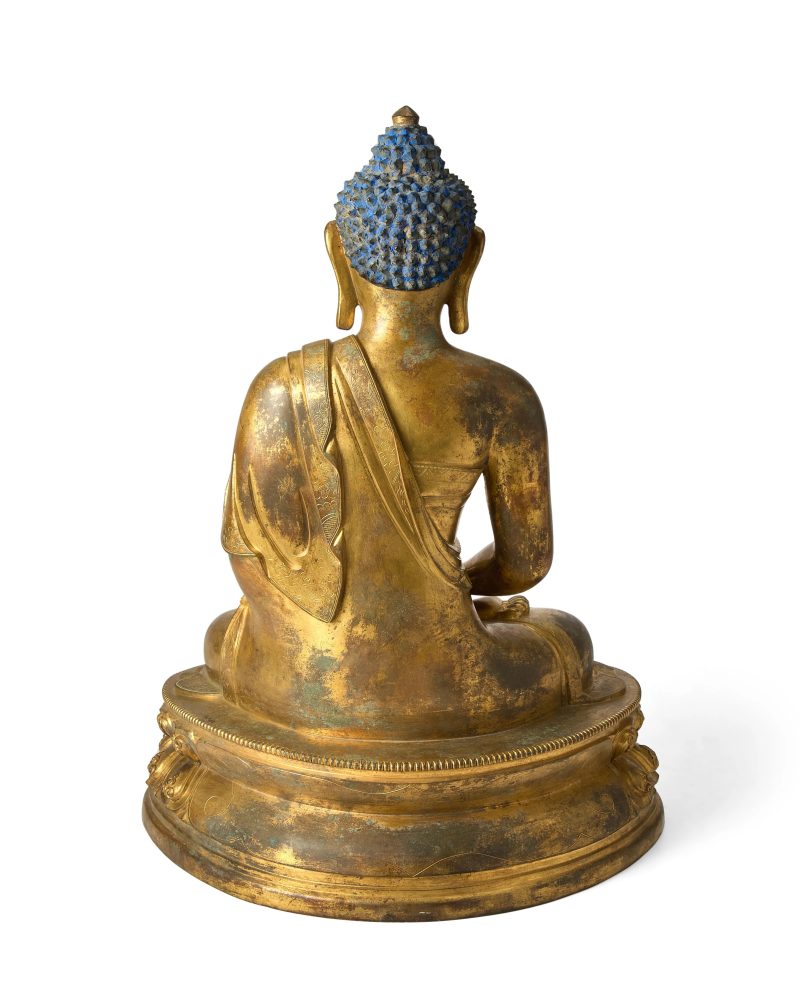

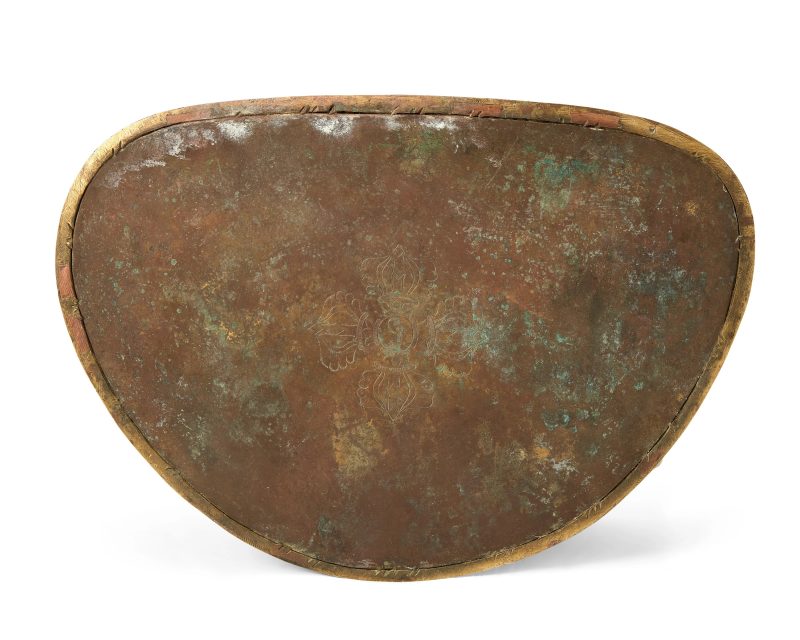
Lot 99 清十八世紀 銅鎏金無量光佛像 | A rare and large Chinese gilt bronze figure of Buddha Amitabha
落槌价
预展中
成交价
预展中
| 拍卖公司 | Roseberys |
|---|---|
| 拍卖时间 | 2026年11月03日 |
拍品信息
拍品名称
清十八世紀 銅鎏金無量光佛像 | A rare and large Chinese gilt bronze figure of Buddha Amitabha
年代
Qing dynasty, 18th century
起拍价
GBP 55,000
估值区间
Estimate: £80,000 - £120,000
尺寸
51cm high, the base 39cm x 27cm.
品相
Tarnishing and verdigris to the metal, with wear to the gilding, and shallow surface scratches commensurate with age. Filled repairs along the edge of the base, incorporating rectangular copper panels. Small cracks in the mineral pigment applied to the hair. The plate on the base may be a later addition.
更多信息
A rare and large Chinese gilt bronze figure of Buddha Amitabha
Qing dynasty, 18th century
Finely cast in Nirmanakaya form, seated in vajraparyankasana on a double lotus pedestal with hands in dhyana mudra, wearing voluminous robe with deep folds across the body and legs, hair arranged in tight curls covered in blue mineral paint, 51cm high, the base 39cm x 27cm. (Import Duty Charged on the Hammer Price) 落槌價徵收進口關稅
清十八世紀 銅鎏金無量光佛像
The present Buddha is depicted in the Nirmanakaya form, wearing monastic robes that fall in natural, flowing folds. Its broad shoulders, well-defined edges, and monumental scale reflect the influence of Himalayan Buddhist art on Chinese sculpture. From Araniko’s introduction of Nepalese artistic traditions to the Yuan court to Gonbujab’s translation of the Sutra on the Measurements of Buddha Statues (《佛說造像度量經》) from Tibetan into Chinese during the Qing dynasty, these traditions helped shape Buddhist image making in China. The text served as an important guide for sculptural production, and its influence extended beyond the imperial palace. Although the present statue bears no reign mark, its large size, fine workmanship, and distinctive iconography make it a noteworthy example of Qing Buddhist sculpture.
The statue’s iconography distinguishes it from the more commonly represented Amitayus, the Buddha of Infinite Life, typically depicted in the Sambhogakaya form wearing a jewelled crown. Amitayus was frequently mentioned in Qing imperial palace records, reflecting the emperors’ and empress dowagers’ aspirations for longevity. By contrast, the present Amitabha image represents a comparatively rare form within Qing Buddhist sculpture.
Beyond the imperial court, Pure Land Buddhism flourished during the Qing dynasty, with Buddha Amitabha being one of the central figures of worshipping. Recitation of the Buddha’s name, nanwu emituofo (南無阿彌陀佛), became a widespread devotional practice among monks and laypeople alike. The statue therefore reflects the enduring place of Amitabha worship in Chinese Buddhist life.
本尊佛像呈現應身(Nirmanakaya)形態,身披僧袍,衣褶自然流暢。其寬闊的雙肩、清晰的輪廓,反映了喜馬拉雅佛教藝術對中國佛教造像的深遠影響。從尼泊爾工匠阿尼哥(Araniko)將尼泊爾藝術傳統引入元代宮廷,到清代蒙古官員貢布扎布(Gonbujab)將《佛說造像度量經》由藏文譯為漢文,這些傳統均對中國佛教造像的發展產生了深遠的影響。該經典亦成為佛像製作的指導性文本,其影響更延伸至宮廷之外。儘管本尊佛像並無年款,但其較大的尺寸、精湛的工藝及造像形式,仍使其成為清代佛教造像中值得關注的作品。
本尊佛像的造像形式有別於清代宮廷中較常見的無量壽佛。無量壽佛通常以報身(Sambhogakaya)形態呈現,頭戴寶冠。清代宮廷檔案中屢見無量壽佛的記載,反映了帝王及皇太后祈求延年益壽的願望。相比之下,本尊應身佛在清代佛教造像中較為罕見。
在宮廷之外,清代亦是佛教淨土宗教蓬勃發展的時期。稱念佛號「南無阿彌陀佛」成為廣泛流行的修行方式,深受高僧與民間信眾的奉行。本尊佛像由此體現了彌陀信仰在中國佛教傳統中根基日漸深厚。
以下内容由AI翻译:
【名称】
清十八世紀 銅鎏金無量光佛像
【年代】
清,十八世纪
【描述】
一尊罕见且大型的中国铜鎏金无量光佛像
清,十八世纪
精细铸造为应身形态,结跏趺坐于双层莲花座上,双手结禅定印,身披宽大的僧袍,衣褶自然流畅,头发呈紧密卷曲状,涂有蓝色矿物颜料,高51厘米,底座39厘米 x 27厘米。 (落槌价征收进口关税)
【品相】
金属表面有氧化和铜绿,镀金磨损,浅表划痕符合年代特征。底座边缘有填充修复,嵌入矩形铜板。头发上的矿物颜料有小裂纹。底座上的铭牌可能是后来添加的。
常见问题
这件清十八世紀 銅鎏金無量光佛像 | A rare and large Chinese gilt bronze figure of Buddha Amitabha的成交价是多少?
落槌价为 预展中。 成交价为 预展中。
拍品的品相状况如何?
Tarnishing and verdigris to the metal, with wear to the gilding, and shallow surface scratches commensurate with age. Filled repairs along the edge of the base, incorporating rectangular copper panels. Small cracks in the mineral pigment applied to the hair. The plate on the base may be a later addition.
拍品的尺寸是多少?
51cm high, the base 39cm x 27cm.