
拍品信息
拍品名称
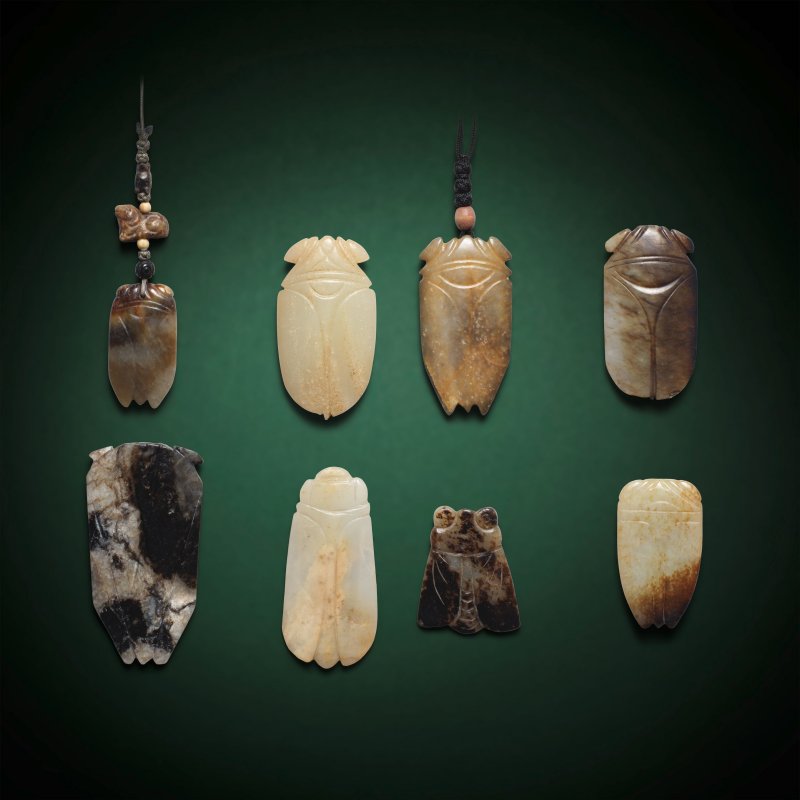
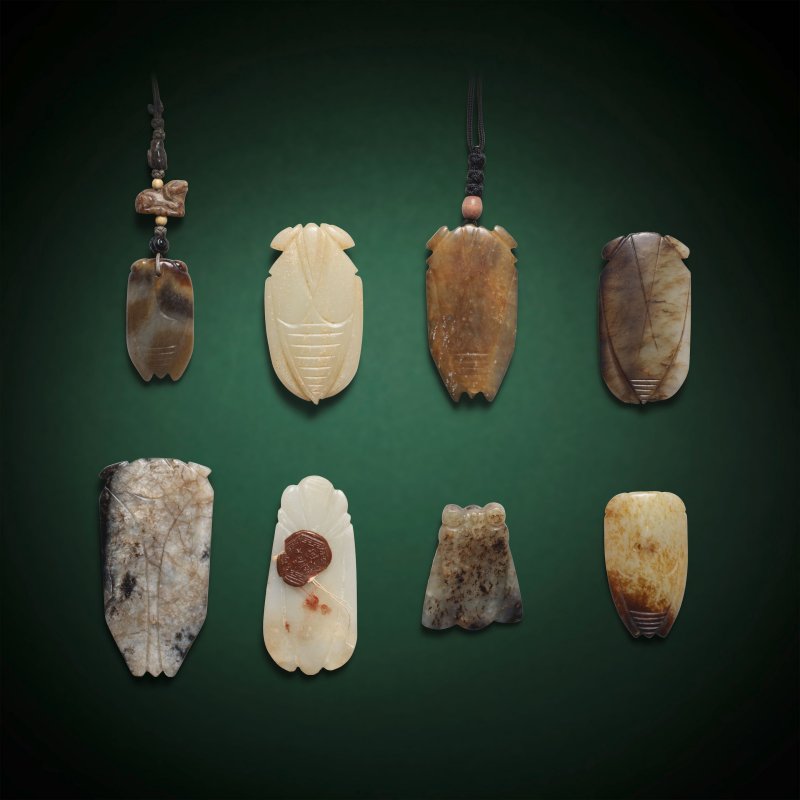
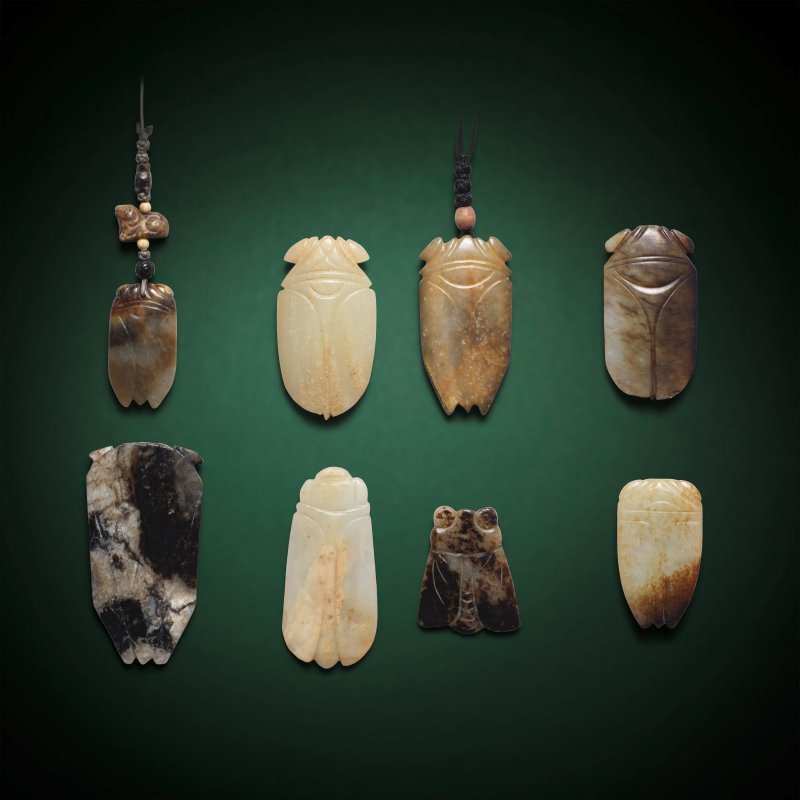
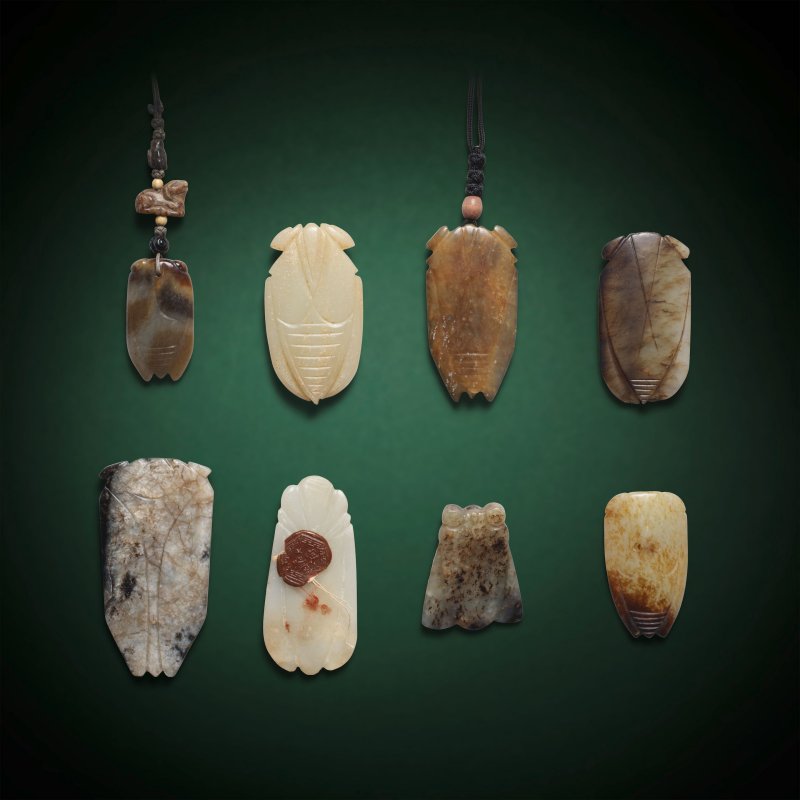
漢及其後 玉蟬 一組八件 | EIGHT JADE CICADAS
年代
Han Dynasty and later
起拍价
GBP 3,000
估值区间
GBP 3000 - 5000
尺寸
未知
品相
未知
更多信息
Han Dynasty and later
Comprising eight jade cicadas of varying sizes, each carved in a stylised form with the wings articulated by fine incised lines, the bodies and heads defined with simplified forms and eyes, the stones of assorted tones ranging from beige and pale celadon to deep brown and black, some with russet inclusions and natural markings. The largest, 7cm (2 3/4in) long. (8).
Footnotes
漢及其後 玉蟬 一組八件
Jade cicadas have been highly esteemed in Chinese art since antiquity. They were traditionally placed on the tongue of the deceased as symbols of transformation and rebirth, inspired by the insect's emergence from the earth after years underground. The cicada was also later associated with purity and the virtues of the scholar, as its life high in trees and reliance on dew were seen as metaphors for moral refinement.
Compare with a pair of cicadas, Warring States period, illustrated by Gu Fang, The Complete Collection of Jades Unearthed in China (中國出土玉器全集), vol.1, Beijing, 2005, p.157. See also another jade cicada, Han dynasty, illustrated in Ibid., p.223. Compare also with another similar jade cicada, Western Han dynasty, excavated from Tomb no.14 at Youjiazhuang, Xi'an, Shaanxi Province, illustrated by Gu Fang, (中國出土玉器全集), vol.14, Beijing, 2005, p.153.
See a similar white jade cicada, Han dynasty, which was sold at Sotheby's Hong Kong, 18 April 2024, lot 592. See also a jade cicada, Han dynasty, which was sold at Bonhams Hong Kong, 4 May 2026, lot 23 (part lot).
Comprising eight jade cicadas of varying sizes, each carved in a stylised form with the wings articulated by fine incised lines, the bodies and heads defined with simplified forms and eyes, the stones of assorted tones ranging from beige and pale celadon to deep brown and black, some with russet inclusions and natural markings. The largest, 7cm (2 3/4in) long. (8).
Footnotes
漢及其後 玉蟬 一組八件
Jade cicadas have been highly esteemed in Chinese art since antiquity. They were traditionally placed on the tongue of the deceased as symbols of transformation and rebirth, inspired by the insect's emergence from the earth after years underground. The cicada was also later associated with purity and the virtues of the scholar, as its life high in trees and reliance on dew were seen as metaphors for moral refinement.
Compare with a pair of cicadas, Warring States period, illustrated by Gu Fang, The Complete Collection of Jades Unearthed in China (中國出土玉器全集), vol.1, Beijing, 2005, p.157. See also another jade cicada, Han dynasty, illustrated in Ibid., p.223. Compare also with another similar jade cicada, Western Han dynasty, excavated from Tomb no.14 at Youjiazhuang, Xi'an, Shaanxi Province, illustrated by Gu Fang, (中國出土玉器全集), vol.14, Beijing, 2005, p.153.
See a similar white jade cicada, Han dynasty, which was sold at Sotheby's Hong Kong, 18 April 2024, lot 592. See also a jade cicada, Han dynasty, which was sold at Bonhams Hong Kong, 4 May 2026, lot 23 (part lot).
常见问题
这件漢及其後 玉蟬 一組八件 | EIGHT JADE CICADAS的成交价是多少?
落槌价为 预展中。 成交价为 预展中。


