
拍品信息
拍品名称
十世噶瑪巴卻英多吉(傳) 藏東或雲南 十七世紀 羅漢尊者唐卡 | A THANGKA OF A GATHERING OF ARHATS
年代
ATTRIBUTED TO THE TENTH KARMAPA, CHOYING DORJE (1604-1674),
EASTERN TIBET OR YUNNAN PROVINCE, 17TH CENTURY
起拍价
HKD 300,000
估值区间
HKD 300000 - 500000
尺寸
未知
品相
未知
更多信息
ATTRIBUTED TO THE TENTH KARMAPA, CHOYING DORJE (1604-1674),
EASTERN TIBET OR YUNNAN PROVINCE, 17TH CENTURY
Distemper on silk.
Himalayan Art Resources item no. 207025
Image: 28.5 x 20.5 cm (11 1/4 x 8 in.);
With silks: 48 x 31 cm (18 7/8 x 12 1/4 in.)
Footnotes
十世噶瑪巴卻英多吉(傳) 藏東或雲南 十七世紀 羅漢尊者唐卡
Arhat painting attributed to the Tenth Karmapa Choying Dorje (1604-1674)
By Ulrich von Schroeder
This painting is the only one to have come to light from a hereto unknown set of arhat paintings depicting Buddha Shakyamuni with the sixteen Arhats in addition to the patron Hva shang and the attendant Upasaka Dharmatala.
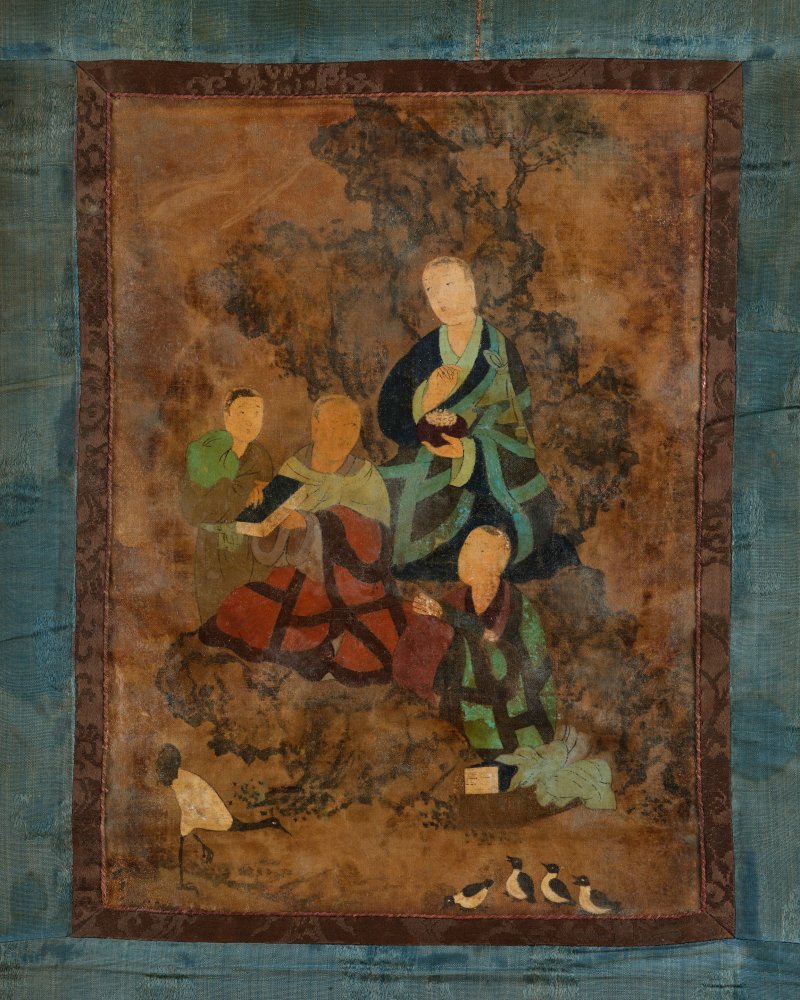
This unpublished painting on silk depicts a group of three Buddhist elders or arhats accompanied by an attendant, taking a rest at the foot of a rocky outcropping surmounted by a single tree. The arhat seated in the middle is dressed in a red robe with dark brown stripes and holds a manuscript in his hands. He seems to be in discussion with another arhat wearing a similar robe made of green fabric decorated with dark stripes with another manuscript lying beside. A third elder seated in the background dressed in a black robe with blue stripes is eating rice from a black bowl held in the left hand. On the left stands an attentive servant carrying a green bag over his shoulder. In front stands a crane facing a group of four black and white coloured birds.
Note the facial features of the arhats with small pointed red lips, and manifest elongated head shapes, all hallmarks of Choying Dorje's exceptional artistic style. As demonstrated by many of his sculptures and paintings, the Tenth Karmapa was fond of animals, and especially birds.
Recognized as one of Tibet's most celebrated artists, paintings by the Tenth Karmapa are well-known for breaking away from traditional Tibetan iconographic standards. This painting highlights his unique blend of traditional Tibetan styles with a more fluid style deeply influenced by Chinese arhat paintings. It appears that the Tenth Karmapa did paint arhats in most cases as general subject matter without iconographical features that would enable individual identifications. That explains why almost none of the arhats on Chos dbyings rdo rje's paintings can be identified. As a prominent and respected religious leader, the Tenth Karma pa was entitled to paint and sculpt whatever he liked, and was not restricted or bound to follow traditional established conventions.
When we study the list of his paintings mentioned in his biographies it is undisputable that the Sixteen Elders were his favoured subject. It must be remembered that Tibetan representations of the Sixteen Arhats were always painted in Tibet in a modified Chinese style. The arhat iconography entered Tibet from China because the arhat cult did not exist in North-Eastern India, from where the Mahayana Buddhism practiced in Tibet originated. According to the various biographies, the Tenth Karmapa painted at least thirteen sets of Elders prior to his exile in Yunnan. Further sixteen sets of Elders painted by Chos dbyings rdo rje are recorded while in Yunnan exile from 1648 to 1672.
According to my opinion based on a life-long study of artworks associated with Choying Dorje, this painting was painted by the Tenth Karmapa's own hands.
EASTERN TIBET OR YUNNAN PROVINCE, 17TH CENTURY
Distemper on silk.
Himalayan Art Resources item no. 207025
Image: 28.5 x 20.5 cm (11 1/4 x 8 in.);
With silks: 48 x 31 cm (18 7/8 x 12 1/4 in.)
Footnotes
十世噶瑪巴卻英多吉(傳) 藏東或雲南 十七世紀 羅漢尊者唐卡
Arhat painting attributed to the Tenth Karmapa Choying Dorje (1604-1674)
By Ulrich von Schroeder
This painting is the only one to have come to light from a hereto unknown set of arhat paintings depicting Buddha Shakyamuni with the sixteen Arhats in addition to the patron Hva shang and the attendant Upasaka Dharmatala.
This unpublished painting on silk depicts a group of three Buddhist elders or arhats accompanied by an attendant, taking a rest at the foot of a rocky outcropping surmounted by a single tree. The arhat seated in the middle is dressed in a red robe with dark brown stripes and holds a manuscript in his hands. He seems to be in discussion with another arhat wearing a similar robe made of green fabric decorated with dark stripes with another manuscript lying beside. A third elder seated in the background dressed in a black robe with blue stripes is eating rice from a black bowl held in the left hand. On the left stands an attentive servant carrying a green bag over his shoulder. In front stands a crane facing a group of four black and white coloured birds.
Note the facial features of the arhats with small pointed red lips, and manifest elongated head shapes, all hallmarks of Choying Dorje's exceptional artistic style. As demonstrated by many of his sculptures and paintings, the Tenth Karmapa was fond of animals, and especially birds.
Recognized as one of Tibet's most celebrated artists, paintings by the Tenth Karmapa are well-known for breaking away from traditional Tibetan iconographic standards. This painting highlights his unique blend of traditional Tibetan styles with a more fluid style deeply influenced by Chinese arhat paintings. It appears that the Tenth Karmapa did paint arhats in most cases as general subject matter without iconographical features that would enable individual identifications. That explains why almost none of the arhats on Chos dbyings rdo rje's paintings can be identified. As a prominent and respected religious leader, the Tenth Karma pa was entitled to paint and sculpt whatever he liked, and was not restricted or bound to follow traditional established conventions.
When we study the list of his paintings mentioned in his biographies it is undisputable that the Sixteen Elders were his favoured subject. It must be remembered that Tibetan representations of the Sixteen Arhats were always painted in Tibet in a modified Chinese style. The arhat iconography entered Tibet from China because the arhat cult did not exist in North-Eastern India, from where the Mahayana Buddhism practiced in Tibet originated. According to the various biographies, the Tenth Karmapa painted at least thirteen sets of Elders prior to his exile in Yunnan. Further sixteen sets of Elders painted by Chos dbyings rdo rje are recorded while in Yunnan exile from 1648 to 1672.
According to my opinion based on a life-long study of artworks associated with Choying Dorje, this painting was painted by the Tenth Karmapa's own hands.
常见问题
这件十世噶瑪巴卻英多吉(傳) 藏東或雲南 十七世紀 羅漢尊者唐卡 | A THANGKA OF A GATHERING OF ARHATS的成交价是多少?
落槌价为 预展中。 成交价为 预展中。