
拍品信息
拍品名称
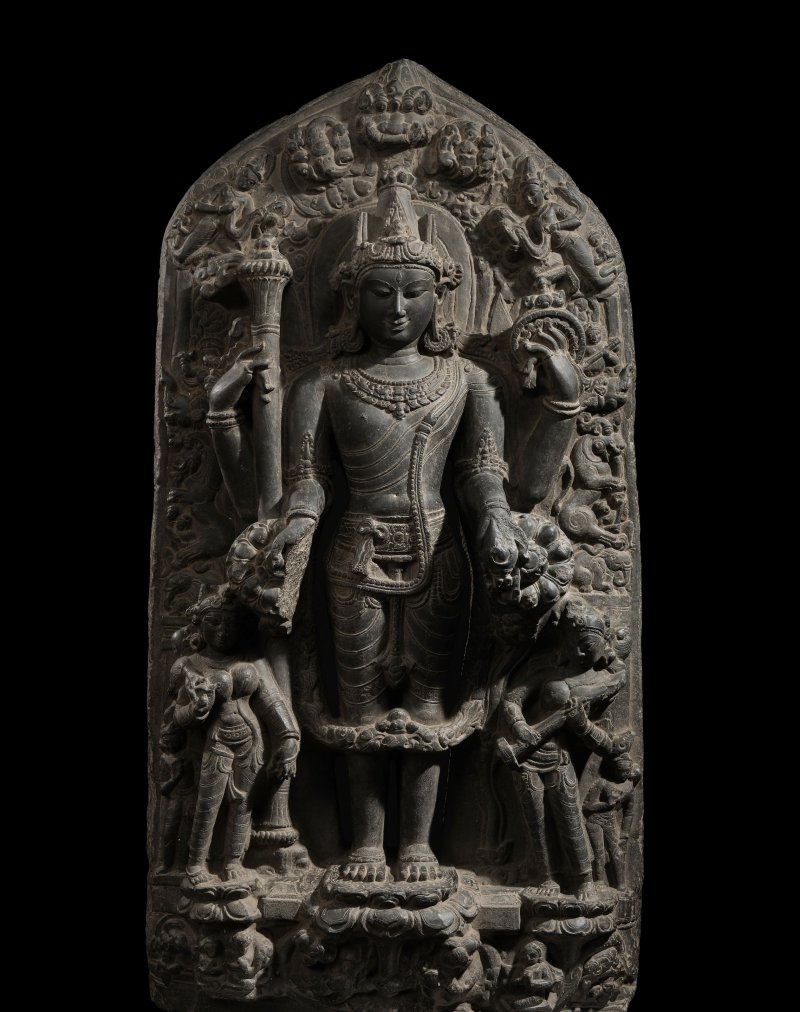
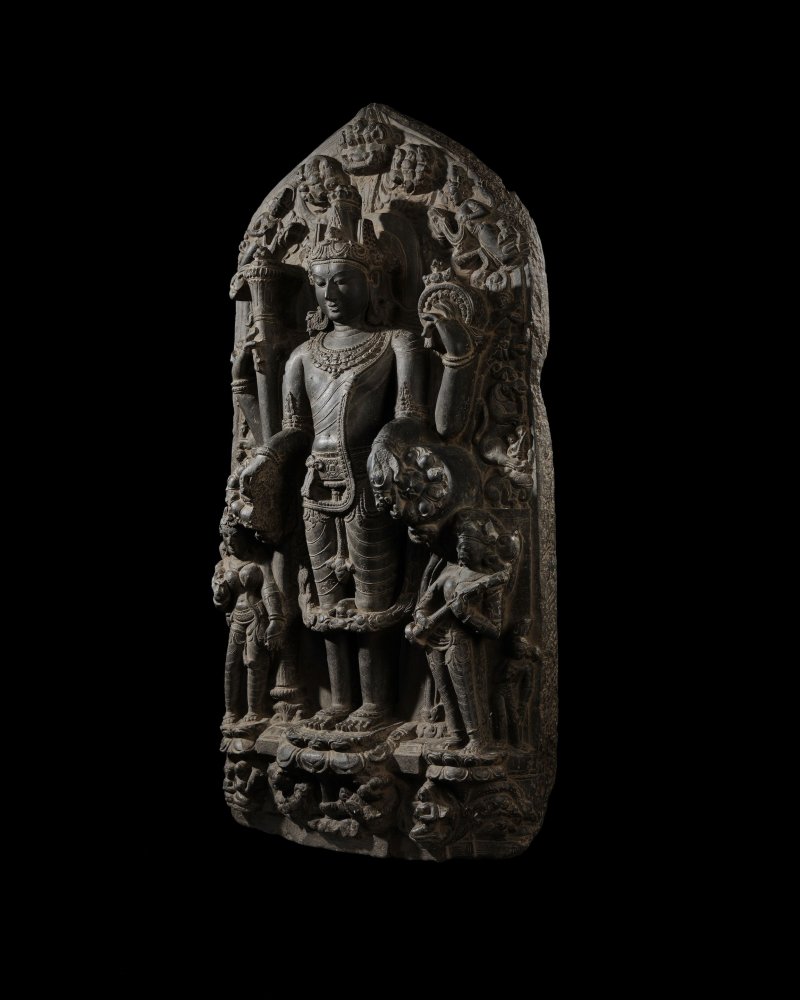
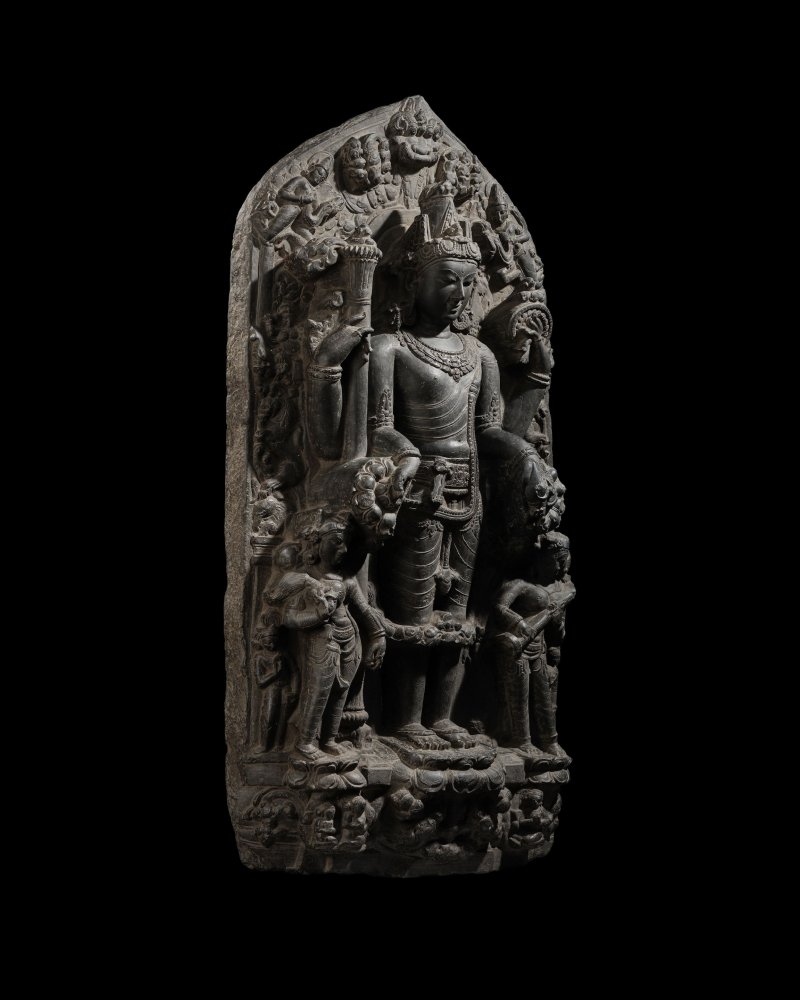
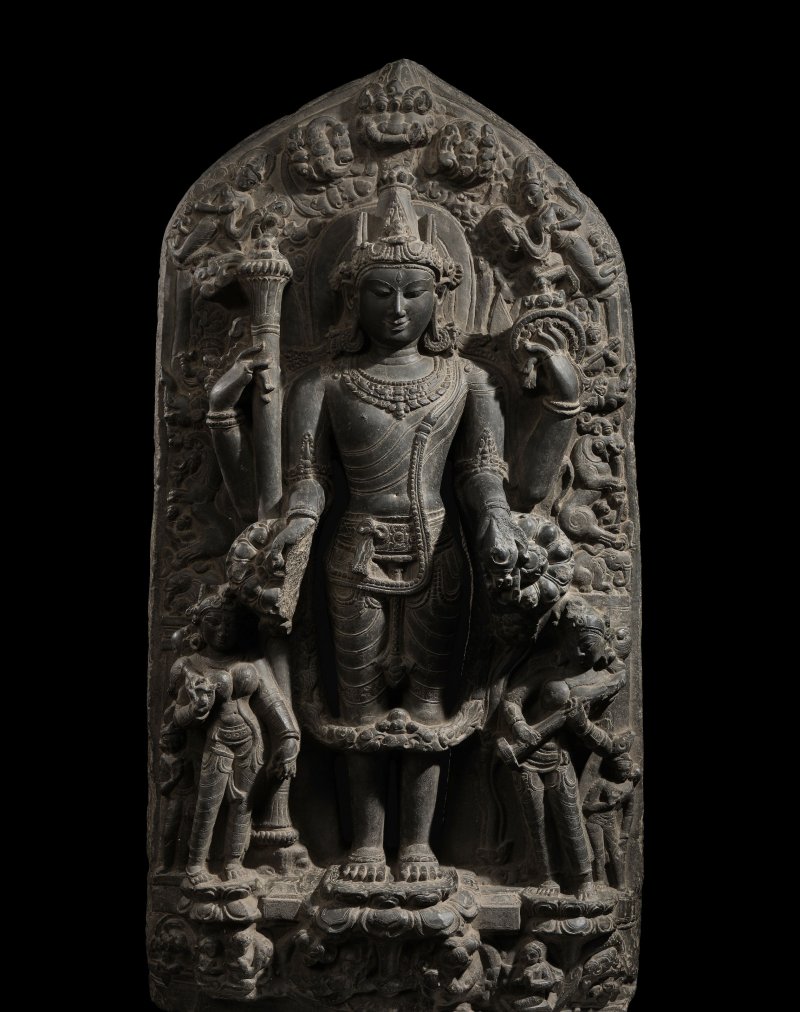
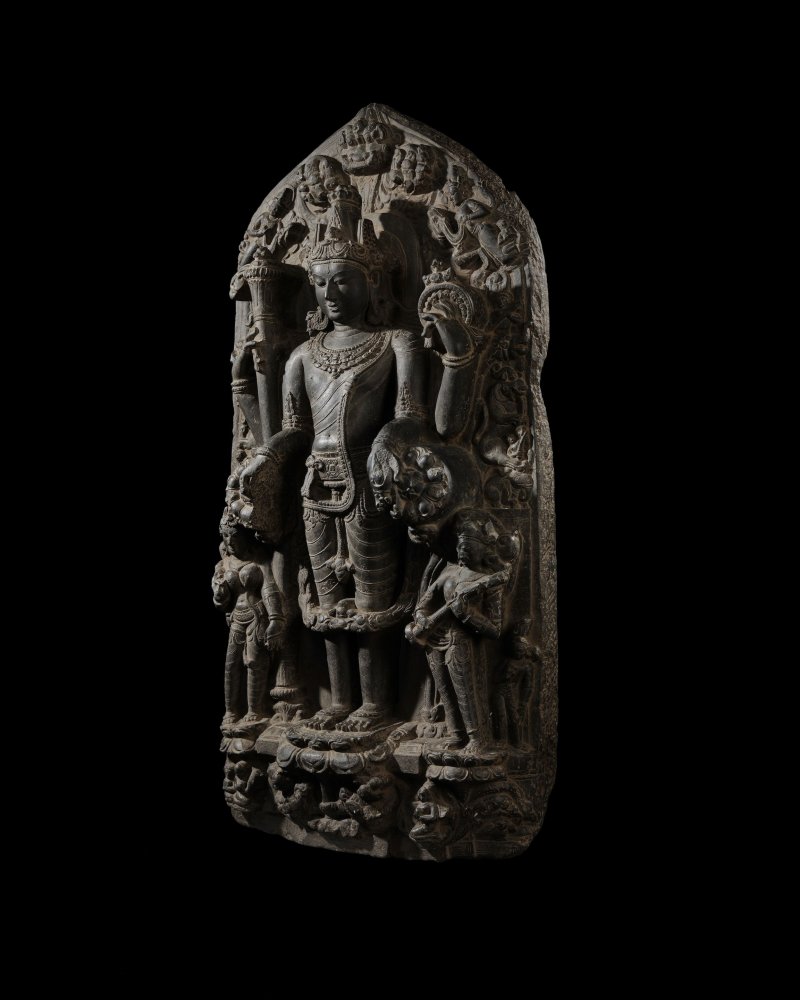
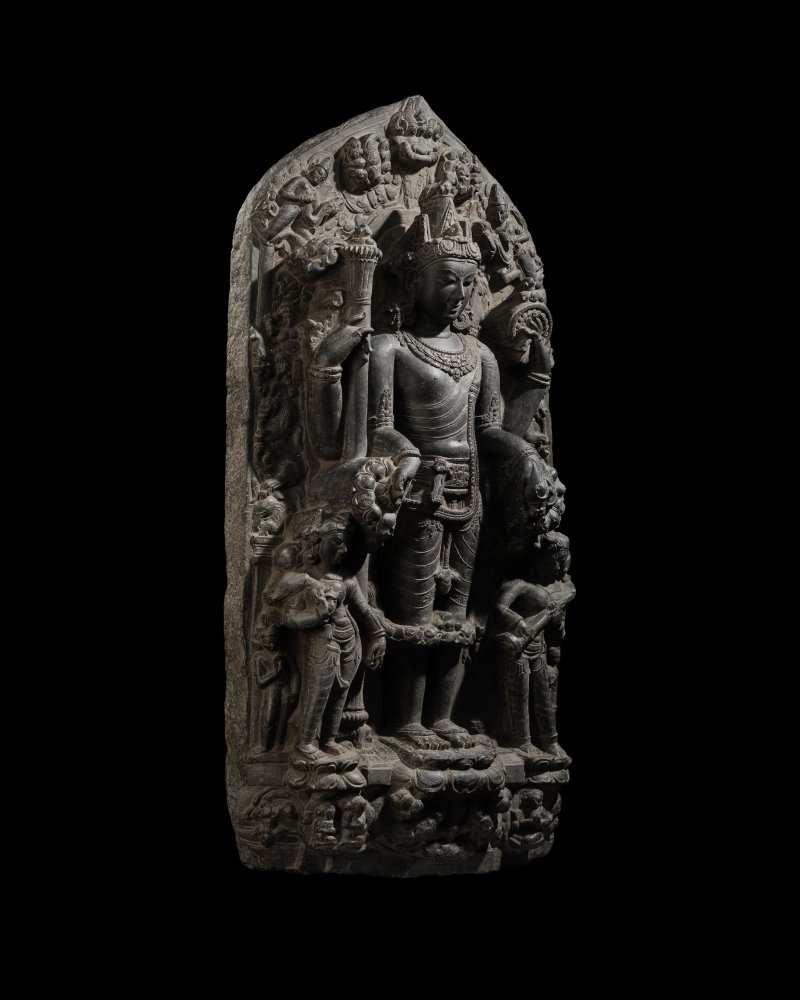
印度東北部 帕拉時期 十二世紀 黑石毗濕奴像 | A BLACKSTONE STELE OF VISHNU
年代
NORTHEASTERN INDIA, PALA PERIOD, 12TH CENTURY
起拍价
HKD 1,500,000
估值区间
HKD 1500000 - 2500000
尺寸
未知
品相
未知
更多信息
NORTHEASTERN INDIA, PALA PERIOD, 12TH CENTURY
Himalayan Art Resources item no. 8873
95 cm (37 3/8 in.) high
Footnotes
印度東北部 帕拉時期 十二世紀 黑石毗濕奴像
Provenance
Private Scottish Collection, since mid-1980s
Vishnu is one of the principal deities of Hinduism, identified by his rigid frontal stance, mitred headdress, and distinctive attributes. As the Preserver within the Hindu trinity, alongside Brahma and Shiva, his commanding posture underscores his role in maintaining the balance and order of the universe. Whenever this cosmic order is threatened by negative forces, he descends to earth in one of his various forms (avatars) to restore harmony and protect humanity. Here, Vishnu is surrounded by hovering celestial beings and flanked by Lakshmi, the goddess of fortune, who carries a fly whisk, and Sarasvati, the goddess of knowledge, who holds a musical instrument.
This stele would originally have occupied a niche within a temple dedicated to Vishnu. For an example of a similar stele within its architectural surround, see the Metropolitan Museum of Art, New York (57.51.7a–h). The refined modelling, intricate ornamentation, and balanced composition exemplify the artistic sophistication for which Pala-period sculpture is renowned. The fine-grained black stone lends itself to exceptionally intricate carving, and the richness of this ornamentation is characteristic of works dating to the 12th century.
For a very closely related example attributed to present-day Bangladesh in the Asian Art Museum, San Francisco (B60S48+), see Huntington, , 1989, no. 36. A comparable example was sold at Sotheby's, New York, 20 March 2013, lot 271. A related example achieved a notable result at Christie's, London, 11 June 2026, lot 93.
Himalayan Art Resources item no. 8873
95 cm (37 3/8 in.) high
Footnotes
印度東北部 帕拉時期 十二世紀 黑石毗濕奴像
Provenance
Private Scottish Collection, since mid-1980s
Vishnu is one of the principal deities of Hinduism, identified by his rigid frontal stance, mitred headdress, and distinctive attributes. As the Preserver within the Hindu trinity, alongside Brahma and Shiva, his commanding posture underscores his role in maintaining the balance and order of the universe. Whenever this cosmic order is threatened by negative forces, he descends to earth in one of his various forms (avatars) to restore harmony and protect humanity. Here, Vishnu is surrounded by hovering celestial beings and flanked by Lakshmi, the goddess of fortune, who carries a fly whisk, and Sarasvati, the goddess of knowledge, who holds a musical instrument.
This stele would originally have occupied a niche within a temple dedicated to Vishnu. For an example of a similar stele within its architectural surround, see the Metropolitan Museum of Art, New York (57.51.7a–h). The refined modelling, intricate ornamentation, and balanced composition exemplify the artistic sophistication for which Pala-period sculpture is renowned. The fine-grained black stone lends itself to exceptionally intricate carving, and the richness of this ornamentation is characteristic of works dating to the 12th century.
For a very closely related example attributed to present-day Bangladesh in the Asian Art Museum, San Francisco (B60S48+), see Huntington, , 1989, no. 36. A comparable example was sold at Sotheby's, New York, 20 March 2013, lot 271. A related example achieved a notable result at Christie's, London, 11 June 2026, lot 93.
常见问题
这件印度東北部 帕拉時期 十二世紀 黑石毗濕奴像 | A BLACKSTONE STELE OF VISHNU的成交价是多少?
落槌价为 预展中。 成交价为 预展中。