

拍品信息
拍品名称
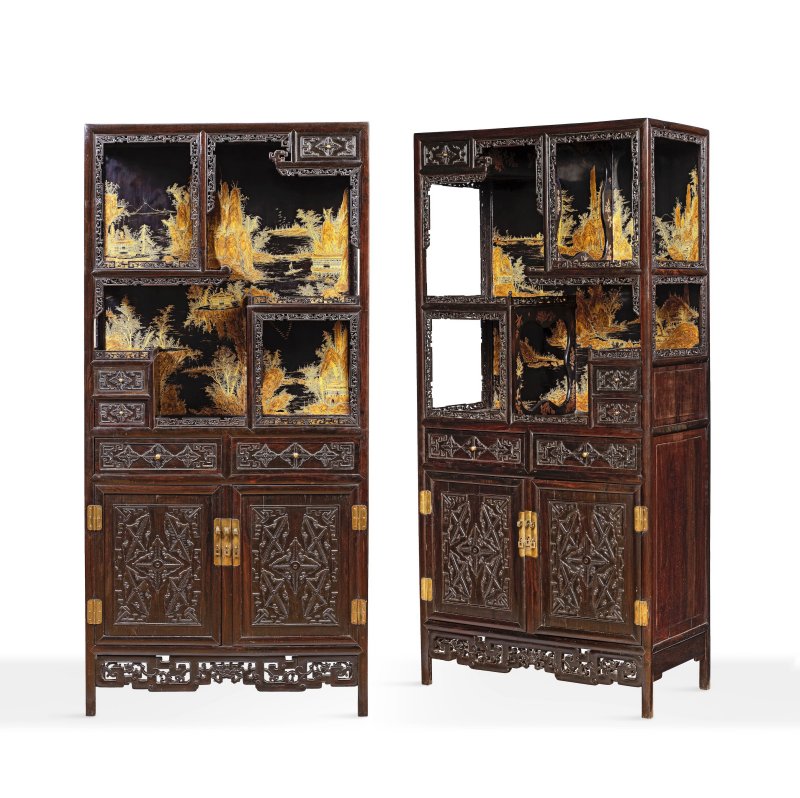
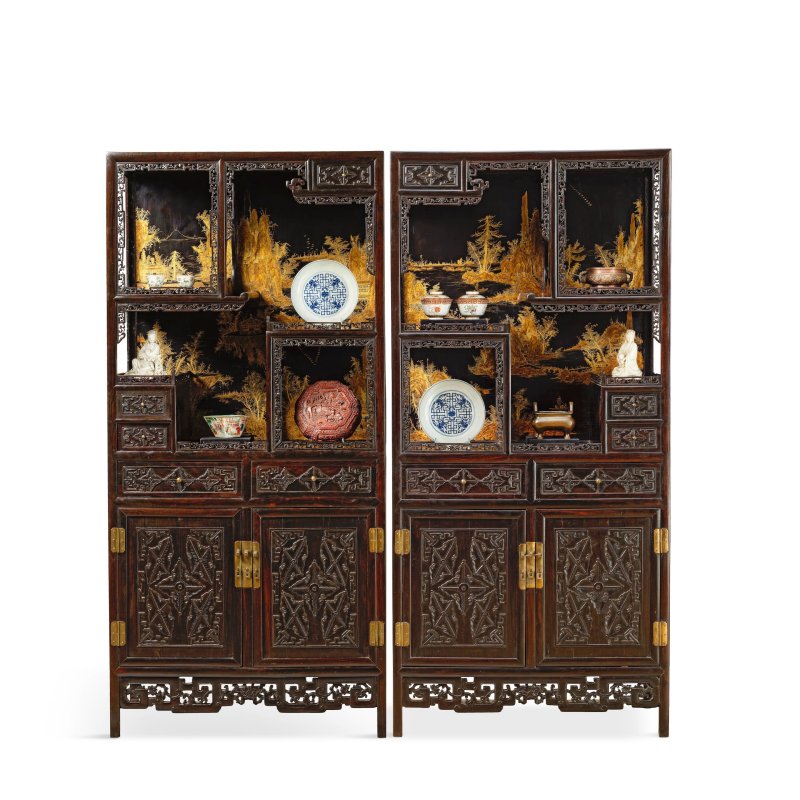
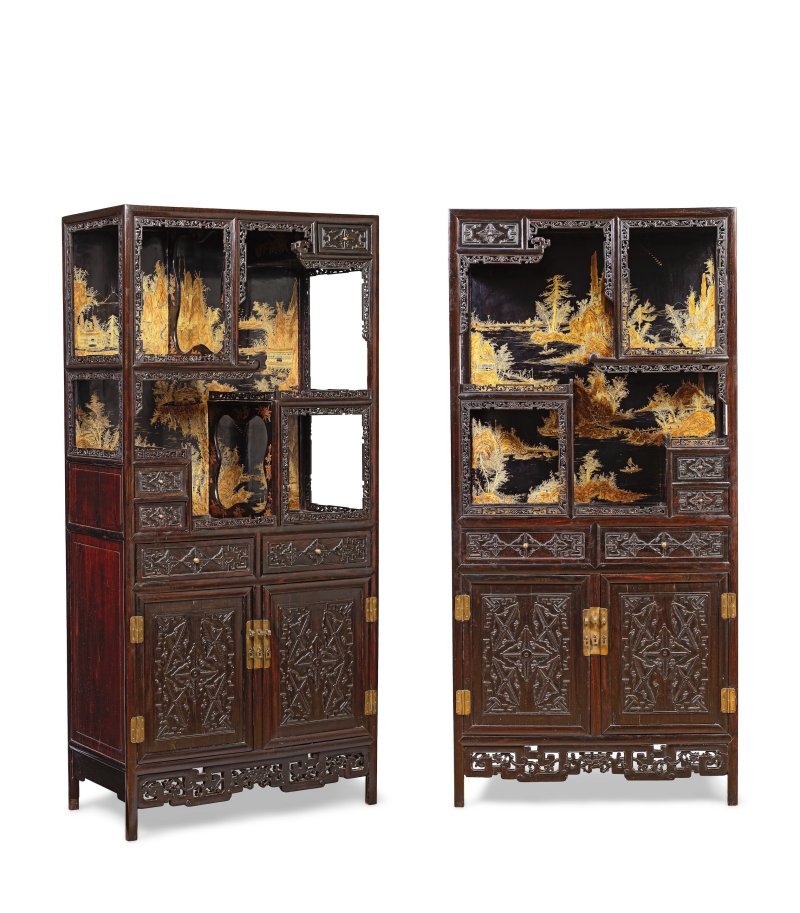
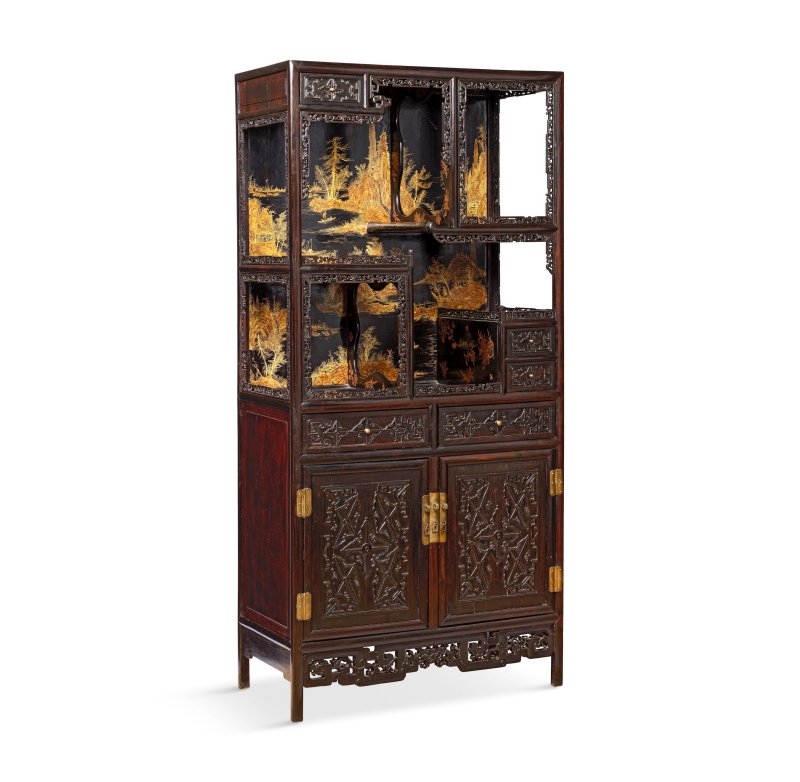
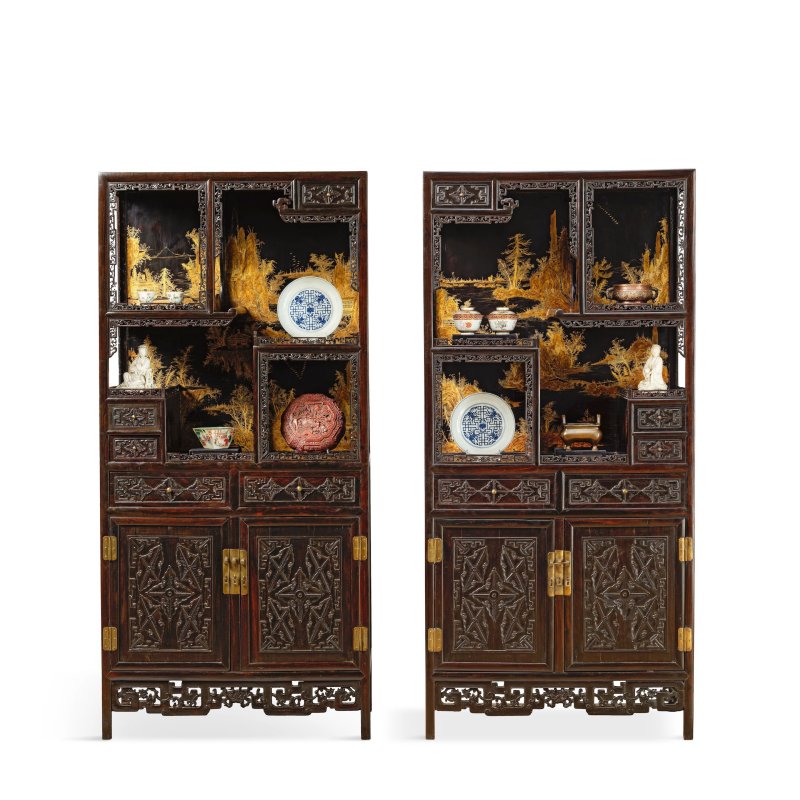
清乾隆/嘉慶 紫檀拼硬木髹金漆山水圖亮格櫃一對 | A MAGNIFICENT AND RARE PAIR OF GILT-LACQUERED ZITAN AND HARDWOOD DISPLAY CABINETS, DUOBAO'GE
年代
Qianlong/Jiaqing
起拍价
GBP 60,000
估值区间
GBP 60000 - 100000
尺寸
未知
品相
未知
更多信息
Qianlong/Jiaqing
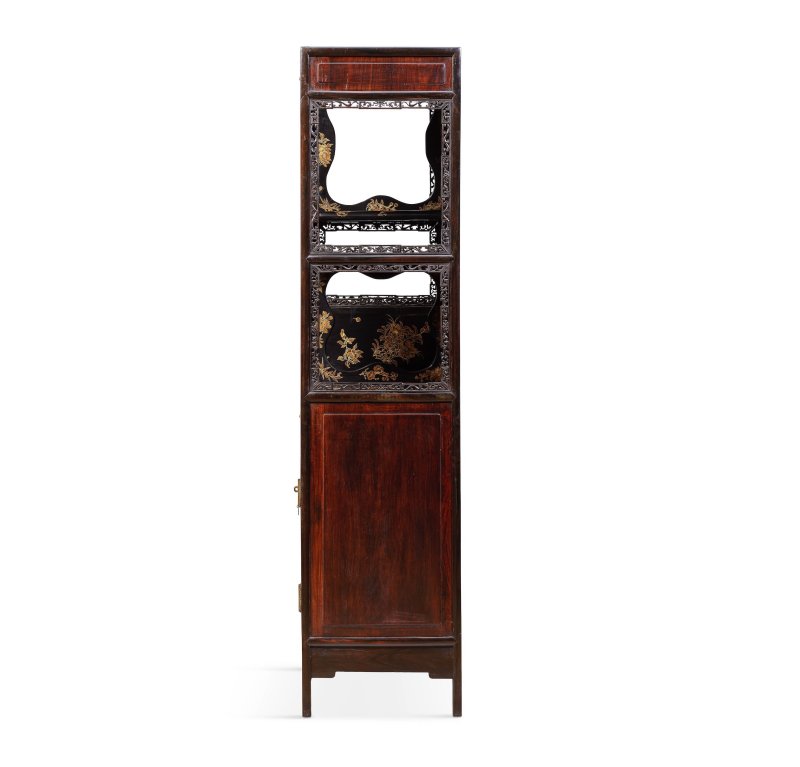
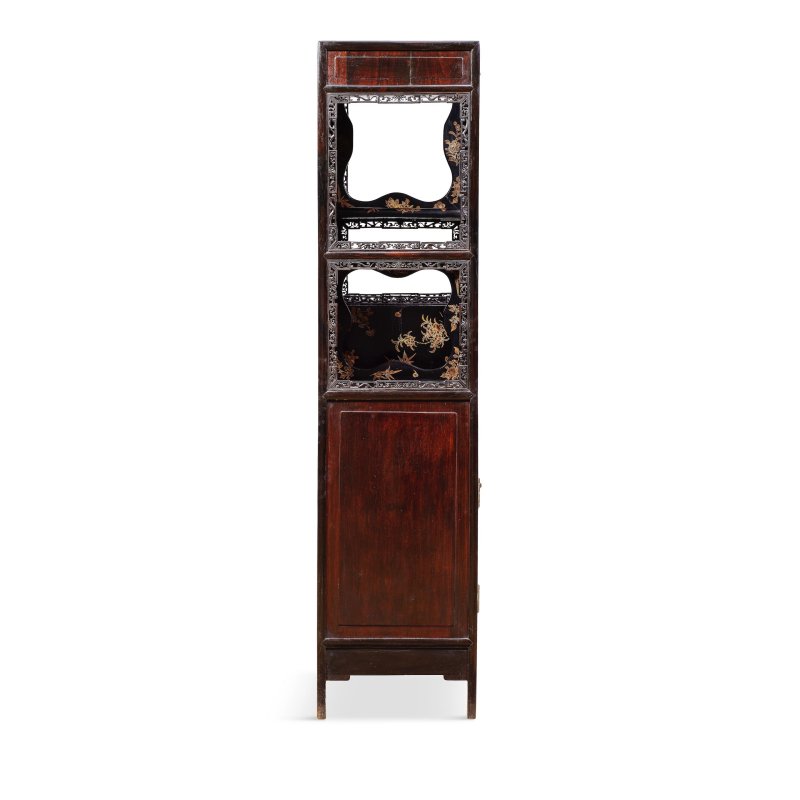
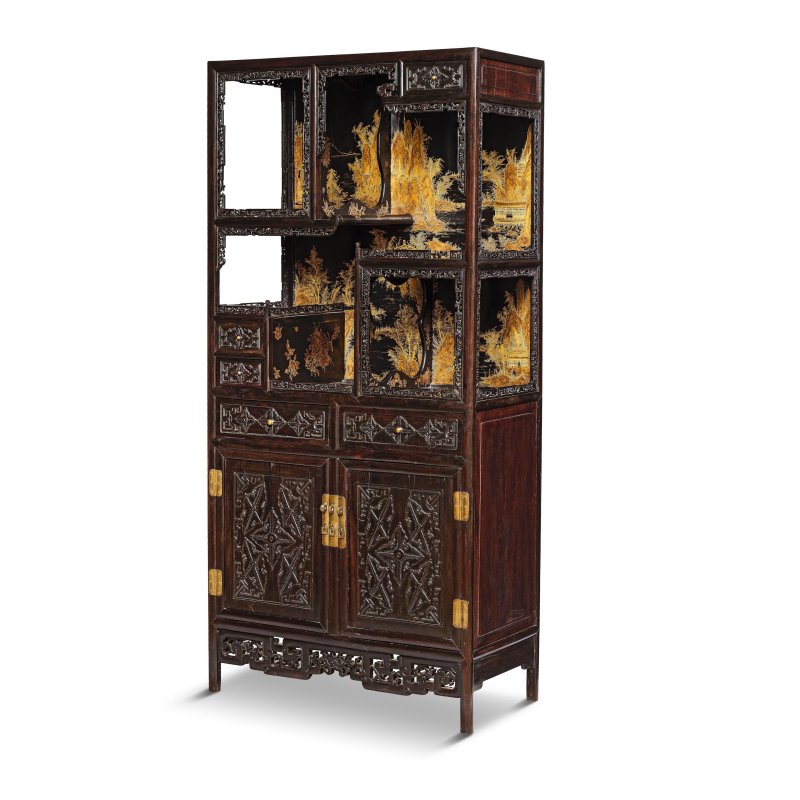
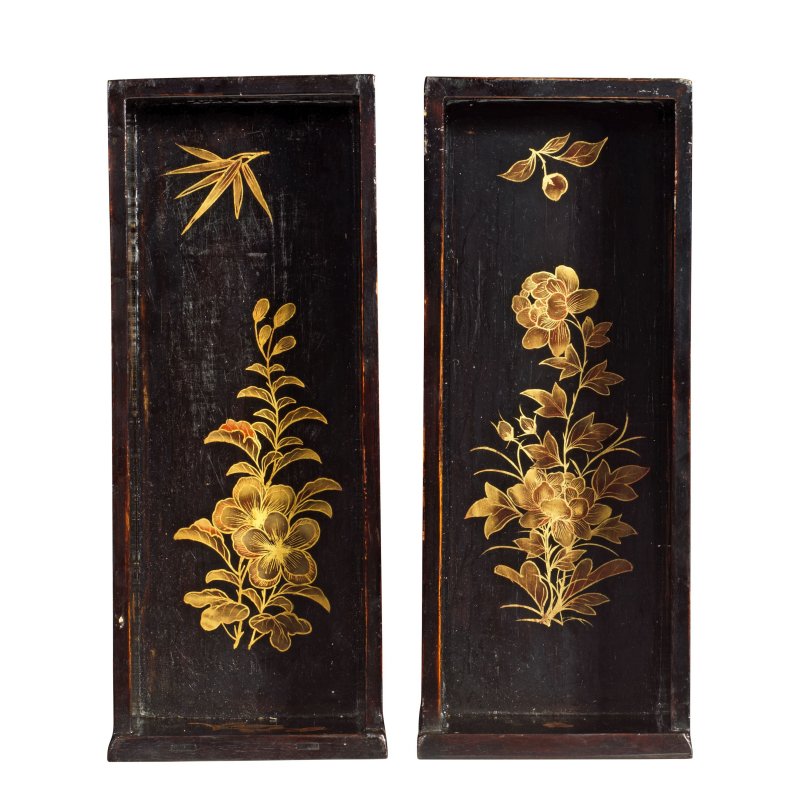
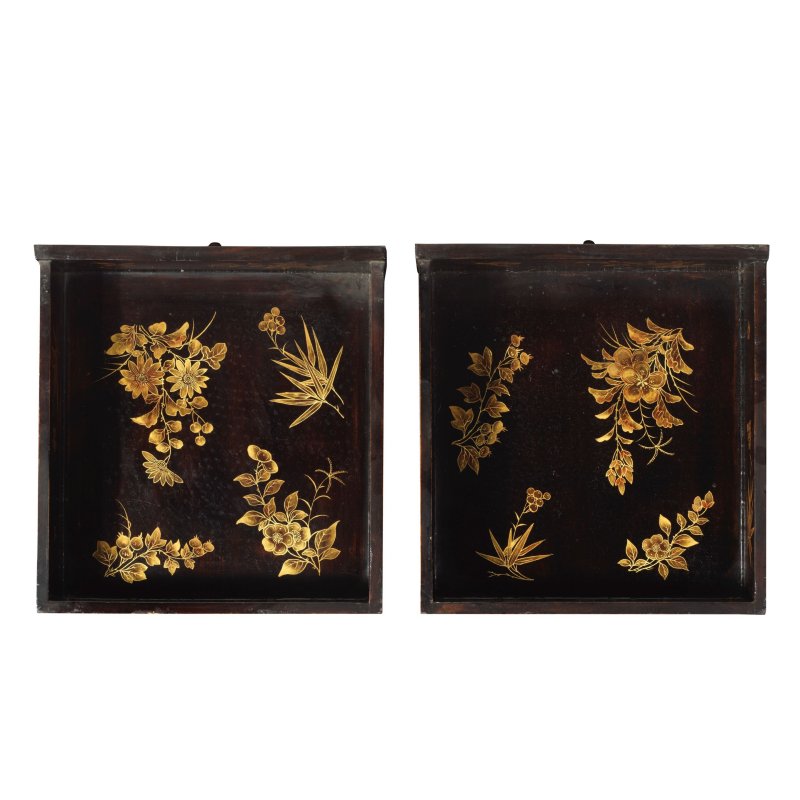
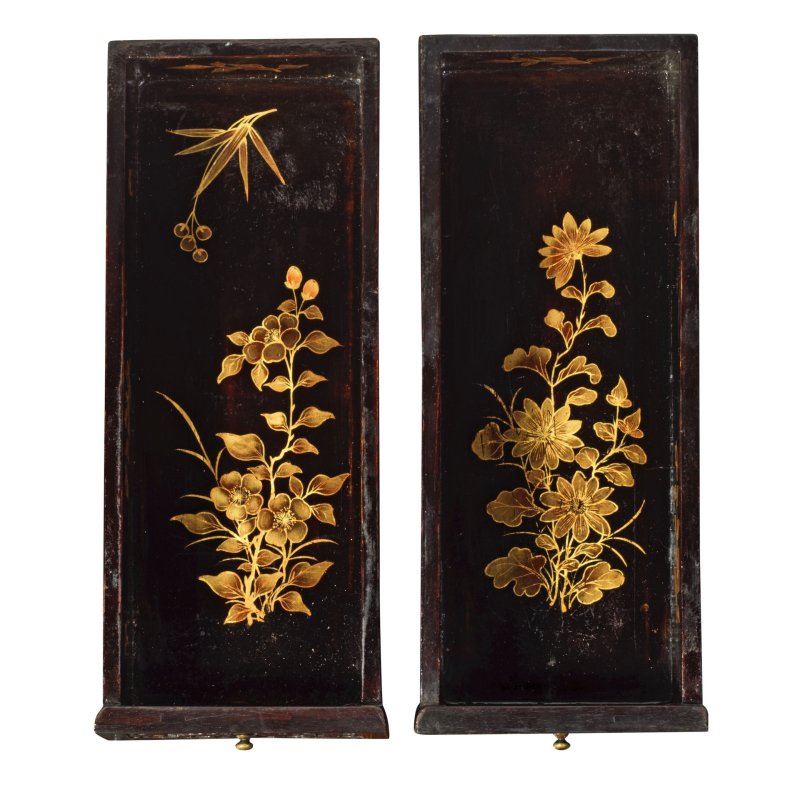
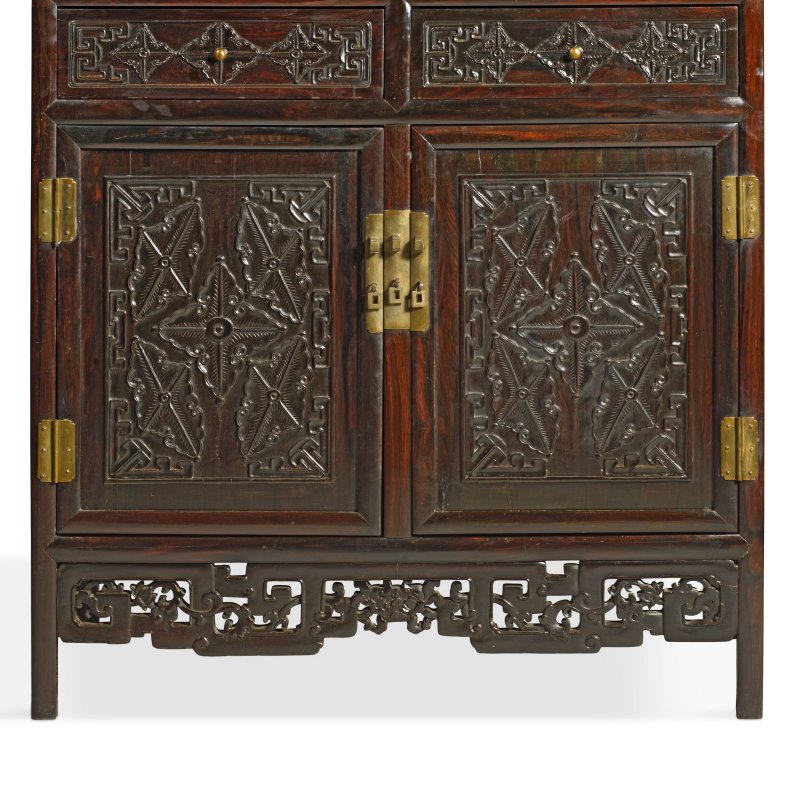
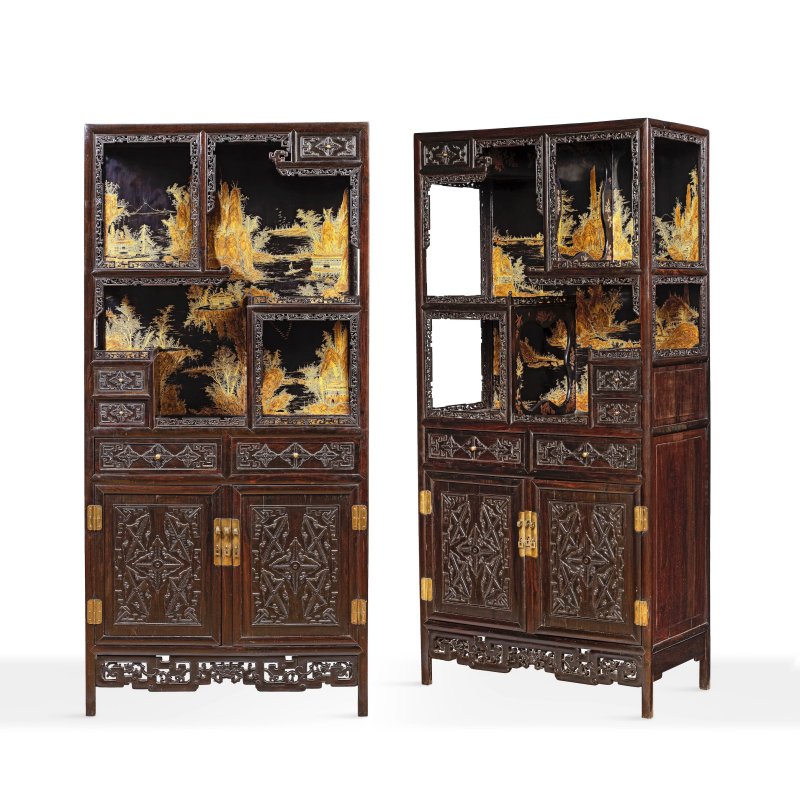
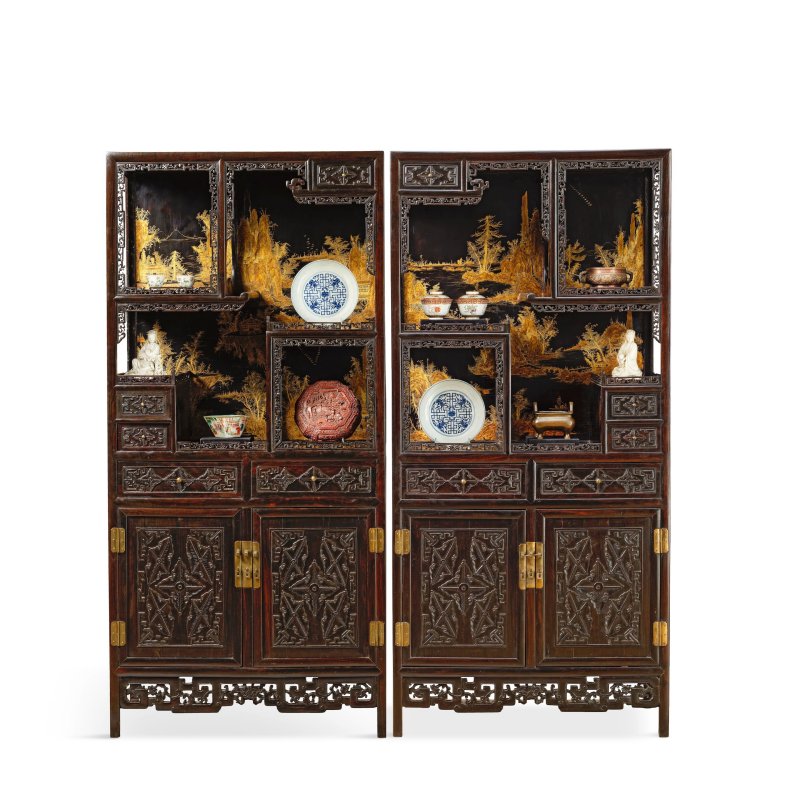
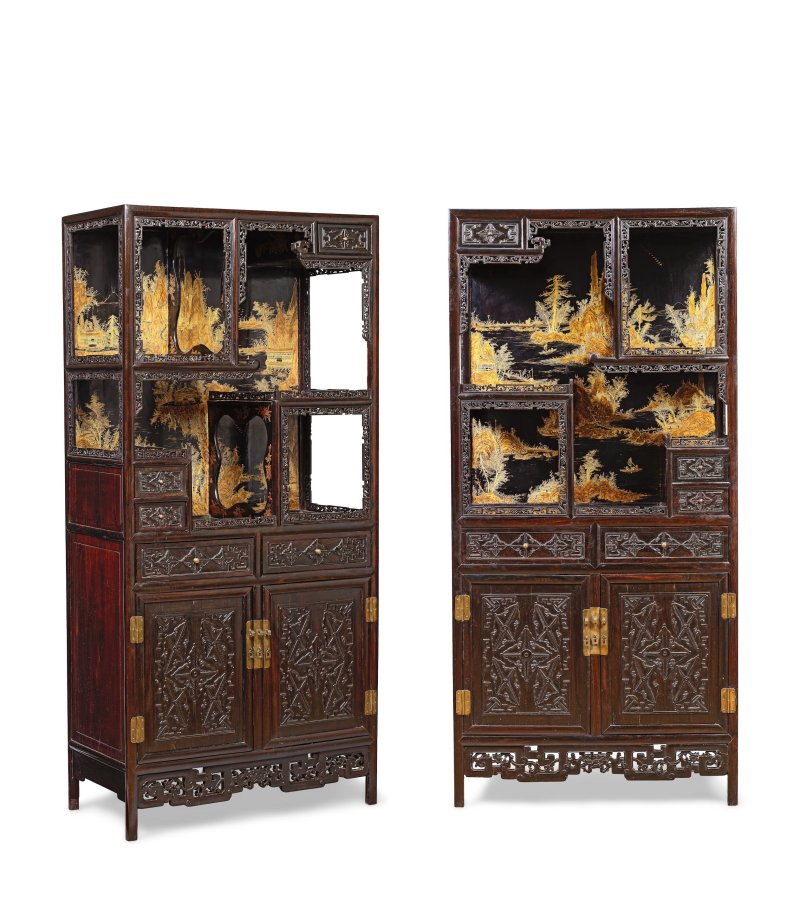
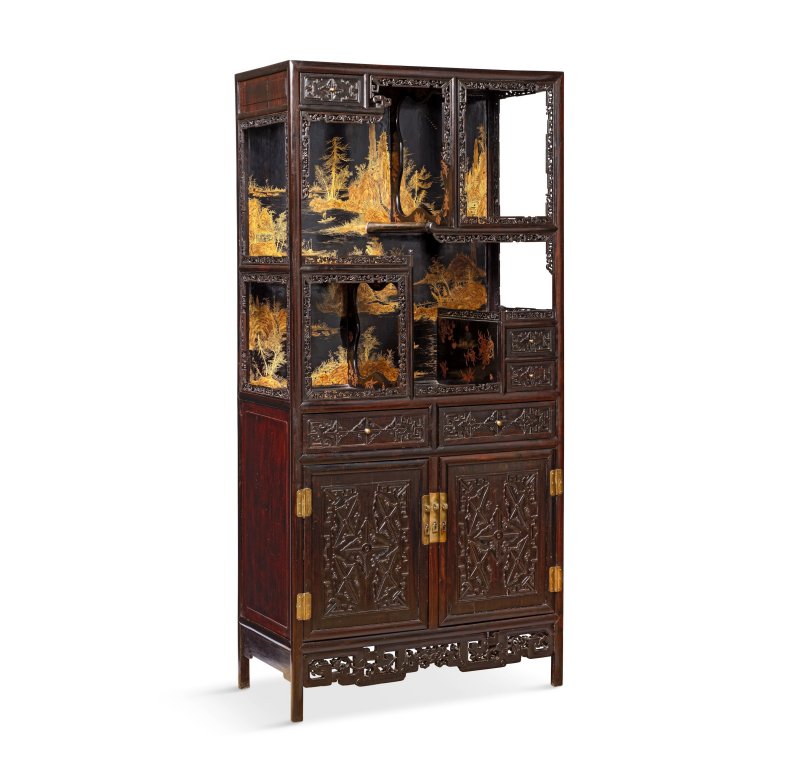
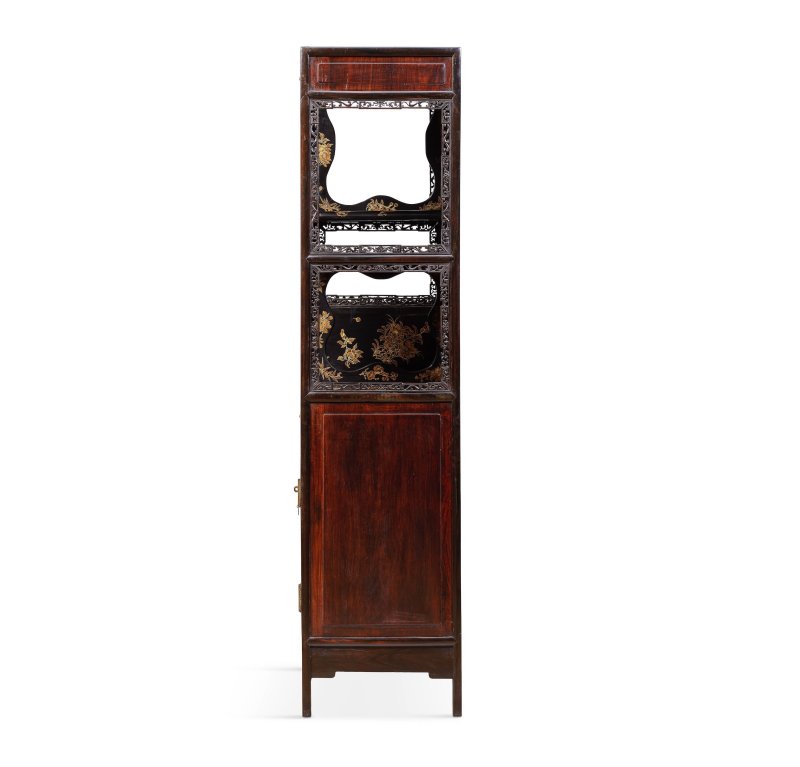
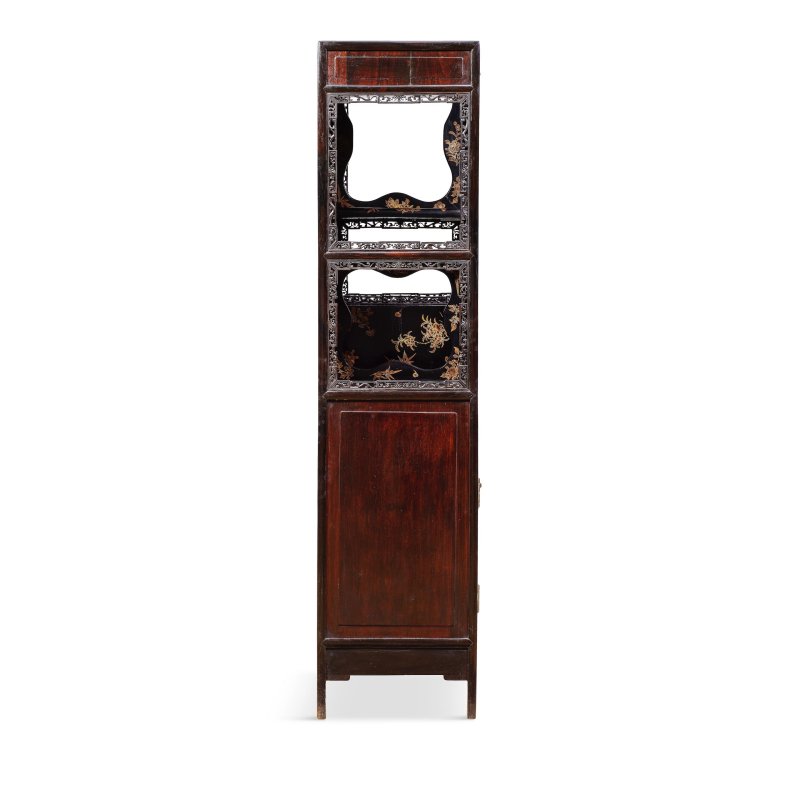
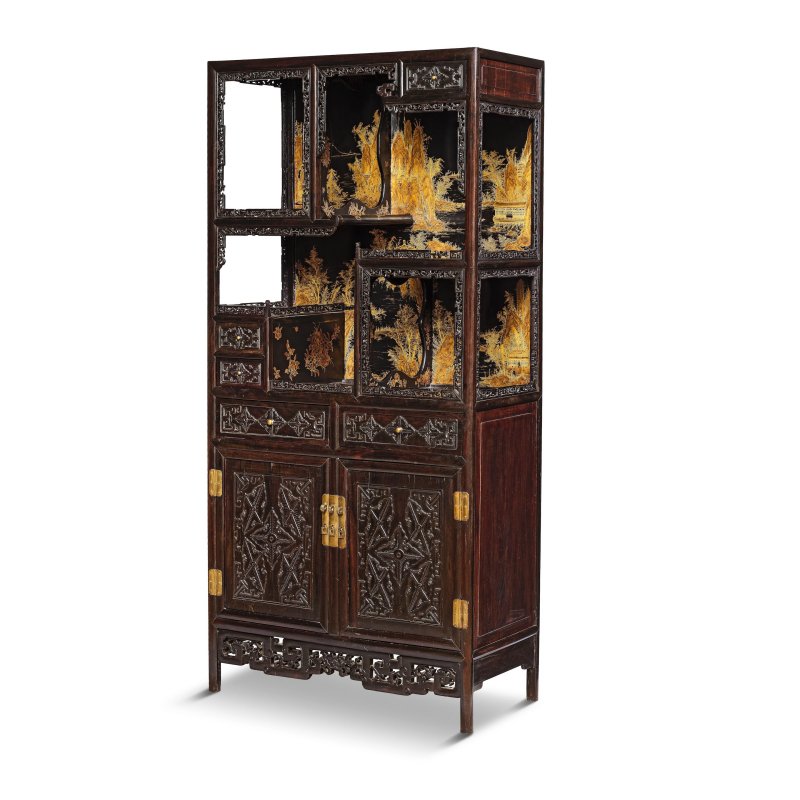
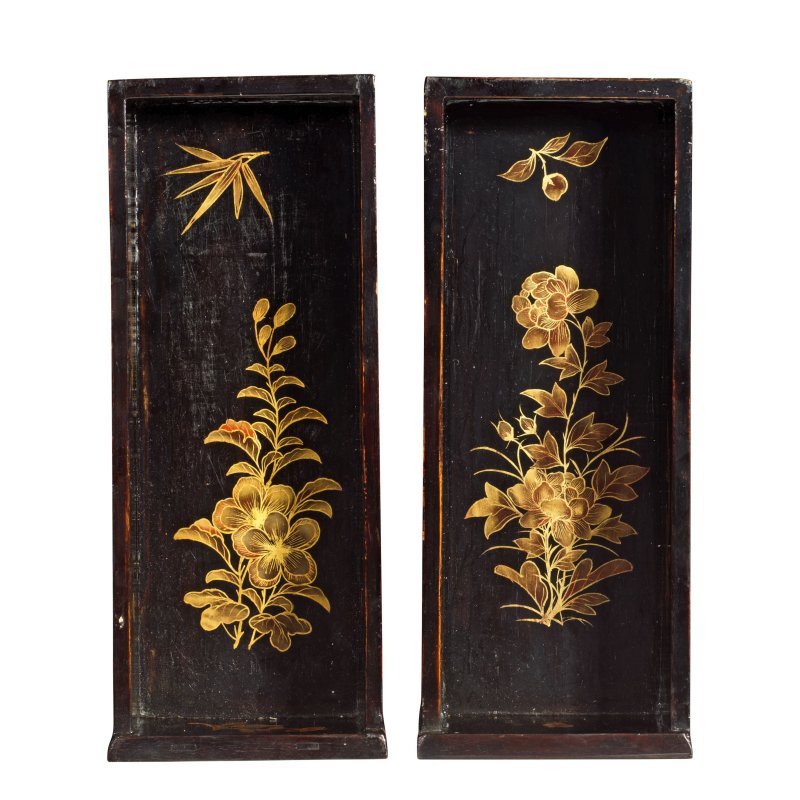
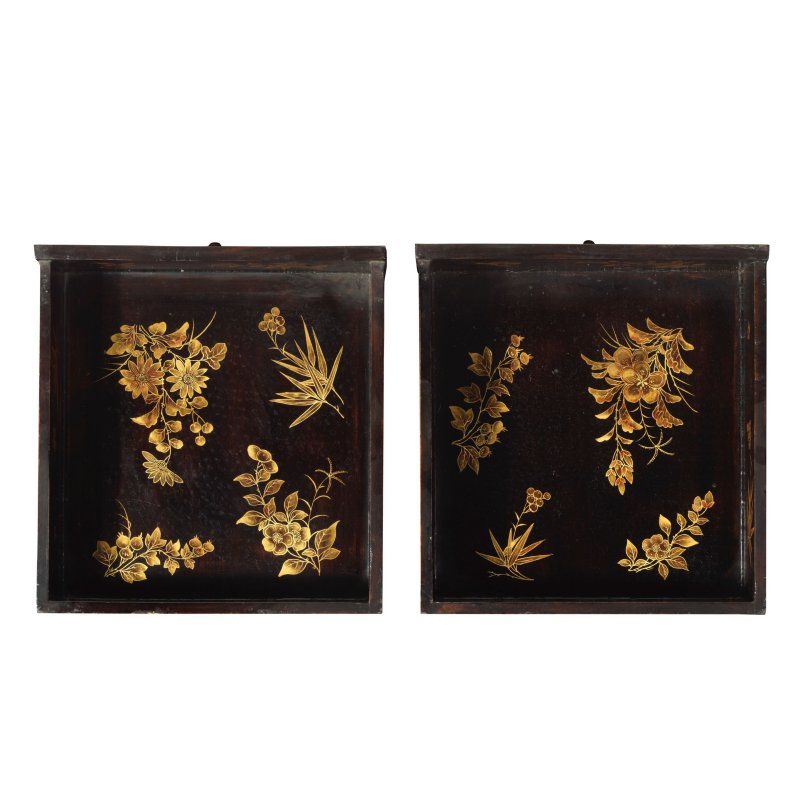
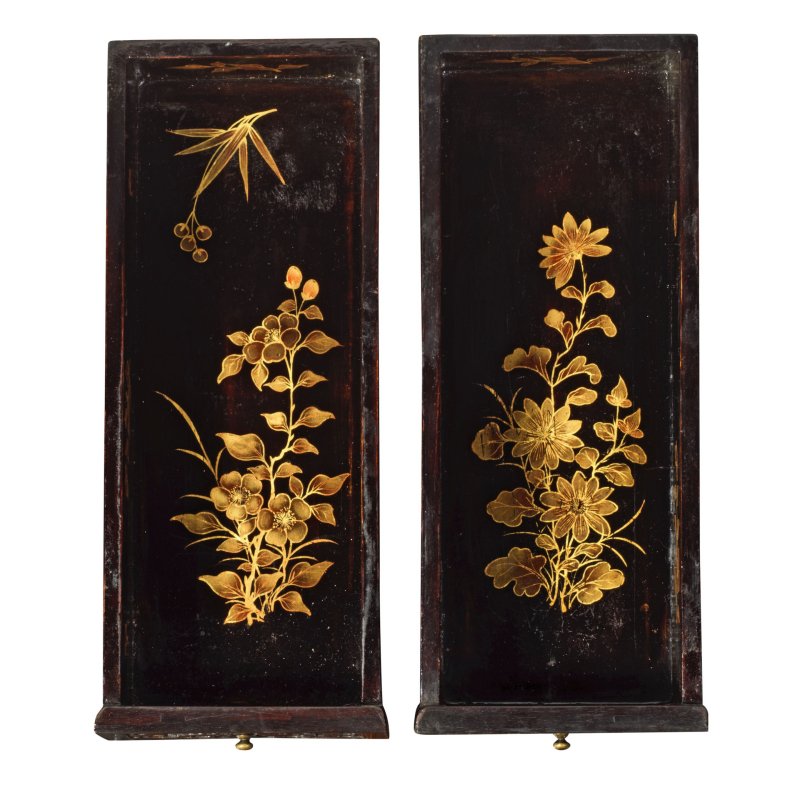
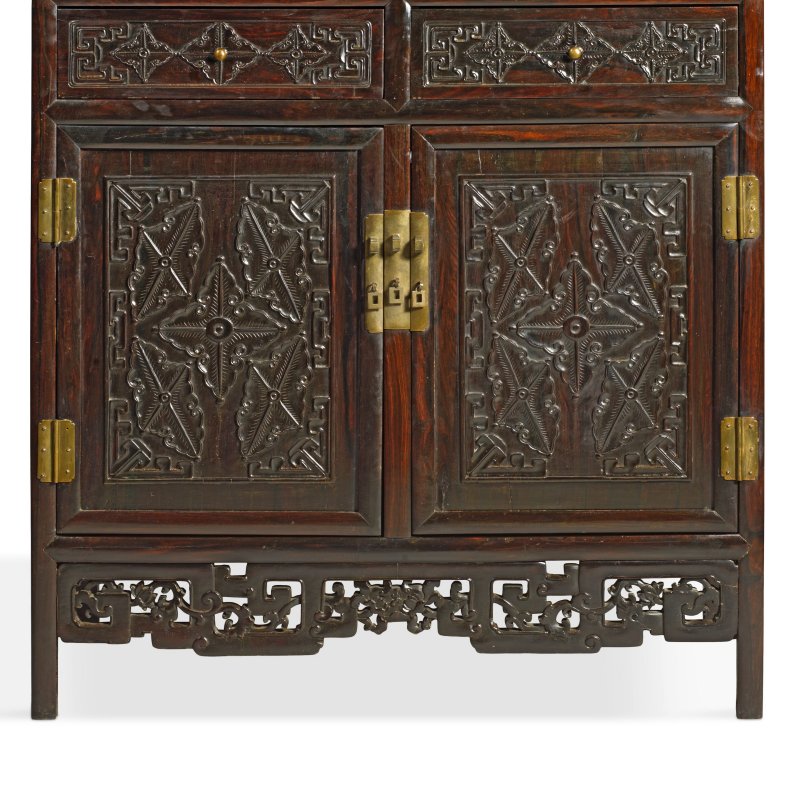
Each cabinet shaped in mirror image, the top section divided into open compartments of various forms and sizes, with three drawers across opposite corners, the openings framed by openwork friezes carved with floral scrolls, the back panel vividly painted in gilt on black lacquer to depict an expansive watery landscape scene, with a lush mountainous riverscape animated by boats and settlements, the shelves and drawer interiors delicately painted in gilt with red highlights with flowering branches, all above a lower section comprising two drawers above a pair of double-door cabinets intricately carved in relief on each door with radiating stylised plantain leaves arranged in a four-lobed floret, the five drawer-fronts similarly decorated, raised on square feet connected by an apron carved with rectilinear scroll woven with lotus branches, gilt hinges and lock plates, the wood with a rich brown grain suffused with amber red. Each 178.5cm (70 1/4in) high x 84.7cm (33 3/8in) wide x 42.5cm (16 3/4in) deep. (2).
Footnotes
清乾隆/嘉慶 紫檀拼硬木髹金漆山水圖亮格櫃一對
Provenance: Evaristo Caretti (1879-1955), China and Italy, and thence by descent
Noted in a valuation conducted by Robert Kleiner in 1988, stating it was acquired in Beijing in 1924
Evaristo Caretti (1879-1955),中國及意大利,並由後人保存迄今
Robert Kleiner于1988年所作的評估中曾提及,此件拍品于1924年獲得于北京
The present pair of cabinets are notable for the exceptionally fine quality of the carving, the use of richly figured wood, and the lavish gilt-lacquer decoration, combining precious materials and elaborate craftsmanship to a dazzling effect. See a related veneered , and lacquer display and book cabinet, late Qing dynasty, illustrated by Tian Jiaqing, , Hong Kong, 1995, pp.236-237, no.107.
(多寶格), literally 'multiple-treasure cabinets', developed during the Qing dynasty from earlier forms of Chinese display furniture, including the of the Ming dynasty. In Qing palace inventories and archives, such cabinets were often described as (博古書格), literally 'cabinets for displaying antiquities and books', reflecting their dual function: the open compartments provided a setting for the display of antiquities and scholar's objects, while the enclosed lower sections were used to store books, scrolls and other possessions.
The Imperial Household Department archives contain numerous references to the design and production of such cabinets, including discussions by the Yongzheng and Qianlong Emperors concerning their form and decoration. The taste for lacquer, particularly Japanese lacquer, was also evident at the Qing Court. Both the Kangxi and Yongzheng Emperors showed a marked appreciation for Japanese lacquerware, and objects produced for the Court during their reigns also incorporated techniques and decorative styles derived from Japanese prototypes. See for example, a related display cabinet with gilt-lacquer decoration, mid-Qing dynasty, in the Qing Court Collection, illustrated in , Hong Kong, 2002, p.270, no.229. The combination of richly figured , black-and-gilt lacquer and elaborate openwork carving as seen on the present pair reflects this broader Qing taste for combining precious materials and diverse decorative traditions within the scholar's interior.
The carved decoration of quatrefoil -shaped plantain leaves is particularly rare, the highly symmetrical arrangement and geometric conception being markedly unusual within the vocabulary of Chinese furniture ornament. At the centre is a four-pronged leaf form, surrounded diagonally by four further elongated, quatre-lobed plantain leaves, creating a distinctive rotational composition with an almost Islamic character. The design may reflect the influence of Mughal jade carving at the Qing Court, where four-petalled and open-flower forms, together with elaborate foliate ornament, provided a distinctive vocabulary of ornament. Compare, for example, the base of a Mughal jade foliate bowl, carved with a four-petalled flower, illustrated in , Taipei, 2007, p.75, no.67; and p.126, no.152. Such forms may have provided an inspiration for the assimilation of Mughal floral and geometric vocabulary into Qing decorative arts, here imaginatively combined with the traditional Chinese motif of the plantain leaf. See also a jade vase, Qianlong six-character mark and of the period, with related geometric designs, illustrated in , London, 1992, no.81.
Compare with a similar single gilt-lacquered and hardwood display cabinet, 18th/19th century, which was sold at Christie's London, 11 May 2016, lot 369. Another similar gilt-lacquered display cabinet, 18th century, was sold at Christie's Hong Kong, 29 May 2007, lot 1398.
Each cabinet shaped in mirror image, the top section divided into open compartments of various forms and sizes, with three drawers across opposite corners, the openings framed by openwork friezes carved with floral scrolls, the back panel vividly painted in gilt on black lacquer to depict an expansive watery landscape scene, with a lush mountainous riverscape animated by boats and settlements, the shelves and drawer interiors delicately painted in gilt with red highlights with flowering branches, all above a lower section comprising two drawers above a pair of double-door cabinets intricately carved in relief on each door with radiating stylised plantain leaves arranged in a four-lobed floret, the five drawer-fronts similarly decorated, raised on square feet connected by an apron carved with rectilinear scroll woven with lotus branches, gilt hinges and lock plates, the wood with a rich brown grain suffused with amber red. Each 178.5cm (70 1/4in) high x 84.7cm (33 3/8in) wide x 42.5cm (16 3/4in) deep. (2).
Footnotes
清乾隆/嘉慶 紫檀拼硬木髹金漆山水圖亮格櫃一對
Provenance: Evaristo Caretti (1879-1955), China and Italy, and thence by descent
Noted in a valuation conducted by Robert Kleiner in 1988, stating it was acquired in Beijing in 1924
Evaristo Caretti (1879-1955),中國及意大利,並由後人保存迄今
Robert Kleiner于1988年所作的評估中曾提及,此件拍品于1924年獲得于北京
The present pair of cabinets are notable for the exceptionally fine quality of the carving, the use of richly figured wood, and the lavish gilt-lacquer decoration, combining precious materials and elaborate craftsmanship to a dazzling effect. See a related veneered , and lacquer display and book cabinet, late Qing dynasty, illustrated by Tian Jiaqing, , Hong Kong, 1995, pp.236-237, no.107.
(多寶格), literally 'multiple-treasure cabinets', developed during the Qing dynasty from earlier forms of Chinese display furniture, including the of the Ming dynasty. In Qing palace inventories and archives, such cabinets were often described as (博古書格), literally 'cabinets for displaying antiquities and books', reflecting their dual function: the open compartments provided a setting for the display of antiquities and scholar's objects, while the enclosed lower sections were used to store books, scrolls and other possessions.
The Imperial Household Department archives contain numerous references to the design and production of such cabinets, including discussions by the Yongzheng and Qianlong Emperors concerning their form and decoration. The taste for lacquer, particularly Japanese lacquer, was also evident at the Qing Court. Both the Kangxi and Yongzheng Emperors showed a marked appreciation for Japanese lacquerware, and objects produced for the Court during their reigns also incorporated techniques and decorative styles derived from Japanese prototypes. See for example, a related display cabinet with gilt-lacquer decoration, mid-Qing dynasty, in the Qing Court Collection, illustrated in , Hong Kong, 2002, p.270, no.229. The combination of richly figured , black-and-gilt lacquer and elaborate openwork carving as seen on the present pair reflects this broader Qing taste for combining precious materials and diverse decorative traditions within the scholar's interior.
The carved decoration of quatrefoil -shaped plantain leaves is particularly rare, the highly symmetrical arrangement and geometric conception being markedly unusual within the vocabulary of Chinese furniture ornament. At the centre is a four-pronged leaf form, surrounded diagonally by four further elongated, quatre-lobed plantain leaves, creating a distinctive rotational composition with an almost Islamic character. The design may reflect the influence of Mughal jade carving at the Qing Court, where four-petalled and open-flower forms, together with elaborate foliate ornament, provided a distinctive vocabulary of ornament. Compare, for example, the base of a Mughal jade foliate bowl, carved with a four-petalled flower, illustrated in , Taipei, 2007, p.75, no.67; and p.126, no.152. Such forms may have provided an inspiration for the assimilation of Mughal floral and geometric vocabulary into Qing decorative arts, here imaginatively combined with the traditional Chinese motif of the plantain leaf. See also a jade vase, Qianlong six-character mark and of the period, with related geometric designs, illustrated in , London, 1992, no.81.
Compare with a similar single gilt-lacquered and hardwood display cabinet, 18th/19th century, which was sold at Christie's London, 11 May 2016, lot 369. Another similar gilt-lacquered display cabinet, 18th century, was sold at Christie's Hong Kong, 29 May 2007, lot 1398.
常见问题
这件清乾隆/嘉慶 紫檀拼硬木髹金漆山水圖亮格櫃一對 | A MAGNIFICENT AND RARE PAIR OF GILT-LACQUERED ZITAN AND HARDWOOD DISPLAY CABINETS, DUOBAO'GE的成交价是多少?
落槌价为 预展中。 成交价为 预展中。


