
拍品信息
拍品名称
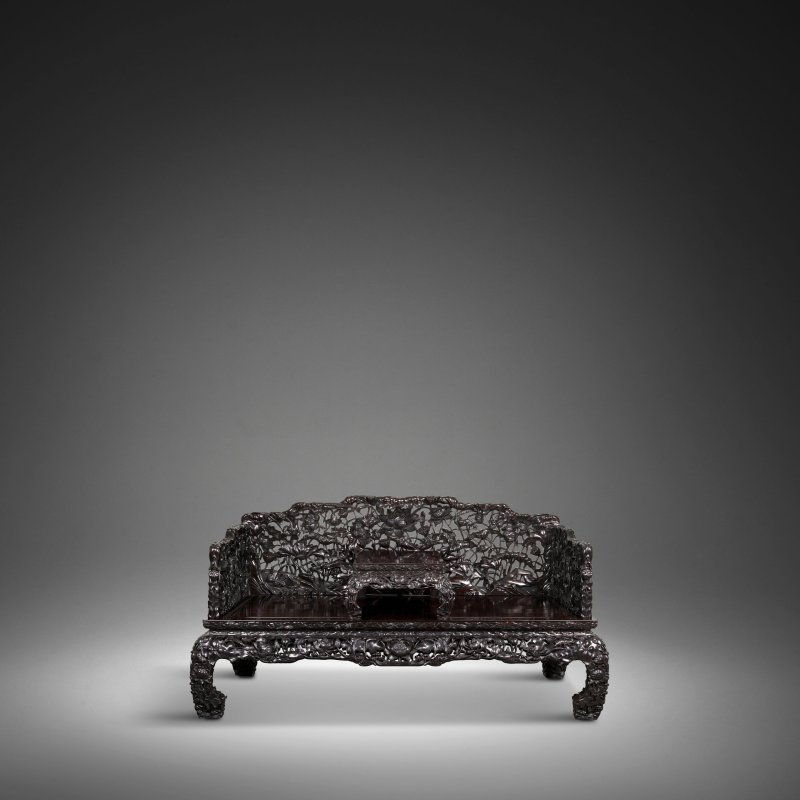
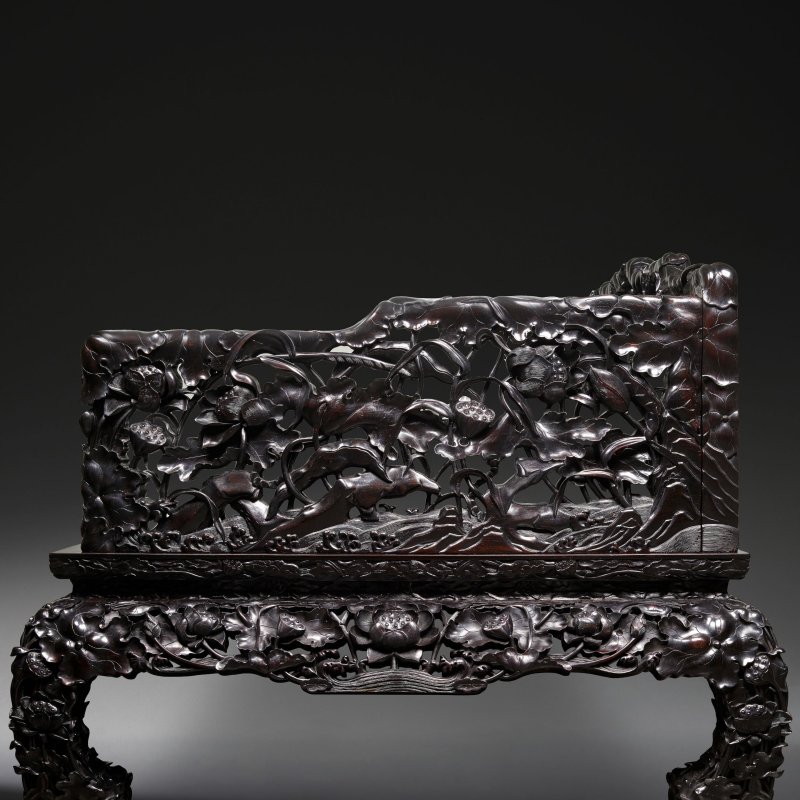
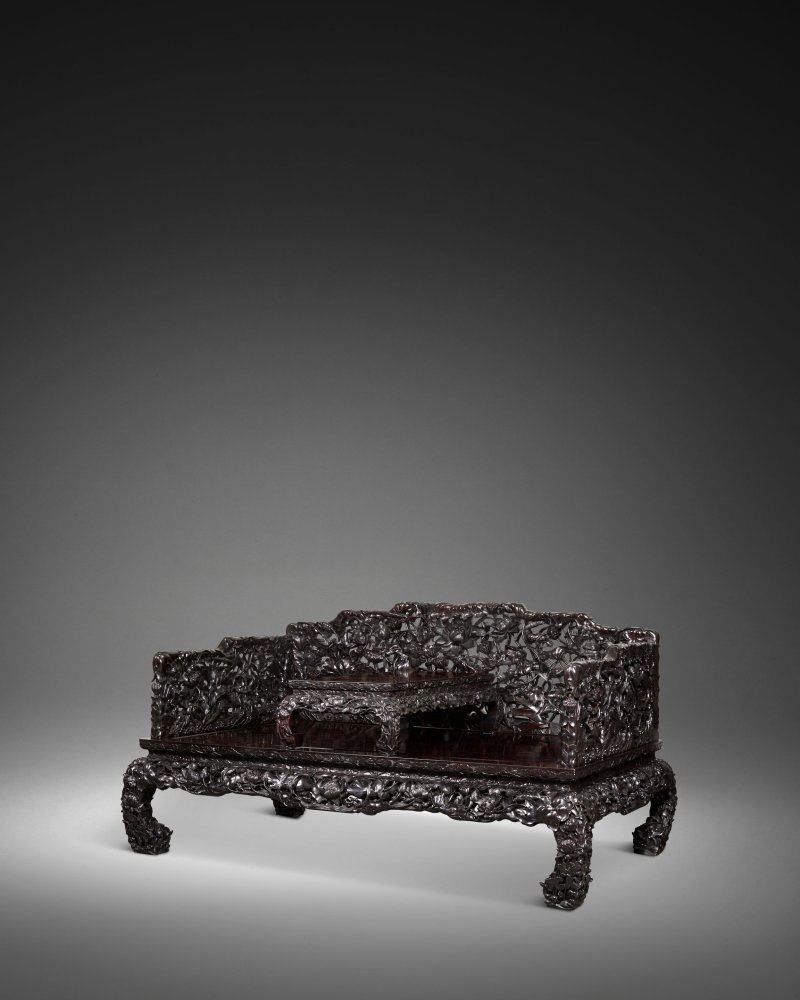
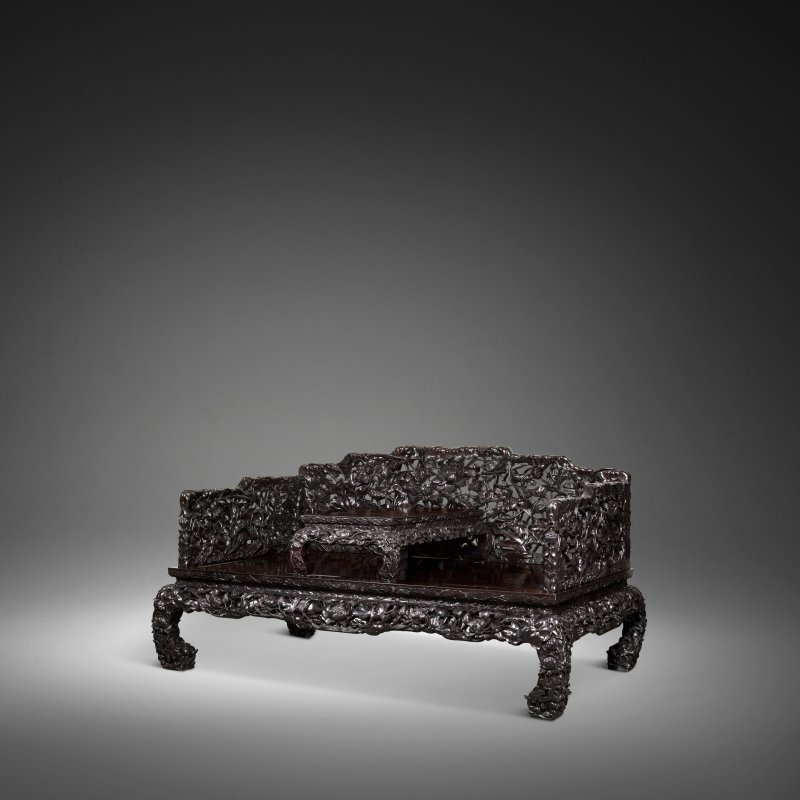
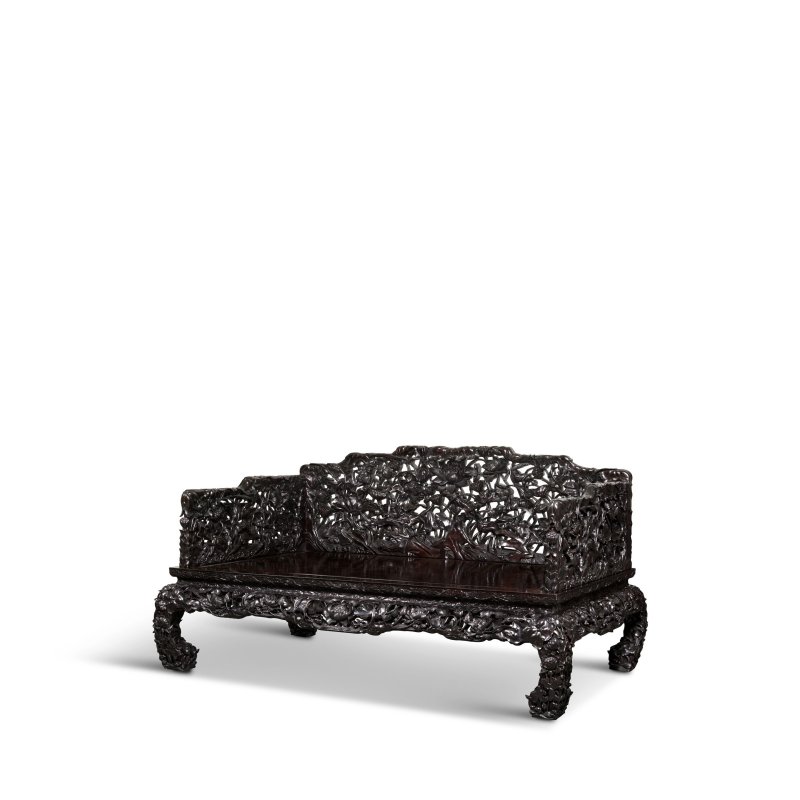
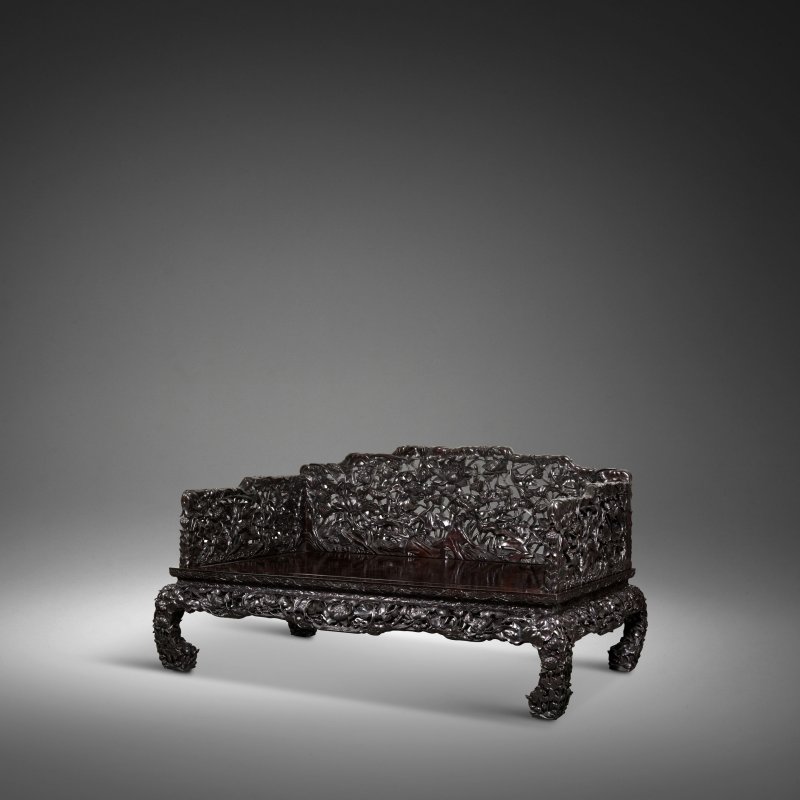
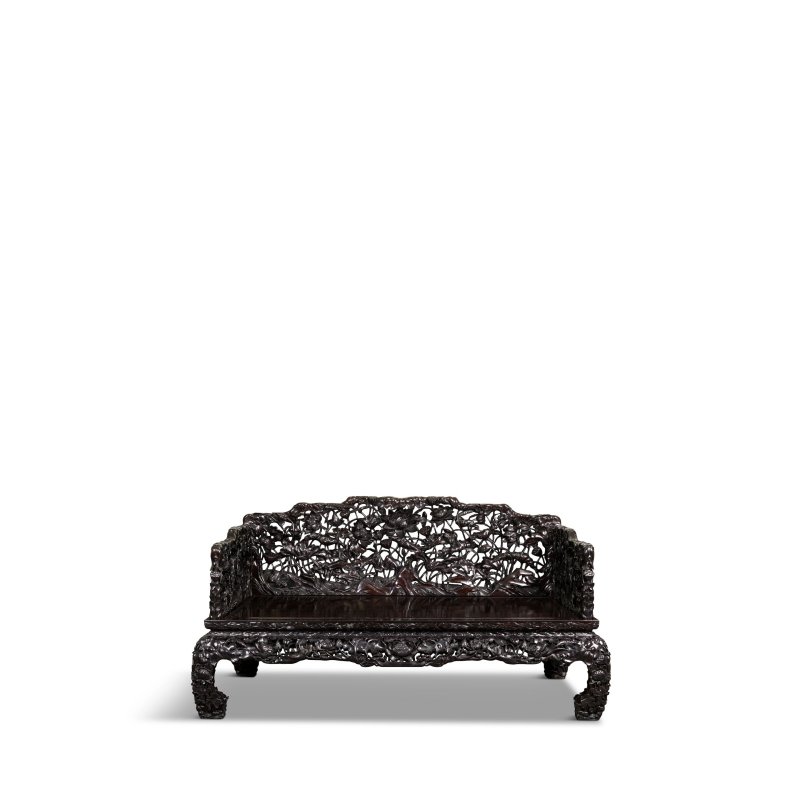
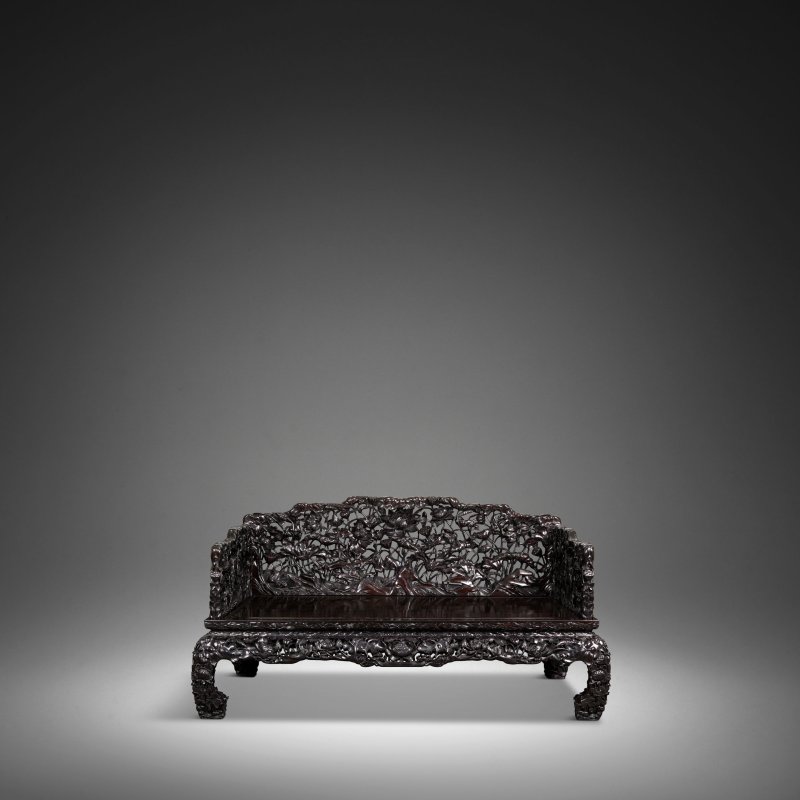
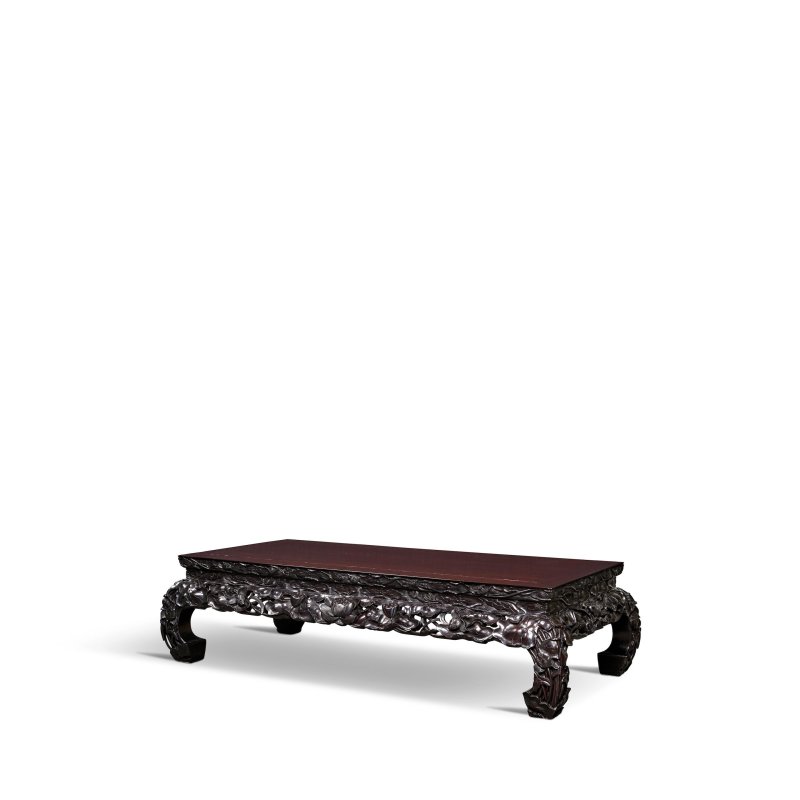
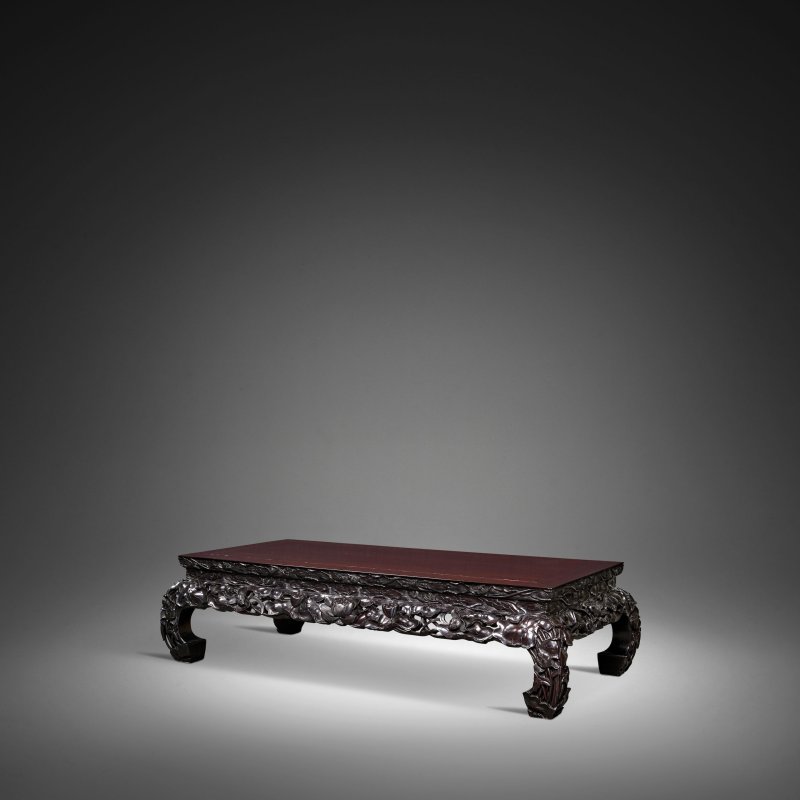
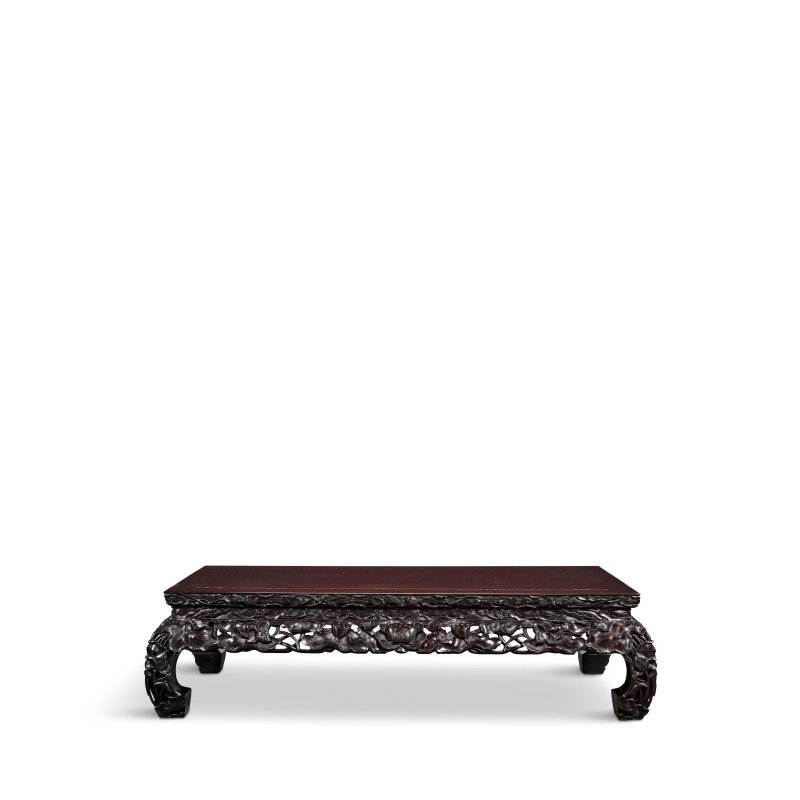
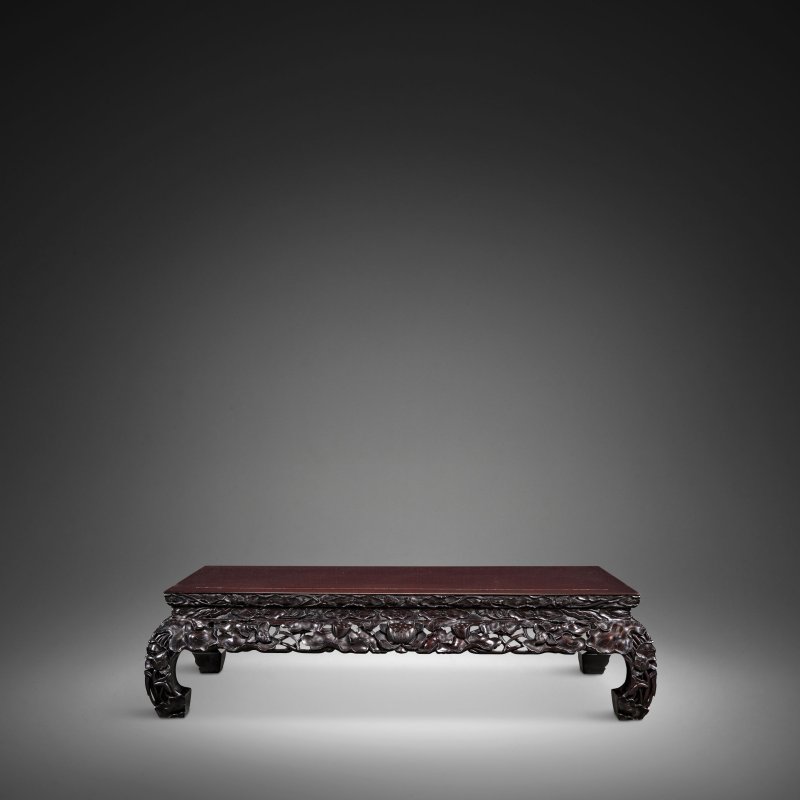
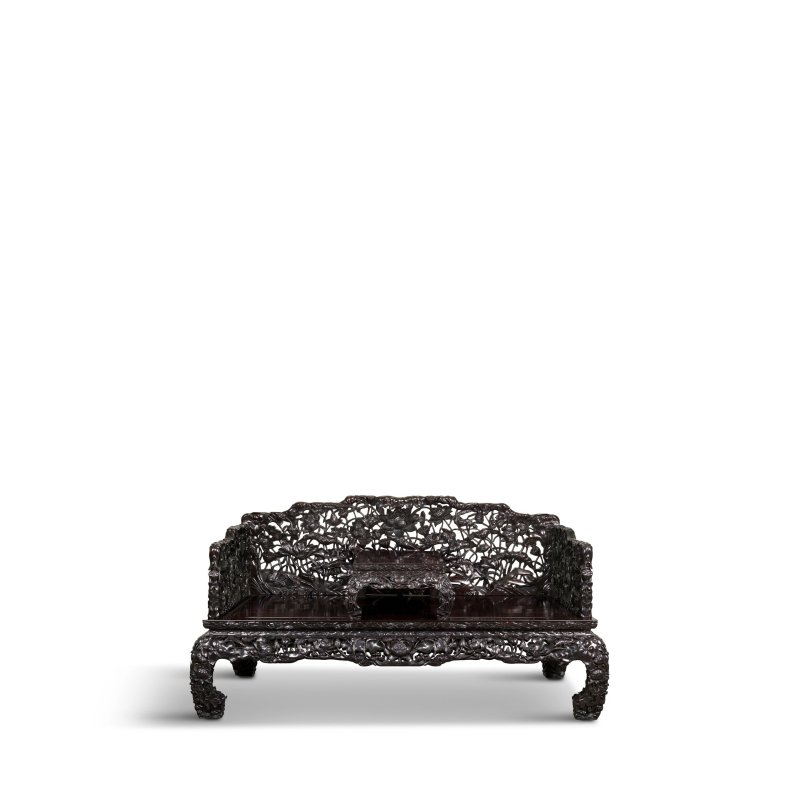
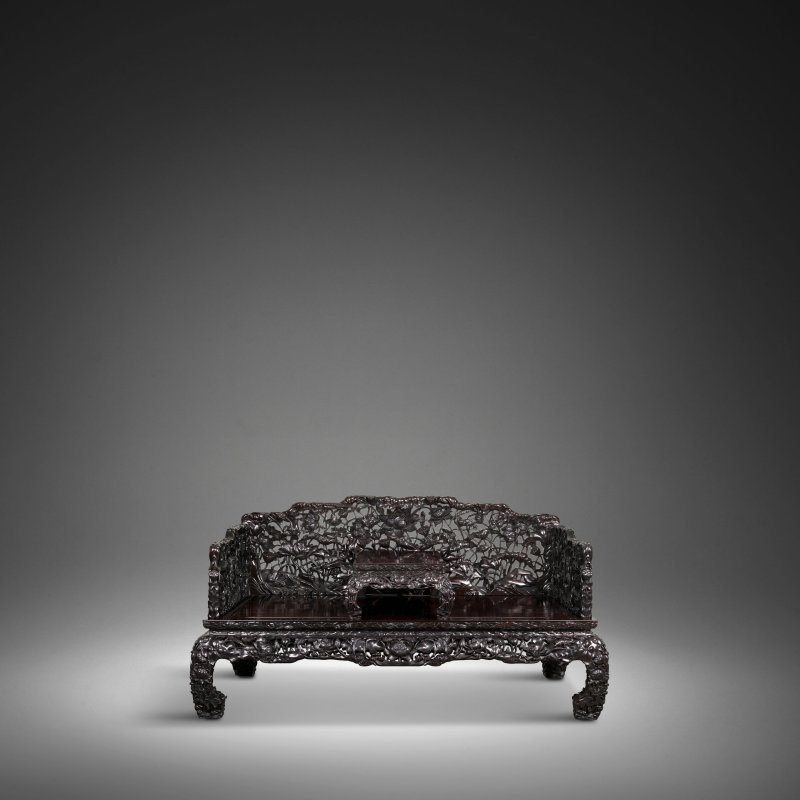
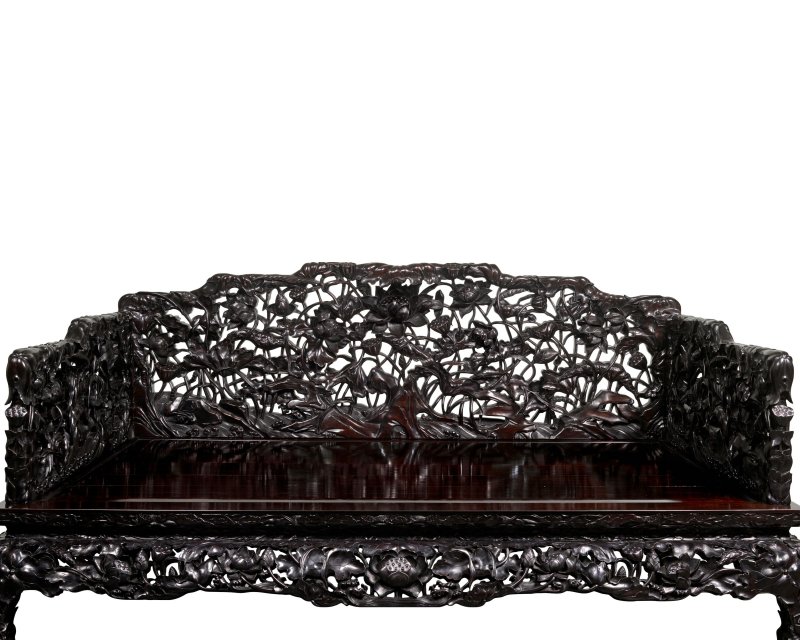
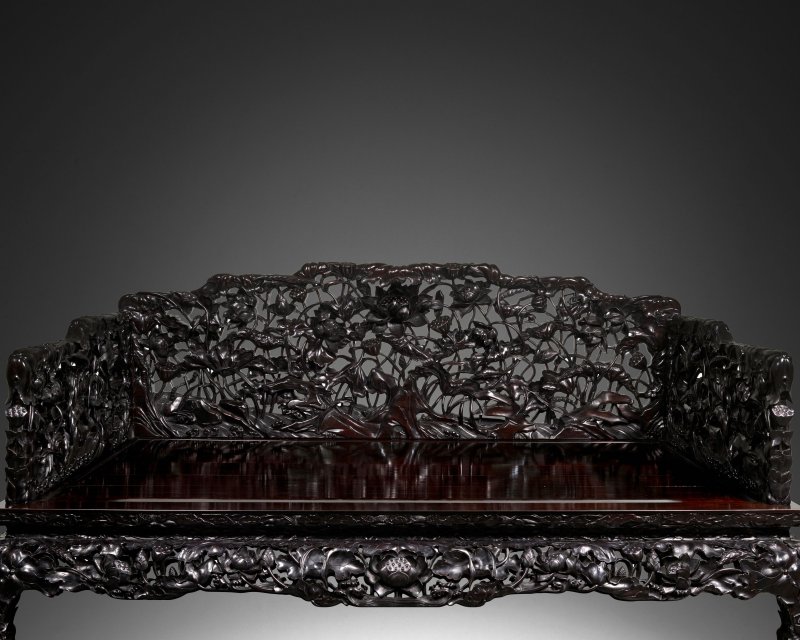
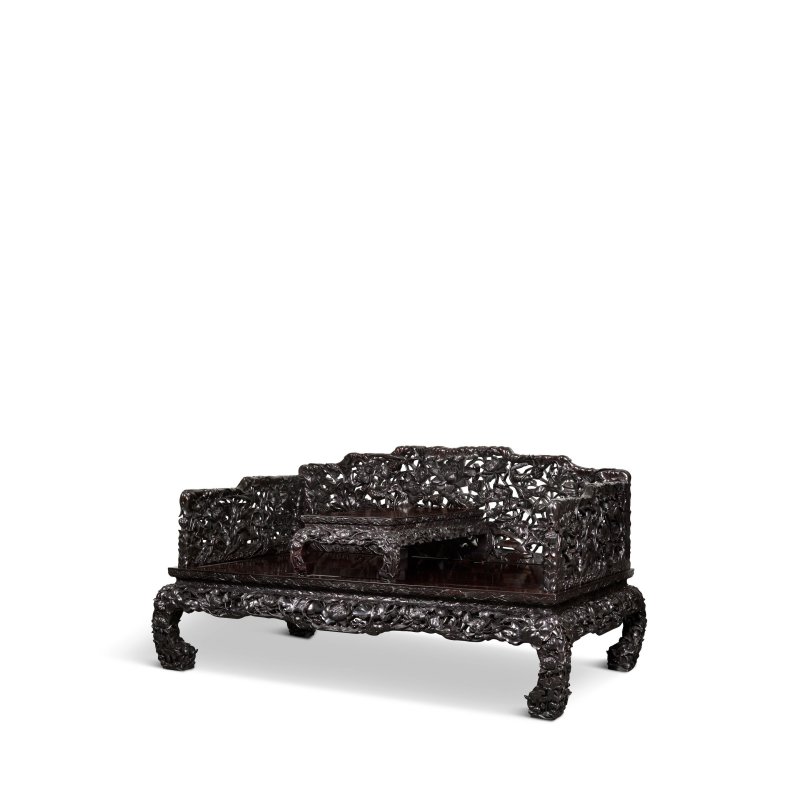
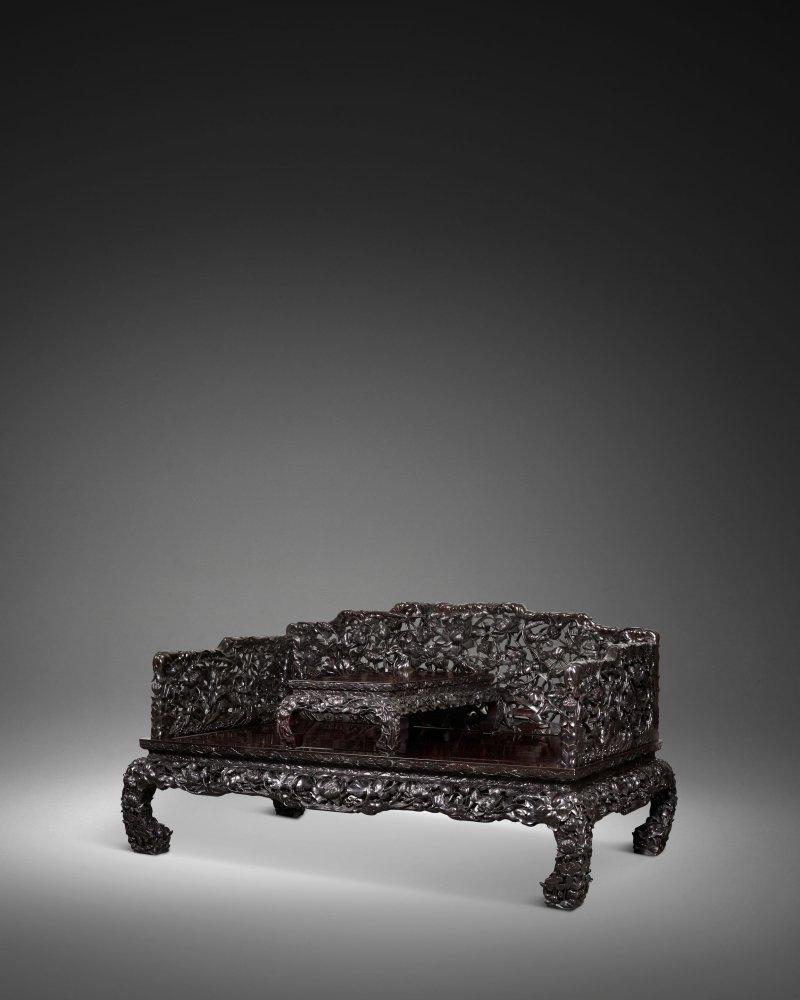
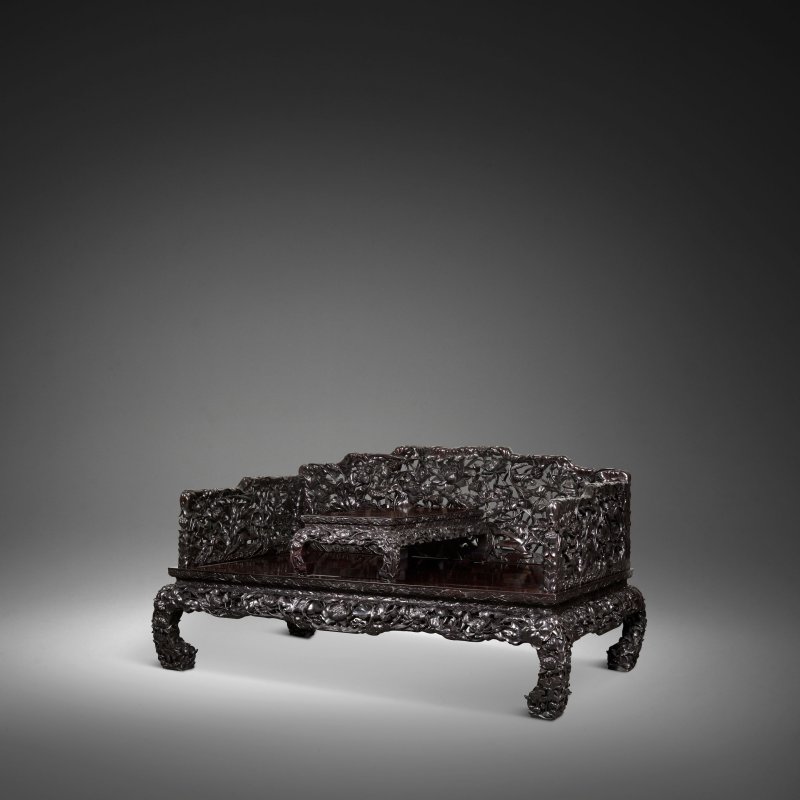
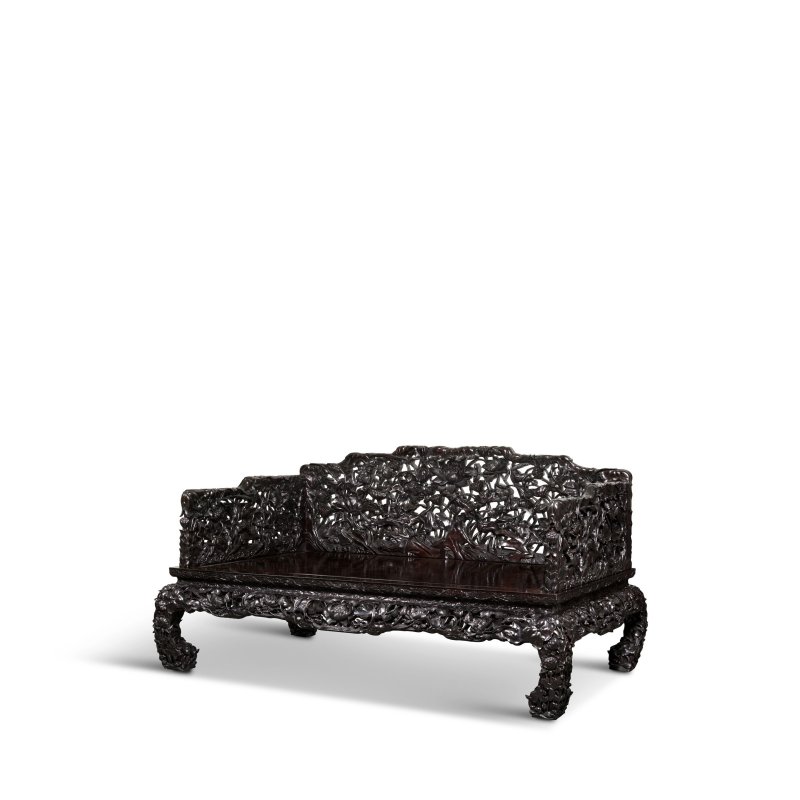
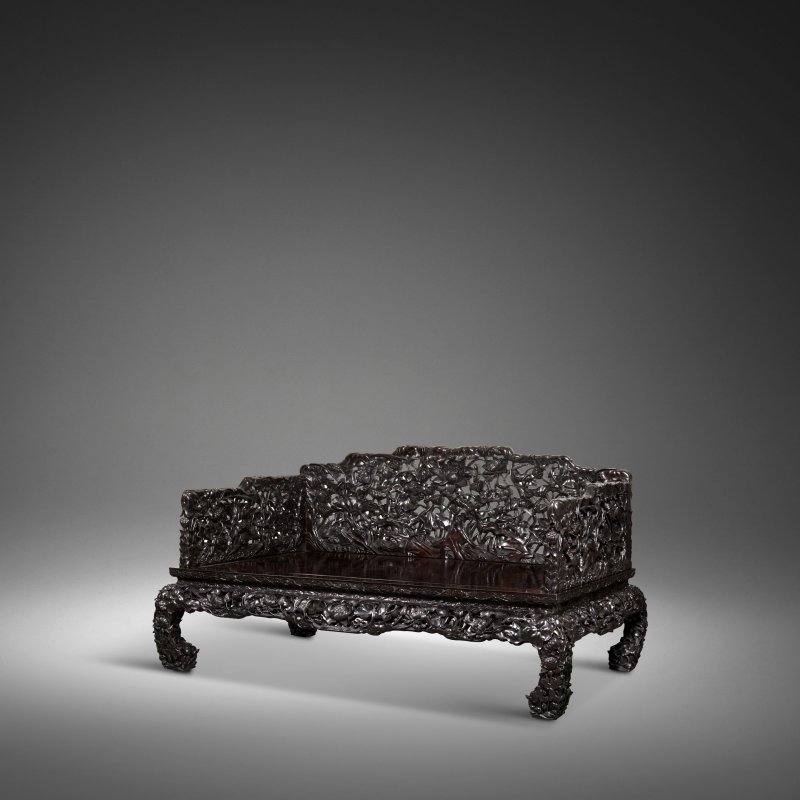
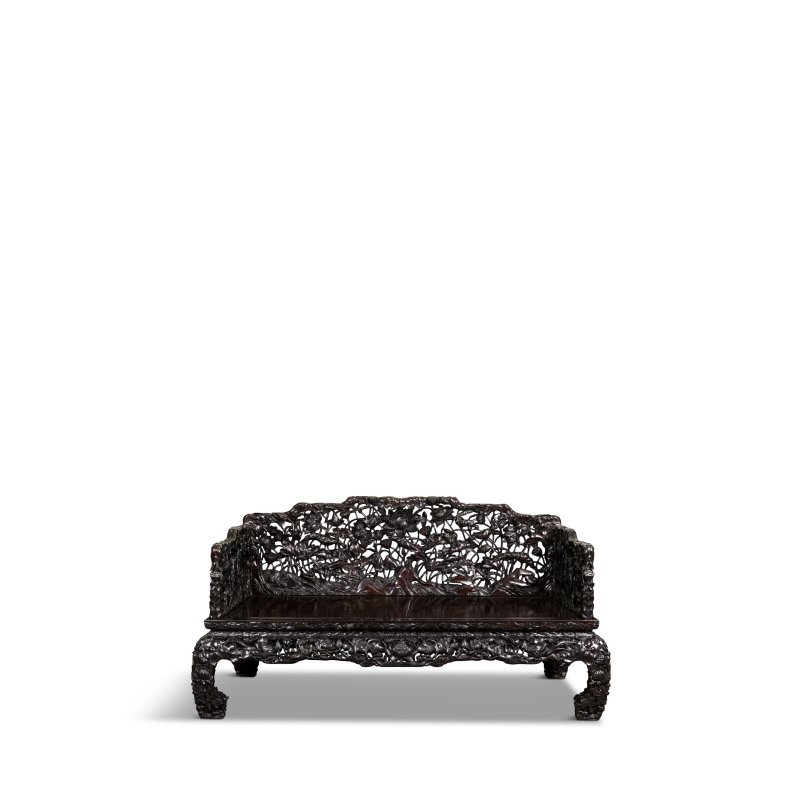
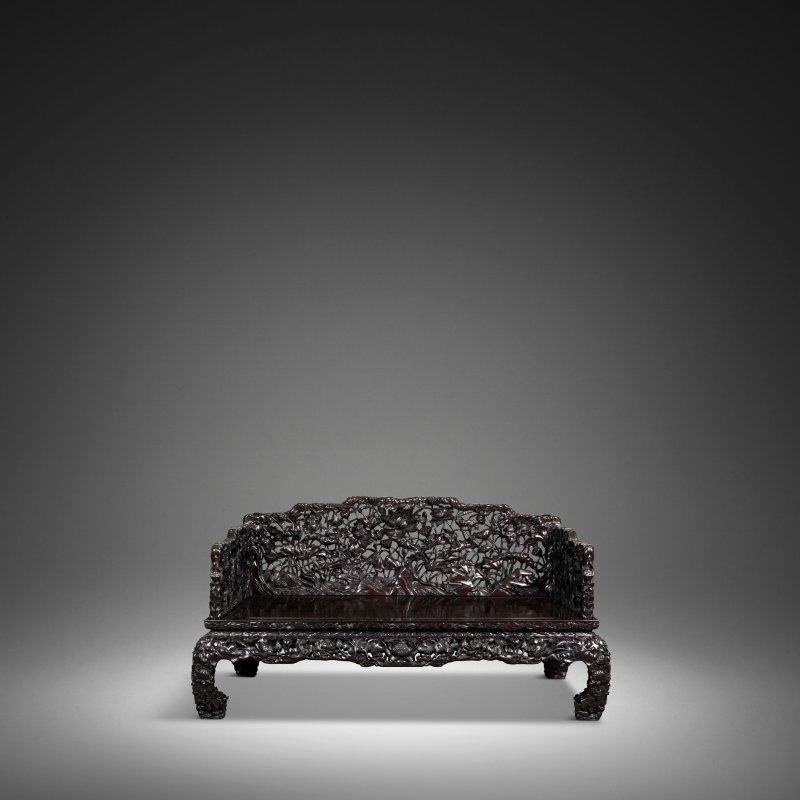
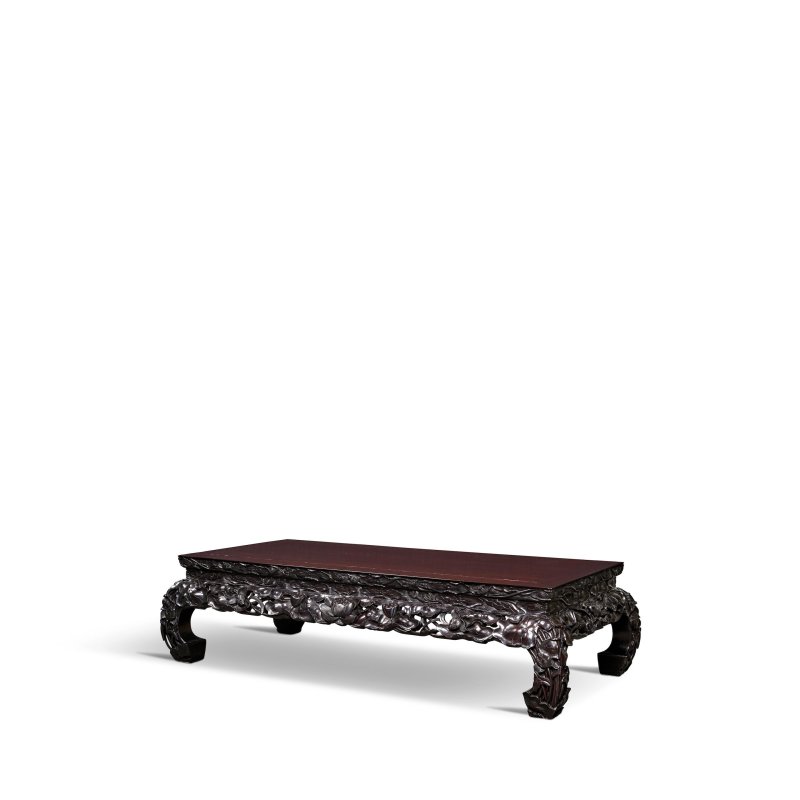
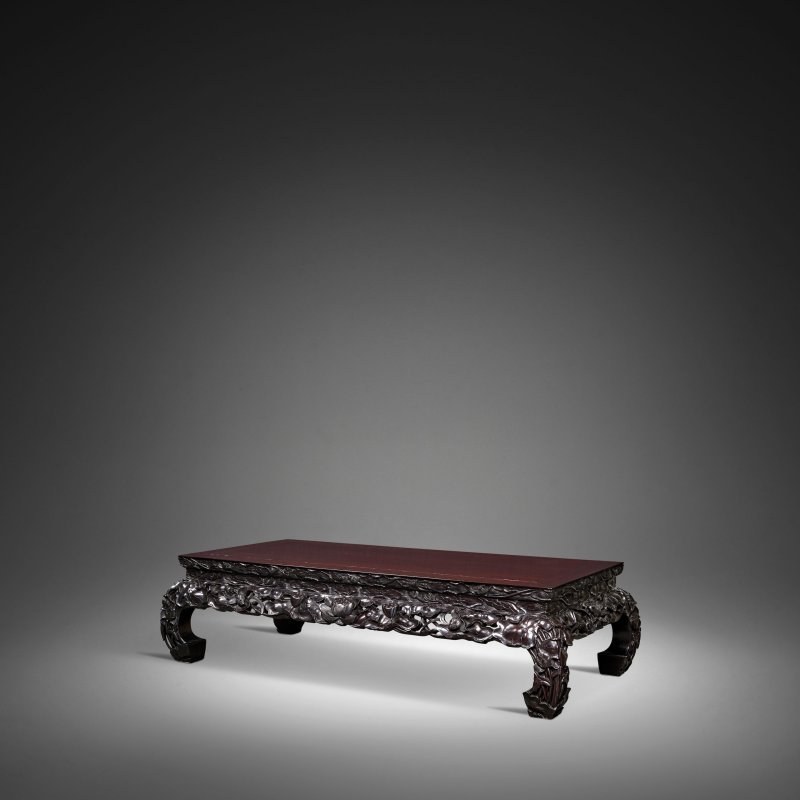
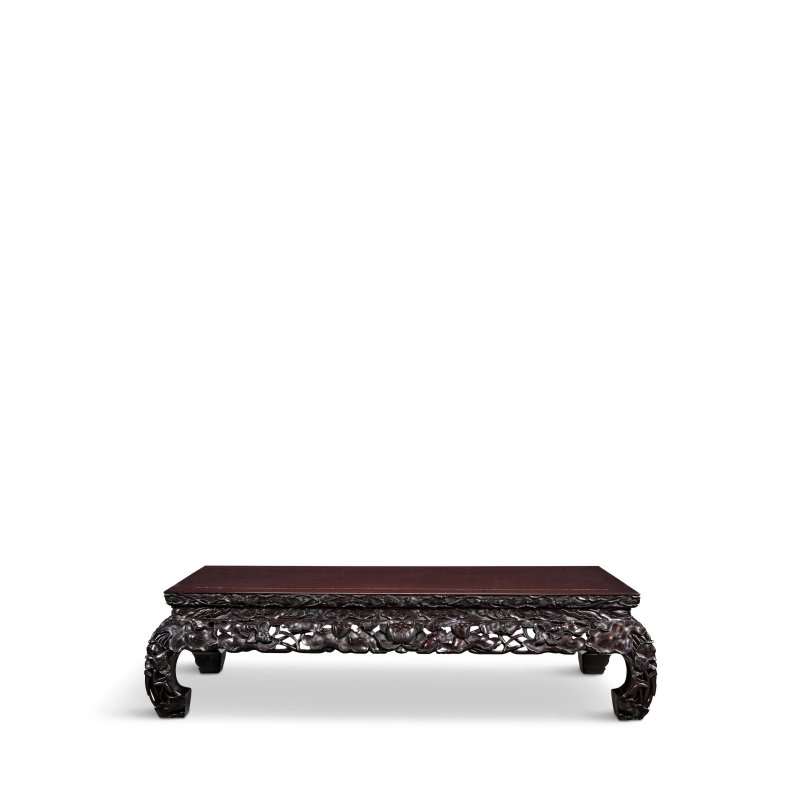
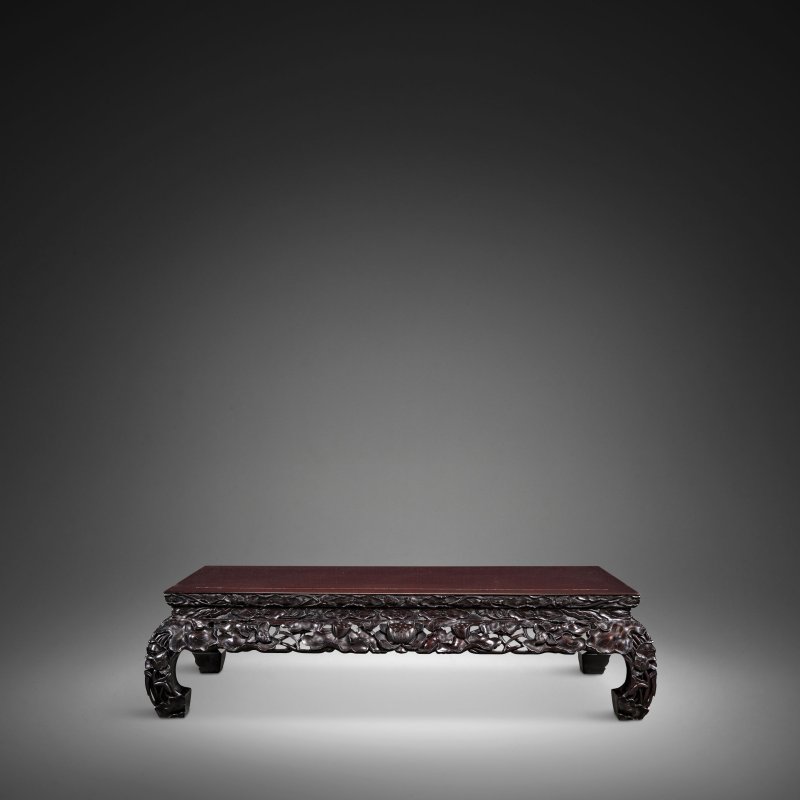
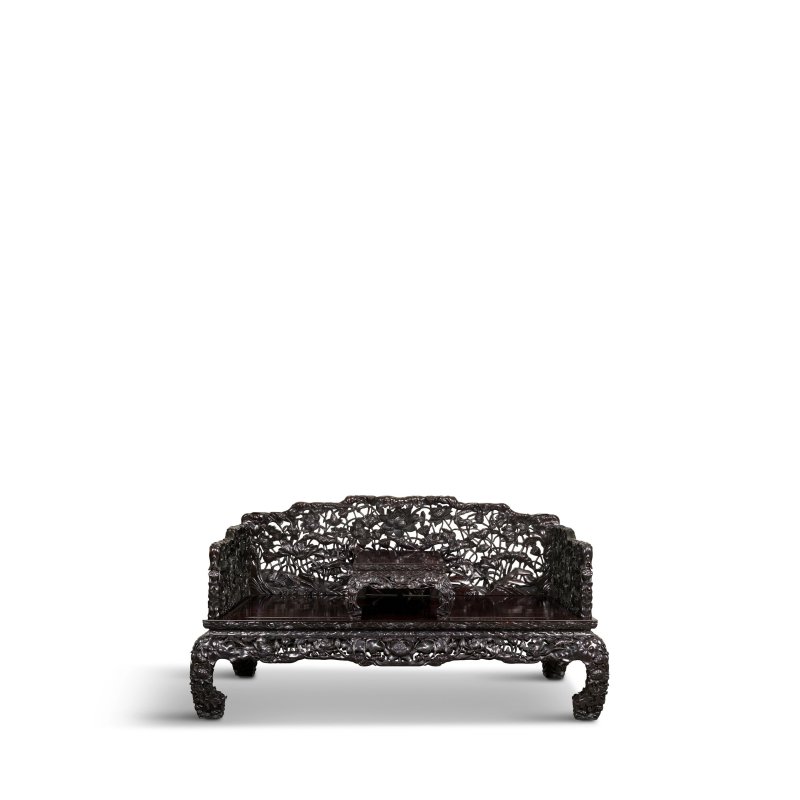
清十八/十九世紀 珍罕紫檀透雕荷塘紋羅漢床及炕桌 | A RARE AND SPLENDID ZITAN 'LOTUS' LUOHAN BED AND KANG TABLE
年代
Qing Dynasty, 18th/19th century
起拍价
USD 600,000
估值区间
USD 600000 - 900000
尺寸
未知
品相
未知
更多信息
Qing Dynasty, 18th/19th century
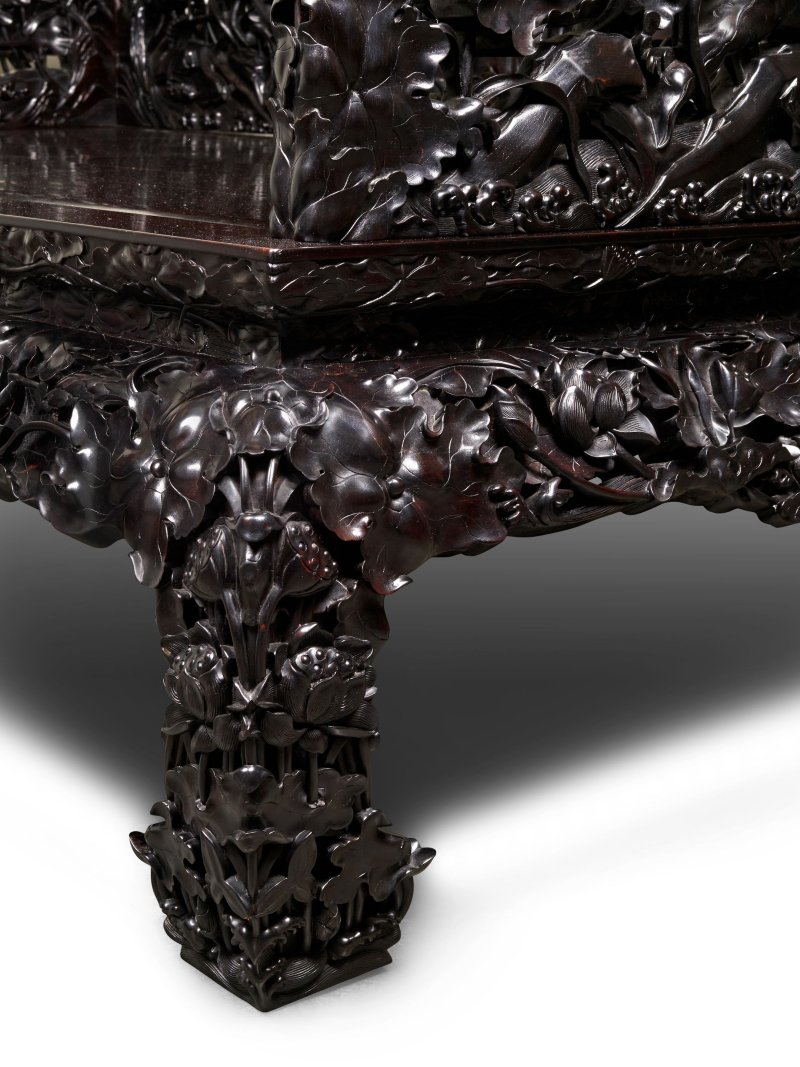
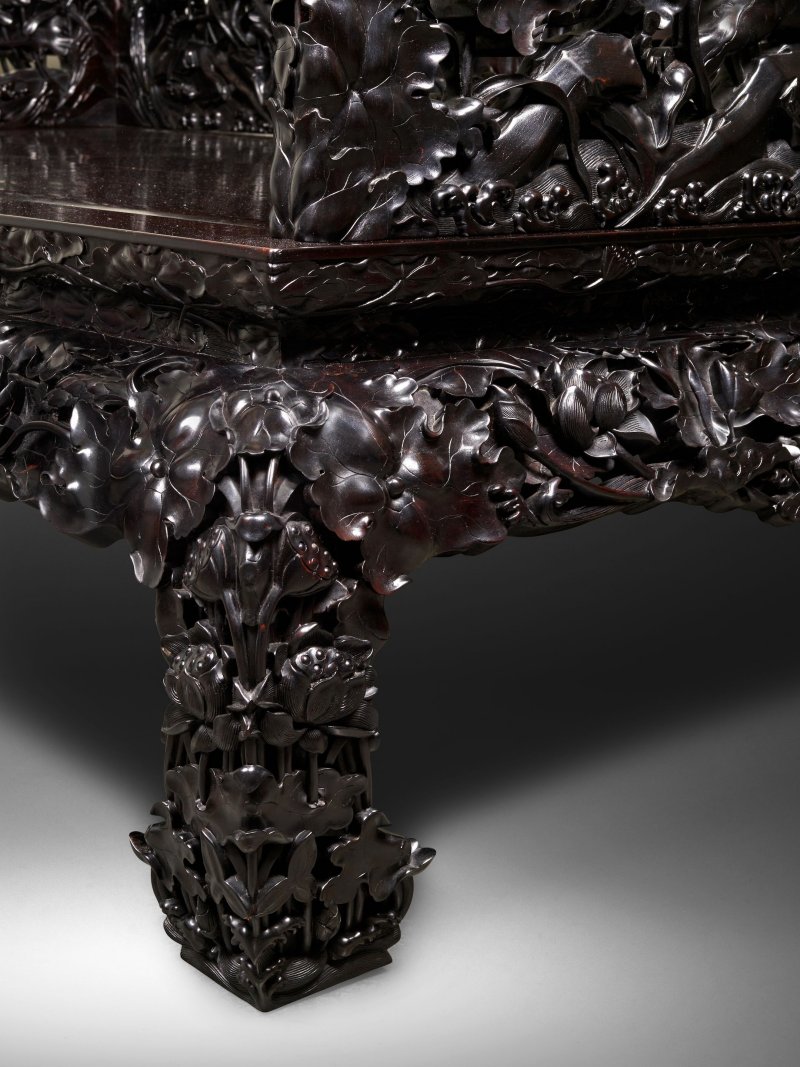
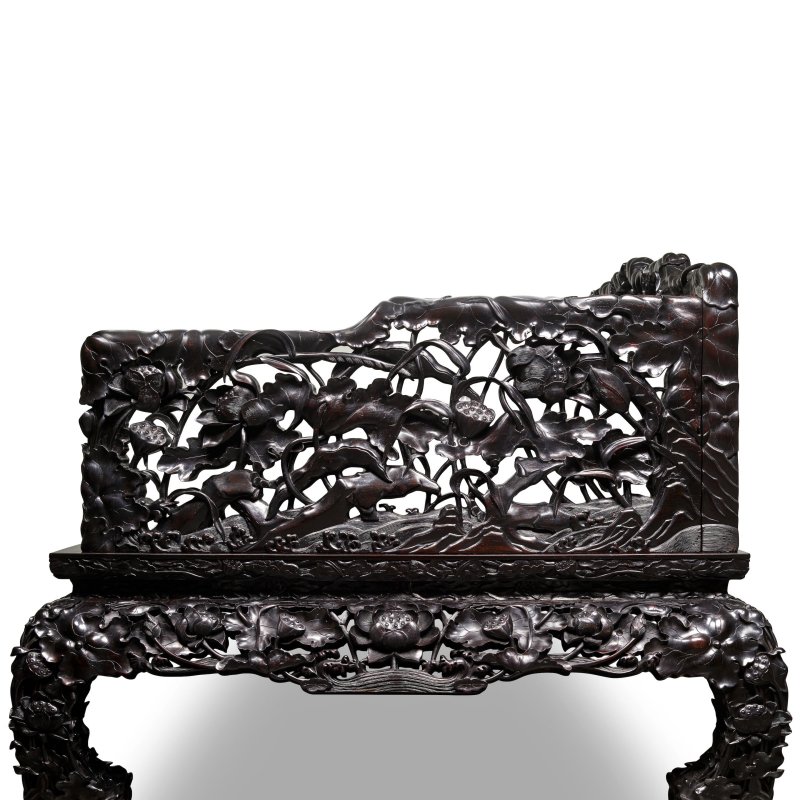
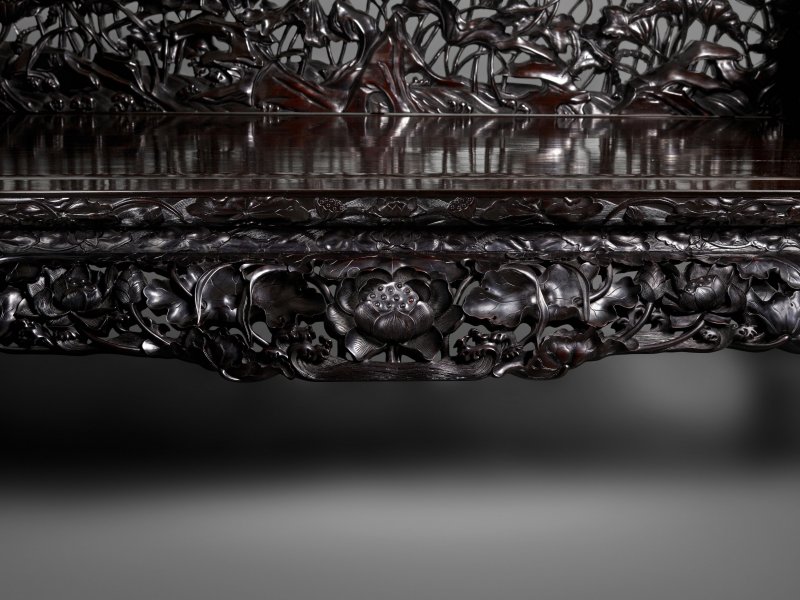
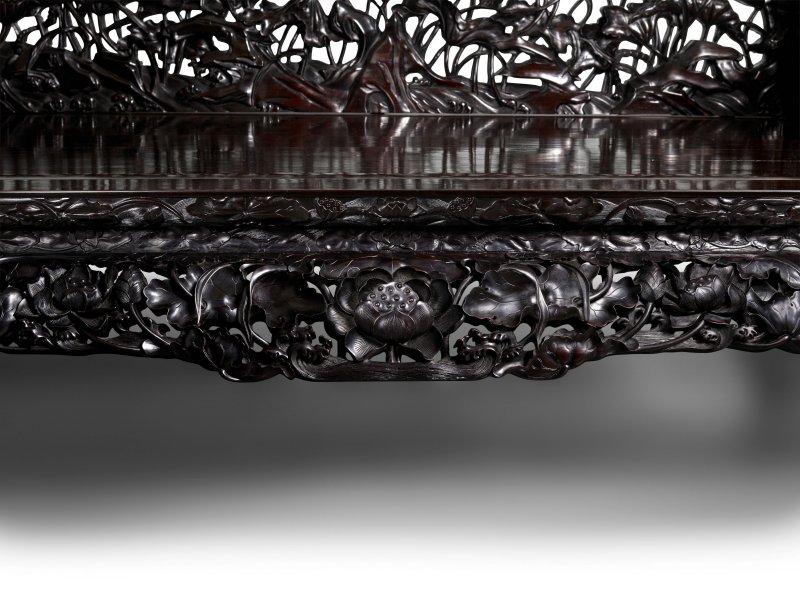
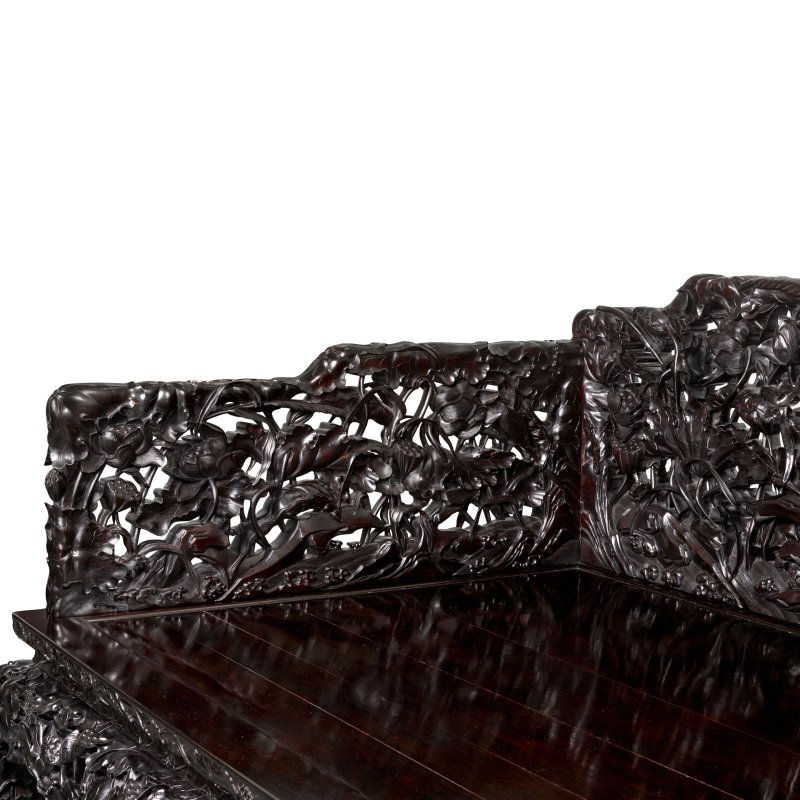
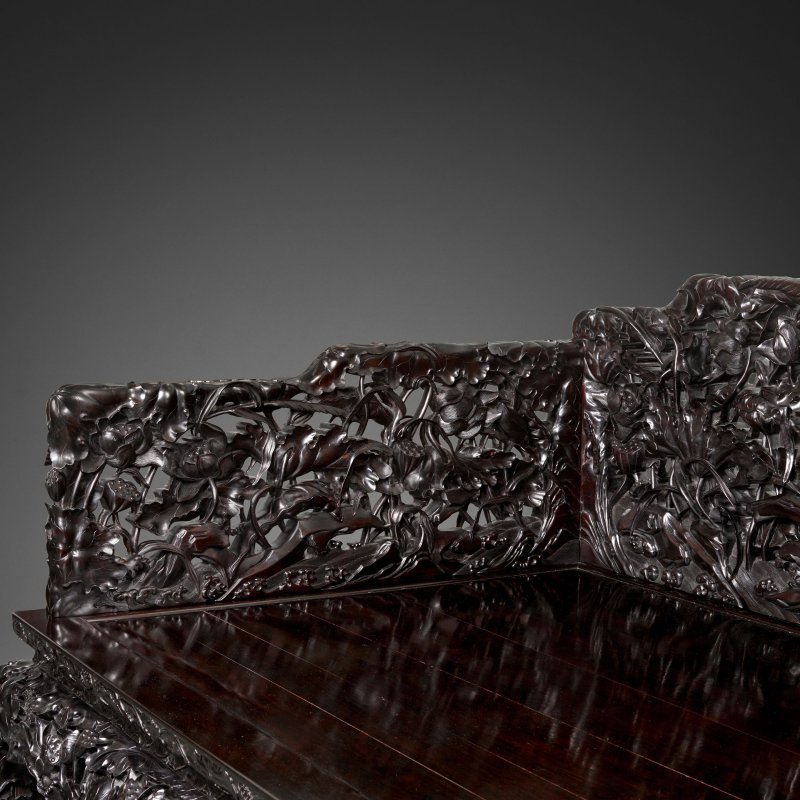
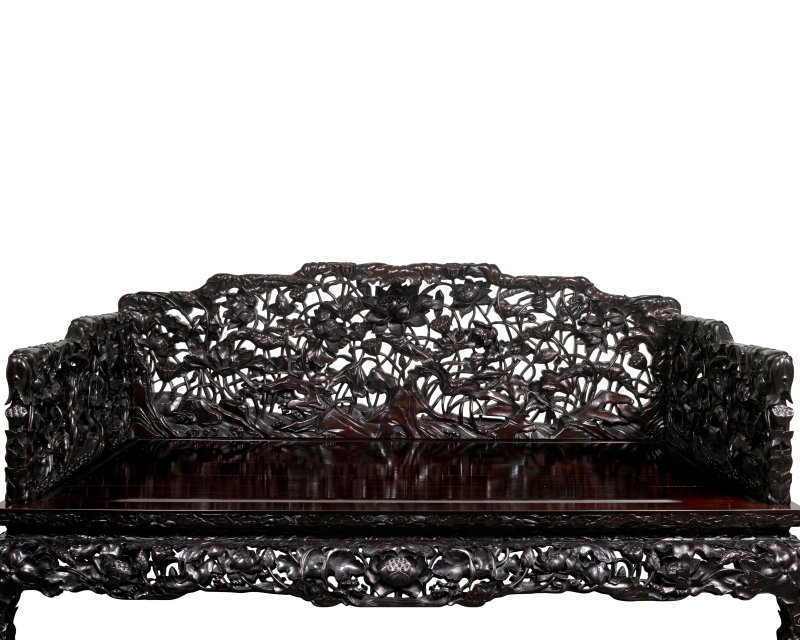
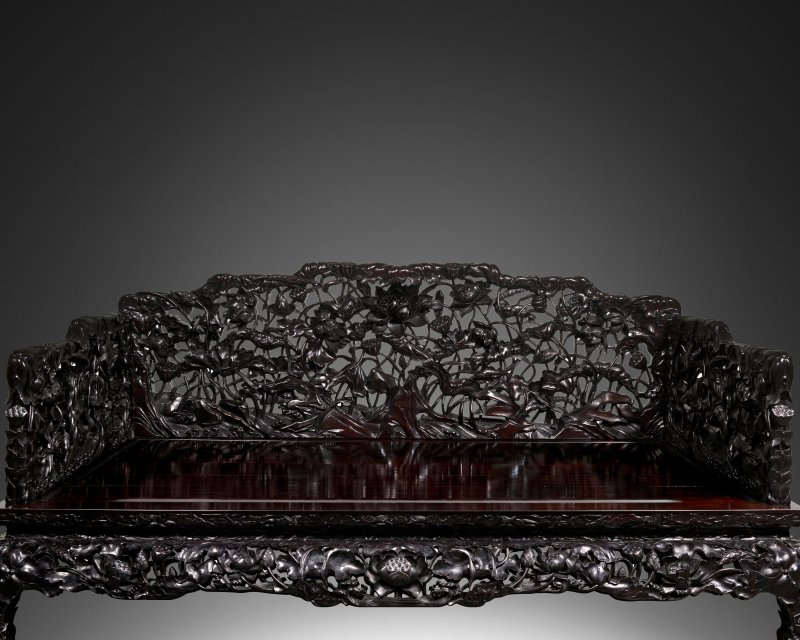
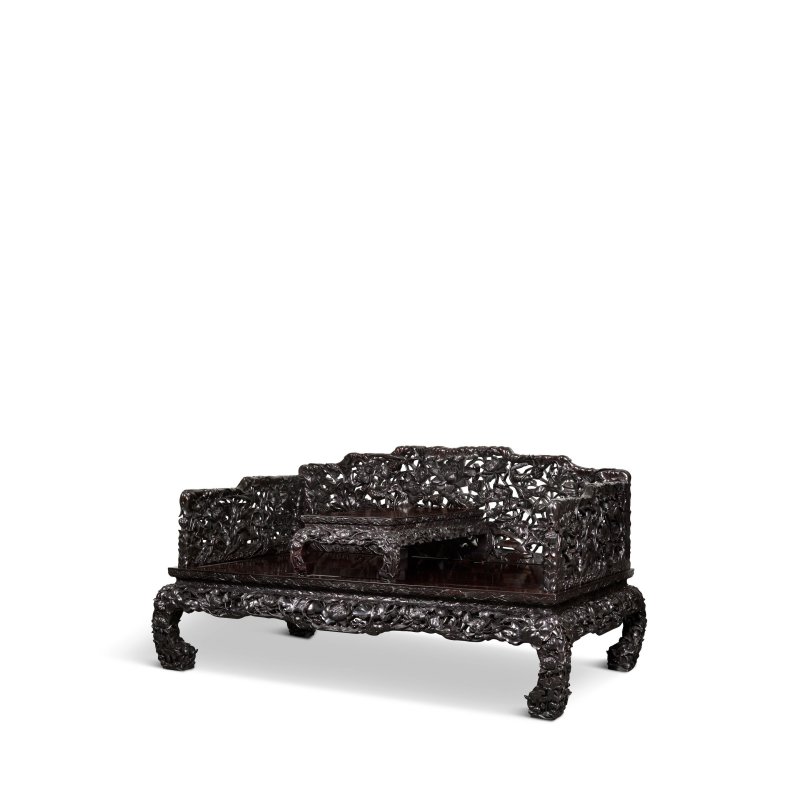
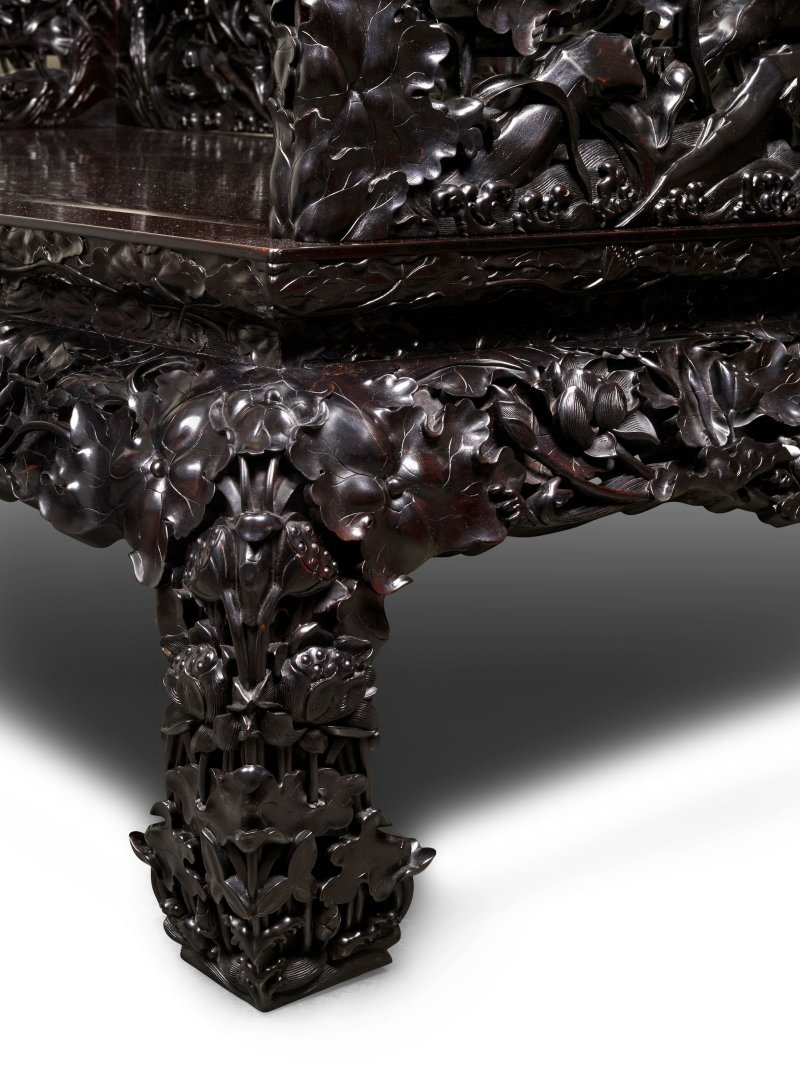
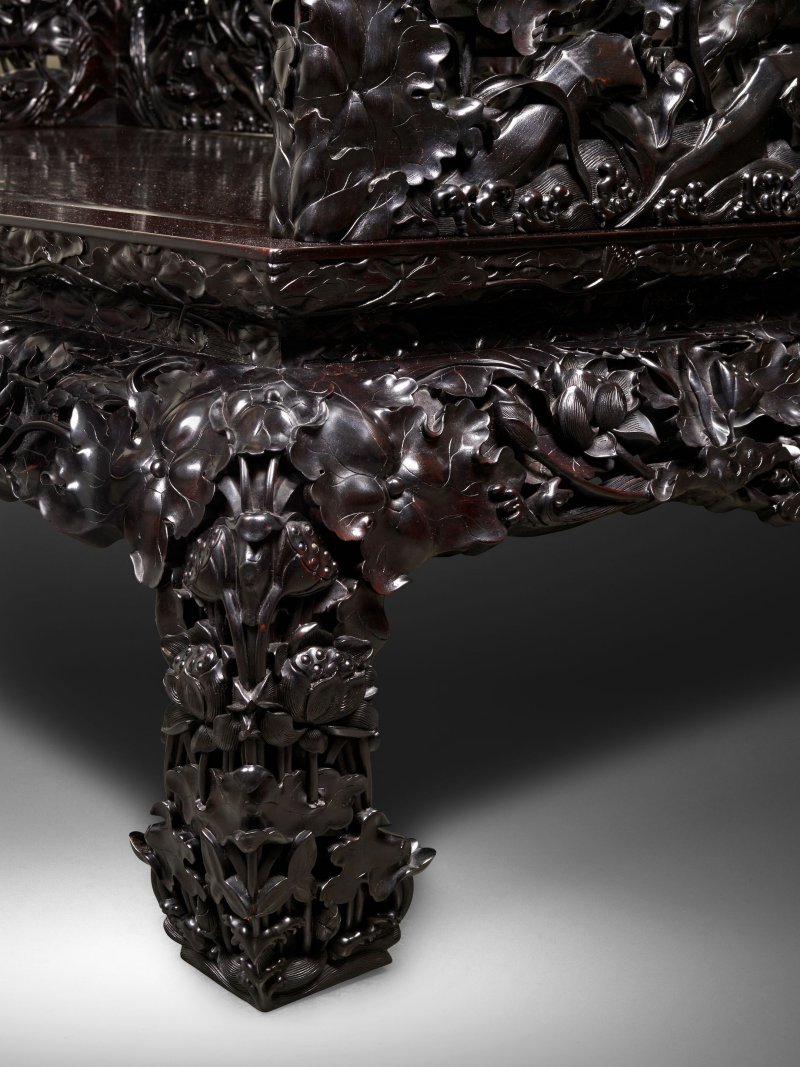
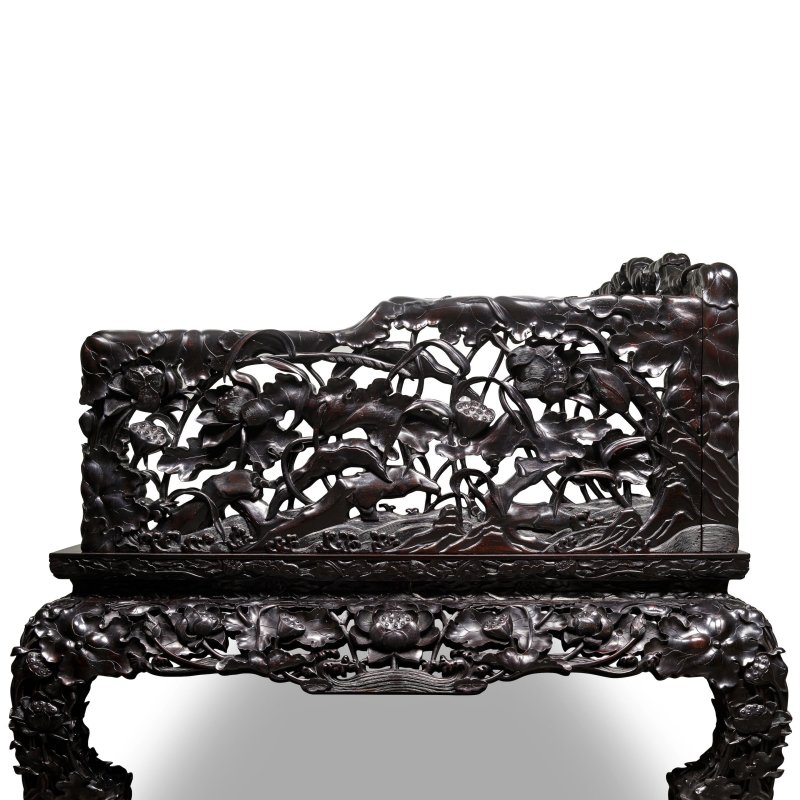
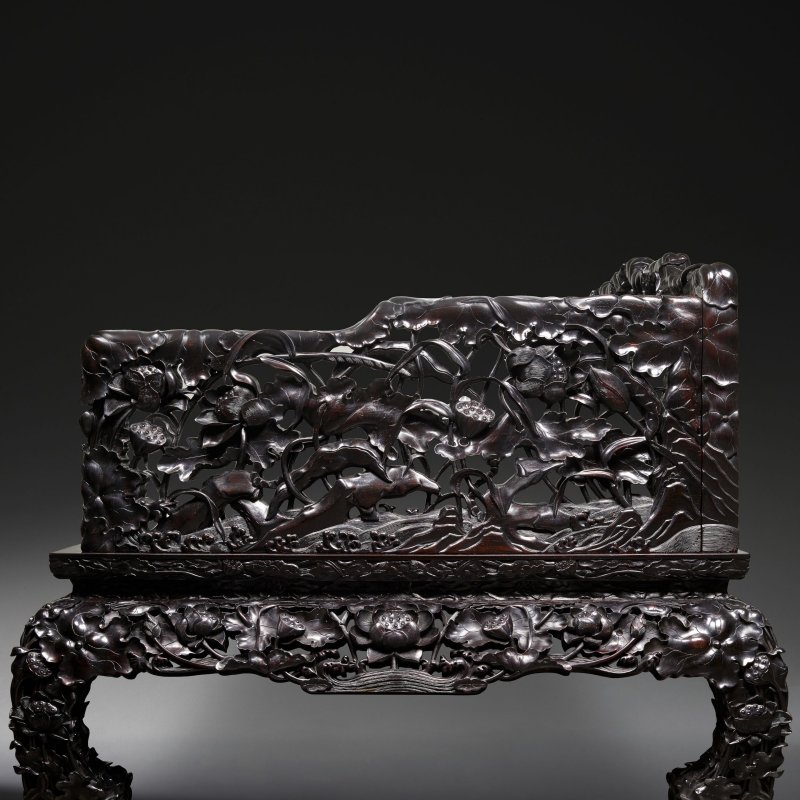
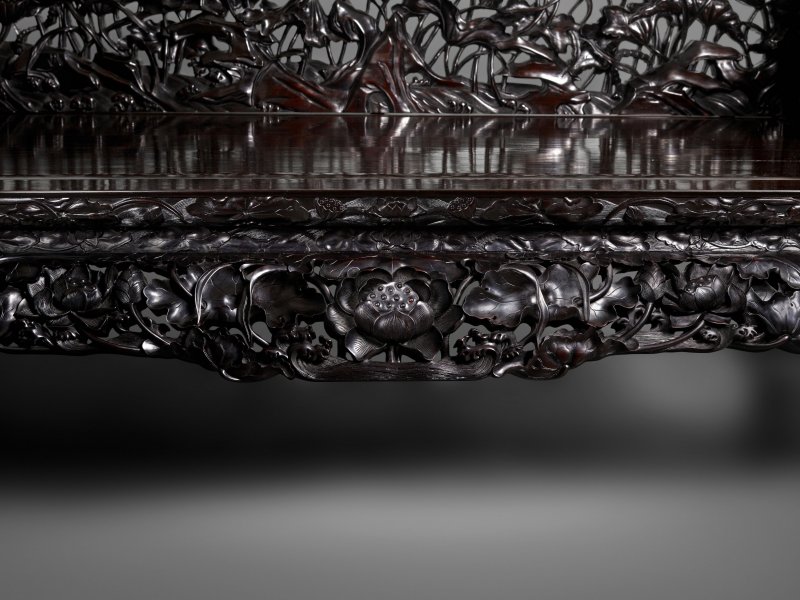
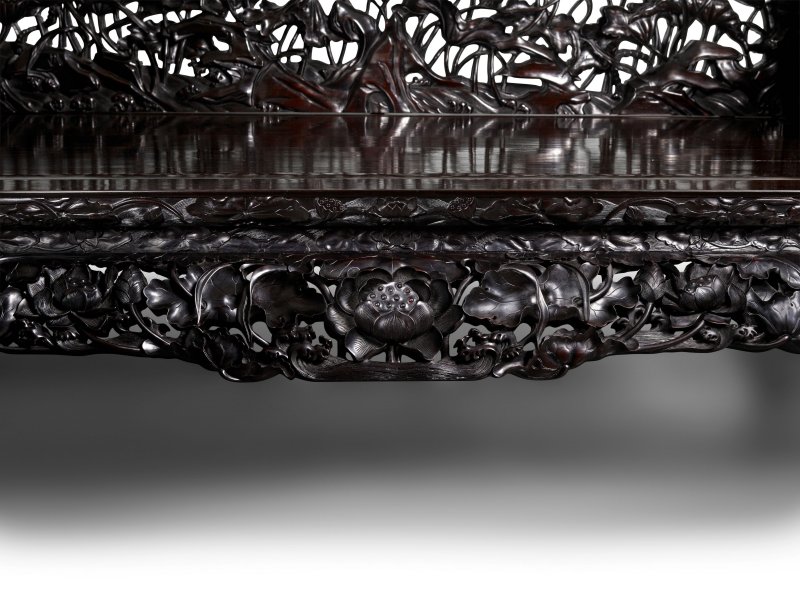
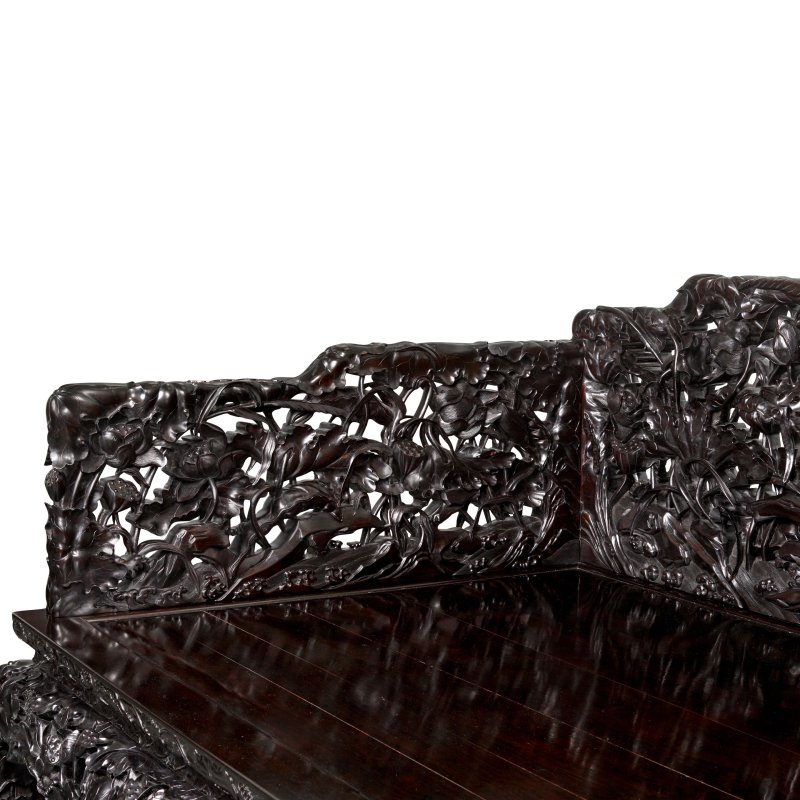
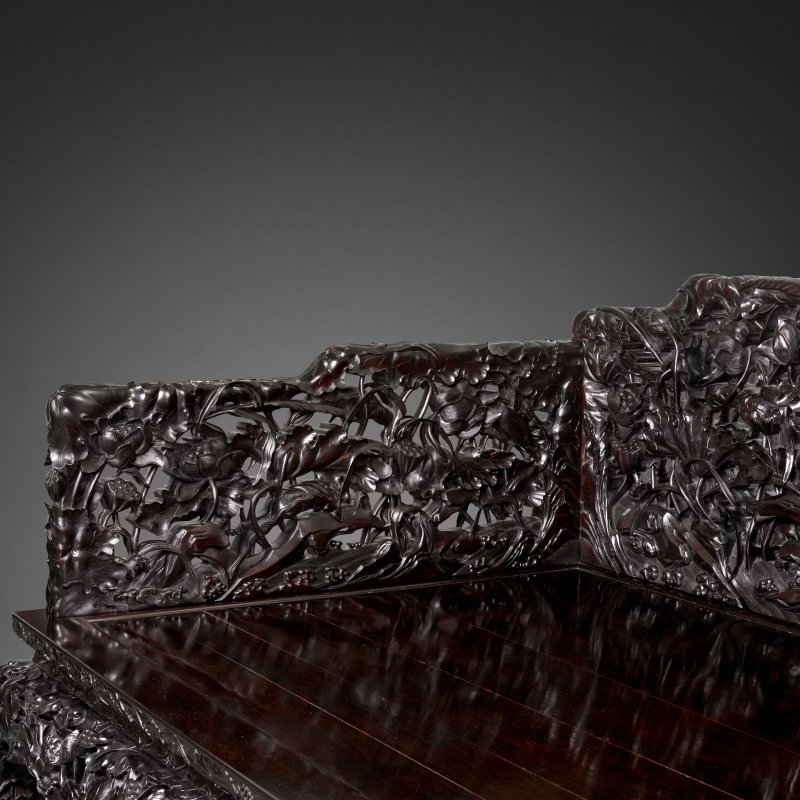
The back and side panels carved to resemble a nine-part screen and superbly carved as a dense network of lotus plants set into a bed of undulating waves and rocky outcroppings, the panels tenoned into a five-panel hard seat carved on the edge with a band of lotus pods and leafy stems above the waisted apron, the lotus and leaf network repeated on the elegantly shaped apron extending down the thick, cabriole legs and centered on a magnificent lotus blossom; the kang table composed of a two-board top set into a mitred, mortise-and tenon frame with ice-plate edge carved ensuite with identical decoration.
44 x 83 x 51 1/2in (111.8 x 210.8 x 130.8cm) overall;
Seat: 78 1/2 x 47in (199.4 x 119.4cm);
19 7/8in (50.5cm) high of seat;
Kang table: 11 x 43 1/4 x 21 1/2in (28 x 110 x 54.6cm)
(2).
Footnotes
清十八/十九世紀 珍罕紫檀透雕荷塘紋羅漢床及炕桌
Provenance:
Acquired from the distinguished Hong Kong art dealer Lai Loy (1926-2012), 1991
Property from a Prestigious New York Family
1991 年得自香港著名古董商黎來先生 (1926-2012)
紐約顯赫家族藏品
The present lot is an exceptionally rare example of Qing dynasty furniture, remarkable for its monumental scale, the quality of its sculptural carving, and the use of highly prized wood of substantial dimensions. See a near identical Luohan bed and table, mid-Qing dynasty, in the Palace Museum, Beijing, with a cane-matting seat, illustrated in , Beijing, 2013, pl. 1, as well as in Hu Desheng, , vol.I, Beijing, 2007, pp. 62–63, fig. 40. The matching table is separately illustrated ., p. 242, no. 274.
The , or 'Luohan bed', is one of the most substantial forms of traditional Chinese furniture, consisting of a raised platform with a high back and enclosed side panels, and traditionally used for sitting, reclining, receiving guests and, on occasion, sleeping. The term invokes the Buddhist (arhat), the enlightened disciples of the Buddha, who are frequently depicted seated or reclining upon raised platforms. An early visual association may be seen in the painting by Wang Zhenpeng (active ca.1280–1329), , dated 1308, which shows Vimalakirti seated upon a substantial raised couch-bed of related form, in the Metropolitan Museum of Art, New York (acc.no.1980.276). See also the woodblock print , from , a collection of essays by Da Shan, showing a figure reclining on a Luohan bed, which Wang Shixiang writes 'closely resemble the furniture made in by the Imperial workshop during the reign of the Qian Long emperor'; Wang Shixiang, , vol. I, Hong Kong, 1990, pp.19–20, fig.1.8.
Such beds were also particularly suited to the informal activities of the scholar's studio. Sarah Handler, in , Berkeley, 2001, p.133, cites the late Ming scholar Wen Zhenheng (1585–1645), who praised couch-beds for their versatility, noting that they could be used for sitting, reclining and resting, as well as for reading texts, viewing calligraphy and paintings, displaying antiquities, dining and taking a nap. Contemporary pictorial representations similarly show such beds serving as settings for the cultivated pursuits of the scholar, blurring the distinction between furniture for repose and furniture for intellectual and aesthetic engagement. See , a Yuan dynasty woodblock illustration to Chen Yuanliang's (), depicting two men seated on a couch-bed of related form while enjoying a game of double sixes, illustrated in Handler, ., p.126, fig.9.7.
The lotus decoration on the present lot is particularly appropriate to its Buddhist associations. Rising from muddy water yet emerging immaculate above the surface, the lotus became one of the most potent Buddhist symbols of purity, spiritual awakening and transcendence. The flower also acquired a celebrated moral significance within the literati tradition through Zhou Dunyi's (1017–1073) essay ('On the Love of the Lotus'), in which the lotus is praised as an embodiment of the virtuous gentleman who remains unsullied despite growing from the mud. The extensive depiction of lotus plants emerging through water and rocks across the present bed may therefore be read on several levels, combining Buddhist associations of purity and enlightenment with the literati ideal of moral integrity and incorruptibility. This layered symbolism is especially apt for a , whose name itself evokes the Buddhist ideal of spiritual attainment.
Compare with a carved 'landscape' couch-bed, Qing dynasty, which was sold at Sotheby's Hong Kong, 7 October 2014, lot 3127. See also a Luohan bed, 18th century, which was sold at Christie's New York, 16 March 2017, lot 643; and a rare Luohan bed with marble panels, 18th century, which was sold at Sotheby's London, 11 November 2015, lot 19.
The back and side panels carved to resemble a nine-part screen and superbly carved as a dense network of lotus plants set into a bed of undulating waves and rocky outcroppings, the panels tenoned into a five-panel hard seat carved on the edge with a band of lotus pods and leafy stems above the waisted apron, the lotus and leaf network repeated on the elegantly shaped apron extending down the thick, cabriole legs and centered on a magnificent lotus blossom; the kang table composed of a two-board top set into a mitred, mortise-and tenon frame with ice-plate edge carved ensuite with identical decoration.
44 x 83 x 51 1/2in (111.8 x 210.8 x 130.8cm) overall;
Seat: 78 1/2 x 47in (199.4 x 119.4cm);
19 7/8in (50.5cm) high of seat;
Kang table: 11 x 43 1/4 x 21 1/2in (28 x 110 x 54.6cm)
(2).
Footnotes
清十八/十九世紀 珍罕紫檀透雕荷塘紋羅漢床及炕桌
Provenance:
Acquired from the distinguished Hong Kong art dealer Lai Loy (1926-2012), 1991
Property from a Prestigious New York Family
1991 年得自香港著名古董商黎來先生 (1926-2012)
紐約顯赫家族藏品
The present lot is an exceptionally rare example of Qing dynasty furniture, remarkable for its monumental scale, the quality of its sculptural carving, and the use of highly prized wood of substantial dimensions. See a near identical Luohan bed and table, mid-Qing dynasty, in the Palace Museum, Beijing, with a cane-matting seat, illustrated in , Beijing, 2013, pl. 1, as well as in Hu Desheng, , vol.I, Beijing, 2007, pp. 62–63, fig. 40. The matching table is separately illustrated ., p. 242, no. 274.
The , or 'Luohan bed', is one of the most substantial forms of traditional Chinese furniture, consisting of a raised platform with a high back and enclosed side panels, and traditionally used for sitting, reclining, receiving guests and, on occasion, sleeping. The term invokes the Buddhist (arhat), the enlightened disciples of the Buddha, who are frequently depicted seated or reclining upon raised platforms. An early visual association may be seen in the painting by Wang Zhenpeng (active ca.1280–1329), , dated 1308, which shows Vimalakirti seated upon a substantial raised couch-bed of related form, in the Metropolitan Museum of Art, New York (acc.no.1980.276). See also the woodblock print , from , a collection of essays by Da Shan, showing a figure reclining on a Luohan bed, which Wang Shixiang writes 'closely resemble the furniture made in by the Imperial workshop during the reign of the Qian Long emperor'; Wang Shixiang, , vol. I, Hong Kong, 1990, pp.19–20, fig.1.8.
Such beds were also particularly suited to the informal activities of the scholar's studio. Sarah Handler, in , Berkeley, 2001, p.133, cites the late Ming scholar Wen Zhenheng (1585–1645), who praised couch-beds for their versatility, noting that they could be used for sitting, reclining and resting, as well as for reading texts, viewing calligraphy and paintings, displaying antiquities, dining and taking a nap. Contemporary pictorial representations similarly show such beds serving as settings for the cultivated pursuits of the scholar, blurring the distinction between furniture for repose and furniture for intellectual and aesthetic engagement. See , a Yuan dynasty woodblock illustration to Chen Yuanliang's (), depicting two men seated on a couch-bed of related form while enjoying a game of double sixes, illustrated in Handler, ., p.126, fig.9.7.
The lotus decoration on the present lot is particularly appropriate to its Buddhist associations. Rising from muddy water yet emerging immaculate above the surface, the lotus became one of the most potent Buddhist symbols of purity, spiritual awakening and transcendence. The flower also acquired a celebrated moral significance within the literati tradition through Zhou Dunyi's (1017–1073) essay ('On the Love of the Lotus'), in which the lotus is praised as an embodiment of the virtuous gentleman who remains unsullied despite growing from the mud. The extensive depiction of lotus plants emerging through water and rocks across the present bed may therefore be read on several levels, combining Buddhist associations of purity and enlightenment with the literati ideal of moral integrity and incorruptibility. This layered symbolism is especially apt for a , whose name itself evokes the Buddhist ideal of spiritual attainment.
Compare with a carved 'landscape' couch-bed, Qing dynasty, which was sold at Sotheby's Hong Kong, 7 October 2014, lot 3127. See also a Luohan bed, 18th century, which was sold at Christie's New York, 16 March 2017, lot 643; and a rare Luohan bed with marble panels, 18th century, which was sold at Sotheby's London, 11 November 2015, lot 19.