
拍品信息
拍品名称
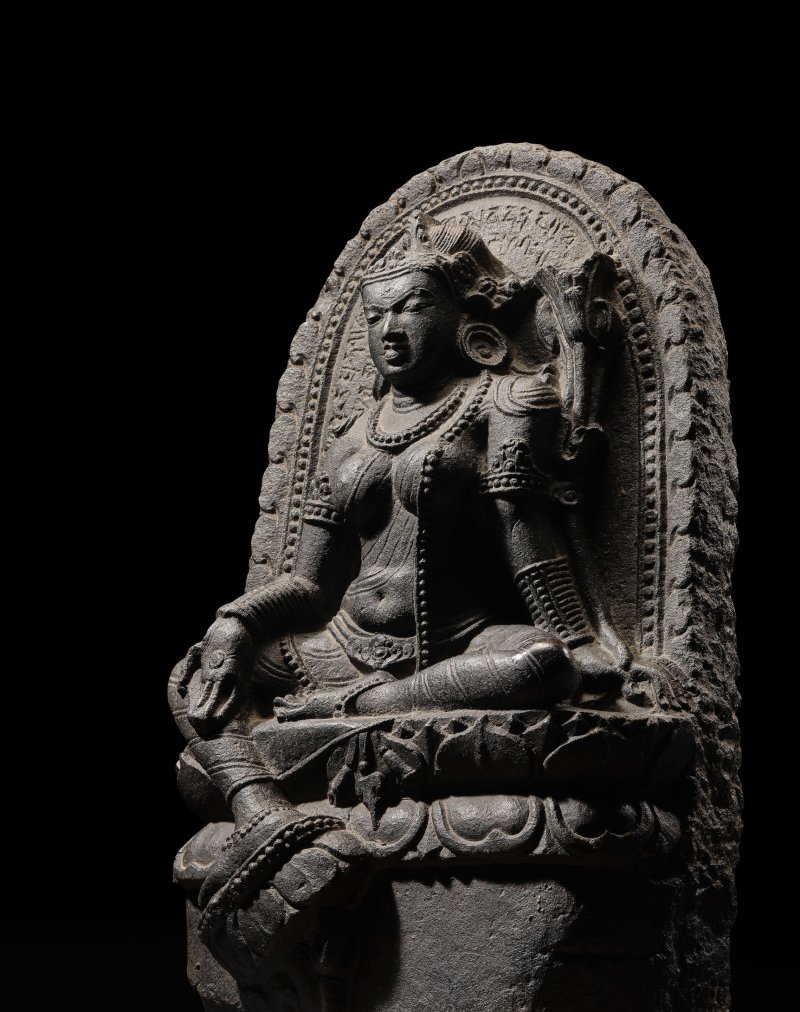
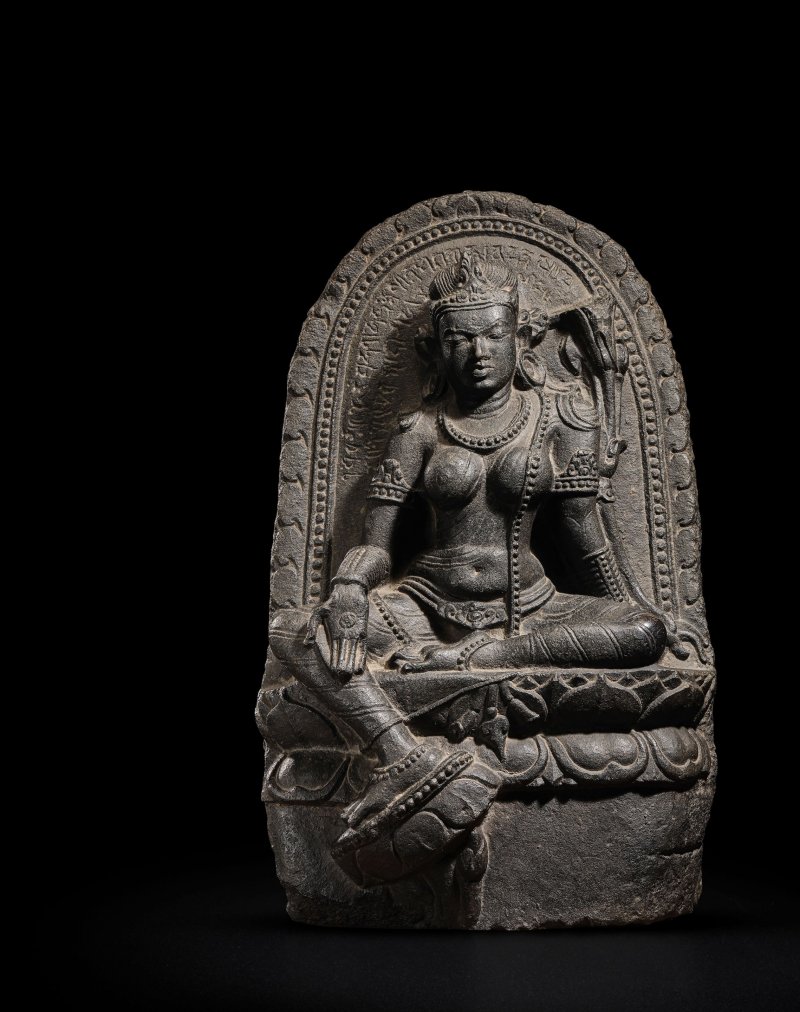
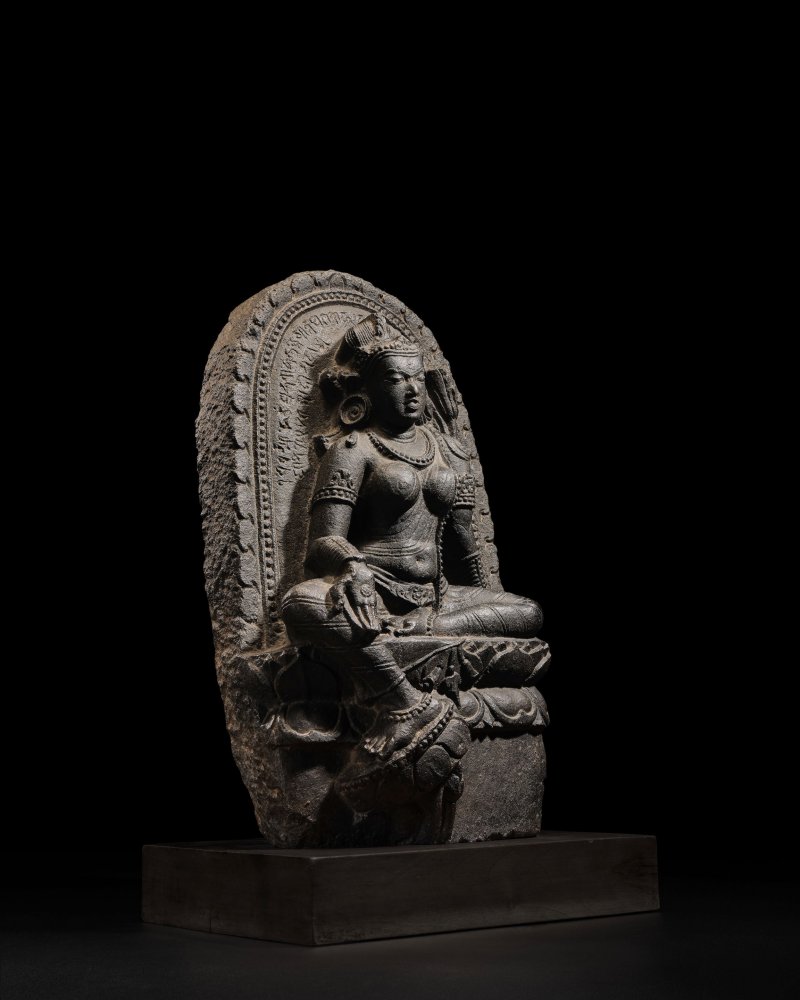
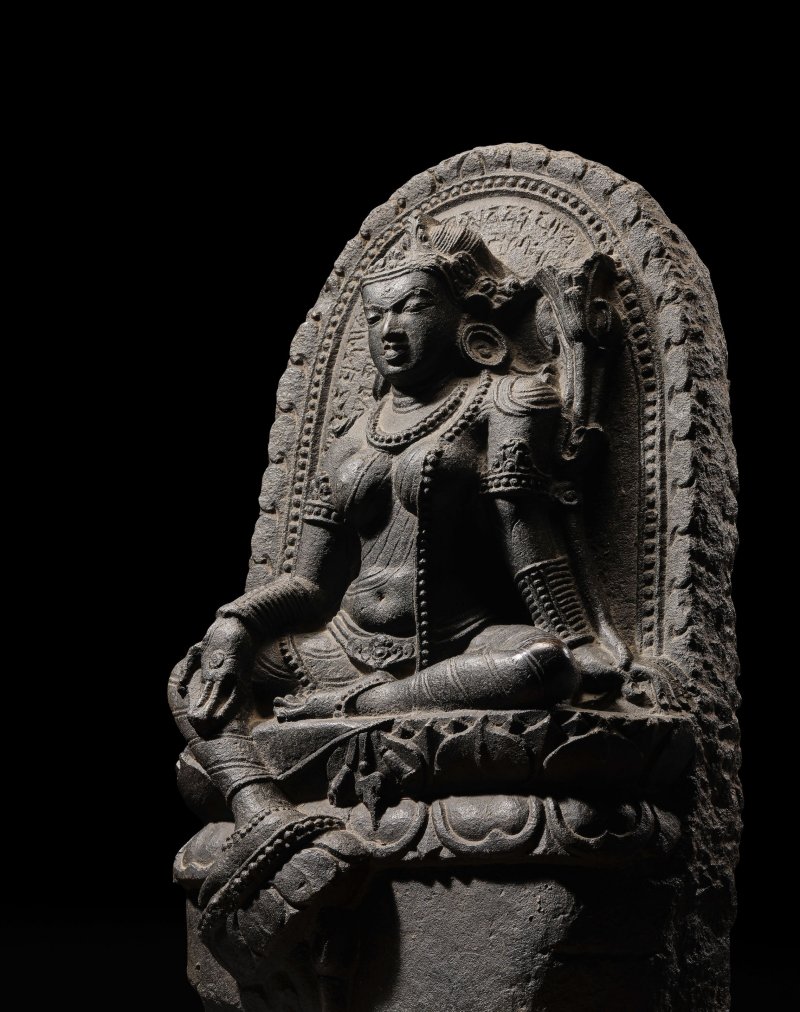
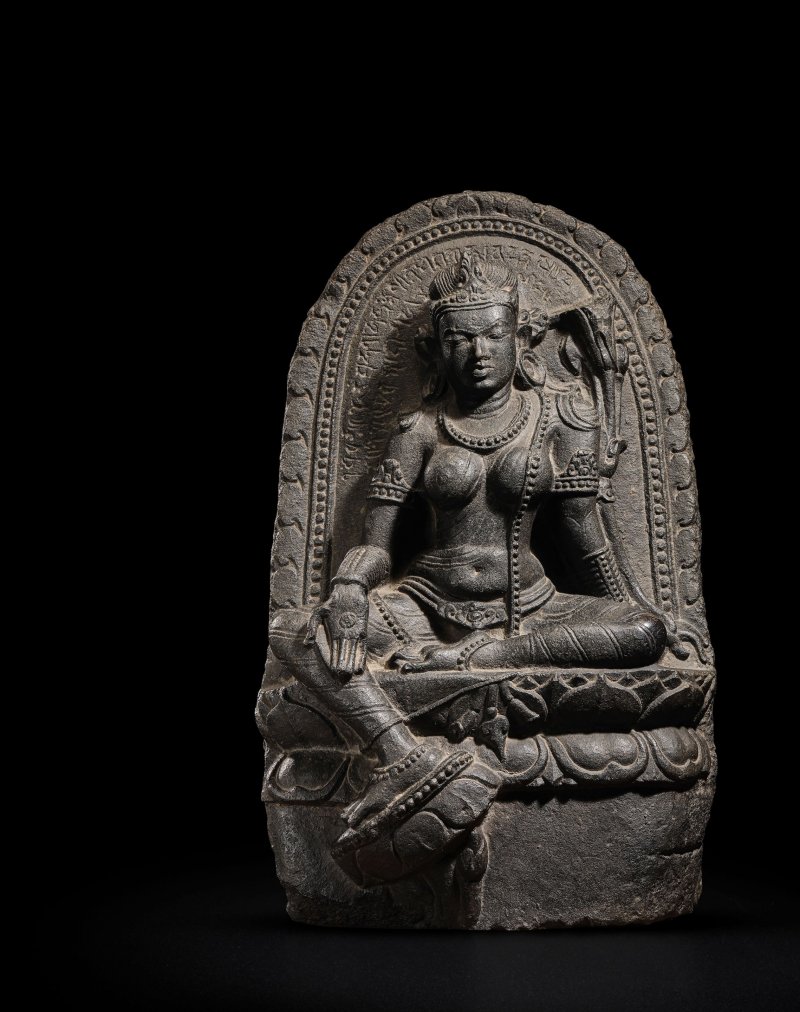
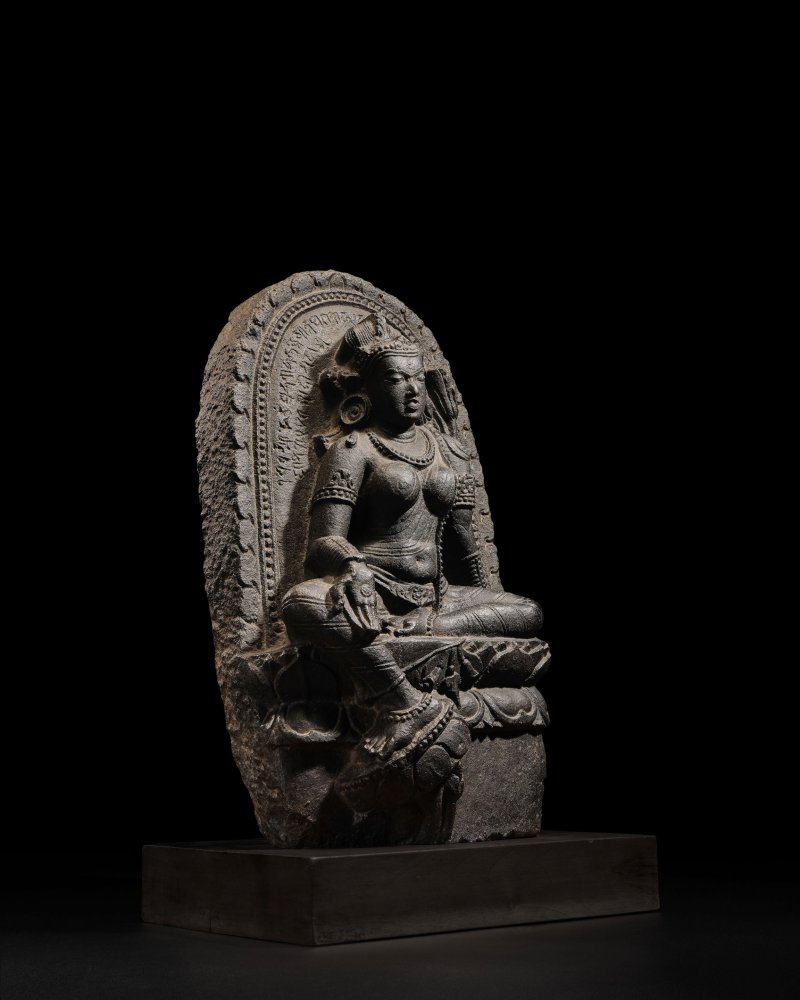
印度東北部 帕拉時期 約十世紀 黑石綠度母像 | A BLACKSTONE STELE OF SYAMATARA
年代
NORTHEASTERN INDIA, PALA PERIOD, CIRCA 10TH CENTURY
起拍价
HKD 300,000
估值区间
HKD 300000 - 500000
尺寸
未知
品相
未知
更多信息
NORTHEASTERN INDIA, PALA PERIOD, CIRCA 10TH CENTURY
Himalayan Art Resources item no. 8874
49 cm (19 1/4 in.) high
Footnotes
印度東北部 帕拉時期 約十世紀 黑石綠度母像
Provenance
Eskenazi Ltd, Milan, early 1980s
Private Collection, Milan, 1987
Tara is one of the most beloved deities in Mahayana and Vajrayana Buddhism. She embodies active compassion, swift assistance, and enlightened wisdom, and is frequently invoked for protection, liberation from suffering, and long life. Syamatara, or Green Tara, is the consort of Amoghasiddhi, one of the Five Wisdom Buddhas. The goddess is elegantly seated in lalitasana (the posture of royal ease) upon a double-lotus throne, she is framed by an aureole bordered with pearls and flames, around which runs a Sanskrit inscription of the Buddhist creed.
The sculpture reflects the artistic legacy of the Gupta period (c. 320–550 CE), whose idealized forms and graceful naturalism profoundly influenced the development of eastern Indian sculpture. This influence is evident in the strong facial features with full lips and the sensuously modelled volumes of the body. This finely carved stele exemplifies the refinement and devotional power that distinguishes the finest works of Pala-period sculpture. A slightly earlier related example is in the Brooklyn Museum (76.179.5), while a larger comparable stele of the goddess Mahapratisara was sold at Bonhams, New York, 21 March 2023, lot 512.
Himalayan Art Resources item no. 8874
49 cm (19 1/4 in.) high
Footnotes
印度東北部 帕拉時期 約十世紀 黑石綠度母像
Provenance
Eskenazi Ltd, Milan, early 1980s
Private Collection, Milan, 1987
Tara is one of the most beloved deities in Mahayana and Vajrayana Buddhism. She embodies active compassion, swift assistance, and enlightened wisdom, and is frequently invoked for protection, liberation from suffering, and long life. Syamatara, or Green Tara, is the consort of Amoghasiddhi, one of the Five Wisdom Buddhas. The goddess is elegantly seated in lalitasana (the posture of royal ease) upon a double-lotus throne, she is framed by an aureole bordered with pearls and flames, around which runs a Sanskrit inscription of the Buddhist creed.
The sculpture reflects the artistic legacy of the Gupta period (c. 320–550 CE), whose idealized forms and graceful naturalism profoundly influenced the development of eastern Indian sculpture. This influence is evident in the strong facial features with full lips and the sensuously modelled volumes of the body. This finely carved stele exemplifies the refinement and devotional power that distinguishes the finest works of Pala-period sculpture. A slightly earlier related example is in the Brooklyn Museum (76.179.5), while a larger comparable stele of the goddess Mahapratisara was sold at Bonhams, New York, 21 March 2023, lot 512.
常见问题
这件印度東北部 帕拉時期 約十世紀 黑石綠度母像 | A BLACKSTONE STELE OF SYAMATARA的成交价是多少?
落槌价为 预展中。 成交价为 预展中。