
拍品信息
拍品名称
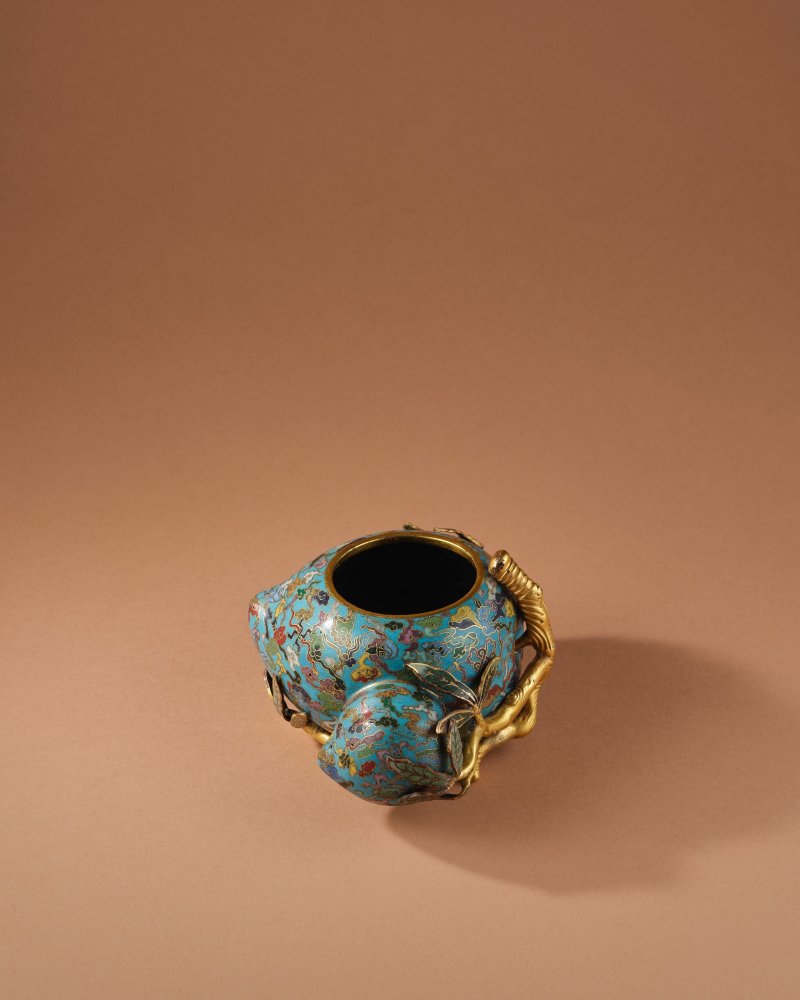
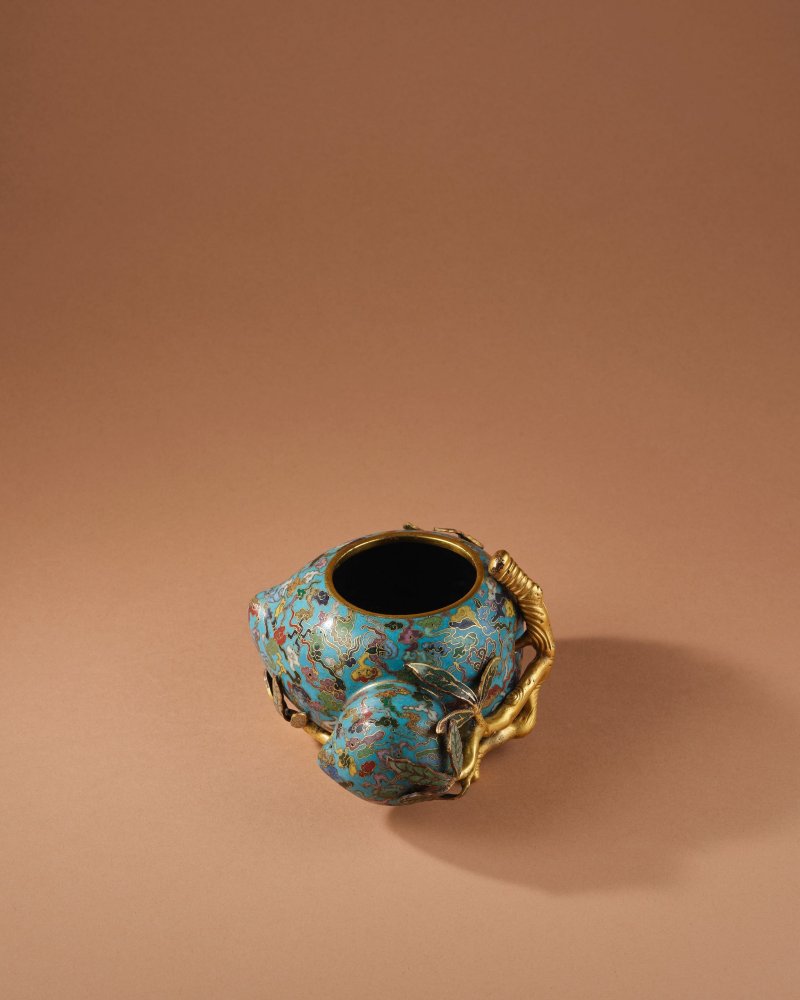
清乾隆 掐絲琺瑯祥雲雙桃式洗 | A RARE CLOISONNÉ ENAMEL AND GILT-BRONZE 'DOUBLE PEACH' WATERPOT
年代
Qianlong four-character mark and of the period
起拍价
HKD 300,000
估值区间
HKD 300000 - 500000
尺寸
未知
品相
未知
更多信息
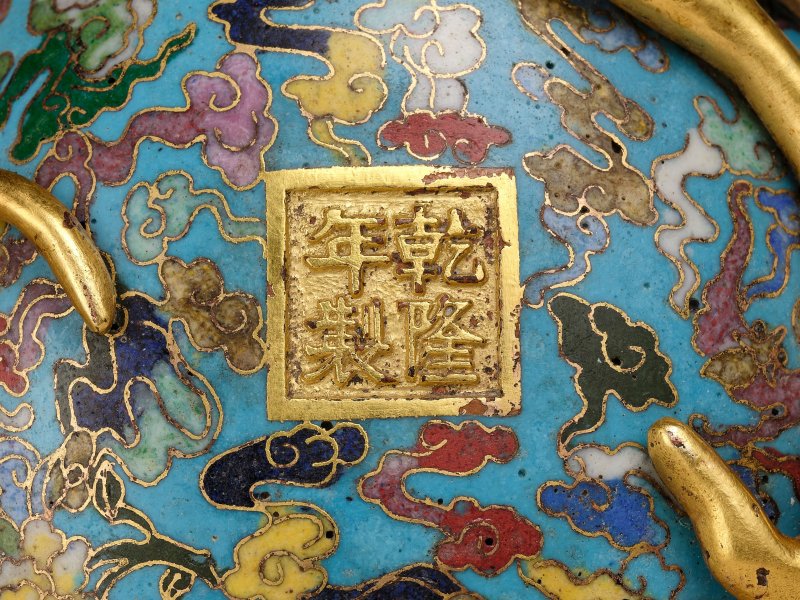
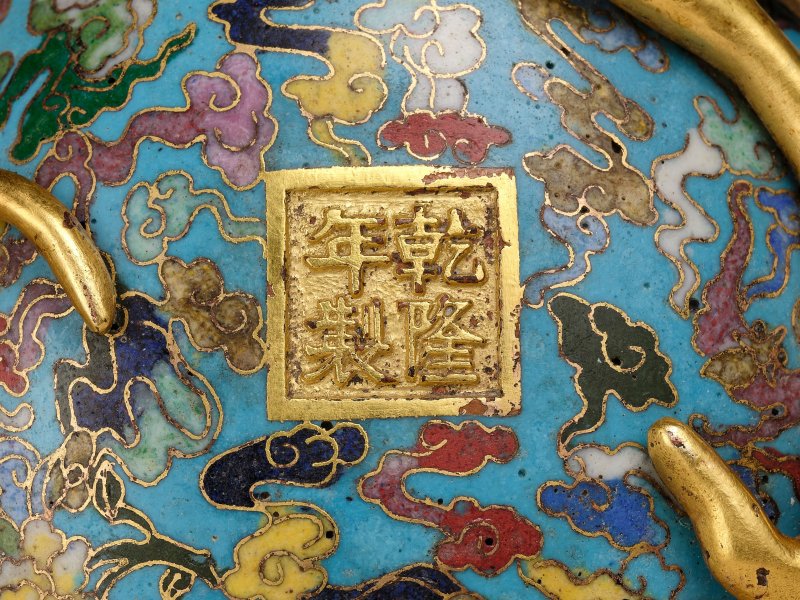
Qianlong four-character mark and of the period
Expertly modelled as a large ripe peach forming the main reservoir, issuing from naturalistic branches picked out with green leaves tipped in red and slender gilt-bronze twigs, beside the principal fruit hangs a smaller attendant peach, the two forms gracefully linked, the exterior enlivened with scrolling auspicious clouds in pink, white, red, green, yellow and deep blue enamels, all delineated by fine cloisonné wires.
13.5cm (5 1/4in) long.
Footnotes
清乾隆 掐絲琺瑯祥雲雙桃式洗
「乾隆年製」四字款
Provenance:
A German private collection, acquired in Shanghai in the 1920s, by repute
來源:
德國私人收藏,傳於1920年代得自上海
In Qing material culture, the peach (tao 桃) constituted one of the most enduring emblems of longevity, regeneration, and transcendence, its significance rooted in early Daoist cosmology and the mythic cult of the Queen Mother of the West, whose peaches of Immortality ripened only at millennial intervals. Moreover, the duplication of the fruit reinforces notions of surplus vitality ( 多福) and extended years ( 長壽).
See a slightly earlier painted enamel 'double-peach' water container, more naturalistically painted, Yongzheng four-character mark and of the period, in the Qing Court Collection, illustrated in the , Beijing, 2011, p.80, no.47.
Cloisonné enamelware in peach shape also crafted as an incense burner; see a larger example, Kangxi period, which was sold at Sotheby's New York, 17 September 2013, lot 280. Another related incense burner and cover in the form of a three-lobed peach with applied gilt handles is illustrated by H.Brinker and A.Lutz, , Zurich, 1985, no.293.
桃自古為長生多福之象徵,傳說西王母瑤圃之仙桃三千年一熟,食之得道長生。雙桃並現,尤寓多福多壽之願,象徵生生不息之機。
桃式洗,取仙桃之形以製文房雅器,陳於畫案之上,為文人濡毫滌穎之清供。清宮舊藏一件畫琺瑯桃式水丞,帶雍正四字款,雖年代稍早,造型與本品相似,更為寫實,著錄於《故宮博物院藏品大系:琺瑯器編5:清畫琺琅》,北京,2011年,頁80,編號47。
桃式掐絲琺瑯器亦作香爐用,例如紐約蘇富比曾售一件尺寸較大之康熙朝例,2013年9月17日,拍品編號280;另有一例作三桃式,枝幹為鎏金耳,見H.Brinker及A.Lutz,《Chinese Cloisonné: The Pierre Uldry Collection》,蘇黎世,1985年,編號293。
Expertly modelled as a large ripe peach forming the main reservoir, issuing from naturalistic branches picked out with green leaves tipped in red and slender gilt-bronze twigs, beside the principal fruit hangs a smaller attendant peach, the two forms gracefully linked, the exterior enlivened with scrolling auspicious clouds in pink, white, red, green, yellow and deep blue enamels, all delineated by fine cloisonné wires.
13.5cm (5 1/4in) long.
Footnotes
清乾隆 掐絲琺瑯祥雲雙桃式洗
「乾隆年製」四字款
Provenance:
A German private collection, acquired in Shanghai in the 1920s, by repute
來源:
德國私人收藏,傳於1920年代得自上海
In Qing material culture, the peach (tao 桃) constituted one of the most enduring emblems of longevity, regeneration, and transcendence, its significance rooted in early Daoist cosmology and the mythic cult of the Queen Mother of the West, whose peaches of Immortality ripened only at millennial intervals. Moreover, the duplication of the fruit reinforces notions of surplus vitality ( 多福) and extended years ( 長壽).
See a slightly earlier painted enamel 'double-peach' water container, more naturalistically painted, Yongzheng four-character mark and of the period, in the Qing Court Collection, illustrated in the , Beijing, 2011, p.80, no.47.
Cloisonné enamelware in peach shape also crafted as an incense burner; see a larger example, Kangxi period, which was sold at Sotheby's New York, 17 September 2013, lot 280. Another related incense burner and cover in the form of a three-lobed peach with applied gilt handles is illustrated by H.Brinker and A.Lutz, , Zurich, 1985, no.293.
桃自古為長生多福之象徵,傳說西王母瑤圃之仙桃三千年一熟,食之得道長生。雙桃並現,尤寓多福多壽之願,象徵生生不息之機。
桃式洗,取仙桃之形以製文房雅器,陳於畫案之上,為文人濡毫滌穎之清供。清宮舊藏一件畫琺瑯桃式水丞,帶雍正四字款,雖年代稍早,造型與本品相似,更為寫實,著錄於《故宮博物院藏品大系:琺瑯器編5:清畫琺琅》,北京,2011年,頁80,編號47。
桃式掐絲琺瑯器亦作香爐用,例如紐約蘇富比曾售一件尺寸較大之康熙朝例,2013年9月17日,拍品編號280;另有一例作三桃式,枝幹為鎏金耳,見H.Brinker及A.Lutz,《Chinese Cloisonné: The Pierre Uldry Collection》,蘇黎世,1985年,編號293。
常见问题
这件清乾隆 掐絲琺瑯祥雲雙桃式洗 | A RARE CLOISONNÉ ENAMEL AND GILT-BRONZE 'DOUBLE PEACH' WATERPOT的成交价是多少?
落槌价为 预展中。 成交价为 预展中。