
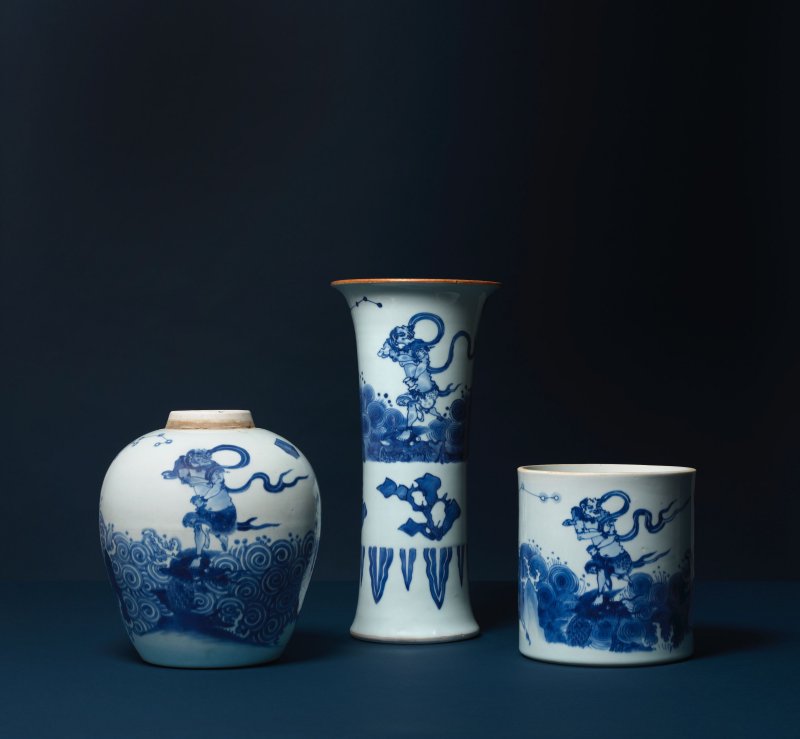
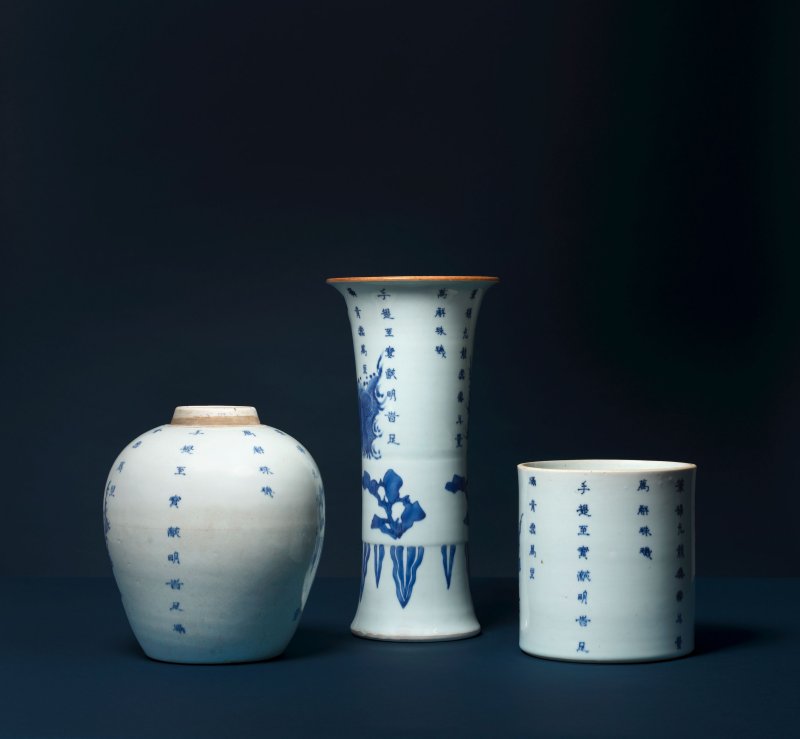
Lot 9 清順治 青花魁星點斗圖詩文筆筒 | A RARE BLUE AND WHITE 'KUI XING' BRUSHPOT, BITONG
落槌价
预展中
成交价
预展中
| 拍卖公司 | 邦瀚斯 |
|---|---|
| 拍卖时间 | 2026年11月05日 |
拍品信息
拍品名称
清順治 青花魁星點斗圖詩文筆筒 | A RARE BLUE AND WHITE 'KUI XING' BRUSHPOT, BITONG
年代
Shunzhi
起拍价
GBP 25,000
估值区间
GBP 25000 - 35000
尺寸
未知
品相
未知
更多信息
Shunzhi
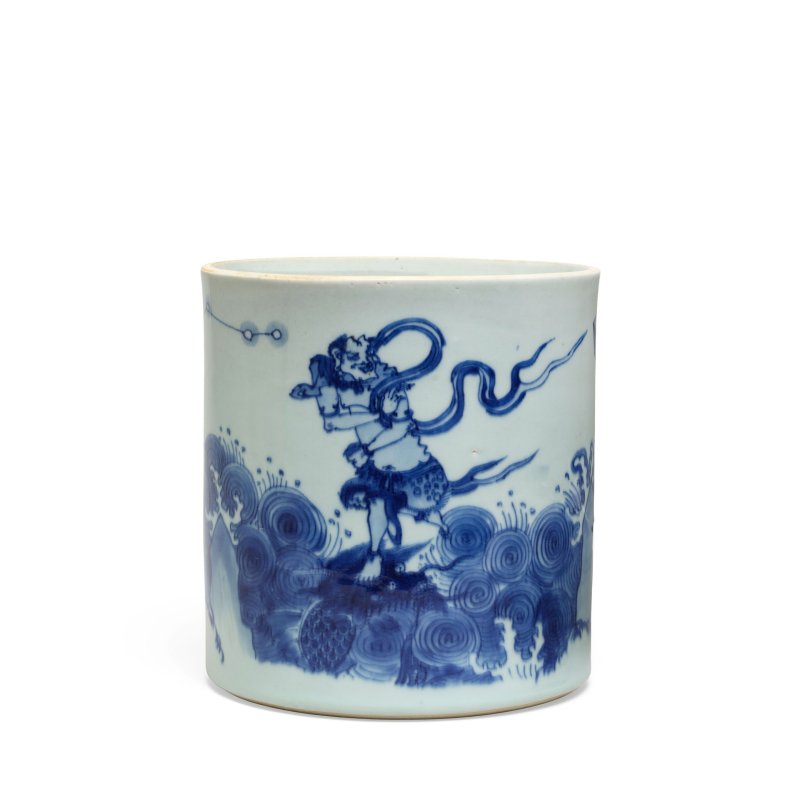
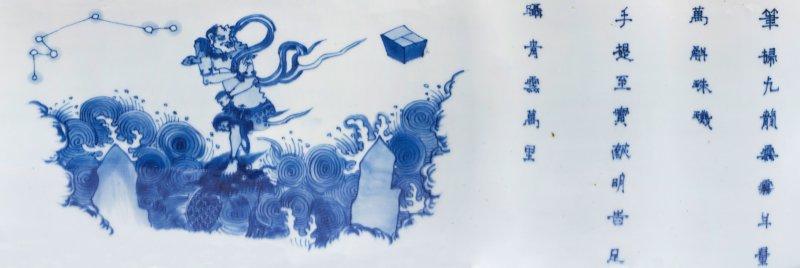
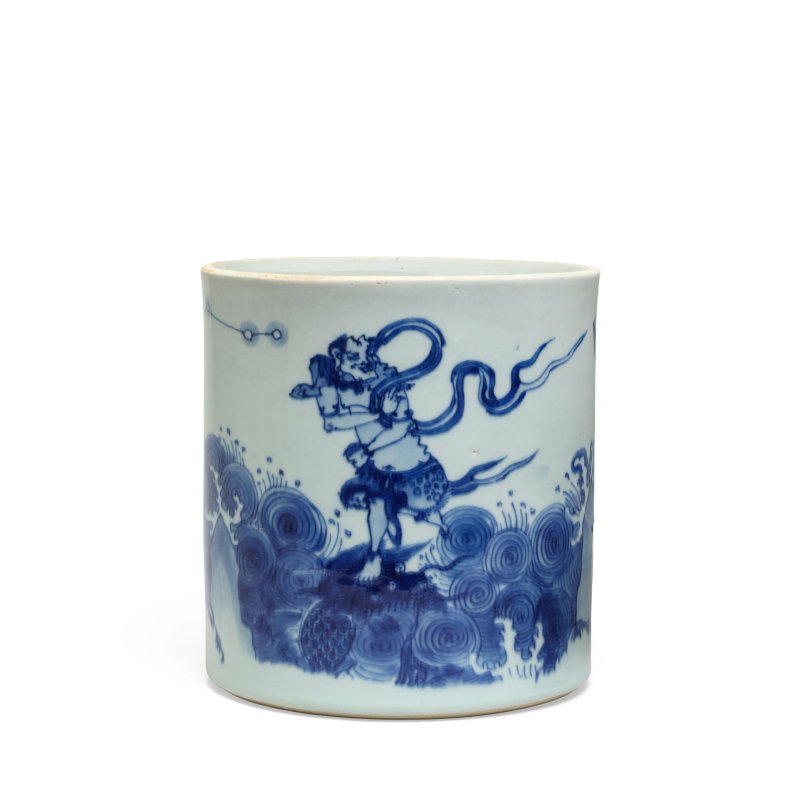
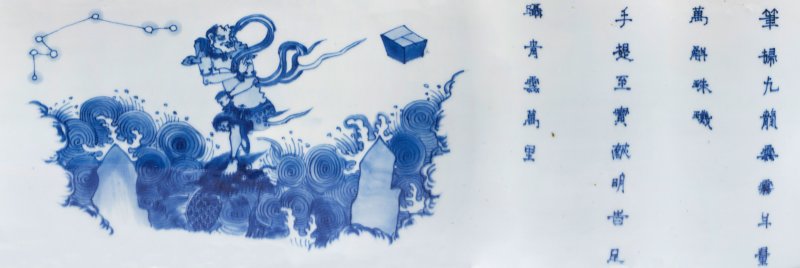
The cylindrical vessel rising to an unglazed mouth rim and vibrantly painted around the exterior with a continuous scene of Kui Xing clad in an animal fur tunic with billowing scarf around his shoulders, one foot atop the mythical fish-dragon (ao) emerging from whirlpools amidst craggy rocks and spray, all beneath a star constellation and measuring vessel in the sky, beside a twenty-five-character poetic inscription, the flat base unglazed. 19.5cm (7 5/8in) high.
Footnotes
清順治 青花魁星點斗圖詩文筆筒
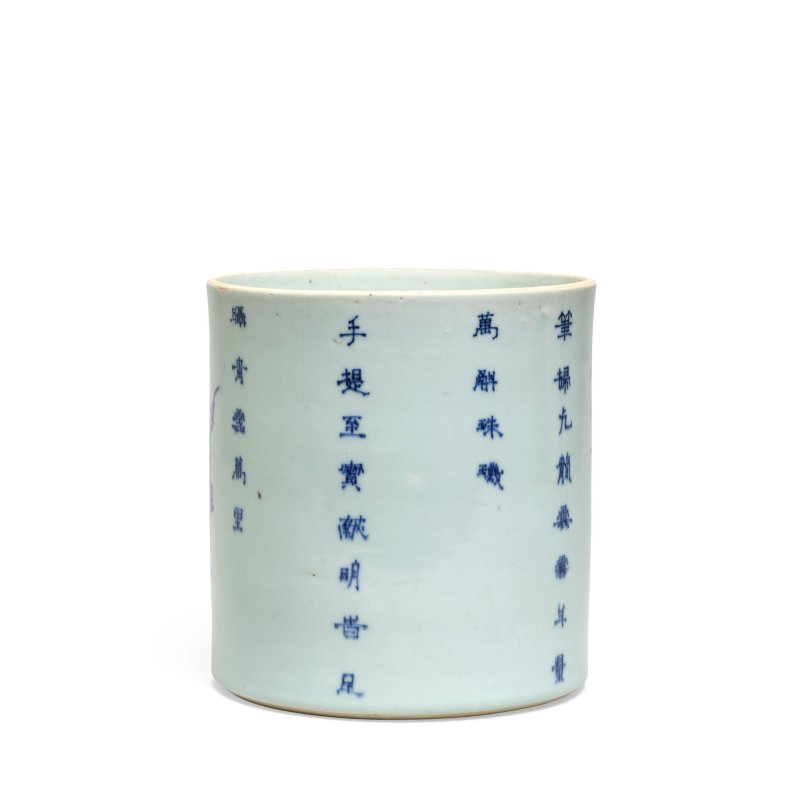
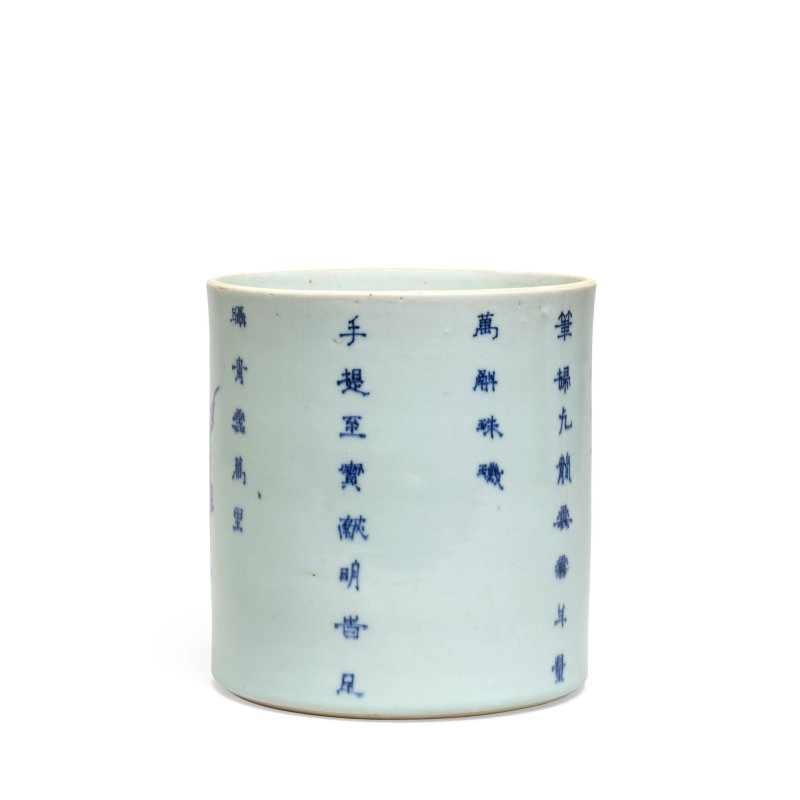
款識:筆掃九靝雲霧,斗量萬觚珠璣。手提至寶獻明時,足躡青雲萬里。
Provenance:
Jan van Beers Oriental Art, London
Acquired from the above on 15 November 1999
Published and Illustrated:
M.Butler, J.B.Curtis and S.Little, Shunzhi Porcelain: Treasures from an Unknown Reign, Alexandria VA, 2002, p.45, figs.3-4
S.Marsh, , Hong Kong, 2020, pp.100-101
倫敦古董商Jan van Beers Oriental Art
從上處獲得于1999年11月15日
M.Butler, J.B.Curtis 及 S.Little,《Shunzhi Porcelain: Treasures from an Unknown Reign》,美國弗吉尼亞州亞歷山德裏亞,2002年,第45頁,插圖3-4
墨一閑,《筆筒淵鑒:收藏家的隨心所悟》,香港,2020年,第100-101頁
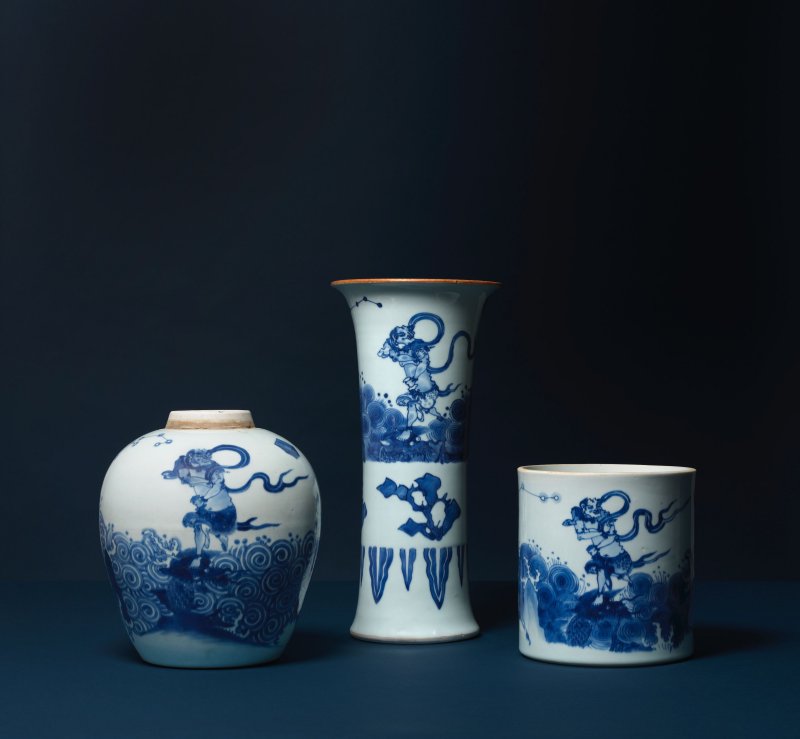
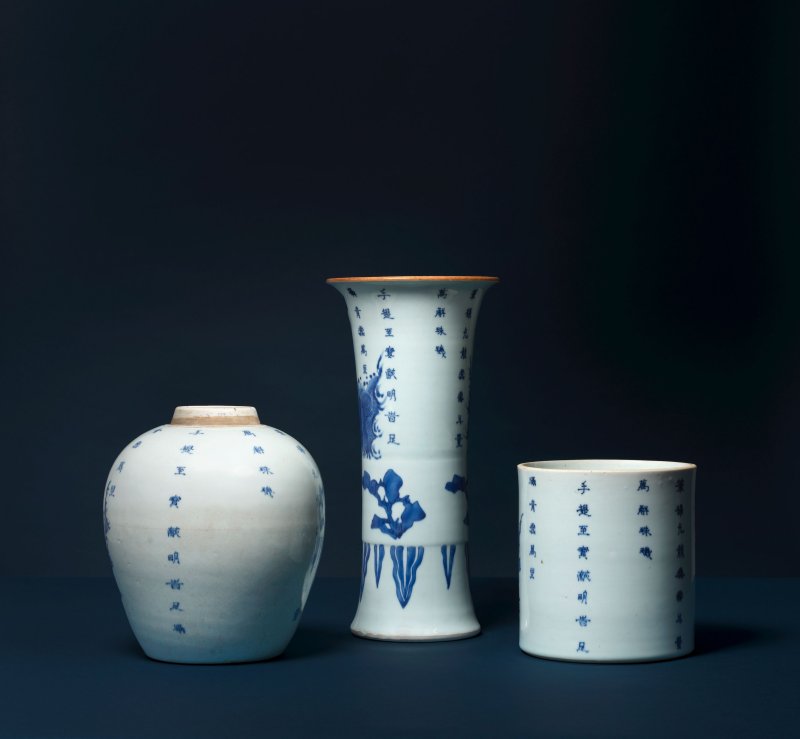
Remarkably, the same twenty-five-character poem on the present lot appears again on Lots 10 and 11 in this catalogue, and seemingly in the hand of the very same calligrapher. This may be identified through the distinctive use of an archaic form of the character (時), meaning 'time' or 'moment', which occurs consistently across the inscriptions. The recurrence of both poem and calligraphy strongly suggests the work of a single specialist decorator or inscription writer operating within the same workshop.
In , Michael Butler, Julia Curtis, and Stephen Little note on p.63 that Bai Qianshen identified this calligrapher as the same individual responsible for the distinctive clerical script on the 'Three Friends of Winter' vase dated 1653 in the Shanghai Museum. A very similar blue and white brushpot, Shunzhi, is illustrated in ., p.45, figs.3-4.
Kui Xing 魁星, whose name may be translated as 'Chief Star', is the Daoist deity associated with literature and success in the Imperial Examinations. Images of the god were especially popular among scholars, for whom such imagery served both as an auspicious emblem and as a visual invocation of academic achievement.
The character (魁) incorporates the radical for 'ghost' or 'demon' (鬼) together with the component (斗), meaning a ladle or dipper, alluding to Kui Xing's celestial association with the Big Dipper. This attribute is represented on the present vessel by the square-form dipper floating above. Kui Xing is traditionally depicted with an unusual and sometimes grotesque appearance: a gaunt body, protruding features, and a horn-like growth upon his head.
According to legend, Kui Xing was once a brilliant scholar whose physical ugliness prevented him from attaining success in the civil service examinations. In despair, he cast himself into a river, where he was rescued by the mythical creature. Thereafter, he ascended to the heavens and became the divine patron of scholars and literary accomplishment.
Dreams of Kui Xing on the eve of the examinations were considered highly auspicious, while the successful candidate who achieved first place, the , was symbolically associated with the beast. Representations of Kui Xing standing upon an thus became enduring symbols of scholarly distinction, examination success, and advancement to high office. The poem further underscores themes of literary accomplishment:
筆掃九靝雲霧,
斗量萬觚珠璣,
手提至寶獻明時,
足躡青雲萬里
Which may be translated as:
The poem celebrates the power of the brush and the attainment of scholarly distinction. The opening line, 'the brush sweeps away the clouds and mists of the nine heavens,' evokes the extraordinary force of literary talent, capable of dispelling ignorance and reaching the celestial realm itself. The following phrase, referring to 'pearls and jade-like gems measured by the dipperful,' likens refined writing and learned thought to precious treasures of immeasurable value. The third line, 'with treasured rarities in hand, they are presented to an enlightened age,' suggests the offering of one's cultivated abilities to a wise and flourishing dynasty, while the final line, 'treading the blue clouds for ten thousand li,' alludes to meteoric advancement and success in the Imperial examinations. Together, the imagery closely accords with Kui Xing's role as patron of scholars, embodying aspirations for literary brilliance, official promotion, and enduring fame.
See a related blue and white documentary 'Kui Xing' vessel, dated to the year, corresponding to 1654 and of the period, which was sold at Bonhams London, 3 November 2022, lot 3.
The cylindrical vessel rising to an unglazed mouth rim and vibrantly painted around the exterior with a continuous scene of Kui Xing clad in an animal fur tunic with billowing scarf around his shoulders, one foot atop the mythical fish-dragon (ao) emerging from whirlpools amidst craggy rocks and spray, all beneath a star constellation and measuring vessel in the sky, beside a twenty-five-character poetic inscription, the flat base unglazed. 19.5cm (7 5/8in) high.
Footnotes
清順治 青花魁星點斗圖詩文筆筒
款識:筆掃九靝雲霧,斗量萬觚珠璣。手提至寶獻明時,足躡青雲萬里。
Provenance:
Jan van Beers Oriental Art, London
Acquired from the above on 15 November 1999
Published and Illustrated:
M.Butler, J.B.Curtis and S.Little, Shunzhi Porcelain: Treasures from an Unknown Reign, Alexandria VA, 2002, p.45, figs.3-4
S.Marsh, , Hong Kong, 2020, pp.100-101
倫敦古董商Jan van Beers Oriental Art
從上處獲得于1999年11月15日
M.Butler, J.B.Curtis 及 S.Little,《Shunzhi Porcelain: Treasures from an Unknown Reign》,美國弗吉尼亞州亞歷山德裏亞,2002年,第45頁,插圖3-4
墨一閑,《筆筒淵鑒:收藏家的隨心所悟》,香港,2020年,第100-101頁
Remarkably, the same twenty-five-character poem on the present lot appears again on Lots 10 and 11 in this catalogue, and seemingly in the hand of the very same calligrapher. This may be identified through the distinctive use of an archaic form of the character (時), meaning 'time' or 'moment', which occurs consistently across the inscriptions. The recurrence of both poem and calligraphy strongly suggests the work of a single specialist decorator or inscription writer operating within the same workshop.
In , Michael Butler, Julia Curtis, and Stephen Little note on p.63 that Bai Qianshen identified this calligrapher as the same individual responsible for the distinctive clerical script on the 'Three Friends of Winter' vase dated 1653 in the Shanghai Museum. A very similar blue and white brushpot, Shunzhi, is illustrated in ., p.45, figs.3-4.
Kui Xing 魁星, whose name may be translated as 'Chief Star', is the Daoist deity associated with literature and success in the Imperial Examinations. Images of the god were especially popular among scholars, for whom such imagery served both as an auspicious emblem and as a visual invocation of academic achievement.
The character (魁) incorporates the radical for 'ghost' or 'demon' (鬼) together with the component (斗), meaning a ladle or dipper, alluding to Kui Xing's celestial association with the Big Dipper. This attribute is represented on the present vessel by the square-form dipper floating above. Kui Xing is traditionally depicted with an unusual and sometimes grotesque appearance: a gaunt body, protruding features, and a horn-like growth upon his head.
According to legend, Kui Xing was once a brilliant scholar whose physical ugliness prevented him from attaining success in the civil service examinations. In despair, he cast himself into a river, where he was rescued by the mythical creature. Thereafter, he ascended to the heavens and became the divine patron of scholars and literary accomplishment.
Dreams of Kui Xing on the eve of the examinations were considered highly auspicious, while the successful candidate who achieved first place, the , was symbolically associated with the beast. Representations of Kui Xing standing upon an thus became enduring symbols of scholarly distinction, examination success, and advancement to high office. The poem further underscores themes of literary accomplishment:
筆掃九靝雲霧,
斗量萬觚珠璣,
手提至寶獻明時,
足躡青雲萬里
Which may be translated as:
The poem celebrates the power of the brush and the attainment of scholarly distinction. The opening line, 'the brush sweeps away the clouds and mists of the nine heavens,' evokes the extraordinary force of literary talent, capable of dispelling ignorance and reaching the celestial realm itself. The following phrase, referring to 'pearls and jade-like gems measured by the dipperful,' likens refined writing and learned thought to precious treasures of immeasurable value. The third line, 'with treasured rarities in hand, they are presented to an enlightened age,' suggests the offering of one's cultivated abilities to a wise and flourishing dynasty, while the final line, 'treading the blue clouds for ten thousand li,' alludes to meteoric advancement and success in the Imperial examinations. Together, the imagery closely accords with Kui Xing's role as patron of scholars, embodying aspirations for literary brilliance, official promotion, and enduring fame.
See a related blue and white documentary 'Kui Xing' vessel, dated to the year, corresponding to 1654 and of the period, which was sold at Bonhams London, 3 November 2022, lot 3.
常见问题
这件清順治 青花魁星點斗圖詩文筆筒 | A RARE BLUE AND WHITE 'KUI XING' BRUSHPOT, BITONG的成交价是多少?
落槌价为 预展中。 成交价为 预展中。