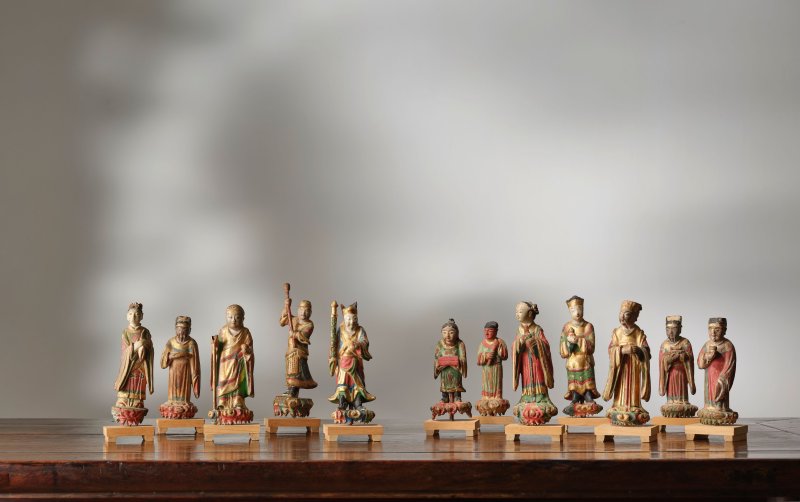

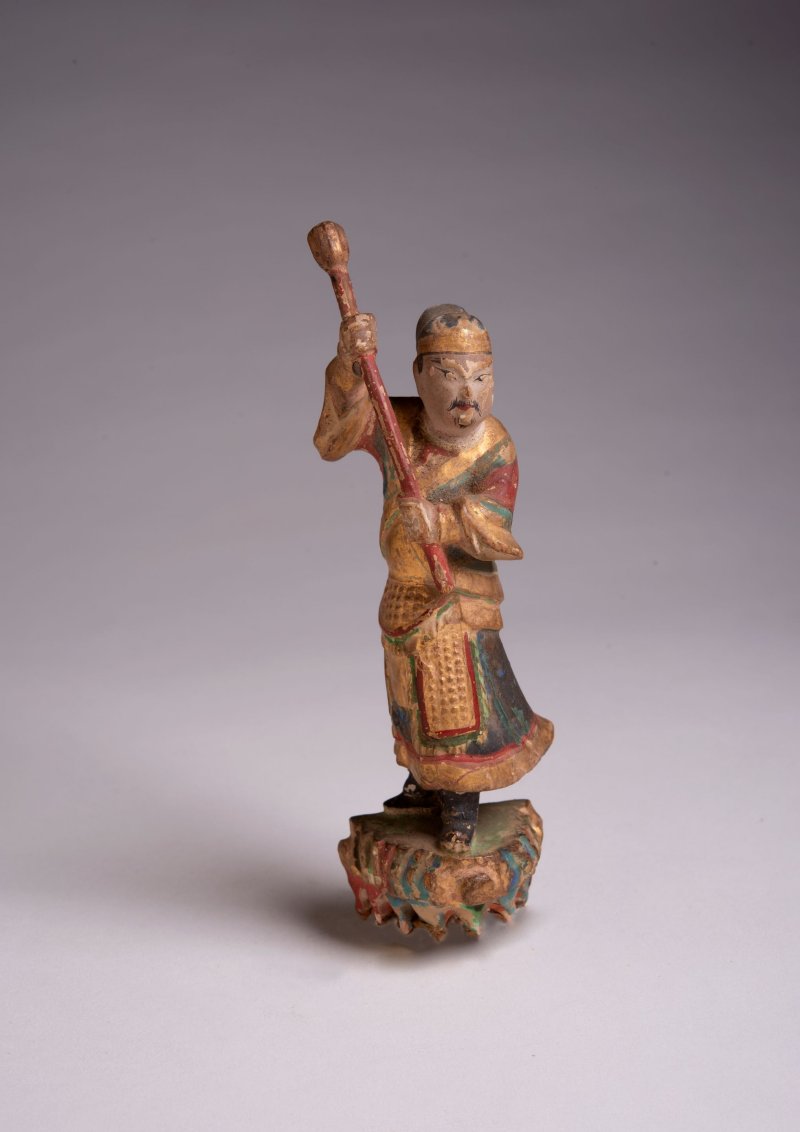
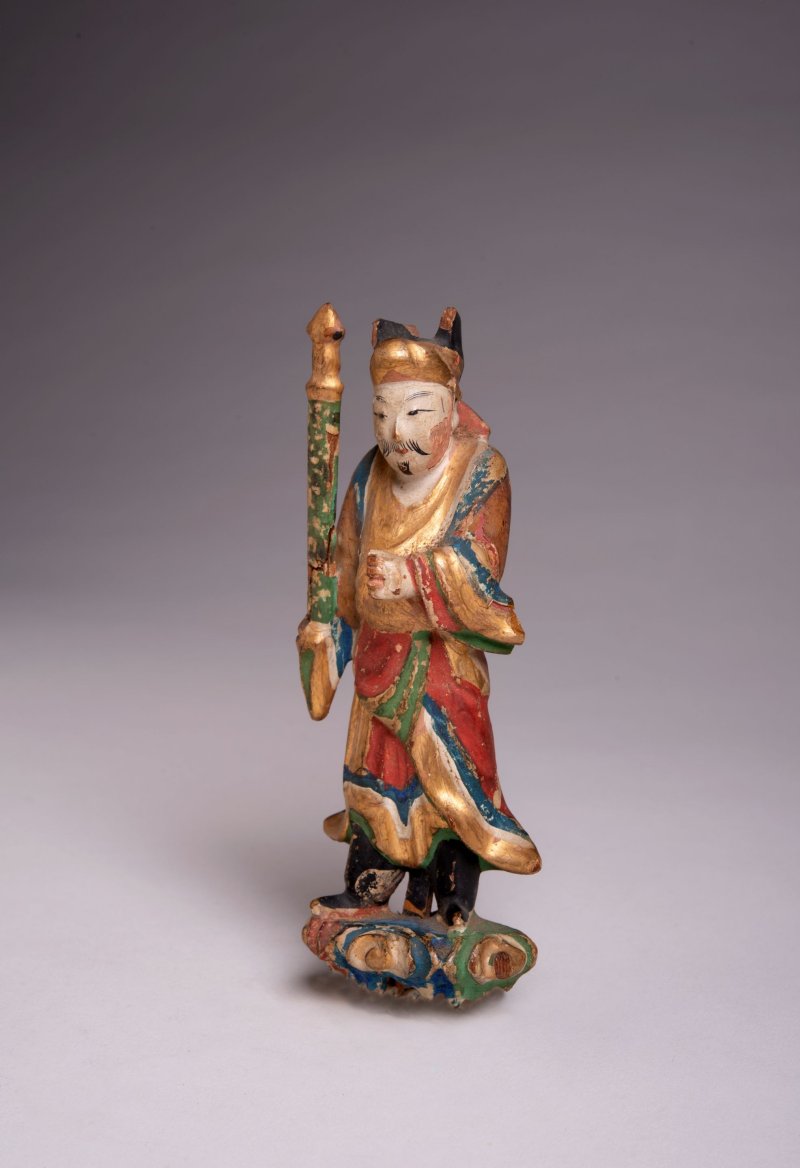
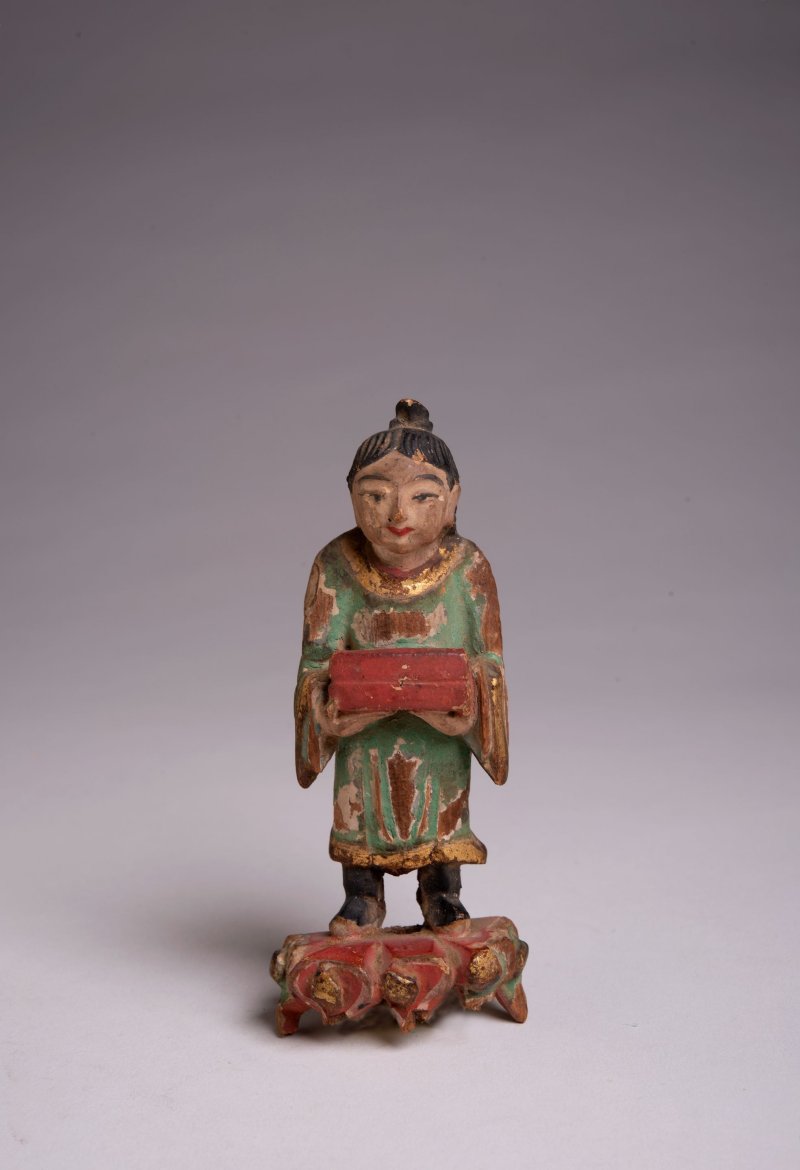
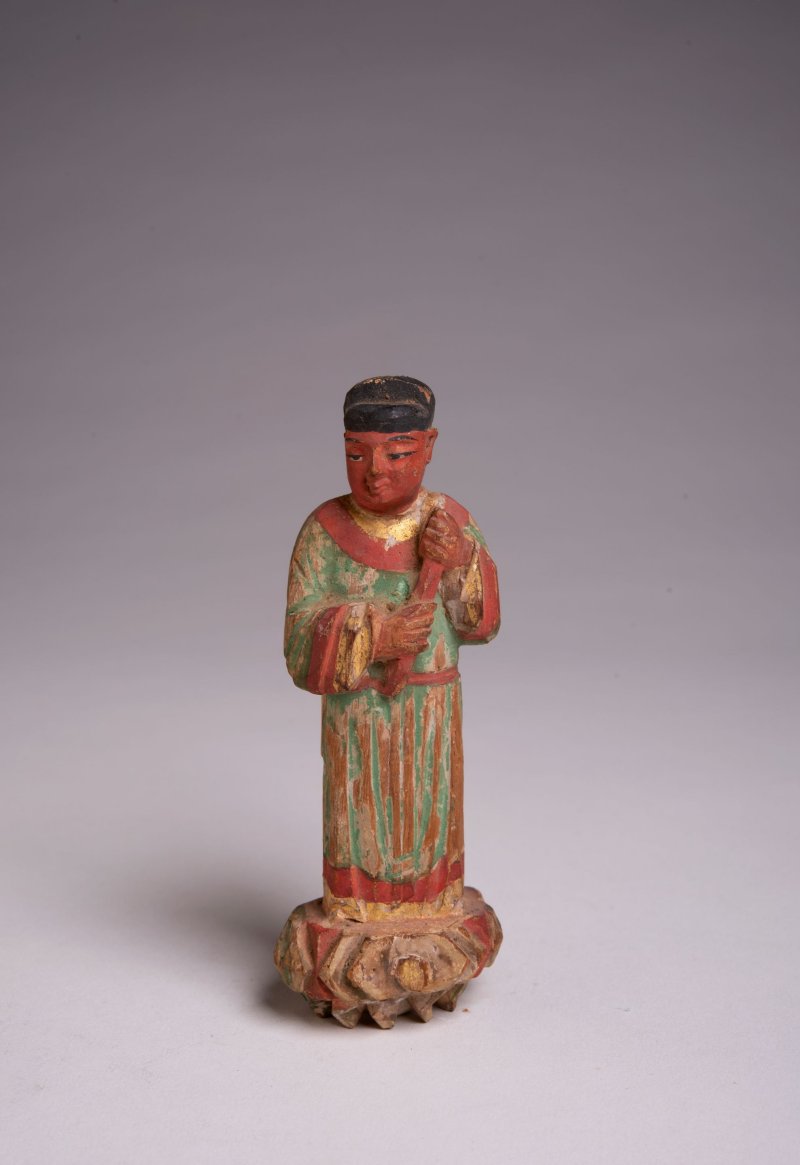
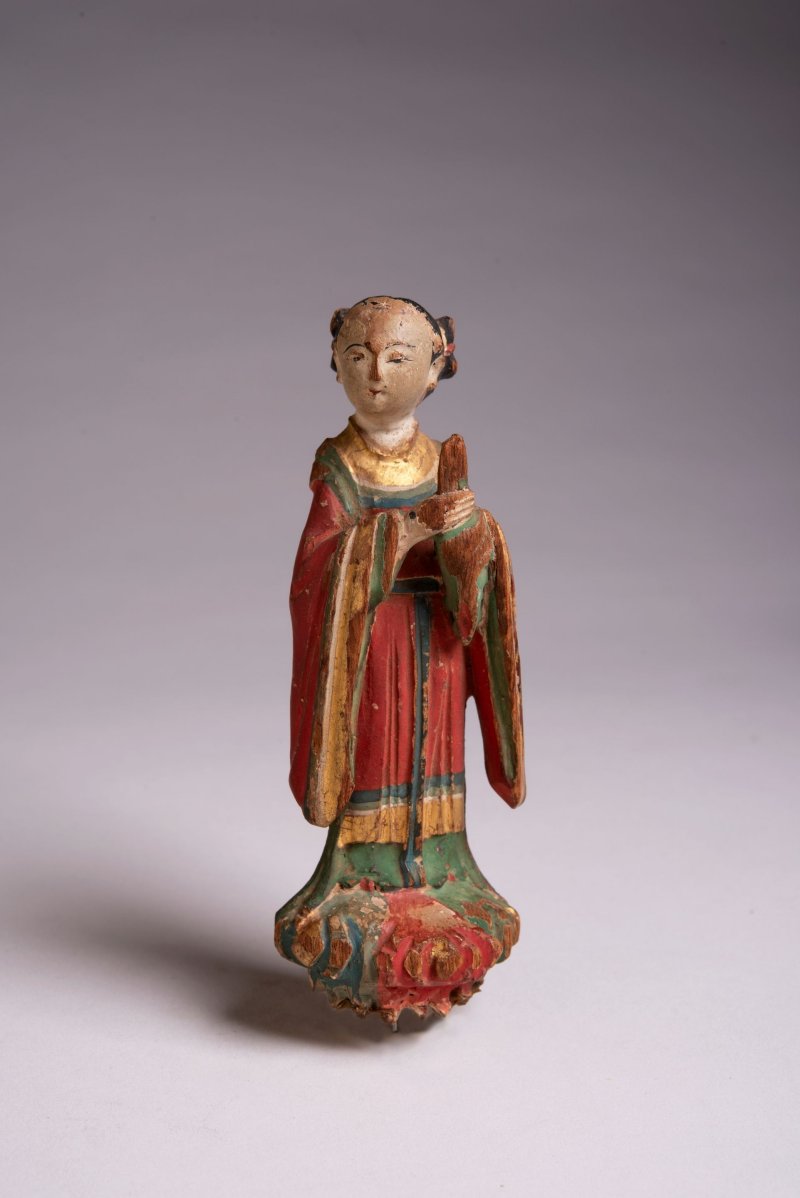
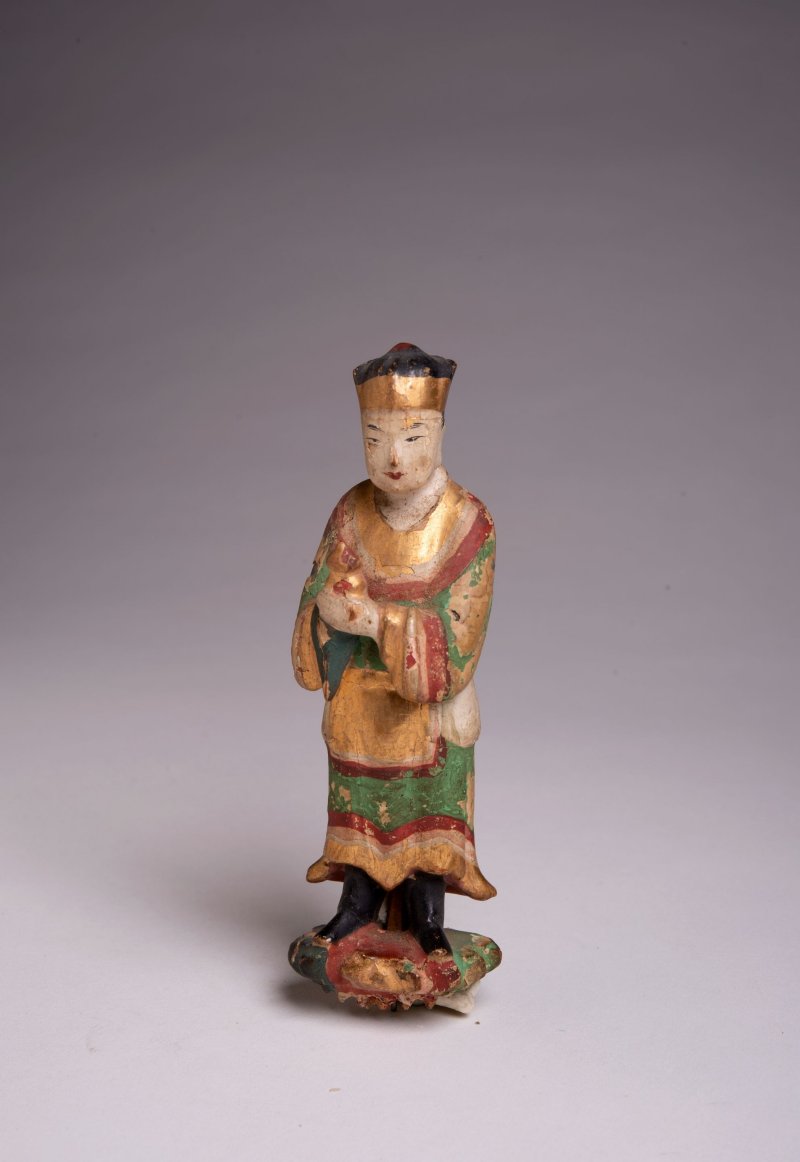
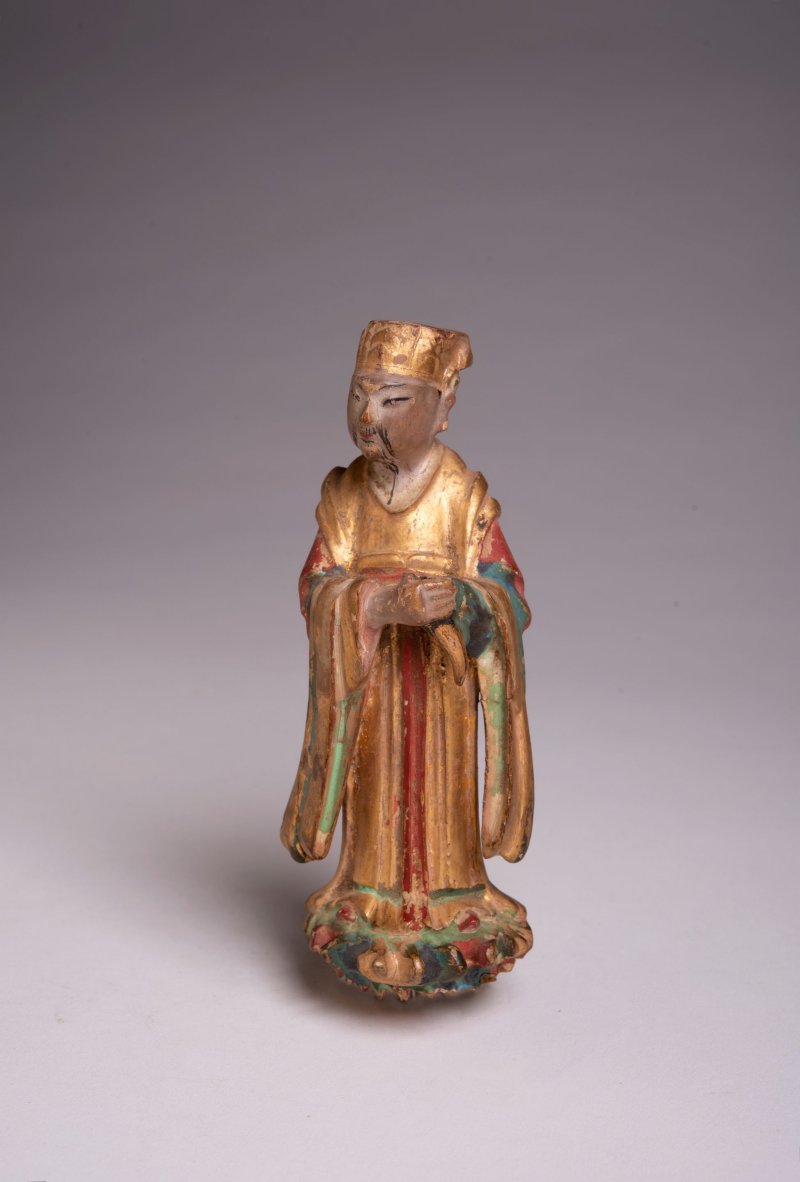
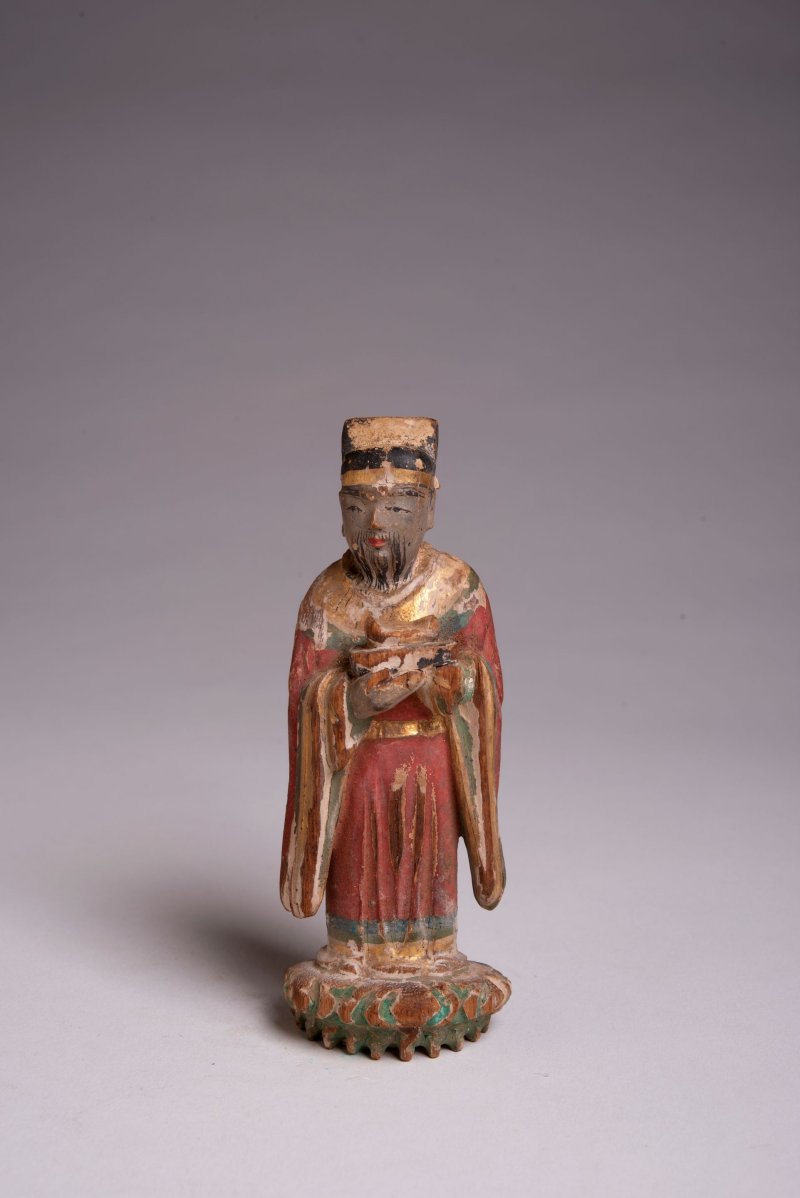

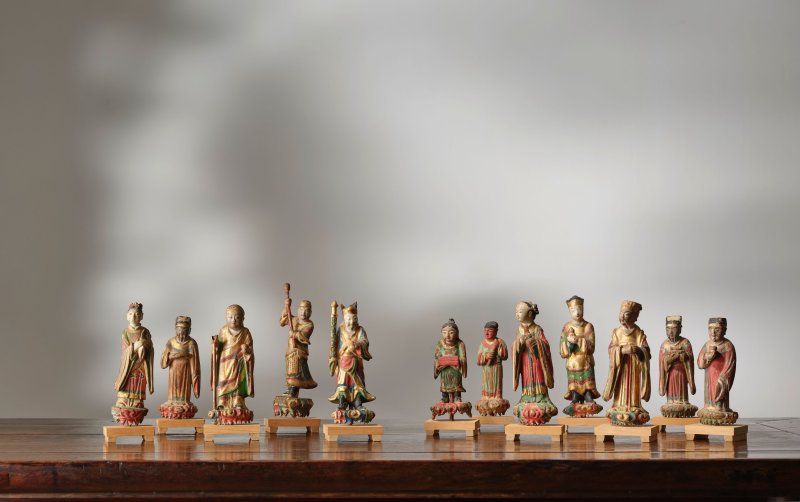
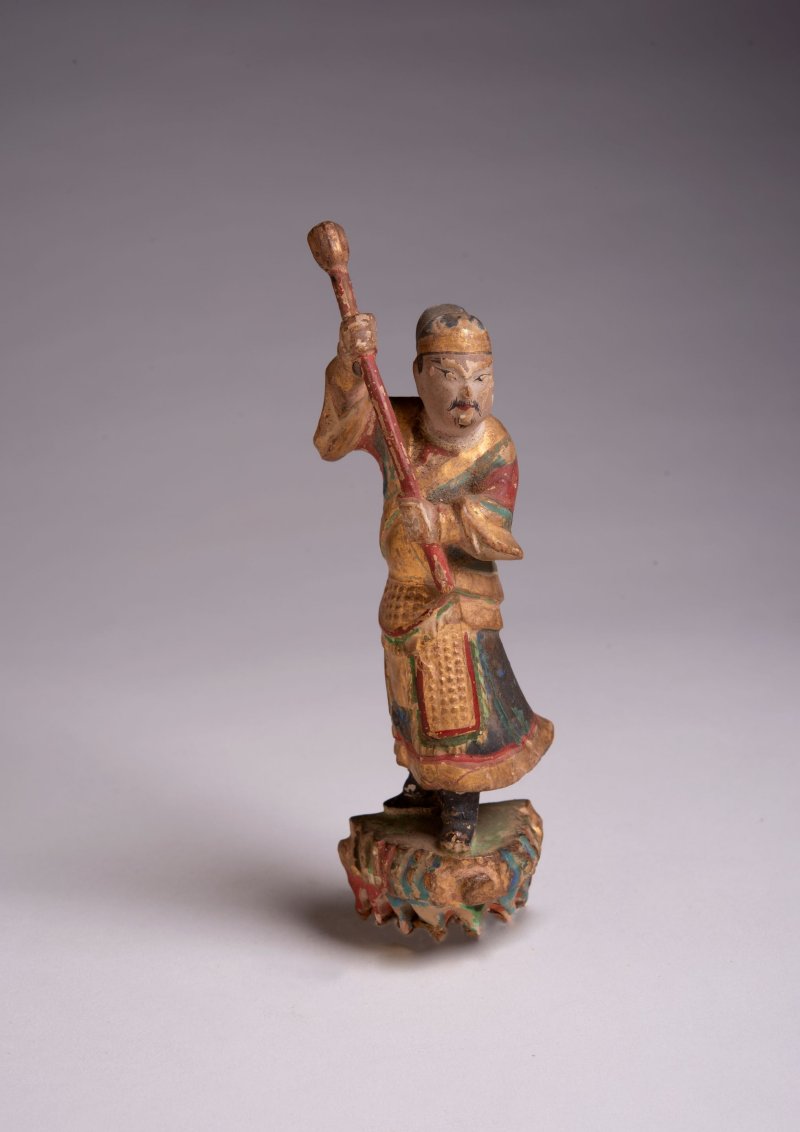
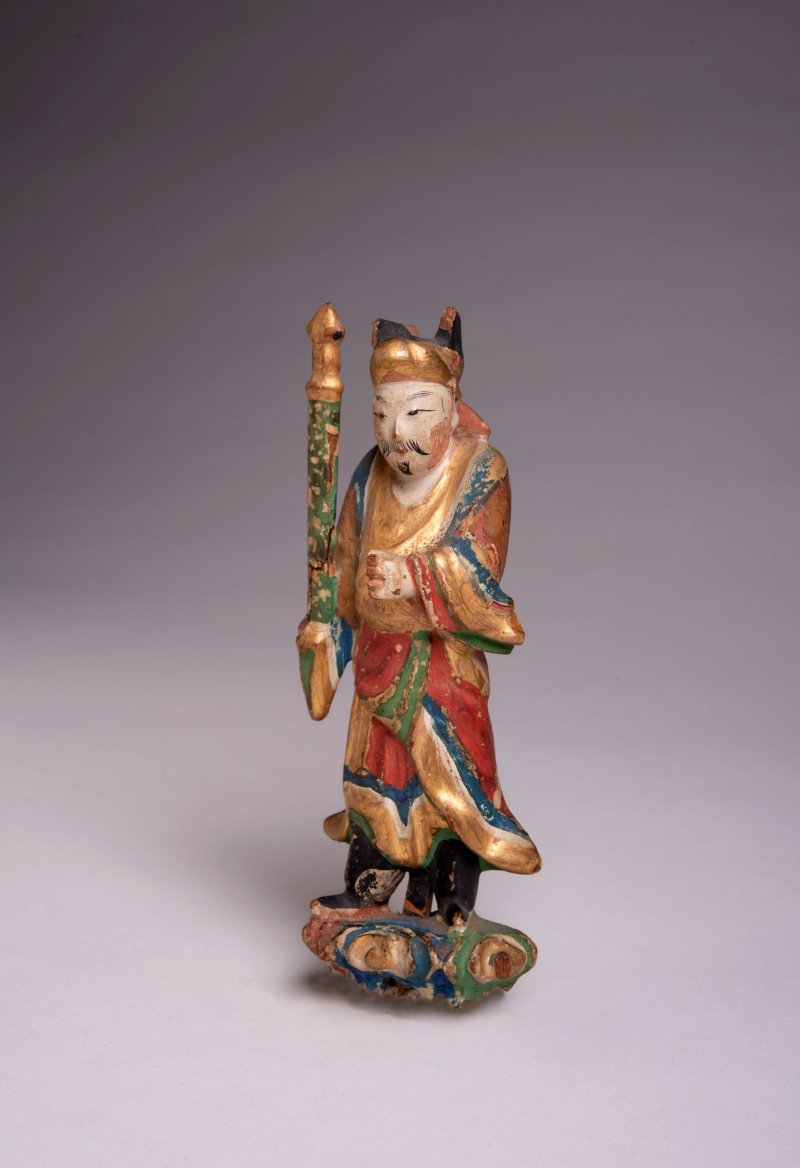
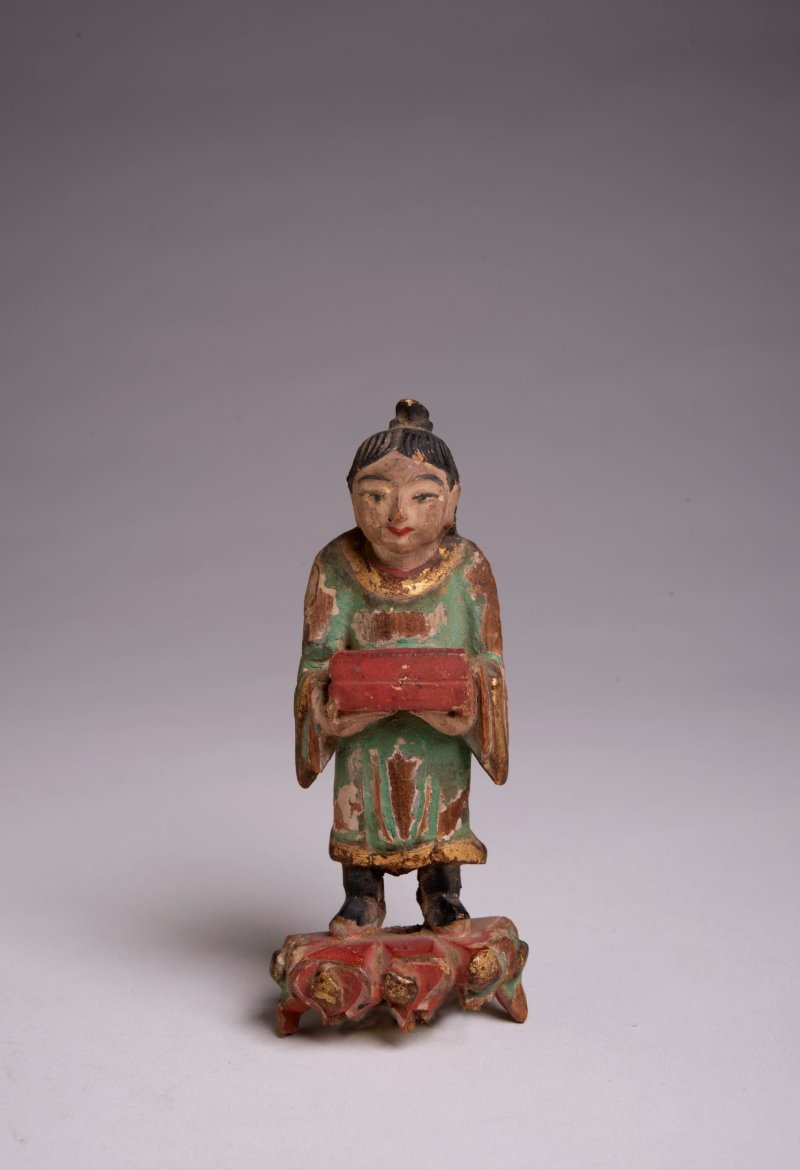
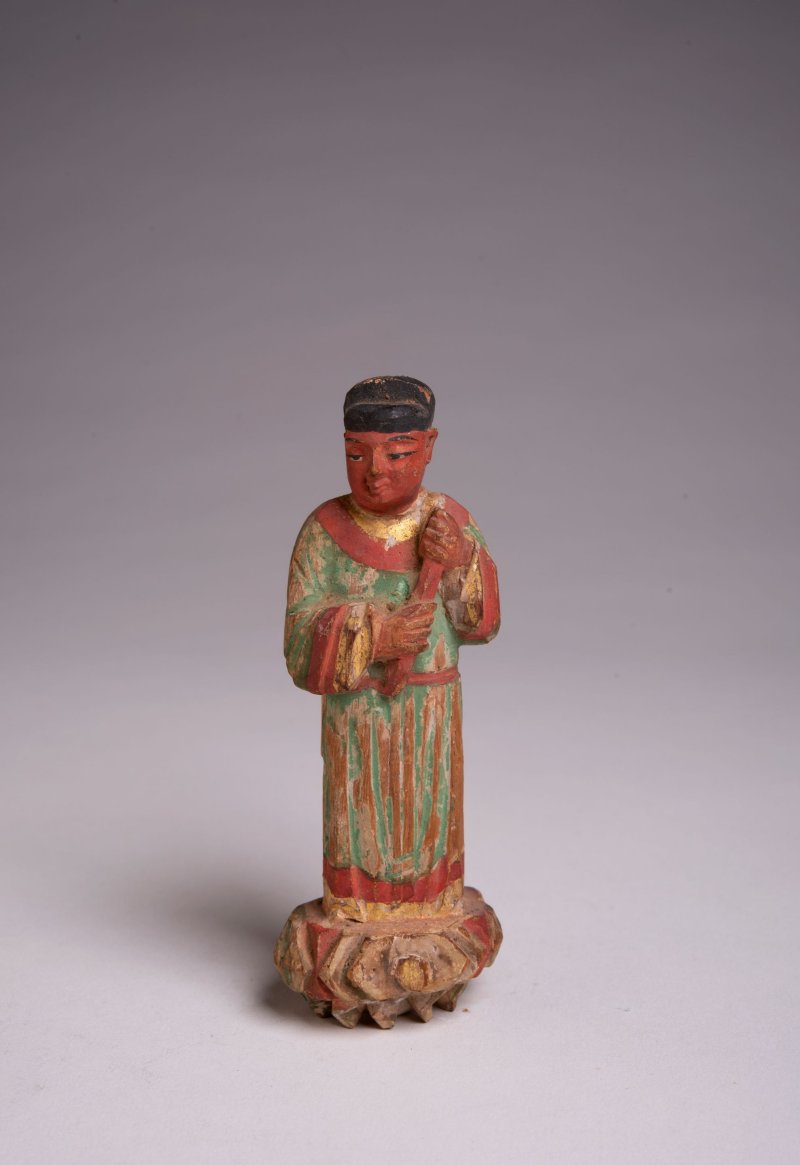
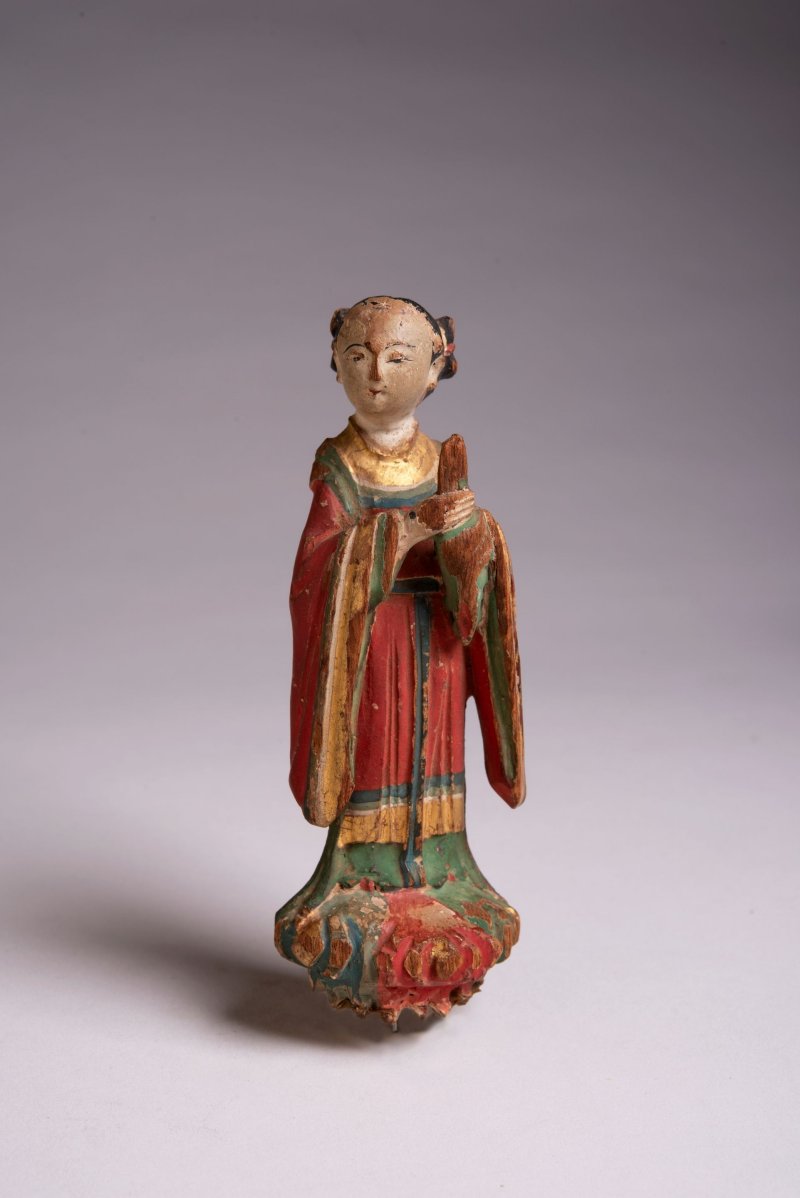
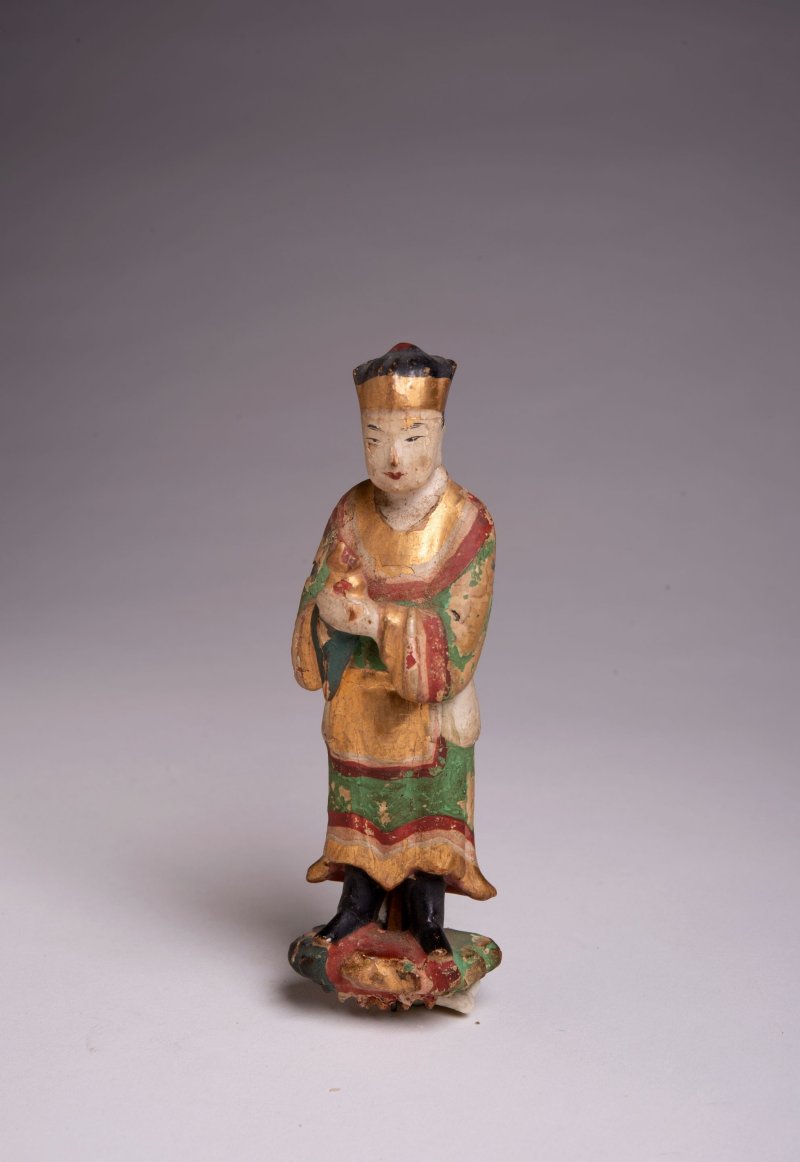
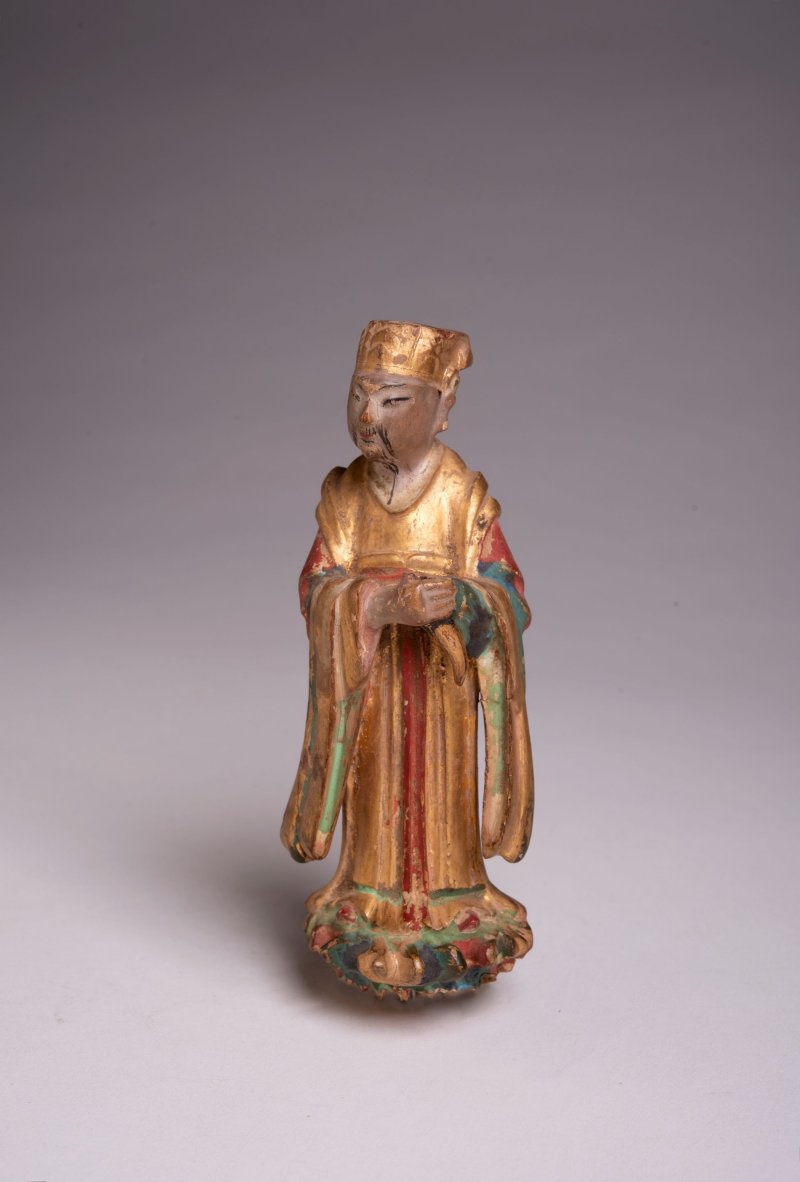
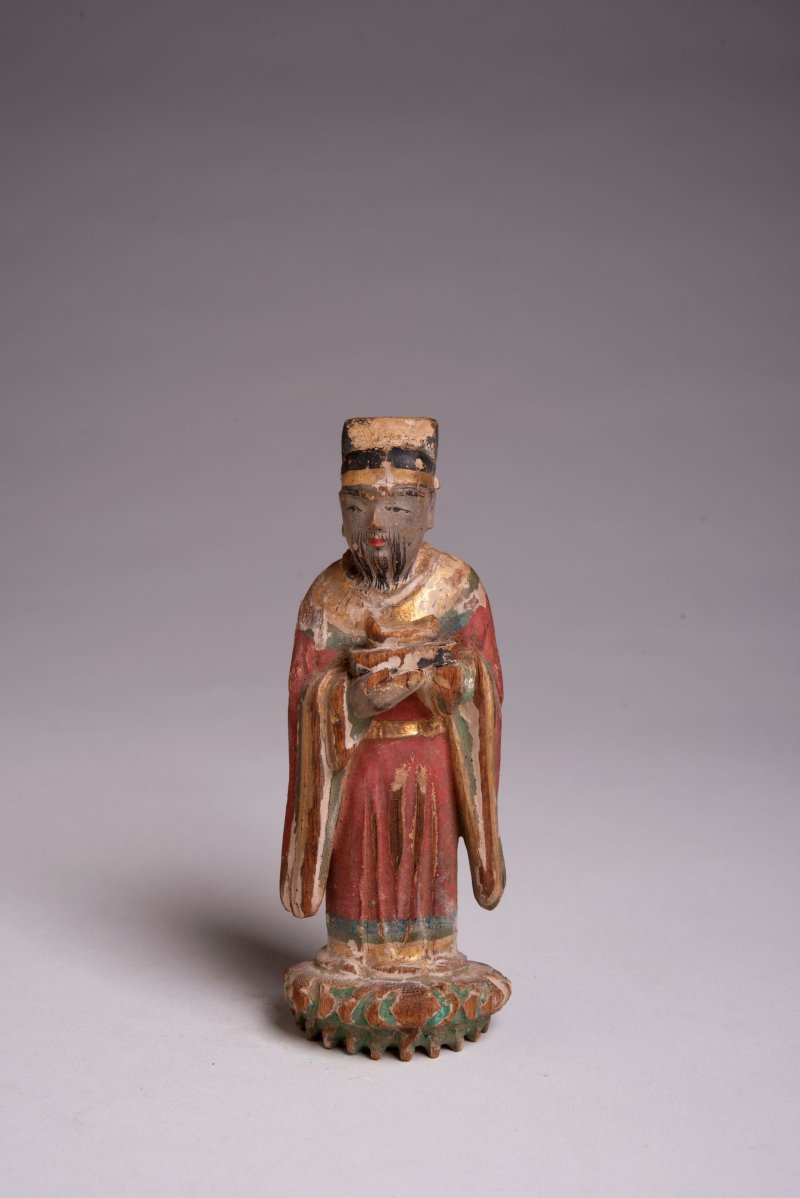
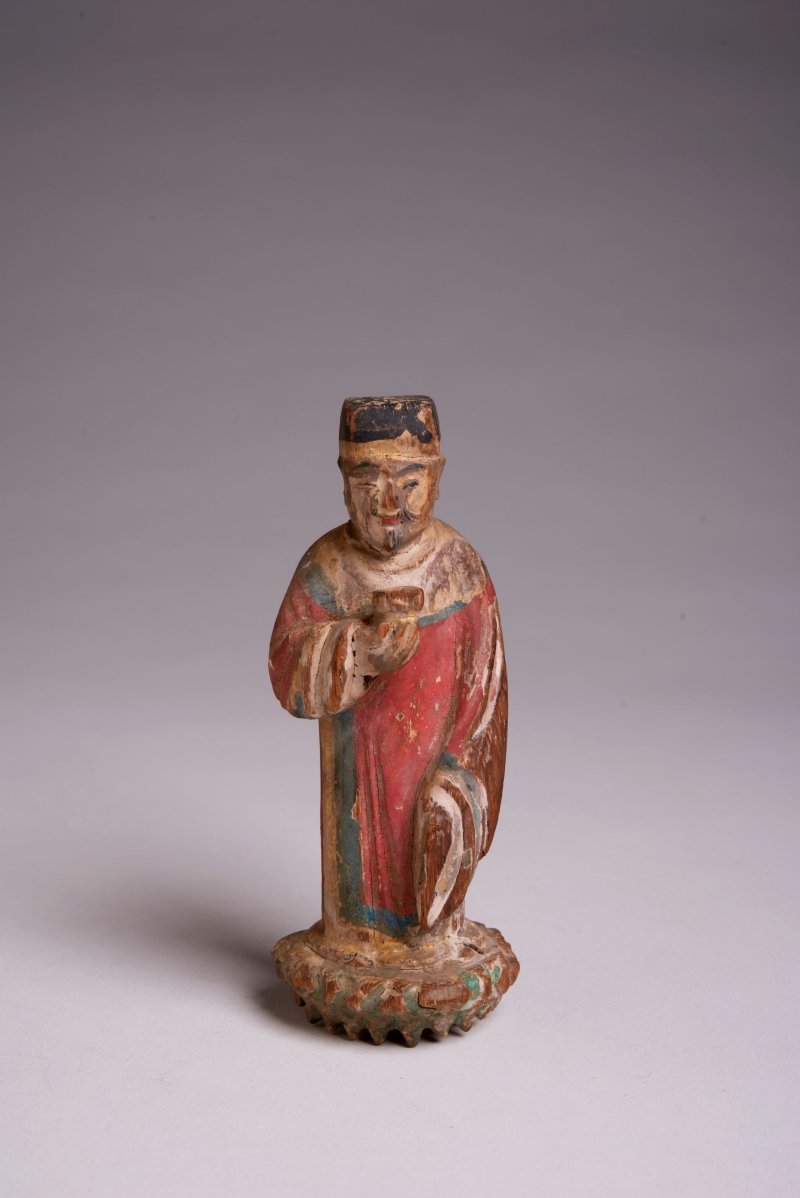
Lot 112 宋/金至元 貼金加彩小木雕人物造像一組十二件 | A GROUP OF TWELVE SMALL POLYCHROME WOOD FIGURES
落槌价
预展中
成交价
预展中
| 拍卖公司 | 邦瀚斯 |
|---|---|
| 拍卖时间 | 2026年10月28日 |
拍品信息
拍品名称
宋/金至元 貼金加彩小木雕人物造像一組十二件 | A GROUP OF TWELVE SMALL POLYCHROME WOOD FIGURES
年代
Song/Jin-Yuan Dynasty
起拍价
HKD 80,000
估值区间
HKD 80000 - 120000
尺寸
未知
品相
未知
更多信息
Song/Jin-Yuan Dynasty
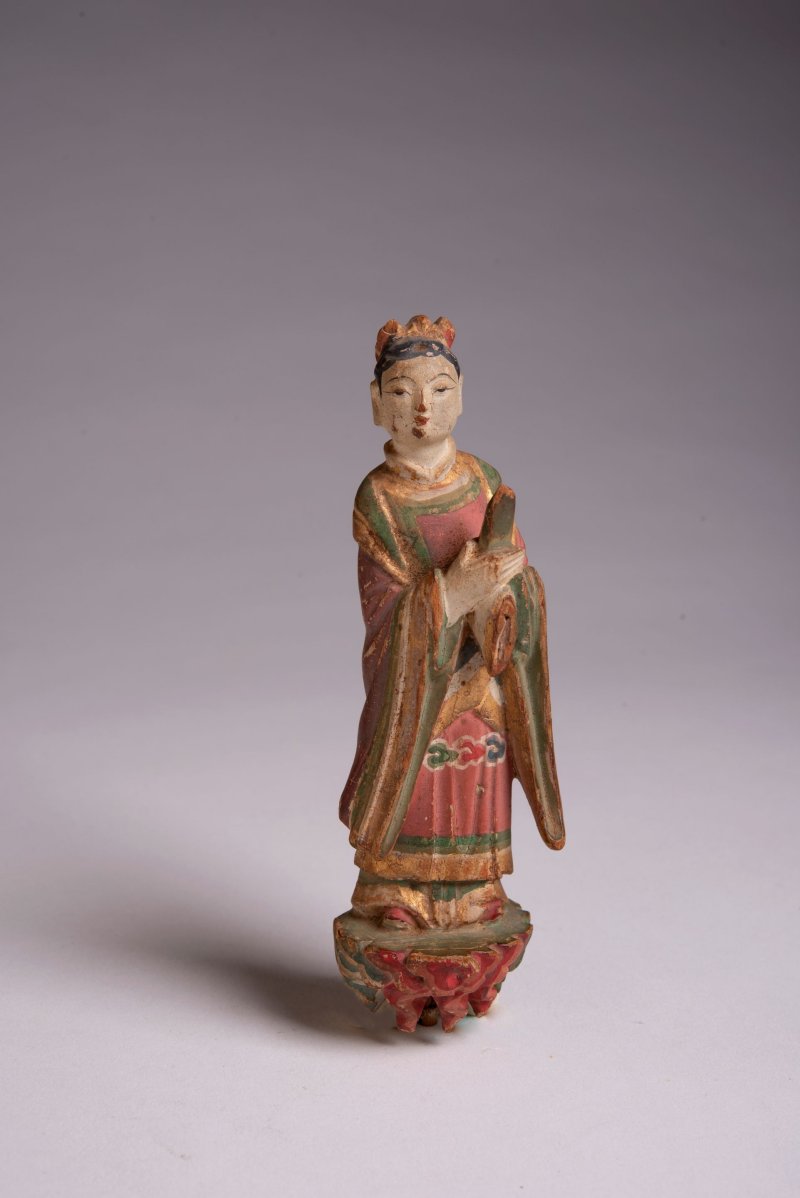
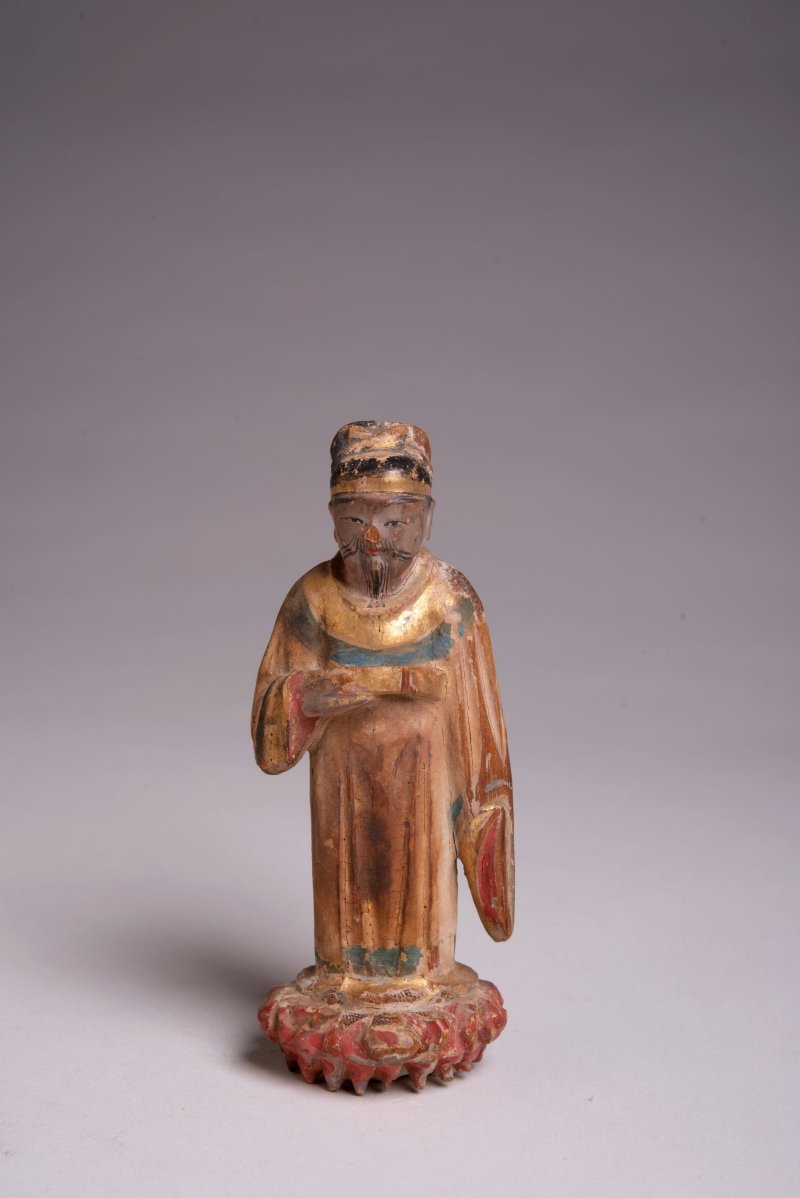
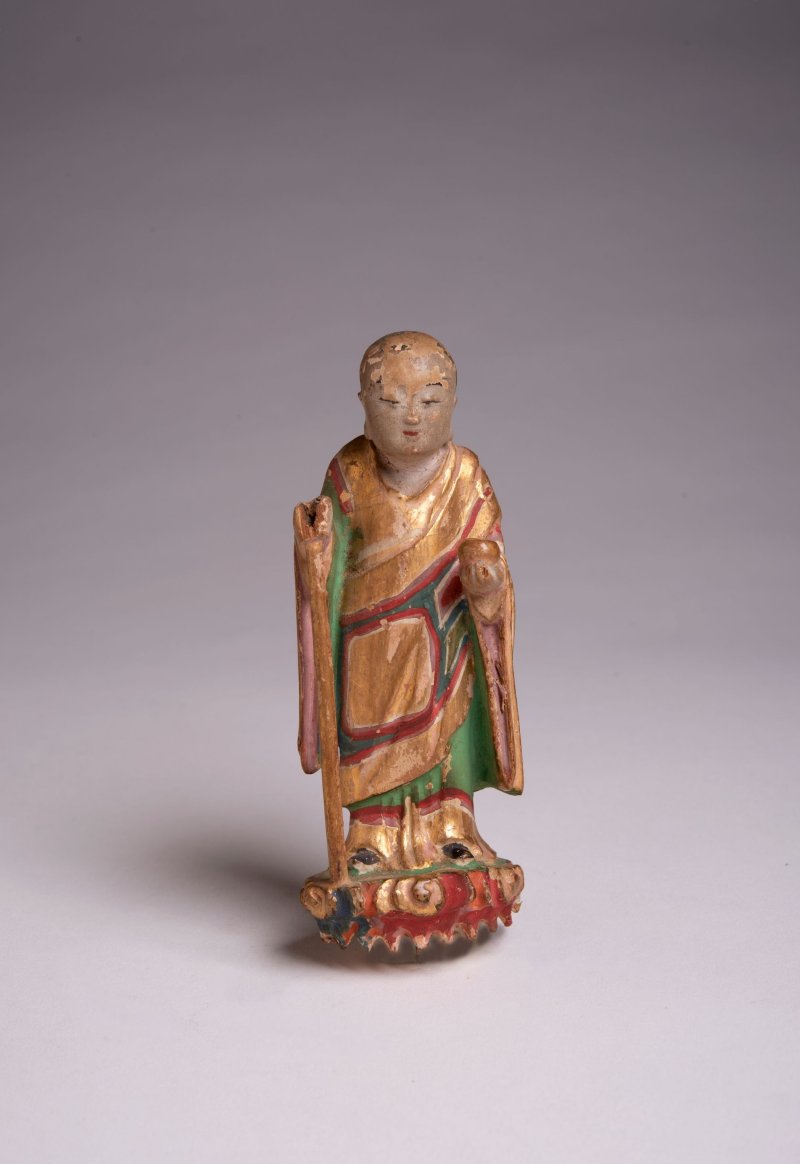
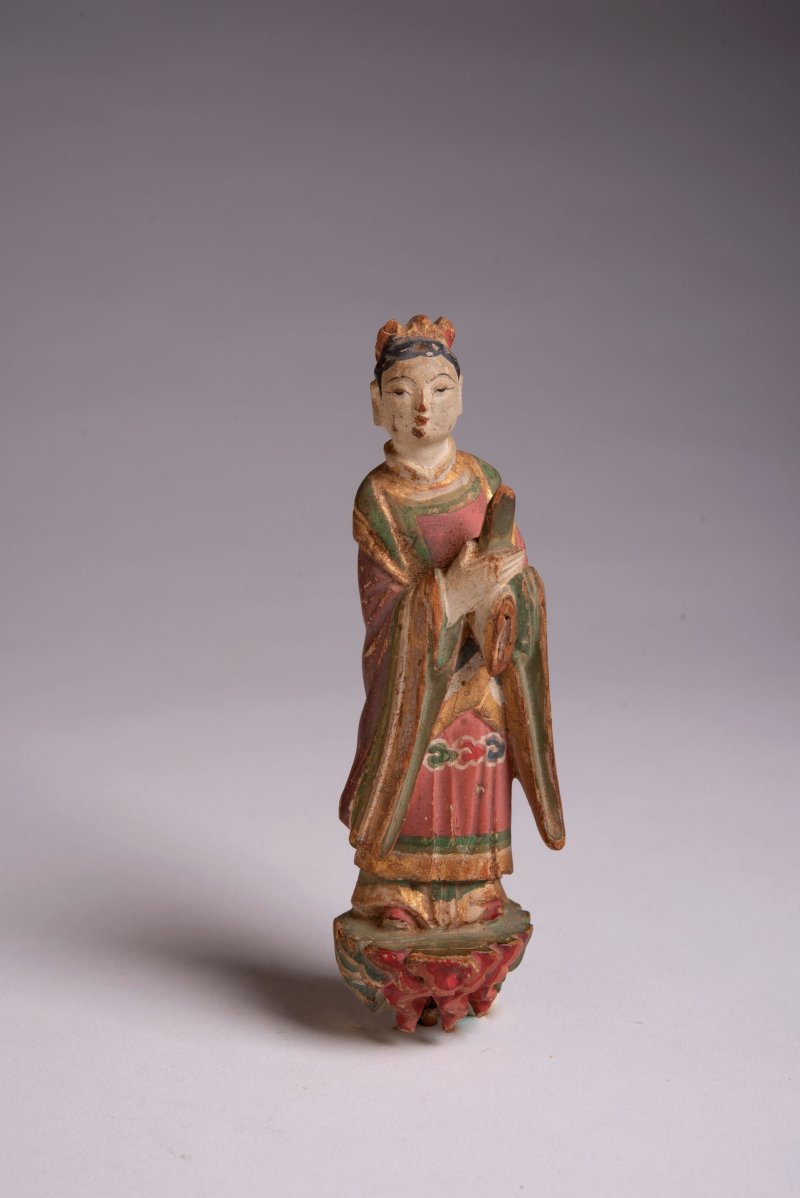
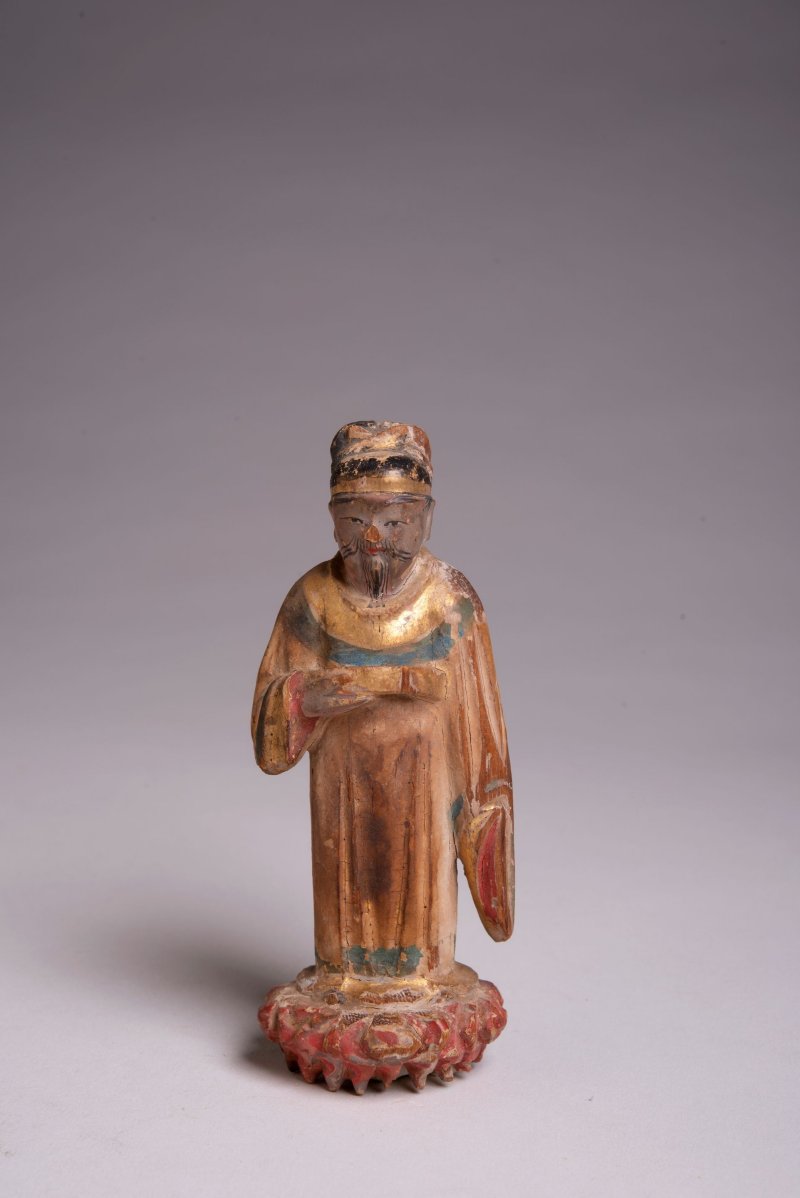
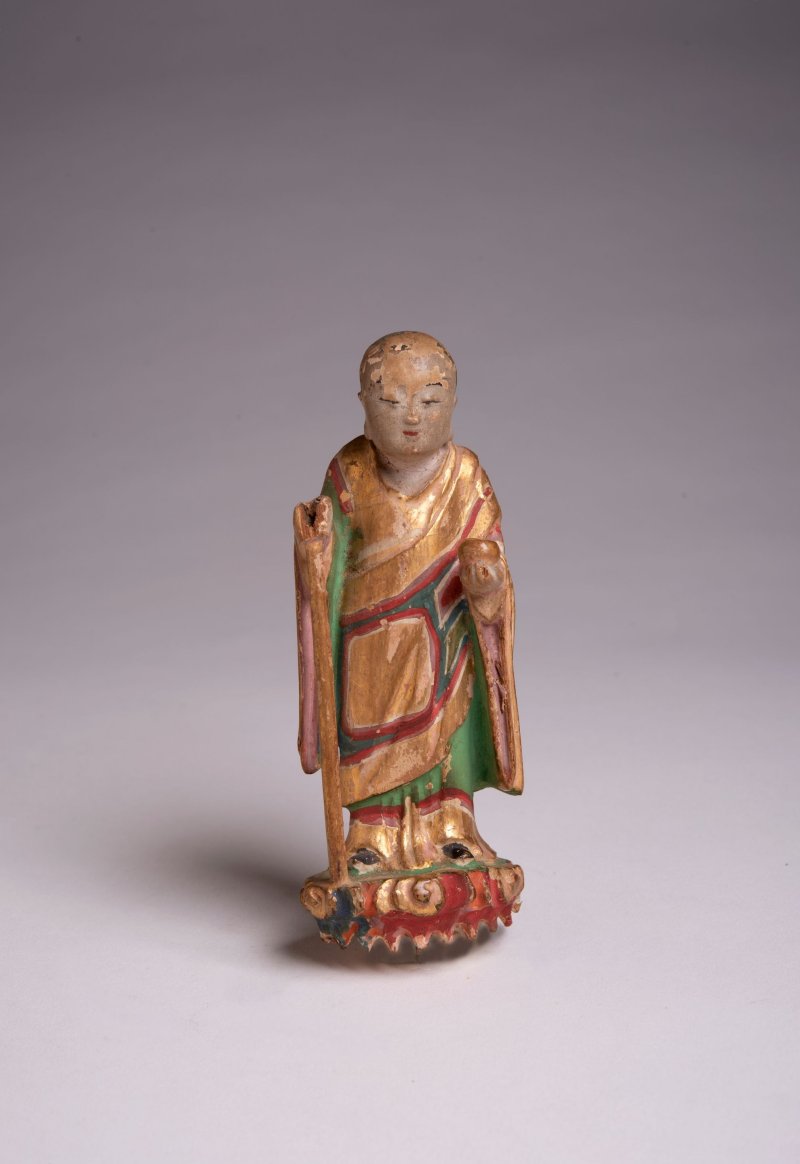
Comprising twelve standing figures depicting a varied pantheon of Daoist personages, including civil officials, martial guardians and courtly attendants, each expressively carved in individualistic postures atop lotus or cloud-scroll pedestals, clad in layered, wide-sleeved robes, courtly tunics, or suit of armour tied with sashes, painted in rich shades of cinnabar red, malachite green, and off-white pigment, accentuated with gilding, finely detailed countenances range from serene and contemplative monastics to stern, majestic officials and expressive guardians, several holding ritual attributes including staves, sacred texts, alms bowls, and offering vessels, fitted wood stands.
Tallest 15.8cm (6 1/4 in) (24).
Footnotes
宋/金至元 貼金加彩小木雕人物造像一組十二件
Provenance:
Acquired in 1995
來源:
1995年購藏
This group shares a notable technical affinity with Song-Jin period Cizhou polychrome figures, which the vibrant red, green, and yellow palette and gilding directly mirror the distinctive colour scheme seen on ceramic sculptures of contemporaneous date, including a Cizhou polychrome decorated figure of a seated dignitary, attributed to the Jin dynasty, in the collection of the Chang Foundation, illustrated in , Taipei, 1990, pl. 52; and a polychrome stoneware figure preserved at the Metropolitan Museum of Art, New York, Object Number 26.292.65. Just as Cizhou craftsmen applied a smooth layer of white slip () prior to painting—particularly across the face and features—these wood carvings were first coated with white gesso ground before receiving painted details accentuated by cold gilding. This distinctive preparation is also visible on well-preserved figures such as the sword-bearing martial general.
Iconographically, the two female attendants () closely parallel larger Song/Jin painted clay sculptures preserved in the Yudi Hall of the Taifu Temple at Fenyang city in Shanxi Province, see , Taiyuan,2019, p.146, pl. 15.6. This compelling regional comparison provides contextual suggestions for attributing the foundational group of seven figures to the Northern Song to Jin periods, with the remaining five continuing the same regional carving tradition into the Yuan dynasty.
本組造像與宋金時期之磁州窯紅綠彩雕塑展現出顯著之共通性。其濃艷之紅、綠、黃彩及金飾,直接呼應了同期陶瓷雕塑之典型色彩風格,可比較鴻禧美術館藏一尊金代磁州窯紅綠彩官人坐像,著錄於《中國歷代陶瓷選集》,台北,1990年,圖版52;以及紐約大都會博物館藏一尊彩繪陶塑像(館藏編號:26.292.65)。正如磁州窯工匠於彩繪前先施一層白化粧土(尤見於面部及五官之處理),此類木雕造像亦先通體敷設白泥打底,隨後再進行彩繪並飾以冷金點綴。此種獨特工藝,於保存完好之作品(如持劍武將像)之上尤為清晰可見。
於圖像學層面,兩尊侍女像與山西省汾陽市太符觀玉帝殿內之體量較大之宋/金彩塑侍女像極為吻合,參見《山西古代寺觀彩塑:遼金彩塑(三)》,太原,2019年,頁146,圖版15.6。此例為將本組拍品核心七尊造像歸為北宋至金代提供了佐證,而其餘五尊則展現出將同一地域雕刻傳統延續至元代之特徵。
Comprising twelve standing figures depicting a varied pantheon of Daoist personages, including civil officials, martial guardians and courtly attendants, each expressively carved in individualistic postures atop lotus or cloud-scroll pedestals, clad in layered, wide-sleeved robes, courtly tunics, or suit of armour tied with sashes, painted in rich shades of cinnabar red, malachite green, and off-white pigment, accentuated with gilding, finely detailed countenances range from serene and contemplative monastics to stern, majestic officials and expressive guardians, several holding ritual attributes including staves, sacred texts, alms bowls, and offering vessels, fitted wood stands.
Tallest 15.8cm (6 1/4 in) (24).
Footnotes
宋/金至元 貼金加彩小木雕人物造像一組十二件
Provenance:
Acquired in 1995
來源:
1995年購藏
This group shares a notable technical affinity with Song-Jin period Cizhou polychrome figures, which the vibrant red, green, and yellow palette and gilding directly mirror the distinctive colour scheme seen on ceramic sculptures of contemporaneous date, including a Cizhou polychrome decorated figure of a seated dignitary, attributed to the Jin dynasty, in the collection of the Chang Foundation, illustrated in , Taipei, 1990, pl. 52; and a polychrome stoneware figure preserved at the Metropolitan Museum of Art, New York, Object Number 26.292.65. Just as Cizhou craftsmen applied a smooth layer of white slip () prior to painting—particularly across the face and features—these wood carvings were first coated with white gesso ground before receiving painted details accentuated by cold gilding. This distinctive preparation is also visible on well-preserved figures such as the sword-bearing martial general.
Iconographically, the two female attendants () closely parallel larger Song/Jin painted clay sculptures preserved in the Yudi Hall of the Taifu Temple at Fenyang city in Shanxi Province, see , Taiyuan,2019, p.146, pl. 15.6. This compelling regional comparison provides contextual suggestions for attributing the foundational group of seven figures to the Northern Song to Jin periods, with the remaining five continuing the same regional carving tradition into the Yuan dynasty.
本組造像與宋金時期之磁州窯紅綠彩雕塑展現出顯著之共通性。其濃艷之紅、綠、黃彩及金飾,直接呼應了同期陶瓷雕塑之典型色彩風格,可比較鴻禧美術館藏一尊金代磁州窯紅綠彩官人坐像,著錄於《中國歷代陶瓷選集》,台北,1990年,圖版52;以及紐約大都會博物館藏一尊彩繪陶塑像(館藏編號:26.292.65)。正如磁州窯工匠於彩繪前先施一層白化粧土(尤見於面部及五官之處理),此類木雕造像亦先通體敷設白泥打底,隨後再進行彩繪並飾以冷金點綴。此種獨特工藝,於保存完好之作品(如持劍武將像)之上尤為清晰可見。
於圖像學層面,兩尊侍女像與山西省汾陽市太符觀玉帝殿內之體量較大之宋/金彩塑侍女像極為吻合,參見《山西古代寺觀彩塑:遼金彩塑(三)》,太原,2019年,頁146,圖版15.6。此例為將本組拍品核心七尊造像歸為北宋至金代提供了佐證,而其餘五尊則展現出將同一地域雕刻傳統延續至元代之特徵。
常见问题
这件宋/金至元 貼金加彩小木雕人物造像一組十二件 | A GROUP OF TWELVE SMALL POLYCHROME WOOD FIGURES的成交价是多少?
落槌价为 预展中。 成交价为 预展中。