
拍品信息
拍品名称
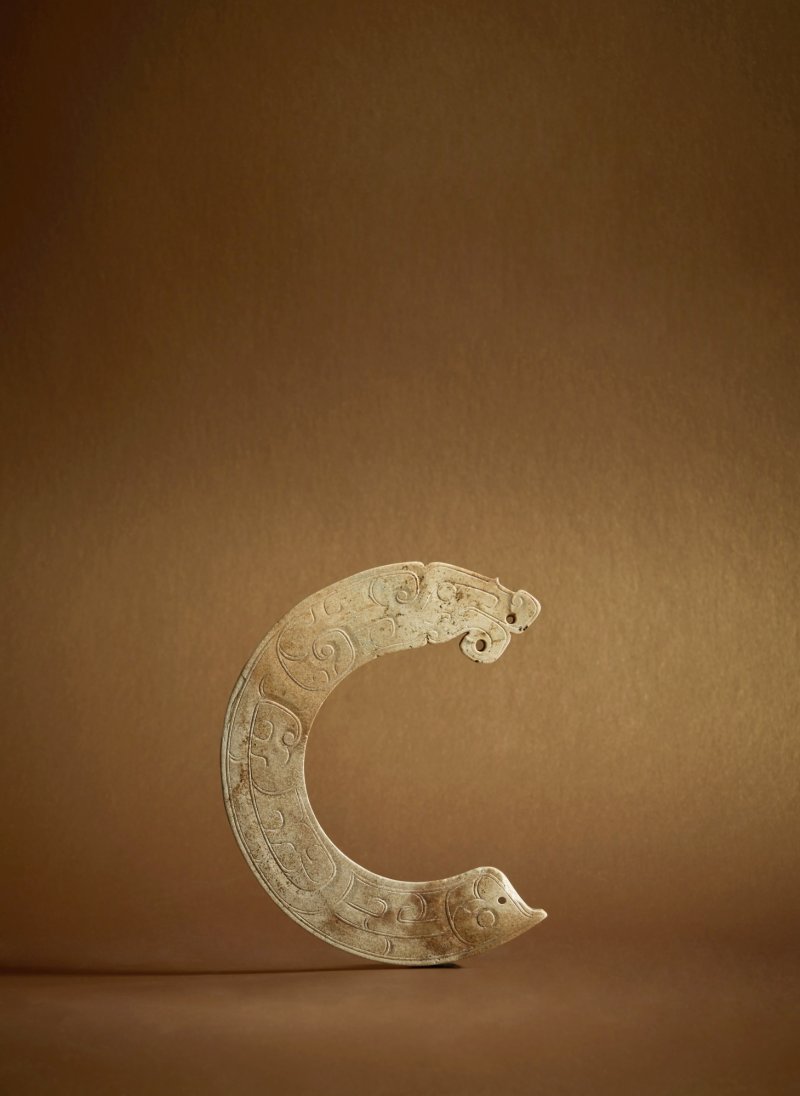
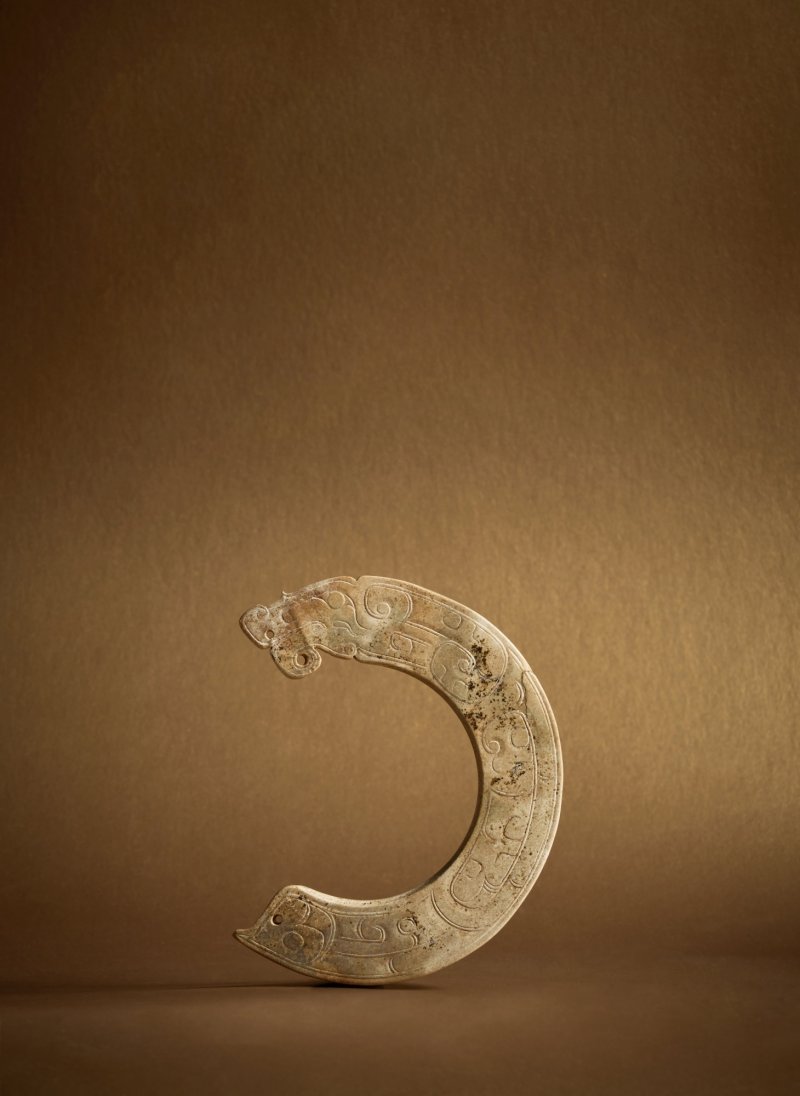
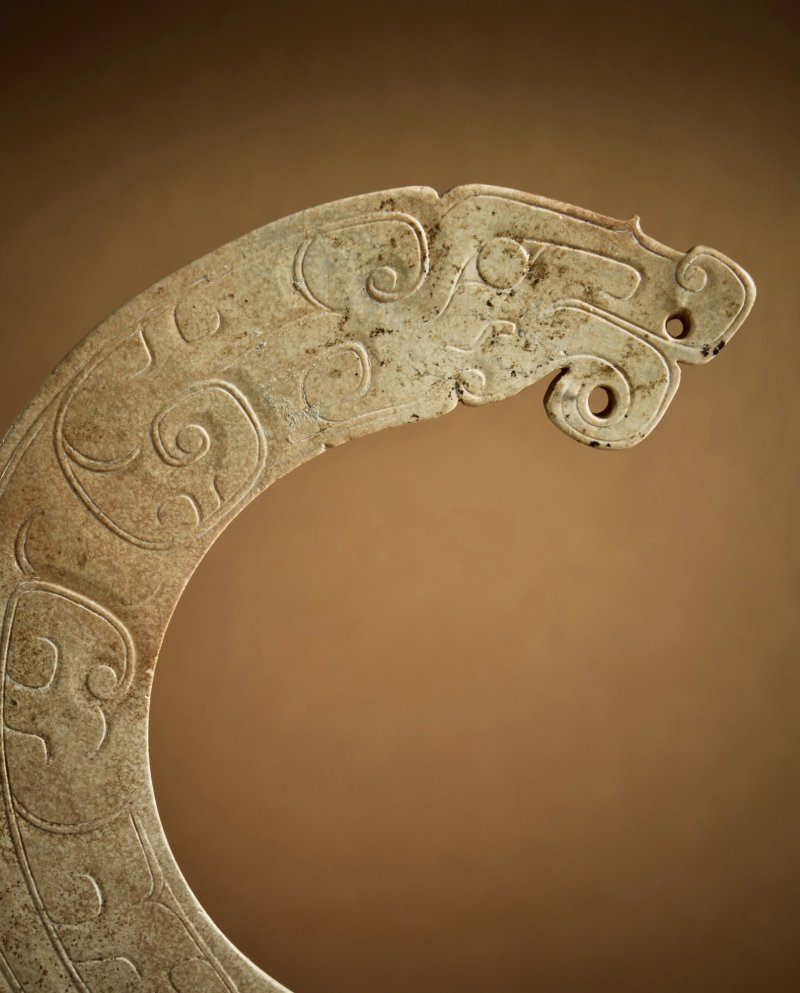
西周初 玉龍紋璜
起拍价
USD 80,000
估值区间
80,000 - 120,000 USD
尺寸
未知
品相
如欲了解本拍品狀況的更多資訊,請聯絡 Drew.Lerner@sothebys.com
更多信息
Length 4⅜ in., 11 cm
来源:巴爾 (1877-1959) 收藏
安思遠,紐約
Anthony Carter Ltd.,倫敦
图录
说明:The present pendant represents one of the finest examples of Western Zhou jade craft to appear on the market in recent years. Carved obliquely in the classical style with a complex yet coherent design of fluid lines, the present dragon seems at once ancient and rippling with life.
Although surviving pendants of this specific dragon design appear to be very rare, other related curved pendants are well attested, carved with similar hooks and volutes used to represent abstracted elements of other animals and birds. Compare a very closely related dragon-shaped pendant with an extended forked tongue excavated from Tomb no. 304 at Zhangjiapo, Chang’an, in Gu Fang, The Complete Collection of Jades Unearthed in China, Beijing, 2005, vol. 14: Shaanxi, p. 49; a pendant from the S. Y. Yip Collection included in Exquisite Jade Carving, University Museum and Art Gallery, University of Hong Kong, Hong Kong, 1996, cat. no. 149; and a related plaque of phoenix design illustrated in The Complete Collection of Treasures of the Palace Museum. Jadeware (I), Hong Kong, 1995, pl. 80, alongside two plaques depicting pairs of dragons, pls 81 and 82.
Also compare a smaller double-headed pendant displaying similar mastery of Western Zhou reliefwork in the Shanghai Museum in Shanghai Museum Ancient Chinese Jade Gallery, Shanghai, 2000, p. 19; a round amulet in the National Museum of Asian Art, Washington in Hai-wai Yi-chen. Chinese Art in Overseas Collections. Jade II, Taipei, 1991, pl. 22; and two closely related pendants excavated from the Necropolis of the State of Guo, Sanmenxia, Henan, in Gu Fang, op. cit., vol. 5: Henan: one (p. 148) more closely resembling a fish and the other (p. 152) very closely related to the present in the rendering of its face but of smaller more circular form.
来源:巴爾 (1877-1959) 收藏
安思遠,紐約
Anthony Carter Ltd.,倫敦
图录
说明:The present pendant represents one of the finest examples of Western Zhou jade craft to appear on the market in recent years. Carved obliquely in the classical style with a complex yet coherent design of fluid lines, the present dragon seems at once ancient and rippling with life.
Although surviving pendants of this specific dragon design appear to be very rare, other related curved pendants are well attested, carved with similar hooks and volutes used to represent abstracted elements of other animals and birds. Compare a very closely related dragon-shaped pendant with an extended forked tongue excavated from Tomb no. 304 at Zhangjiapo, Chang’an, in Gu Fang, The Complete Collection of Jades Unearthed in China, Beijing, 2005, vol. 14: Shaanxi, p. 49; a pendant from the S. Y. Yip Collection included in Exquisite Jade Carving, University Museum and Art Gallery, University of Hong Kong, Hong Kong, 1996, cat. no. 149; and a related plaque of phoenix design illustrated in The Complete Collection of Treasures of the Palace Museum. Jadeware (I), Hong Kong, 1995, pl. 80, alongside two plaques depicting pairs of dragons, pls 81 and 82.
Also compare a smaller double-headed pendant displaying similar mastery of Western Zhou reliefwork in the Shanghai Museum in Shanghai Museum Ancient Chinese Jade Gallery, Shanghai, 2000, p. 19; a round amulet in the National Museum of Asian Art, Washington in Hai-wai Yi-chen. Chinese Art in Overseas Collections. Jade II, Taipei, 1991, pl. 22; and two closely related pendants excavated from the Necropolis of the State of Guo, Sanmenxia, Henan, in Gu Fang, op. cit., vol. 5: Henan: one (p. 148) more closely resembling a fish and the other (p. 152) very closely related to the present in the rendering of its face but of smaller more circular form.
常见问题
拍品的品相状况如何?
如欲了解本拍品狀況的更多資訊,請聯絡 Drew.Lerner@sothebys.com
这件拍品的流传来源是什么?
巴爾 (1877-1959) 收藏
安思遠,紐約
Anthony Carter Ltd.,倫敦
图录
安思遠,紐約
Anthony Carter Ltd.,倫敦
图录