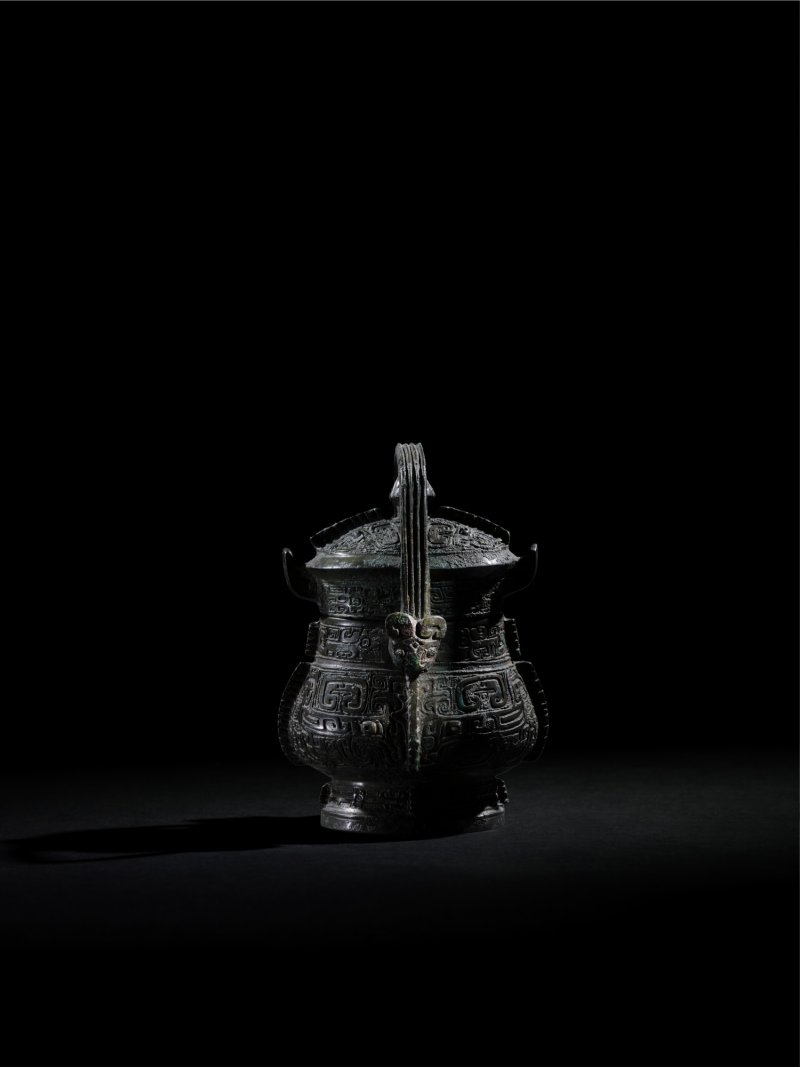

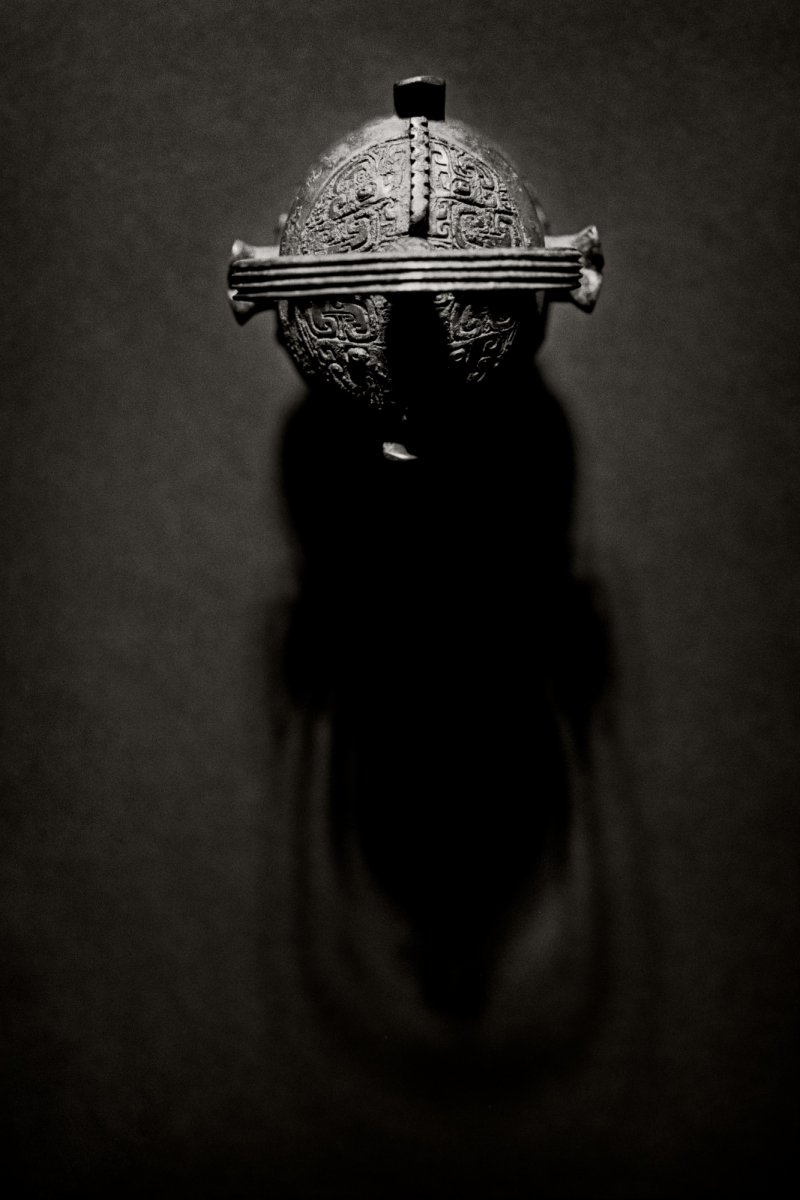
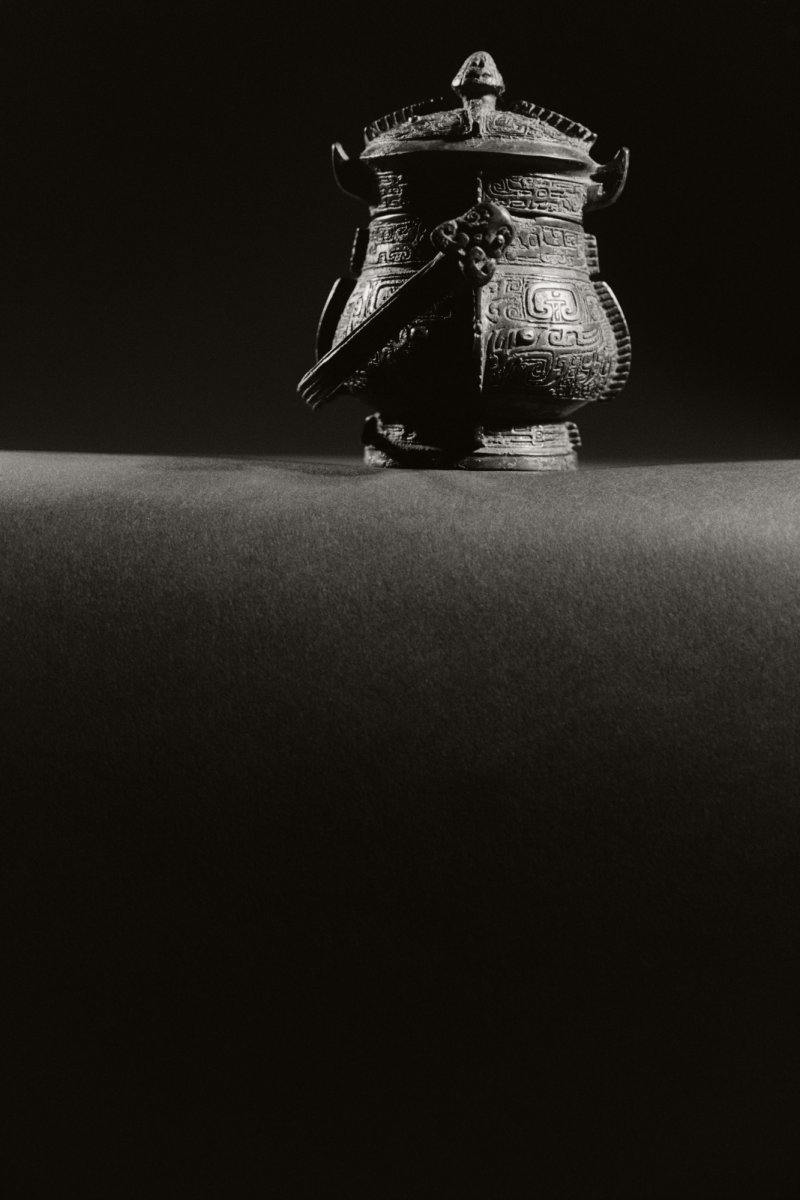
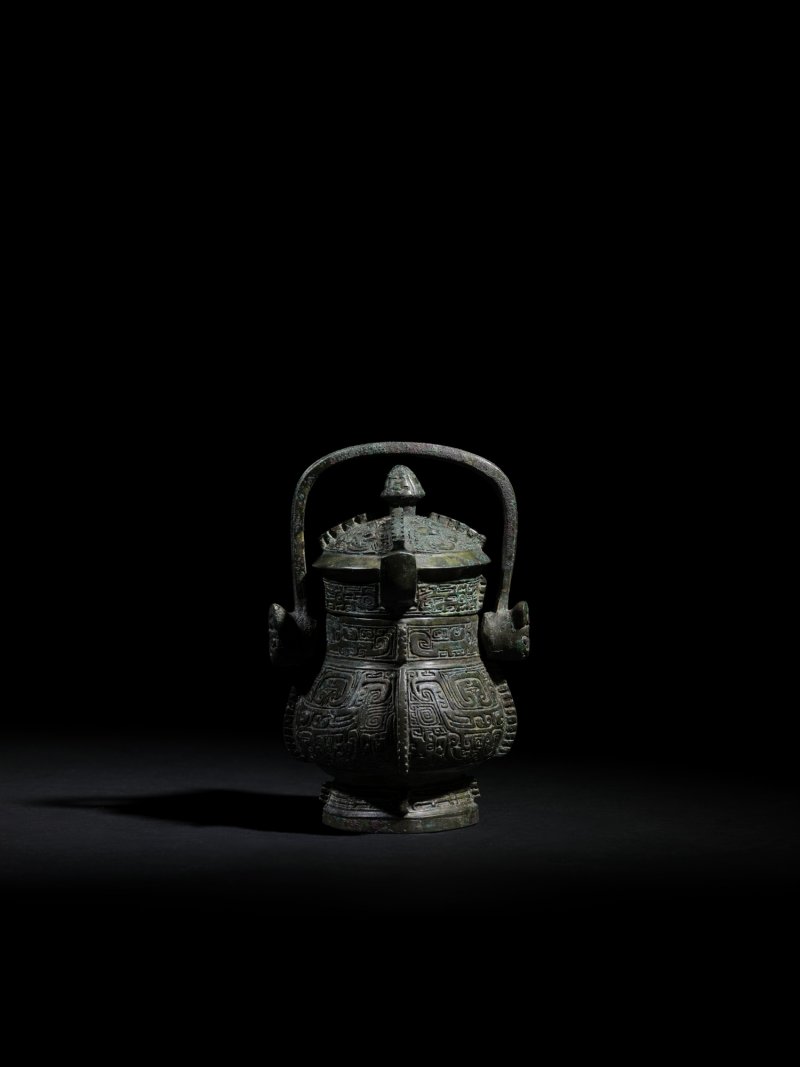
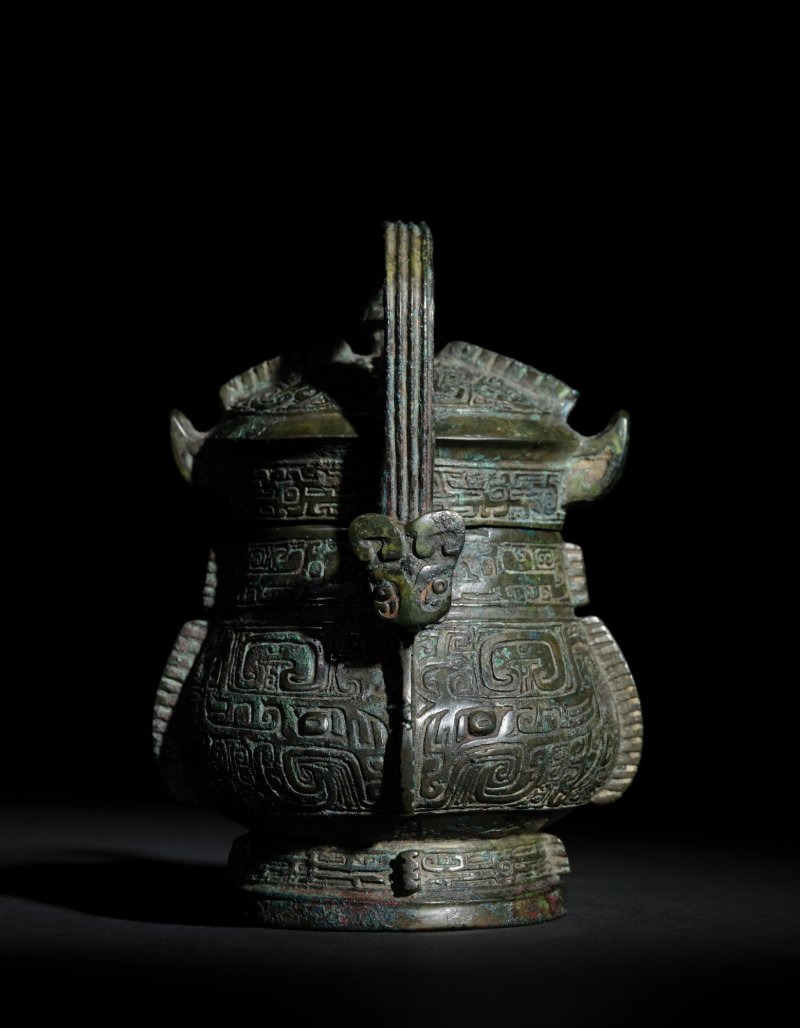
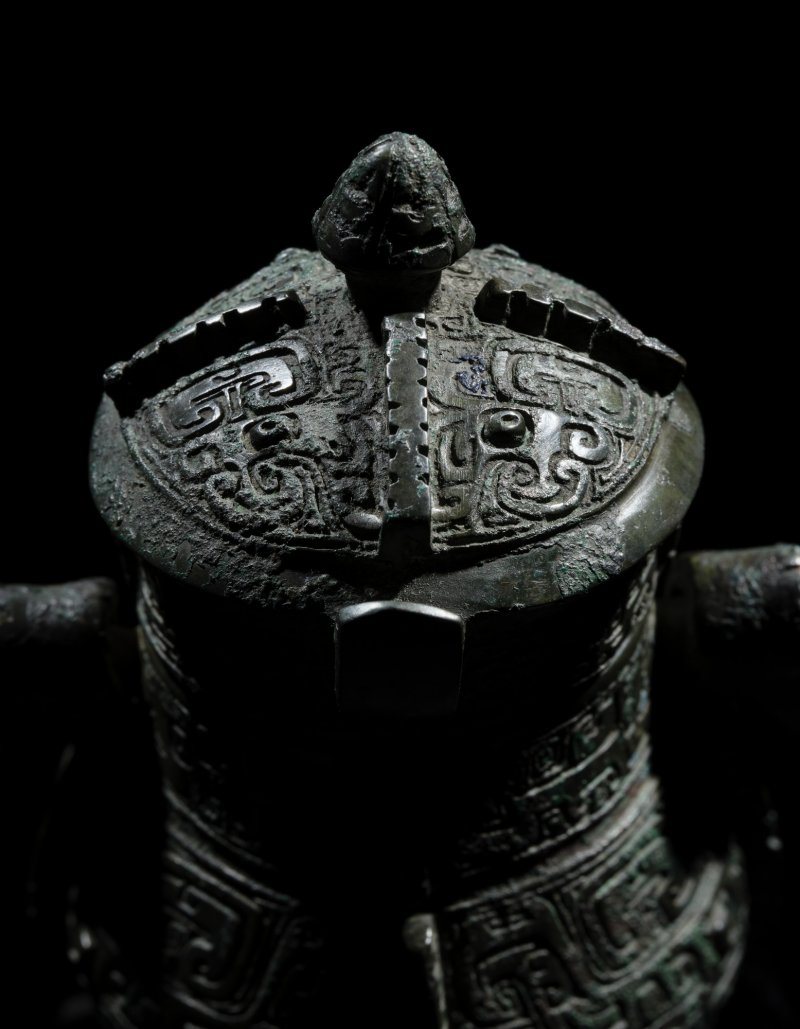
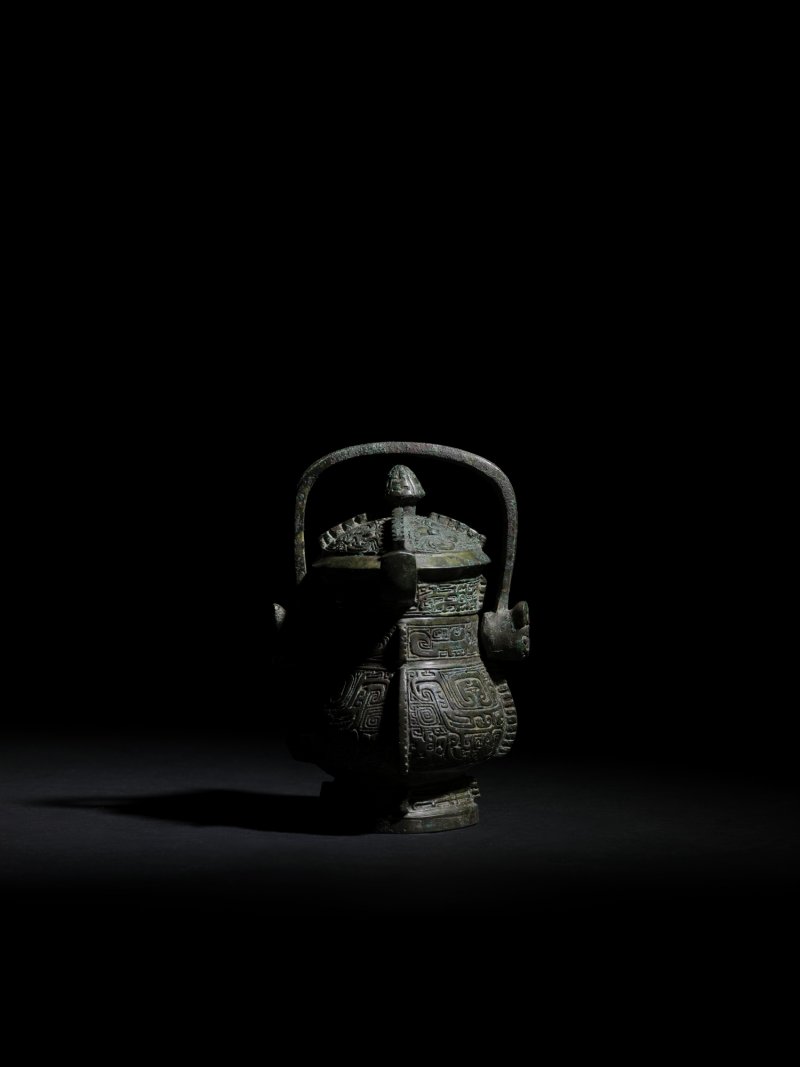
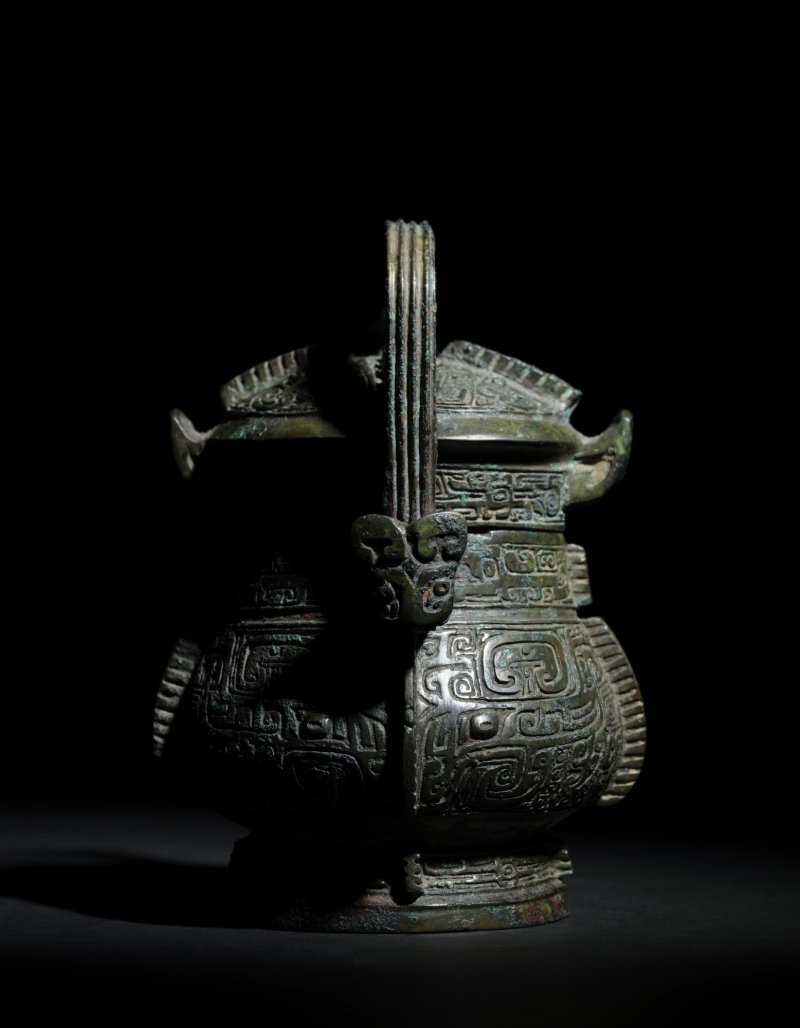
Lot 8022 An exquisite and remarkably rare miniature bronze royal ritual wine vessel and cover, You, Late Shang dynasty | 商晚期 青銅弄器提梁卣
落槌价
预展中
成交价
预展中
| 拍卖公司 | 苏富比 |
|---|---|
| 拍卖时间 | 2026年10月30日 |
拍品信息
拍品名称
An exquisite and remarkably rare miniature bronze royal ritual wine vessel and cover, You, Late Shang dynasty | 商晚期 青銅弄器提梁卣
起拍价
HKD 8,000,000
估值区间
8,000,000 - 16,000,000 HKD
尺寸
未知
品相
如欲了解本拍品狀況的更多資訊,請聯絡 Rubie.Fong@sothebys.com
更多信息
h. 11.5 cm (handle upright)
来源:Sotheby’s London, 14th March 1972, lot 10.
J. T. Tai & Co., New York.
Collection of Dr. Arthur M. Sackler (1913-1987).
Collection of Else Sackler (1913-2000).
Collection of Elizabeth A. Sackler (b. 1948).
Christie’s New York, 13th September 2019, lot 806.
展览:The Arts of Ancient China, The Metropolitan Museum of Art, New York, 1973-1977.
著录:The Burlington Magazine, London, 1972 March, p. 30.
Dawn H. Delbanco, Art From Ritual. Ancient Chinese Bronze Vessels from the Arthur M. Sackler Collections, Washington, D.C., 1983, pl.17.
Robert W. Bagley, Shang Ritual Bronzes in the Arthur M. Sackler Collections, Washington, D.C., 1987, pl. 65.
Paul Singer M.D., Chinese Art. A Thousand Masterpieces from the Arthur M. Sackler Collections, Washington, D.C., 2000, pl. 63.
Hwang Ming-chorng, ‘Yindai yu dongzhou zhi ‘nongqi’ ji qi yiyi / The ‘Nong vessel’ of the Shang and Western Zhou and its significance’, Gujin lunheng / Disquisitions on the Past and Present, no. 6, 2001, pp 79 and 84 and fig. no. 6.
图录
说明:來源
倫敦蘇富比1972年3月14日,編號10
戴潤齋(J. T. Tai & Co.),紐約
亞瑟·賽克勒(Dr. Arthur M. Sackler,1913-1987)收藏
艾爾莎·賽克勒(Else Sackler,1913-2000)收藏
伊麗莎白·A·賽克勒(Elizabeth A. Sackler,生於1948年)收藏
紐約佳士得2019年9月13日,編號806
展覽
《The Arts of Ancient China》,大都會藝術博物館,紐約,1973-1977年
出版
《伯林頓雜誌》(The Burlington Magazine),倫敦,1972年3月,頁30
Dawn H. Delbanco,《Art From Ritual. Ancient Chinese Bronze Vessels from the Arthur M. Sackler Collections》,華盛頓,1983年,圖版17
羅伯特·貝格利(Robert W. Bagley),《Shang Ritual Bronzes in the Arthur M. Sackler Collections》,華盛頓,1987年,圖版65
保羅·辛格醫生(Paul Singer M.D.),《Chinese Art. A Thousand Masterpieces from the Arthur M. Sackler Collections》,華盛頓,2000年,圖版63
黃銘崇,〈殷代與東周之「弄器」及其意義〉,《古今論衡》,第6期,2001年,頁79及84,圖6
A Treasure in the Palm: An Exceptional Miniature Bronze Wine Vessel
‘In tenui labor; at tenuis non gloria.’
This celebrated line from Book IV of Georgics by the Roman poet Virgil (70-19 BC) may well capture the essence of the present bronze you. Reflecting on the humble bee, Virgil recognized that subjects modest in scale may nonetheless possess extraordinary significance. Held comfortably within the palm, the present you possesses a quiet charm distinct from the imposing ritual bronzes of the Shang dynasty (c. 1600-c. 1046 BC). Rather than relying on monumentality, it invites close admiration and direct engagement, rewarding the connoisseur with an experience that is as tactile as it is visual.
Despite its miniature size, no concession was made in its conception or execution. The vessel is finely cast with a gently pear-shaped body rising from a neatly defined foot to a constricted neck surmounted by a fitted cover, all connected by a tall swing handle terminating in feline masks. Equally impressive is the richness of its decoration, meticulously rendered to accentuate the vessel's inherently tactile character. Each side is adorned with a large, stylized beast mask with bulging eyes, C-shaped horns, and broad nostrils, framed by bands of angular dragon motifs encircling the neck and foot. Four vertical flanges divide the surface into symmetrical quadrants, providing both visual impact and sculptural depth. The cover is similarly well cast and embellished, its surface continuing the decorative scheme of the body and terminating in a pair of prominent upturned projections. The remarkable precision to successfully translating the complexity of a full-sized ritual vessel into an object of exceptional intimacy demonstrates the boundless imagination and technical virtuosity of the late Shang bronze artisans.
The present you belongs to a rare group of Shang bronzes known as nongqi (nong vessels) 弄器. Vessels of this category are distinctively smaller in scale than the standard bronzes of the period. Scholars generally believe that these miniature bronzes were intended for intimate appreciation and handling by members of the aristocracy. Emerging during the late Shang dynasty, nongqi coexisted alongside the larger vessels employed in ritual and ceremonial contexts. Exquisitely crafted and rich in detail, they were likely not intended for display or use within ancestral temples; rather, they appear to have accompanied their owners in more private settings, enriching the daily lives of the elite through close interaction and aesthetic enjoyment (for more on nongqi, see Hwang Ming-chorng, ‘Yindai yu dongzhou zhi ‘nongqi’ ji qi yiyi / The ‘Nong vessel’ of the Shang and Western Zhou and its significance’, Gujin lunheng / Disquisitions on the Past and Present, no. 6, 2001, pp 67-88).
The term nong first appeared on a small group of late Shang dynasty bronzes. A bronze cover (6.3 x 5.2 cm) of a miniature ding was excavated from Yinxu at Anyang, Henan province, in 1975, published in Zheng Zhenxiang, ‘1975 nian anyang yinxu de xinfaxian [The new discovery of Yinxu in Anyang in 1975]’, Kaogu / Archaeology, vol. 4, Beijing, 1976, p. 264. This small bronze cover is cast with a four-character inscription, wang zuo wa nong (nong vessel made by the king for lady Wa) 王作女瓦弄. The same inscription appears on another small bronze you (h. 20.2 cm), formerly in the collection of Arnold Knapp and on loan to the Fogg Museum, Harvard University, Cambridge, sold in our London rooms, 2nd-3rd December 1974, lot 14 (fig. 1), illustrated in Liu Yu and Wang Tao, Liusan oumei yinzhou youming qingtongqi jilu / A Selection of Early Chinese Bronzes with Inscriptions from Sotheby’s and Christie’s Sales, Shanghai, 2007, pl. 133. Another miniature bronze gui (d. 14 cm), self-identified through its inscription as a nong vessel, excavated from tomb no. 1 in Guojiazhuang, Anyang, Henan province, in 1987, currently preserved at the Institute of Archaeology, Chinese Academy of Social Sciences, Beijing, is published in Zhongguo qingtongqi quanji [Complete collection of Chinese bronzes], vol. 2, Beijing, 1997, pl. 97.
Related nongqi from the late Shang dynasty are extremely rare. According to a survey conducted by Hwang Ming-chorng (op. cit., p. 84), only fourteen additional late Shang miniature bronzes, beyond the aforementioned inscribed examples, have been recorded. Some were included in the exhibition Early Chinese Miniatures, China Institute in America, New York, 1977, including two miniature bronze ding from the Royal Ontario Museum, Toronto, cat. nos 1 (h. 6.8 cm) (fig. 2) and 11 (h. 6 cm); two jue, cat. nos 4 (h. 11.7 cm) and 12 (h. 8.9 cm), from the collections of Dr. Paul Singer and John M. Crawford, Jr., respectively; a lei (h. 14.6 cm), cat. no. 13 (fig. 3); an adze (l. 8.1 cm), cat. no. 6; and an axe (l. 7 cm), cat. no. 14.
The ancient form of the character nong 弄 comprises two ‘hand 手’ elements surmounted by the jade 玉 radical, conveying the notion of an object intended to be held and admired. As such, nongqi were not confined to bronze, but also existed in jade during the late Shang period. Du Jinpeng identifies jade nongqi as individual carvings created for handling and display, rather than as pendants or fittings designed for suspension or insertion (see ‘Shuonong - Yinshang yuqiming shikao zhiliu / On Nong: Study on the Name and Object of Jade in Shang Dynasty (Part VI)’, Jianghan kaogu / Jianghan Archaeology, no. 6, Wuhan, 2021, pp 154-155). A substantial group of such miniature jade carvings was excavated from the tomb of Fu Hao at Yinxu in 1975, including finely worked figures of humans, dragons (fig. 4), tigers, and elephants (see Institute of Archaeology, Chinese Academy of Social Sciences, Yinxu Fuhaomu / Tomb of Lady Hao at Yinxu in Anyang, Beijing, 1980, pp. 152-153, 157).
Drawing upon both bronze and oracle bone inscriptions, Du Jinpeng concludes that nongqi ranked among the most precious luxury objects of the late Shang period. Rather than serving a formal ritual function, these exquisitely crafted works appear to have been treasured as objects of personal possession, employed as prestigious gifts or symbols of status and favor (op. cit., p. 160).
The tradition of casting bronze nongqi did not disappear with the fall of the Shang dynasty. Miniature vessels of comparable character continued to be produced throughout the Zhou period (c. 1046-256 BC). A notable example is a miniature bronze ding (h. 10.6 cm), attributed to the early Western Zhou dynasty (c. 1046-771 BC) and formerly in the collection of Tao Zuguang (1882-1956), now preserved in the Palace Museum, Beijing, illustrated in Gugong qingtongqi / Bronzes in the Palace Museum, Beijing, 1999, pl. 106. Significantly, the vessel's inscription identifies it as a xiaoding ('small ding'), demonstrating an explicit recognition of its reduced scale.
Further evidence for the continued appreciation of miniature objects among the aristocracy comes from the late Western Zhou tomb of Marquis Jin 晉侯 (M63) at Zhaocun, Quwo county, Shanxi province. Among the remarkable finds was a finely cast miniature bronze box, published in Zhang Tongxin, 'Liangdaicun li faxian de weixing qingtongqi' [Miniature bronzes discovered in Liangdai village]’, Kaogu wuyu / Popular Archaeology, no. 9, Nanjing, 2014, p. 67. Upon excavation, the box was found to contain a group of miniature Shang jade carvings depicting human figures, bears, owls, and turtles, suggesting that such diminutive objects were treasured possessions closely associated with their owner.
By the Eastern Zhou period (770-256 BC), one of the most celebrated examples of nongqi is the bird-shaped wine vessel of the Spring and Autumn period (770-476 BC), formerly in the collection of Mr. and Mrs. Eugene Meyer (1875-1959) and now housed in the National Museum of Asian Art, Washington, D.C. Published in John A. Pope et al., The Freer Chinese Bronzes, vol. I, Washington, D.C., 1967, pl. 106 (fig. 5), the vessel is remarkable for an inscription inlaid in gold on the reverse of the bird's head reading zi zhi nong niao 子之弄鳥. Reportedly discovered in Taiyuan, Shanxi Province, the inscription explicitly identifies the vessel as a bird-form nongqi, providing rare textual evidence for the continued use and recognition of the term centuries after its first appearance in the Shang dynasty.
Viewed together, these examples demonstrate that nongqi constituted a long-lived tradition extending well beyond the Shang period. While varying considerably in form and date, they share a common emphasis on scale, craftsmanship, and intimate engagement, qualities that distinguish them from the larger ritual bronzes employed in ancestral and ceremonial contexts. The present you stands among the earliest and most accomplished representatives of this remarkable tradition.
The form and design of the present miniature you are of a remarkable quality and appear to have been inspired by a small group of related full-sized ritual vessels. Compare a very similar late Shang dynasty bronze you, formerly in the imperial collection of Huizong of Song (1082-1135), included in the imperial catalogue by Wang Fu, ed., Bogutu [Illustrations of Broad Antiquity], vol. 9, 1107-1123, p. 10 (fig. 6); another with a more pronounced relief decoration, formerly in the collection of Luo Zhenyu (1866-1940), illustrated in Minao Hayashi, In Shū Jidai seidōki no kenkyū. In Shū seidōki souran [Research of bronze ware of Shang and Zhou dynasty], vol. 2, Tokyo, 1984, p. 261, you, no. 49; the third from the Freer Collection, now in the National Museum of Asian Art, Washington, D.C., published in op. cit., 1967, pl. 49; and the fourth in the British Museum, donated by Percy Thomas Brooke Sewell (1878-1958), published on the museum’s website, accession no. 1953,0714.1. For related auction examples, see one formerly in the collection of A.E.K. Cull and James Cull, sold at Christie’s New York, 21st September 2004, lot 147; and another, missing its handle, sold in our London rooms, 5th June 1973, lot 258.
常见问题
这件An exquisite and remarkably rare miniature bronze royal ritual wine vessel and cover, You, Late Shang dynasty | 商晚期 青銅弄器提梁卣的成交价是多少?
落槌价为 预展中。 成交价为 预展中。
拍品的品相状况如何?
如欲了解本拍品狀況的更多資訊,請聯絡 Rubie.Fong@sothebys.com
这件拍品的流传来源是什么?
Sotheby’s London, 14th March 1972, lot 10.
J. T. Tai & Co., New York.
Collection of Dr. Arthur M. Sackler (1913-1987).
Collection of Else Sackler (1913-2000).
Collection of Elizabeth A. Sackler (b. 1948).
Christie’s New York, 13th September 2019, lot 806.
J. T. Tai & Co., New York.
Collection of Dr. Arthur M. Sackler (1913-1987).
Collection of Else Sackler (1913-2000).
Collection of Elizabeth A. Sackler (b. 1948).
Christie’s New York, 13th September 2019, lot 806.
这件拍品曾在哪些展览中展出过?
The Arts of Ancient China, The Metropolitan Museum of Art, New York, 1973-1977.
这件拍品被哪些著录书籍记载?
The Burlington Magazine, London, 1972 March, p. 30.
Dawn H. Delbanco, Art From Ritual. Ancient Chinese Bronze Vessels from the Arthur M. Sackler Collections, Washington, D.C., 1983, pl.17.
Robert W. Bagley, Shang Ritual Bronzes in the Arthur M. Sackler Collections, Washington, D.C., 1987, pl. 65.
Paul Singer M.D., Chinese Art. A Thousand Masterpieces from the Arthur M. Sackler Collections, Washington, D.C., 2000, pl. 63.
Hwang Ming-chorng, ‘Yindai yu dongzhou zhi ‘nongqi’ ji qi yiyi / The ‘Nong vessel’ of the Shang and Western Zhou and its significance’, Gujin lunheng / Disquisitions on the Past and Present, no. 6, 2001, pp 79 and 84 and fig. no. 6.
图录