
Lot 8 清康熙 釉裏紅青花點睛鍾馗圖棒槌瓶 | AN EXCEPTIONALLY RARE UNDERGLAZE-RED 'ZHONG KUI AND DEMON' ROULEAU VASE
落槌价
预展中
成交价
预展中
| 拍卖公司 | 邦瀚斯 |
|---|---|
| 拍卖时间 | 2026年11月05日 |
拍品信息
拍品名称
清康熙 釉裏紅青花點睛鍾馗圖棒槌瓶 | AN EXCEPTIONALLY RARE UNDERGLAZE-RED 'ZHONG KUI AND DEMON' ROULEAU VASE
年代
Kangxi
起拍价
GBP 50,000
估值区间
GBP 50000 - 70000
尺寸
未知
品相
未知
更多信息
Kangxi
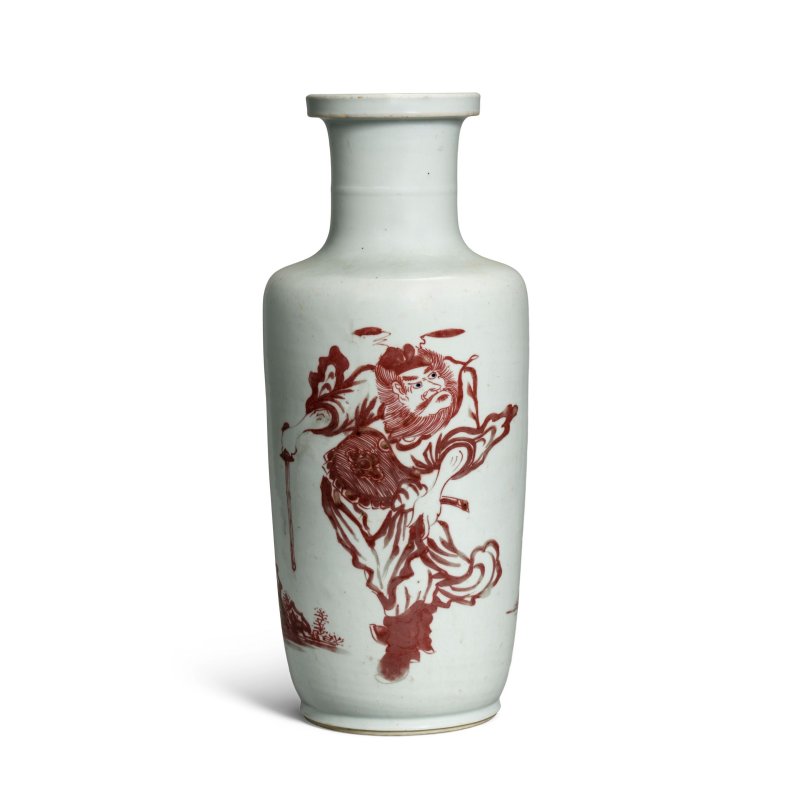
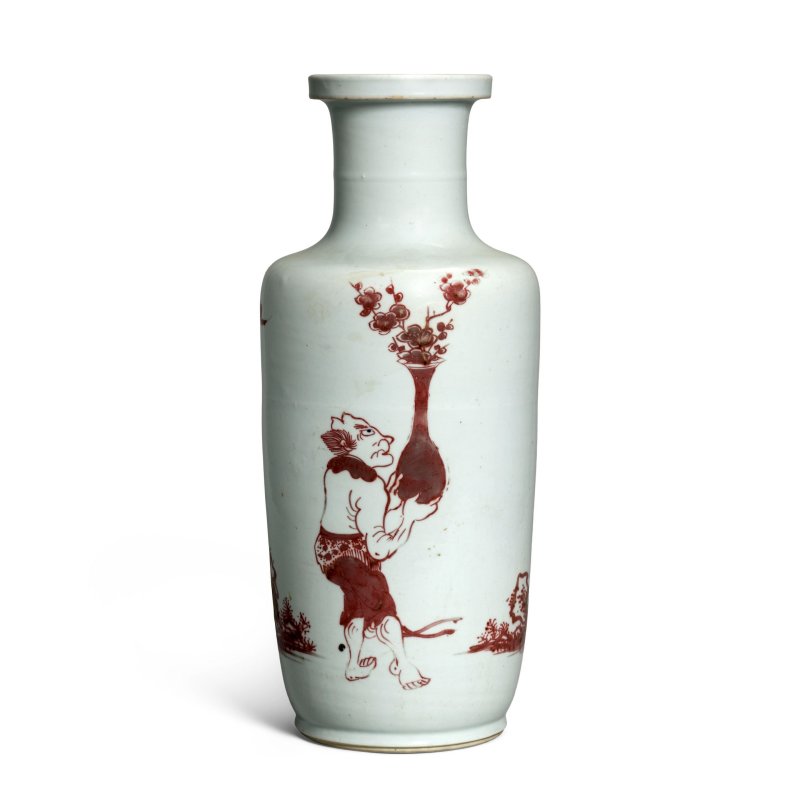
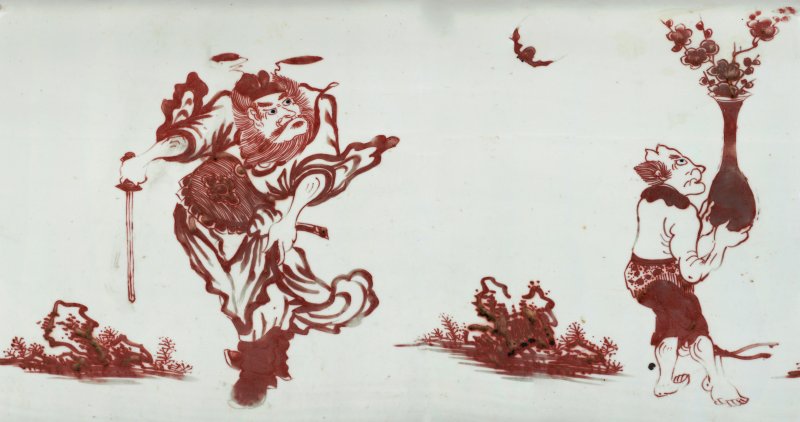
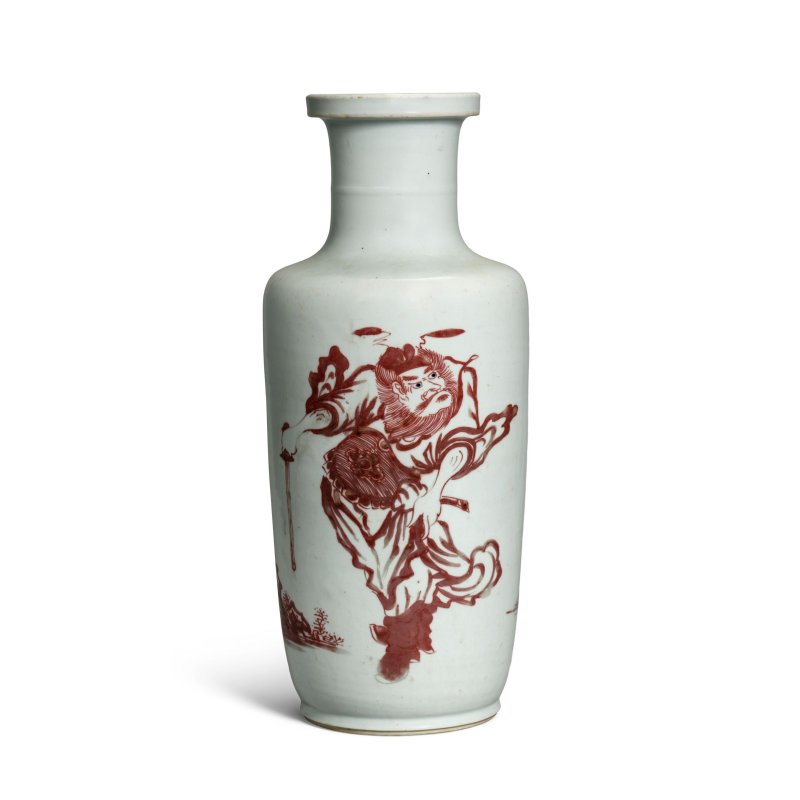
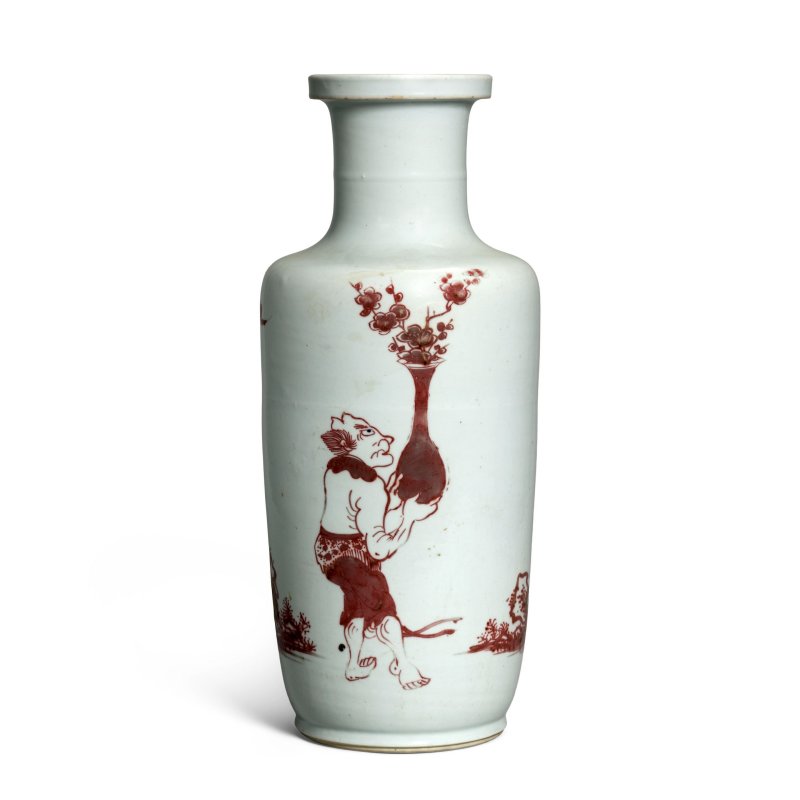
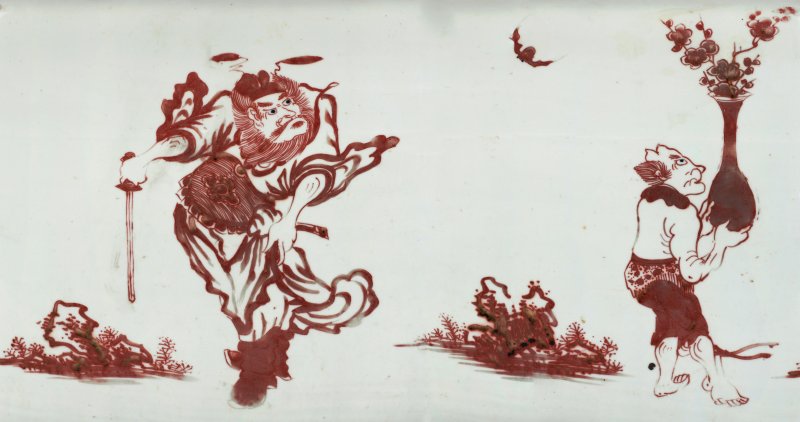
Finely potted with a tall cylindrical body rising to a waisted neck with a raised rib beneath a galleried rim, the exterior boldly painted with Zhong Kui, the famed demon-queller, depicted grasping a sword and gazing towards an auspicious bat overhead, his fierce visage, distinguished by vivid cobalt-blue eyes, a wild flowing beard and scholar's cap, emerges from robes dramatically billowing in the wind, at his side, a horned demon attendant clad in an animal-skin tunic offers a vase filled with flowering plum branches. 45cm (17 3/4in) high.
Footnotes
清康熙 釉裏紅青花點睛鍾馗圖棒槌瓶
Provenance:
Sotheby's Hong Kong, 16 November 1983, lot 543
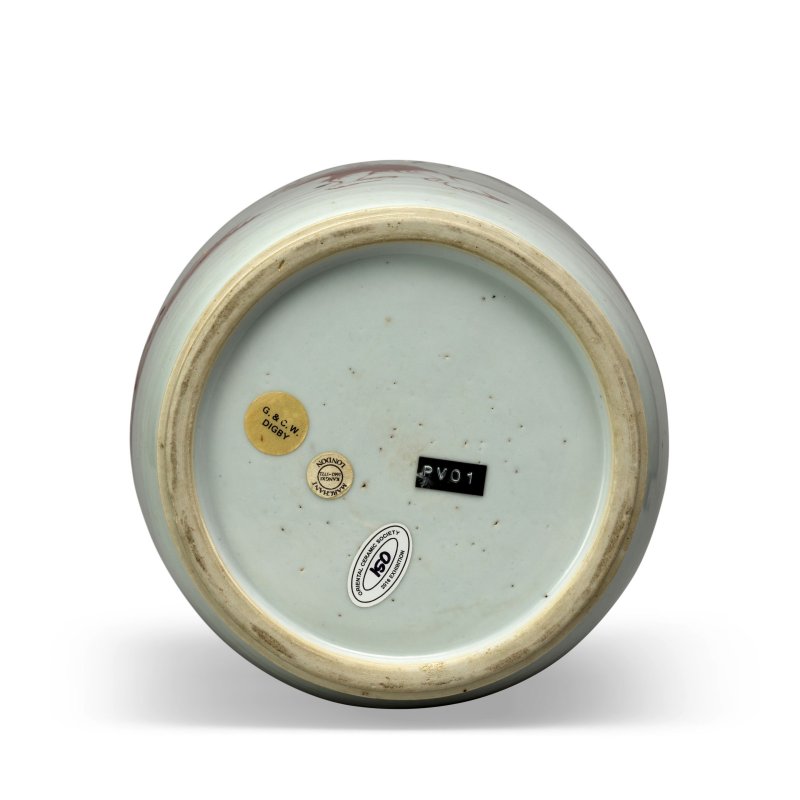
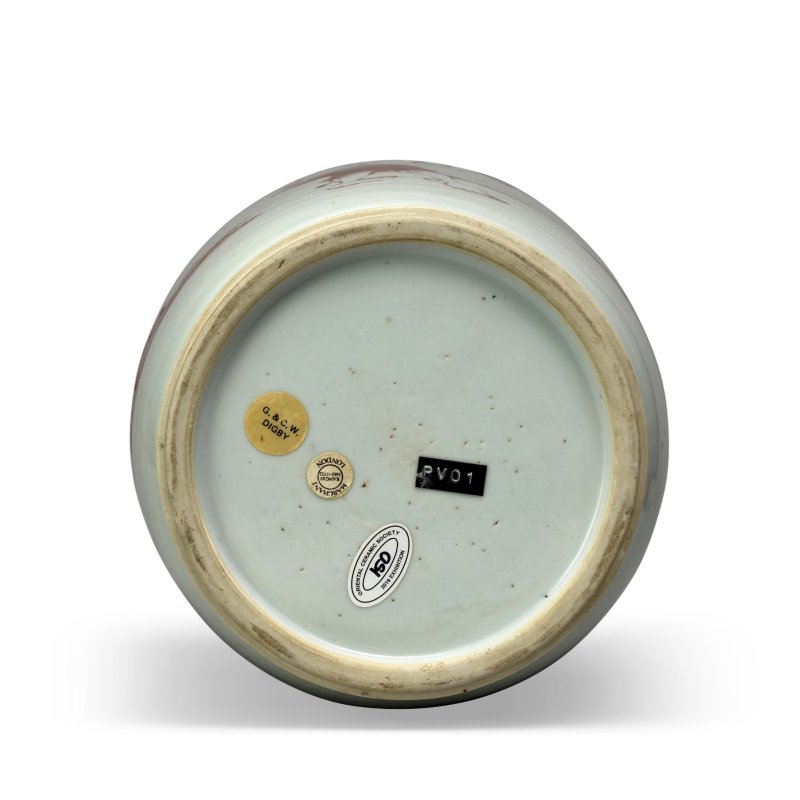
S. Marchant & Son, London, 1984
George Frederick Wingfield Digby (1911-1989) and Cornelia Wingfield Digby (1911-2001), Sherborne, Dorset
Sotheby's Olympia, London, The George and Cornelia Wingfield Digby Collection of Chinese and Japanese Porcelain, 12 June 2003, lot 1123
Sherborne Castle, Dorset, prior to 2003 (Exhibited)
The Oriental Ceramic Society, , London, 3-9 November 2016, pp.250-251, no.150 (Published, Illustrated and Exhibited)
香港蘇富比,1983年11月16日,拍品編號543
倫敦古董商馬錢特,1984年
George Frederick Wingfield Digby (1911-1989)及Cornelia Wingfield Digby (1911-2001),舍伯恩,英國多塞特郡
奧林匹亞蘇富比,倫敦,"The George and Cornelia Wingfield Digby Collection of Chinese and Japanese Porcelain",2003年6月12日,拍品編號1123
舍伯恩城堡,英國多塞特郡,2003年前(展覽)
東方陶瓷學會,《龍隱:英國東方陶瓷學會會員珍稀藏品展》,倫敦,2016年11月3-9日,第250-251頁,編號150(展覽著錄)
George Wingfield Digby was keeper of the textile department at the Victoria and Albert Museum, London (1957-1972).
Zhong Kui (鍾馗), the legendary demon-queller, occupies a prominent place in Chinese popular religion and visual culture. According to tradition, he was a gifted scholar who achieved the highest marks in the Imperial examinations, but was denied official honours because of his unattractive appearance. In despair, he took his own life on the palace steps. The Tang Emperor Xuanzong later dreamed of Zhong Kui vanquishing demons that had plagued him during an illness; upon awakening, the Emperor was cured and decreed that images of Zhong Kui should be displayed as talismans against malevolent spirits. Thereafter, Zhong Kui became one of the most widely depicted apotropaic figures in Chinese art, particularly during the fifth lunar month, a period traditionally associated with disease and harmful influences.
The imagery on the present vase is rich in auspicious symbolism. The bat ( 蝠) serves as a visual pun for (福), meaning 'blessing', 'good fortune', or 'happiness', and is among the most common emblems of auspiciousness in Chinese decorative art. The demon attendant carrying a vase filled with blossoming plum branches similarly conveys positive wishes. The vase ( 瓶) forms a rebus with (平安), meaning 'peace' or 'safe passage', while plum blossom ( 梅), flowering amid the hardships of winter, symbolises perseverance, renewal, and the arrival of spring. Together, these motifs express wishes for blessings, peace, protection, and the triumph of good fortune over adversity.
The vivid underglaze-red palette further reinforces the protective nature of the decoration. Red has long been regarded in China as a powerful colour capable of repelling evil influences, averting misfortune, and warding off disease. The combination of Zhong Kui, auspicious emblems, and a brilliant red palette suggests that the vase was intended not merely as an ornamental object but also as a potent visual expression of protection, health, and prosperity.
See a related underglaze-red decorated vase with Zhong Kui and demon carrying a vase with prunus, Kangxi, illustrated in , Shanghai, 1998, p.118, no.80. A vase decorated in underglaze-red with dragons, further embellished with underglaze-blue eyes, Kangxi, is illustrated by T.Canepa and K.Butler, , London, 2021, p.466.
Finely potted with a tall cylindrical body rising to a waisted neck with a raised rib beneath a galleried rim, the exterior boldly painted with Zhong Kui, the famed demon-queller, depicted grasping a sword and gazing towards an auspicious bat overhead, his fierce visage, distinguished by vivid cobalt-blue eyes, a wild flowing beard and scholar's cap, emerges from robes dramatically billowing in the wind, at his side, a horned demon attendant clad in an animal-skin tunic offers a vase filled with flowering plum branches. 45cm (17 3/4in) high.
Footnotes
清康熙 釉裏紅青花點睛鍾馗圖棒槌瓶
Provenance:
Sotheby's Hong Kong, 16 November 1983, lot 543
S. Marchant & Son, London, 1984
George Frederick Wingfield Digby (1911-1989) and Cornelia Wingfield Digby (1911-2001), Sherborne, Dorset
Sotheby's Olympia, London, The George and Cornelia Wingfield Digby Collection of Chinese and Japanese Porcelain, 12 June 2003, lot 1123
Sherborne Castle, Dorset, prior to 2003 (Exhibited)
The Oriental Ceramic Society, , London, 3-9 November 2016, pp.250-251, no.150 (Published, Illustrated and Exhibited)
香港蘇富比,1983年11月16日,拍品編號543
倫敦古董商馬錢特,1984年
George Frederick Wingfield Digby (1911-1989)及Cornelia Wingfield Digby (1911-2001),舍伯恩,英國多塞特郡
奧林匹亞蘇富比,倫敦,"The George and Cornelia Wingfield Digby Collection of Chinese and Japanese Porcelain",2003年6月12日,拍品編號1123
舍伯恩城堡,英國多塞特郡,2003年前(展覽)
東方陶瓷學會,《龍隱:英國東方陶瓷學會會員珍稀藏品展》,倫敦,2016年11月3-9日,第250-251頁,編號150(展覽著錄)
George Wingfield Digby was keeper of the textile department at the Victoria and Albert Museum, London (1957-1972).
Zhong Kui (鍾馗), the legendary demon-queller, occupies a prominent place in Chinese popular religion and visual culture. According to tradition, he was a gifted scholar who achieved the highest marks in the Imperial examinations, but was denied official honours because of his unattractive appearance. In despair, he took his own life on the palace steps. The Tang Emperor Xuanzong later dreamed of Zhong Kui vanquishing demons that had plagued him during an illness; upon awakening, the Emperor was cured and decreed that images of Zhong Kui should be displayed as talismans against malevolent spirits. Thereafter, Zhong Kui became one of the most widely depicted apotropaic figures in Chinese art, particularly during the fifth lunar month, a period traditionally associated with disease and harmful influences.
The imagery on the present vase is rich in auspicious symbolism. The bat ( 蝠) serves as a visual pun for (福), meaning 'blessing', 'good fortune', or 'happiness', and is among the most common emblems of auspiciousness in Chinese decorative art. The demon attendant carrying a vase filled with blossoming plum branches similarly conveys positive wishes. The vase ( 瓶) forms a rebus with (平安), meaning 'peace' or 'safe passage', while plum blossom ( 梅), flowering amid the hardships of winter, symbolises perseverance, renewal, and the arrival of spring. Together, these motifs express wishes for blessings, peace, protection, and the triumph of good fortune over adversity.
The vivid underglaze-red palette further reinforces the protective nature of the decoration. Red has long been regarded in China as a powerful colour capable of repelling evil influences, averting misfortune, and warding off disease. The combination of Zhong Kui, auspicious emblems, and a brilliant red palette suggests that the vase was intended not merely as an ornamental object but also as a potent visual expression of protection, health, and prosperity.
See a related underglaze-red decorated vase with Zhong Kui and demon carrying a vase with prunus, Kangxi, illustrated in , Shanghai, 1998, p.118, no.80. A vase decorated in underglaze-red with dragons, further embellished with underglaze-blue eyes, Kangxi, is illustrated by T.Canepa and K.Butler, , London, 2021, p.466.
常见问题
这件清康熙 釉裏紅青花點睛鍾馗圖棒槌瓶 | AN EXCEPTIONALLY RARE UNDERGLAZE-RED 'ZHONG KUI AND DEMON' ROULEAU VASE的成交价是多少?
落槌价为 预展中。 成交价为 预展中。