
拍品信息
拍品名称
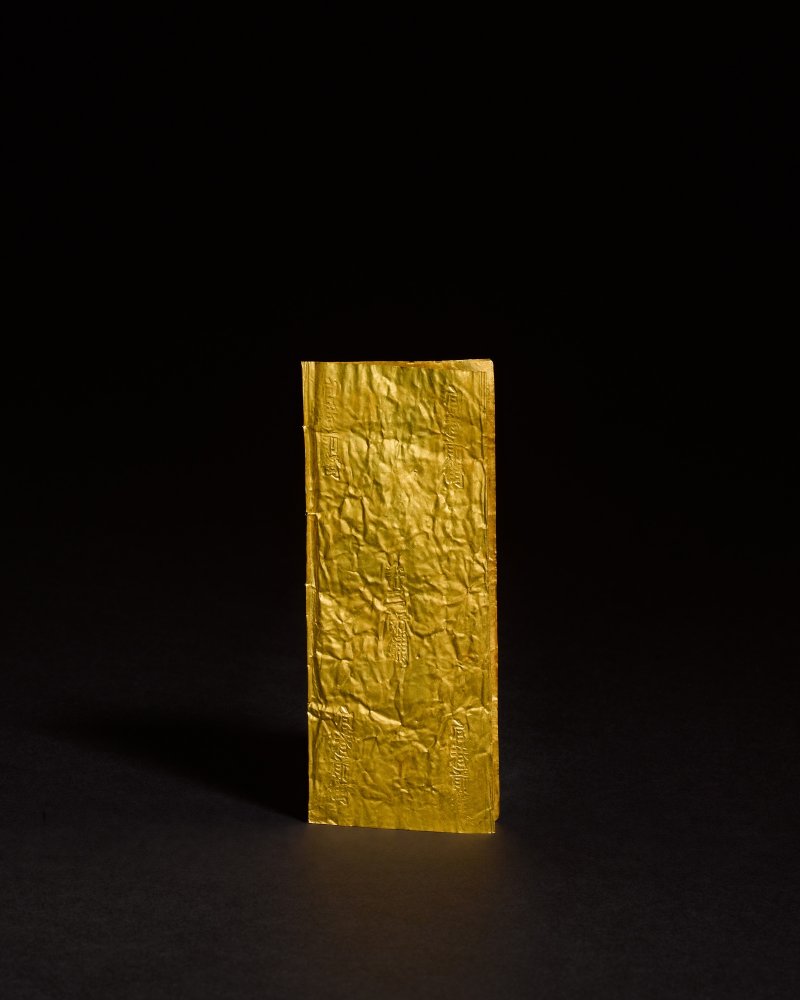
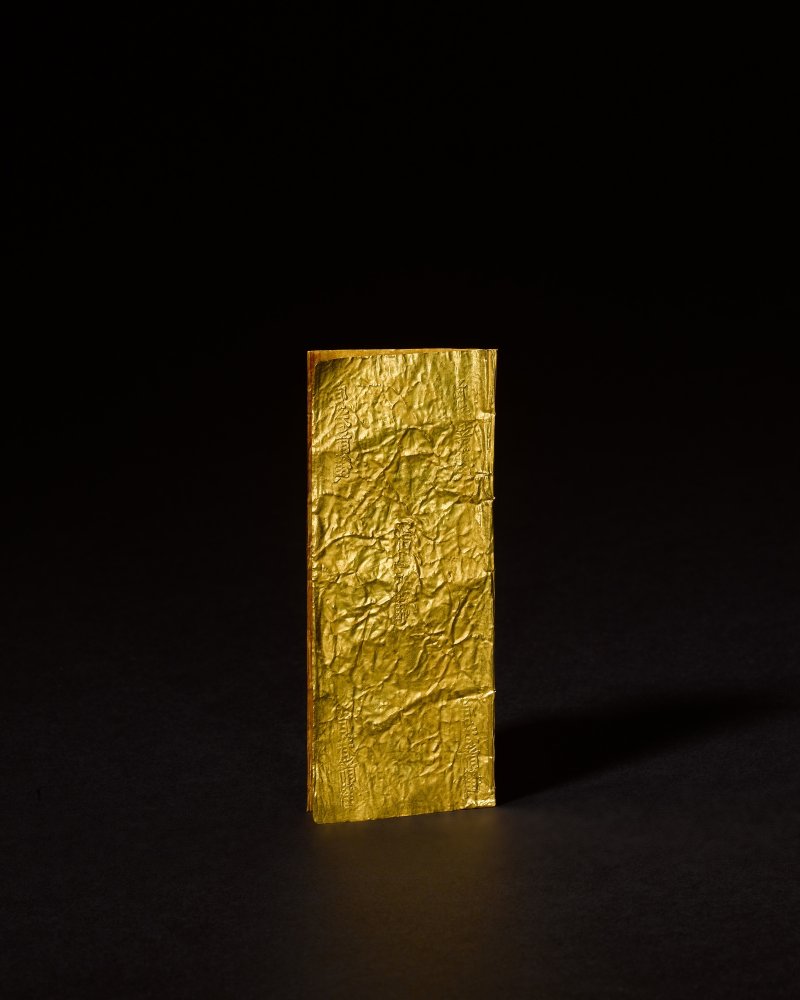
南宋 《許二郎鋪》《官巷前街》銘金葉子
起拍价
GBP 6,000
估值区间
6,000 - 8,000 GBP
尺寸
未知
品相
如欲了解本拍品狀況的更多資訊,請聯絡 chinese.london@sothebys.com
更多信息
Height 9.8 cm, 3⅞ in.
来源:Little River Oriental Antiques,倫敦,1999年2月3日
图录
说明:Paper-thin, wrinkled from years of treasured ownership and folded like book pages, gold leaves like the present, hammered from high-purity gold, served as currency in the Song dynasty during periods of cash shortage. Full leaves like the present served as a medium for large-scale trade and could be cut into smaller pieces as needed.
During the Southern Song dynasty, one tael of gold (roughly 40 grams) was worth 24,000 copper cash— equivalent to a magistrate's monthly salary (roughly 40,000 yuan today). A single gold leaf could purchase 200 bolts of silk at the Port of Quanzhou or be exchanged for enough copper cash to hire 50 laborers for a month. Additionally, gold leaves were widely used by the public to pay in-kind taxes to the government.
The present leaf features four corner stamps reading Guanxiang Qianjie ('Front Street of Guanxiang'), one of the major gold-and-silversmith hubs in Southern Song Hangzhou, alongside Qinghefang Xi and Tianshuiqiao Dong. The central stamp, Xu Erlang Pu, identifies the specific workshop that crafted it.
Requiring smiths to stamp their trade names was effectively a government quality-assurance scheme: if a leaf was later found to be impure during circulation, the authorities could hold the workshop liable. An identical gold leaf, matching both inscription and shape, is preserved in the collection of the Hangzhou Museum, Hangzhou.
常见问题
这件南宋 《許二郎鋪》《官巷前街》銘金葉子的成交价是多少?
落槌价为 预展中。 成交价为 预展中。
拍品的品相状况如何?
如欲了解本拍品狀況的更多資訊,請聯絡 chinese.london@sothebys.com
这件拍品的流传来源是什么?
Little River Oriental Antiques,倫敦,1999年2月3日
图录
图录