
拍品信息
拍品名称
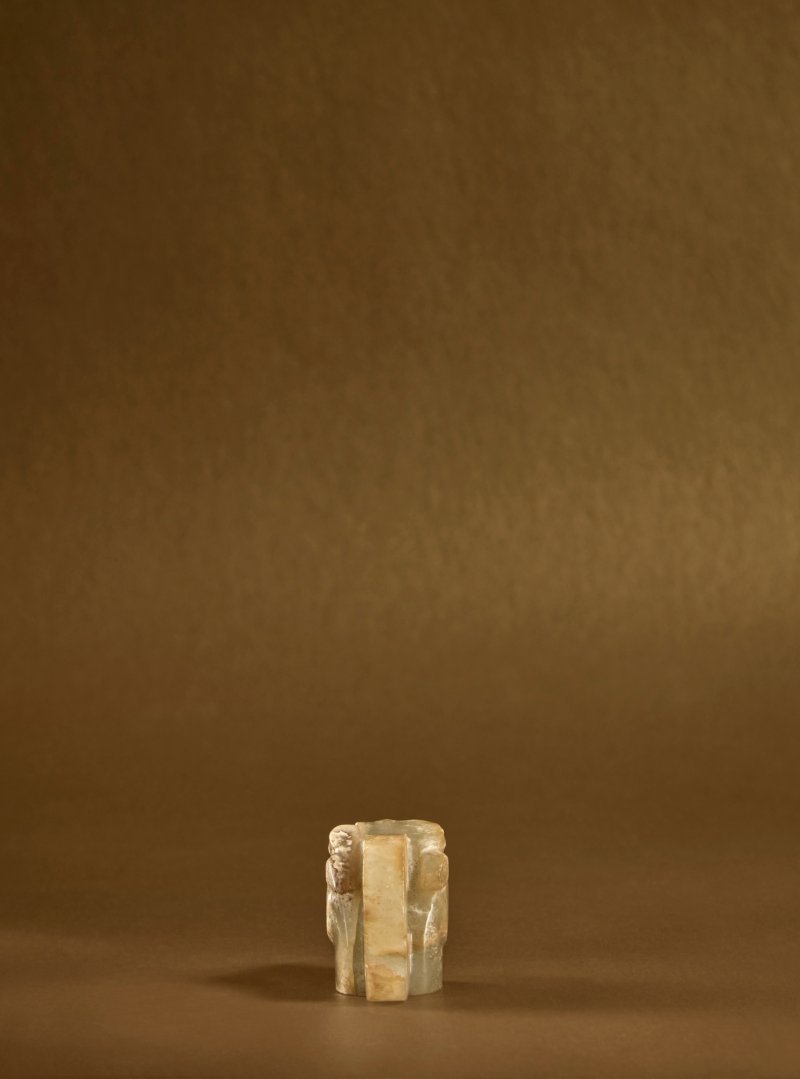
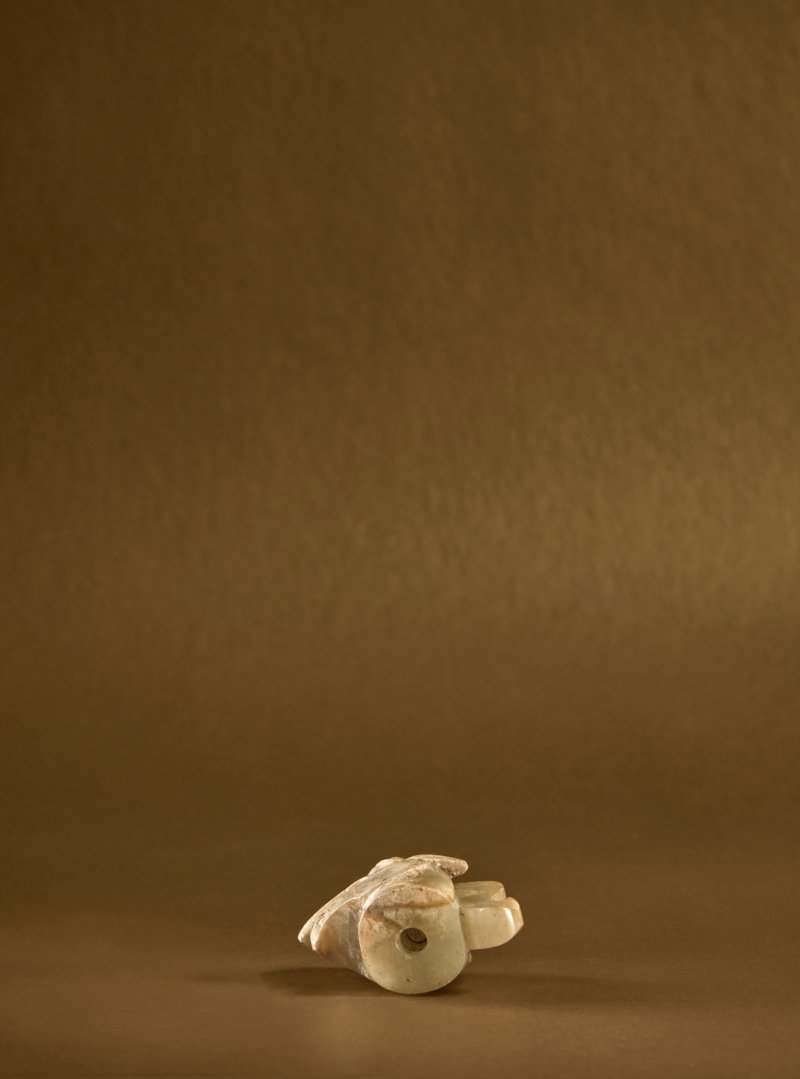
西漢 玉鳩杖首
起拍价
USD 40,000
估值区间
40,000 - 60,000 USD
尺寸
未知
品相
如欲了解本拍品狀況的更多資訊,請聯絡 Drew.Lerner@sothebys.com
更多信息
Width 1⅜ in., 3.5 cm
来源:埃斯卡納齊,倫敦,1995年之前
Anthony Carter Ltd.,倫敦
展览:《Early Chinese Art: 8th Century BC - 9th Century AD》,埃斯卡納齊,倫敦,1995年,編號26
图录
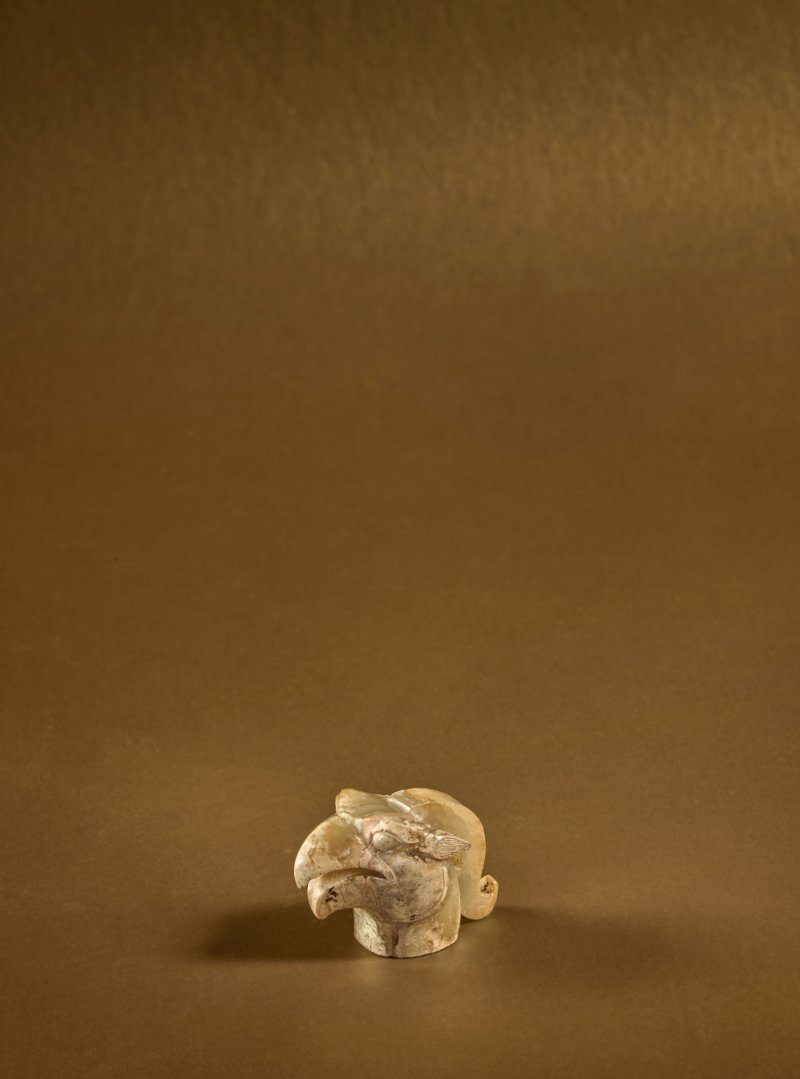
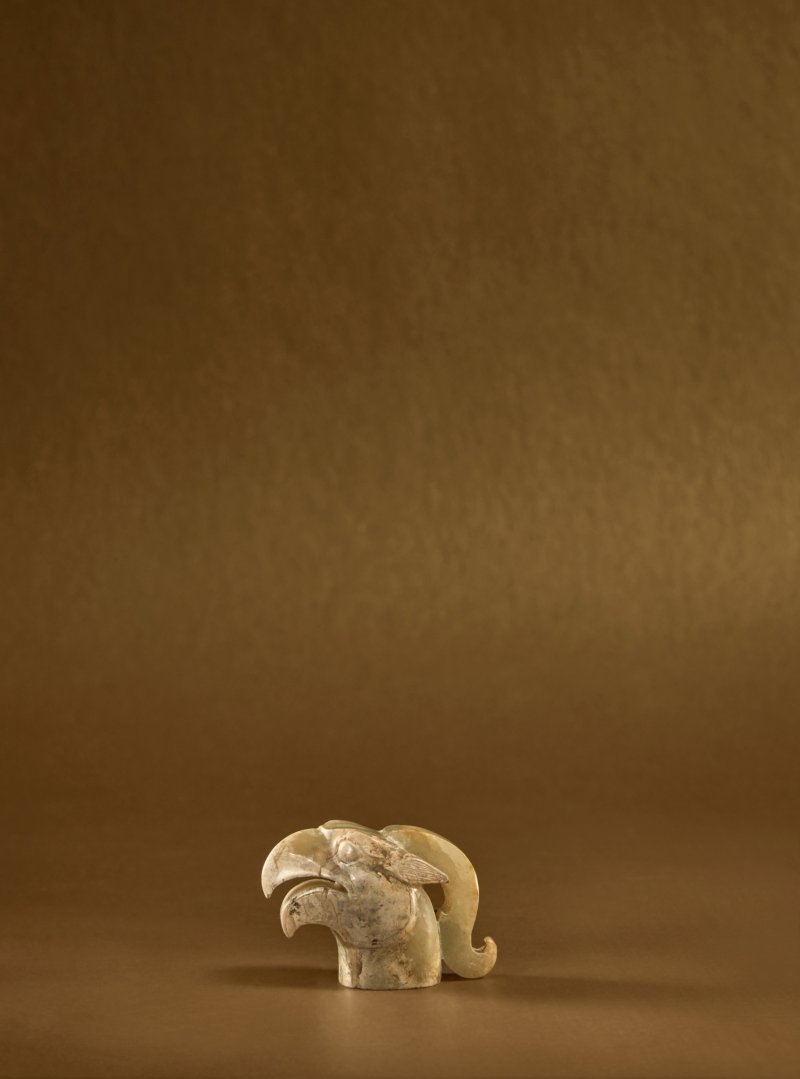
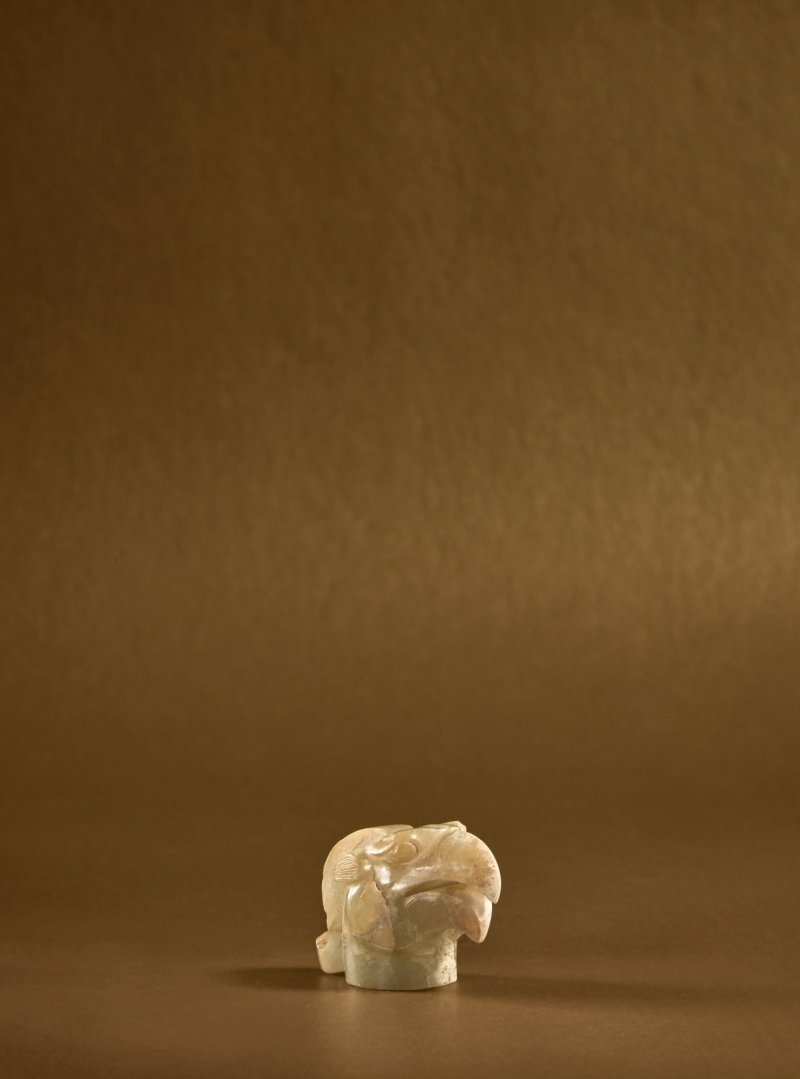
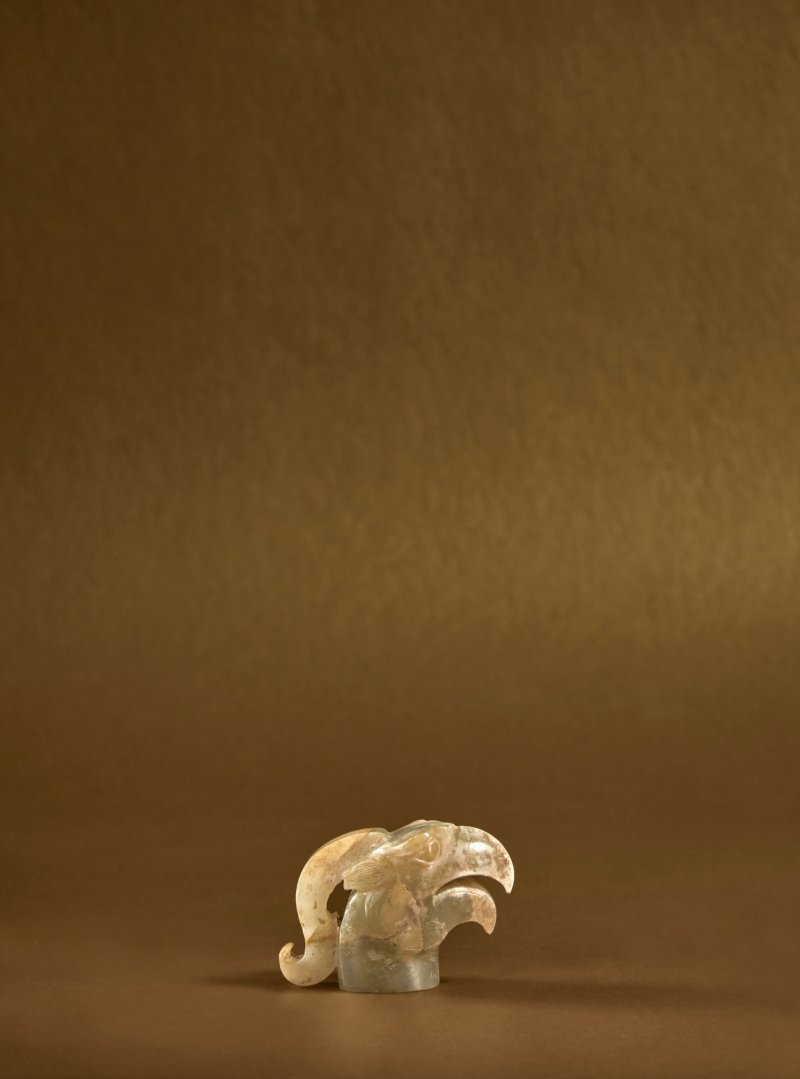
说明:The present finial is carved in the form of a majestic bird with its long crest feathers sweeping backward in elegant, rhythmic curves. Its thick beak clasps a rounded bead while a pair of sharply triangular ears rise beside the crest.
In antiquity, staffs surmounted by bird finials were potent emblems of supreme authority. During the Neolithic period, they may have served in ritual practices intended to invoke the spirits of divine birds, functioning as intermediaries between the human and celestial worlds. By the pre-Qin period, the bird-headed staff had evolved into a mark of the dignity and status of revered elders. In the Han dynasty, it acquired an additional layer of meaning as an imperial token of honor bestowed upon the aged.
Although bird-head finials of this general type are known in bronze, wood, and other materials, examples carved from jade are exceptionally rare and only one closely related example has ever been published. Of similar size, the finial was included in the National Palace Museum's exhibition 1999 Collectors' Exhibition of Archaic Chinese Jades, Taipei, 1999, cat. no. 149, later entering the Lantien Shanfang Collection and was most recently sold at Christie's Hong Kong, 29th November 2024, lot 1065. For related examples in other materials, see a Han bronze bird-head form finial (5.7 cm), but without the feather on its head, in the Hebei Museum; and a painted wood bird-form finial housed in the Wuwei City Museum, Gansu Province.
来源:埃斯卡納齊,倫敦,1995年之前
Anthony Carter Ltd.,倫敦
展览:《Early Chinese Art: 8th Century BC - 9th Century AD》,埃斯卡納齊,倫敦,1995年,編號26
图录
说明:The present finial is carved in the form of a majestic bird with its long crest feathers sweeping backward in elegant, rhythmic curves. Its thick beak clasps a rounded bead while a pair of sharply triangular ears rise beside the crest.
In antiquity, staffs surmounted by bird finials were potent emblems of supreme authority. During the Neolithic period, they may have served in ritual practices intended to invoke the spirits of divine birds, functioning as intermediaries between the human and celestial worlds. By the pre-Qin period, the bird-headed staff had evolved into a mark of the dignity and status of revered elders. In the Han dynasty, it acquired an additional layer of meaning as an imperial token of honor bestowed upon the aged.
Although bird-head finials of this general type are known in bronze, wood, and other materials, examples carved from jade are exceptionally rare and only one closely related example has ever been published. Of similar size, the finial was included in the National Palace Museum's exhibition 1999 Collectors' Exhibition of Archaic Chinese Jades, Taipei, 1999, cat. no. 149, later entering the Lantien Shanfang Collection and was most recently sold at Christie's Hong Kong, 29th November 2024, lot 1065. For related examples in other materials, see a Han bronze bird-head form finial (5.7 cm), but without the feather on its head, in the Hebei Museum; and a painted wood bird-form finial housed in the Wuwei City Museum, Gansu Province.
常见问题
拍品的品相状况如何?
如欲了解本拍品狀況的更多資訊,請聯絡 Drew.Lerner@sothebys.com
这件拍品的流传来源是什么?
埃斯卡納齊,倫敦,1995年之前
Anthony Carter Ltd.,倫敦
Anthony Carter Ltd.,倫敦
这件拍品曾在哪些展览中展出过?
《Early Chinese Art: 8th Century BC - 9th Century AD》,埃斯卡納齊,倫敦,1995年,編號26
图录
图录