
拍品信息
拍品名称
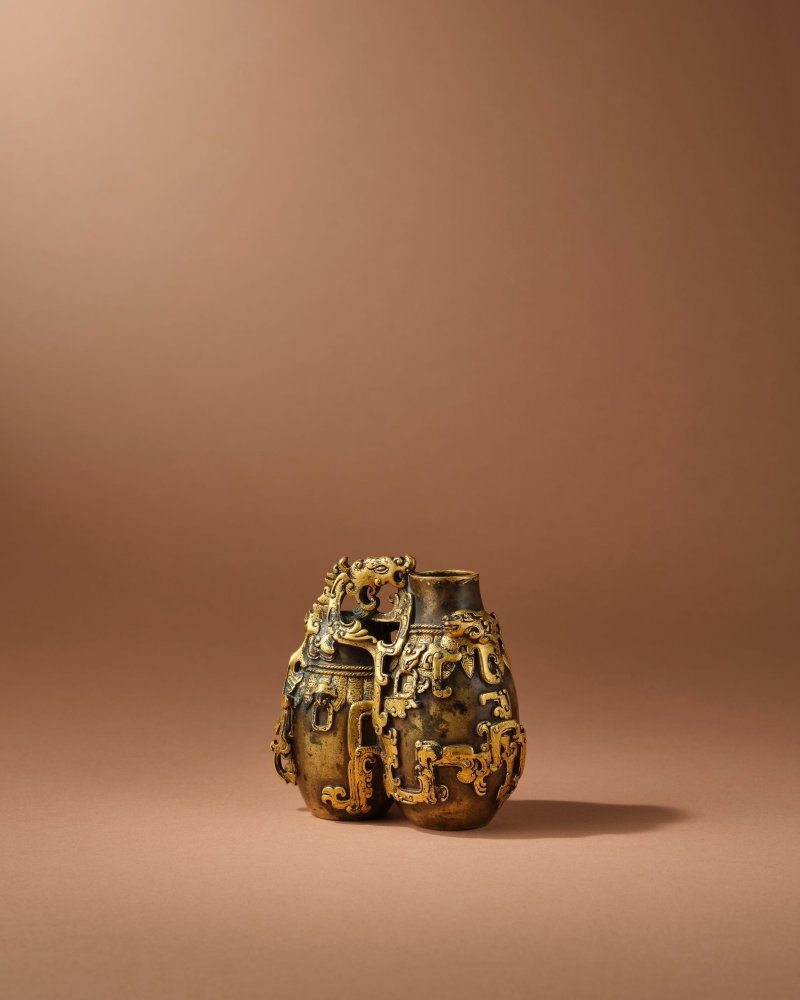
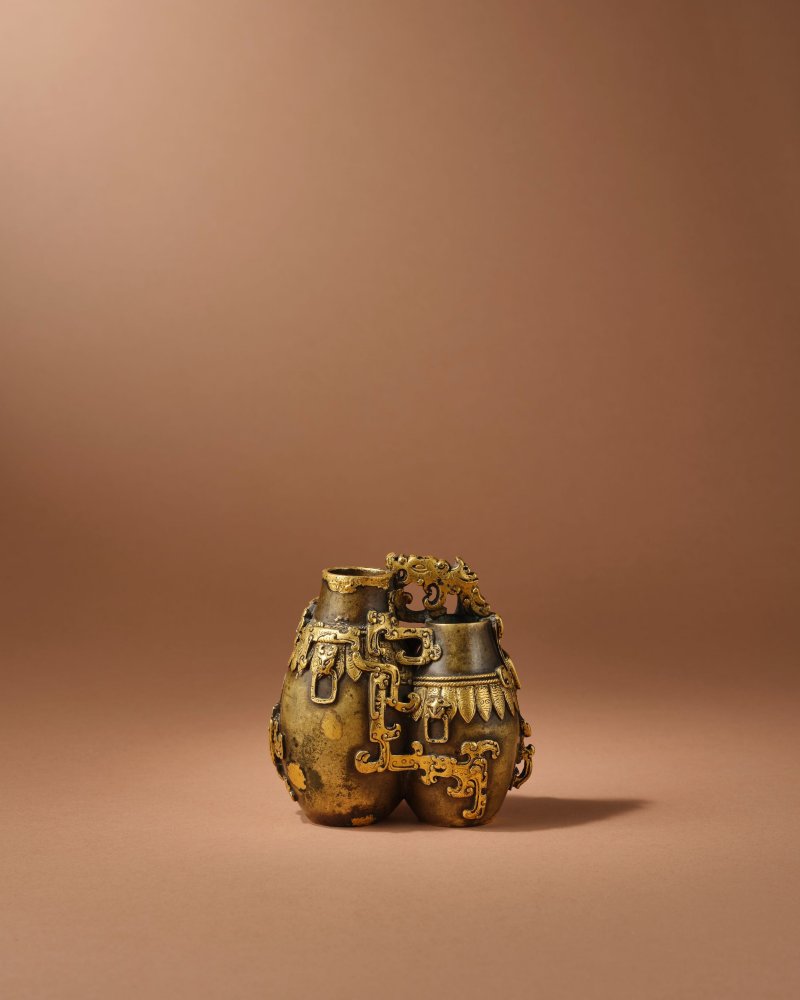
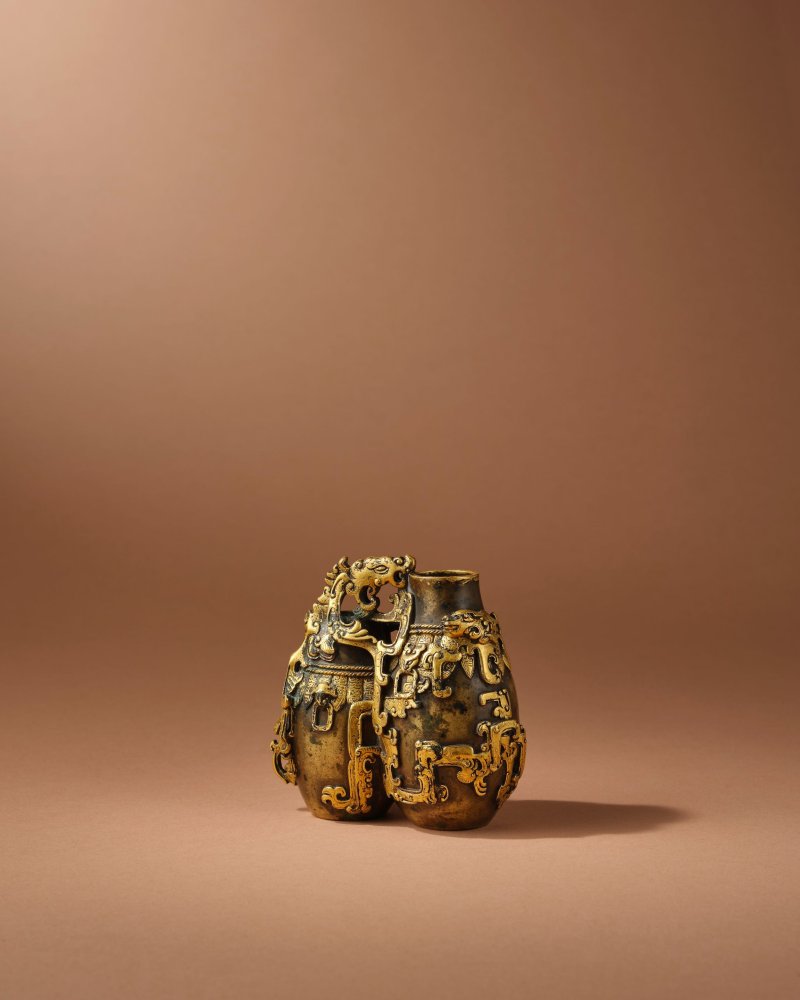
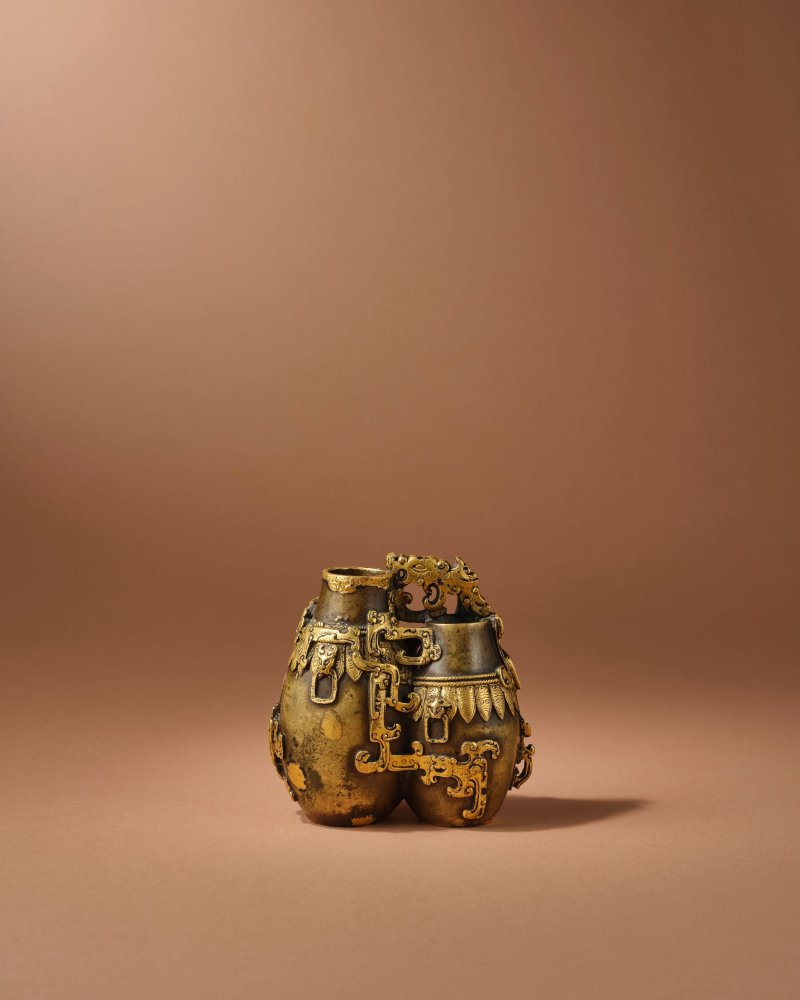
清乾隆 銅局部鎏金夔龍紋雙聯瓶 | A RARE IMPERIAL PARCEL-GILT BRONZE DOUBLE-VASE
年代
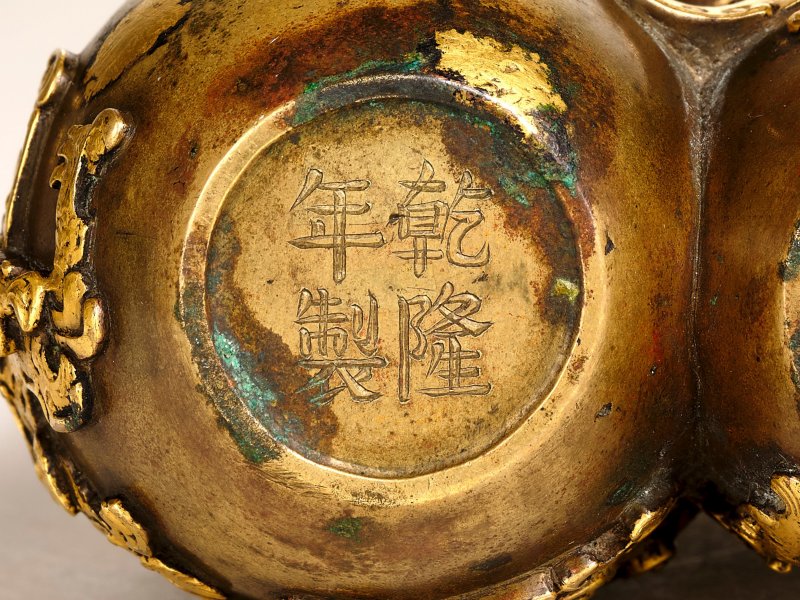
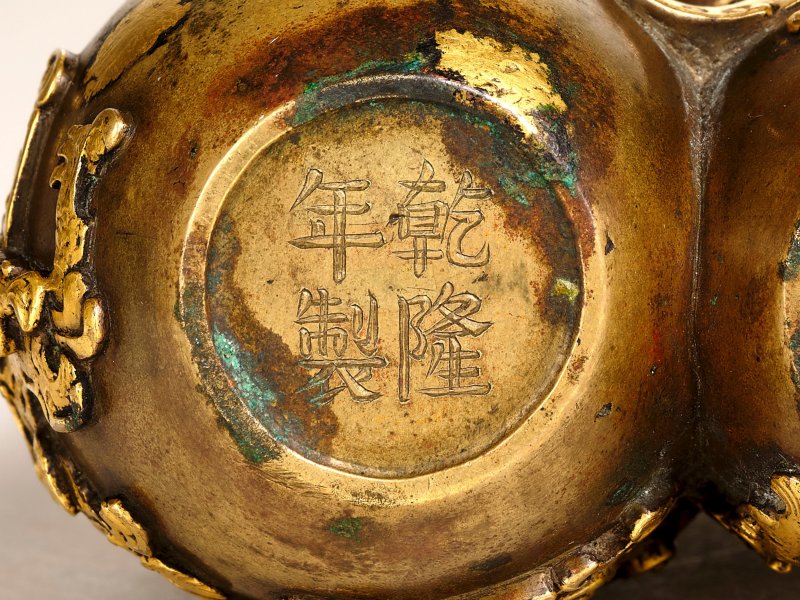
Qianlong four-character mark and of the period
起拍价
HKD 400,000
估值区间
HKD 400000 - 600000
尺寸
未知
品相
未知
更多信息
Qianlong four-character mark and of the period
Crisply cast as a conjoined pair of ovoid vases surmounted by slightly flaring necks, one slightly larger, both with two rope-twist bands around the necks above pendant cicada lappets and mythical-beast-head handles suspending rings on the shoulders, stylised archaistic kui dragons coiling around the vases, the larger with its head biting the rim of the taller vase.
8cm (3 1/8in) high.
Footnotes
清乾隆 銅局部鎏金夔龍紋雙聯瓶
「乾隆年製」楷書款
The present lot exemplifies the Qianlong Emperor's sophisticated fascination with antiquity and the virtuoso metalwork produced at the Imperial Workshops. Conceived in the spirit of fanggu (「仿古」, 'imitating antiquity'), the vase draws upon the forms and decorative vocabulary of ancient ritual bronzes, while translating them into the materials and techniques of the eighteenth century Court. Its form appears to be inspired by earlier bronze prototypes, notably the Tang dynasty 'champion' vase illustrated in the Xiqing gujian 《西清古鑑》, 1751-1755; see M.Wilson, Chinese Jades, London, 2004, p.106, pl.107.
The Qianlong Emperor's engagement with antiquity was rooted in a desire to 'restore the ancient ways', reflecting his conception of antiquity as embodying qualities of sincerity, simplicity and harmonious exuberance. This antiquarian interest formed part of the broader ('Evidential Research') movement of the Qing period, which emphasised the critical study of historical texts and material remains and encouraged renewed attention to the forms, inscriptions and decorative vocabulary of ancient bronzes. Under the Qianlong Emperor's patronage, Imperial catalogues and illustrated studies of antiquities, most notably the , provided important visual sources for craftsmen working in a variety of media. The resulting objects were not simply copies of ancient prototypes, but sophisticated reinterpretations of antiquity in accordance with the aesthetic tastes and technical capabilities of the Qianlong Court. See Chang Li-tuan, , Taipei, 1997, pp.49-50.
A closely related but smaller example, Qianlong four-character mark and of the period, was treasured in the 'Tian Fu Qiu Lin' curio box, assembled during the Qianlong reign, now in the Palace Museum, Taipei, illustrated in , Taipei, 2020, p.61. Compare also related vessels made of other material, including two cloisonné enamel double vases (27cm and 18cm high), Qianlong six-character marks and of the period, in the Qing Court Collection, illustrated in the , Beijing, 2011, nos.182-183.
See another very similar example (8.9cm high), Qianlong four-character mark and of the period, illustrated in , Phoenix, 1993, pp.190-191, no.40; see also a metal double vase, Qianlong, similarly decorated with and archaistic designs, in the Avery Brundage Collection, Asian Art Museum, San Francisco (acc.no.B60B106.a-.b).
Compare a similar example (14.9cm high), Qianlong six-character mark and of the period, from the Collection of Sydney L. Moss Ltd., which was later sold at Sotheby's Hong Kong, 22 April 2021, lot 3688.
此雙聯瓶器小而精,反映乾隆皇帝尚古審美,又彰顯宮廷匠人鑄造銅器之卓越工藝。其造型古樸,仿效周代青銅禮器,然從其雙聯設計又可見當朝創新意趣。瓶身以銅鑄造,局部鎏金,金飾與浮雕紋飾相得益彰。器表飾以螭龍,身形修長,蜿蜒盤繞,交錯於瓶腹兩側。此類紋飾雖源於古器,然其工藝利落、線條婉約,具乾隆宮廷作坊之典型風格,可見鑄造技法之純熟。此螭龍之態與象徵皇權之五爪龍紋有別,更趨近文人鑑古之雅趣。其造型或源自更早之青銅器,如《西清古鑑》(1751–1755年)所錄之唐代雙聯瓶,參見M.Wilson《Chinese Jades》,倫敦,2004年,頁106,圖版107。
乾隆皇帝之慕古情懷,源自其對「復古」之追求,認為古物體現真誠、簡樸與和諧之美。此一慕古風尚,與清代考據學運動相呼應,強調對歷史文獻與物質遺存之嚴謹研究,進而重新關注古銅器之形制、銘文與紋飾。在乾隆皇帝的推動下,宮廷編纂之圖譜如《西清古鑑》,為各類工藝匠師提供了重要參考。然而,此類作品並非單純摹古,而是依乾隆宮廷之審美趣味與技術條件,對古器進行再詮釋,參見張麗端著,《宮廷之雅:清代仿古及畫意玉器特展》,台北,1997年,頁49至50。
一件形制相近而尺寸略小之乾隆四字款銅鎏金浮雕龍鳳紋雙連瓶,曾收貯於乾隆朝〈天府球琳〉百什件內,現藏台北故宮博物院,見《皇帝的多寶格》,台北,2020年,頁61。另可比較其他材質之雙聯瓶,如清宮舊藏兩件乾隆六字款掐絲琺瑯雙聯瓶(高27厘米及18厘米),參見《故宮博物院藏品大系:琺瑯器編2:清掐絲琺瑯》,北京,2011年,編號182至183。
另見一件形制極為相近之乾隆四字款雙聯瓶(高8.9厘米),著錄於《China's Renaissance in Bronze: The Robert H. Clague Collection of Later Chinese Bronzes 1100–1900》,鳳凰城,1993年,頁190至191,編號40;又可參考舊金山亞洲藝術博物館Avery Brundage收藏一件乾隆時期銅雙聯瓶,飾以螭龍及仿古紋(館藏編號B60B106.a-.b)。
比較Sydney L. Moss Ltd.舊藏一件乾隆六字款灑金銅鏨龍鳳雙聯瓶(高14.9厘米),後售於香港蘇富比,2021年4月22日,拍品編號3688。
Crisply cast as a conjoined pair of ovoid vases surmounted by slightly flaring necks, one slightly larger, both with two rope-twist bands around the necks above pendant cicada lappets and mythical-beast-head handles suspending rings on the shoulders, stylised archaistic kui dragons coiling around the vases, the larger with its head biting the rim of the taller vase.
8cm (3 1/8in) high.
Footnotes
清乾隆 銅局部鎏金夔龍紋雙聯瓶
「乾隆年製」楷書款
The present lot exemplifies the Qianlong Emperor's sophisticated fascination with antiquity and the virtuoso metalwork produced at the Imperial Workshops. Conceived in the spirit of fanggu (「仿古」, 'imitating antiquity'), the vase draws upon the forms and decorative vocabulary of ancient ritual bronzes, while translating them into the materials and techniques of the eighteenth century Court. Its form appears to be inspired by earlier bronze prototypes, notably the Tang dynasty 'champion' vase illustrated in the Xiqing gujian 《西清古鑑》, 1751-1755; see M.Wilson, Chinese Jades, London, 2004, p.106, pl.107.
The Qianlong Emperor's engagement with antiquity was rooted in a desire to 'restore the ancient ways', reflecting his conception of antiquity as embodying qualities of sincerity, simplicity and harmonious exuberance. This antiquarian interest formed part of the broader ('Evidential Research') movement of the Qing period, which emphasised the critical study of historical texts and material remains and encouraged renewed attention to the forms, inscriptions and decorative vocabulary of ancient bronzes. Under the Qianlong Emperor's patronage, Imperial catalogues and illustrated studies of antiquities, most notably the , provided important visual sources for craftsmen working in a variety of media. The resulting objects were not simply copies of ancient prototypes, but sophisticated reinterpretations of antiquity in accordance with the aesthetic tastes and technical capabilities of the Qianlong Court. See Chang Li-tuan, , Taipei, 1997, pp.49-50.
A closely related but smaller example, Qianlong four-character mark and of the period, was treasured in the 'Tian Fu Qiu Lin' curio box, assembled during the Qianlong reign, now in the Palace Museum, Taipei, illustrated in , Taipei, 2020, p.61. Compare also related vessels made of other material, including two cloisonné enamel double vases (27cm and 18cm high), Qianlong six-character marks and of the period, in the Qing Court Collection, illustrated in the , Beijing, 2011, nos.182-183.
See another very similar example (8.9cm high), Qianlong four-character mark and of the period, illustrated in , Phoenix, 1993, pp.190-191, no.40; see also a metal double vase, Qianlong, similarly decorated with and archaistic designs, in the Avery Brundage Collection, Asian Art Museum, San Francisco (acc.no.B60B106.a-.b).
Compare a similar example (14.9cm high), Qianlong six-character mark and of the period, from the Collection of Sydney L. Moss Ltd., which was later sold at Sotheby's Hong Kong, 22 April 2021, lot 3688.
此雙聯瓶器小而精,反映乾隆皇帝尚古審美,又彰顯宮廷匠人鑄造銅器之卓越工藝。其造型古樸,仿效周代青銅禮器,然從其雙聯設計又可見當朝創新意趣。瓶身以銅鑄造,局部鎏金,金飾與浮雕紋飾相得益彰。器表飾以螭龍,身形修長,蜿蜒盤繞,交錯於瓶腹兩側。此類紋飾雖源於古器,然其工藝利落、線條婉約,具乾隆宮廷作坊之典型風格,可見鑄造技法之純熟。此螭龍之態與象徵皇權之五爪龍紋有別,更趨近文人鑑古之雅趣。其造型或源自更早之青銅器,如《西清古鑑》(1751–1755年)所錄之唐代雙聯瓶,參見M.Wilson《Chinese Jades》,倫敦,2004年,頁106,圖版107。
乾隆皇帝之慕古情懷,源自其對「復古」之追求,認為古物體現真誠、簡樸與和諧之美。此一慕古風尚,與清代考據學運動相呼應,強調對歷史文獻與物質遺存之嚴謹研究,進而重新關注古銅器之形制、銘文與紋飾。在乾隆皇帝的推動下,宮廷編纂之圖譜如《西清古鑑》,為各類工藝匠師提供了重要參考。然而,此類作品並非單純摹古,而是依乾隆宮廷之審美趣味與技術條件,對古器進行再詮釋,參見張麗端著,《宮廷之雅:清代仿古及畫意玉器特展》,台北,1997年,頁49至50。
一件形制相近而尺寸略小之乾隆四字款銅鎏金浮雕龍鳳紋雙連瓶,曾收貯於乾隆朝〈天府球琳〉百什件內,現藏台北故宮博物院,見《皇帝的多寶格》,台北,2020年,頁61。另可比較其他材質之雙聯瓶,如清宮舊藏兩件乾隆六字款掐絲琺瑯雙聯瓶(高27厘米及18厘米),參見《故宮博物院藏品大系:琺瑯器編2:清掐絲琺瑯》,北京,2011年,編號182至183。
另見一件形制極為相近之乾隆四字款雙聯瓶(高8.9厘米),著錄於《China's Renaissance in Bronze: The Robert H. Clague Collection of Later Chinese Bronzes 1100–1900》,鳳凰城,1993年,頁190至191,編號40;又可參考舊金山亞洲藝術博物館Avery Brundage收藏一件乾隆時期銅雙聯瓶,飾以螭龍及仿古紋(館藏編號B60B106.a-.b)。
比較Sydney L. Moss Ltd.舊藏一件乾隆六字款灑金銅鏨龍鳳雙聯瓶(高14.9厘米),後售於香港蘇富比,2021年4月22日,拍品編號3688。
常见问题
这件清乾隆 銅局部鎏金夔龍紋雙聯瓶 | A RARE IMPERIAL PARCEL-GILT BRONZE DOUBLE-VASE的成交价是多少?
落槌价为 预展中。 成交价为 预展中。