
拍品信息
拍品名称
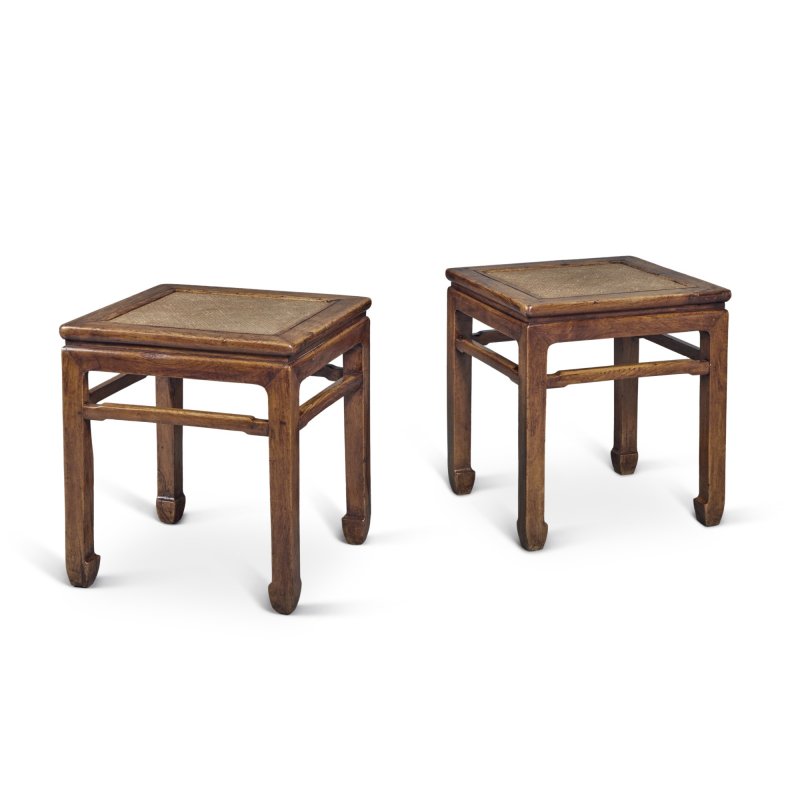
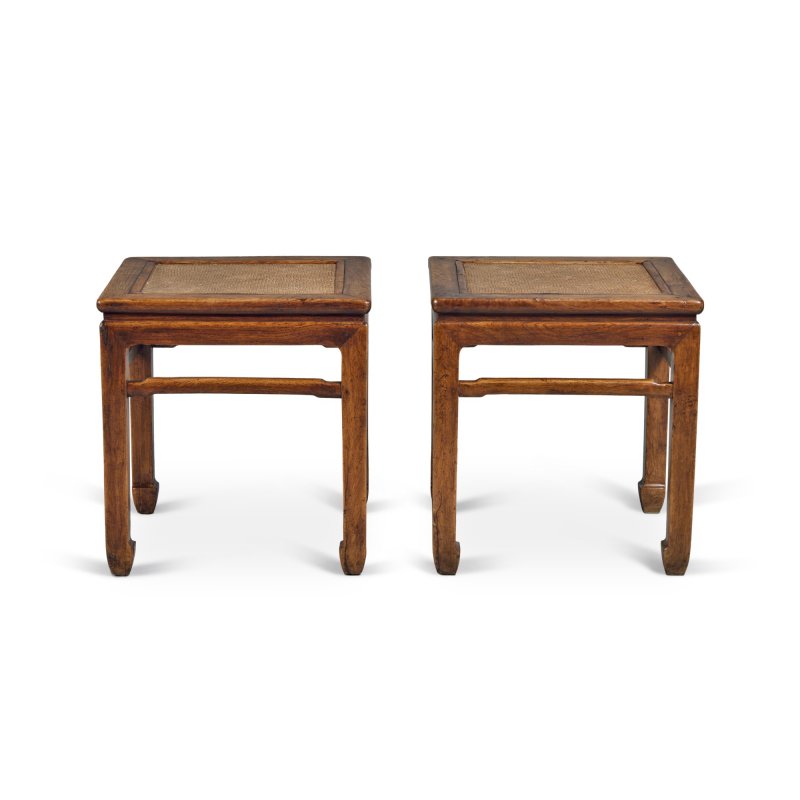
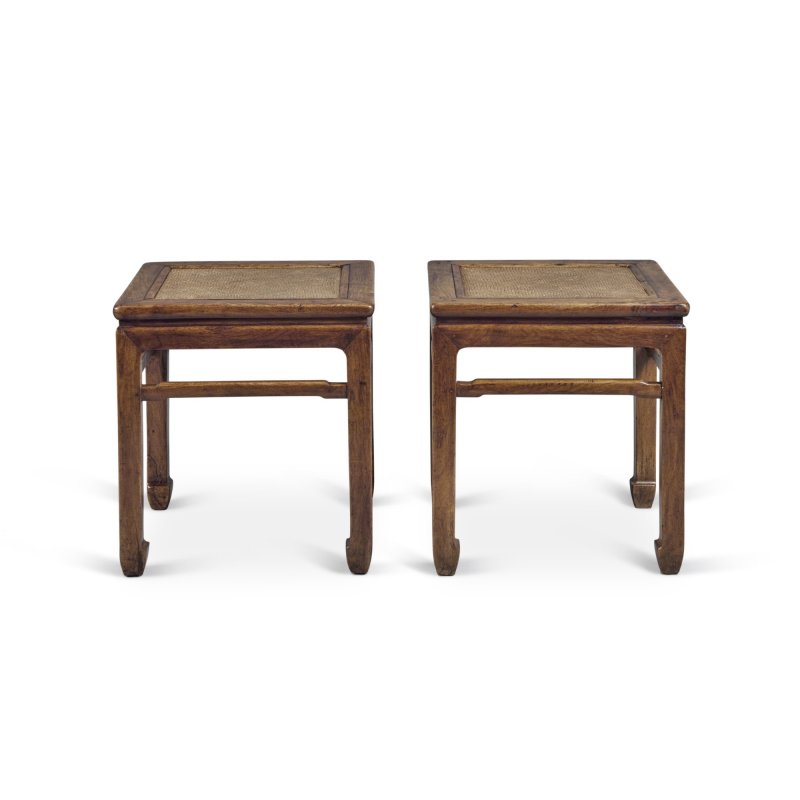
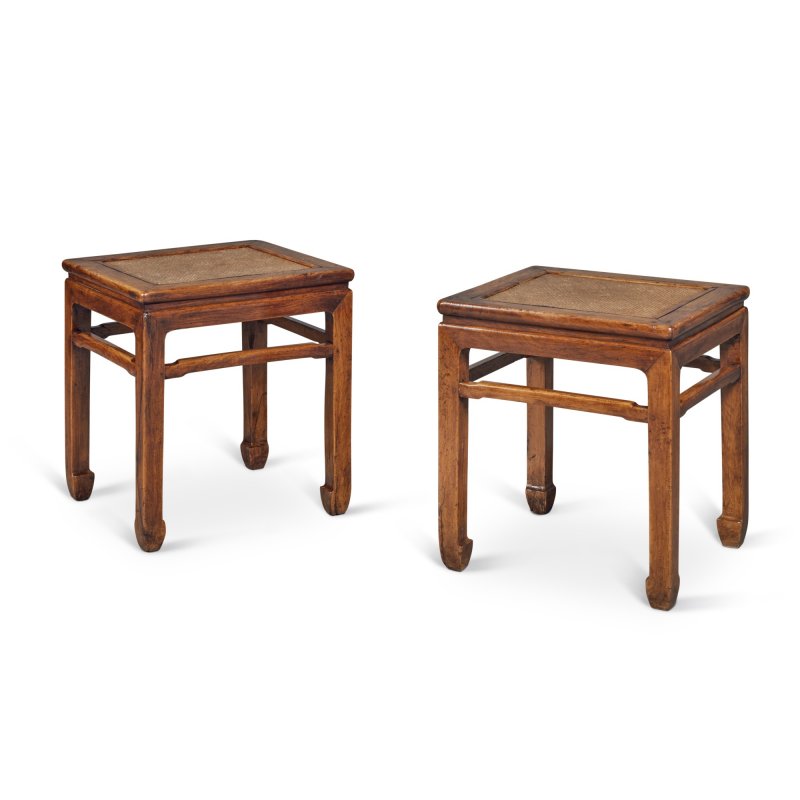
十七世紀 黃花梨羅鍋棖有束腰馬蹄足方凳一對
起拍价
USD 30,000
估值区间
30,000 - 50,000 USD
尺寸
未知
品相
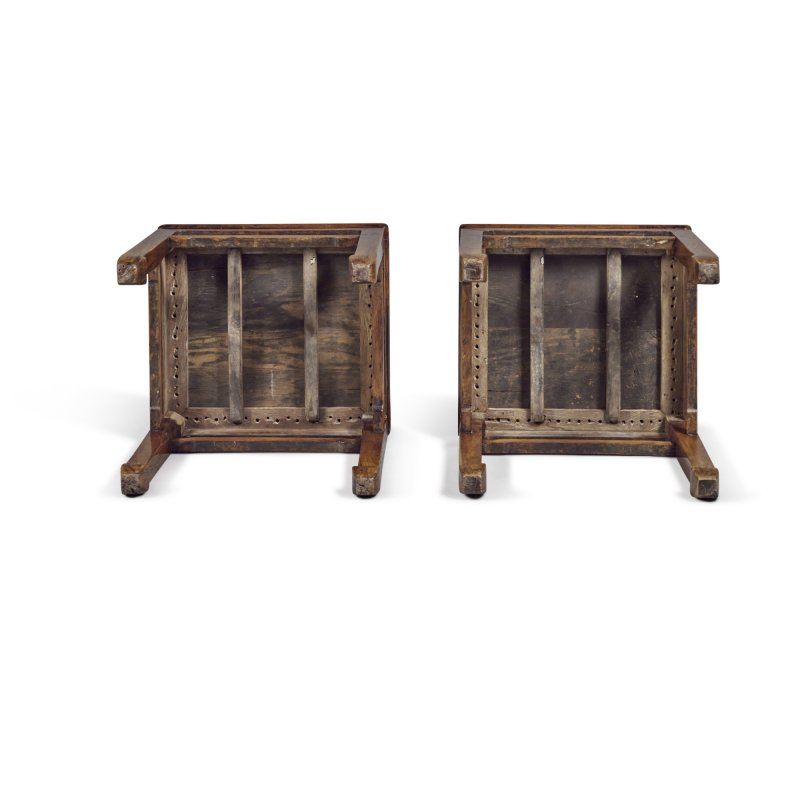
One stool with patches to two legs. One leg with polished loss to inside corner. One humpback stretcher with pinned repair. Both stools with pinning to the joints, expected wear and cracks to the feet, and replaced hard seats.
更多信息
(2)
Height 20⅜ in., 51.6 cm; Width 19⅛ in., 48.6 cm; Depth 17⅝ in., 44.8 cm
来源:英國私人收藏,購於1987年5月18日
倫敦蘇富比1992年6月9日,編號47
图录
说明:This pair of waisted huanghuali stools is notable for its sturdy appearance achieved through the legs that end in horse-hoof feet. Stools of this classical form with humpbacked stretchers were produced in large numbers from the Ming dynasty (1368-1644) onwards, as their small size and light weight made them highly versatile. George N. Kates also notes that in the Tang dynasty (618-907) the stool in all its varieties ‘was considered the ideal seat for a woman’ because sitting on it displays the curves of a lady’s back, neck and shoulders to best advantage, while the position is considered modest to others, see Chinese Household Furniture, New York, 1948, p. 49.
Compare a pair from the Minneapolis Institute of Arts, Minneapolis, illustrated in Robert D. Jacobsen and Nicholas Grindley, Classical Chinese Furniture in the Minneapolis Institute of Arts, Minneapolis, 1999, fig. 2, pp 38-9; one illustrated in Wang Shixiang, Classic Chinese Furniture. Ming and Early Qing Dynasties, Hong Kong, 1986, pl. 15; and another pair sold at Christie’s Hong Kong, 29th November 2012, lot 2007. Compare also a related piece, illustrated in Robert H. Ellsworth, Chinese Furniture. Hardwood Examples of the Ming and Early Ch'ing Dynasties, New York, 1971, pl. 115, and sold at Christie’s New York, 25th September 2020, lot 1655; one sold at Christie’s Hong Kong, 28th November 2012, lot 2007; and a pair sold at Christie’s New York, 23rd March 2018, lot 963.
Height 20⅜ in., 51.6 cm; Width 19⅛ in., 48.6 cm; Depth 17⅝ in., 44.8 cm
来源:英國私人收藏,購於1987年5月18日
倫敦蘇富比1992年6月9日,編號47
图录
说明:This pair of waisted huanghuali stools is notable for its sturdy appearance achieved through the legs that end in horse-hoof feet. Stools of this classical form with humpbacked stretchers were produced in large numbers from the Ming dynasty (1368-1644) onwards, as their small size and light weight made them highly versatile. George N. Kates also notes that in the Tang dynasty (618-907) the stool in all its varieties ‘was considered the ideal seat for a woman’ because sitting on it displays the curves of a lady’s back, neck and shoulders to best advantage, while the position is considered modest to others, see Chinese Household Furniture, New York, 1948, p. 49.
Compare a pair from the Minneapolis Institute of Arts, Minneapolis, illustrated in Robert D. Jacobsen and Nicholas Grindley, Classical Chinese Furniture in the Minneapolis Institute of Arts, Minneapolis, 1999, fig. 2, pp 38-9; one illustrated in Wang Shixiang, Classic Chinese Furniture. Ming and Early Qing Dynasties, Hong Kong, 1986, pl. 15; and another pair sold at Christie’s Hong Kong, 29th November 2012, lot 2007. Compare also a related piece, illustrated in Robert H. Ellsworth, Chinese Furniture. Hardwood Examples of the Ming and Early Ch'ing Dynasties, New York, 1971, pl. 115, and sold at Christie’s New York, 25th September 2020, lot 1655; one sold at Christie’s Hong Kong, 28th November 2012, lot 2007; and a pair sold at Christie’s New York, 23rd March 2018, lot 963.
常见问题
拍品的品相状况如何?
One stool with patches to two legs. One leg with polished loss to inside corner. One humpback stretcher with pinned repair. Both stools with pinning to the joints, expected wear and cracks to the feet, and replaced hard seats.
这件拍品的流传来源是什么?
英國私人收藏,購於1987年5月18日
倫敦蘇富比1992年6月9日,編號47
图录
倫敦蘇富比1992年6月9日,編號47
图录