
Lot 28 漢代 陶馬 | MAGNIFIQUE TRÈS GRAND CHEVAL EN TERRE CUITE
落槌价
预展中
成交价
预展中
| 拍卖公司 | 邦瀚斯 |
|---|---|
| 拍卖时间 | 2026年12月10日 |
拍品信息
拍品名称
漢代 陶馬 | MAGNIFIQUE TRÈS GRAND CHEVAL EN TERRE CUITE
年代
漢代
起拍价
未知
估值区间
EUR 8,000–12,000
尺寸
113 cm (44 21/2 in.) high x 103 cm (40 1/2 in.) long
品相
未知
更多信息
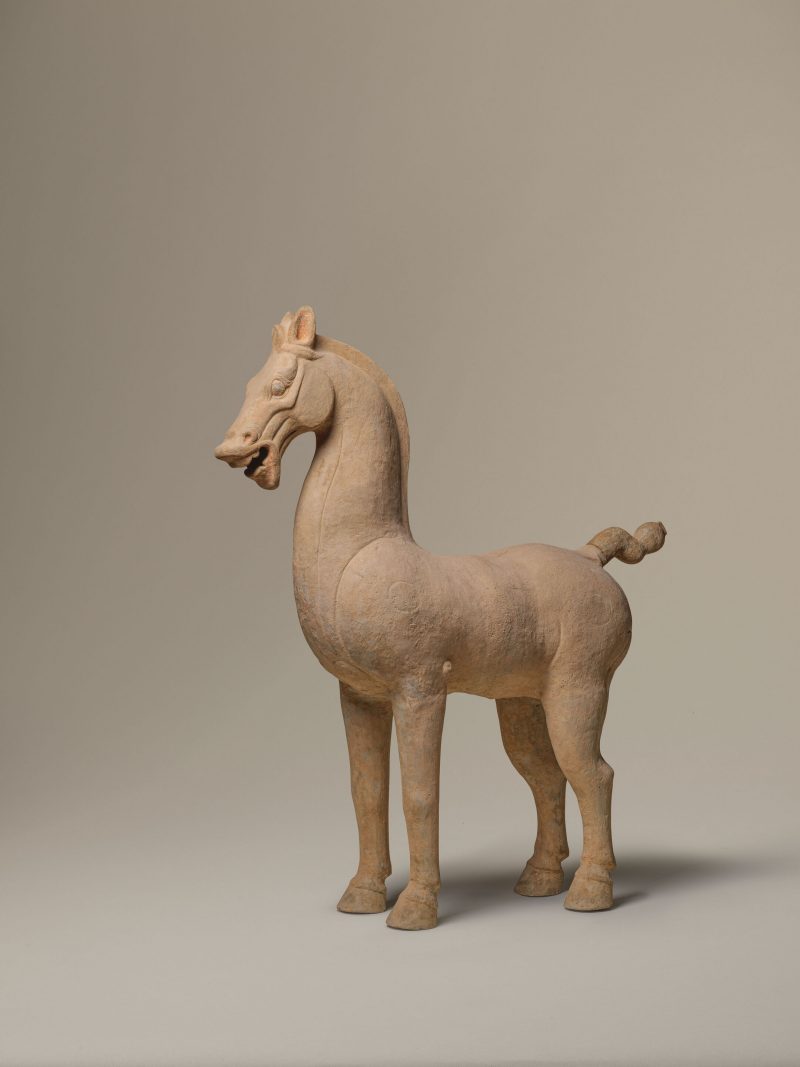
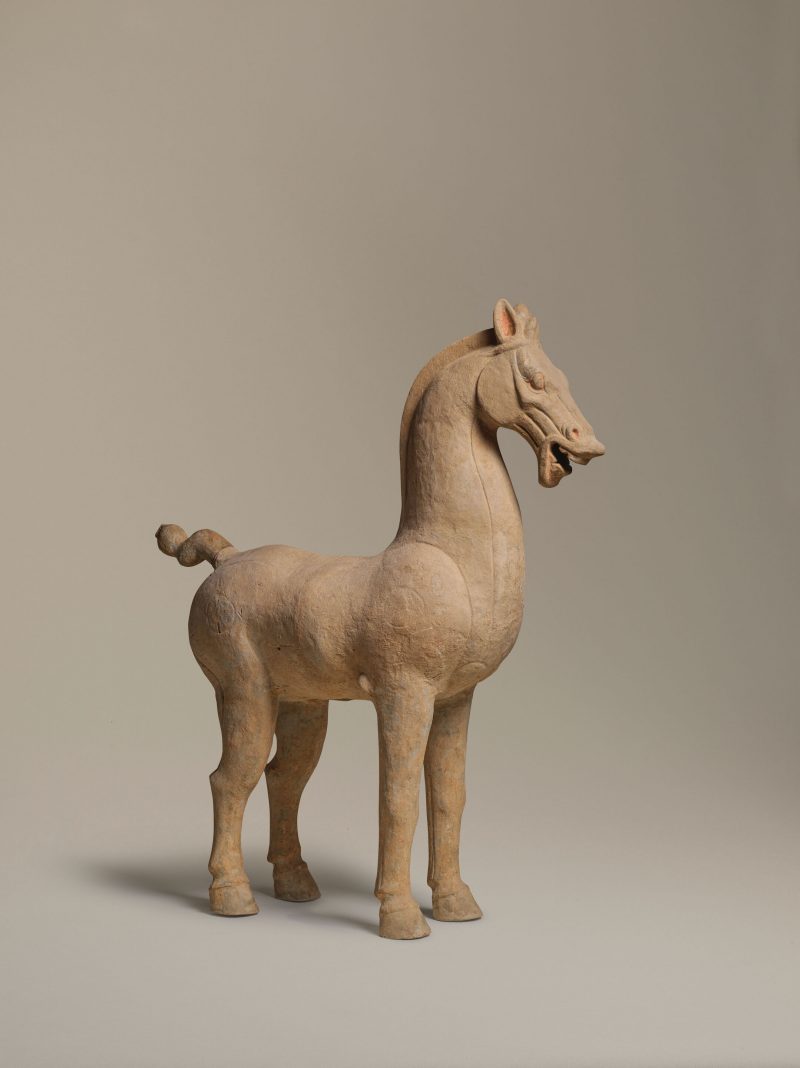
MAGNIFIQUE TRÈS GRAND CHEVAL EN TERRE CUITE
Dynastie Han (206 av. J.-C. - 220 ap. J.-C.), Sichuan
A MAGNIFICIENT AND VERY LARGE POTTERY FIGURE OF A STANDING HORSE
Han Dynasty, Sichuan
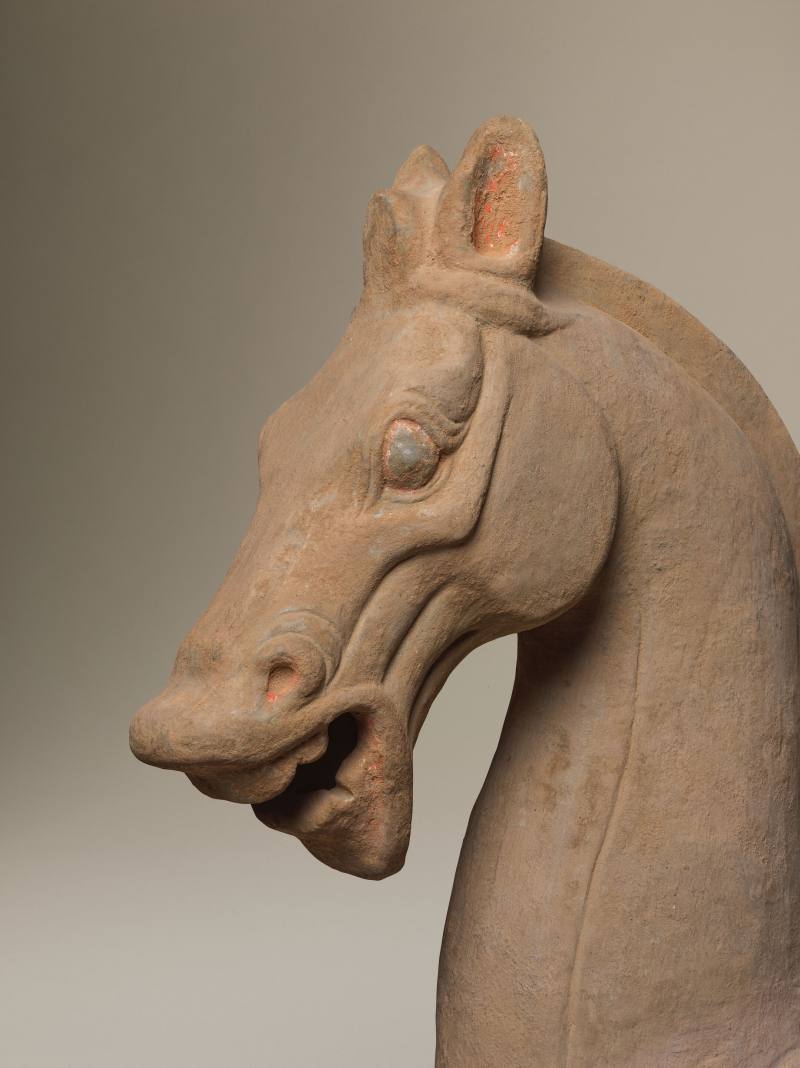
Standing on alert four-square, head held high and modelled with deep, flared nostrils and the lips pulled back, eyes wide below sharp brows and ears pricked, the details picked out in red and white, the body and legs realistically modelled, the arched tail made separately.
113 cm (44 21/2 in.) high x 103 cm (40 1/2 in.) long (2).
漢代 四川 陶馬
The result of University of Hong Kong thermoluminescence test no. 84.93 dated 16 June 1993, is consistent with the dating of this lot.
Provenance:
Gisèle Croës Arts d'Extrême Orient, Brussels, 1993
來源:
Gisèle Croës Arts d'Extrême Orient,布魯塞爾,1993年
Large pottery horses are a distinctive feature of Eastern Han dynasty funerary art in Sichuan, where tomb furnishings are notable for their monumental scale and forceful modelling. Although the practice of burying pottery figures with the deceased was widespread throughout Han dynasty China, the particularly imposing horses associated with Sichuan often occur alongside smaller figures of attendants, entertainers and musicians, rather than within explicitly military assemblages. Their commanding presence may have conveyed the status of the deceased, while also reflecting the belief that the necessities of earthly life should accompany the dead into the afterlife. Standing 113cm high, the present horse exemplifies the striking scale and vitality characteristic of this regional sculptural tradition. Compare with a large pottery figure of a horse, Eastern Han dynasty, Sichuan, in the Los Angeles County Museum of Art (accession no. AC1997.137.1). See also a related grey pottery horse of Western Han date, illustrated in Tao yong, Xi'an, 2014, p. 25, no. 30. Compare also with a massive Sichuan pottery horse, Han dynasty, which was sold at Bonhams Los Angeles, 14 April 2022, lot 50.
以下内容由AI翻译:
【描述】
四足站立,头部高扬,鼻孔外张,嘴唇后拉,眼睛在锐利的眉毛下睁得很大,耳朵竖起,细节用红色和白色描绘,身体和腿部逼真塑造,弓形尾巴单独制作。
大型陶马是四川东汉墓葬艺术的一个显著特征,这里的随葬品以其宏大的规模和有力的造型而著称。尽管随葬陶俑在中国汉代各地都很普遍,但与四川相关的特别雄伟的马通常伴随着较小的侍从、艺人和乐师的塑像,而不是明确的军事组合。它们的威严可能传达了死者的地位,同时也反映了人们认为生前必需品应伴随死者进入来世的信仰。这件高达113厘米的马体现了这一地区雕塑传统的惊人规模和活力。可比较洛杉矶县艺术博物馆收藏的一件东汉时期四川的大型陶马(馆藏编号:AC1997.137.1)。另见《陶俑》,西安,2014年,第25页,编号30,一件西汉时期的灰陶马。还可比较一件汉代四川的大陶马,于2022年4月14日在邦瀚斯洛杉矶拍卖会上拍出,拍品编号50。
常见问题
这件漢代 陶馬 | MAGNIFIQUE TRÈS GRAND CHEVAL EN TERRE CUITE的成交价是多少?
落槌价为 预展中。 成交价为 预展中。
拍品的尺寸是多少?
113 cm (44 21/2 in.) high x 103 cm (40 1/2 in.) long