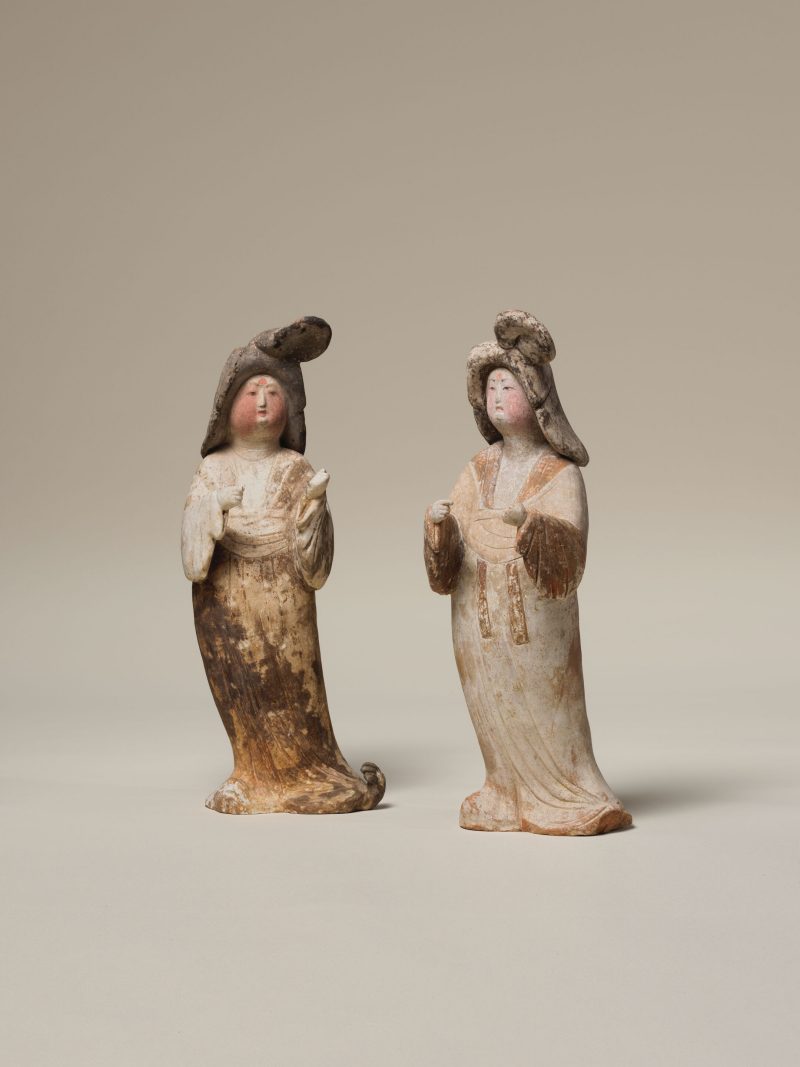

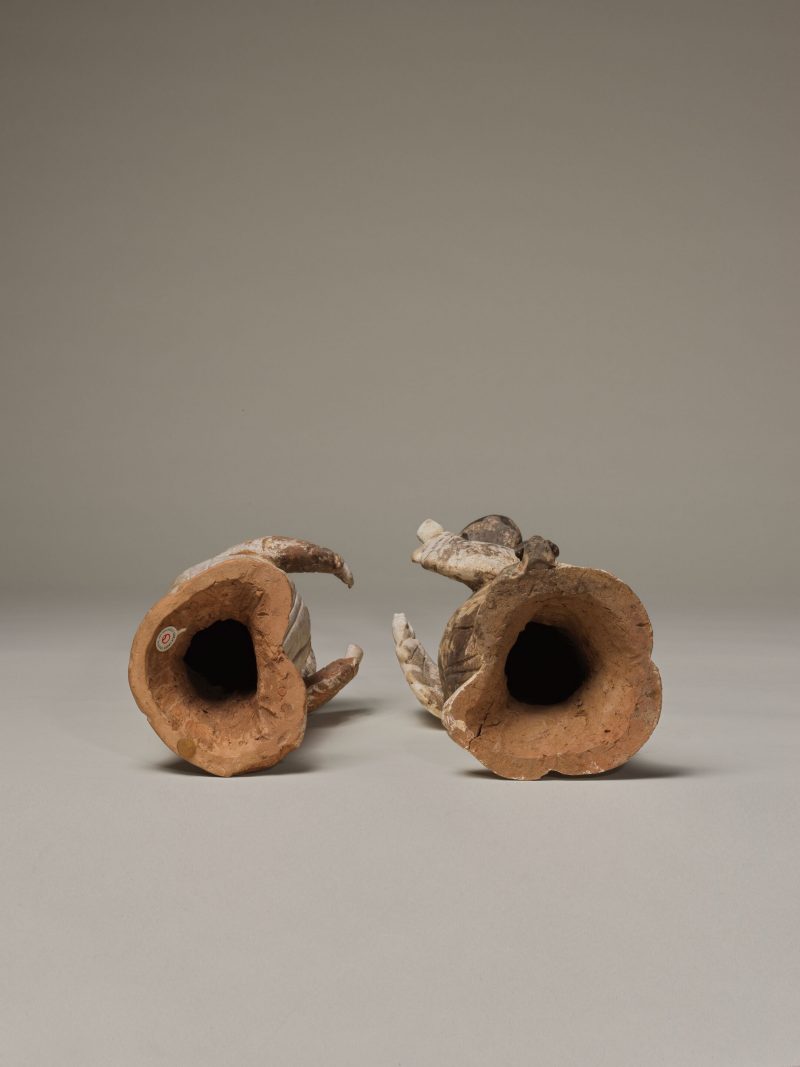
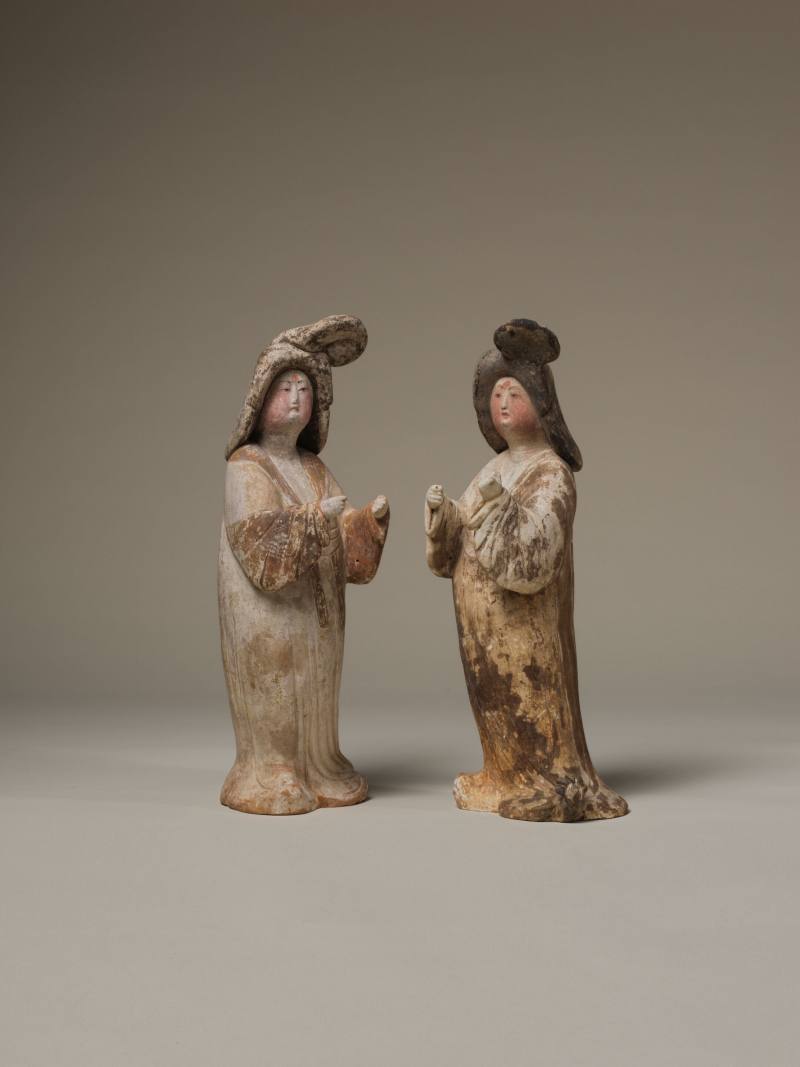
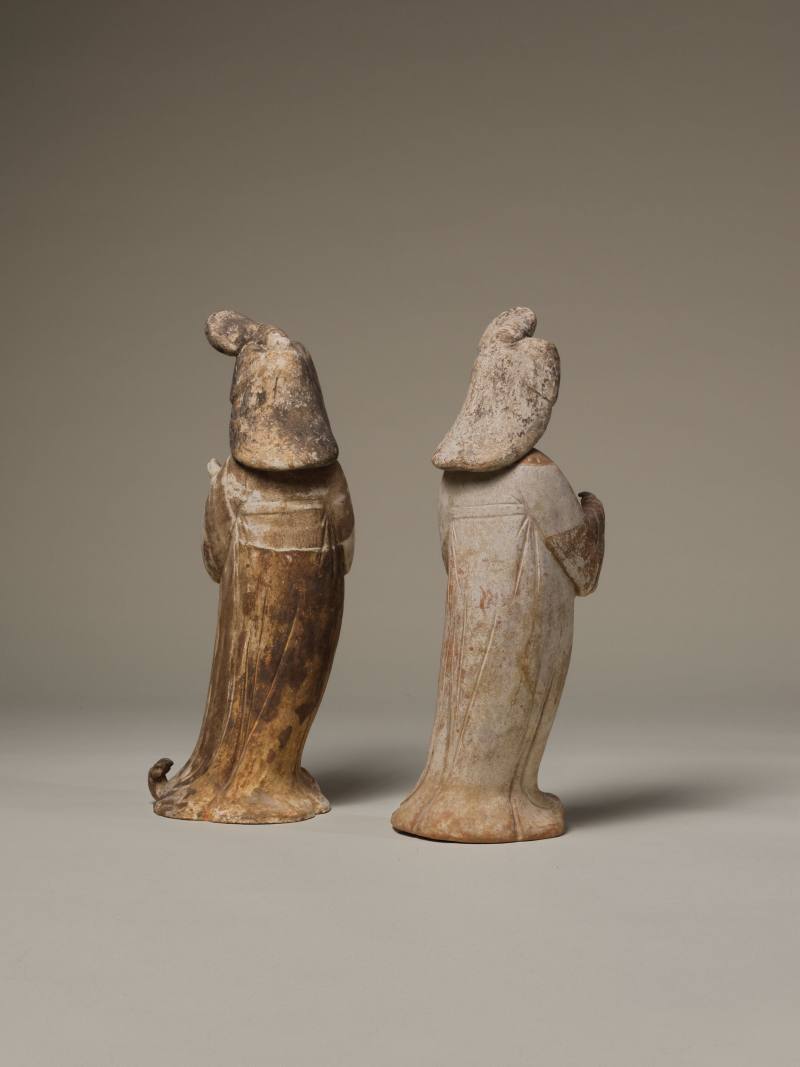
Lot 62 唐 陶彩繪女俑 一組兩件 | DEUX STATUETTES DE DAMES DE COUR EN TERRE CUITE POLYCHROME
落槌价
预展中
成交价
预展中
| 拍卖公司 | 邦瀚斯 |
|---|---|
| 拍卖时间 | 2026年12月10日 |
拍品信息
拍品名称
唐 陶彩繪女俑 一組兩件 | DEUX STATUETTES DE DAMES DE COUR EN TERRE CUITE POLYCHROME
年代
唐
起拍价
未知
估值区间
EUR 8,000–12,000
尺寸
Each 43 cm (16 7/8 in.) high
品相
未知
更多信息
DEUX STATUETTES DE DAMES DE COUR EN TERRE CUITE POLYCHROME
Dynastie Tang (618-907)
TWO PAINTED POTTERY FIGURES OF COURT LADIES
Tang Dynasty
Each lady dressed in a long-sleeved and high-waisted robe falling in generous folds to the floor and covering the right foot while exposing the left foot clad in a pointed shoe, arms raised and gesticulating, the hair gathered into an elaborate arrangement and tied up loosely into a bun, the delicate features of the face painted with red, pink and black highlights, traces of black and red pigment on the clothes.
Each 43 cm (16 7/8 in.) high (2).
唐 陶彩繪女俑 一組兩件
Provenance:
Gisèle Croës Arts d'Extrême Orient, Brussels, 1999
Published, Exhibited and Illustrated:
Gisèle Croës Arts d'Extrême-Orient, Light for the After Life, selected objects, the International Asian Art Fair, Seventh Regiment Armory, New York, 24-29 March 2000, pp. 110-111 (one of the two)
來源:
Gisèle Croës Arts d'Extrême Orient,布魯塞爾,1999年
展覽著錄:
Gisèle Croës Arts d'Extrême-Orient,《Light for the After Life, selected objects》,國際亞洲藝術博覽會,第七團軍械庫,紐約,2000年3月24-29日,第110-111頁(其中一件)
The full-bodied form of Tang Court ladies reflects a changing ideal of feminine beauty that became prominent during the 8th century. Whereas earlier Tang dynasty female figures tend to be more slender, fuller faces and rounded bodies were established features of sculpture by the 720s, before Yang Guifei (719–756), the celebrated consort of Emperor Xuanzong (r.712–756), became associated with this aesthetic in later tradition. Created as mingqi (funerary figures), such images of elaborately dressed attendants also evoke the refinement and material aspirations of the Tang elite. Several painted pottery figures of plump Court ladies, Tang dynasty, are illustrated in Pottery Figurine, Xi'an, 2014, pp. 132-189. A similar standing Court lady, of mid-8th century date, coiffed with similar hair-style, is illustrated in The Eternal Feast: Banqueting in Chinese Art from the 10th to the 14th Century, New Haven and London, 2019, p. 142, no. 28.
See also two Tang dynasty painted pottery figures of Court ladies, sold at Bonhams London, 7 November 2019, lot 153.
以下内容由AI翻译:
【描述】
每位女子身穿长袖高腰长袍,衣褶丰富,垂至地面,遮住右脚而露出左脚穿着尖头鞋,双臂举起并做手势,头发扎成复杂的发型,松散地束成发髻,面部细腻,用红色、粉色和黑色勾勒出细节,衣服上有黑色和红色颜料痕迹。
唐代宫廷女性丰满的形象反映了8世纪时对女性美的新标准。早期唐代女性形象较为苗条,但到了720年代,丰满面庞与圆润体态已成为雕塑的特征。这种审美在后世传统中才与唐玄宗(712–756年在位)的妃嫔杨贵妃(719–756年)相联系。作为冥器,这些精心打扮的侍女形象也反映了唐代精英阶层的精致和物质追求。几件唐代彩绘胖宫女陶俑见于《陶俑》,西安,2014年,第132-189页。一件8世纪中叶的站姿宫女像,发式相近,见《永恒盛宴:从10世纪到14世纪中国艺术中的宴饮》,纽黑文和伦敦,2019年,第142页,编号28。
另见两件唐代彩绘陶制宫女俑,2019年11月7日邦瀚斯伦敦拍卖,拍品153号。
常见问题
这件唐 陶彩繪女俑 一組兩件 | DEUX STATUETTES DE DAMES DE COUR EN TERRE CUITE POLYCHROME的成交价是多少?
落槌价为 预展中。 成交价为 预展中。
拍品的尺寸是多少?
Each 43 cm (16 7/8 in.) high