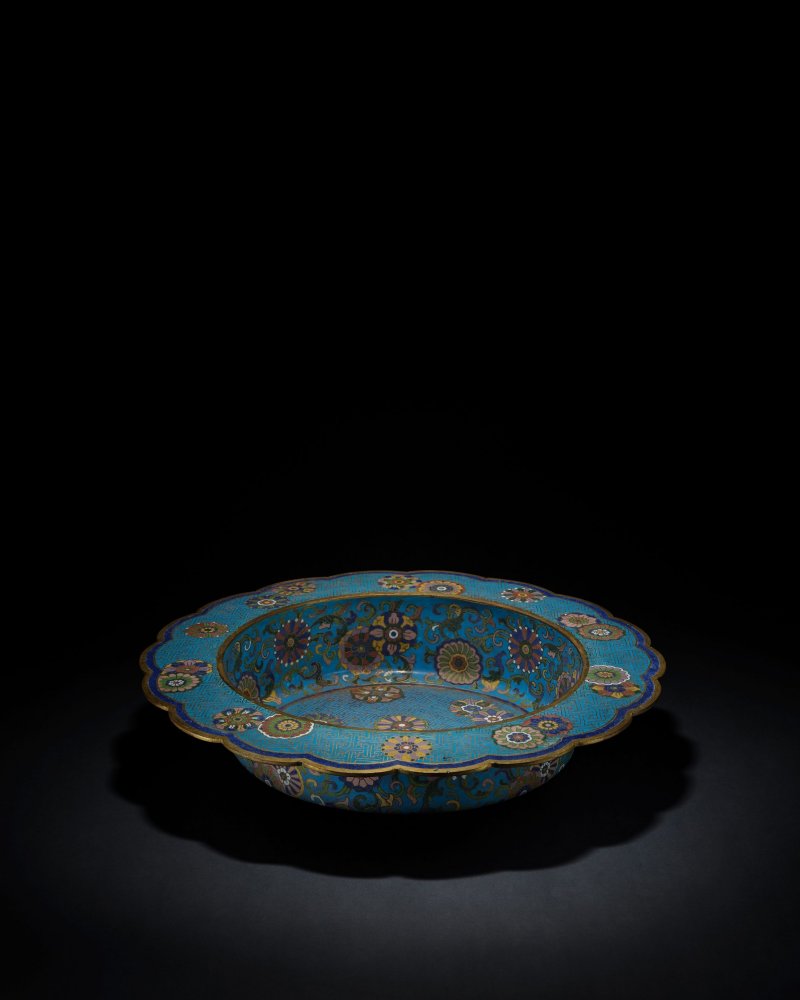

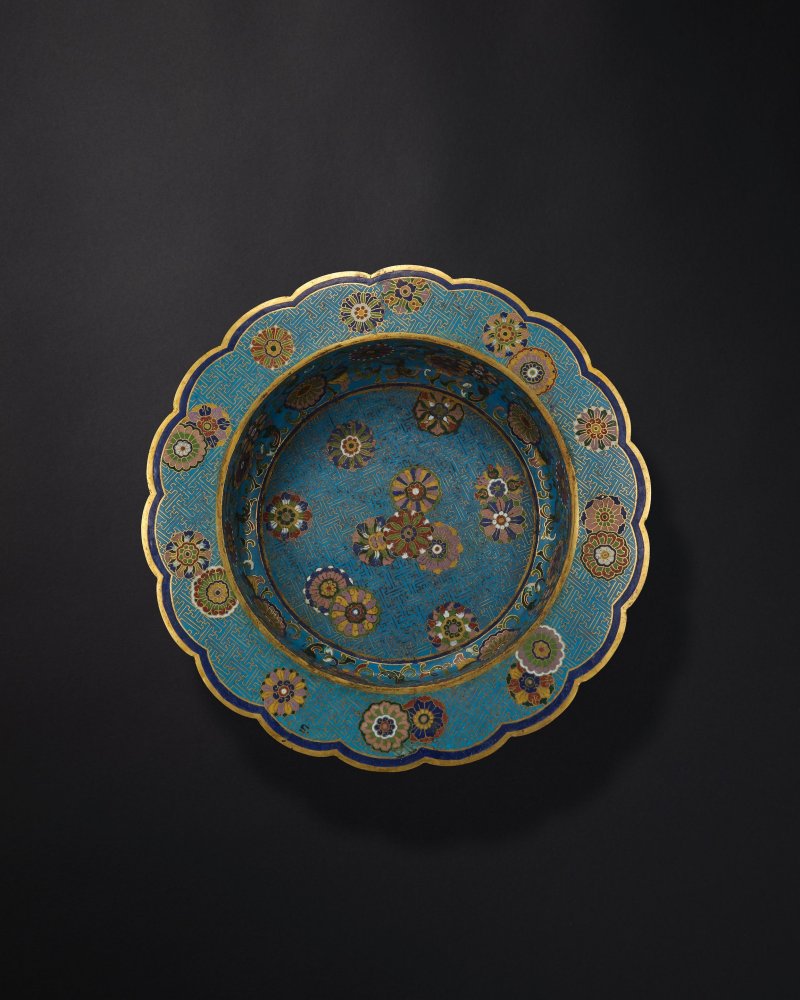
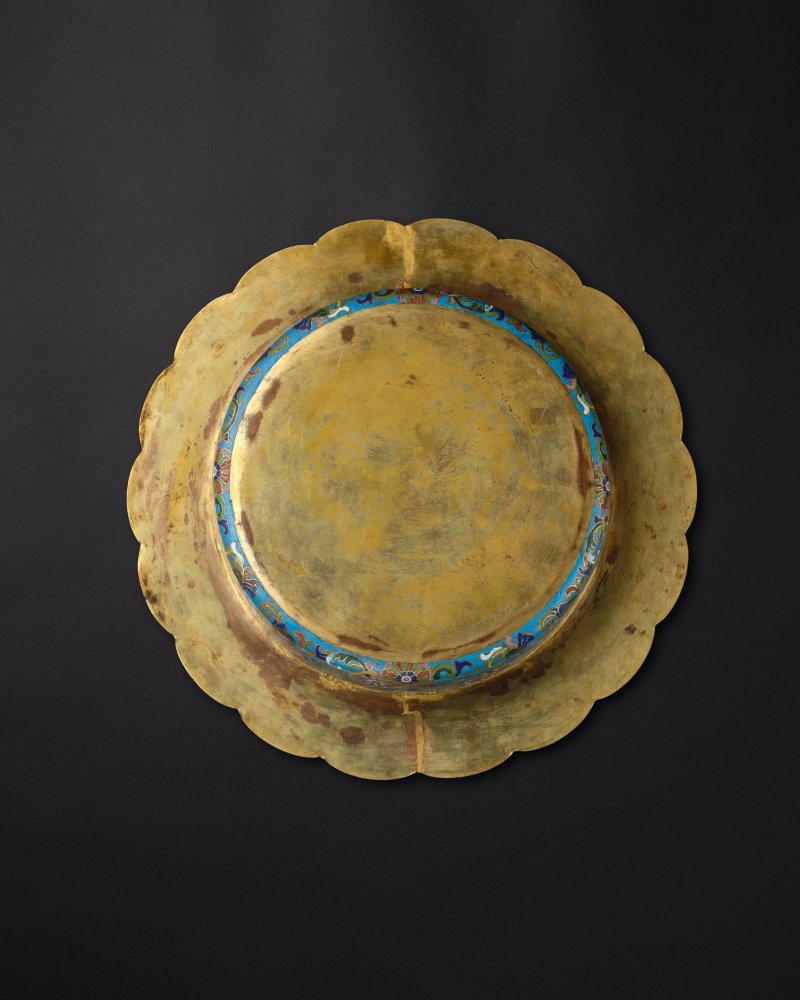
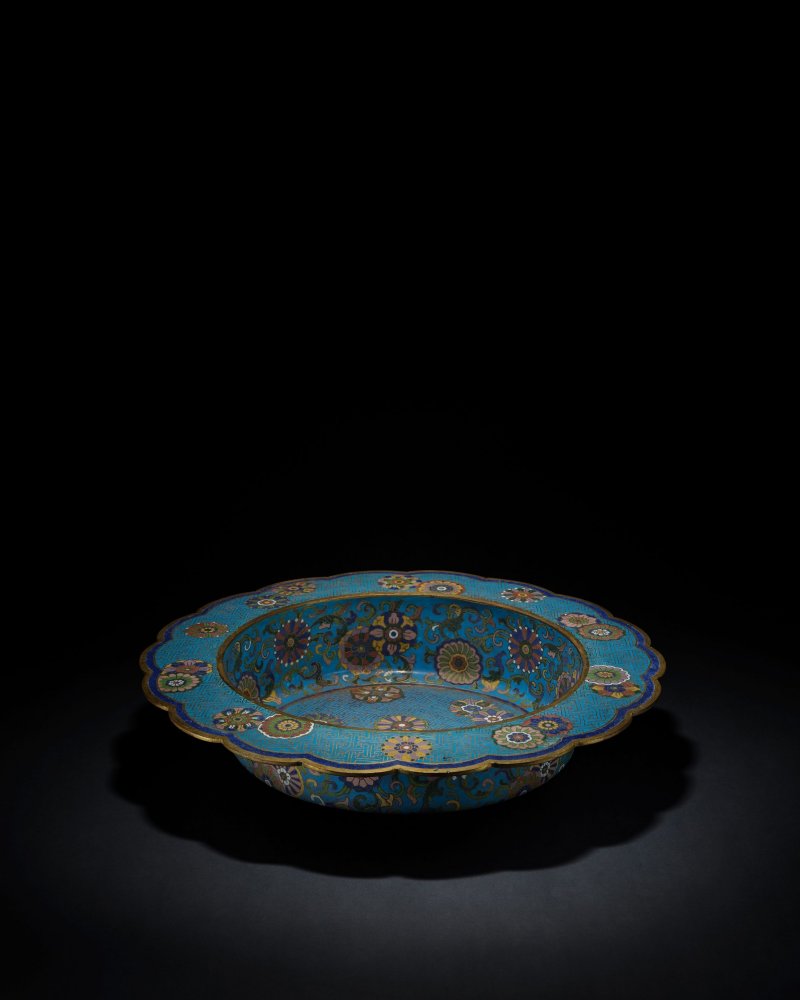
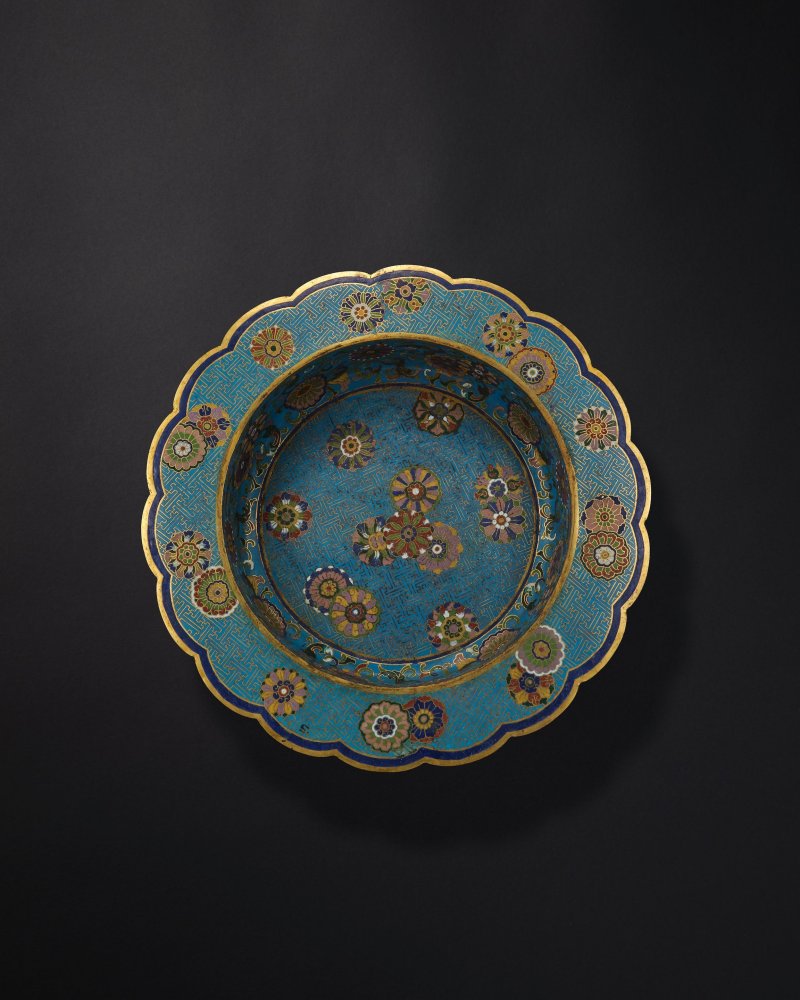
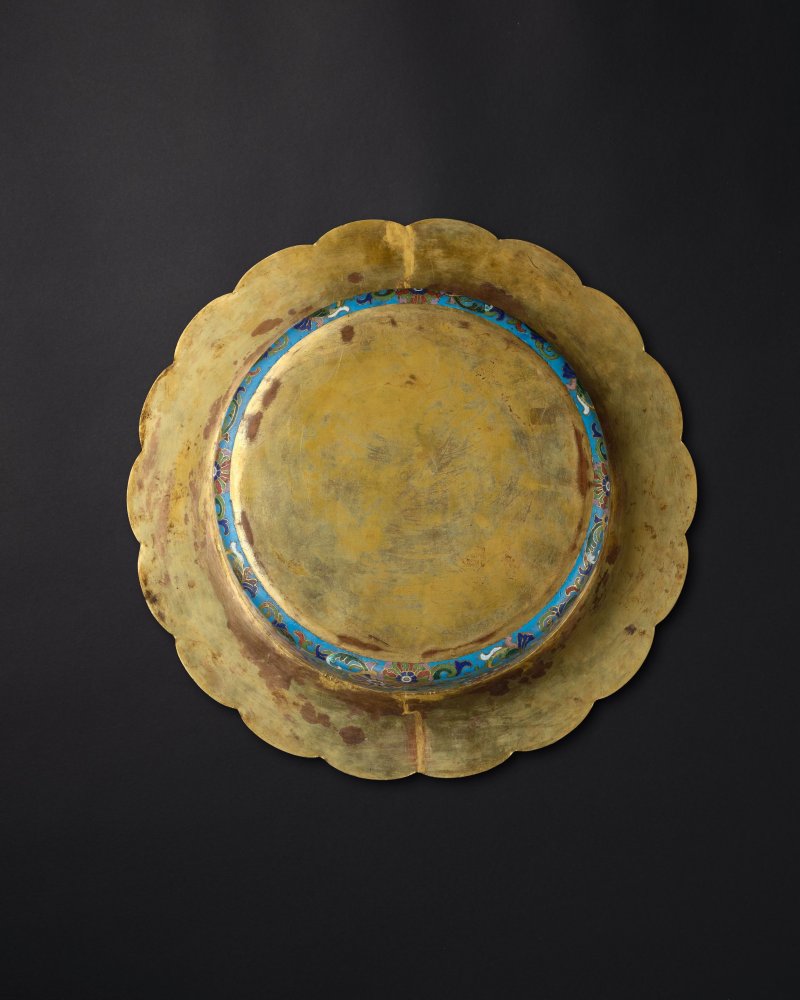
Lot 49 清十八世紀 鏨胎琺瑯皮球花花口折沿盆 | A LARGE CHAMPLEVÉ ENAMEL LOBED 'FLOWER-BALL' BASIN
落槌价
预展中
成交价
预展中
| 拍卖公司 | 邦瀚斯 |
|---|---|
| 拍卖时间 | 2026年10月28日 |
拍品信息
拍品名称
清十八世紀 鏨胎琺瑯皮球花花口折沿盆 | A LARGE CHAMPLEVÉ ENAMEL LOBED 'FLOWER-BALL' BASIN
年代
Qing Dynasty, 18th century
起拍价
HKD 250,000
估值区间
HKD 250000 - 350000
尺寸
未知
品相
未知
更多信息
Qing Dynasty, 18th century
The lobed basin, sturdily cast, with straight sides rising from a flat base to an everted petal-shaped rim, extensively decorated with multi-coloured 'ball flowers', some freely floating while others overlap in small clusters, the cavetto further embellished with blooms rendered on curling foliage, all set against a bright turquoise-blue wan brocade ground, save for the gilt-bronze base and the underside of the rim left undecorated, fitted box.
42.2cm (16 5/8in) diam. (2).
Footnotes
清十八世紀 鏨胎琺瑯皮球花花口折沿盆
Provenance:
Roger Keverne Ltd., London
Sotheby's Hong Kong, 5 October 2016, lot 85
來源:
倫敦古董商 Roger Keverne Ltd.
香港蘇富比,2016年10月5日,拍品編號85
The present lot is unusual for its large size and the use of the champlevé enamel technique (), which reached its zenith in the 18th century. Unlike cloisonné, the champlevé technique involves carving or casting recessed cells directly into a heavy gilt-bronze body before applying multicoloured enamels. This specialised craft particularly flourished in Canton workshops, which produced opulent tribute items for the Qing Court.
Large, deep basins of this scale, whether decorated in cloisonné or champlevé enamel, are exceptionally rare. Compare an example of comparable proportions, but with a more common barbed rim, in the collection of the Palace Museum, Beijing, decorated with a floral scroll on the interior and encircled by a band of ball flowers on the rim, illustrated in , vol.4, Beijing, 2011, no.4.
The striking, almost abstract motif of overlapping floral roundels on this basin draws inspiration from Japanese circular family crests, , often found on Japanese textiles, lacquerware, and ceramics. The aesthetic quality of such roundels first caught the attention of the Yongzheng Emperor, who greatly admired Japanese design. By the subsequent Qianlong period, the motif was fully integrated into the Chinese artistic repertoire, widely utilised across porcelain, cloisonné, and lacquerware.
本品體量碩大,且採用錾胎琺瑯工藝,殊為罕見;此項工藝於十八世紀達到巔峰。與掐絲琺瑯不同,錾胎工藝需於厚重的鎏金銅胎上直接雕刻,隨後填入彩琺瑯料。此項技藝於廣州作坊尤為精湛興盛,曾為清宮製作無數富麗華貴之進貢佳品。
此類大體量且具深度之大盆,無論是掐絲琺瑯抑或錾胎琺瑯,均極為罕見。參閲北京故宮博物院館藏一件尺寸相近之例,唯其採用較為常見之花口設計,盆內飾以纏枝花卉紋,沿邊環繞一圈團花紋,收錄於《故宮博物院藏品大系:琺瑯器編》,卷4,北京,2011年,圖版4。
本品上之重疊團花紋,其靈感源自日本家族徽章,常見於日本織物、漆器及陶瓷之上。此類團花紋飾之美學特質最早受到深愛日本風格之雍正皇帝青睞;及至乾隆一朝,此類紋樣已完全融入中國藝術之體系,並廣泛應用於瓷器、琺瑯器與漆器製作之中。
The lobed basin, sturdily cast, with straight sides rising from a flat base to an everted petal-shaped rim, extensively decorated with multi-coloured 'ball flowers', some freely floating while others overlap in small clusters, the cavetto further embellished with blooms rendered on curling foliage, all set against a bright turquoise-blue wan brocade ground, save for the gilt-bronze base and the underside of the rim left undecorated, fitted box.
42.2cm (16 5/8in) diam. (2).
Footnotes
清十八世紀 鏨胎琺瑯皮球花花口折沿盆
Provenance:
Roger Keverne Ltd., London
Sotheby's Hong Kong, 5 October 2016, lot 85
來源:
倫敦古董商 Roger Keverne Ltd.
香港蘇富比,2016年10月5日,拍品編號85
The present lot is unusual for its large size and the use of the champlevé enamel technique (), which reached its zenith in the 18th century. Unlike cloisonné, the champlevé technique involves carving or casting recessed cells directly into a heavy gilt-bronze body before applying multicoloured enamels. This specialised craft particularly flourished in Canton workshops, which produced opulent tribute items for the Qing Court.
Large, deep basins of this scale, whether decorated in cloisonné or champlevé enamel, are exceptionally rare. Compare an example of comparable proportions, but with a more common barbed rim, in the collection of the Palace Museum, Beijing, decorated with a floral scroll on the interior and encircled by a band of ball flowers on the rim, illustrated in , vol.4, Beijing, 2011, no.4.
The striking, almost abstract motif of overlapping floral roundels on this basin draws inspiration from Japanese circular family crests, , often found on Japanese textiles, lacquerware, and ceramics. The aesthetic quality of such roundels first caught the attention of the Yongzheng Emperor, who greatly admired Japanese design. By the subsequent Qianlong period, the motif was fully integrated into the Chinese artistic repertoire, widely utilised across porcelain, cloisonné, and lacquerware.
本品體量碩大,且採用錾胎琺瑯工藝,殊為罕見;此項工藝於十八世紀達到巔峰。與掐絲琺瑯不同,錾胎工藝需於厚重的鎏金銅胎上直接雕刻,隨後填入彩琺瑯料。此項技藝於廣州作坊尤為精湛興盛,曾為清宮製作無數富麗華貴之進貢佳品。
此類大體量且具深度之大盆,無論是掐絲琺瑯抑或錾胎琺瑯,均極為罕見。參閲北京故宮博物院館藏一件尺寸相近之例,唯其採用較為常見之花口設計,盆內飾以纏枝花卉紋,沿邊環繞一圈團花紋,收錄於《故宮博物院藏品大系:琺瑯器編》,卷4,北京,2011年,圖版4。
本品上之重疊團花紋,其靈感源自日本家族徽章,常見於日本織物、漆器及陶瓷之上。此類團花紋飾之美學特質最早受到深愛日本風格之雍正皇帝青睞;及至乾隆一朝,此類紋樣已完全融入中國藝術之體系,並廣泛應用於瓷器、琺瑯器與漆器製作之中。
常见问题
这件清十八世紀 鏨胎琺瑯皮球花花口折沿盆 | A LARGE CHAMPLEVÉ ENAMEL LOBED 'FLOWER-BALL' BASIN的成交价是多少?
落槌价为 预展中。 成交价为 预展中。