
拍品信息
拍品名称
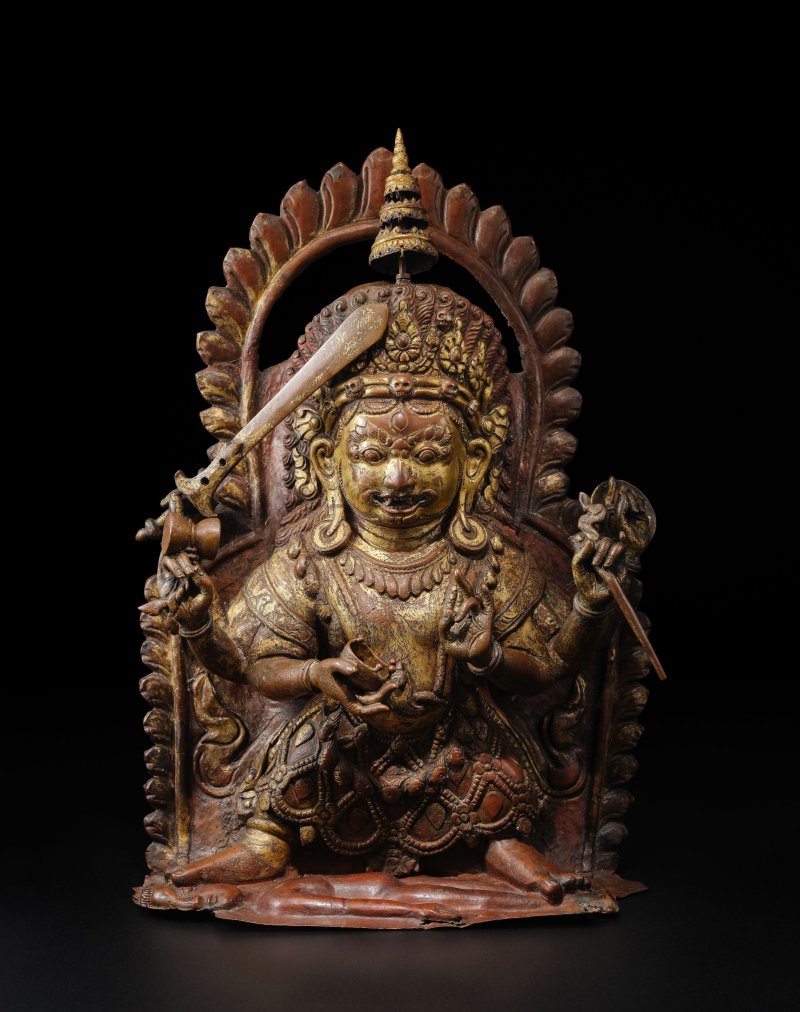
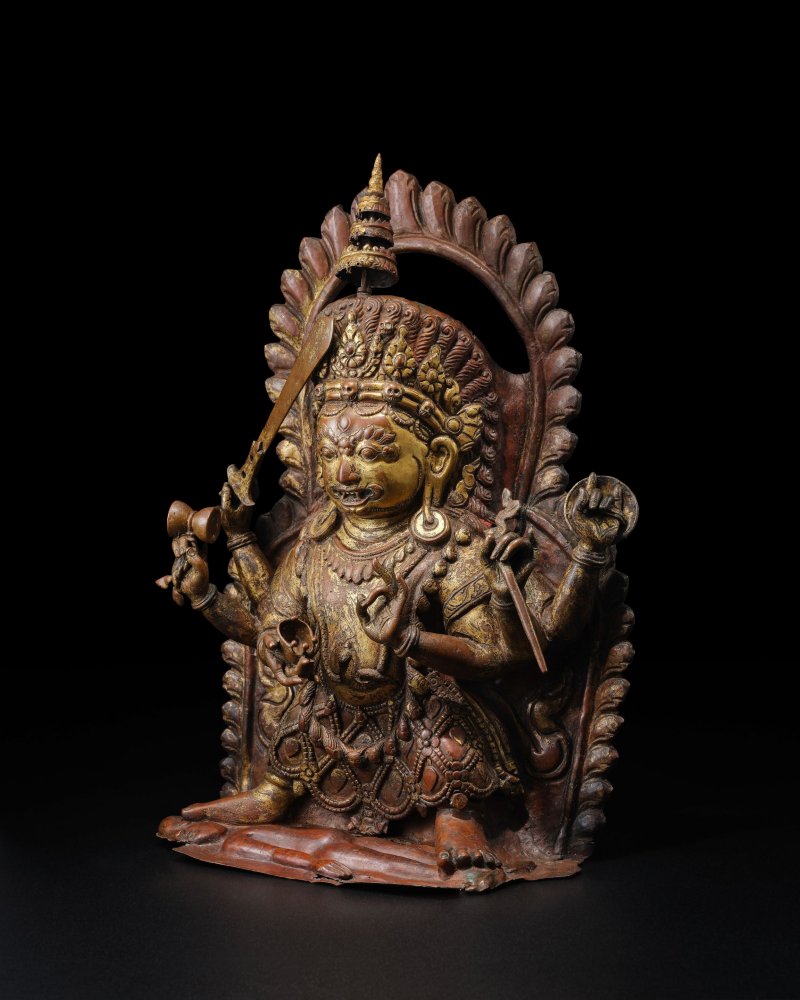
尼泊爾 十七世紀 銅鎏金錘揲陪臚像 | A GILT COPPER ALLOY REPOUSSE FIGURE OF BHAIRAVA
年代
NEPAL, 17TH CENTURY
起拍价
HKD 120,000
估值区间
HKD 120000 - 160000
尺寸
未知
品相
未知
更多信息
NEPAL, 17TH CENTURY
Himalayan Art Resources item no. 8871
36 cm (14 1/8 in.) high
Footnotes
尼泊爾 十七世紀 銅鎏金錘揲陪臚像
Provenance
Arnold Lieberman, New York, 1970s/80s
Kapoor Galleries, New York, 1980s/90s
Arnold Lieberman, New York, 1993
John and Karina Stewart Collection
Bhairava is a fearsome manifestation of the Hindu deity Shiva, embodying divine wrath and protective power. Wide-eyed and fanged, he tramples a prostrate figure symbolizing ignorance, while flames issuing from his mouth, eyes, and brows emphasize his fierce nature. Bhairava held an important place in the religious and artistic traditions of the Kathmandu Valley during the Malla period (c. 1200–1769), where he was revered as both a guardian deity and a protector within Tantric practice.
In Nepalese Buddhist contexts, Bhairava imagery intersects with Vajrayana traditions through related wrathful deities such as Mahakala, reflecting the close relationship between Hindu Shaiva and Newar Buddhist traditions. For a comparable 17th-century example with a similar treatment of the facial features and stance, see Pal, , vol. I, 1974, cat. no. 152.
Himalayan Art Resources item no. 8871
36 cm (14 1/8 in.) high
Footnotes
尼泊爾 十七世紀 銅鎏金錘揲陪臚像
Provenance
Arnold Lieberman, New York, 1970s/80s
Kapoor Galleries, New York, 1980s/90s
Arnold Lieberman, New York, 1993
John and Karina Stewart Collection
Bhairava is a fearsome manifestation of the Hindu deity Shiva, embodying divine wrath and protective power. Wide-eyed and fanged, he tramples a prostrate figure symbolizing ignorance, while flames issuing from his mouth, eyes, and brows emphasize his fierce nature. Bhairava held an important place in the religious and artistic traditions of the Kathmandu Valley during the Malla period (c. 1200–1769), where he was revered as both a guardian deity and a protector within Tantric practice.
In Nepalese Buddhist contexts, Bhairava imagery intersects with Vajrayana traditions through related wrathful deities such as Mahakala, reflecting the close relationship between Hindu Shaiva and Newar Buddhist traditions. For a comparable 17th-century example with a similar treatment of the facial features and stance, see Pal, , vol. I, 1974, cat. no. 152.
常见问题
这件尼泊爾 十七世紀 銅鎏金錘揲陪臚像 | A GILT COPPER ALLOY REPOUSSE FIGURE OF BHAIRAVA的成交价是多少?
落槌价为 预展中。 成交价为 预展中。