
拍品信息
拍品名称
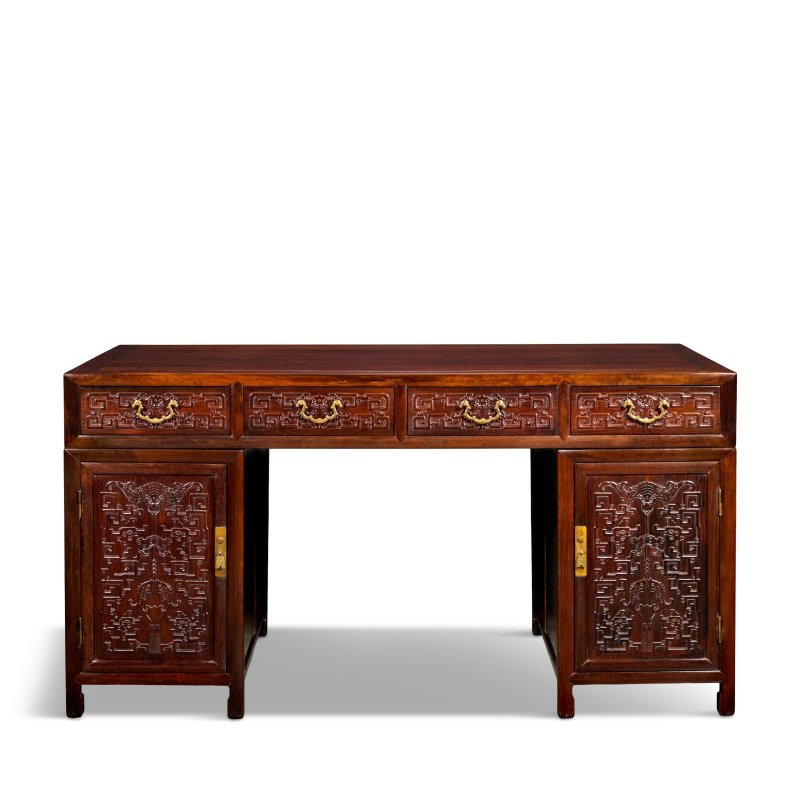
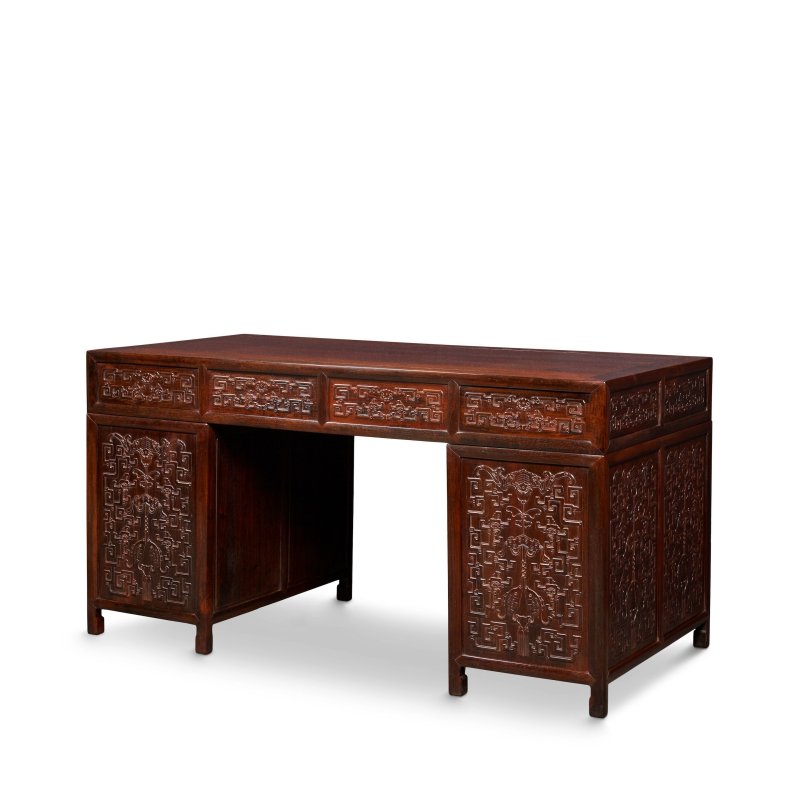
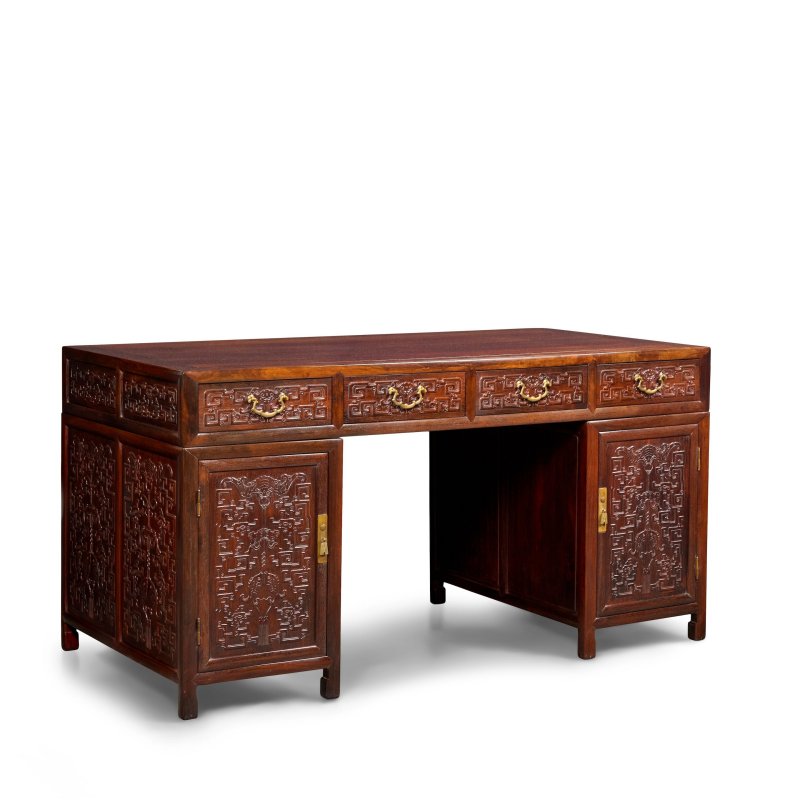
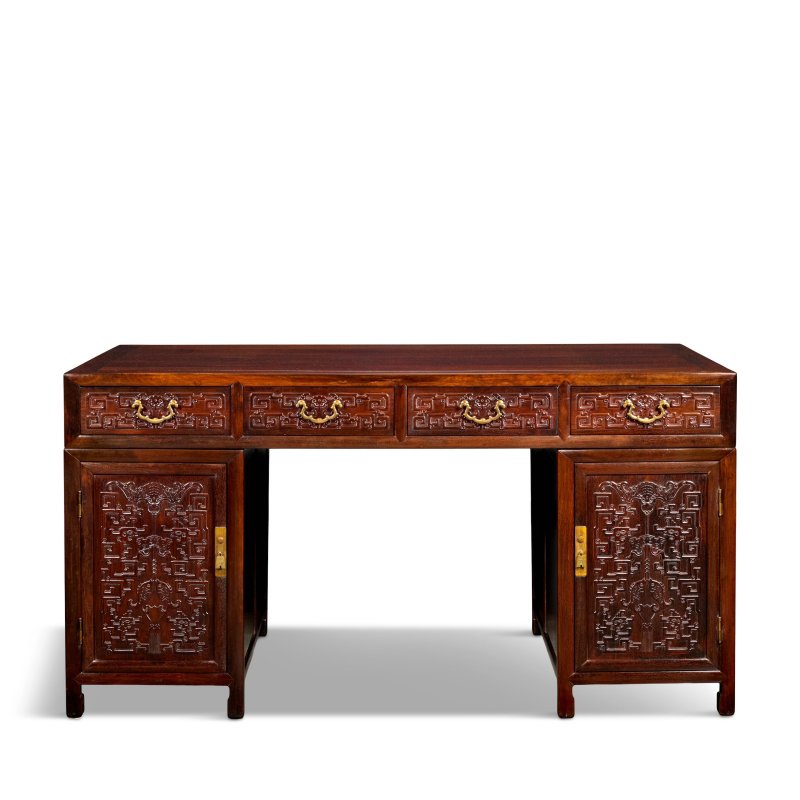
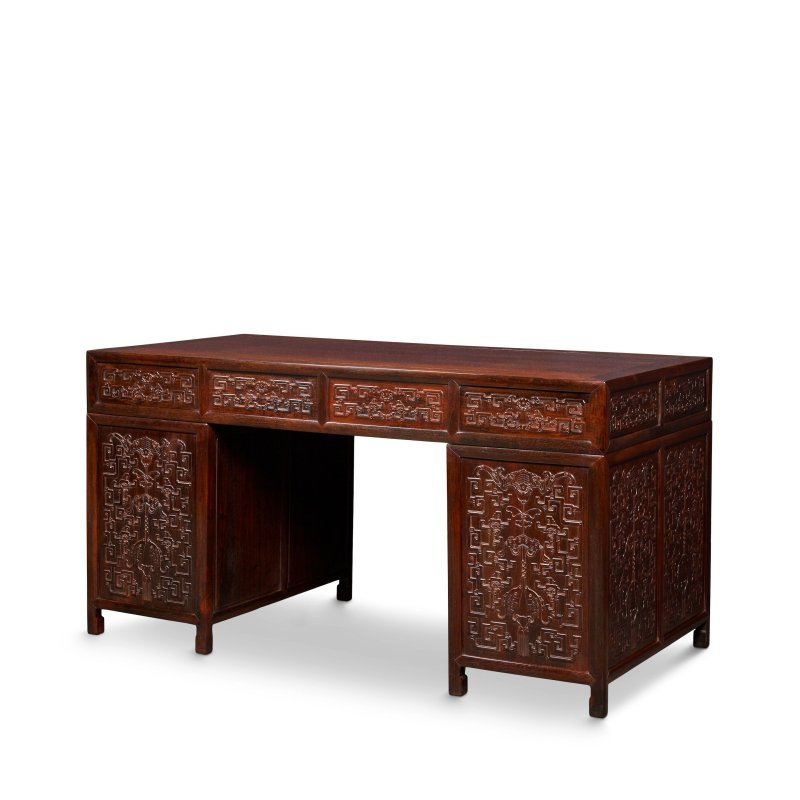
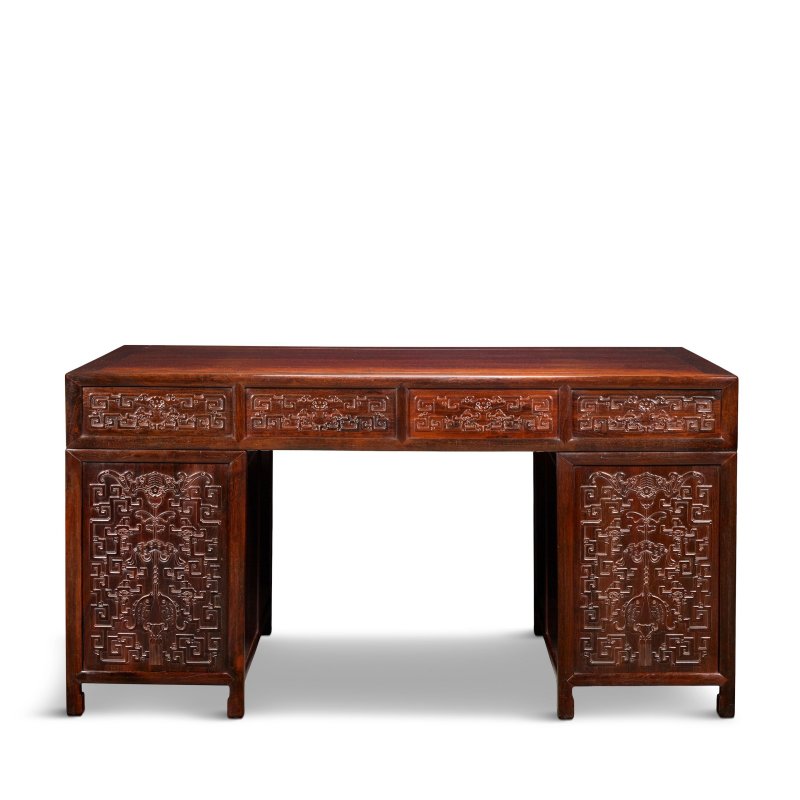
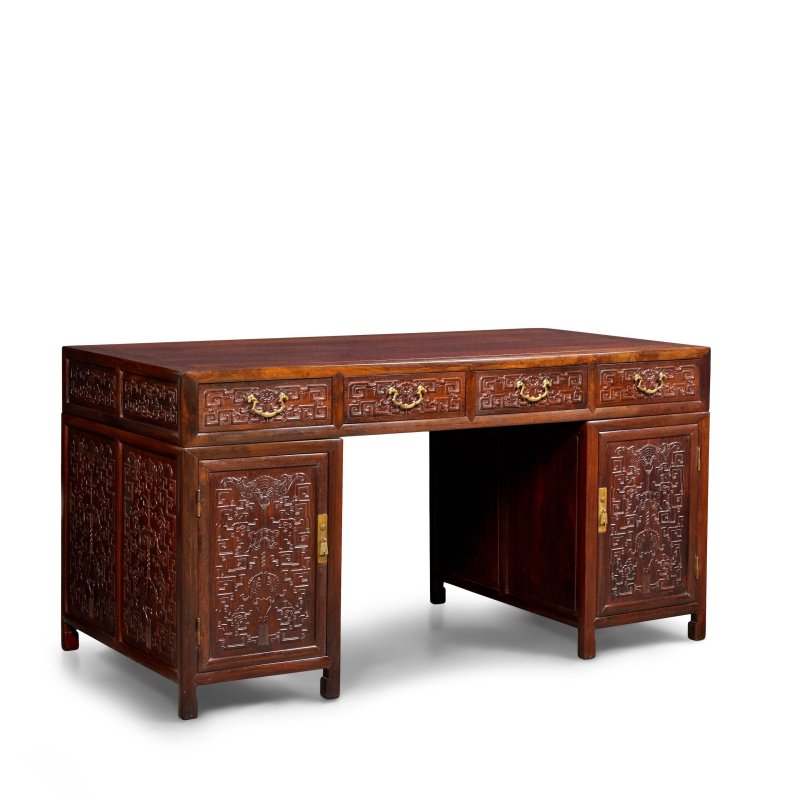
清 十八/十九世紀 紫檀雕福慶有餘紋字台 | A FINE AND ELEGANT ZITAN CABINET DESK
年代
Qing Dynasty, 18th/19th century
起拍价
USD 250,000
估值区间
未知
尺寸
未知
品相
未知
更多信息
Qing Dynasty, 18th/19th century
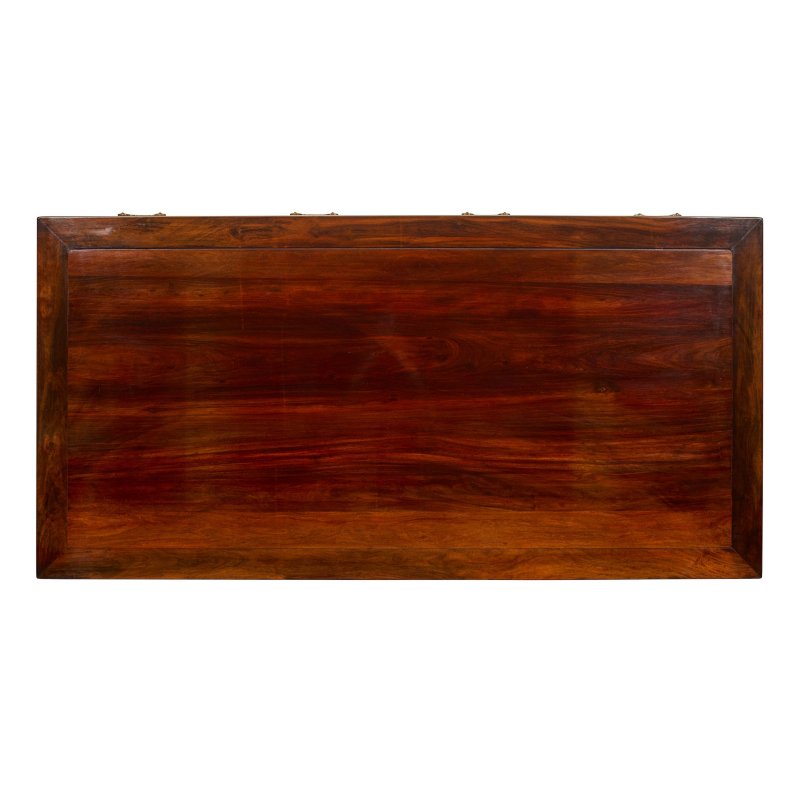
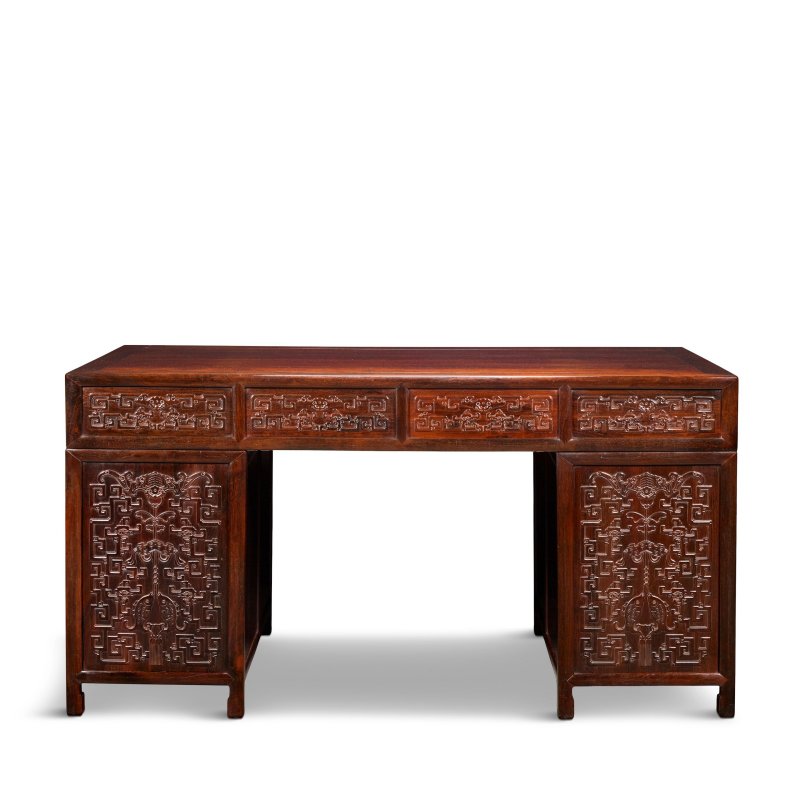
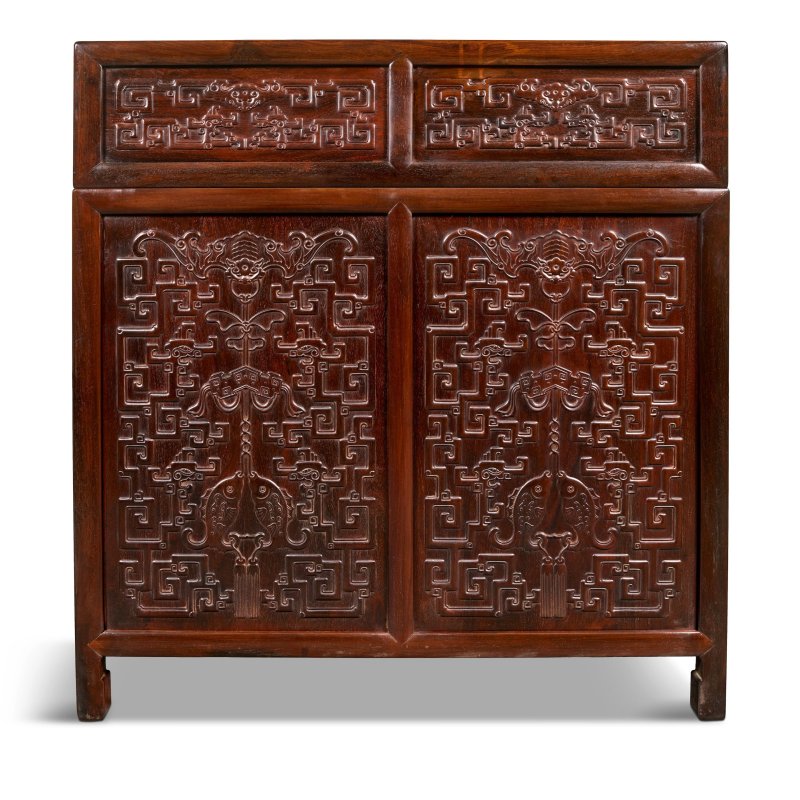
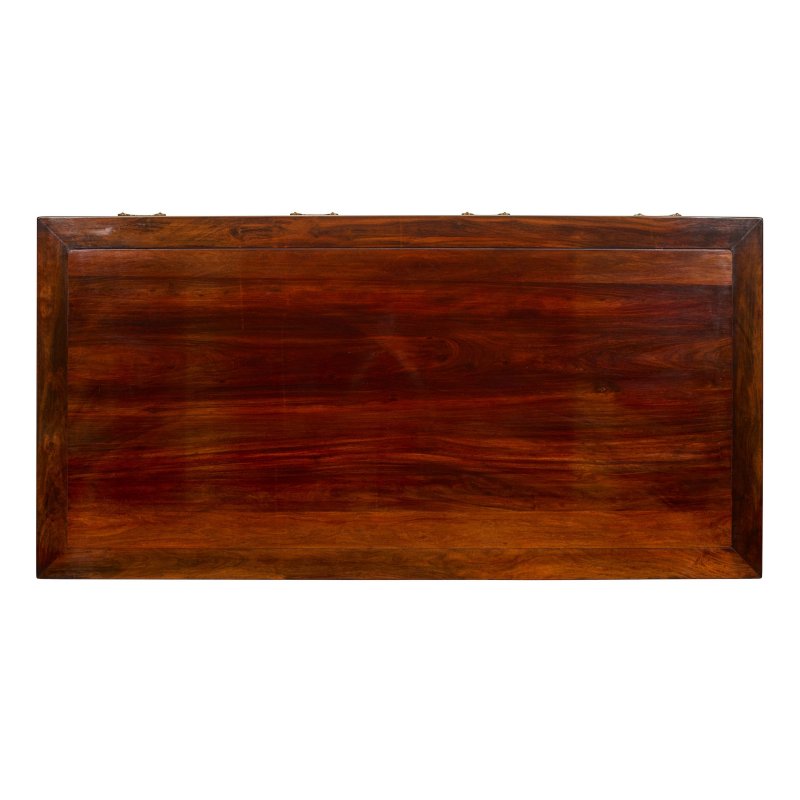
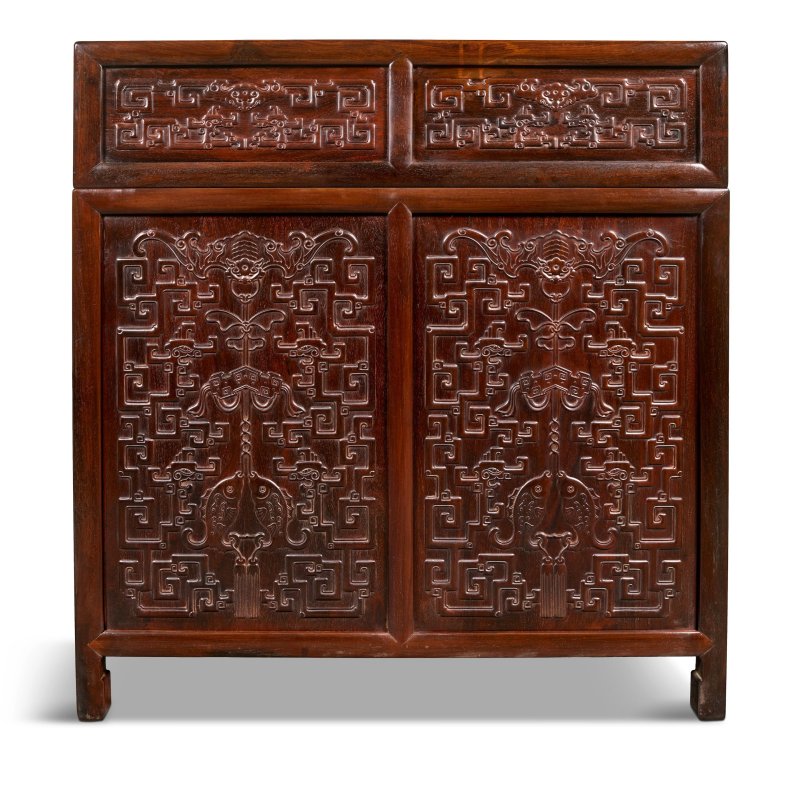
Composed of three sections, the four-panel top set into mitred, mortise and tenon frame housing four drawers, each finely carved with two rows of scrollwork centered on a central bat chime, the top tenoned to paired cabinets with doors on one side exquisitely carved with a bat, chime and paired fish suspending tassels enclosed in an elaborate geometric frame of abstract kui dragons, the decoration repeated on the sides and back panels set into a square frame with scroll feet.
33 1/2 x 63 5/8 x 31 3/4in (85.2 x 161.6 x 80.7cm) overall;
Top: 7 1/4 x 63 5/8 x 31 3/4in (18.4 x 161.6 x 80.7cm);
Cabinet: 26 1/4 x 17 1/8 x 31 3/4in (66.7 x 43.3 x 80.7cm)
Footnotes
清 十八/十九世紀 紫檀雕福慶有餘紋字台
Provenance:
Property from a Prestigious New York Family
來源:
紐約顯赫家族收藏
The present desk is exquisitely carved with bats, chimes and fish, forming the auspicious rebus (福慶有餘), conveying the felicitous wish for 'abundant fortune and happiness'. The motif was particularly favored in Qing decorative arts and found a prominent place among imperial furnishings. Related compositions appear on a number of throne, chairs, tables, and cabinets in the Qing Court Collection, see , Hong Kong, 2002, pls. 25, 35, 37 and 56. Compare also a pair of chairs carved with the same motif, formerly in the C. Philip Cardeiro Collection, sold at Bonhams Hong Kong, 29 October 2025, lot 362.
The desk is of the (字台) type, a form that evolved from the (架几) side table, with its supports transformed into enclosed cabinets to provide additional storage, typically comprising three or four drawers flanked by cupboards. Its practical yet elegant configuration made it particularly suited to scholar's studios, and the form gained increasing currency among the literati from the 19th century onwards. A closely related desk, dated to the Qianlong period, is illustrated in Tian Jiaqing, /《盛世雅集——二〇〇八年中國古典家具精品展》, Beijing, 2008, pp. 93-94, where the author notes another closely related example formerly in the personal collection of the celebrated painter Huang Zhou. Further examples include a desk formerly in the Pang Laichen Collection, sold at Beijing Poly International Auction Co., 29 May 2009, lot 42, and another from the collection of Henry Spencer Houghton, sold in the same sale, lot 43.
Composed of three sections, the four-panel top set into mitred, mortise and tenon frame housing four drawers, each finely carved with two rows of scrollwork centered on a central bat chime, the top tenoned to paired cabinets with doors on one side exquisitely carved with a bat, chime and paired fish suspending tassels enclosed in an elaborate geometric frame of abstract kui dragons, the decoration repeated on the sides and back panels set into a square frame with scroll feet.
33 1/2 x 63 5/8 x 31 3/4in (85.2 x 161.6 x 80.7cm) overall;
Top: 7 1/4 x 63 5/8 x 31 3/4in (18.4 x 161.6 x 80.7cm);
Cabinet: 26 1/4 x 17 1/8 x 31 3/4in (66.7 x 43.3 x 80.7cm)
Footnotes
清 十八/十九世紀 紫檀雕福慶有餘紋字台
Provenance:
Property from a Prestigious New York Family
來源:
紐約顯赫家族收藏
The present desk is exquisitely carved with bats, chimes and fish, forming the auspicious rebus (福慶有餘), conveying the felicitous wish for 'abundant fortune and happiness'. The motif was particularly favored in Qing decorative arts and found a prominent place among imperial furnishings. Related compositions appear on a number of throne, chairs, tables, and cabinets in the Qing Court Collection, see , Hong Kong, 2002, pls. 25, 35, 37 and 56. Compare also a pair of chairs carved with the same motif, formerly in the C. Philip Cardeiro Collection, sold at Bonhams Hong Kong, 29 October 2025, lot 362.
The desk is of the (字台) type, a form that evolved from the (架几) side table, with its supports transformed into enclosed cabinets to provide additional storage, typically comprising three or four drawers flanked by cupboards. Its practical yet elegant configuration made it particularly suited to scholar's studios, and the form gained increasing currency among the literati from the 19th century onwards. A closely related desk, dated to the Qianlong period, is illustrated in Tian Jiaqing, /《盛世雅集——二〇〇八年中國古典家具精品展》, Beijing, 2008, pp. 93-94, where the author notes another closely related example formerly in the personal collection of the celebrated painter Huang Zhou. Further examples include a desk formerly in the Pang Laichen Collection, sold at Beijing Poly International Auction Co., 29 May 2009, lot 42, and another from the collection of Henry Spencer Houghton, sold in the same sale, lot 43.