
拍品信息
拍品名称
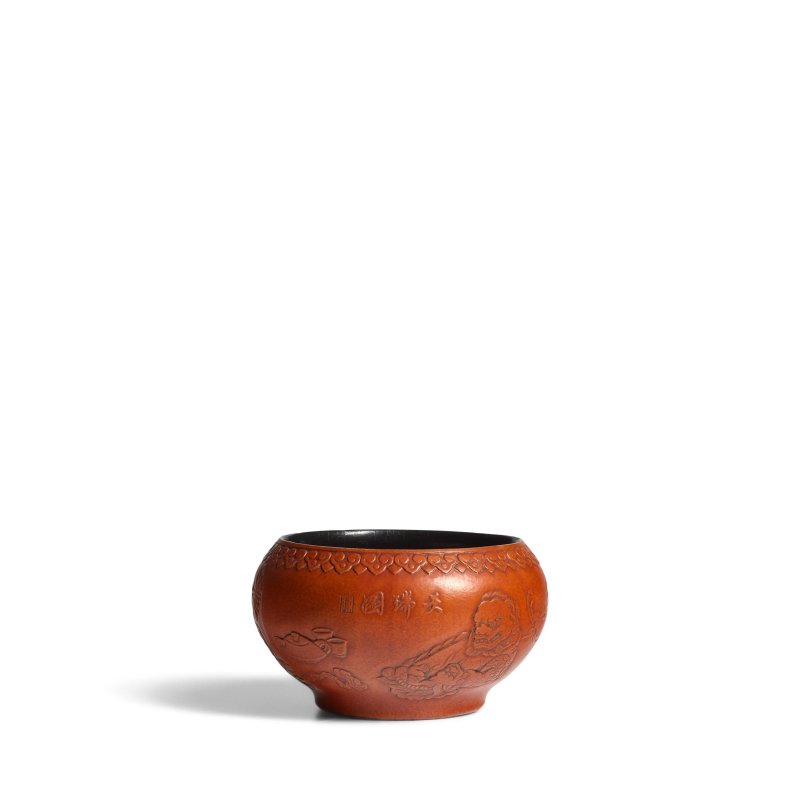
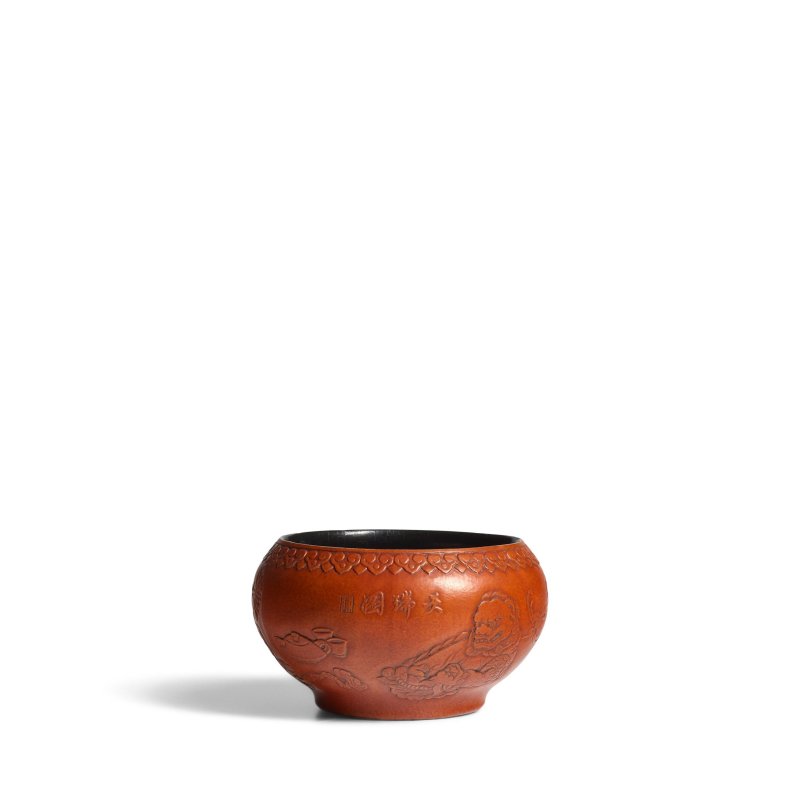
清道光 「定府行有恒堂珍賞」款 匏製博古天瑞圖缽 | A SMALL GOURD 'TIAN RUI TU' ALMS BOWL
年代
Daoguang period
起拍价
USD 6,000
估值区间
未知
尺寸
未知
品相
未知
更多信息
Daoguang period
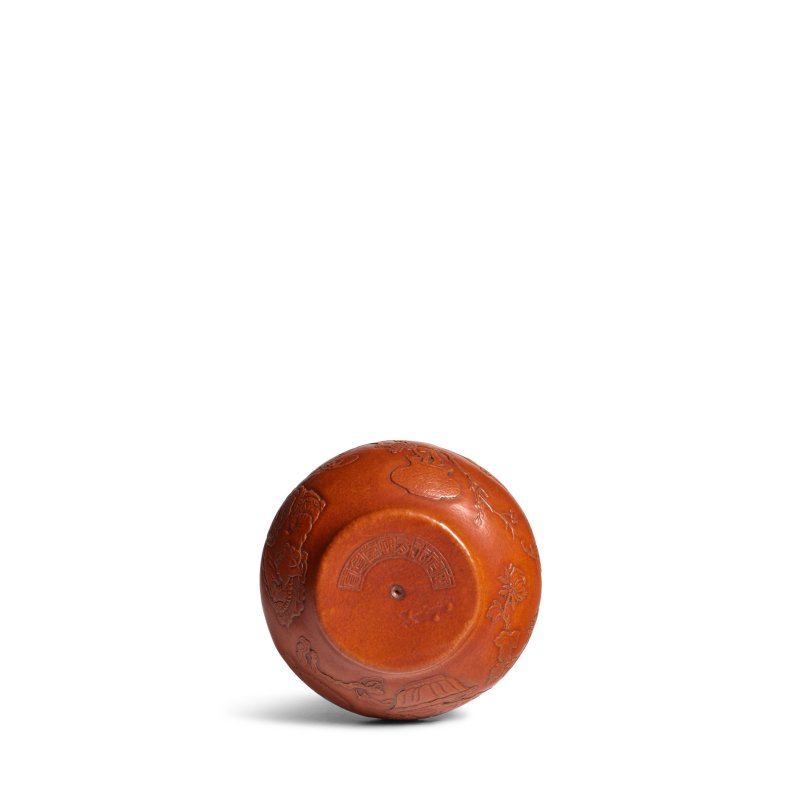
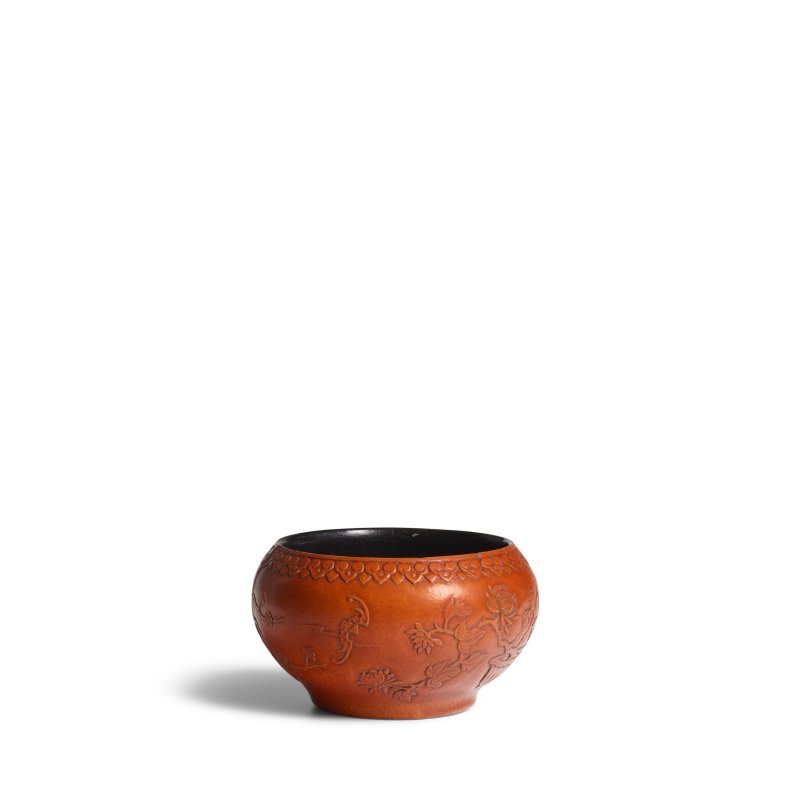
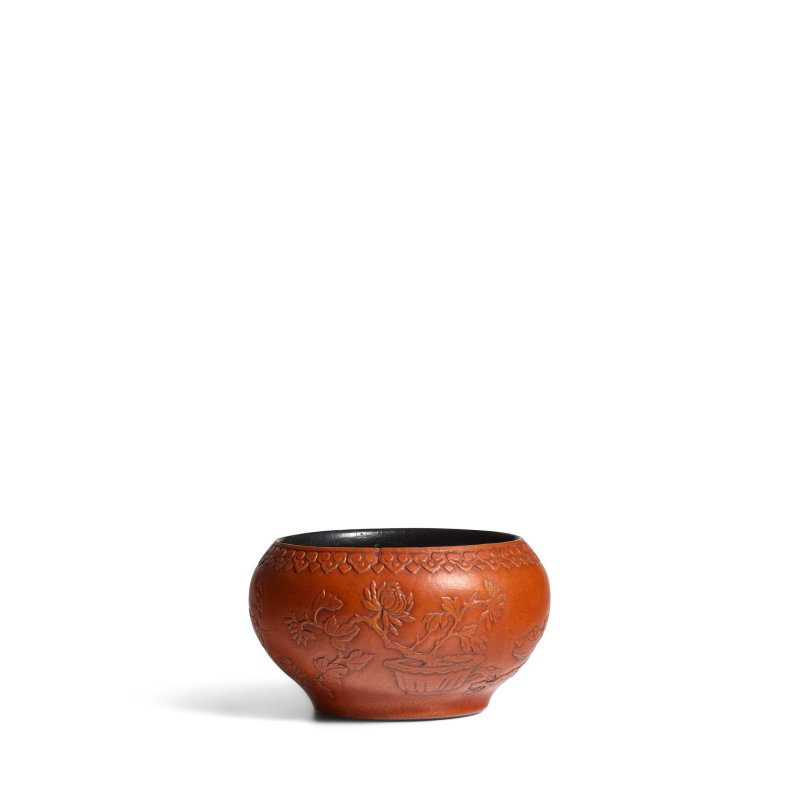
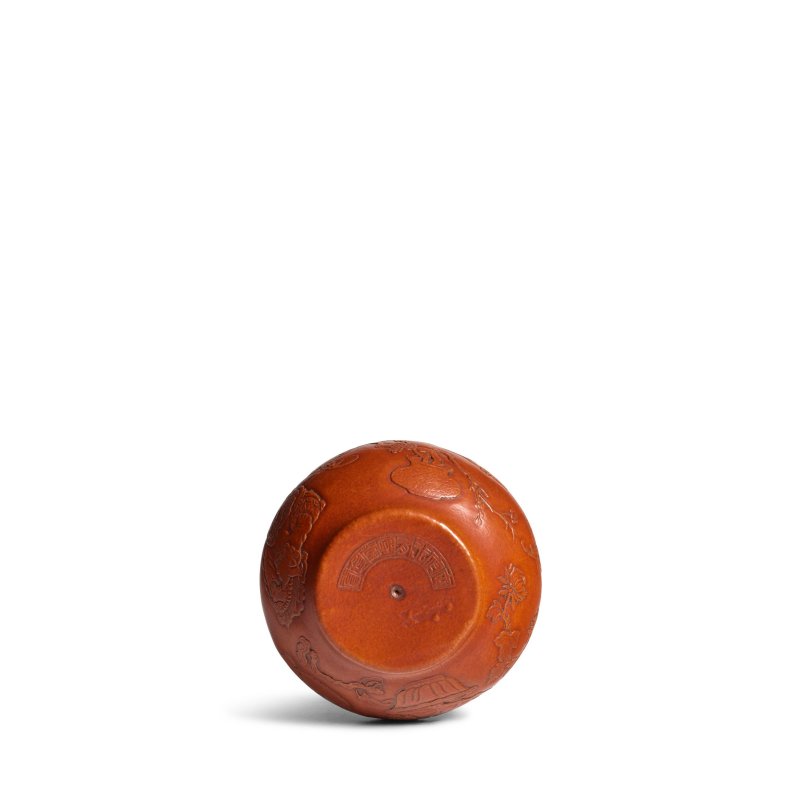
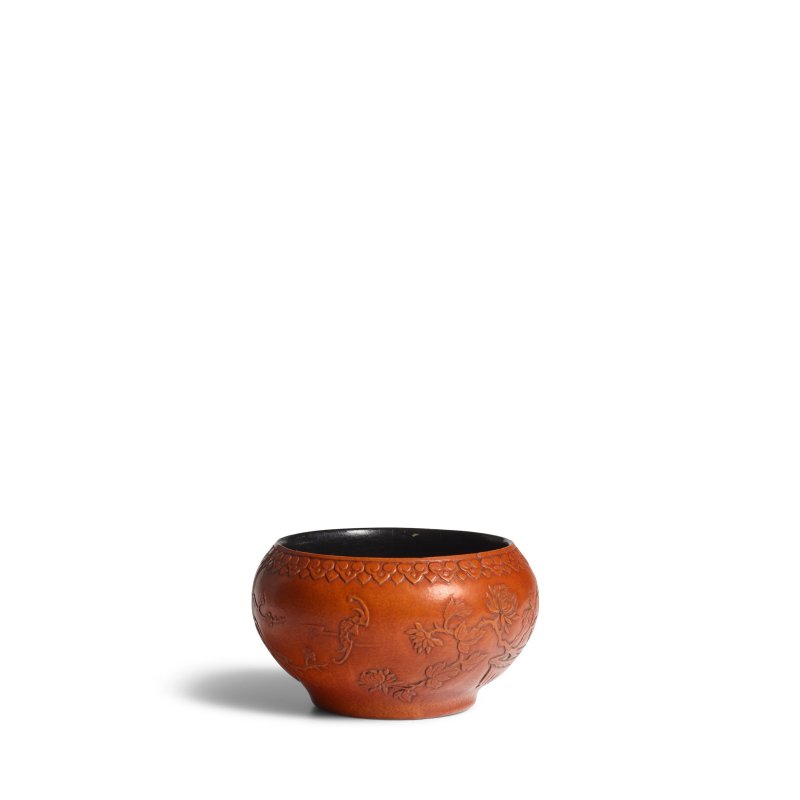
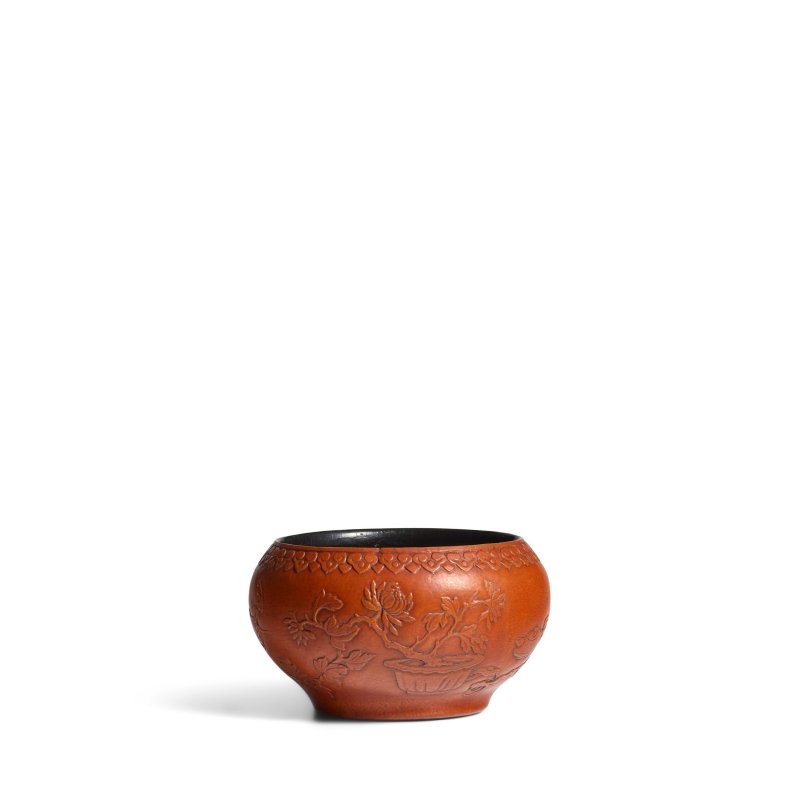
Moulded in low relief with potted chrysanthemum, prunus in vase, a ruyi scepter, and a set of tea wares, together with a recumbent lion and cub and a pair of bats, the scene titled Tian Rui Tu (Image of Heavenly Auspiciousness) with an artist's seal Chen, the rim decorated with a band of ruyi heads, the flat base bears a eight-character fan-shaped seal mark.
4 1/4in (10.8cm) diam (box).
Footnotes
清道光 「定府行有恒堂珍賞」款 匏製博古天瑞圖缽
The eight-character mark Dingfu Xingyouhengtang zhenshang may be translated as 'Treasured for the Hall of Consistency in Prince Ding's Residence'. Xingyouheng tang is often used interchangeably or in tandem with the Dingfu hall mark on the works commissioned by Prince Ding, Zai Quan (1794-1854), the younger brother of the Daoguang emperor, and a passionate patron of the arts.
In Geng Baochang's Authentication of Ming and Qing Porcelain, Beijing, 1993, p. 293, he notes that the earliest known porcelain bearing the Xingyouhengtang (行有恆堂) mark is a sacrificial-red glazed jar dated to the guiyou year of the Jiaqing reign (1813, the eighteenth year of Jiaqing), which was specially commissioned for the Prince Ding Mansion. He further observes that wares bearing the mark are most commonly encountered during the Daoguang period, while examples from the Xianfeng reign are comparatively rare. This suggests that the production of porcelain wares bearing the mark spanned at least the Jiaqing, Daoguang, and Xianfeng reigns.
See the small gourd alms bowl with a closely related design, sold at Sotheby's London, 16 May 2018. See also a Songhua stone incense dish bearing a mark, sold at Christie's Hong Kong, 30 May 2018, lot 2904.
Moulded in low relief with potted chrysanthemum, prunus in vase, a ruyi scepter, and a set of tea wares, together with a recumbent lion and cub and a pair of bats, the scene titled Tian Rui Tu (Image of Heavenly Auspiciousness) with an artist's seal Chen, the rim decorated with a band of ruyi heads, the flat base bears a eight-character fan-shaped seal mark.
4 1/4in (10.8cm) diam (box).
Footnotes
清道光 「定府行有恒堂珍賞」款 匏製博古天瑞圖缽
The eight-character mark Dingfu Xingyouhengtang zhenshang may be translated as 'Treasured for the Hall of Consistency in Prince Ding's Residence'. Xingyouheng tang is often used interchangeably or in tandem with the Dingfu hall mark on the works commissioned by Prince Ding, Zai Quan (1794-1854), the younger brother of the Daoguang emperor, and a passionate patron of the arts.
In Geng Baochang's Authentication of Ming and Qing Porcelain, Beijing, 1993, p. 293, he notes that the earliest known porcelain bearing the Xingyouhengtang (行有恆堂) mark is a sacrificial-red glazed jar dated to the guiyou year of the Jiaqing reign (1813, the eighteenth year of Jiaqing), which was specially commissioned for the Prince Ding Mansion. He further observes that wares bearing the mark are most commonly encountered during the Daoguang period, while examples from the Xianfeng reign are comparatively rare. This suggests that the production of porcelain wares bearing the mark spanned at least the Jiaqing, Daoguang, and Xianfeng reigns.
See the small gourd alms bowl with a closely related design, sold at Sotheby's London, 16 May 2018. See also a Songhua stone incense dish bearing a mark, sold at Christie's Hong Kong, 30 May 2018, lot 2904.