
Lot 8035 A rare imperial cinnabar lacquer and silver-fitted table, Early Qing dynasty | 清初 御製紅漆銀包角鏨花插肩榫劍腿供案
落槌价
预展中
成交价
预展中
| 拍卖公司 | 苏富比 |
|---|---|
| 拍卖时间 | 2026年10月30日 |
拍品信息
拍品名称
A rare imperial cinnabar lacquer and silver-fitted table, Early Qing dynasty | 清初 御製紅漆銀包角鏨花插肩榫劍腿供案
起拍价
HKD 1,000,000
估值区间
1,000,000 - 2,000,000 HKD
尺寸
未知
品相
如欲了解本拍品狀況的更多資訊,請聯絡 Rubie.Fong@sothebys.com
更多信息
125 by 80.5 by h. 59 cm
著录:Nicolas Chow, The Literati Aesthetic, Hong Kong, 2018, no. 9.
图录
说明:出版
仇國仕,《無盡意》,香港,2018年,編號9
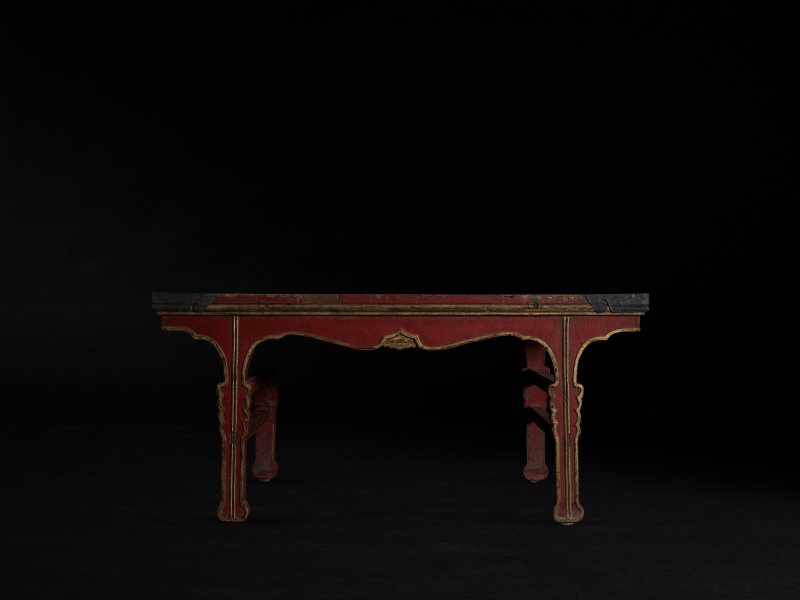
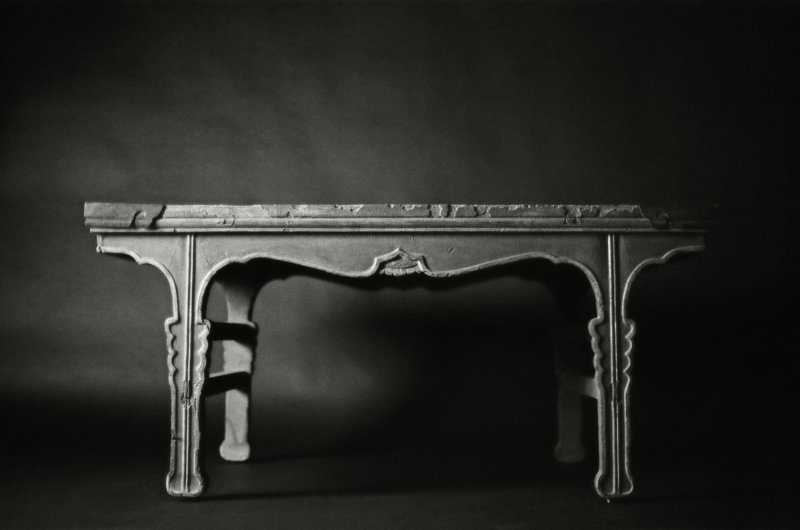
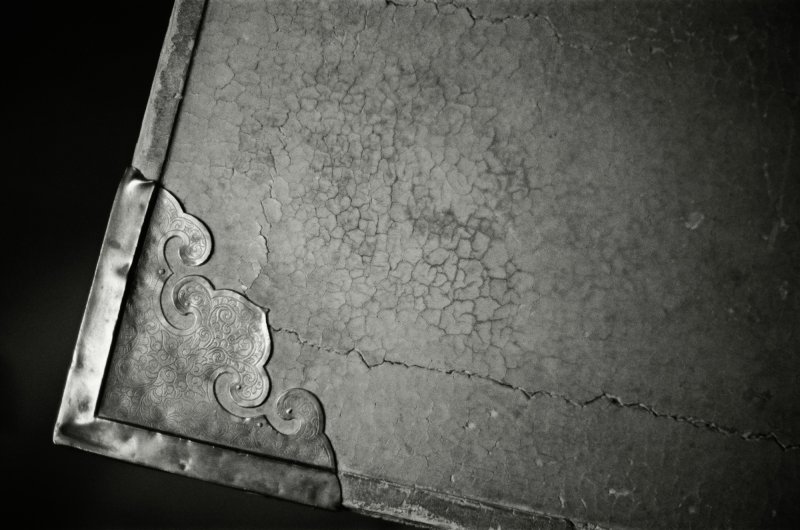
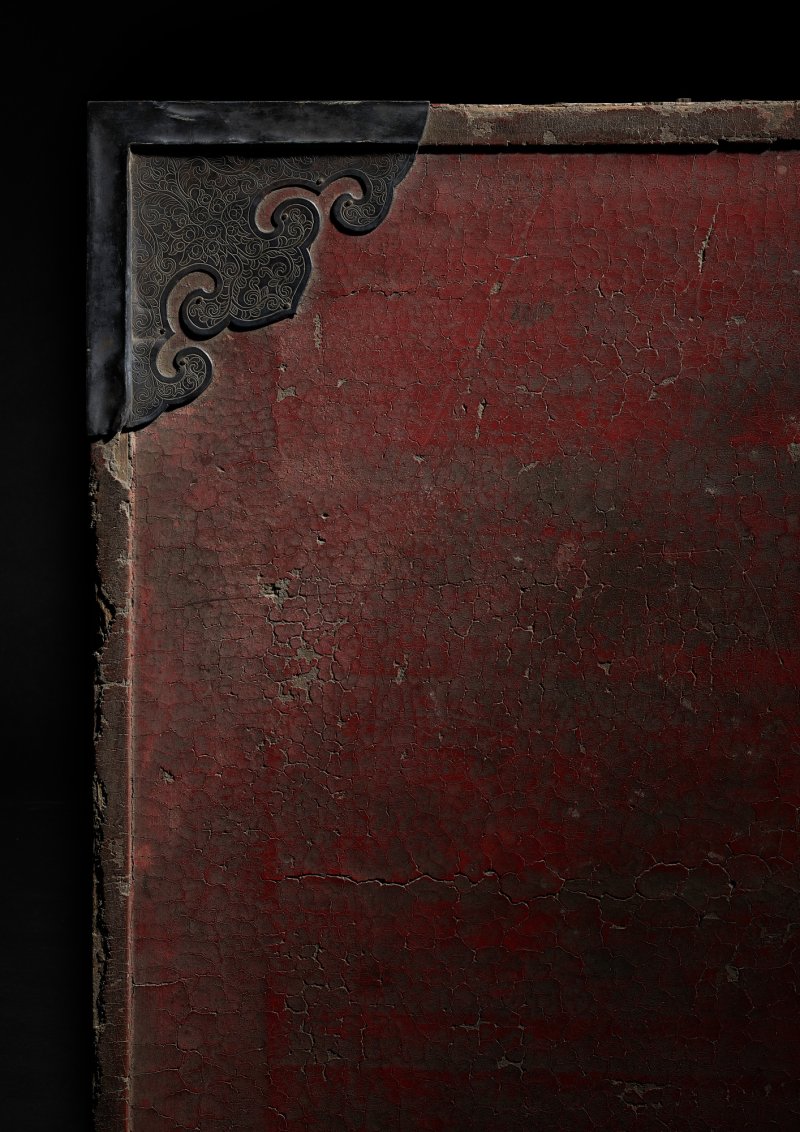
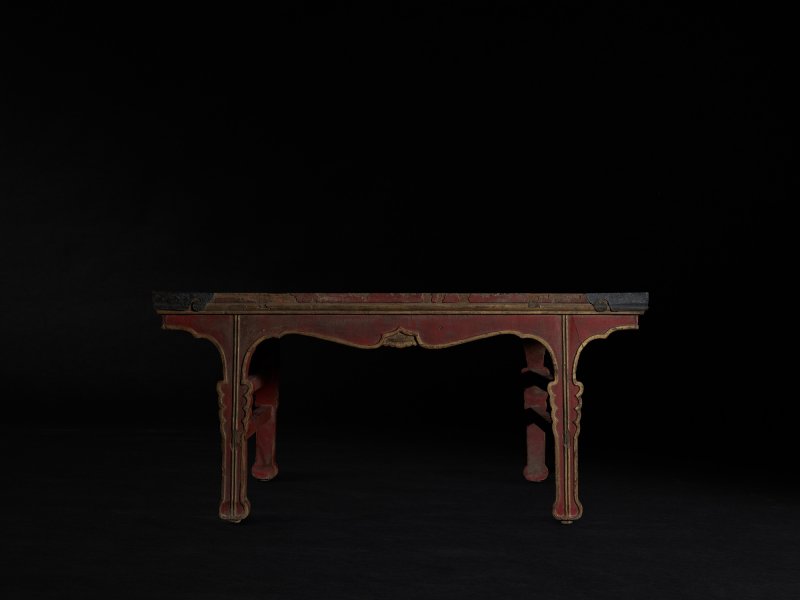
Broad in proportion, this table was expressly designed for a traditional floor-seating lifestyle. Constructed with a fir wood core and covered in a hemp-and-ash ground, the table is finished in a rich layer of vermilion lacquer, complemented by gold-painted details and chased silver corner mounts. Over the centuries, the lacquer has developed a striking “fish-scale crackle” (yulin duan); its slightly raised edges resemble the rippling waves of a vast lake, lending the table an especially captivating surface.
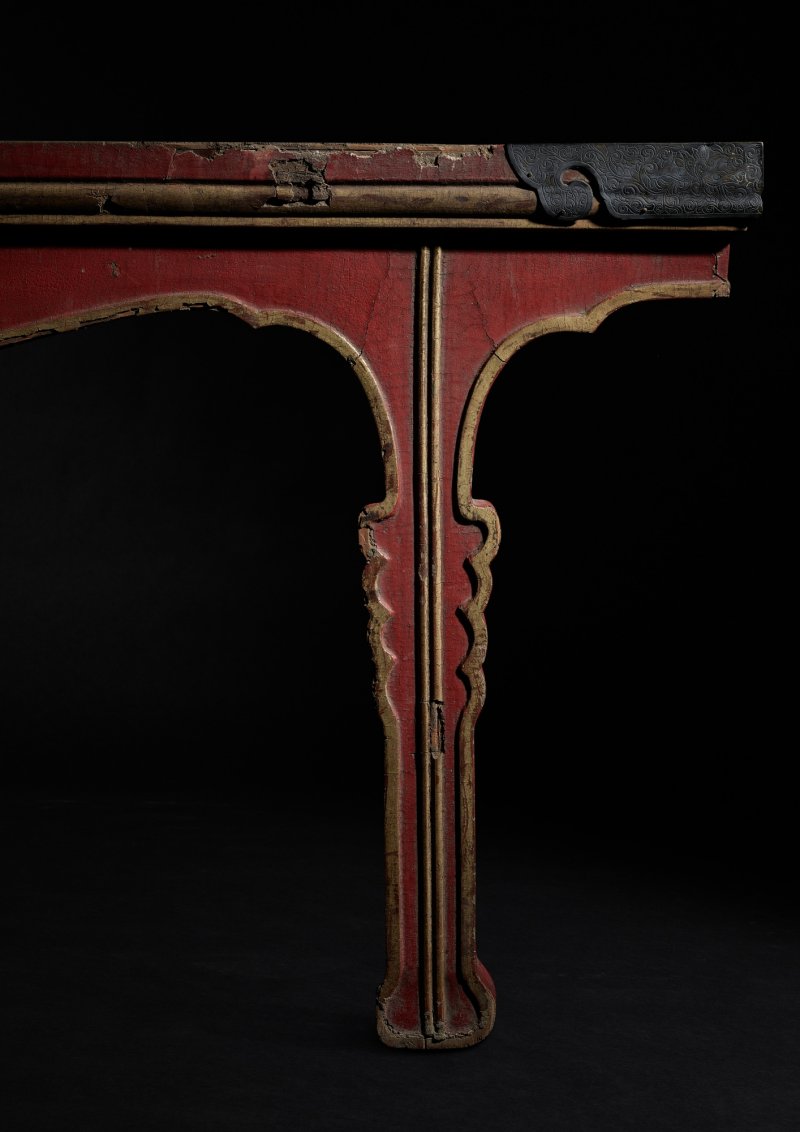
The tabletop features a broad, raised “water-stopping” edge, a design element that can be traced back to the ritual stands (zu and an) of the Warring States and Han periods, originally intended to prevent liquid offerings from spilling. The tabletop is framed by an “ice-plate” edge accented with gold lacquer, enhancing the piece’s visual weight and evoking the solemn presence of an ancient ritual bronze vessel.
The corners are reinforced with silver mounts in the form of ruyi clouds and chased with large passionflower (xifanlian) heads, from which sinuous scrolling vines and foliage extend. Metal corner mounts were a hallmark of Qing dynasty imperial furniture, and similar gold mounts can be seen on a red lacquer low banquet table decorated with cloud and dragon motifs. According to Qing court regulations, the material of such mounts—ranging from gold for the Empress to silver or iron for lower-ranking concubines—could denote the status of the intended user. The floral motifs on these mounts are particularly characteristic of the imperial style of the Kangxi period.
Structurally, the table employs the classic inserted-shoulder mortise-and-tenon joints (chajian sun). The cusped apron features a central carved sunflower motif—a design element that originated in the Song and Yuan dynasties and became highly popular from the late Ming through the early Qing. The legs flare outward at the midpoint into a classic “sword leg” or “arrow leg” shape before terminating in sturdy, rounded horse-hoof feet. This joint system evolved from the box-style constructions of the late Tang and Five Dynasties periods. Visual evidence of this early structural form is illustrated by the banquet mural in the Five Dynasties tomb of Wang Chuzhi, while a surviving physical example is the wooden couch excavated from the Five Dynasties tomb of Princess Xunyang.
From the early Ming dynasty onwards, red and gold lacquer furniture was closely associated with imperial and temple use, a tradition that continued into the Qing dynasty. Notably, the Kunning Palace in the Forbidden City, which served as a site for Manchu shamanic rituals, still retains several closely comparable low red lacquer offering tables. The unusually low height of this table, at under 60 cm, reflects a fascinating archaising tendency within Qing court furniture: a revival of forms associated with the ancient tradition of floor sitting, which also resonated with the nomadic and equestrian heritage of the Manchu rulers.
The Qing court collection holds several Wanli-marked tables of the Ming dynasty with inserted-shoulder mortise-and-tenon construction that share overall proportions with the present example, though varying in lacquer techniques. Although broadly comparable, the present table exhibits several refined developments, such as the central floral carvings and the softened curves of the legs. A group of red lacquer offering tables in the Qin'an Hall shares this structural and stylistic lineage, though slight variations among them suggest they were produced over successive periods. Further comparison may be drawn with a transitional Ming-Qing red lacquer offering table with gold-inlaid cloud and dragon motifs in the Palace Museum, Beijing, whose form closely parallels that of the present table. Taken together, these stylistic evolutions, alongside the decoration of the silver corner mounts, suggest that the present offering table is most accurately dated to the 17th century.
常见问题
这件A rare imperial cinnabar lacquer and silver-fitted table, Early Qing dynasty | 清初 御製紅漆銀包角鏨花插肩榫劍腿供案的成交价是多少?
落槌价为 预展中。 成交价为 预展中。
拍品的品相状况如何?
如欲了解本拍品狀況的更多資訊,請聯絡 Rubie.Fong@sothebys.com
这件拍品被哪些著录书籍记载?
Nicolas Chow, The Literati Aesthetic, Hong Kong, 2018, no. 9.
图录
图录