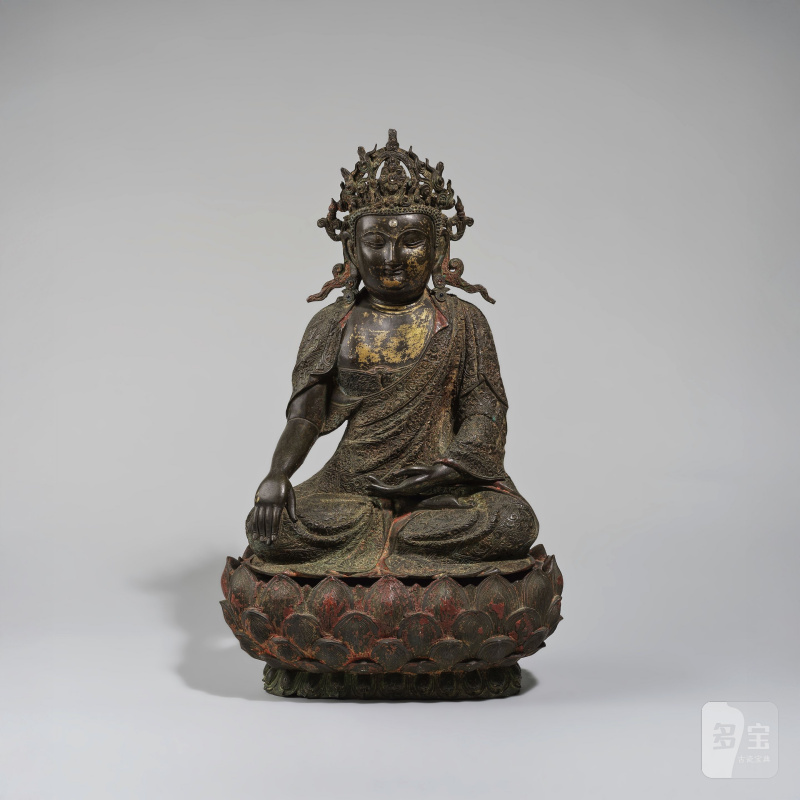








Lot 19 明嘉靖三年(1525年) 漆金銅阿閦佛像 | MAGNIFIQUE GRANDE STATUETTE DE BOUDDHA AKSHOBHYA EN BRONZE LAQUÉ DORÉ
落槌价
****
成交价
****
| 拍卖公司 | 邦瀚斯 |
|---|---|
| 拍卖时间 | 2026年06月09日 |
请安装多宝古瓷宝典APP,查看高清无损大图
拍品信息
拍品名称
明嘉靖三年(1525年) 漆金銅阿閦佛像 | MAGNIFIQUE GRANDE STATUETTE DE BOUDDHA AKSHOBHYA EN BRONZE LAQUÉ DORÉ
起拍价
EUR 30,000
估值区间
未知
尺寸
未知
品相
未知
更多信息
Dynastie Ming, datée de la 3e année de Jiajing (1525)
A RARE LARGE LACQUER-GILT BRONZE FIGURE OF AKSHOBHYA BUDDHA
Ming Dynasty, dated 3rd year of Jiajing (1525)
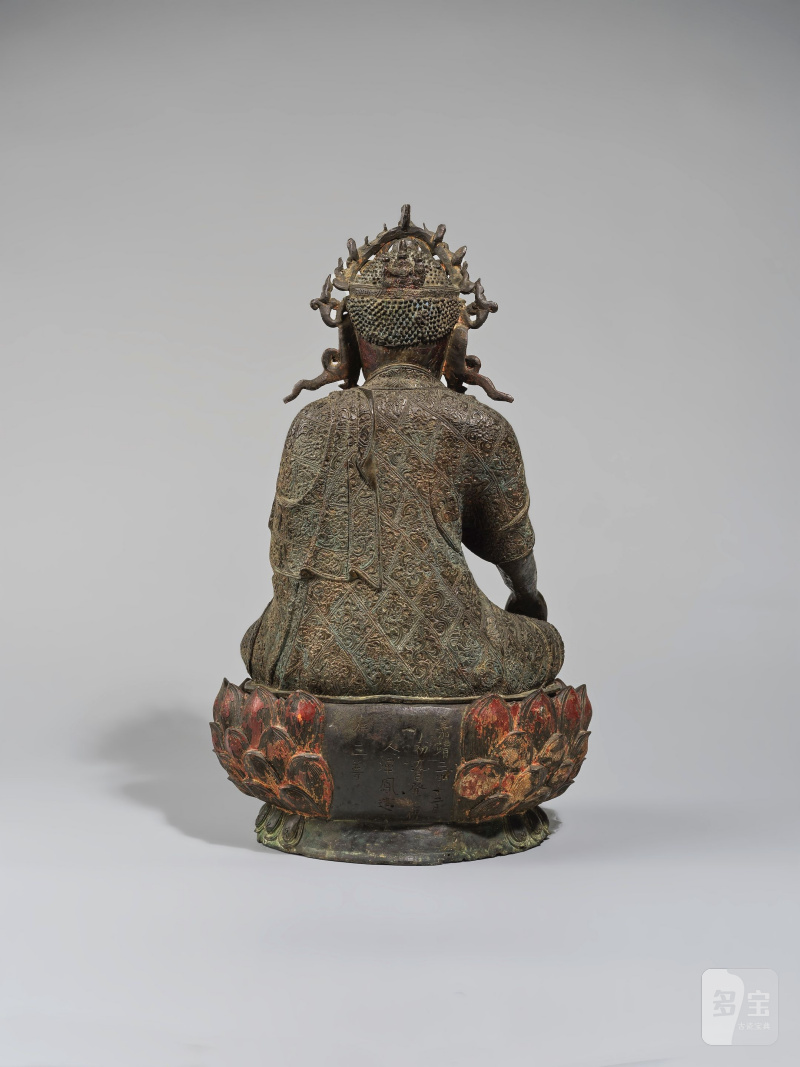
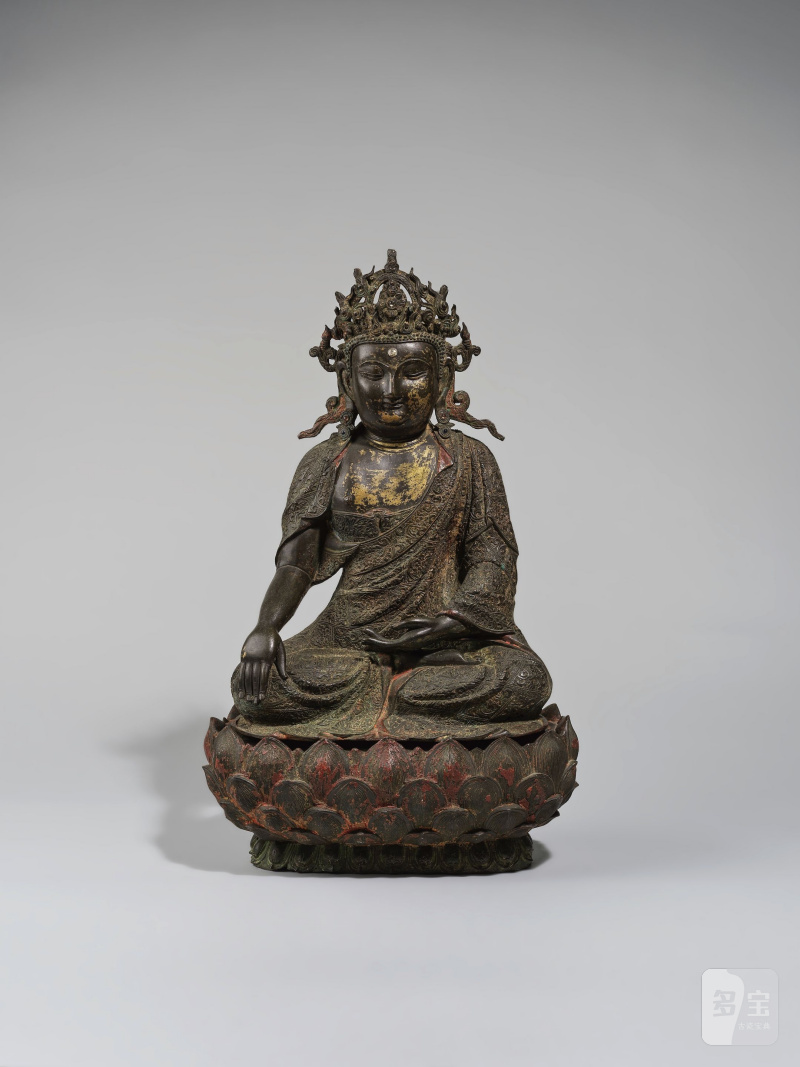
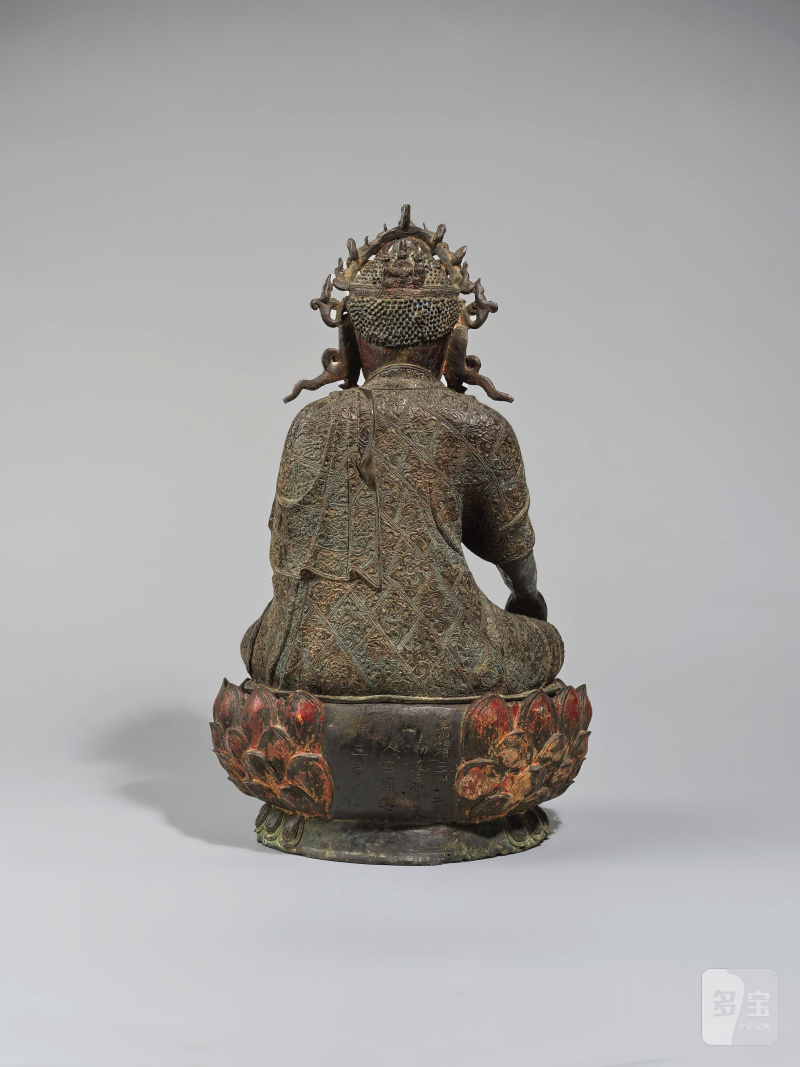
Seated in dhyanasana on a double-lotus base, his hands held in bhumisparsha mudra, dressed in ornate patchwork robes, each patch intricately cast with a raised design of lotus flowers, adorned with elaborate jewelry and a foliate tiara, the face with a gentle smile and downcast eyes, the hair in tight curls over the ushnisha, the back of the base inscribed and dated.
The buddha 40 cm (15 3/4 in.) high, overall 51.5 cm (20 1/4 in.) high overall (2).
Footnotes
Provenance:
A French private collection.
The result of CIRAM thermoluminescence test no.0326-OA-0484J-1, dated 30th March 2026, is consistent with the dating of this lot.
明嘉靖三年(1525年) 漆金銅阿閦佛像
來源
法國私人收藏
This impressive figure of Akshobhya is adorned with a crown, jewelry and heavenly garments. The distinctive robe worn by this figure of Akshobhya is made up of patches, alternating horizontal and vertical strips or patches, which are cast in a sharp relief and decorated with flower motifs, filling the flat open areas of the upper and lower garments. Originally patchwork robes were the prescribed garments worn by Buddhist monks and nuns as stipulated in the literature of India. Made of scrap textiles, they were modest and functional. The robe worn by this buddha is luxurious and a sharp departure from the plain patchwork robes worn by other buddhist figures.
In Tibet, the appearance of monks and buddhas dressed in patchwork robes in Tibetan art can be traced back to the 12th/13th centuries but became the favored idiom throughout the 15th century. Related Buddha images include a mid-15th-century thangka of Shakyamuni in the collection of the British Museum, illustrated in Marylin M. Rhie and Robert A.F. Thurman, , New York, 1996, p. 77, no. 3, and a 15th-century gilt-bronze sold in Sotheby's New York, 30 November 1994, lot 68. In Tibet, however, more precious garments rapidly replaced the humble Indian patchwork robe. By the 15th century, the patchwork robe had been transformed into the finest conceivable garment of the period, a transformation that perfectly exemplifies the "refinement and elaboration" of this period.
A result of this climate of great cultural exchange between China and Tibet, lavishly decorated patchwork textiles with floral designs appear by the late Yuan/early Ming dynasty as seen on a patchwork panel with similar patterns held in The Metropolitan Museum of Art (accession no. 1997.380). The foliate scrolls within the present robe's narrower strips also bear a strong resemblance to the decoration on a Yuan dynasty sculpture published by Robert Bigler, , Zurich, 2013, pp. 84-95, nos. 19-21. Compare also with a bronze buddha of smaller size but similarly cast with a distinctive patchwork robe, sold in Christie's New York, 17 and 18 March 2015, lot 2131.
A RARE LARGE LACQUER-GILT BRONZE FIGURE OF AKSHOBHYA BUDDHA
Ming Dynasty, dated 3rd year of Jiajing (1525)
Seated in dhyanasana on a double-lotus base, his hands held in bhumisparsha mudra, dressed in ornate patchwork robes, each patch intricately cast with a raised design of lotus flowers, adorned with elaborate jewelry and a foliate tiara, the face with a gentle smile and downcast eyes, the hair in tight curls over the ushnisha, the back of the base inscribed and dated.
The buddha 40 cm (15 3/4 in.) high, overall 51.5 cm (20 1/4 in.) high overall (2).
Footnotes
Provenance:
A French private collection.
The result of CIRAM thermoluminescence test no.0326-OA-0484J-1, dated 30th March 2026, is consistent with the dating of this lot.
明嘉靖三年(1525年) 漆金銅阿閦佛像
來源
法國私人收藏
This impressive figure of Akshobhya is adorned with a crown, jewelry and heavenly garments. The distinctive robe worn by this figure of Akshobhya is made up of patches, alternating horizontal and vertical strips or patches, which are cast in a sharp relief and decorated with flower motifs, filling the flat open areas of the upper and lower garments. Originally patchwork robes were the prescribed garments worn by Buddhist monks and nuns as stipulated in the literature of India. Made of scrap textiles, they were modest and functional. The robe worn by this buddha is luxurious and a sharp departure from the plain patchwork robes worn by other buddhist figures.
In Tibet, the appearance of monks and buddhas dressed in patchwork robes in Tibetan art can be traced back to the 12th/13th centuries but became the favored idiom throughout the 15th century. Related Buddha images include a mid-15th-century thangka of Shakyamuni in the collection of the British Museum, illustrated in Marylin M. Rhie and Robert A.F. Thurman, , New York, 1996, p. 77, no. 3, and a 15th-century gilt-bronze sold in Sotheby's New York, 30 November 1994, lot 68. In Tibet, however, more precious garments rapidly replaced the humble Indian patchwork robe. By the 15th century, the patchwork robe had been transformed into the finest conceivable garment of the period, a transformation that perfectly exemplifies the "refinement and elaboration" of this period.
A result of this climate of great cultural exchange between China and Tibet, lavishly decorated patchwork textiles with floral designs appear by the late Yuan/early Ming dynasty as seen on a patchwork panel with similar patterns held in The Metropolitan Museum of Art (accession no. 1997.380). The foliate scrolls within the present robe's narrower strips also bear a strong resemblance to the decoration on a Yuan dynasty sculpture published by Robert Bigler, , Zurich, 2013, pp. 84-95, nos. 19-21. Compare also with a bronze buddha of smaller size but similarly cast with a distinctive patchwork robe, sold in Christie's New York, 17 and 18 March 2015, lot 2131.