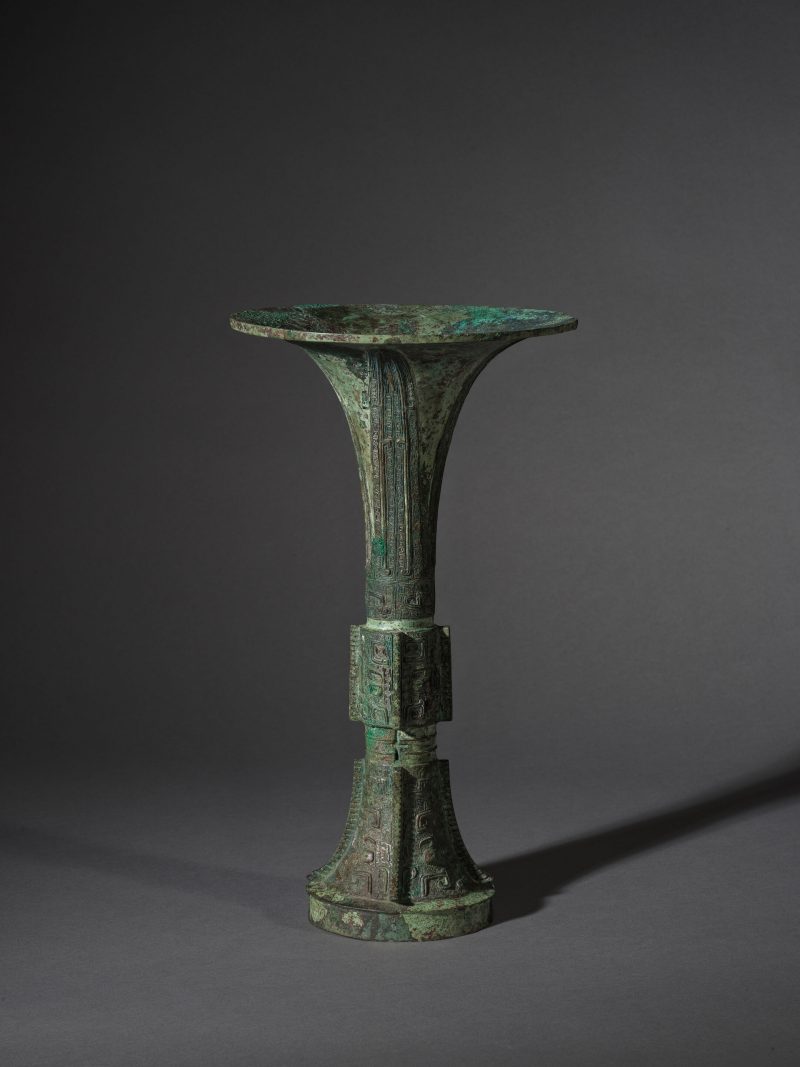

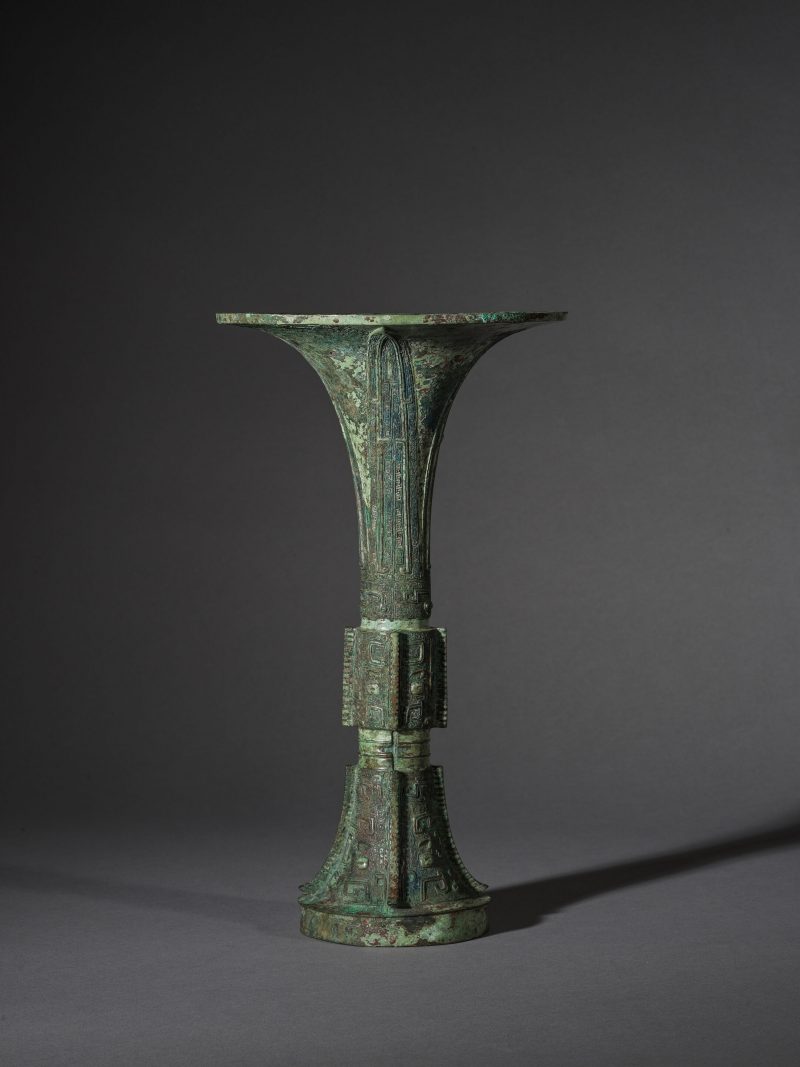
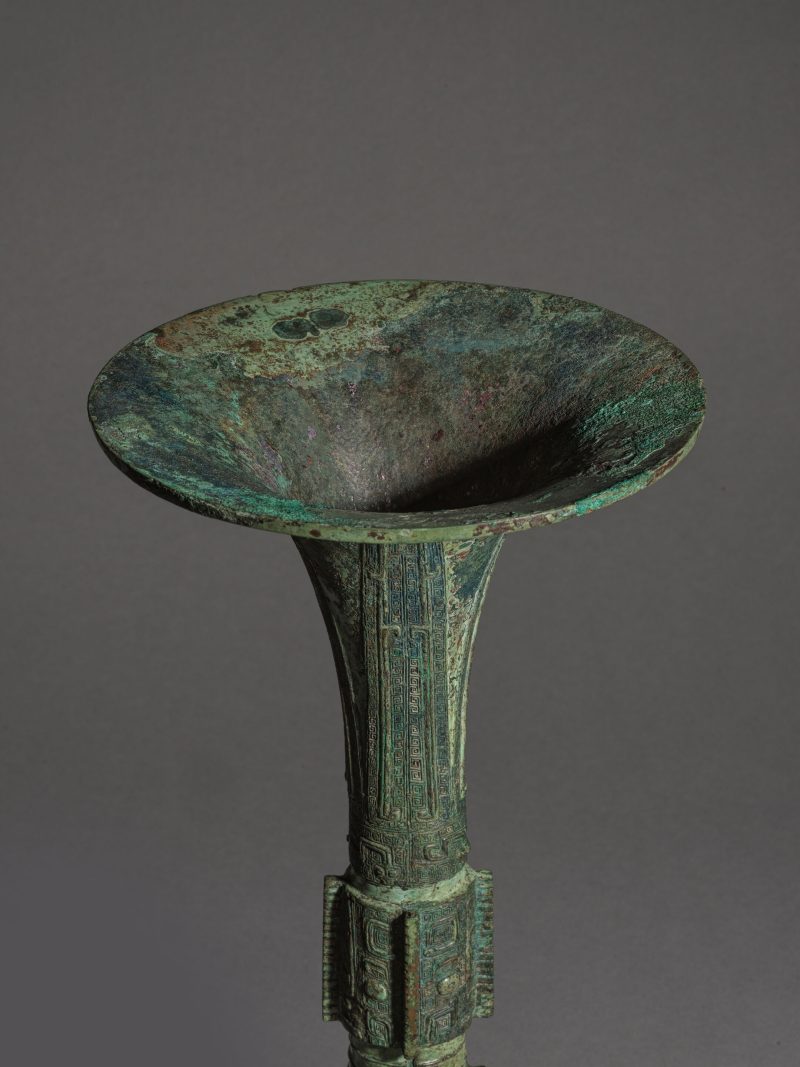
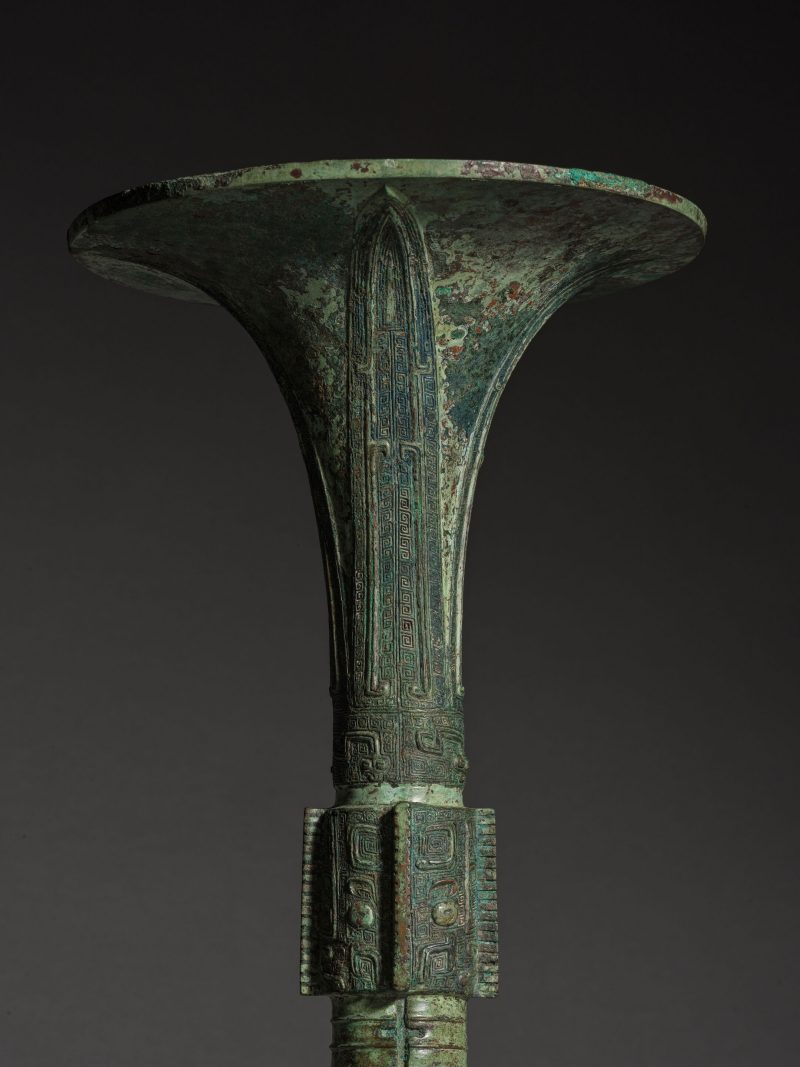
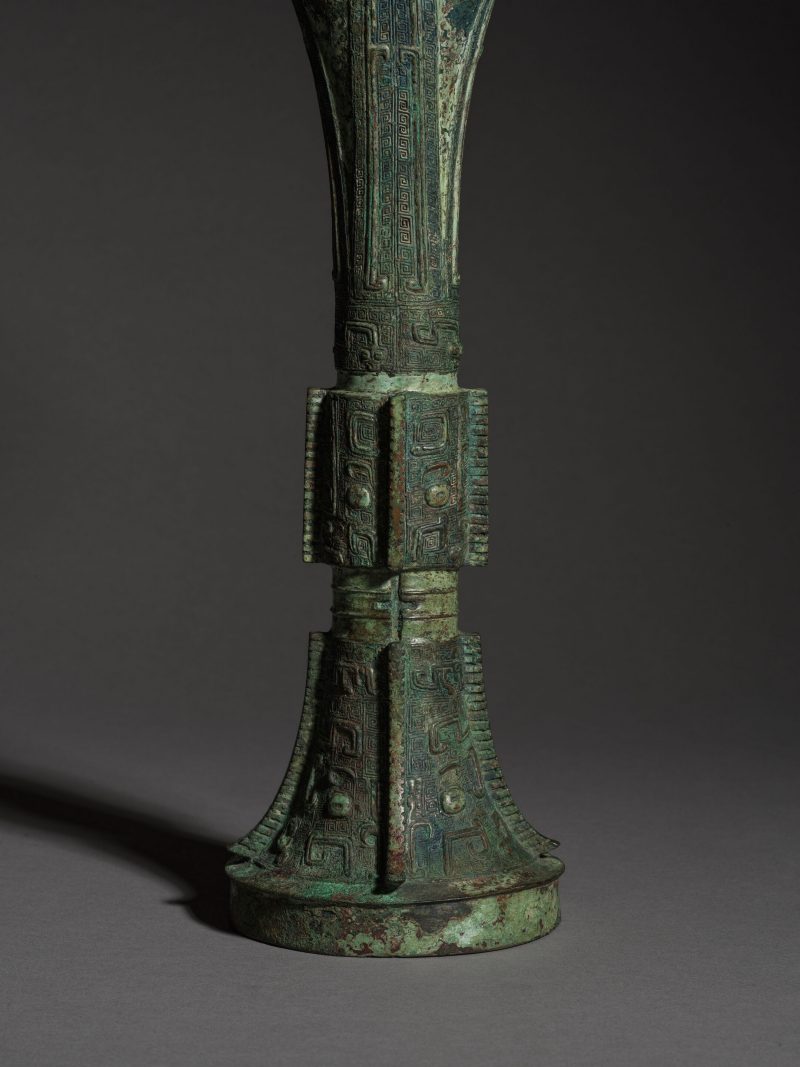
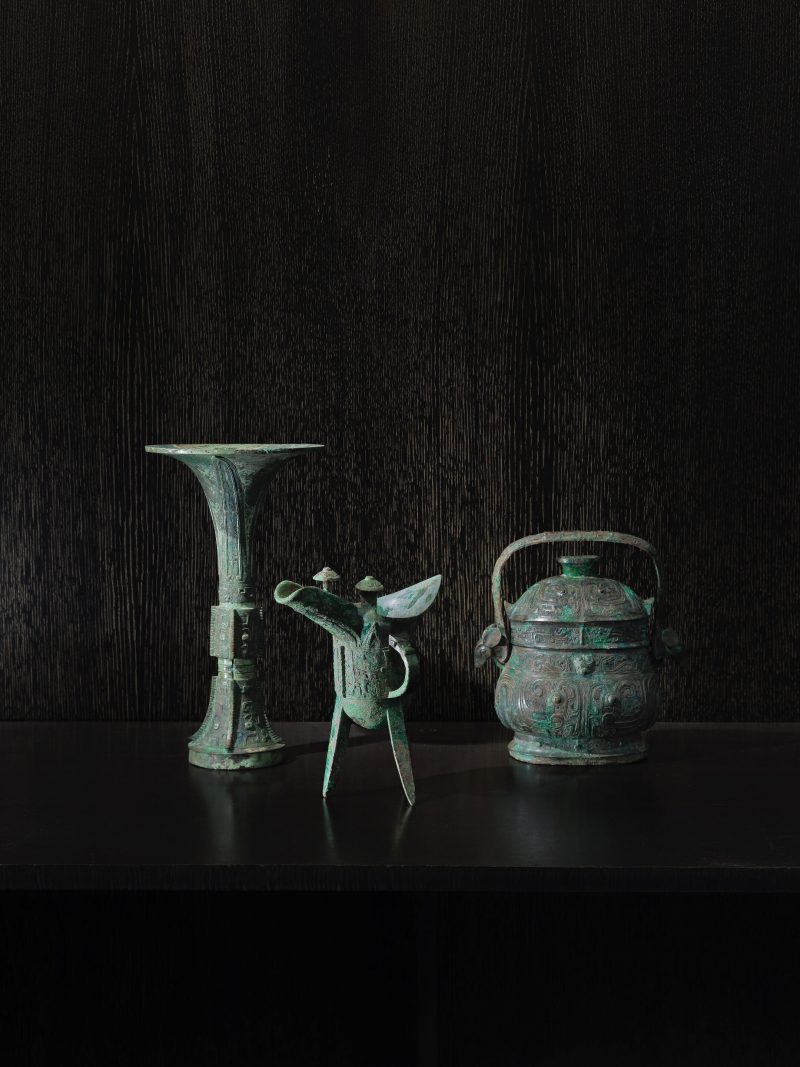
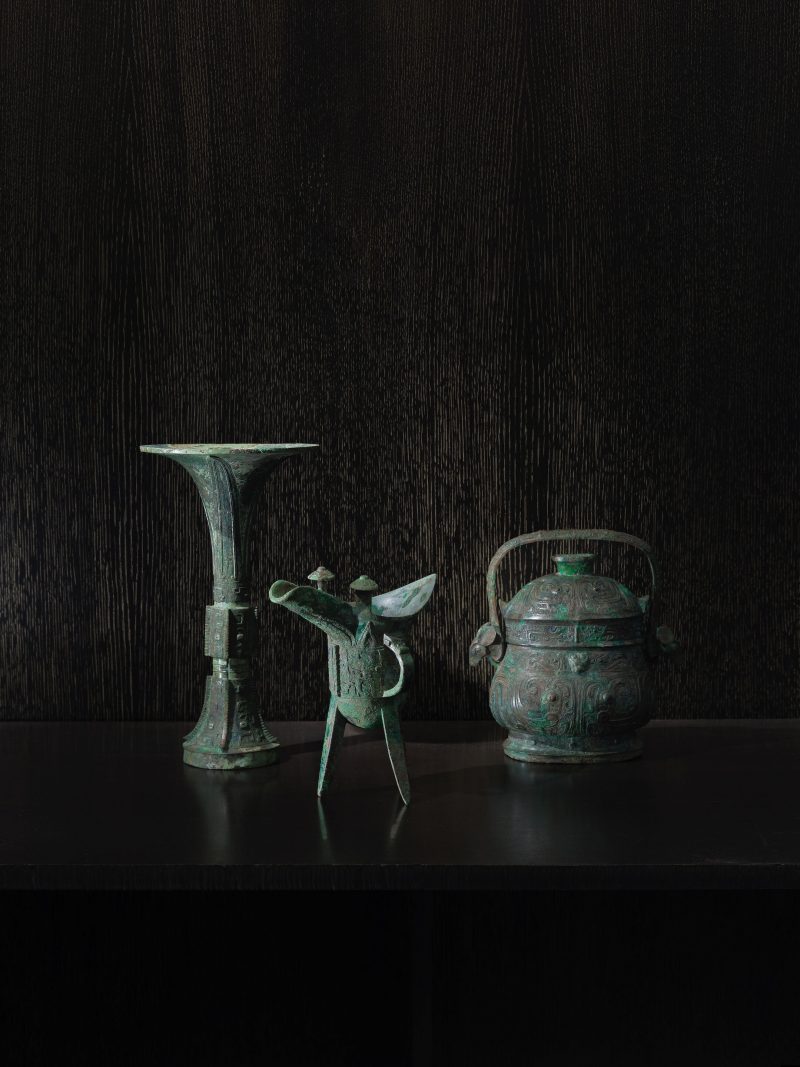
Lot 6 商晚期 安陽時期 約公元前十二/十一世紀 青銅饕餮紋觚 | IMPORTANT RÉCIPIENT RITUEL EN BRONZE, GU
落槌价
预展中
成交价
预展中
| 拍卖公司 | 邦瀚斯 |
|---|---|
| 拍卖时间 | 2026年12月10日 |
拍品信息
拍品名称
商晚期 安陽時期 約公元前十二/十一世紀 青銅饕餮紋觚 | IMPORTANT RÉCIPIENT RITUEL EN BRONZE, GU
年代
商晚期 安陽時期 約公元前十二/十一世紀
起拍价
未知
估值区间
EUR 120,000–150,000
尺寸
31.5 cm (12 3/8 in.) high
品相
未知
更多信息
IMPORTANT RÉCIPIENT RITUEL EN BRONZE, GU
Fin de la dynastie Shang, phase Anyang, vers XIIe/XIe siècle av. J.-C.
A RARE ARCHAIC BRONZE RITUAL WINE VESSEL, GU
Late Shang Dynasty, Anyang phase, ca. 12th/11th century BC
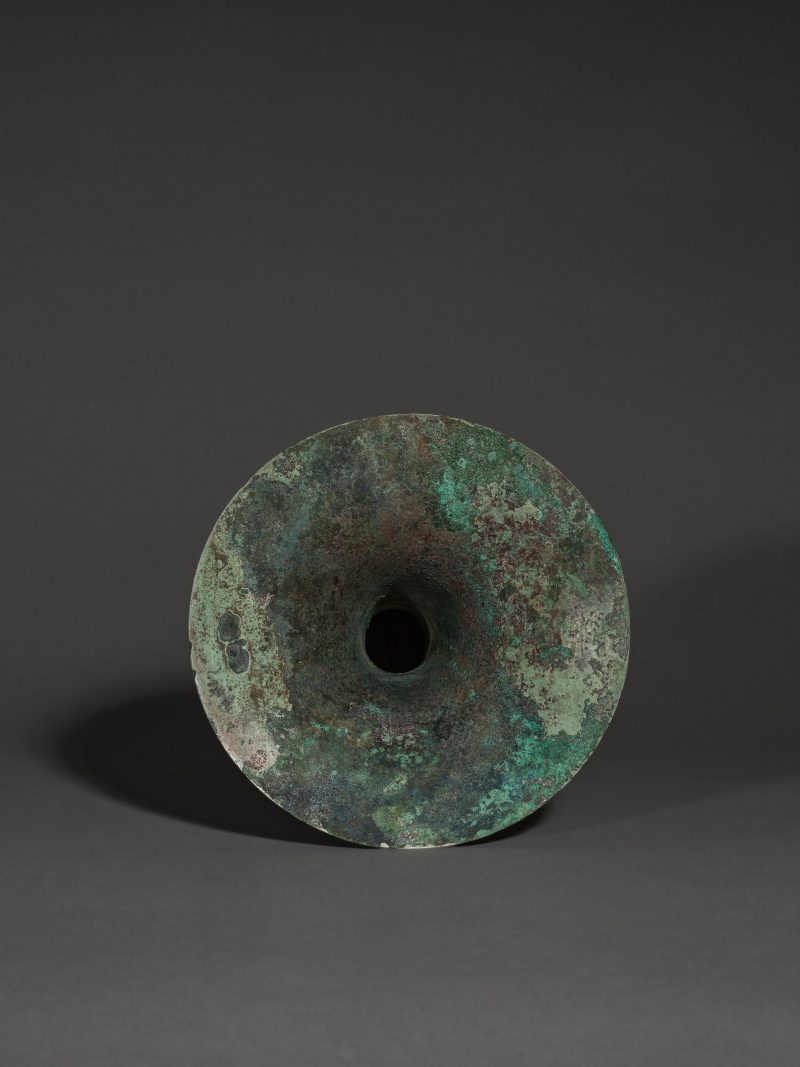
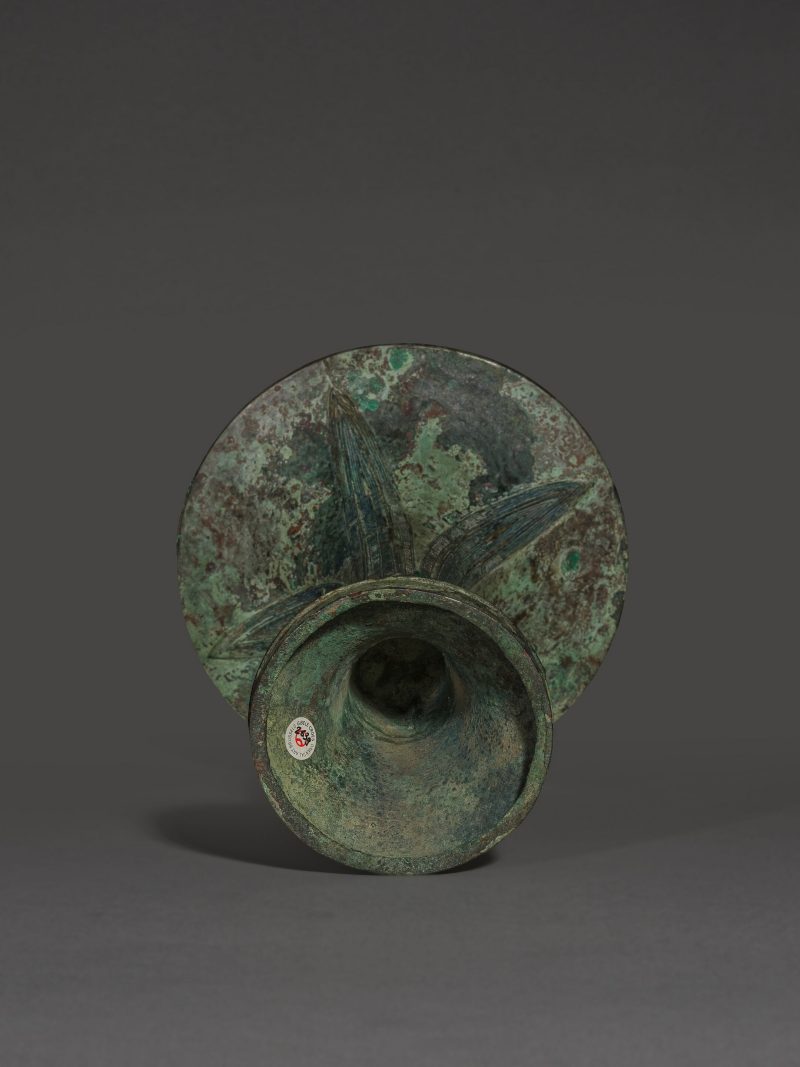
Of tall, slender beaker form raised on a plain ring foot, the trumpet-shaped neck finely cast with four elongated blades, each enclosing confronted pairs of elongated kui dragons above a narrow band of stylised serpents with angular, scroll-shaped bodies, the design cast in varied relief against a dense leiwen ground, the middle section above a plain recessed band with impressed cruciform motifs interrupted by two thin raised line collars, decorated with two taotie masks divided and separated by notched flanges on a densely patterned angular scrollwork ground, the spreading foot finely cast with two large dissolved taotie masks with prominent protruding oval eyes, similarly separated by four notched flanges, all on a finely detailed leiwen ground, the patina an attractive pale greenish-grey tone with areas of malachite and cuprite encrustation.
31.5 cm (12 3/8 in.) high
商晚期 安陽時期 約公元前十二/十一世紀 青銅饕餮紋觚
Provenance:
Martin Månsson (1880-1952), Sweden, acquired during the first half of the 20th century, and thence by descent
Bonhams Hong Kong, 29 November 2016, lot 28
Gisèle Croës Arts d'Extrême Orient, Brussels
來源:
Martin Månsson (1880-1952),瑞典,獲得于二十世紀前半期,并由後人保存
香港邦瀚斯,2016年11月29日,拍品編號28
Gisèle Croës Arts d'Extrême Orient,布魯塞爾
Martin Månsson (1880-1952) was a Swedish entrepreneur with early links to Russia and Japan. From 1911-1917 he lived in St. Petersburg where he owned a company selling high-quality stainless steel, and where he learned the Russian language.
Although he first visited Japan in 1907, it was in 1920 that he returned home to set up a sales operation similar to that in St. Petersburg which had been halted three years earlier due to the political upheaval. He spent several years in Osaka and Kobe, when his interest in Japanese works of art commenced. Once again he realised the benefit of learning the language in order to facilitate the acquiring of works of art. The result was a fine collection of woodblock prints, netsuke, inro, porcelain (in particular Kakiemon vases), swords, lacquer and silver.
It was in the 1930s, when back in Japan, that he extended his collection to include Chinese art. Fine porcelain, Tang silver, and early bronzes were his particular interests, and he studied these subjects both in books and through his discussions with his friend Kusaka Shogado, who was a leading dealer based in Kyoto, and from whom he made many purchases. He visited Japan for the last time in 1938, when he bought numerous items for his collection.
The detailed and finely cast decoration on this vessel can be associated with the 'mature' style representative of ritual vessels made during the Anyang phase of the Shang dynasty which all exhibit a similarly distinctive pattern and sequence of motifs as can be seen on the current lot. Examples of this classic form and design have been recorded from archaeological sites associated with the Shang capital at Anyang, as a vessel excavated in Huayuanzhuang village, Anyang, Henan province, illustrated, published in Yinxu xin chutu qingtongqi, Kunming, 2008, pl. 62. This type of gu is also well documented in important museums and private collections, see, for example, a bronze gu with very similar cast decoration, but incorporating inverted taotie masks set within the blades on the neck, illustrated by Robert W. Bagley in Shang Ritual Bronzes in the Arthur M. Sackler Collections, Washington, D.C., 1987, pp. 248-53, cat.no. 38. Compare also with a gu of this type in the collection of the Minneapolis Institute of Arts, illustrated by Bernard Karlgren, A Catalogue of the Chinese Bronzes in the Alfred F. Pillsbury Collection, Minneapolis, 1952, cat. no. 25, pp. 74-75. Another example from the collection of the Art Institute of Chicago, is published in Charles F. Kelley and Ch'en Meng-Chia, Chinese Bronzes from the Buckingham Collection, Chicago, 1946, pp. 32-33.
A related example similarly cast with confronted kui dragons instead of stylised taotie masks, formerly in the collections of Alexandre J. Argyropoulos and Julius Eberhardt, was sold at Sotheby's New York, 17 September 2013, lot 1. Compare with an archaic bronze gu from the Anthony Hardy collection, similarly cast with a band of stylised dragons around the middle section, sold in Christie's, New York, 16 September 2010, lot 809. See also a related gu sold in Bonhams New York, 19 March 2018, lot 8030, and a another example sold at Sotheby's New York, 11 September 2019, lot 503. Finally, a similar gu formerly with J.J. Lally, was sold in Christie's New York, 15 March 2021, lot 501.
以下内容由AI翻译:
【描述】
高而细长的杯形,底部为平环足,喇叭形颈部精细铸造有四个长条形刀片,每个刀片内包含一对对称的长条形夔龙,上方有一窄带装饰有角状卷曲身体的蛇纹,图案在密集的雷纹底上以不同层次的浮雕形式铸造。中部饰有两组饕餮纹,其下有一道凹入的素带,上见压印的十字形纹样,并有两道细凸棱间隔,由锯齿状的棱脊分隔,在密集的几何卷曲底纹上。展开的足部精细铸造有两个大型的饕餮面具,突出的椭圆形眼睛,同样由四个锯齿状的棱脊分隔,所有这些都在精细的雷纹底上。铜锈呈淡绿灰色调,局部有孔雀石和赤铜矿的附着。
这件器物上的精细铸造装饰可以与商代安阳时期的‘成熟’风格联系起来,这一时期的所有礼器都表现出类似的独特图案和主题序列,如本件所示。这种经典的形式和设计已在与安阳商都相关的考古遗址中记录到,例如河南省安阳市花园庄村出土的一件青铜觚,见《殷墟新出土青铜器》,昆明,2008年,图版62。这种类型的觚也在重要的博物馆和私人收藏中有所记录,例如一件具有非常相似铸造装饰的青铜觚,但颈部刀片内包含倒置的饕餮面具,见罗伯特·W·巴格利著,《亚瑟·M·萨克勒收藏的商代礼器》,华盛顿特区,1987年,第248-53页,编号38。另可比较明尼阿波利斯艺术学院收藏的一件同类觚,见伯纳德·卡尔格林著,《阿尔弗雷德·F·皮尔斯伯里收藏的中国青铜器目录》,明尼阿波利斯,1952年,编号25,第74-75页。芝加哥艺术学院收藏的另一件同类觚,见查尔斯·F·凯利和陈梦家著,《白金汉收藏的中国青铜器》,芝加哥,1946年,第32-33页。
一件类似的作品,铸造有对称的夔龙而不是风格化的饕餮面具,曾属于亚历山大·J·阿尔吉罗普洛斯和尤利乌斯·埃伯哈特的收藏,于2013年9月17日在纽约苏富比拍卖,编号1。另可比较安东尼·哈迪收藏的一件古青铜觚,中部铸有一圈风格化的龙纹,于2010年9月16日在纽约佳士得拍卖,编号809。另见2018年3月19日在纽约邦瀚斯拍卖的一件相关作品,编号8030,以及2019年9月11日在纽约苏富比拍卖的另一件作品,编号503。最后,一件类似的作品曾属于J.J.拉利,于2021年3月15日在纽约佳士得拍卖,编号501。
常见问题
这件商晚期 安陽時期 約公元前十二/十一世紀 青銅饕餮紋觚 | IMPORTANT RÉCIPIENT RITUEL EN BRONZE, GU的成交价是多少?
落槌价为 预展中。 成交价为 预展中。
拍品的尺寸是多少?
31.5 cm (12 3/8 in.) high