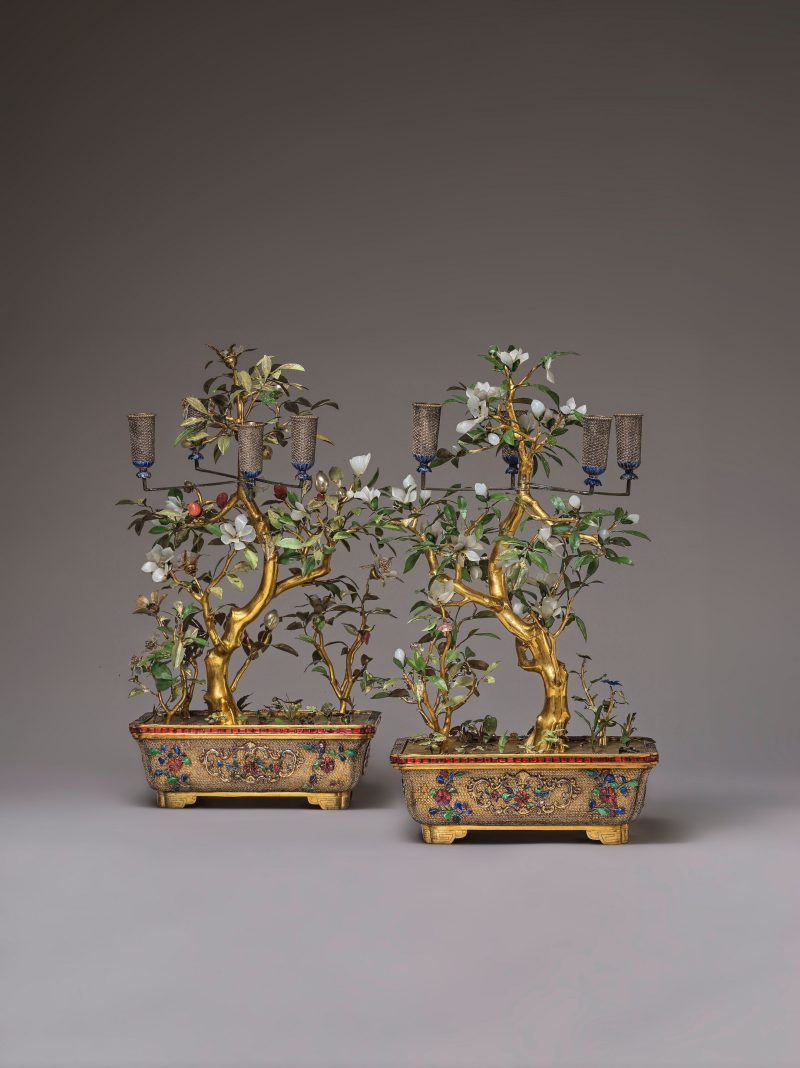

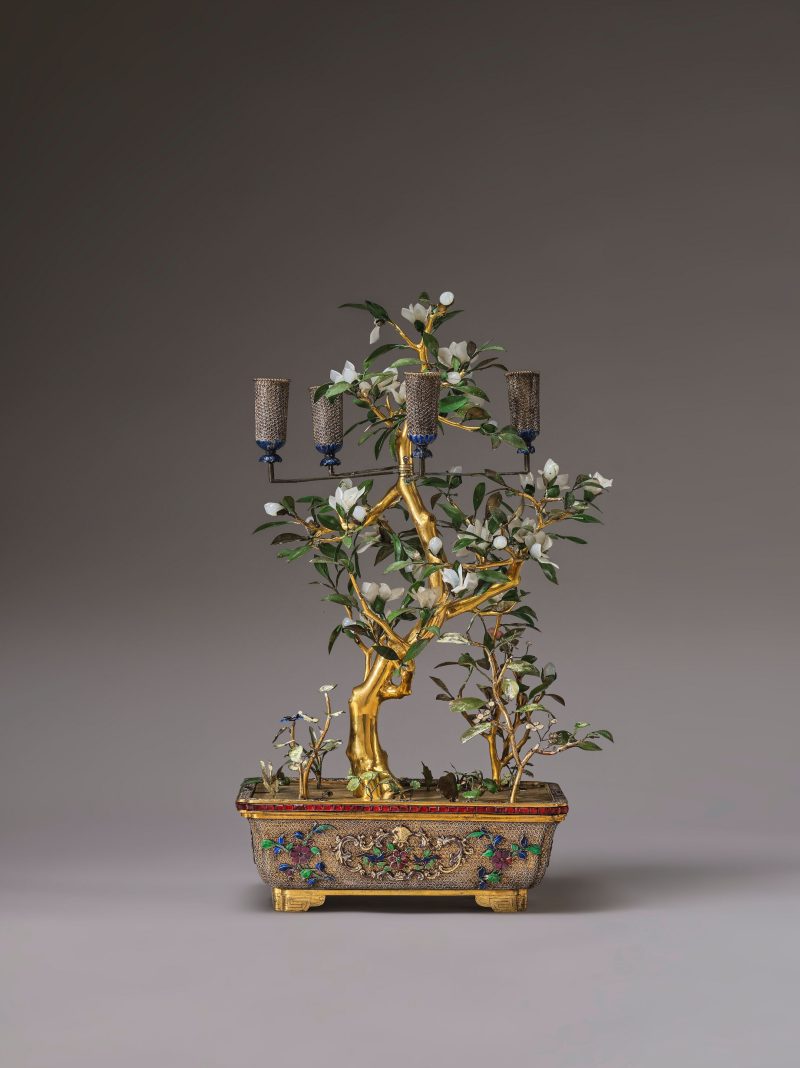
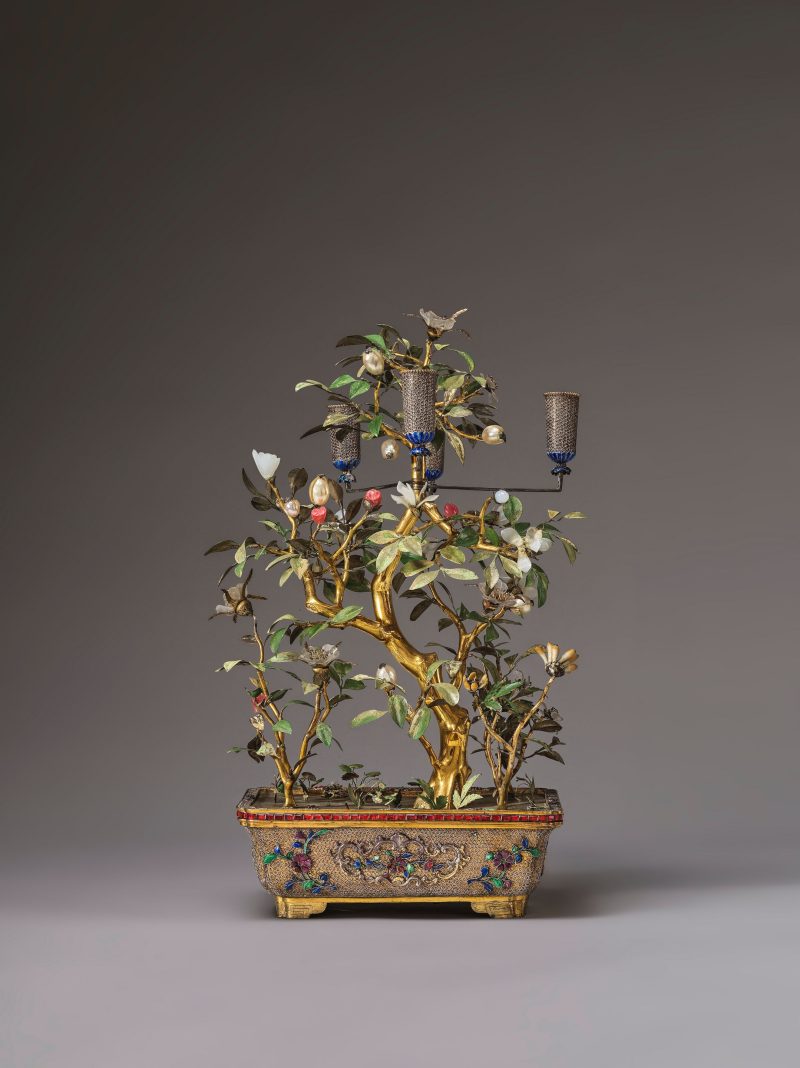
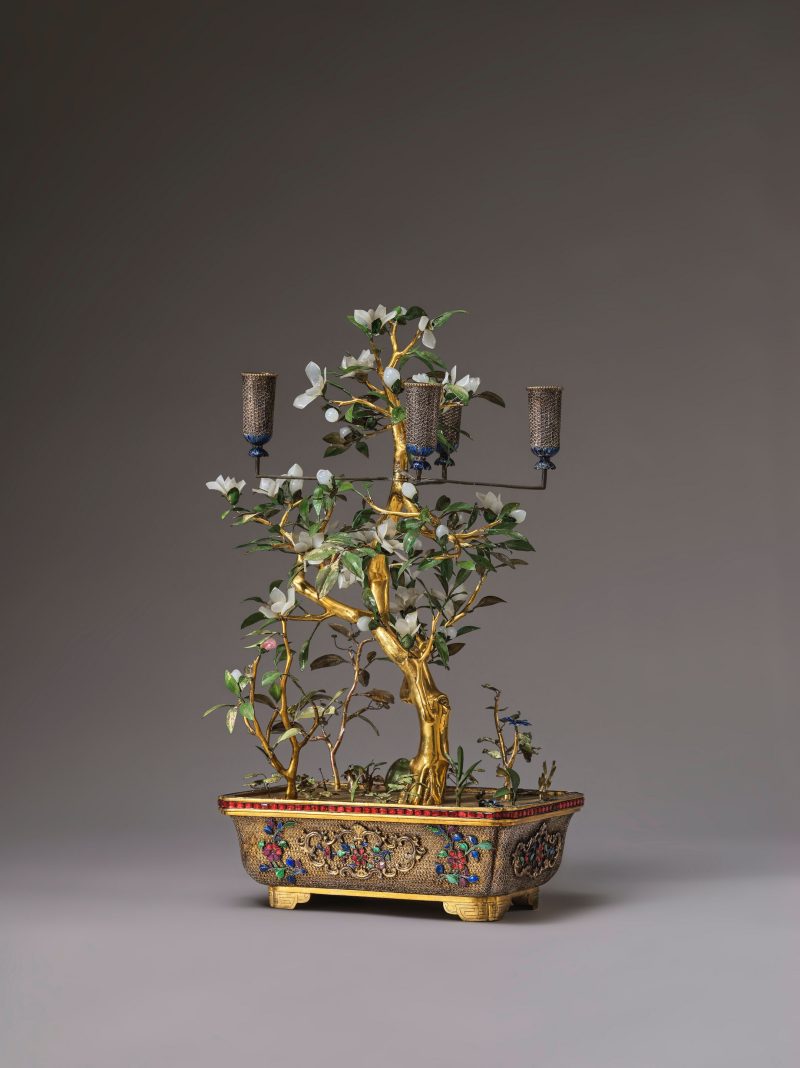
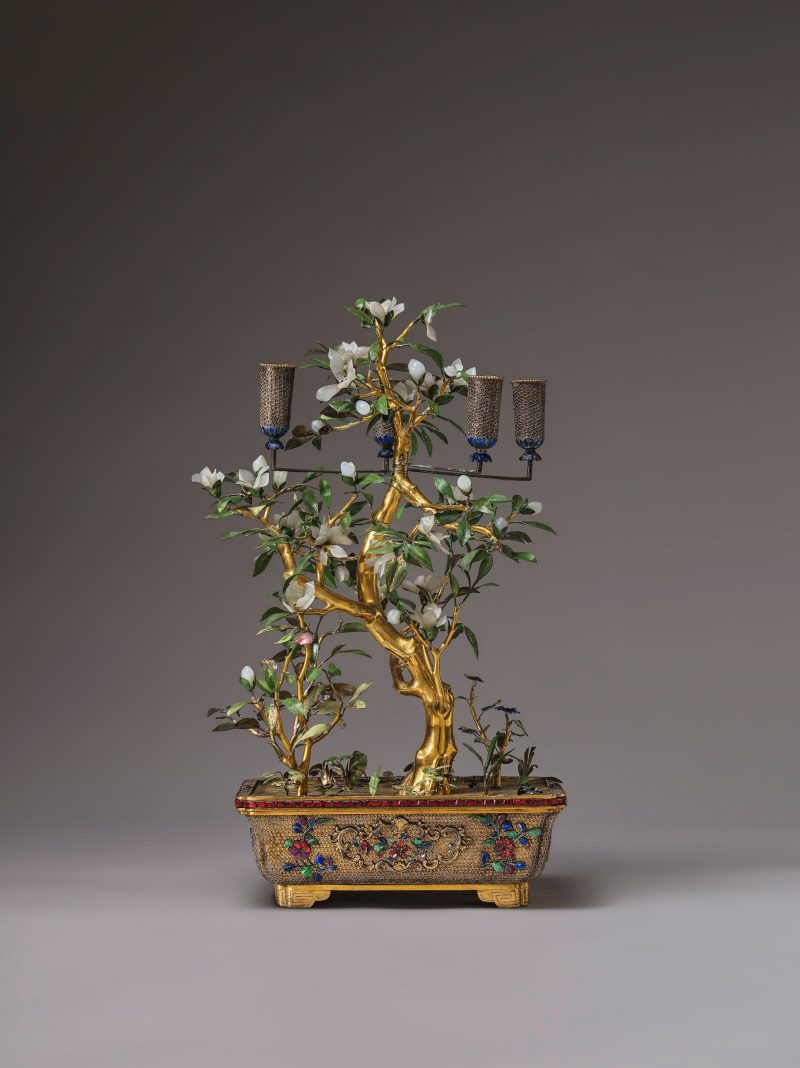
Lot 37 清乾隆 廣作玉蘭花樹盆景 | RARE PAIRE DE JARDINIÈRES IMPÉRIALES EN BRONZE DORÉ ET INCRUSTATIONS EN VERRE COLORÉ
落槌价
预展中
成交价
预展中
| 拍卖公司 | 邦瀚斯 |
|---|---|
| 拍卖时间 | 2026年12月10日 |
拍品信息
拍品名称
清乾隆 廣作玉蘭花樹盆景 | RARE PAIRE DE JARDINIÈRES IMPÉRIALES EN BRONZE DORÉ ET INCRUSTATIONS EN VERRE COLORÉ
年代
清乾隆
起拍价
未知
估值区间
EUR 30,000–50,000
尺寸
Each 43 cm (16 7/8 in.) high
品相
未知
更多信息
RARE PAIRE DE JARDINIÈRES IMPÉRIALES EN BRONZE DORÉ ET INCRUSTATIONS EN VERRE COLORÉ
Dynastie Qing, époque Qianlong (1736-1795)
A RARE PAIR OF IMPERIAL CANTON-TRIBUTE HARDSTONE AND GLASS-EMBELLISHED, SILVER FILIGRÉE GILT-METAL JARDINIÈRES
Qing Dynasty, Qianlong period
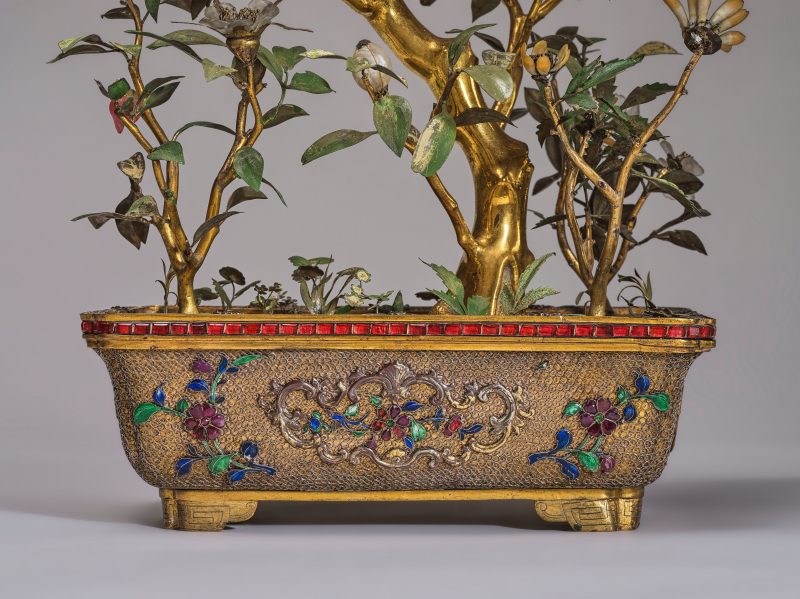
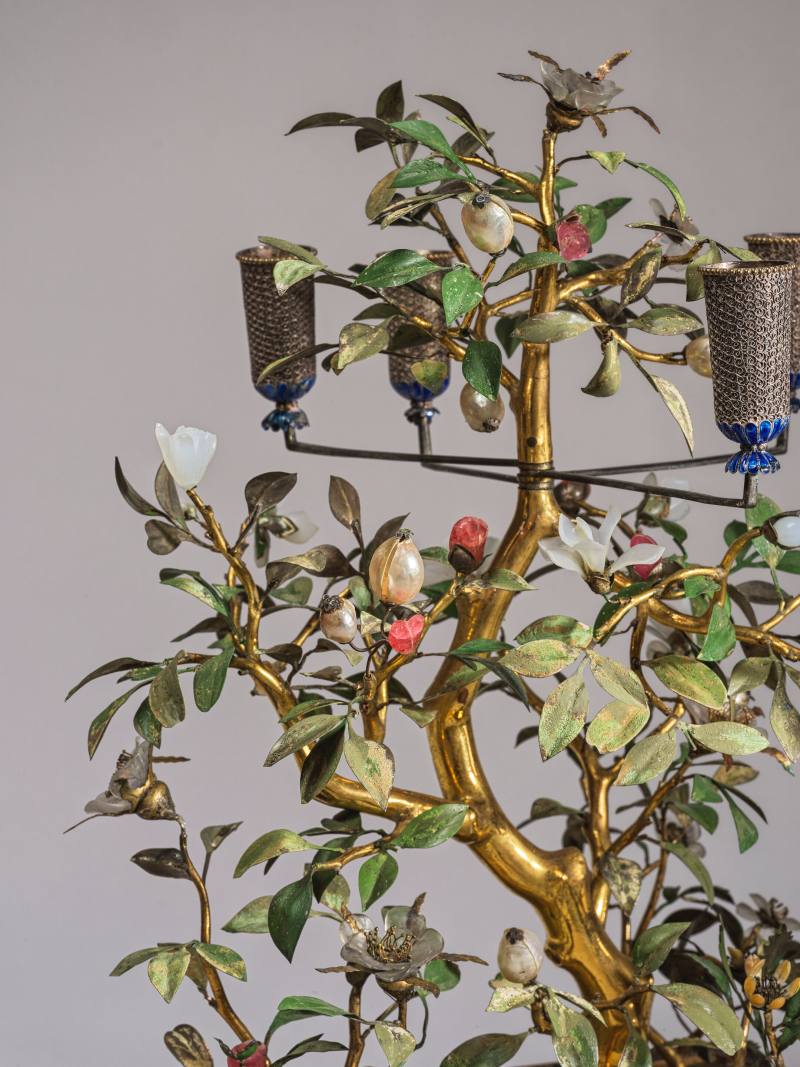
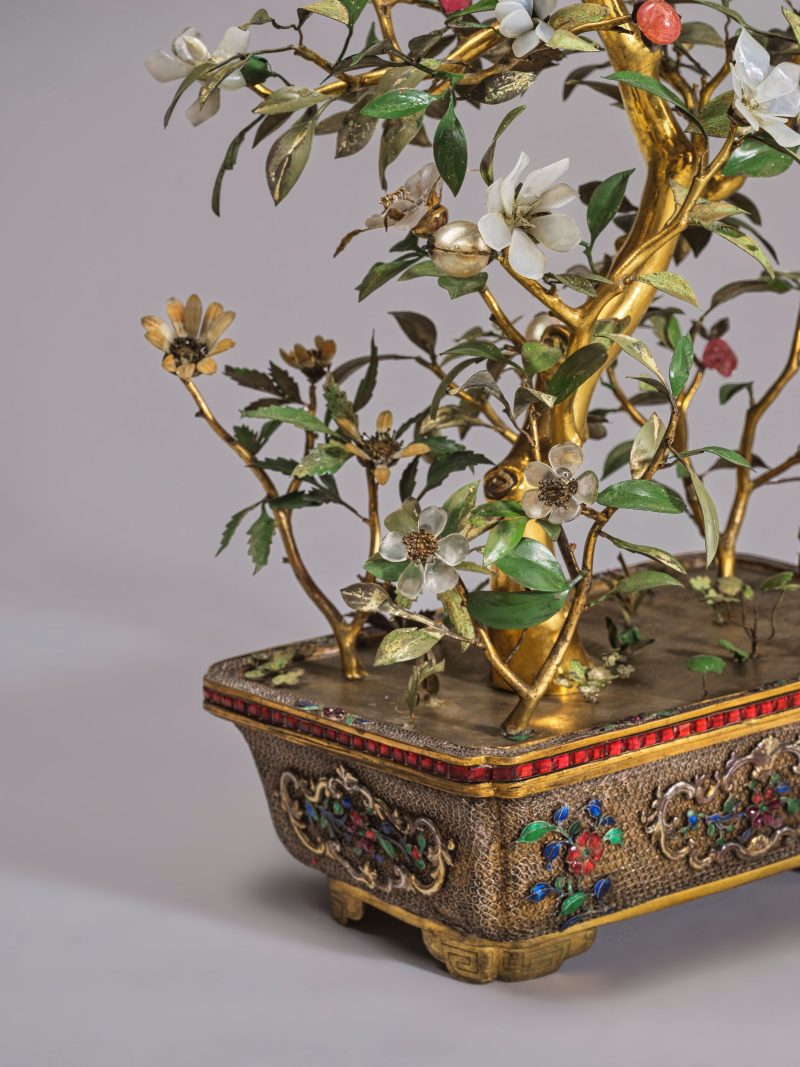
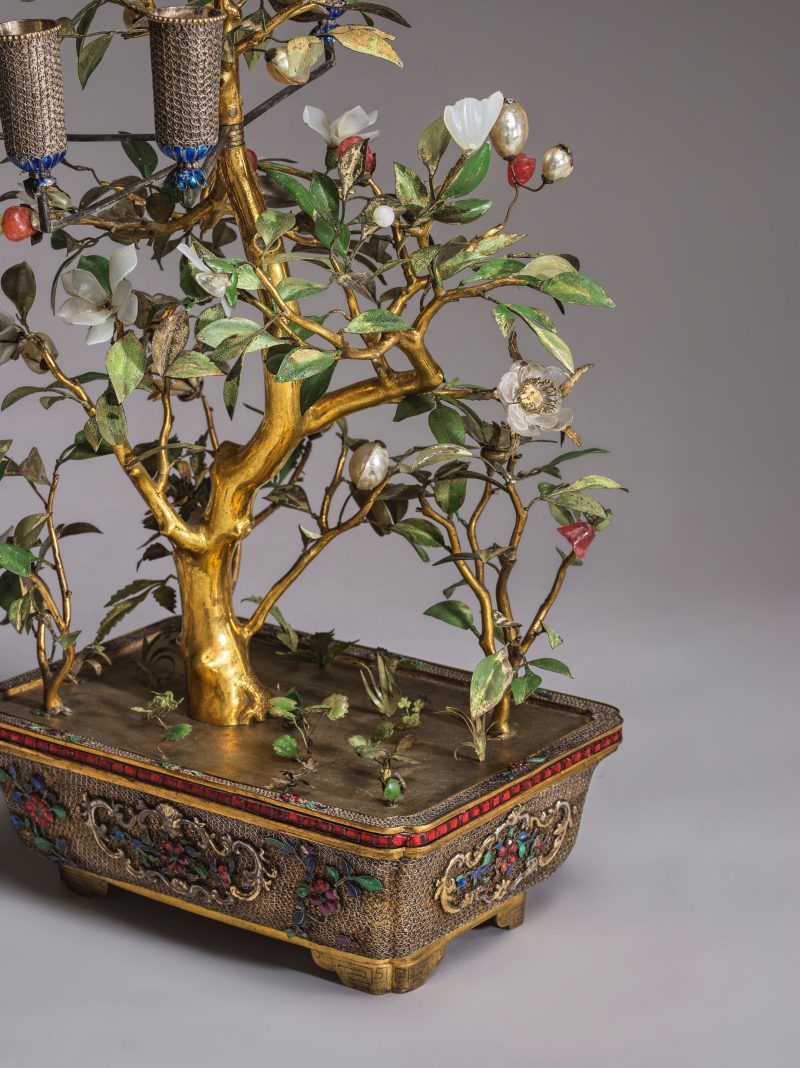
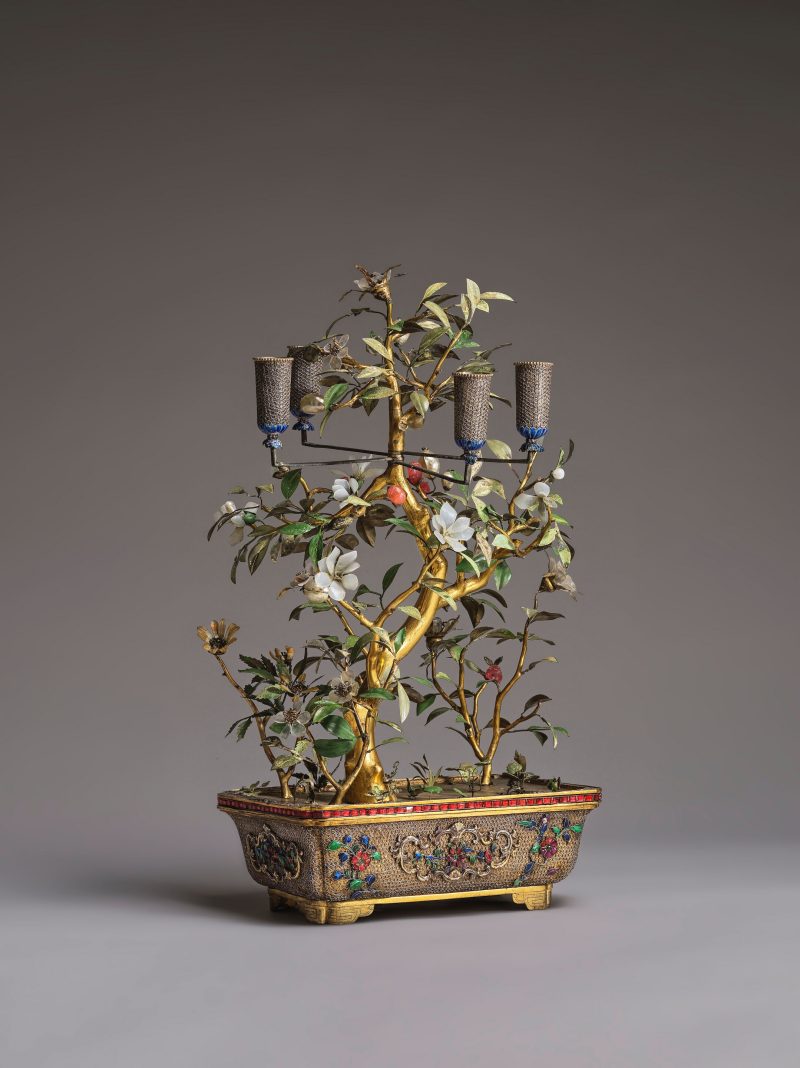
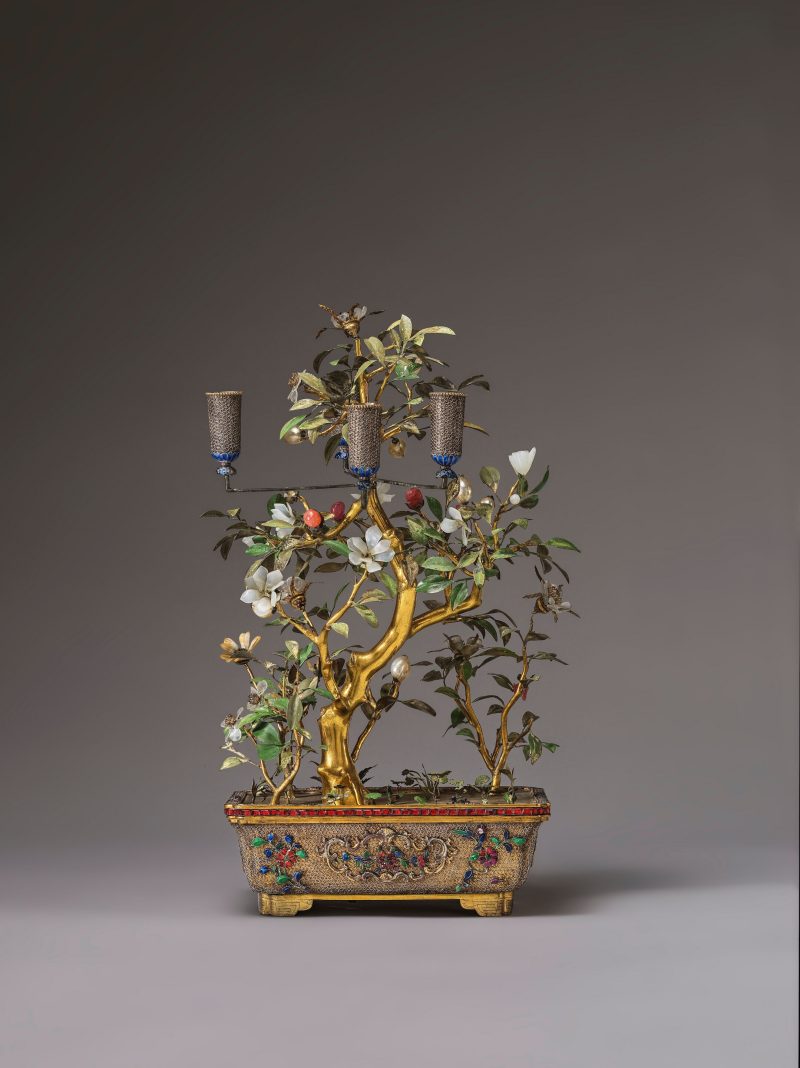
Each of rectangular form with canted corners raised on four bracket feet, the gilt-metal sides covered with a dense silver filigree pattern, applied with a shaped medallion enclosing small flowerheads and sprays set with colourful glass stones, the rim with a band of red glass stones, the interior with gnarled tree with gilt-trunks and branches issuing a profusion of leaves and petalled flowers in various hardstones above an assortment of rockwork, lingzhi and blossoming shrubs, each tree fitted with four silver filigrée candleholders.
Each 43 cm (16 7/8 in.) high (2).
清乾隆 廣作玉蘭花樹盆景
Provenance:
Collection of the King of Portugal D. Manuel II (1889-1932) (according to remains of an inventory label of the PalaÌcio das Necessidades, number 10820, vol. V, p. 1612, noting them being the property of King of Portugal D. Manuel II (1889-1932)
Galerie Lamy, Brussels, 2018
Gisèle Croës Arts d'Extrême Orient, Brussels
來源:葡萄牙國王D. Manuel二世(1889-1932)(据內塞西達迪什宮藏品清單殘存標簽的記載,編號10820,第V卷,第1612頁,注明該品為葡萄牙國王D. Manuel二世所有)
Galerie Lamy,布魯塞爾,2018年
Gisèle Croës Arts d'Extrême Orient,布魯塞爾
In the vast halls and chambers of the Qing Court, potted miniature landscapes and floral displays formed an important part of the interior decoration and were frequently fashioned from prized materials, contributing to the sumptuous environment of the Imperial palaces. Particularly in northern China, where the seasons were clearly differentiated, such permanent representations of colourful flowers, plants and landscapes provided an enduring alternative to living specimens.
The potted miniature landscapes in the Qing Court Collection were made by highly skilled craftsmen working in the Imperial workshops in Beijing and in workshops in Canton working for the Qing Court. Such luxurious gifts were also presented as tributes to the Emperor from the provinces or offered by nobles and high-ranking officials seeking favours. The present pair of jardinières is likely to have been produced in Guangzhou, where the technique of using colourful cut-glass stones to embellish exquisitely modelled gilt-metal objects such as this pair of jardinières was perfected in grand objects including highly elaborate clocks, such as two examples illustrated in Secret World of the Forbidden City: Splendors From China's Imperial Palace, New York, 2000, pp. 54-55. The gilt-treatment of the trunks and branches, as seen on the present pair of trees, is also characteristic of such Guangzhou-made arrangements, compare examples illustrated in Tributes from Guangdong to the Qing Court, Hong Kong, 1987, pp. 90-91, nos. 59 and 61.
This sumptuous pair of miniature hardstone trees embedded in a gilt-metal and glass-embellished container is related to similarly decorated hardstone trees and embellished gilt-metal jardinière, dated to the Qianlong/Jiaqing period, sold at Sotheby's New York, 20 March 2012, lot 71. Other embellished jardinières with trees include a pair of related extravagant gilt-metal and cut-glass embellished jardinières sold at Christie's New York, 1 February 2024, lot 6, and examples formerly in the Qing Court Collection, published in Gugong zhenbao, Beijing, 2004 pp. 196-202.
以下内容由AI翻译:
【描述】
每件呈矩形,四角斜切,底部设四个托脚,镀金金属侧面覆盖密集的银丝图案,饰有一块异形纹饰牌,其内以彩色玻璃料嵌小花及折枝花卉,边缘饰有一圈红色玻璃石,内部有一棵扭曲的树,树干和树枝镀金,发出大量叶子和花瓣花朵,由各种硬石制成,下方是各种岩石、灵芝和盛开的灌木,每棵树配有四个银丝烛台。
在清廷的大厅和房间中,盆景微型景观和花卉展示是室内装饰的重要组成部分,经常用珍贵材料制成,为皇宫增添了奢华的环境。特别是在北方,季节分明,这些永久性的彩色花卉、植物和景观提供了对活体标本的持久替代。
清廷收藏的盆景微型景观由在北京的皇家作坊和广州的作坊中的高技能工匠制作。各省也将此类豪华礼物作为贡品献给皇帝,或由贵族和高级官员为了求得恩宠而赠送。这对盆景很可能是广州制作的,当地擅用切面彩色玻璃料装饰这类造型精美的鎏金金属器物,这项技艺在大型作品中臻于成熟,包括结构繁复的钟表;两件钟表实例见《神秘的紫禁城:来自中国皇宫的辉煌》,纽约,2000年,第54-55页。树干和树枝的镀金处理,如这对树所见,也是广州制造的布置的特征,比较《广东进贡清廷》,香港,1987年,第90-91页,编号59和61。
这对豪华的微型硬石树嵌入镀金金属和玻璃装饰的容器中,与类似的装饰硬石树和镀金金属盆景有关,年代为乾隆/嘉庆时期,曾在2012年3月20日纽约苏富比拍卖,拍品编号71。其他类似的装饰盆景还包括一对华丽的镀金金属和切割玻璃装饰的盆景,曾在2024年2月1日纽约佳士得拍卖,拍品编号6,以及前清廷收藏的例子,见于《故宫珍宝》,北京,2004年,第196-202页。
常见问题
这件清乾隆 廣作玉蘭花樹盆景 | RARE PAIRE DE JARDINIÈRES IMPÉRIALES EN BRONZE DORÉ ET INCRUSTATIONS EN VERRE COLORÉ的成交价是多少?
落槌价为 预展中。 成交价为 预展中。
拍品的尺寸是多少?
Each 43 cm (16 7/8 in.) high