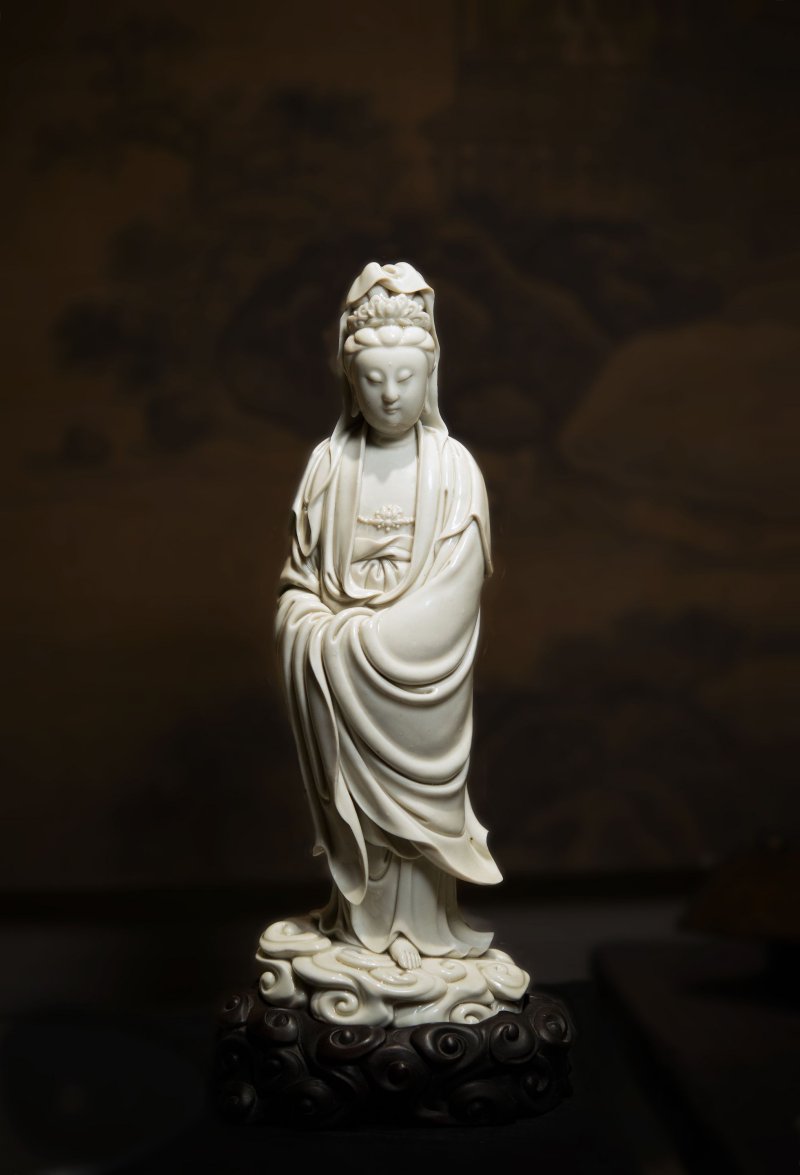

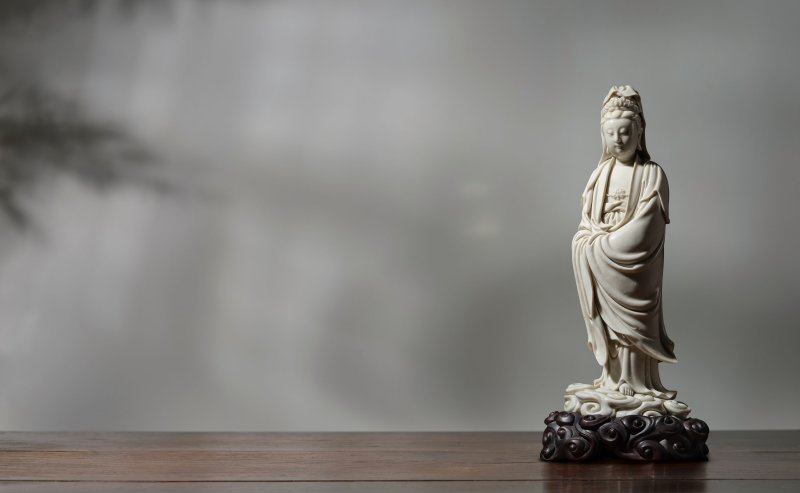
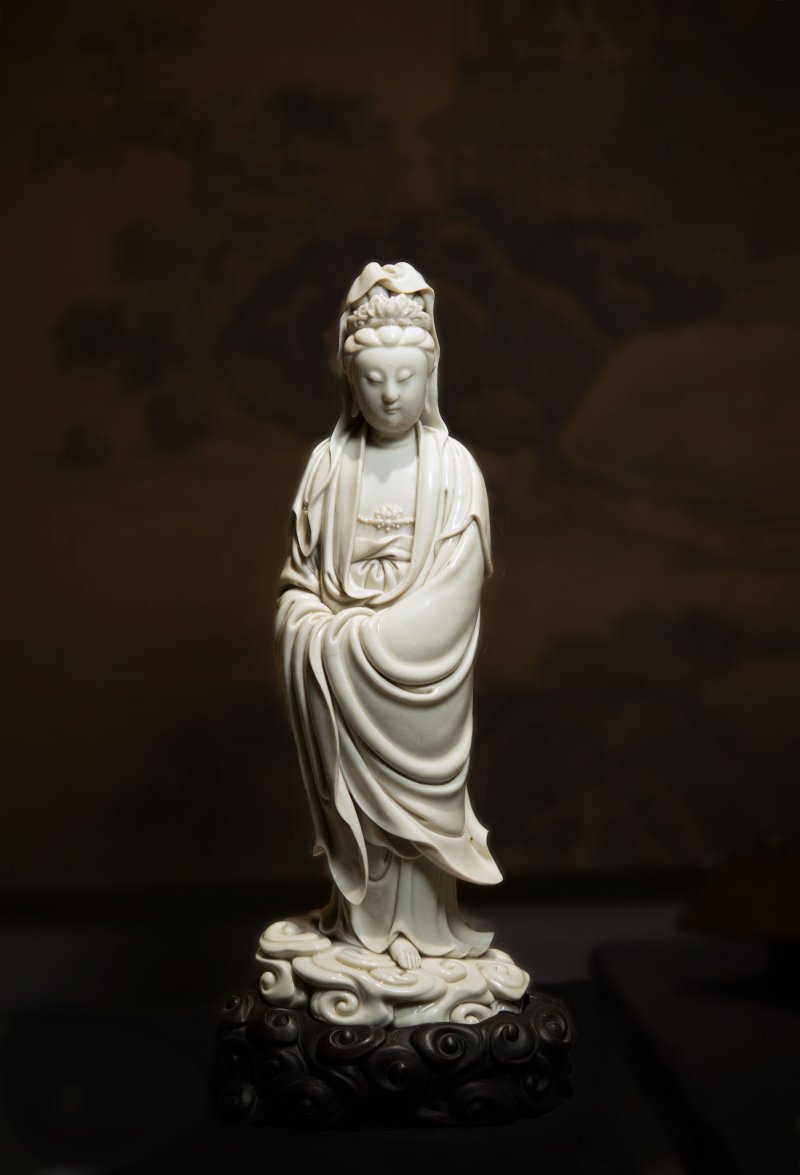
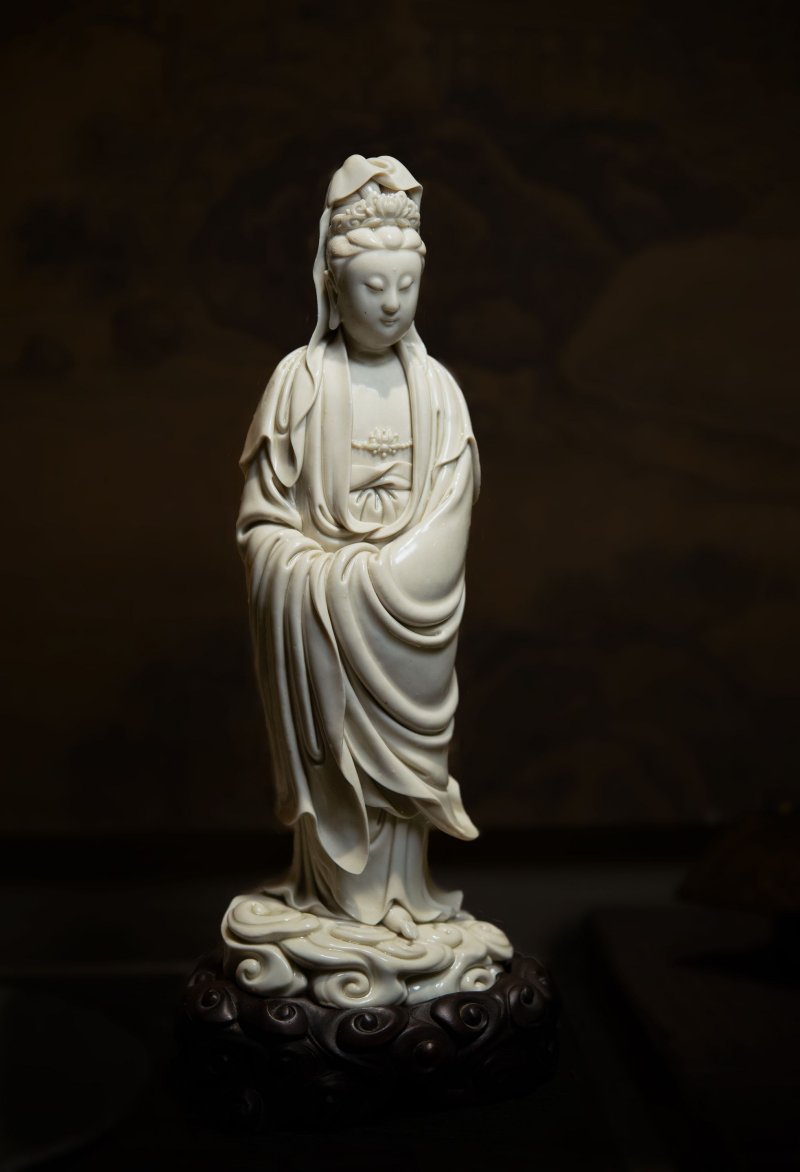
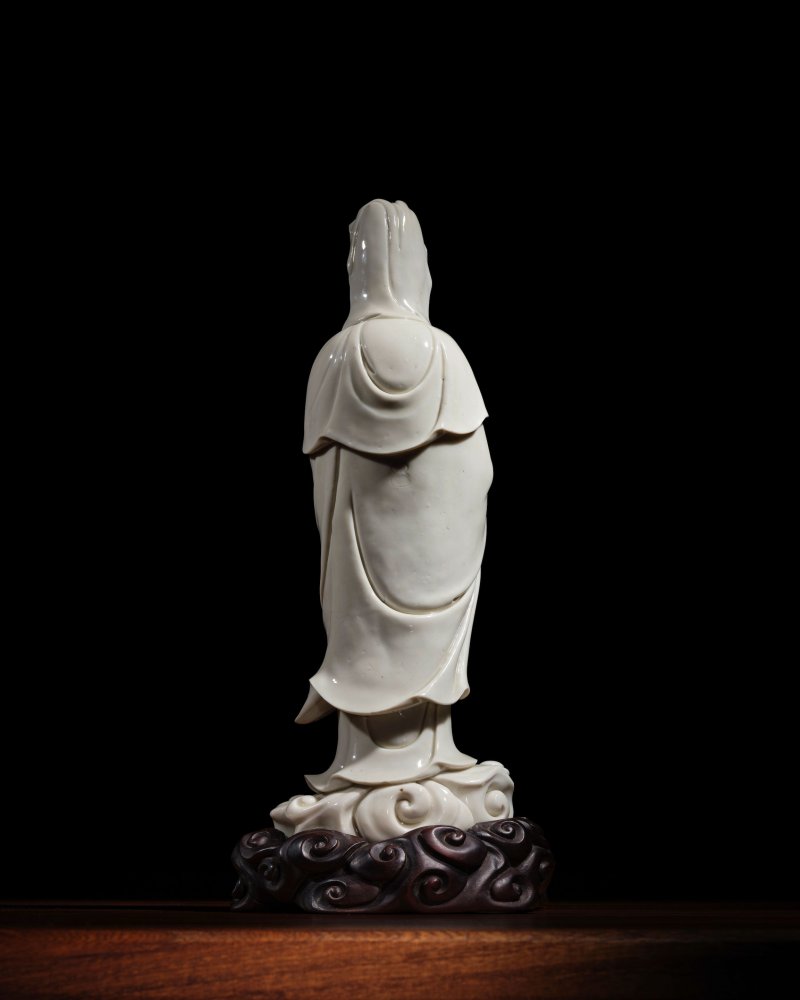
Lot 105 明十七世紀初 德化白釉祥雲觀音立像 | AN IMPORTANT DEHUA STANDING FIGURE OF GUANYIN
落槌价
预展中
成交价
预展中
| 拍卖公司 | 邦瀚斯 |
|---|---|
| 拍卖时间 | 2026年10月28日 |
拍品信息
拍品名称
明十七世紀初 德化白釉祥雲觀音立像 | AN IMPORTANT DEHUA STANDING FIGURE OF GUANYIN
年代
Impressed He Chaozong mark, Ming Dynasty, early 17th century
起拍价
HKD 2,000,000
估值区间
HKD 2000000 - 3000000
尺寸
未知
品相
未知
更多信息
Impressed He Chaozong mark, Ming Dynasty, early 17th century
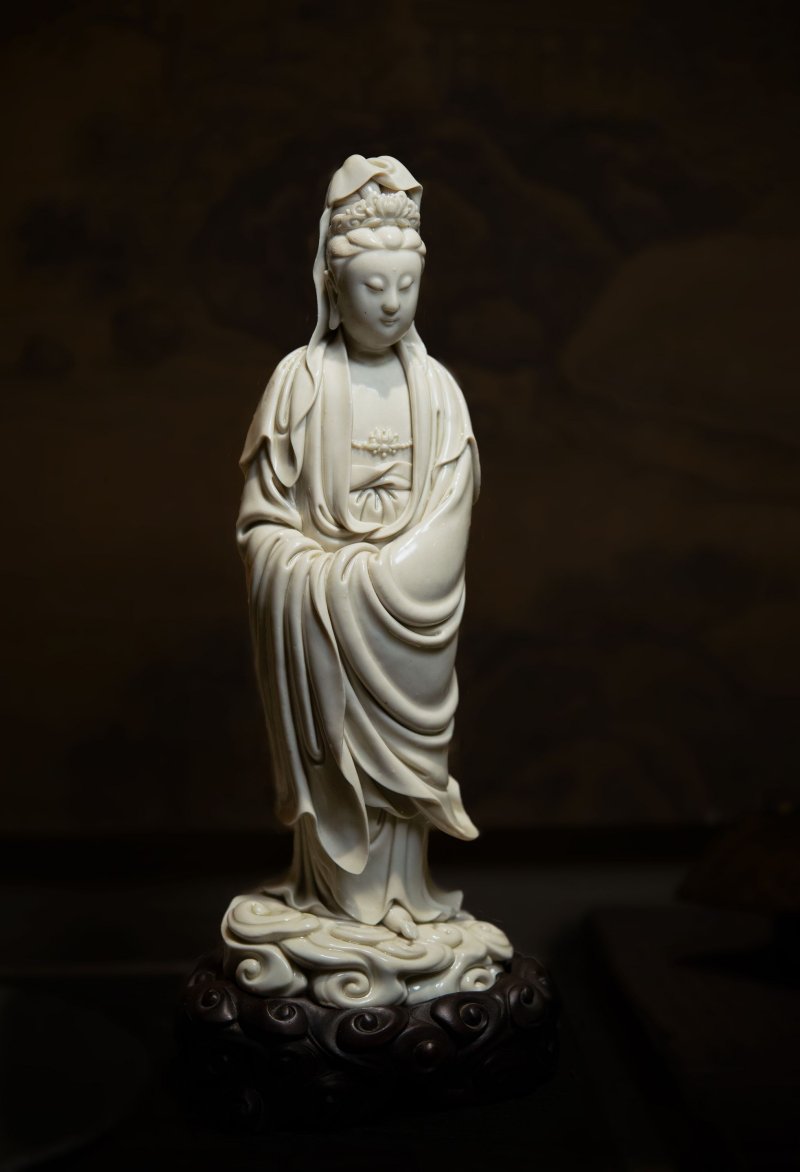
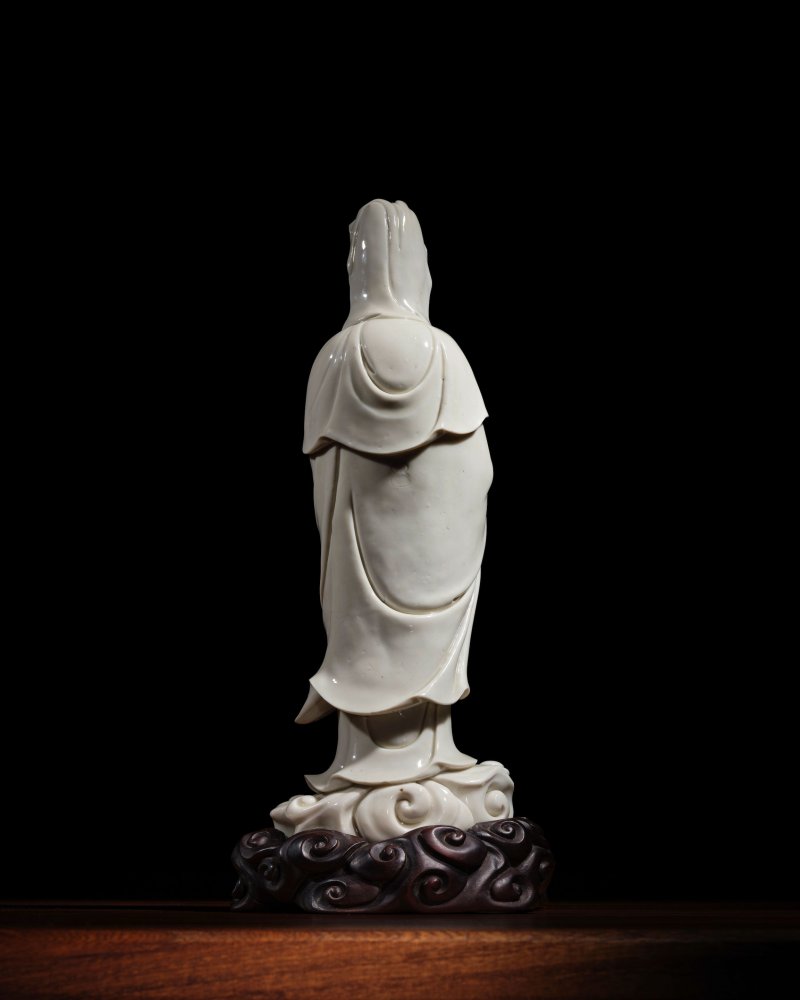
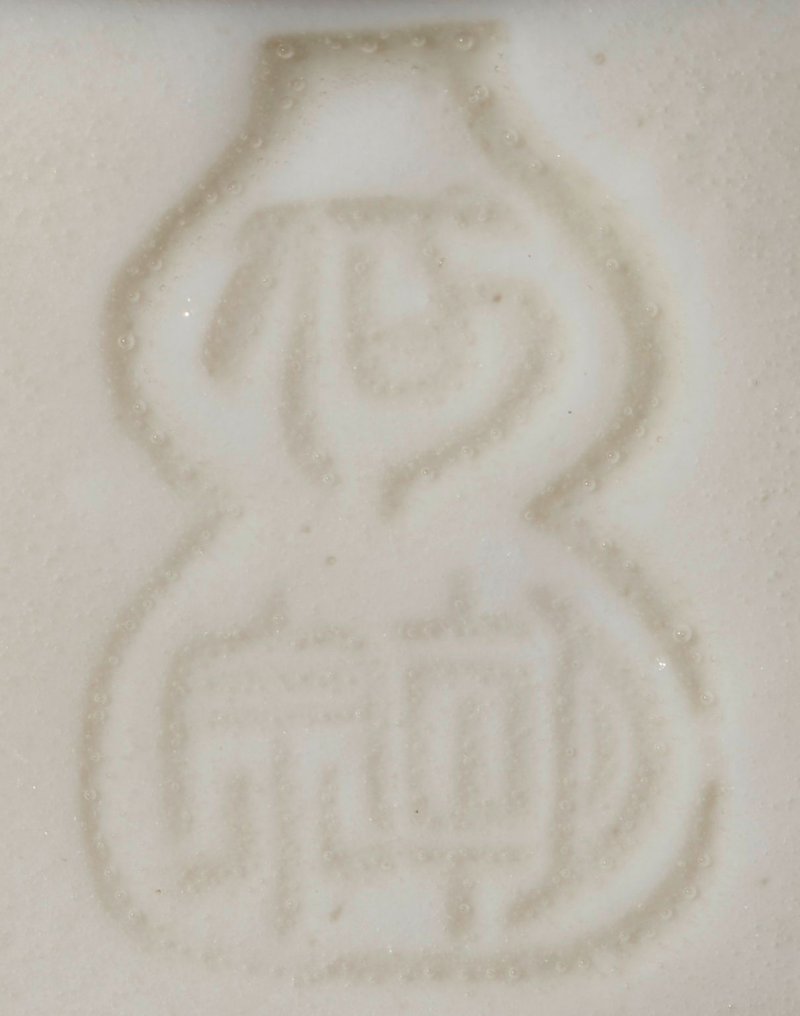
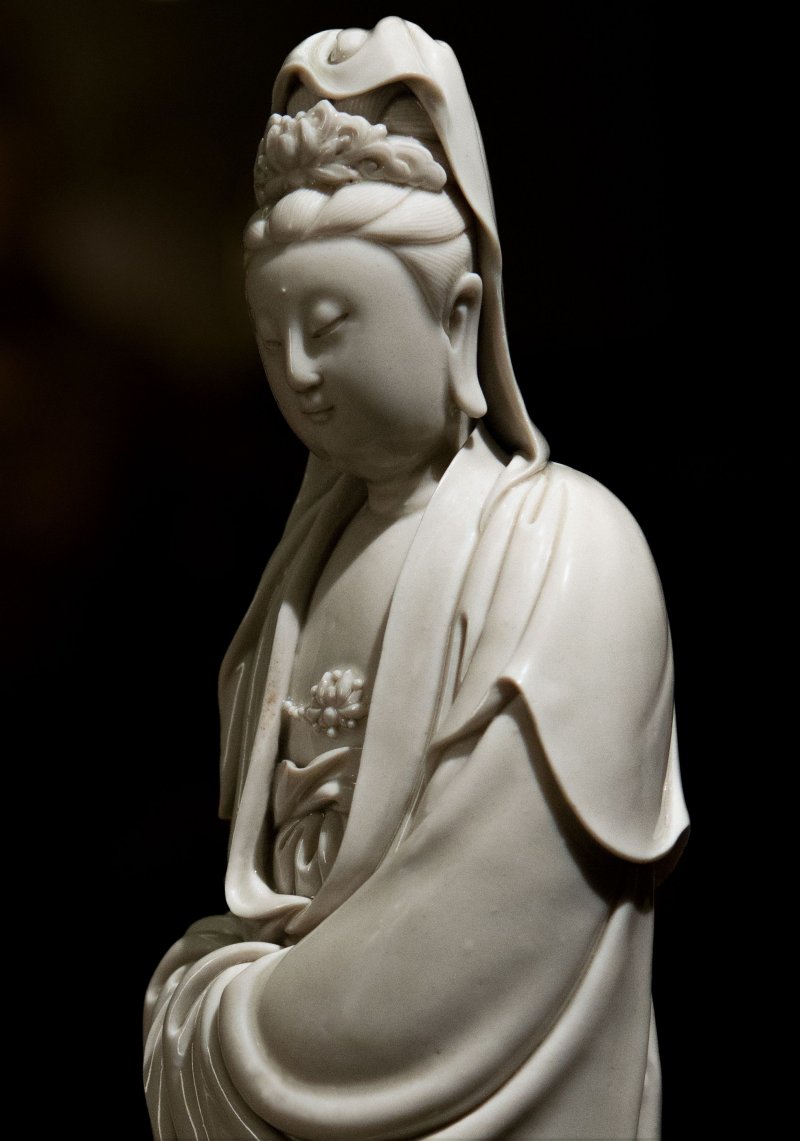
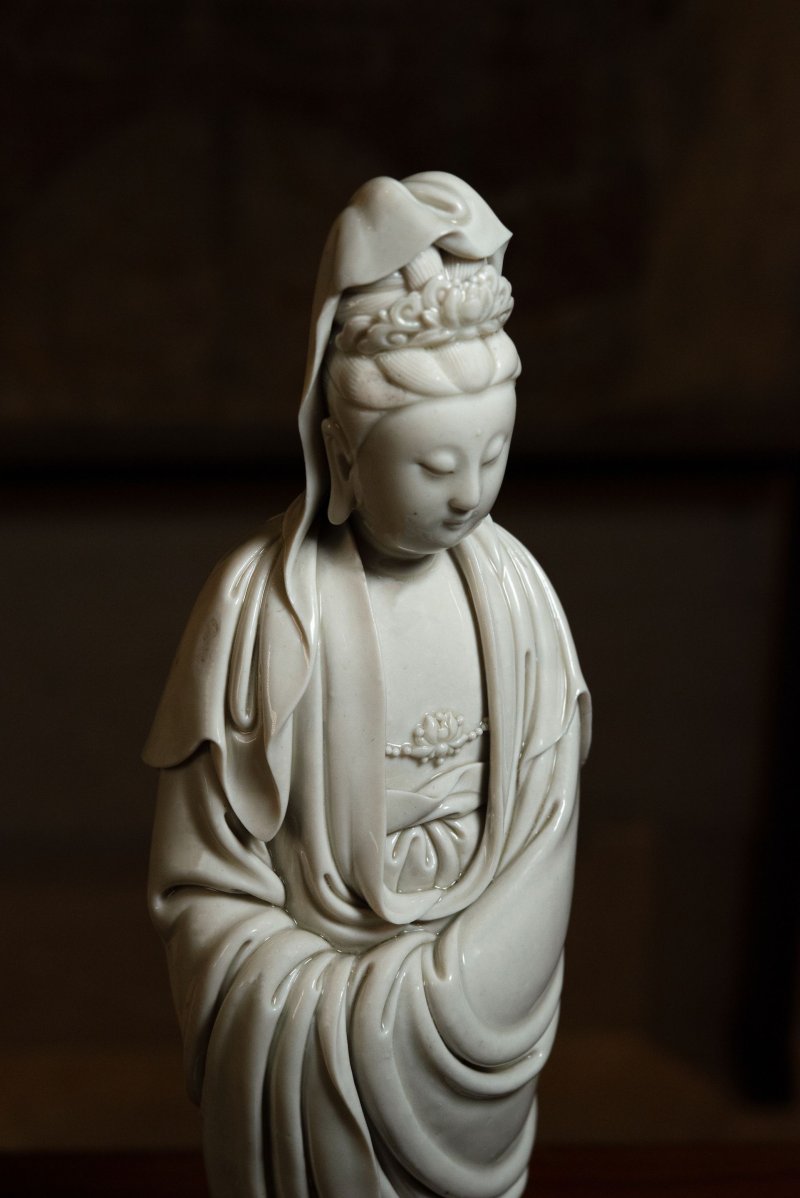
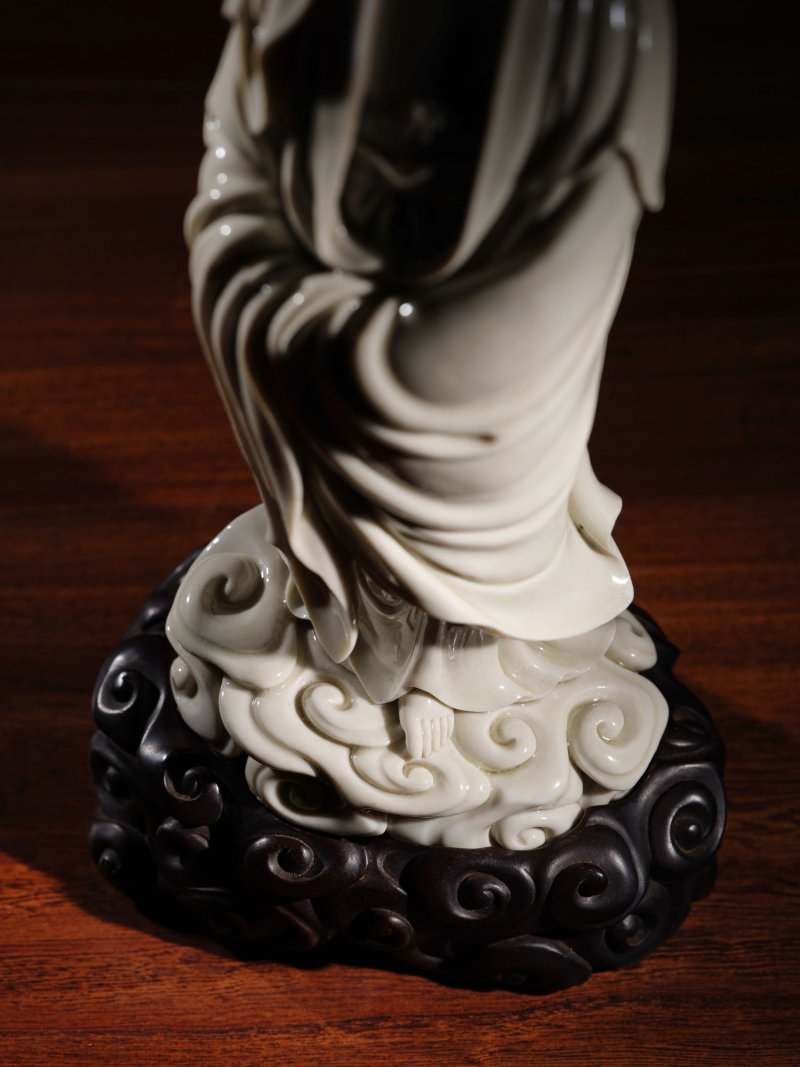
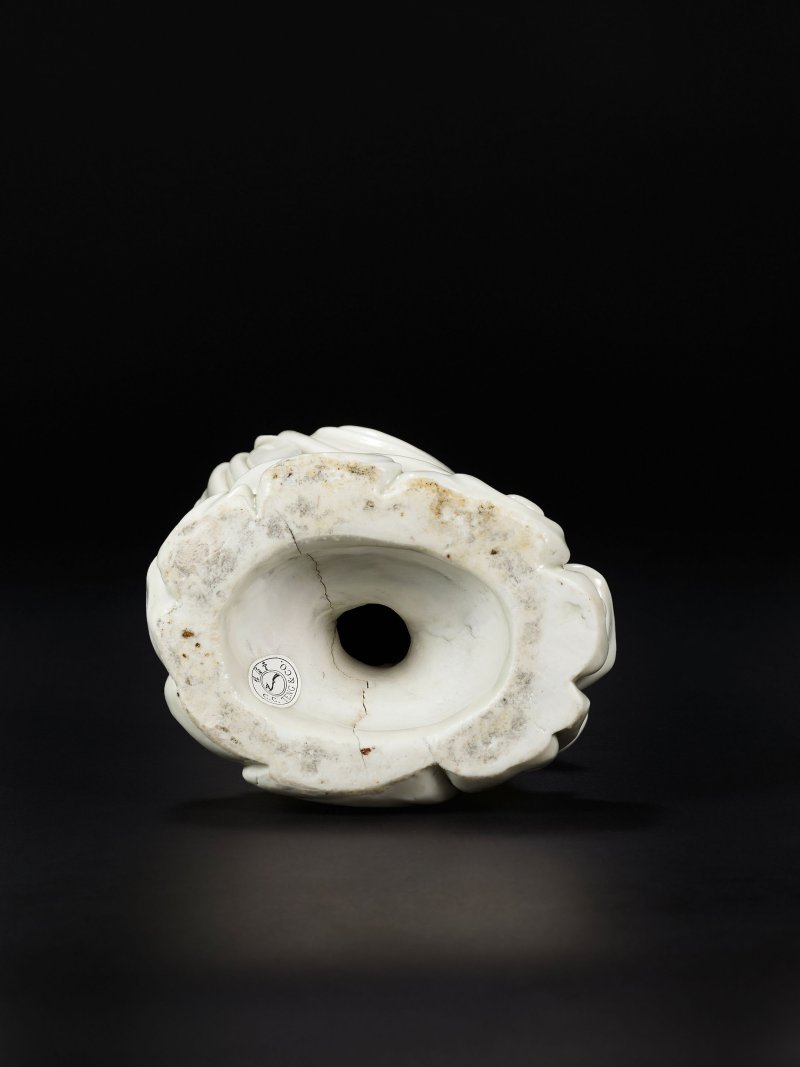
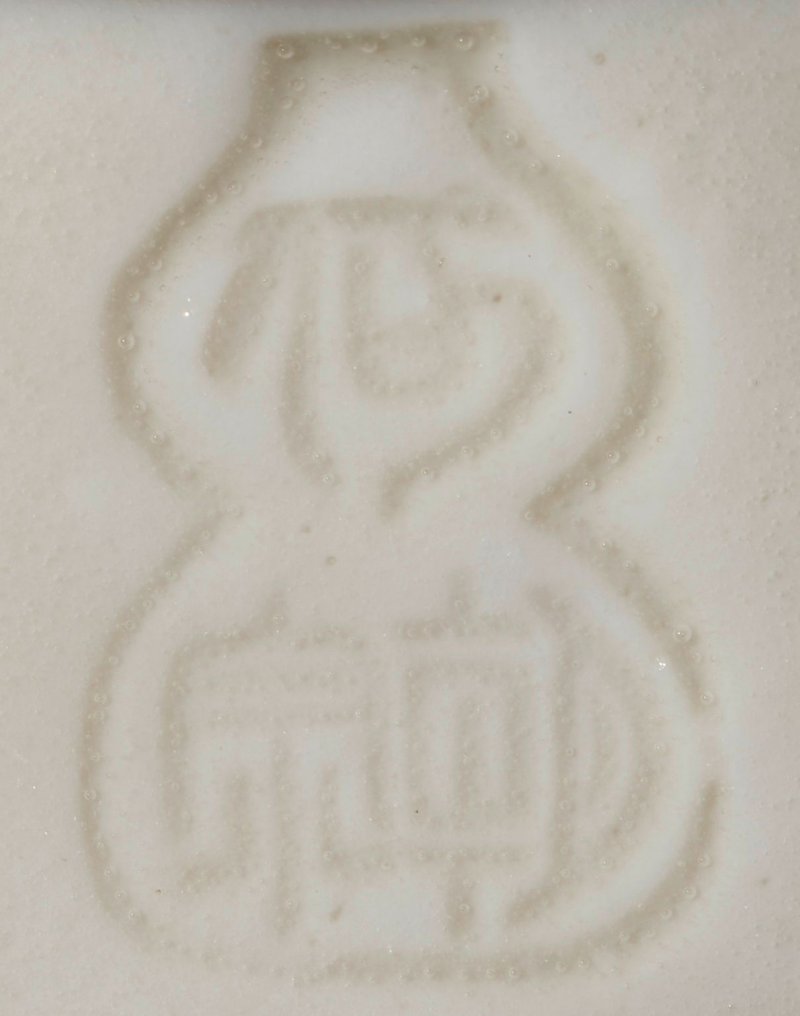
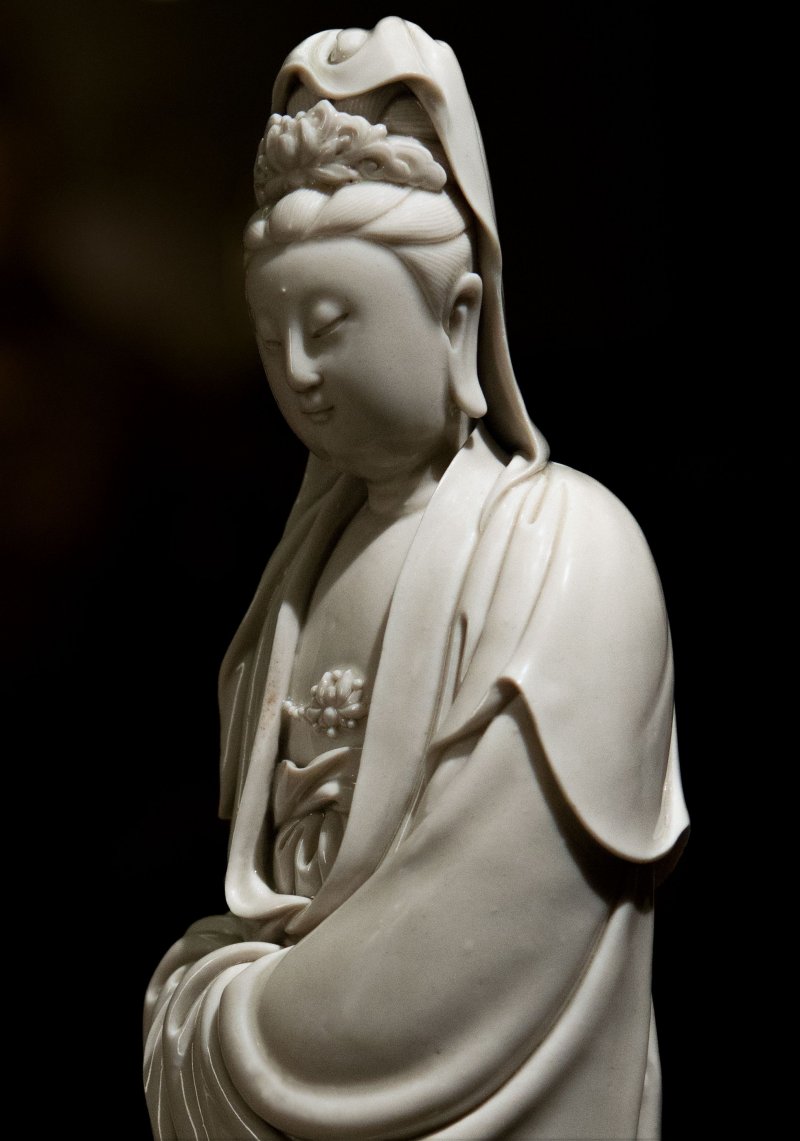
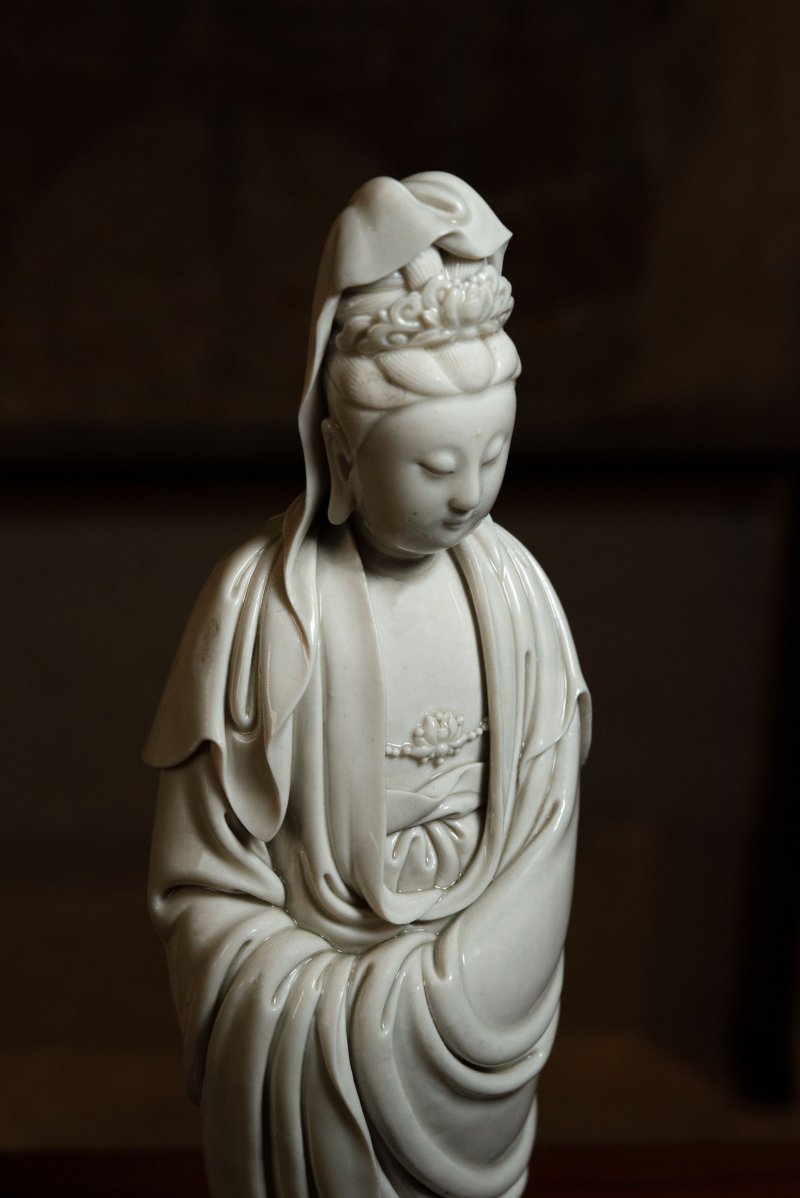
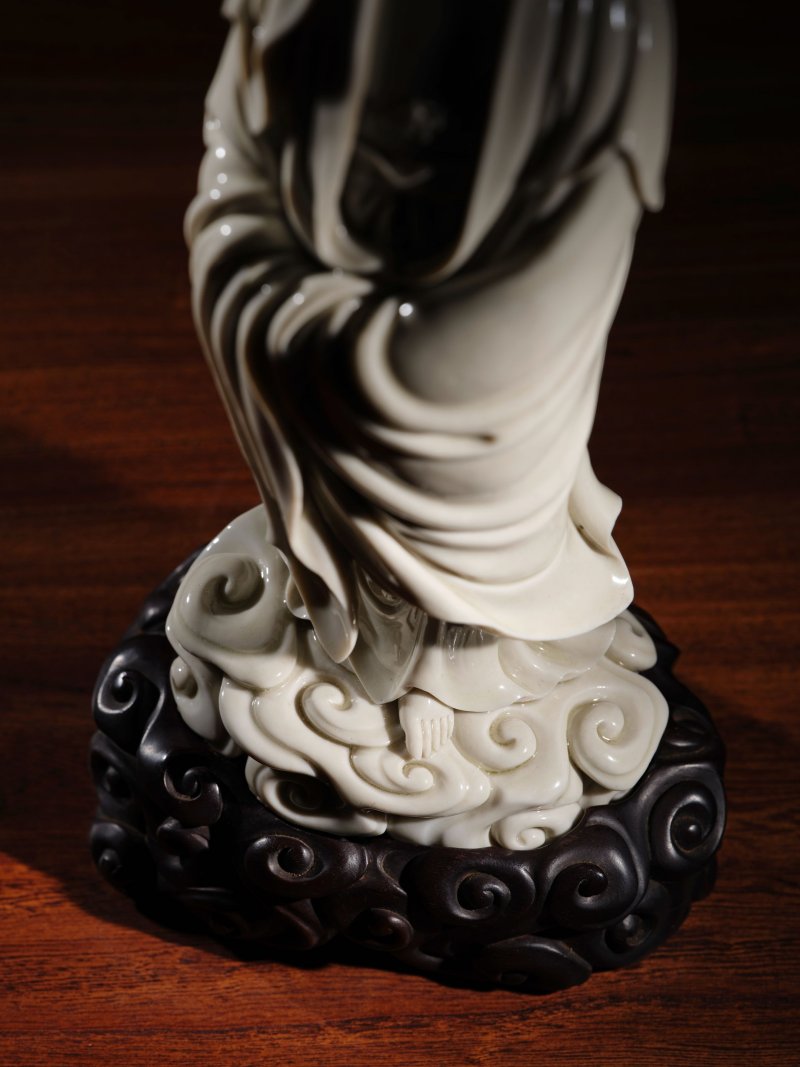
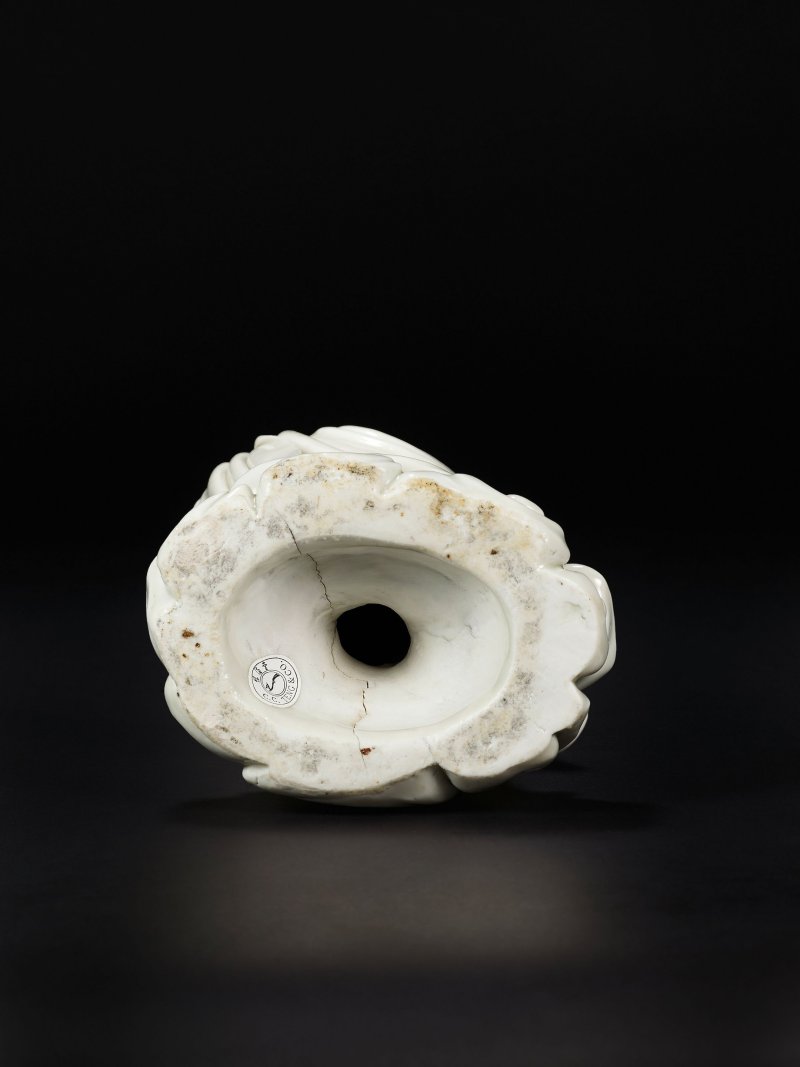
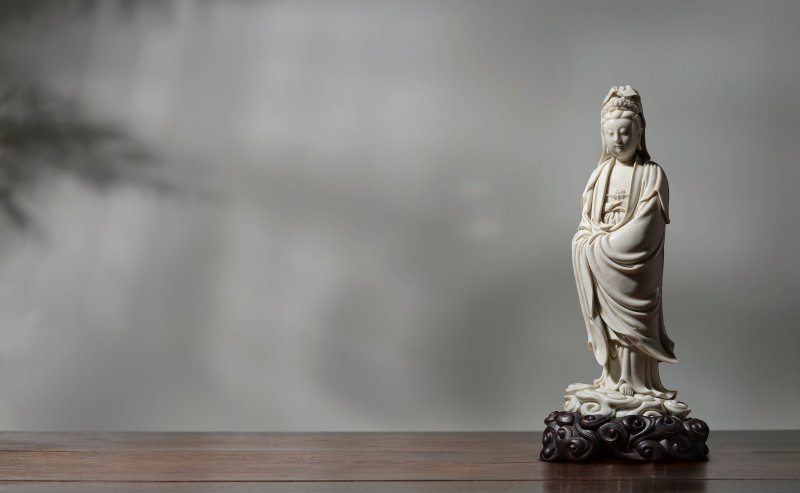
Exquisitely modelled standing in a poised, dignified posture atop a base of deeply carved, swirling wave and cloud scrolls, the Bodhisattva portrayed with her head inclined slightly forward in serene contemplation, her face sculpted with a quiet, introspective beauty featuring softly downcast, almond-shaped eyes set beneath subtle, arched brows, a delicate nose, and a compassionate smile framed by long pendulous earlobes. Her hair is gathered high into a coiled chignon behind a hairpin, gracefully draped beneath a hooded cowl falling softly over her shoulders, her body clad in heavy, voluminous robes opening at the chest to reveal a delicate beaded necklace centred by a lotus bloom, her hands are concealed in front beneath the cascading, rhythmically carved sleeves of her outer cloak, which drapes in long, fluid folds pooling around her feet—one left exposed—resting upon the billowing base, covered in an exceptionally vitreous, lustrous ivory-white glaze of even tone, which pools softly to a warm cream in the deep recesses of the drapery, with the back impressed with a He Chaozong double-gourd seal mark, fitted wood stand, fitted box.
38cm (15in) high (3).
Footnotes
明十七世紀初 德化白釉祥雲觀音立像
「何朝宗」款
An English private collection
Christie's London, 22 April 1991, lot 22
XianJu Shuzhai Collection, 1992
Acquired in 2005
C.C.Teng & Co., Taipei, 1992 (Calendar)
英國私人收藏
佳士得倫敦 ,1991年4月22日,拍品編號22
閒居書齋收藏,1992年
2005年購藏
慎德堂,台北,1992年(月曆)
A firm chronological reference for dating figures of this precise model and stylistic group to the late Wanli period (c. 1619) is provided by a dated example bearing a cyclical inscription corresponding to the year (1619), published by J.Ayers, , New York, 2002, pl.25.
Compare a Dehua figure of Guanyin,Ming dynasty, with a nearly identical mark, executed with the exact same calligraphic script and a distinctive gap on the right border of the seal impression, as well as other closely related technical mastery including the fluid cascading garments, upturned collars, tight knots across chest below a similar lotus embellishment, in the Qing Court collection and formerly placed at the Supreme Chamber for Cultivating Harmony() of The Palace of Tranquil Longevity(), and now preserved in the Palace Museum, Beijing, in the Palace Museum, Beijing, illustrated in Dehua Wares Collected by the Palace Museum I, Beijing, 2016, pl.10.
See also a Dehua figure of Guanyin with a mark, Late Ming dynasty, from the collection of George Salting (1835-1909), and now housed at the Victoria & Albert Museum, London (acc.no. C.546-1910), published in P.J. Donnelly, , London, 1969, pl.49. The rendition of the superb fluid -shaped clouds is very similar on the V&A example and the present lot, whilst other refined differentiating details demonstrate the hand of the same master, to speak on one such example – in the V&A figure the sash is tightly knotted in the centre beautifully forming the rippled folds of the fabric; and in the present example, the sash is so tight as for the knot to disappear into the folds – a superb variation making each such figure a unique masterpiece.
Dehua figures of Guanyin represent one of the crowning achievements of Chinese ceramic sculpture. Revered across East Asia as the Goddess of Mercy and Bodhisattva of Compassion, Guanyin was frequently depicted standing on clouds, symbolising her celestial manifestation and her ability to traverse the mortal world to grant salvation. The master carvers at the Fujian kilns were uniquely skilled in transforming the dense white porcelain clay into fluid, silk-like drapery, a tradition spearheaded by legendary sculptor - He Chaozong. The present example stands as a superb testament to his superb workmanship, demonstrating a flawless synthesis of technical mastery, material purity, and divine tranquillity.
Exquisitely modelled standing atop a base of swirling, sculpted cloud scrolls, this important Guanyin embodies the serene elegance and tactile refinement characteristic of the finest Dehua porcelain figure. The Bodhisattva is portrayed standing in a poised, dignified posture, her hands gently folded beneath the cascading sleeves of her heavy, voluminous robes. The drapery is rendered with extraordinary fluidity, sweeping around her body in soft, rhythmic folds that pool around her feet before breaking into gentle ripples across the billowing cloud base. Her head is inclined slightly forward, framed by long, well-defined earlobes and a cowl draped gracefully over a high, coiled chignon secured with a hairpin. The face is sculpted with a quiet, introspective beauty, featuring downcast, almond-shaped eyes beneath softly arched brows, a delicate nose, and a subtle, compassionate smile that imbues the work with profound spiritual warmth. The entire figure is covered in an exceptionally lustrous, warm ivory-white glaze of even tone and vitreous clarity, which pools softly within the deep recesses of the drapery to emphasise the crisp sculptural definition of the robes and the soft contours of the face.
可見與本拍品同型同風格之造像,其紀年標桿可參考一尊帶「己未年」(明萬曆四十七年,1619年)干支銘款之立像,著錄於約翰·艾爾斯(J. Ayers)著《Blanc de Chine: Divine Images in Porcelain》,紐約,2002年,圖版25。
另可比較清宮舊藏一尊明代德化白釉觀音立像,原陳設於寧壽宮養和精舍,現藏於北京故宮博物院,著錄於《故宮博物院藏德化窯瓷器(上)》,北京,2016年,圖版10。該例背後亦鈐有「何朝宗」款,其印款書法結體與本品如出一轍,右側邊框更帶有同一處極為獨特之缺口痕跡,足證兩者係出自同一方印章鈐印。此外,兩者造型以及大小甚至雲紋台尺寸皆高度一致,其流暢層垂之衣褶、翻領細節,以及胸前結於蓮花飾物下方之緊湊紐結等極爲相似,顯見兩者應為同期捏塑燒製之傑作。
另可參考英國George Salting(1835-1909年)舊藏一尊明末德化白釉「何朝宗印」款觀音立像,現藏於倫敦維多利亞與阿爾伯特博物館(館藏編號:C.546-1910),著錄於P.J. Donnelly著《Blanc de Chine: The Porcelain of Tehua in Fukien》,倫敦,1969年,圖版49。該V&A藏例與本品於祥雲座之靈芝狀雲氣紋雕刻上極為相似;而其他精細微妙之工藝差異,更彰顯出出自同一宗師手筆之獨特匠心——例如緊結衣帶,將布料之漣漪褶皺完美呈現;而本品之衣帶則因紮得極緊,使得衣結隱於褶皺之中——此等精妙之變化,使每一尊造像皆成為獨一無二之絕世傑作。
德化觀音造像代表了中國陶瓷雕塑的最高成就之一。觀音作為大慈大悲之觀世音菩薩,於東亞各地備受崇敬,常被塑造成立於祥雲之上之法相,象徵其天界顯化及巡行人間渡化眾生之神通。福建德化窯之雕塑大師,獨具將緻密白瓷土化為行雲流水般絲綢衣褶之絕技,而此一傳統正由一代傳奇宗師何朝宗所奠定。本品即為其出神入化之雕藝完美例證,集精湛技藝、材質純淨與神聖寧靜於一身。
此尊極具份量之觀音像雕刻精絕,立於翻騰之祥雲座上,盡顯頂級德化瓷塑之祥和雅致與溫潤質感。菩薩呈立姿,神態端莊,雙手拱袖交疊於寬大重厚之衣袍內。衣紋線條流暢無比,沿身軀優雅延伸,層層垂墜,於足下匯聚成柔和之褶皺,進而於滾滾祥雲之上舒展為綿延之波紋。觀音頭部微頷,雙耳垂肩,髮髻高聳並以髮簪固定,頭巾優雅披拂於上。面相端莊靜謐,呈現內省之美,雙目微闔,眉如新月,鼻樑秀挺,唇角含笑,流露出深沉慈悲之精神溫度。通體罩施極具光澤之象牙白釉,釉質溫潤,色澤均勻,光潔如玉,深垂之衣褶凹處聚釉微厚,更烘托出衣紋之立體線條與面龐之柔和輪廓。
Exquisitely modelled standing in a poised, dignified posture atop a base of deeply carved, swirling wave and cloud scrolls, the Bodhisattva portrayed with her head inclined slightly forward in serene contemplation, her face sculpted with a quiet, introspective beauty featuring softly downcast, almond-shaped eyes set beneath subtle, arched brows, a delicate nose, and a compassionate smile framed by long pendulous earlobes. Her hair is gathered high into a coiled chignon behind a hairpin, gracefully draped beneath a hooded cowl falling softly over her shoulders, her body clad in heavy, voluminous robes opening at the chest to reveal a delicate beaded necklace centred by a lotus bloom, her hands are concealed in front beneath the cascading, rhythmically carved sleeves of her outer cloak, which drapes in long, fluid folds pooling around her feet—one left exposed—resting upon the billowing base, covered in an exceptionally vitreous, lustrous ivory-white glaze of even tone, which pools softly to a warm cream in the deep recesses of the drapery, with the back impressed with a He Chaozong double-gourd seal mark, fitted wood stand, fitted box.
38cm (15in) high (3).
Footnotes
明十七世紀初 德化白釉祥雲觀音立像
「何朝宗」款
An English private collection
Christie's London, 22 April 1991, lot 22
XianJu Shuzhai Collection, 1992
Acquired in 2005
C.C.Teng & Co., Taipei, 1992 (Calendar)
英國私人收藏
佳士得倫敦 ,1991年4月22日,拍品編號22
閒居書齋收藏,1992年
2005年購藏
慎德堂,台北,1992年(月曆)
A firm chronological reference for dating figures of this precise model and stylistic group to the late Wanli period (c. 1619) is provided by a dated example bearing a cyclical inscription corresponding to the year (1619), published by J.Ayers, , New York, 2002, pl.25.
Compare a Dehua figure of Guanyin,Ming dynasty, with a nearly identical mark, executed with the exact same calligraphic script and a distinctive gap on the right border of the seal impression, as well as other closely related technical mastery including the fluid cascading garments, upturned collars, tight knots across chest below a similar lotus embellishment, in the Qing Court collection and formerly placed at the Supreme Chamber for Cultivating Harmony() of The Palace of Tranquil Longevity(), and now preserved in the Palace Museum, Beijing, in the Palace Museum, Beijing, illustrated in Dehua Wares Collected by the Palace Museum I, Beijing, 2016, pl.10.
See also a Dehua figure of Guanyin with a mark, Late Ming dynasty, from the collection of George Salting (1835-1909), and now housed at the Victoria & Albert Museum, London (acc.no. C.546-1910), published in P.J. Donnelly, , London, 1969, pl.49. The rendition of the superb fluid -shaped clouds is very similar on the V&A example and the present lot, whilst other refined differentiating details demonstrate the hand of the same master, to speak on one such example – in the V&A figure the sash is tightly knotted in the centre beautifully forming the rippled folds of the fabric; and in the present example, the sash is so tight as for the knot to disappear into the folds – a superb variation making each such figure a unique masterpiece.
Dehua figures of Guanyin represent one of the crowning achievements of Chinese ceramic sculpture. Revered across East Asia as the Goddess of Mercy and Bodhisattva of Compassion, Guanyin was frequently depicted standing on clouds, symbolising her celestial manifestation and her ability to traverse the mortal world to grant salvation. The master carvers at the Fujian kilns were uniquely skilled in transforming the dense white porcelain clay into fluid, silk-like drapery, a tradition spearheaded by legendary sculptor - He Chaozong. The present example stands as a superb testament to his superb workmanship, demonstrating a flawless synthesis of technical mastery, material purity, and divine tranquillity.
Exquisitely modelled standing atop a base of swirling, sculpted cloud scrolls, this important Guanyin embodies the serene elegance and tactile refinement characteristic of the finest Dehua porcelain figure. The Bodhisattva is portrayed standing in a poised, dignified posture, her hands gently folded beneath the cascading sleeves of her heavy, voluminous robes. The drapery is rendered with extraordinary fluidity, sweeping around her body in soft, rhythmic folds that pool around her feet before breaking into gentle ripples across the billowing cloud base. Her head is inclined slightly forward, framed by long, well-defined earlobes and a cowl draped gracefully over a high, coiled chignon secured with a hairpin. The face is sculpted with a quiet, introspective beauty, featuring downcast, almond-shaped eyes beneath softly arched brows, a delicate nose, and a subtle, compassionate smile that imbues the work with profound spiritual warmth. The entire figure is covered in an exceptionally lustrous, warm ivory-white glaze of even tone and vitreous clarity, which pools softly within the deep recesses of the drapery to emphasise the crisp sculptural definition of the robes and the soft contours of the face.
可見與本拍品同型同風格之造像,其紀年標桿可參考一尊帶「己未年」(明萬曆四十七年,1619年)干支銘款之立像,著錄於約翰·艾爾斯(J. Ayers)著《Blanc de Chine: Divine Images in Porcelain》,紐約,2002年,圖版25。
另可比較清宮舊藏一尊明代德化白釉觀音立像,原陳設於寧壽宮養和精舍,現藏於北京故宮博物院,著錄於《故宮博物院藏德化窯瓷器(上)》,北京,2016年,圖版10。該例背後亦鈐有「何朝宗」款,其印款書法結體與本品如出一轍,右側邊框更帶有同一處極為獨特之缺口痕跡,足證兩者係出自同一方印章鈐印。此外,兩者造型以及大小甚至雲紋台尺寸皆高度一致,其流暢層垂之衣褶、翻領細節,以及胸前結於蓮花飾物下方之緊湊紐結等極爲相似,顯見兩者應為同期捏塑燒製之傑作。
另可參考英國George Salting(1835-1909年)舊藏一尊明末德化白釉「何朝宗印」款觀音立像,現藏於倫敦維多利亞與阿爾伯特博物館(館藏編號:C.546-1910),著錄於P.J. Donnelly著《Blanc de Chine: The Porcelain of Tehua in Fukien》,倫敦,1969年,圖版49。該V&A藏例與本品於祥雲座之靈芝狀雲氣紋雕刻上極為相似;而其他精細微妙之工藝差異,更彰顯出出自同一宗師手筆之獨特匠心——例如緊結衣帶,將布料之漣漪褶皺完美呈現;而本品之衣帶則因紮得極緊,使得衣結隱於褶皺之中——此等精妙之變化,使每一尊造像皆成為獨一無二之絕世傑作。
德化觀音造像代表了中國陶瓷雕塑的最高成就之一。觀音作為大慈大悲之觀世音菩薩,於東亞各地備受崇敬,常被塑造成立於祥雲之上之法相,象徵其天界顯化及巡行人間渡化眾生之神通。福建德化窯之雕塑大師,獨具將緻密白瓷土化為行雲流水般絲綢衣褶之絕技,而此一傳統正由一代傳奇宗師何朝宗所奠定。本品即為其出神入化之雕藝完美例證,集精湛技藝、材質純淨與神聖寧靜於一身。
此尊極具份量之觀音像雕刻精絕,立於翻騰之祥雲座上,盡顯頂級德化瓷塑之祥和雅致與溫潤質感。菩薩呈立姿,神態端莊,雙手拱袖交疊於寬大重厚之衣袍內。衣紋線條流暢無比,沿身軀優雅延伸,層層垂墜,於足下匯聚成柔和之褶皺,進而於滾滾祥雲之上舒展為綿延之波紋。觀音頭部微頷,雙耳垂肩,髮髻高聳並以髮簪固定,頭巾優雅披拂於上。面相端莊靜謐,呈現內省之美,雙目微闔,眉如新月,鼻樑秀挺,唇角含笑,流露出深沉慈悲之精神溫度。通體罩施極具光澤之象牙白釉,釉質溫潤,色澤均勻,光潔如玉,深垂之衣褶凹處聚釉微厚,更烘托出衣紋之立體線條與面龐之柔和輪廓。
常见问题
这件明十七世紀初 德化白釉祥雲觀音立像 | AN IMPORTANT DEHUA STANDING FIGURE OF GUANYIN的成交价是多少?
落槌价为 预展中。 成交价为 预展中。