
拍品信息
拍品名称
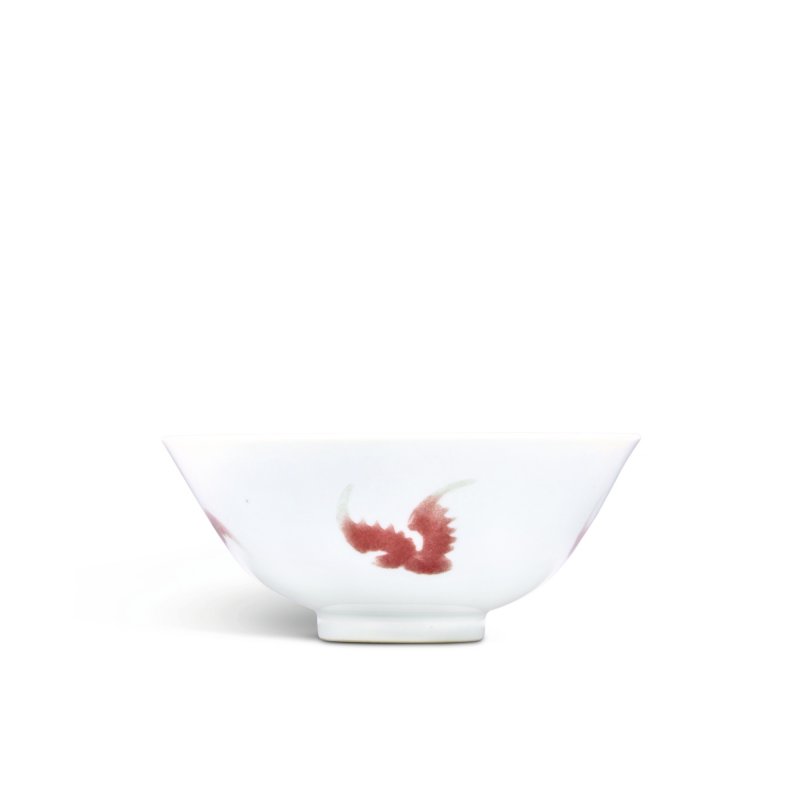
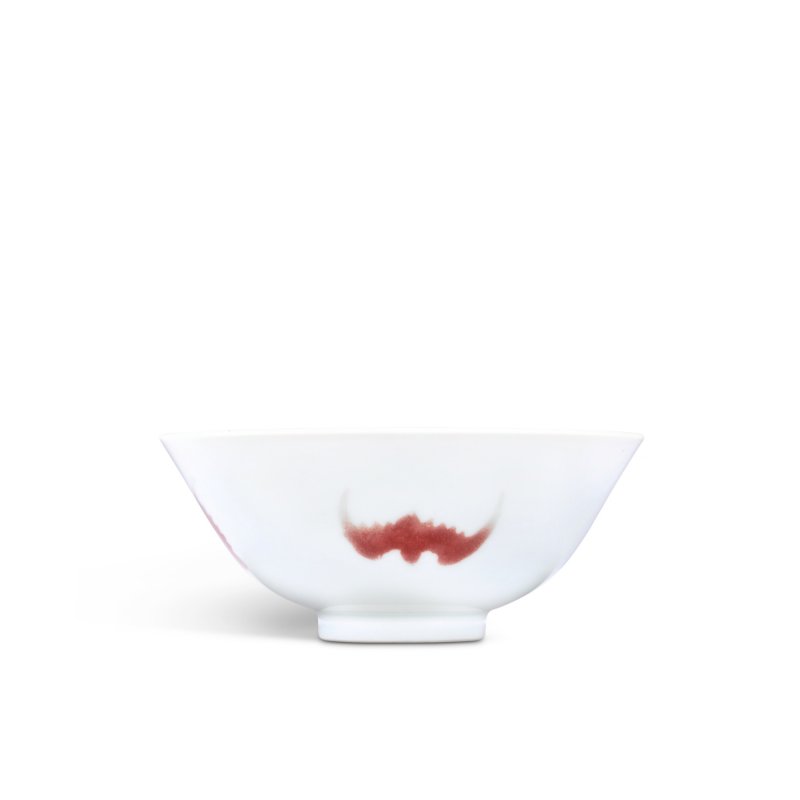
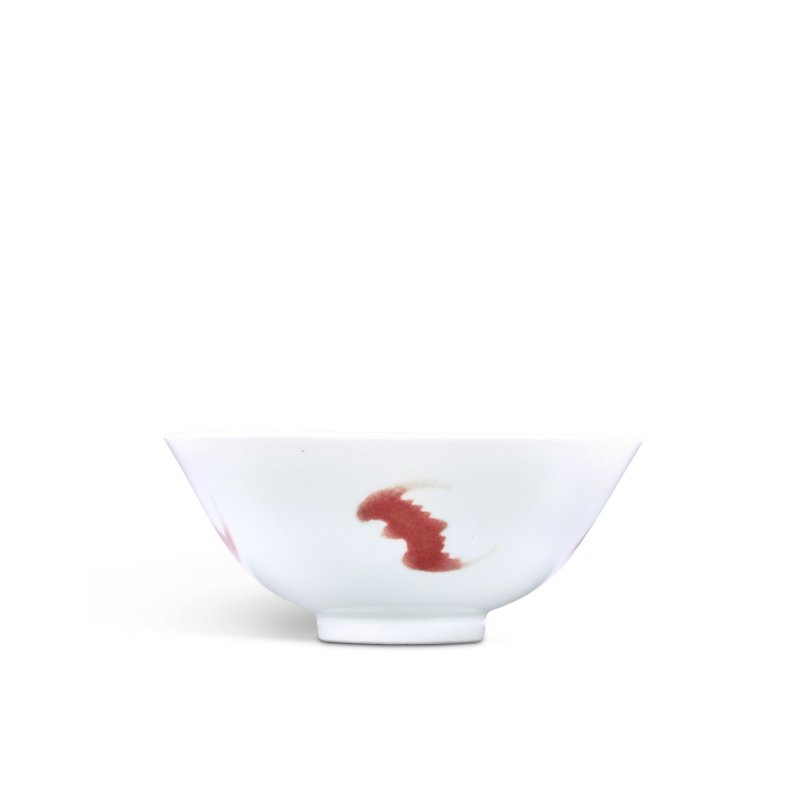
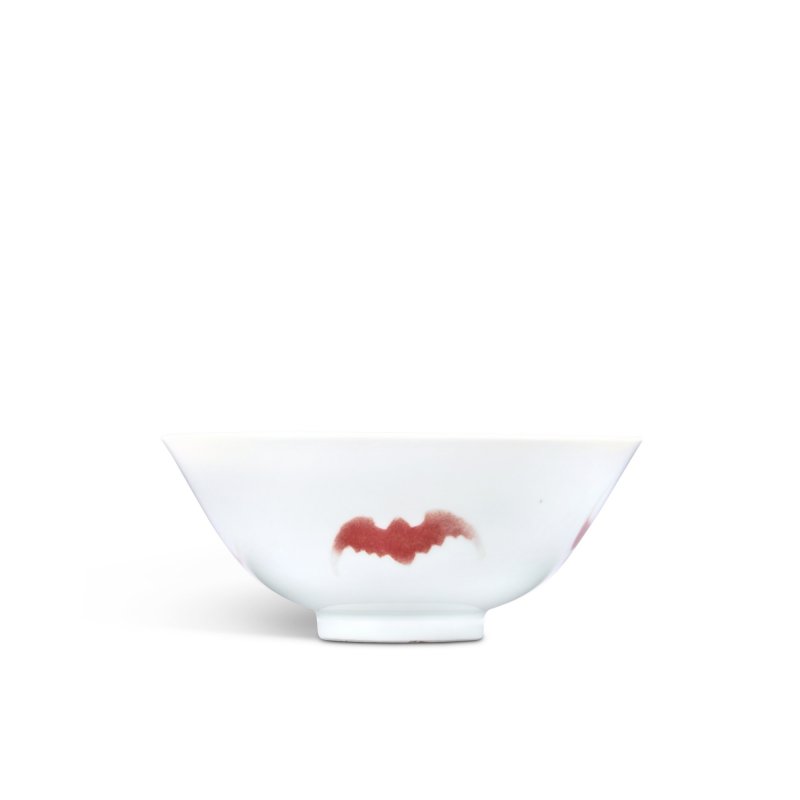
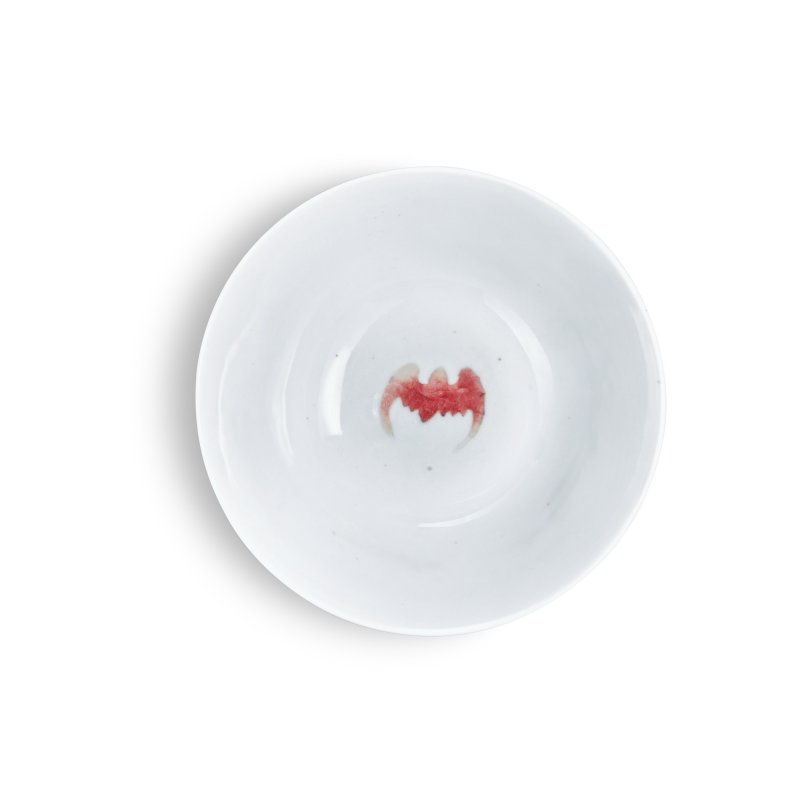
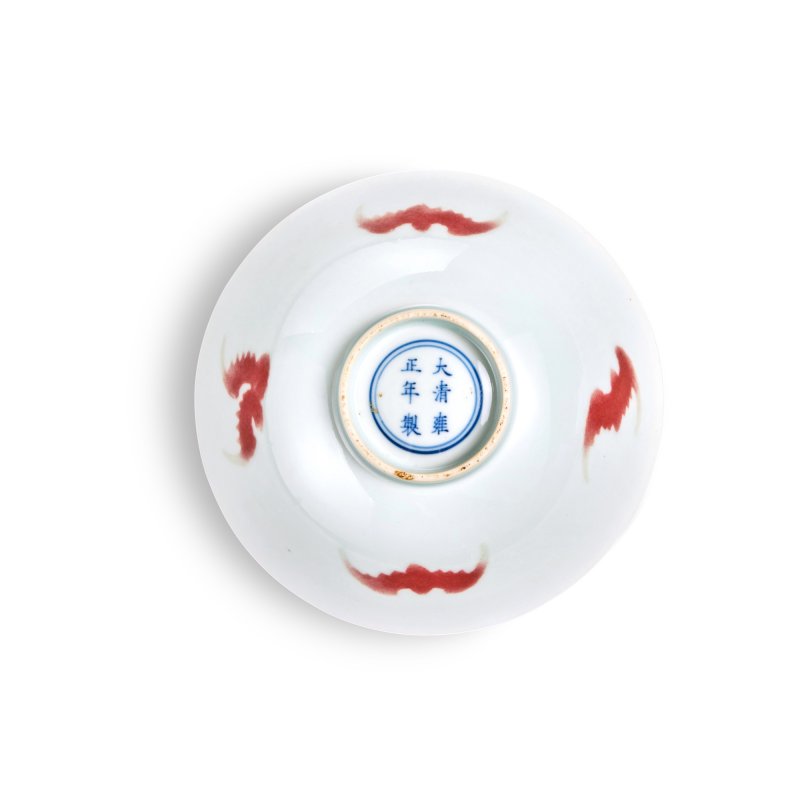
清雍正 釉裏紅五蝠紋盌 《大清雍正年製》款
起拍价
USD 40,000
估值区间
40,000 - 60,000 USD
尺寸
未知
品相
整體品相良好,見少許正常微細磨痕及窰燒瑕疵,包括内壁底部一小處區域見輕微打磨。
更多信息
the base with a six-character mark in underglaze blue within a double circle
Diameter 6 in., 15.2 cm
来源:姚昌復(1884-1963)舊藏
華美協進社,紐約
Parke-Bernet Galleries, Inc.,紐約,1962年12月1日,編號77
图录
说明:Exquisitely decorated with five crimson-red bats in silhouette against a luminous white ground, the present bowl is quintessentially Yongzheng in its restrained elegance, technical sophistication and auspicious design. At once bold and delicately controlled, the composition showcases the extraordinary mastery of the imperial potters in their handling of copper-red glaze, one of the most celebrated and technically demanding achievements in the history of Chinese porcelain. The five bats, wufu, form a rebus for the Five Blessings of longevity, wealth, health, virtue and a peaceful end, imbuing the bowl with layers of auspicious meaning beneath its deceptively simple decoration.
Designs created through copper-red silhouettes originated in the early Ming dynasty and are best known from porcelains of the Xuande (1426-35) period, although the technique had already been developed during the Yongle (1403-24) reign, when silhouettes of animals and fish were combined with underglaze-blue decoration. Largely abandoned thereafter due to its notoriously difficult to achieve, copper-red was revived during the early Kangxi period under the direction of Zang Yingxuan, who was sent to Jingdezhen in 1681 to oversee the rebuilding of the kilns and supervise imperial production. By the Yongzheng period, the technique had been perfected, achieving its finest expression in the richly colored silhouettes of fish, pomegranates and, rarest of all, bats.
This silhouette technique, which makes use of copper-red glaze, possibly sandwiched between layers of clear glaze, differs from the more common method of painting designs in copper-red pigment directly onto the porcelain body before the glaze is applied. When successfully handled, the technique results in intensely red designs that do not allow for the rendering of detail and are therefore ideally suited to the bold graphic clarity of silhouettes.
Compare two identical bowls from the Malcolm McDonald Collection, now in the Oriental Museum, Durham University, illustrated in Ireneus László Legeza, A Descriptive and Illustrated Catalogue of the Malcolm McDonald Collection of Chinese Ceramics in the Gulbenkian Museum of Oriental Art and Archaeology, School of Oriental Studies, University of Durham, London, 1972, pl. LXXVIII, nos. 218 and 219; another identical bowl illustrated in Bo Gyllensvärd, Chinese Ceramics in the Carl Kempe Collection, Stockholm, 1964, pl. 788. For auction examples, see two sold in these rooms, 12th September 2018, lot 14; compare another bowl sold at Christie’s Hong Kong, 1st June 2011, lot 3527.
Diameter 6 in., 15.2 cm
来源:姚昌復(1884-1963)舊藏
華美協進社,紐約
Parke-Bernet Galleries, Inc.,紐約,1962年12月1日,編號77
图录
说明:Exquisitely decorated with five crimson-red bats in silhouette against a luminous white ground, the present bowl is quintessentially Yongzheng in its restrained elegance, technical sophistication and auspicious design. At once bold and delicately controlled, the composition showcases the extraordinary mastery of the imperial potters in their handling of copper-red glaze, one of the most celebrated and technically demanding achievements in the history of Chinese porcelain. The five bats, wufu, form a rebus for the Five Blessings of longevity, wealth, health, virtue and a peaceful end, imbuing the bowl with layers of auspicious meaning beneath its deceptively simple decoration.
Designs created through copper-red silhouettes originated in the early Ming dynasty and are best known from porcelains of the Xuande (1426-35) period, although the technique had already been developed during the Yongle (1403-24) reign, when silhouettes of animals and fish were combined with underglaze-blue decoration. Largely abandoned thereafter due to its notoriously difficult to achieve, copper-red was revived during the early Kangxi period under the direction of Zang Yingxuan, who was sent to Jingdezhen in 1681 to oversee the rebuilding of the kilns and supervise imperial production. By the Yongzheng period, the technique had been perfected, achieving its finest expression in the richly colored silhouettes of fish, pomegranates and, rarest of all, bats.
This silhouette technique, which makes use of copper-red glaze, possibly sandwiched between layers of clear glaze, differs from the more common method of painting designs in copper-red pigment directly onto the porcelain body before the glaze is applied. When successfully handled, the technique results in intensely red designs that do not allow for the rendering of detail and are therefore ideally suited to the bold graphic clarity of silhouettes.
Compare two identical bowls from the Malcolm McDonald Collection, now in the Oriental Museum, Durham University, illustrated in Ireneus László Legeza, A Descriptive and Illustrated Catalogue of the Malcolm McDonald Collection of Chinese Ceramics in the Gulbenkian Museum of Oriental Art and Archaeology, School of Oriental Studies, University of Durham, London, 1972, pl. LXXVIII, nos. 218 and 219; another identical bowl illustrated in Bo Gyllensvärd, Chinese Ceramics in the Carl Kempe Collection, Stockholm, 1964, pl. 788. For auction examples, see two sold in these rooms, 12th September 2018, lot 14; compare another bowl sold at Christie’s Hong Kong, 1st June 2011, lot 3527.
常见问题
拍品的品相状况如何?
整體品相良好,見少許正常微細磨痕及窰燒瑕疵,包括内壁底部一小處區域見輕微打磨。
这件拍品的流传来源是什么?
姚昌復(1884-1963)舊藏
華美協進社,紐約
Parke-Bernet Galleries, Inc.,紐約,1962年12月1日,編號77
图录
華美協進社,紐約
Parke-Bernet Galleries, Inc.,紐約,1962年12月1日,編號77
图录