
Lot 14 清康熙 豆青釉青花釉裏紅花卉紋筆筒 | A BLUE AND WHITE, COPPER-RED AND CELADON BRUSHPOT, BITONG
落槌价
预展中
成交价
预展中
| 拍卖公司 | 邦瀚斯 |
|---|---|
| 拍卖时间 | 2026年11月05日 |
拍品信息
拍品名称
清康熙 豆青釉青花釉裏紅花卉紋筆筒 | A BLUE AND WHITE, COPPER-RED AND CELADON BRUSHPOT, BITONG
年代
Xuande six-character mark, Kangxi
起拍价
GBP 12,000
估值区间
GBP 12000 - 15000
尺寸
未知
品相
未知
更多信息
Xuande six-character mark, Kangxi
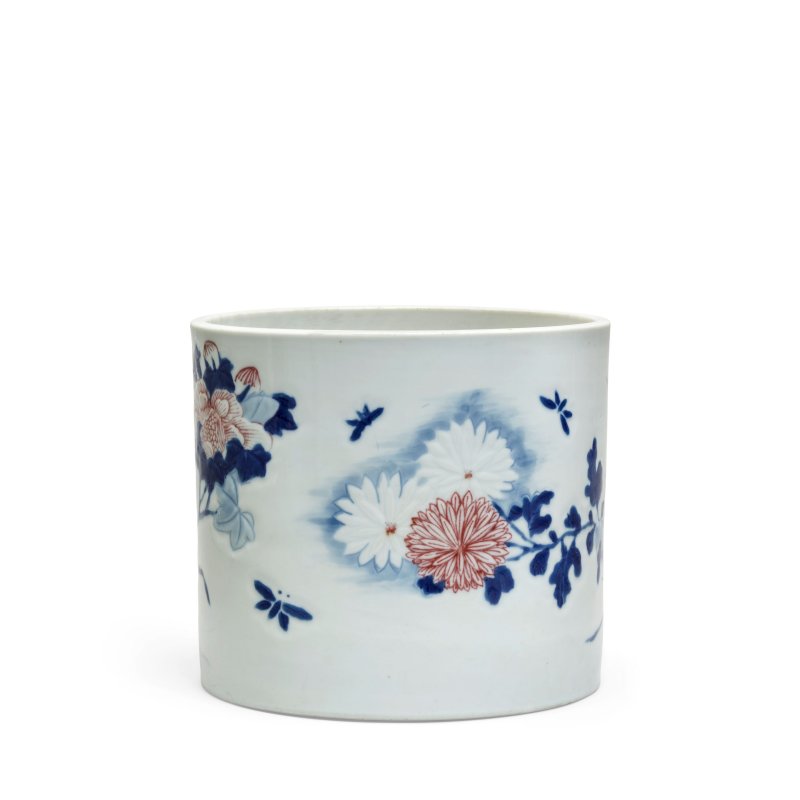
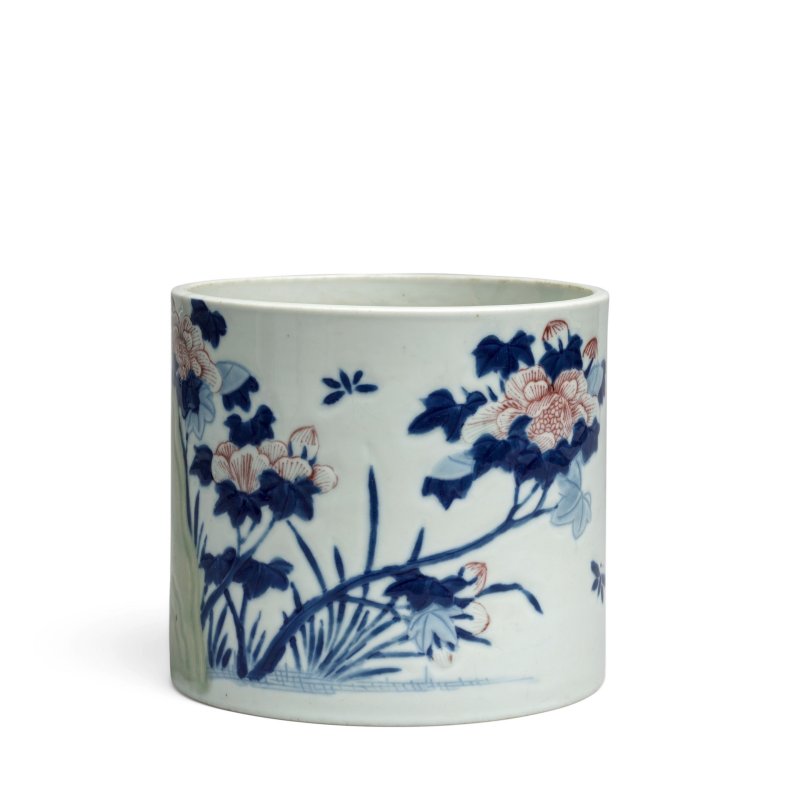
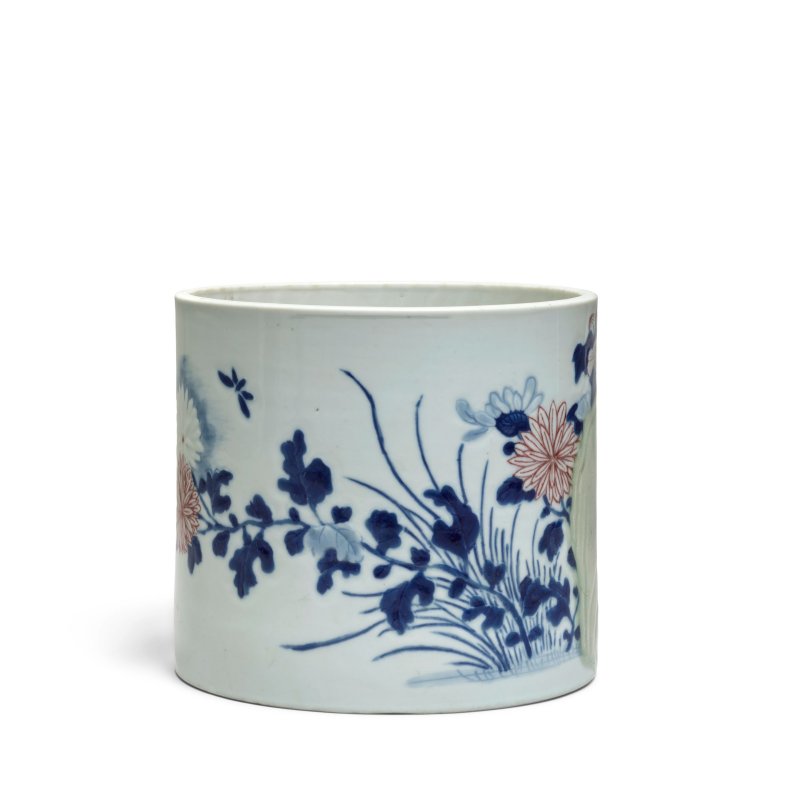
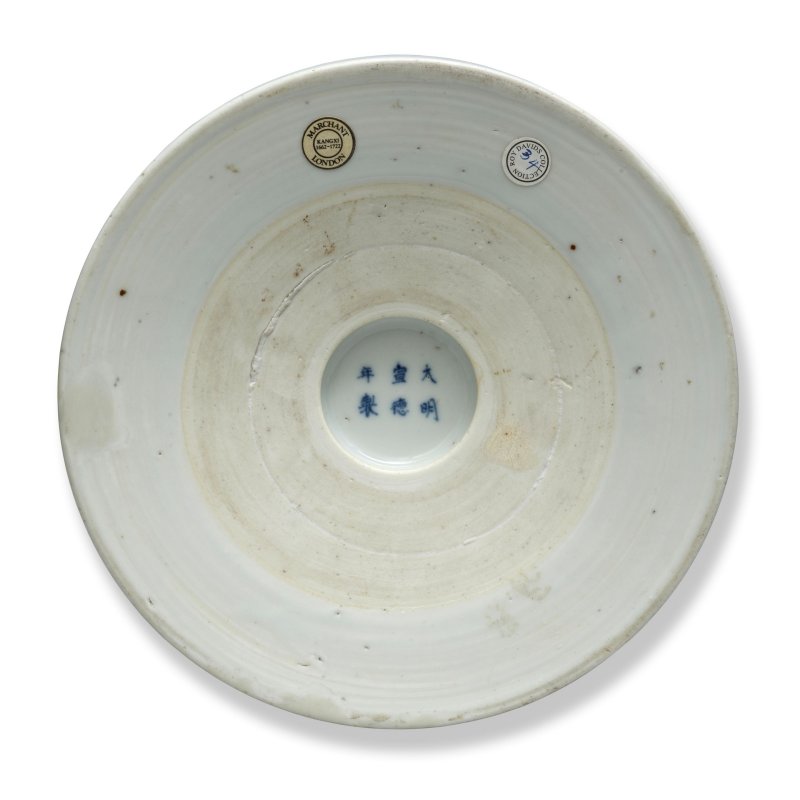
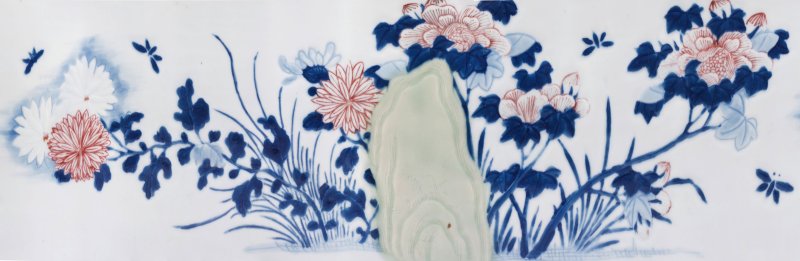
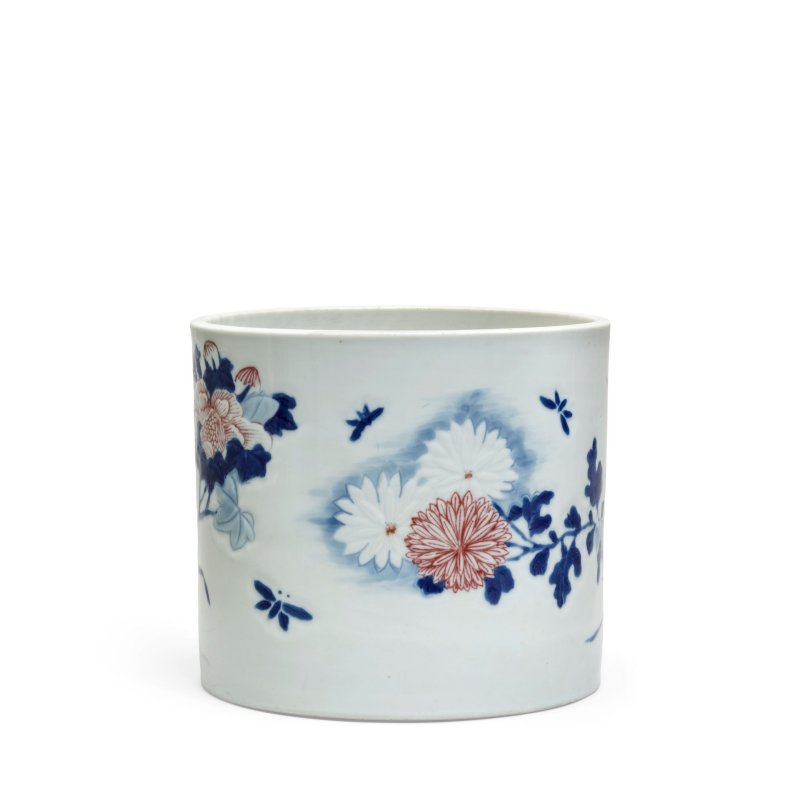
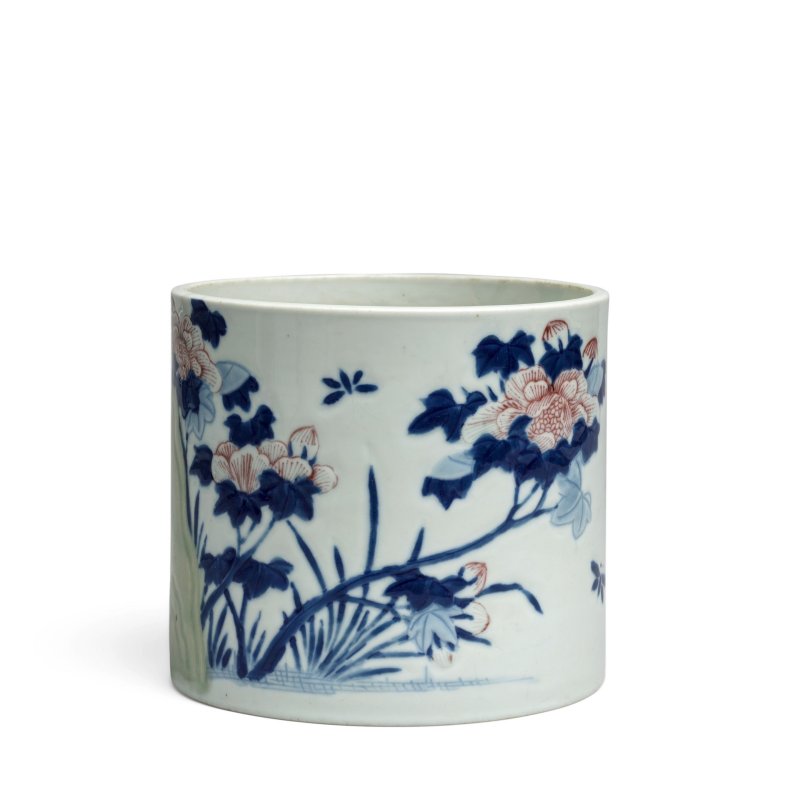
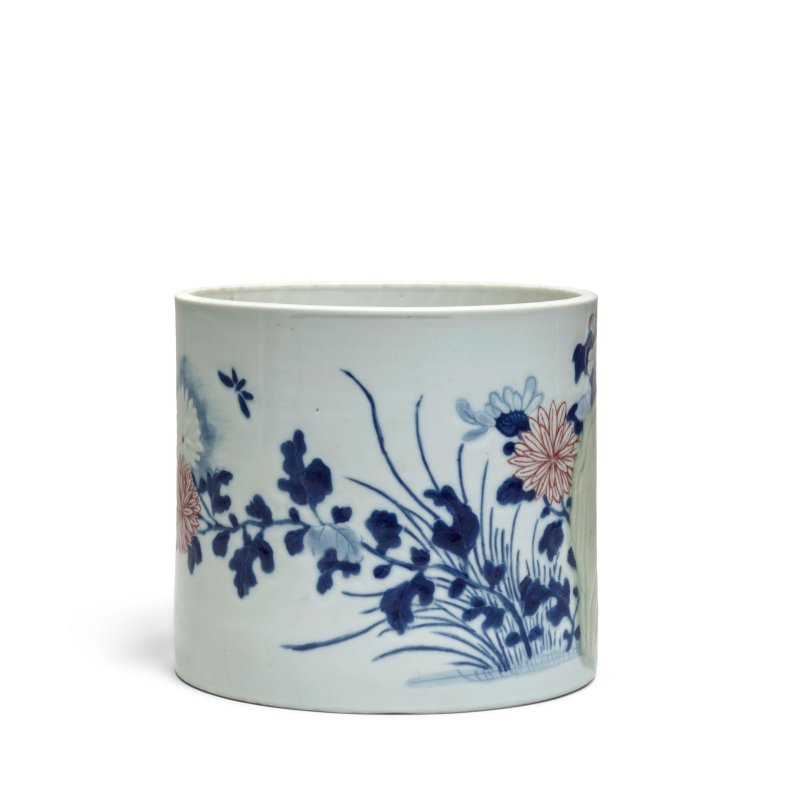
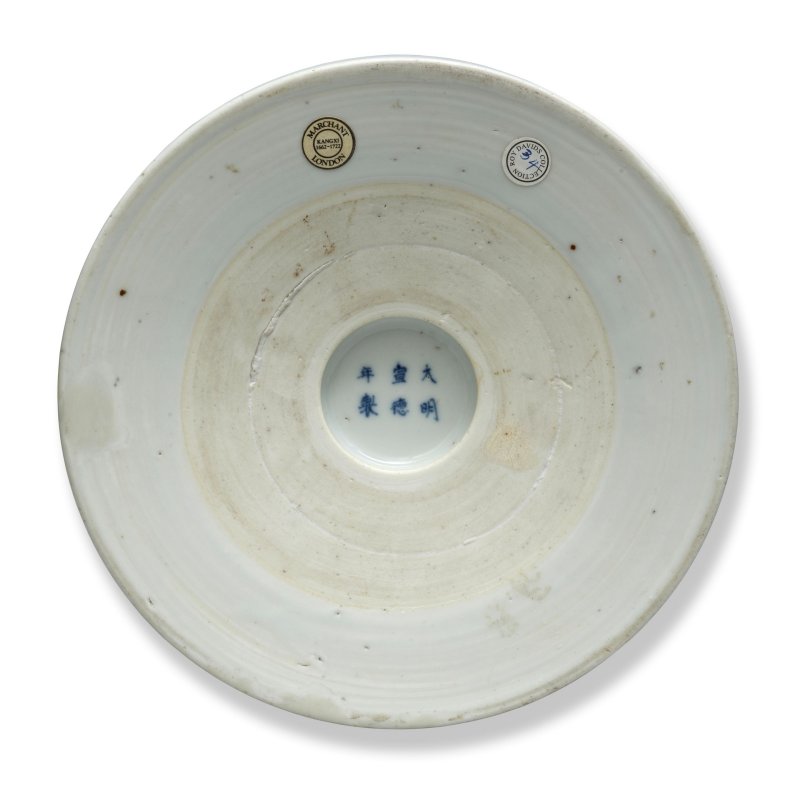
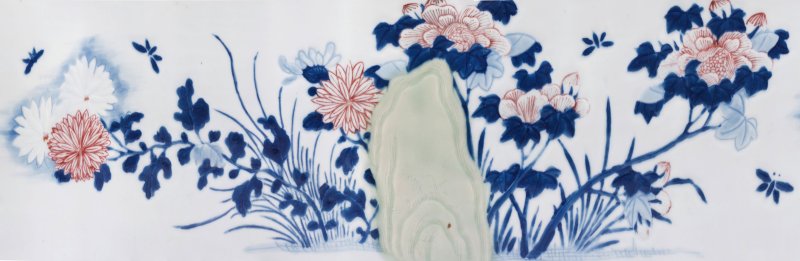
Sturdily potted with straight sides rising from a recessed 'button' base with underglaze-blue mark, decorated around the exterior with slightly raised white chrysanthemums surrounded by an underglaze-blue wash, others detailed in iron-red, the leaves in varying shades of cobalt blue, the peonies similarly decorated, all issuing from celadon-green rocks, all amidst fluttering butterflies. 18.5cm (7 1/4in) diam.
Footnotes
清康熙 豆青釉青花釉裏紅花卉紋筆筒
青花「大明宣德年製」楷書款
Provenance:
S. Marchant & Son, London (label)
Roy Leslie Davids FSA (1942-2017), Oxfordshire, collection no.34, acquired from the above on 8 October 2004
Bonhams London, The Roy Davids Collection of Chinese Ceramics, 6 November 2014, lot 133 and Front Cover (detail)
Published and Illustrated:
S.Marsh, , Hong Kong, 2020, pp.132-133
倫敦古董商馬錢特(標簽)
Roy Leslie Davids FSA (1942-2017),牛津郡,藏品編號34,于2004年10月8日從上處獲得
倫敦邦瀚斯,"The Roy Davids Collection of Chinese Ceramics",2014年11月6日,拍品133及封面(細節)
墨一閑,《筆筒淵鑒:收藏家的隨心所悟》,香港,2020年,第132-133頁
The present lot is unusually decorated with three high-fired colours: celadon glaze, underglaze blue, and underglaze copper-red. The brushpot has a semi-glazed base with a recessed button, and an apocryphal Xuande mark. It was likely made towards the end of the Kangxi reign, a period in which technically ambitious polychrome wares were being explored with increasing confidence.
The decoration is carefully organised around a celadon-green rock formation, from which the composition develops in underglaze blue and copper-red. Flowers and butterflies enliven the surface, producing a rich, layered effect that contrasts with the restrained geometry of the form. The chrysanthemum (, 菊花), symbolising longevity, appears alongside the peony (, 牡丹), associated with wealth and honour. Together they form a traditional auspicious rebus, expressed as '' (長壽富貴), wishing for longevity, wealth, and high status.
The present brushpot is further distinguished by the unusually detailed treatment of the body, with subtle incised modelling used to articulate petals and rocks. This contrasts with the majority of brushpots of the type, which typically have flat, unmodulated sides, and enhances the sense of pictorial depth across the surface. Compare with a bowl, Kangxi, but with related decoration of prunus blossoms with raised white petals, and underglaze-red stamens, in the Palace Museum, Beijing, illustrated in , Beijing, 2005, p.225, no.140.
A very similar brushpot, Kangxi mark and of the period, is illustrated in , Hong Kong, 1998, no.87. Another brushpot, Kangxi mark and of the period, with related design and technique is illustrated in , Hong Kong, 1994, pp.54-55, no.14.
Sturdily potted with straight sides rising from a recessed 'button' base with underglaze-blue mark, decorated around the exterior with slightly raised white chrysanthemums surrounded by an underglaze-blue wash, others detailed in iron-red, the leaves in varying shades of cobalt blue, the peonies similarly decorated, all issuing from celadon-green rocks, all amidst fluttering butterflies. 18.5cm (7 1/4in) diam.
Footnotes
清康熙 豆青釉青花釉裏紅花卉紋筆筒
青花「大明宣德年製」楷書款
Provenance:
S. Marchant & Son, London (label)
Roy Leslie Davids FSA (1942-2017), Oxfordshire, collection no.34, acquired from the above on 8 October 2004
Bonhams London, The Roy Davids Collection of Chinese Ceramics, 6 November 2014, lot 133 and Front Cover (detail)
Published and Illustrated:
S.Marsh, , Hong Kong, 2020, pp.132-133
倫敦古董商馬錢特(標簽)
Roy Leslie Davids FSA (1942-2017),牛津郡,藏品編號34,于2004年10月8日從上處獲得
倫敦邦瀚斯,"The Roy Davids Collection of Chinese Ceramics",2014年11月6日,拍品133及封面(細節)
墨一閑,《筆筒淵鑒:收藏家的隨心所悟》,香港,2020年,第132-133頁
The present lot is unusually decorated with three high-fired colours: celadon glaze, underglaze blue, and underglaze copper-red. The brushpot has a semi-glazed base with a recessed button, and an apocryphal Xuande mark. It was likely made towards the end of the Kangxi reign, a period in which technically ambitious polychrome wares were being explored with increasing confidence.
The decoration is carefully organised around a celadon-green rock formation, from which the composition develops in underglaze blue and copper-red. Flowers and butterflies enliven the surface, producing a rich, layered effect that contrasts with the restrained geometry of the form. The chrysanthemum (, 菊花), symbolising longevity, appears alongside the peony (, 牡丹), associated with wealth and honour. Together they form a traditional auspicious rebus, expressed as '' (長壽富貴), wishing for longevity, wealth, and high status.
The present brushpot is further distinguished by the unusually detailed treatment of the body, with subtle incised modelling used to articulate petals and rocks. This contrasts with the majority of brushpots of the type, which typically have flat, unmodulated sides, and enhances the sense of pictorial depth across the surface. Compare with a bowl, Kangxi, but with related decoration of prunus blossoms with raised white petals, and underglaze-red stamens, in the Palace Museum, Beijing, illustrated in , Beijing, 2005, p.225, no.140.
A very similar brushpot, Kangxi mark and of the period, is illustrated in , Hong Kong, 1998, no.87. Another brushpot, Kangxi mark and of the period, with related design and technique is illustrated in , Hong Kong, 1994, pp.54-55, no.14.
常见问题
这件清康熙 豆青釉青花釉裏紅花卉紋筆筒 | A BLUE AND WHITE, COPPER-RED AND CELADON BRUSHPOT, BITONG的成交价是多少?
落槌价为 预展中。 成交价为 预展中。