
拍品信息
拍品名称
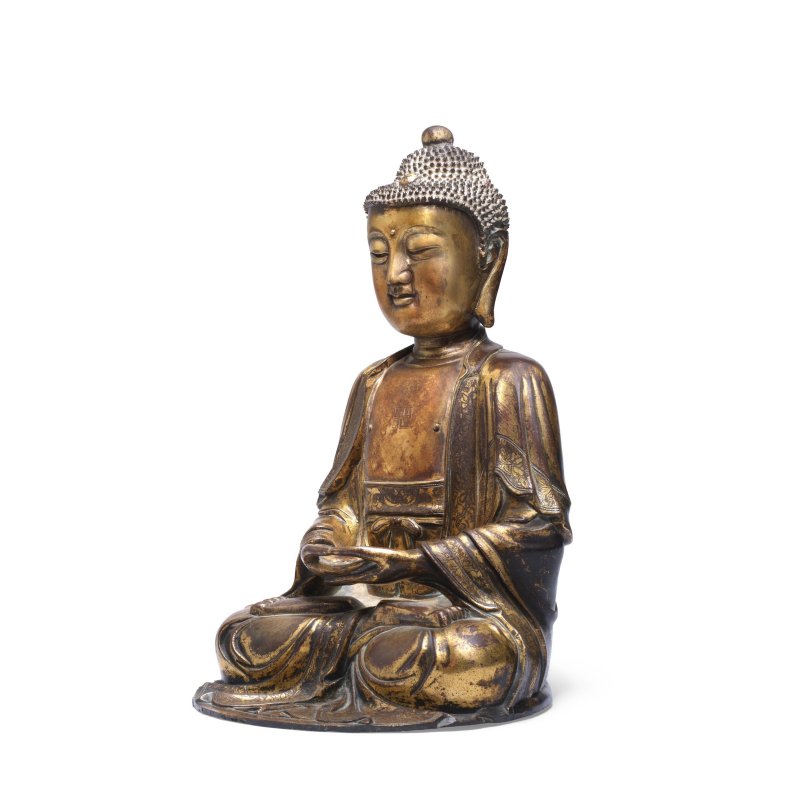
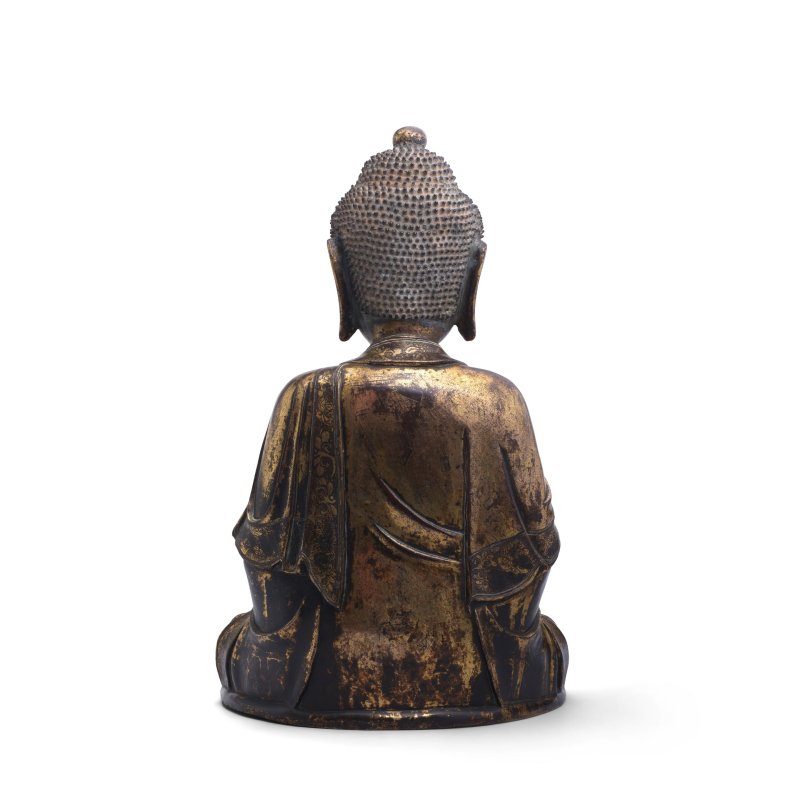
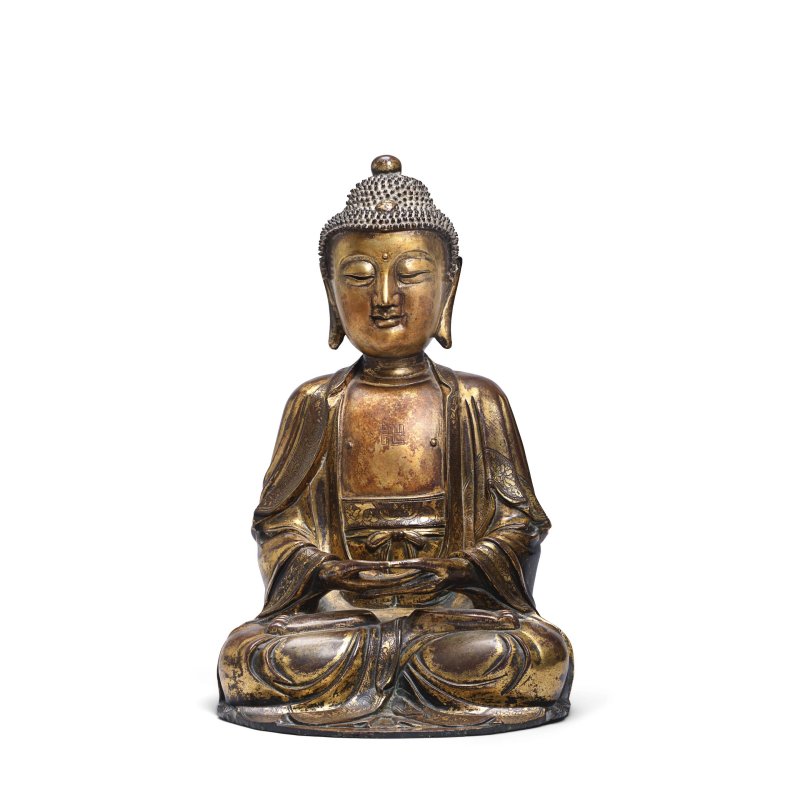
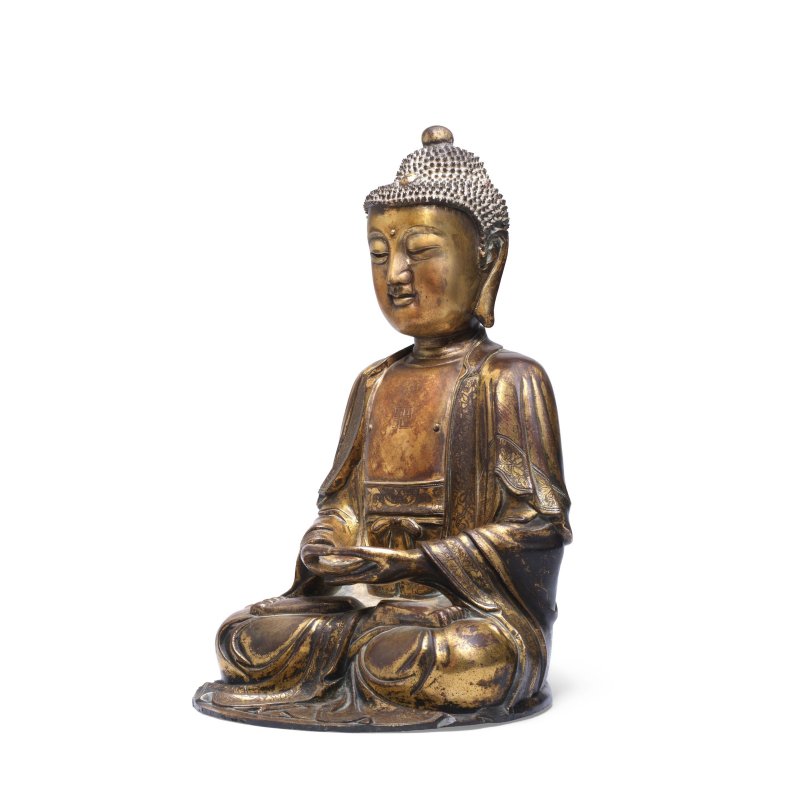
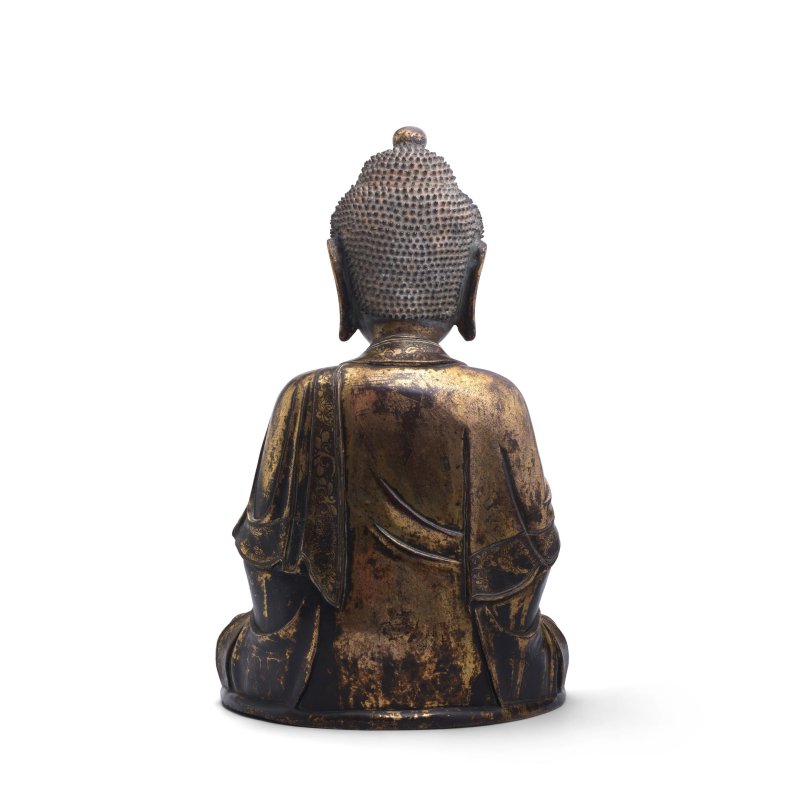
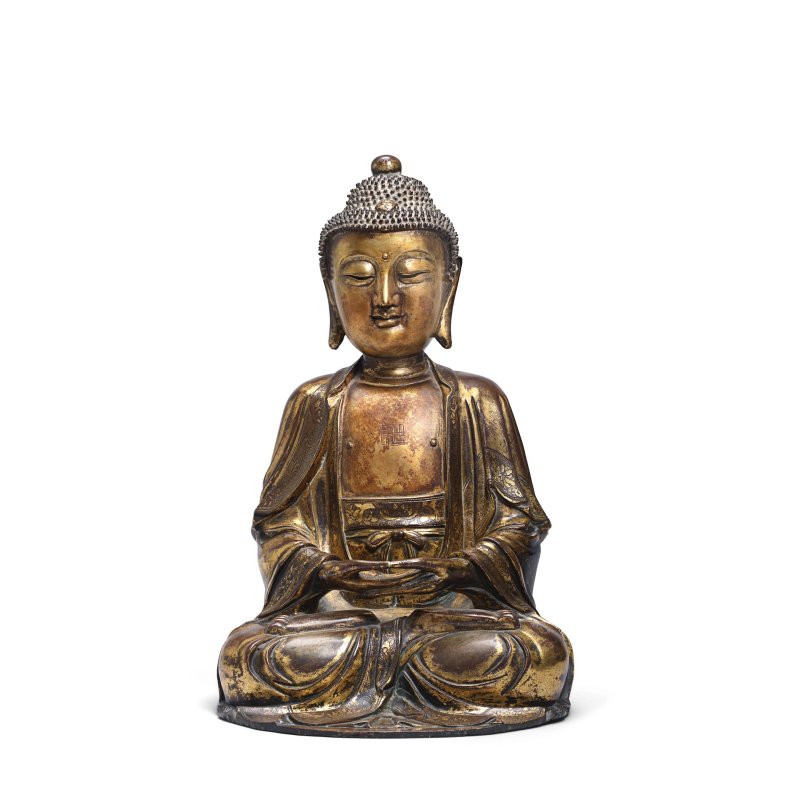
明 銅鎏金佛像 | A LARGE GILT BRONZE FIGURE OF AMITABHA BUDDHA
年代
Ming Dynasty
起拍价
GBP 15,000
估值区间
GBP 15000 - 20000
尺寸
未知
品相
未知
更多信息
Ming Dynasty
Expertly cast seated in vajraparyankasana, with the soles of both feet turned upwards, the hands resting in the lap in dhyana mudra with the thumbs touching, the serene face framed by pendulous earlobes and surmounted by rows of tightly curled hair rising to the domed ushnisha, the long pleated robes open at the chest and tied at the midriff. 42.5cm (16 3/4in) high.
Footnotes
明 銅鎏金佛像
Provenance: acquired in Battle, Kent, in the mid-1990s (by repute)
來源:1990年代中期獲得于肯特巴特爾(据傳)
The present figure depicts Amitabha, the principal deity of Pure Land Buddhism and the Western Buddha among the Five Tathagatas. His name means 'immeasurable light', and he is also known as Wuliangguang (Infinite Light) and Wuliangshou (Infinite Life), reflecting his associations with longevity and pure perception. Believed to reside in Sukhavati, the Western Pure Land or 'Pure and Happy Land', Amitabha is conventionally depicted seated in meditation with the hands resting in the lap in , as on the present figure. Devotion to Amitabha occupies a central place in Pure Land Buddhism, with the promise of rebirth in through faith and worship. As Meher McArthur notes in , London, 2002, p.39, the teaches that mortals may attain rebirth in the Pure Land through worship of Amitabha. This salvific promise derives from the vow he made while still a bodhisattva to save all sentient beings upon attaining enlightenment.
See a related gilt bronze figure of Buddha, Ming dynasty, 16th/17th century, which was sold at Christie's New York, 20 September 2013, lot 1529; and a gilt-bronze figure of seated Amitabha Buddha, Ming dynasty, sold at Christie's New York, 19 September 2025, lot 898.
Expertly cast seated in vajraparyankasana, with the soles of both feet turned upwards, the hands resting in the lap in dhyana mudra with the thumbs touching, the serene face framed by pendulous earlobes and surmounted by rows of tightly curled hair rising to the domed ushnisha, the long pleated robes open at the chest and tied at the midriff. 42.5cm (16 3/4in) high.
Footnotes
明 銅鎏金佛像
Provenance: acquired in Battle, Kent, in the mid-1990s (by repute)
來源:1990年代中期獲得于肯特巴特爾(据傳)
The present figure depicts Amitabha, the principal deity of Pure Land Buddhism and the Western Buddha among the Five Tathagatas. His name means 'immeasurable light', and he is also known as Wuliangguang (Infinite Light) and Wuliangshou (Infinite Life), reflecting his associations with longevity and pure perception. Believed to reside in Sukhavati, the Western Pure Land or 'Pure and Happy Land', Amitabha is conventionally depicted seated in meditation with the hands resting in the lap in , as on the present figure. Devotion to Amitabha occupies a central place in Pure Land Buddhism, with the promise of rebirth in through faith and worship. As Meher McArthur notes in , London, 2002, p.39, the teaches that mortals may attain rebirth in the Pure Land through worship of Amitabha. This salvific promise derives from the vow he made while still a bodhisattva to save all sentient beings upon attaining enlightenment.
See a related gilt bronze figure of Buddha, Ming dynasty, 16th/17th century, which was sold at Christie's New York, 20 September 2013, lot 1529; and a gilt-bronze figure of seated Amitabha Buddha, Ming dynasty, sold at Christie's New York, 19 September 2025, lot 898.
常见问题
这件明 銅鎏金佛像 | A LARGE GILT BRONZE FIGURE OF AMITABHA BUDDHA的成交价是多少?
落槌价为 预展中。 成交价为 预展中。


