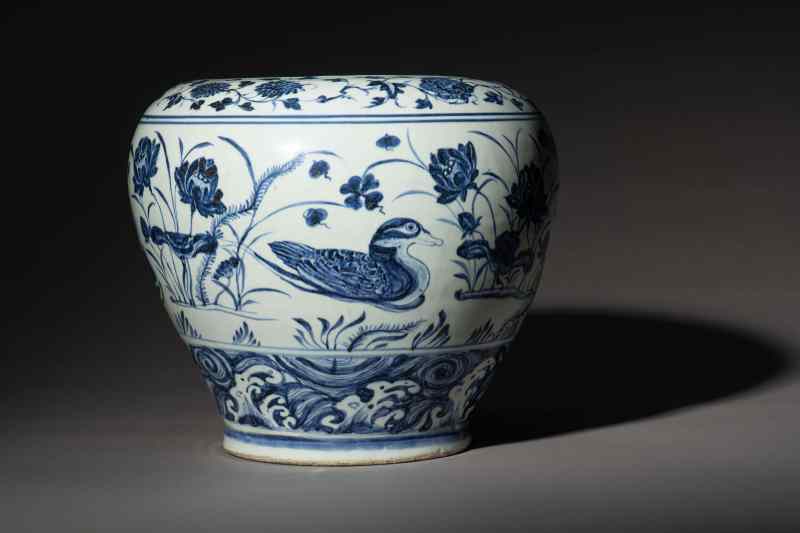

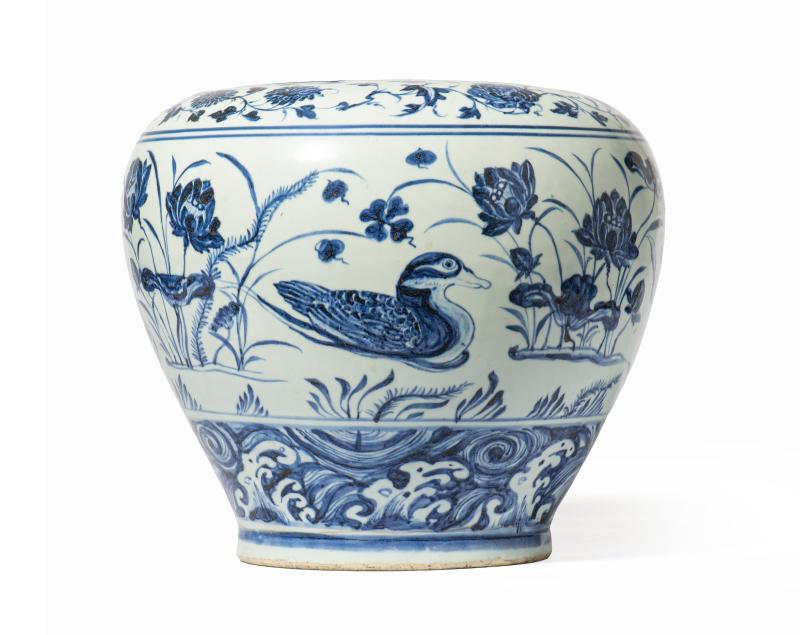
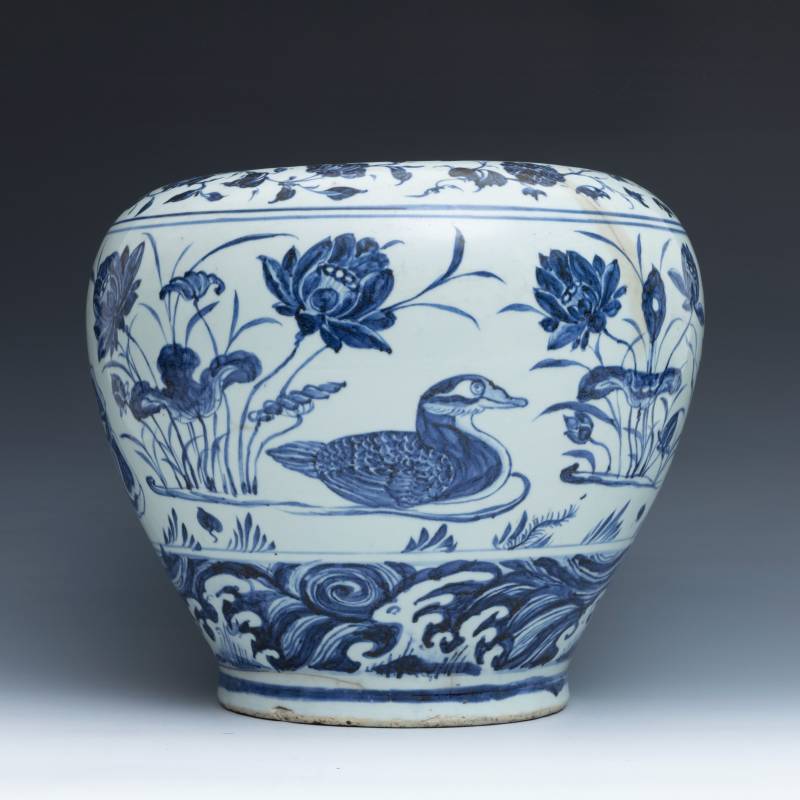
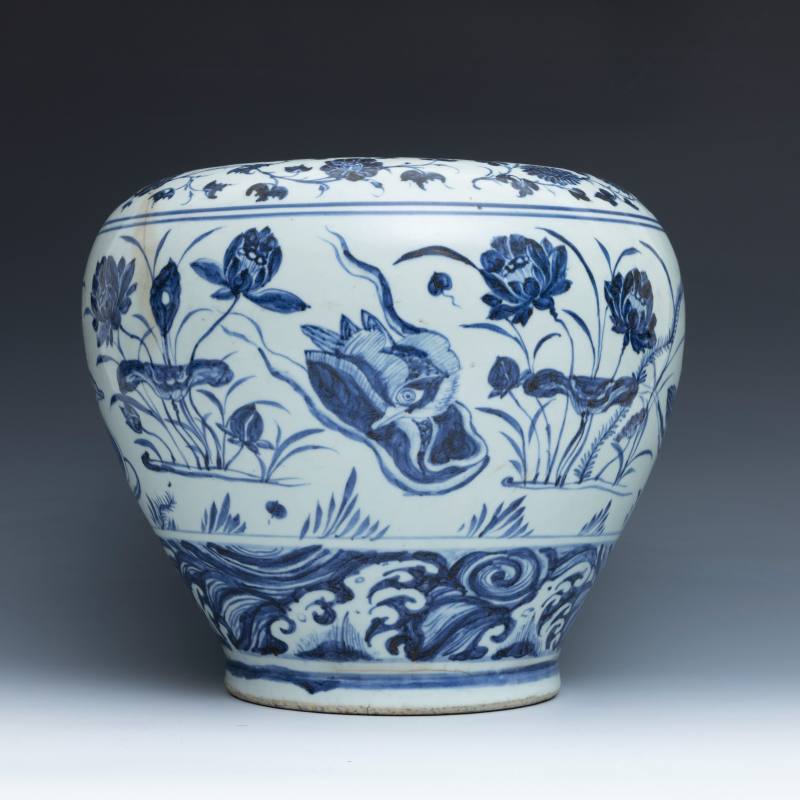
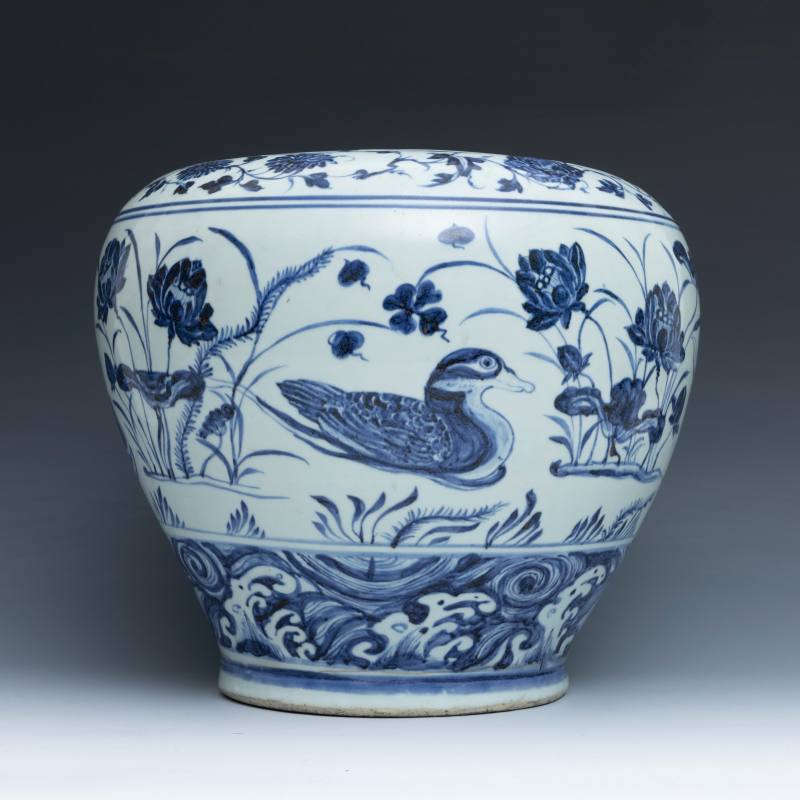
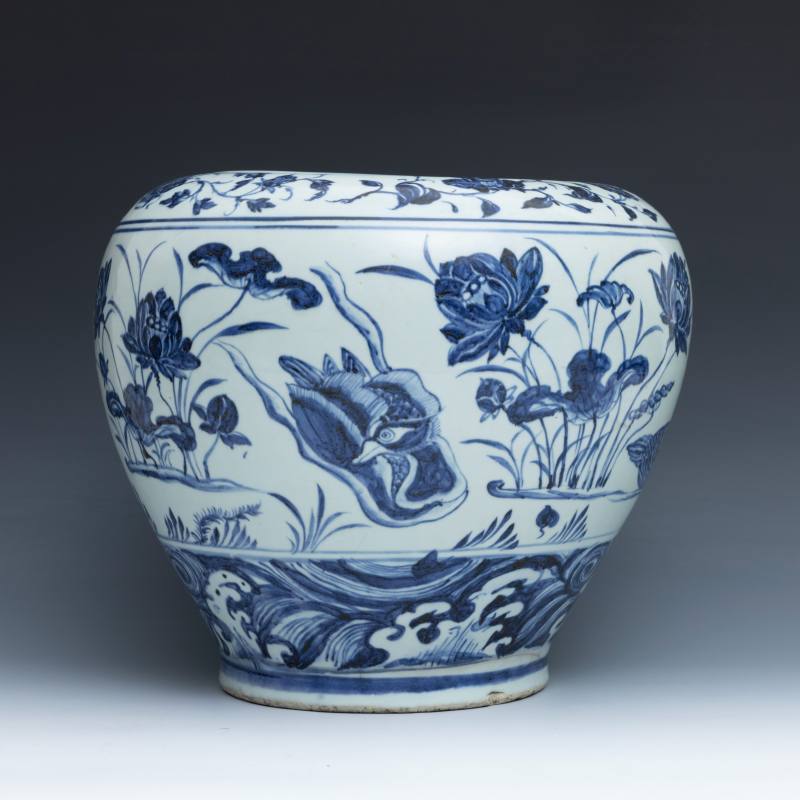
Lot 44 A rare blue and white 'mandarin ducks and lotus' jar, Guan
落槌价
****
成交价
****
拍品信息
拍品名称
A rare blue and white 'mandarin ducks and lotus' jar, Guan
年代
Yuan/early Ming Dynasty, 14th-15th century
起拍价
EUR 100,000
估值区间
€100,000 - €200,000
尺寸
H 31 cm, D inside rim 20.5 cm, W 35 cm (at the widest)
品相
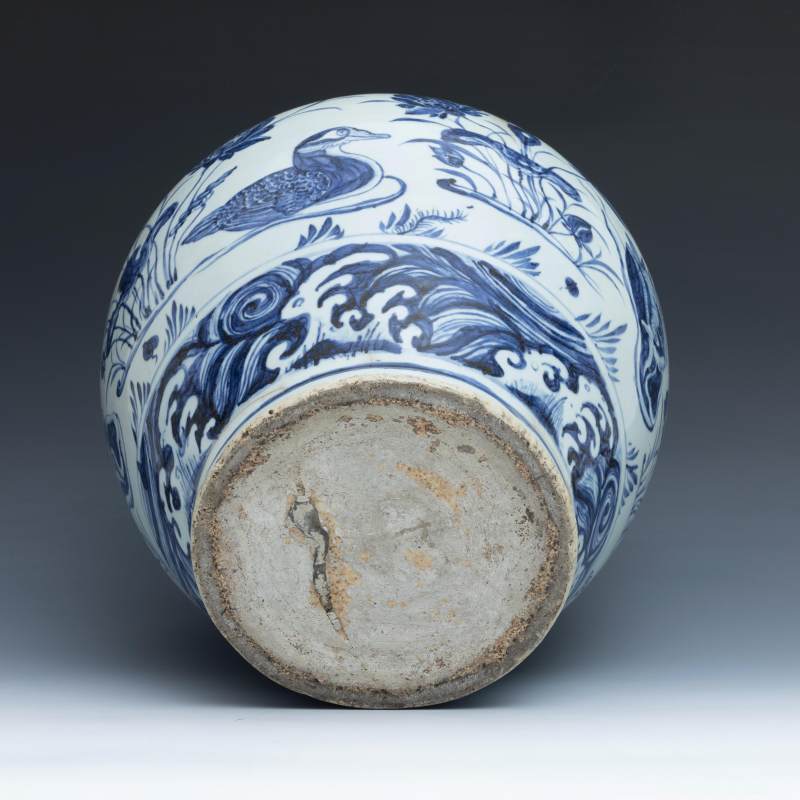
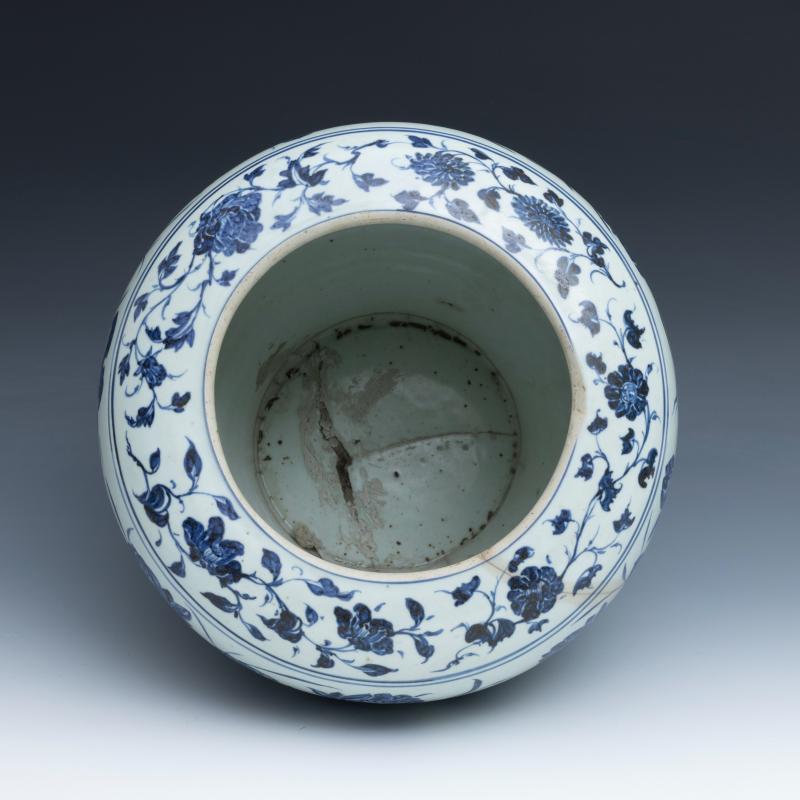
With old cracks and the top cut short. The form of the vase slightly warped. A darkened area around an old hairline running from the edge to the wide part of the body of the vase and a few scratches throughout consistent with the age and use. Old lead filling to firing crack in the base.
更多信息
Heavily potted, standing on a broad, low foot and rising to a swelling body with wide, rounded shoulders, decorated in vibrant cobalt blue with a skilfully composed design of four ducks, each carefully distinguished and swimming between flowering lotus rendered with great naturalism. The shoulder decorated with various scrolling floral motifs and the base is encircled by a band of stylized waves.
Among the most enduring motifs in Chinese visual culture is the mandarin duck (yuanyang), a bird long associated with love, fidelity, and marital harmony. The Chinese name yuanyang refers to the pair: yuan denotes the beautifully coloured and crested male, while yang refers to the more modestly feathered female. Although modern biology tells us that mandarin ducks do not, in fact, mate for life, they have symbolised lifelong devotion in East Asian culture for over fourteen centuries.
The symbolism of the mandarin duck evolved over time. In early Chinese literature of the third to sixth centuries, ducks represented the affection between brothers rather than romantic partners. During the Tang Dynasty (618-907), however, poets began to associate the birds with idealised love. The seventh-century poet Lu Zhaolin famously wrote that lovers “wished to be mandarin ducks more so than immortals,” establishing the birds as enduring emblems of conjugal happiness. This interpretation spread throughout East Asia and remains deeply rooted in Chinese visual culture.
By the Yuan (1271-1368) and early Ming (1368-mid-fifteenth century) dynasties, the mandarin duck had become a well-known decorative motif on porcelain produced at Jingdezhen. The birds are typically shown swimming peacefully among lotus blossoms, reeds, and other aquatic plants. These naturalistic waterside scenes carried layers of auspicious meaning. While the ducks symbolised fidelity and domestic harmony, the lotus represented purity, fertility, and abundance. Together they conveyed wishes for a happy, prosperous, and enduring marriage. The popularity of this imagery reflects the close relationship between literature and the decorative arts in medieval China. Decorative motifs were rarely chosen for their beauty alone; they communicated shared cultural ideals and conveyed blessings to their owners.
The popularity of the motif continued throughout the Ming and Qing Dynasties and featured prominently on ceramics from the Xuande and Chenghua periods, the late Ming period and the latter half of the Qing Dynasty.
Blue and white porcelain originated during the Yuan Dynasty (1271-1368), when potters at Jingdezhen combined a refined porcelain body with underglaze cobalt-blue decoration, using pigment largely imported from Persia. During the Ming Dynasty (1368-1644), it became the principal product of the imperial kilns, reaching exceptional technical and artistic standards. Following the Ming-Qing transition, production was revitalised under the Kangxi Emperor (r. 1662-1722). Throughout the Qing Dynasty (1644-1912), blue and white porcelain achieved its highest level of refinement, distinguished by its brilliant white body, subtle cobalt tones, and elegant decoration, remaining highly prized both at the imperial court and in international export markets.
以下内容由AI翻译:
【名称】
元/明早期十四至十五世纪青花鸳鸯莲花纹罐
【年代】
元/明早期,十四至十五世纪
【描述】
厚重的器身,立于宽而低的圈足上,向上逐渐扩展成一个宽阔、圆润的腹部,以鲜艳的钴蓝色绘制四只鸳鸯,每一只都精心区分,游弋在描绘得非常自然的莲花之间。肩部装饰有各种卷曲的花卉图案,底部环绕着一圈程式化的波浪纹。
在中国视觉文化中最持久的图案之一是鸳鸯(yuanyang),这种鸟长期以来与爱情、忠诚和婚姻和谐联系在一起。中文名称鸳鸯指的是这对鸟:鸳指色彩艳丽且有冠的雄鸟,而鸯则指羽毛较为朴素的雌鸟。尽管现代生物学告诉我们鸳鸯实际上并不终生配对,但它们在东亚文化中象征着终生的忠诚已有超过十四世纪的历史。
鸳鸯的象征意义随着时间的推移而演变。在公元三至六世纪的早期中国文学中,鸭子代表兄弟之间的感情而不是浪漫伴侣。然而,在唐代(618-907),诗人开始将这些鸟与理想化的爱情联系起来。七世纪的诗人卢照邻曾写道,恋人“愿为鸳鸯而不愿为神仙”,确立了鸳鸯作为夫妻幸福的永恒象征。这一解释在整个东亚传播开来,并深深植根于中国视觉文化中。
到了元代(1271-1368)和明早期(1368-十五世纪中期),鸳鸯已成为景德镇生产的瓷器上广为人知的装饰图案。这些鸟通常被描绘成在莲花、芦苇和其他水生植物中平静地游动。这些自然主义的水边场景承载了多层吉祥的意义。鸳鸯象征着忠诚和家庭和谐,而莲花则代表纯洁、生育和丰饶。它们共同传达了对幸福、繁荣和持久婚姻的美好祝愿。这一图案的流行反映了中世纪中国文学与装饰艺术之间的密切关系。装饰图案很少仅因其美丽而被选择;它们传达了共享的文化理想,并向其主人传达祝福。
这一图案的流行持续到明代和清代,并在宣德和成化时期、晚明时期以及清代后半期的陶瓷上尤为突出。
青花瓷起源于元代(1271-1368),当时景德镇的陶工将精致的瓷胎与釉下钴蓝装饰相结合,使用的颜料主要从波斯进口。在明代(1368-1644),它成为御窑的主要产品,达到了卓越的技术和艺术标准。经过明清过渡期后,在康熙皇帝(1662-1722年在位)统治下,生产得到了复兴。在整个清代(1644-1912),青花瓷达到了最高水平的精炼,以其明亮的白色胎体、微妙的钴蓝色调和优雅的装饰而著称,无论是在宫廷还是国际出口市场上都备受推崇。
【品相】
有旧裂痕,顶部被截短。瓶身略有变形。有一条从边缘延伸到瓶身宽处的老裂纹周围变暗,并有一些与年龄和使用相符的划痕。底部有旧铅填充的烧制裂纹。
Among the most enduring motifs in Chinese visual culture is the mandarin duck (yuanyang), a bird long associated with love, fidelity, and marital harmony. The Chinese name yuanyang refers to the pair: yuan denotes the beautifully coloured and crested male, while yang refers to the more modestly feathered female. Although modern biology tells us that mandarin ducks do not, in fact, mate for life, they have symbolised lifelong devotion in East Asian culture for over fourteen centuries.
The symbolism of the mandarin duck evolved over time. In early Chinese literature of the third to sixth centuries, ducks represented the affection between brothers rather than romantic partners. During the Tang Dynasty (618-907), however, poets began to associate the birds with idealised love. The seventh-century poet Lu Zhaolin famously wrote that lovers “wished to be mandarin ducks more so than immortals,” establishing the birds as enduring emblems of conjugal happiness. This interpretation spread throughout East Asia and remains deeply rooted in Chinese visual culture.
By the Yuan (1271-1368) and early Ming (1368-mid-fifteenth century) dynasties, the mandarin duck had become a well-known decorative motif on porcelain produced at Jingdezhen. The birds are typically shown swimming peacefully among lotus blossoms, reeds, and other aquatic plants. These naturalistic waterside scenes carried layers of auspicious meaning. While the ducks symbolised fidelity and domestic harmony, the lotus represented purity, fertility, and abundance. Together they conveyed wishes for a happy, prosperous, and enduring marriage. The popularity of this imagery reflects the close relationship between literature and the decorative arts in medieval China. Decorative motifs were rarely chosen for their beauty alone; they communicated shared cultural ideals and conveyed blessings to their owners.
The popularity of the motif continued throughout the Ming and Qing Dynasties and featured prominently on ceramics from the Xuande and Chenghua periods, the late Ming period and the latter half of the Qing Dynasty.
Blue and white porcelain originated during the Yuan Dynasty (1271-1368), when potters at Jingdezhen combined a refined porcelain body with underglaze cobalt-blue decoration, using pigment largely imported from Persia. During the Ming Dynasty (1368-1644), it became the principal product of the imperial kilns, reaching exceptional technical and artistic standards. Following the Ming-Qing transition, production was revitalised under the Kangxi Emperor (r. 1662-1722). Throughout the Qing Dynasty (1644-1912), blue and white porcelain achieved its highest level of refinement, distinguished by its brilliant white body, subtle cobalt tones, and elegant decoration, remaining highly prized both at the imperial court and in international export markets.
以下内容由AI翻译:
【名称】
元/明早期十四至十五世纪青花鸳鸯莲花纹罐
【年代】
元/明早期,十四至十五世纪
【描述】
厚重的器身,立于宽而低的圈足上,向上逐渐扩展成一个宽阔、圆润的腹部,以鲜艳的钴蓝色绘制四只鸳鸯,每一只都精心区分,游弋在描绘得非常自然的莲花之间。肩部装饰有各种卷曲的花卉图案,底部环绕着一圈程式化的波浪纹。
在中国视觉文化中最持久的图案之一是鸳鸯(yuanyang),这种鸟长期以来与爱情、忠诚和婚姻和谐联系在一起。中文名称鸳鸯指的是这对鸟:鸳指色彩艳丽且有冠的雄鸟,而鸯则指羽毛较为朴素的雌鸟。尽管现代生物学告诉我们鸳鸯实际上并不终生配对,但它们在东亚文化中象征着终生的忠诚已有超过十四世纪的历史。
鸳鸯的象征意义随着时间的推移而演变。在公元三至六世纪的早期中国文学中,鸭子代表兄弟之间的感情而不是浪漫伴侣。然而,在唐代(618-907),诗人开始将这些鸟与理想化的爱情联系起来。七世纪的诗人卢照邻曾写道,恋人“愿为鸳鸯而不愿为神仙”,确立了鸳鸯作为夫妻幸福的永恒象征。这一解释在整个东亚传播开来,并深深植根于中国视觉文化中。
到了元代(1271-1368)和明早期(1368-十五世纪中期),鸳鸯已成为景德镇生产的瓷器上广为人知的装饰图案。这些鸟通常被描绘成在莲花、芦苇和其他水生植物中平静地游动。这些自然主义的水边场景承载了多层吉祥的意义。鸳鸯象征着忠诚和家庭和谐,而莲花则代表纯洁、生育和丰饶。它们共同传达了对幸福、繁荣和持久婚姻的美好祝愿。这一图案的流行反映了中世纪中国文学与装饰艺术之间的密切关系。装饰图案很少仅因其美丽而被选择;它们传达了共享的文化理想,并向其主人传达祝福。
这一图案的流行持续到明代和清代,并在宣德和成化时期、晚明时期以及清代后半期的陶瓷上尤为突出。
青花瓷起源于元代(1271-1368),当时景德镇的陶工将精致的瓷胎与釉下钴蓝装饰相结合,使用的颜料主要从波斯进口。在明代(1368-1644),它成为御窑的主要产品,达到了卓越的技术和艺术标准。经过明清过渡期后,在康熙皇帝(1662-1722年在位)统治下,生产得到了复兴。在整个清代(1644-1912),青花瓷达到了最高水平的精炼,以其明亮的白色胎体、微妙的钴蓝色调和优雅的装饰而著称,无论是在宫廷还是国际出口市场上都备受推崇。
【品相】
有旧裂痕,顶部被截短。瓶身略有变形。有一条从边缘延伸到瓶身宽处的老裂纹周围变暗,并有一些与年龄和使用相符的划痕。底部有旧铅填充的烧制裂纹。
常见问题
拍品的品相状况如何?
With old cracks and the top cut short. The form of the vase slightly warped. A darkened area around an old hairline running from the edge to the wide part of the body of the vase and a few scratches throughout consistent with the age and use. Old lead filling to firing crack in the base.
拍品的尺寸是多少?
H 31 cm, D inside rim 20.5 cm, W 35 cm (at the widest)