
拍品信息
拍品名称
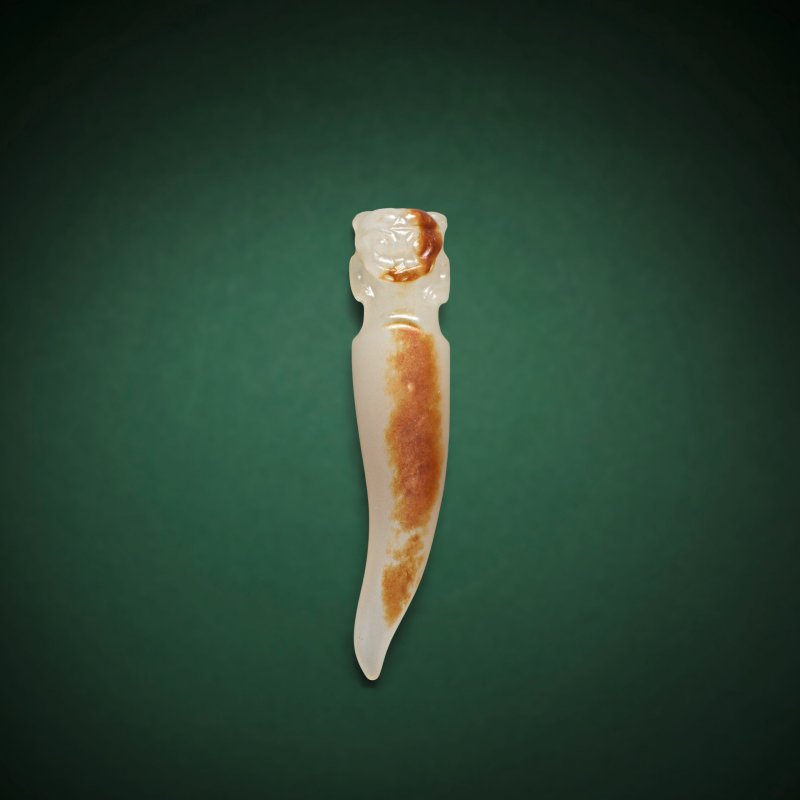
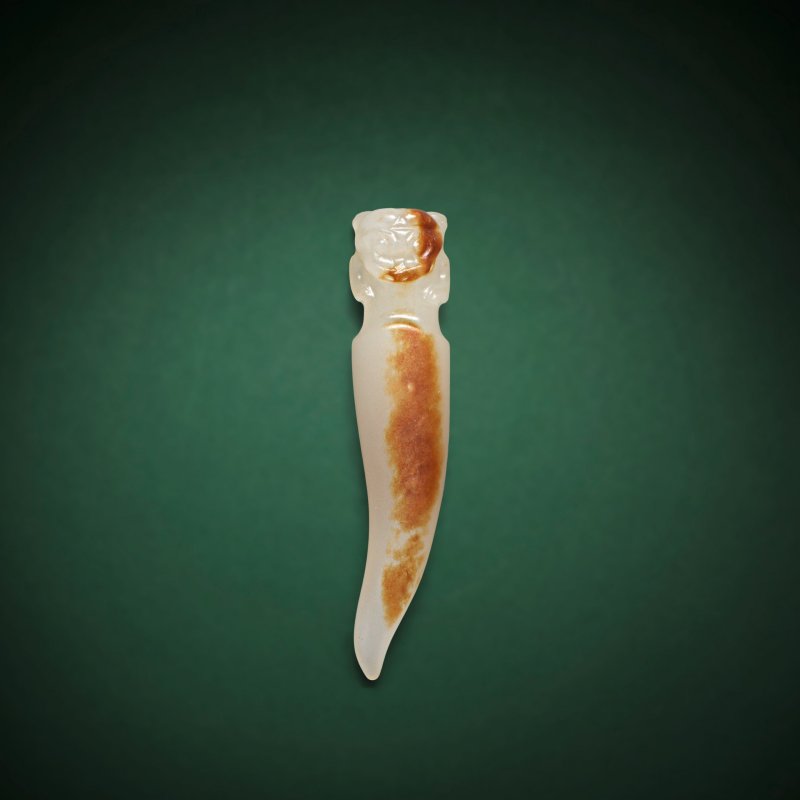
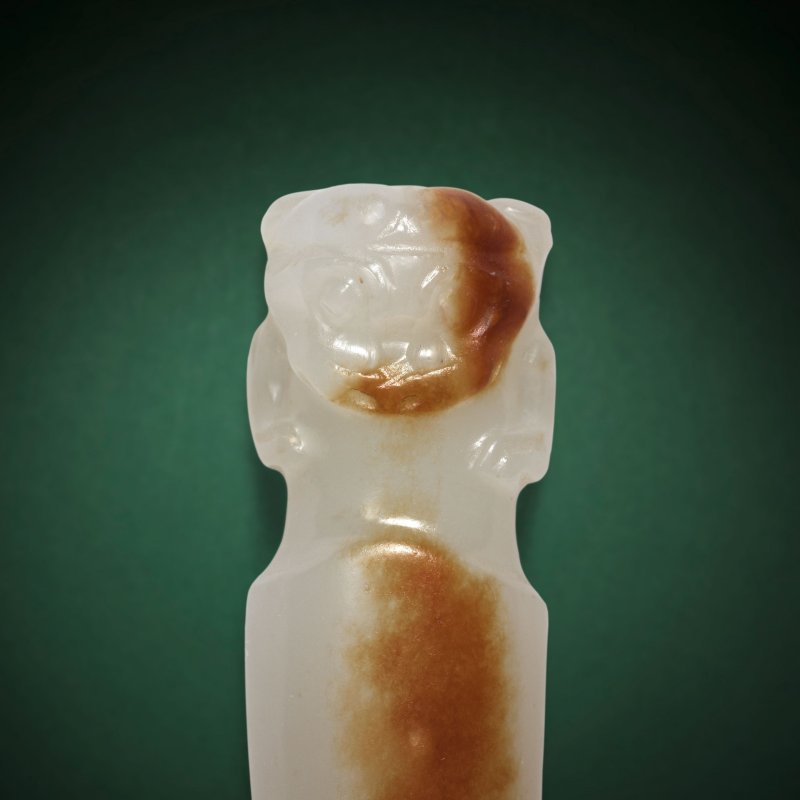
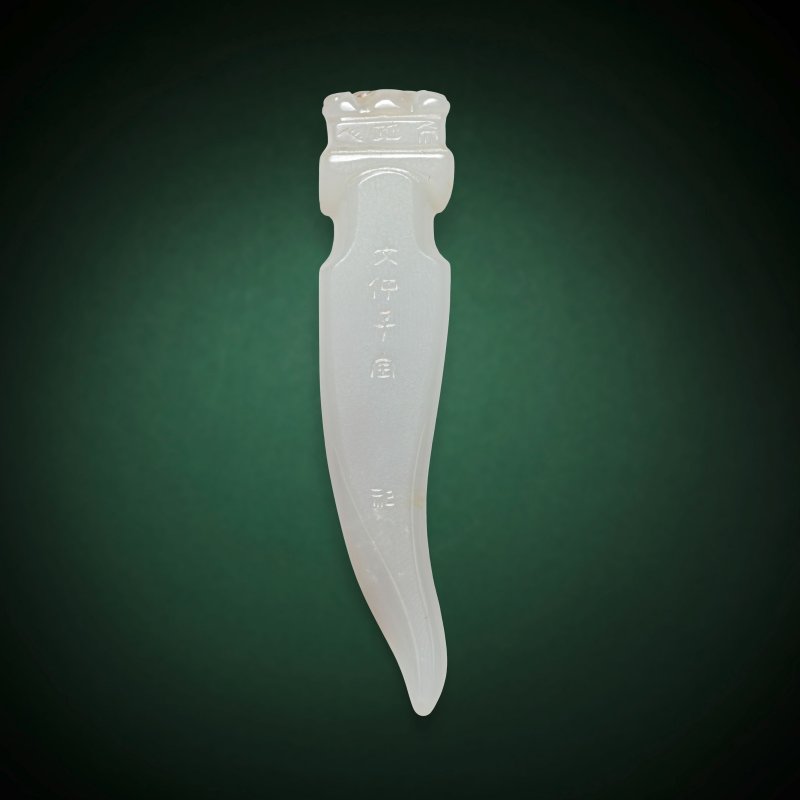
宋/明 白玉帶皮獸面紋玉觿 | A VERY RARE WHITE AND RUSSET JADE INSCRIBED PENDANT, XI
年代
Song/Ming Dynasty
起拍价
GBP 3,000
估值区间
未知
尺寸
未知
品相
未知
更多信息
Song/Ming Dynasty
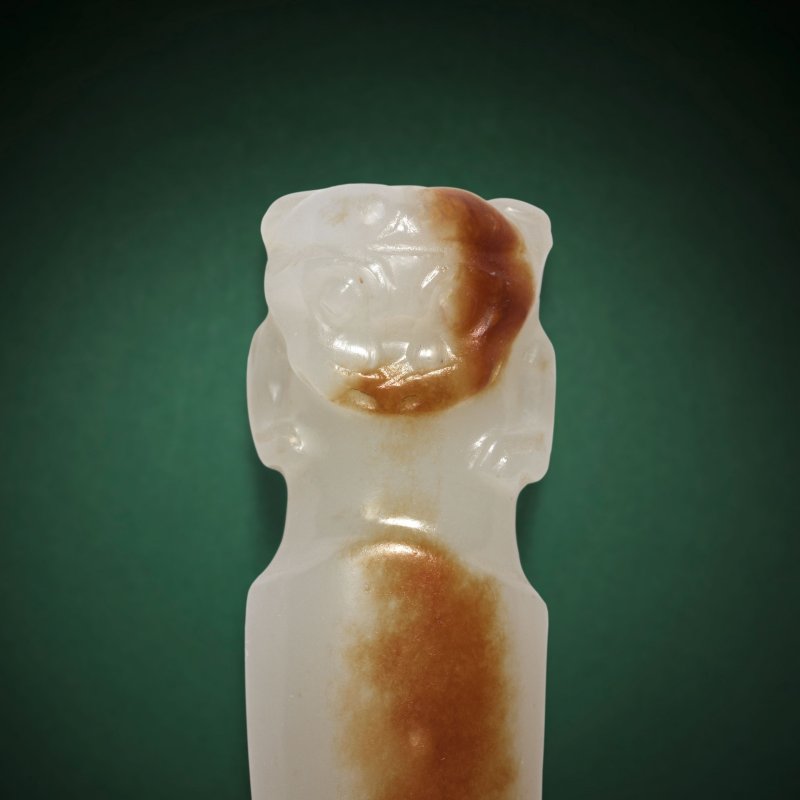
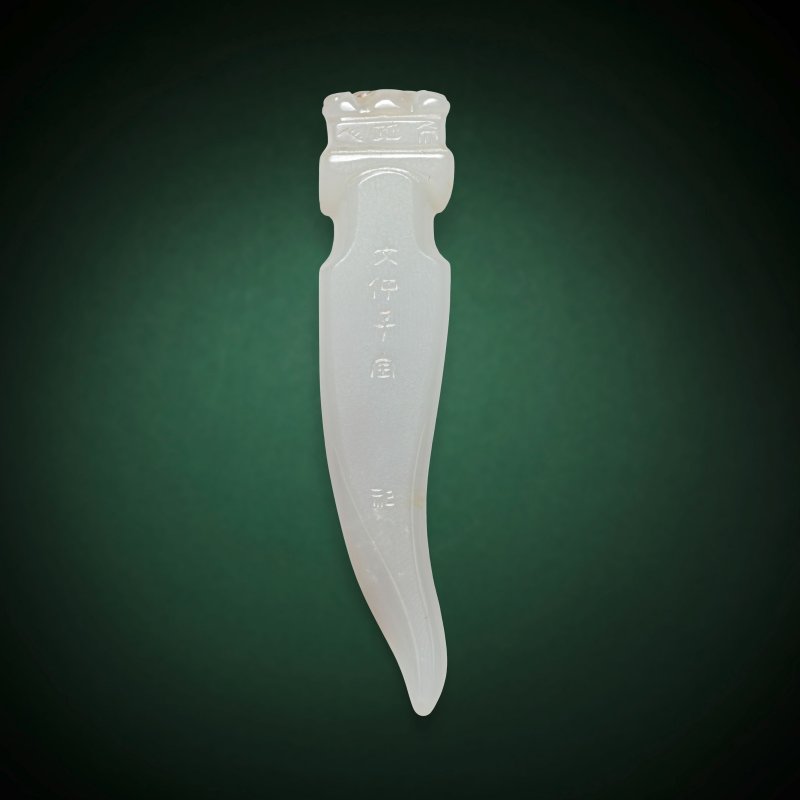
Skilfully carved as a long, crescent-shaped body terminating in a pointy tip, surmounted by a mythical beast head detailed with bulging eyes and pierced at the top for suspension, the reverse side incised with an eight-character inscription, the stone of white tone with russet patches. 5.5cm (2 1/8in) high.
Footnotes
宋/明 白玉帶皮獸面紋玉觿
款識:天地人 文仲子寶 祀
The inscription may be translated as:
Heaven, Earth, and Humanity; the treasured object of Wen Zhongzi; for sacrificial rites.
The Wen Zhongzi (文仲子) mentioned in the inscription is most likely Wang Tong 王通 (584-617), the Sui dynasty philosopher and politician who was posthumously honoured by his disciples with the title 'Wen Zhongzi'. A devoted advocate of Confucianism, Wang Tong emphasised the inseparable relationship between Heaven, Earth, and Humanity, regarding them as the three indispensable powers that together constitute the cosmos. He further reformulated the traditional cosmological concept of the Three Powers by assigning each a distinct ontological attribute: 'Heaven governs the primordial , Earth governs the primordial form, and Humanity governs the primordial consciousness' (天統元氣,地統元形,人統元識).
See a related yellowish-celadon jade pendant, , Ming dynasty, which was sold at Sotheby's Hong Kong, 18 December 2024, lot 6854.