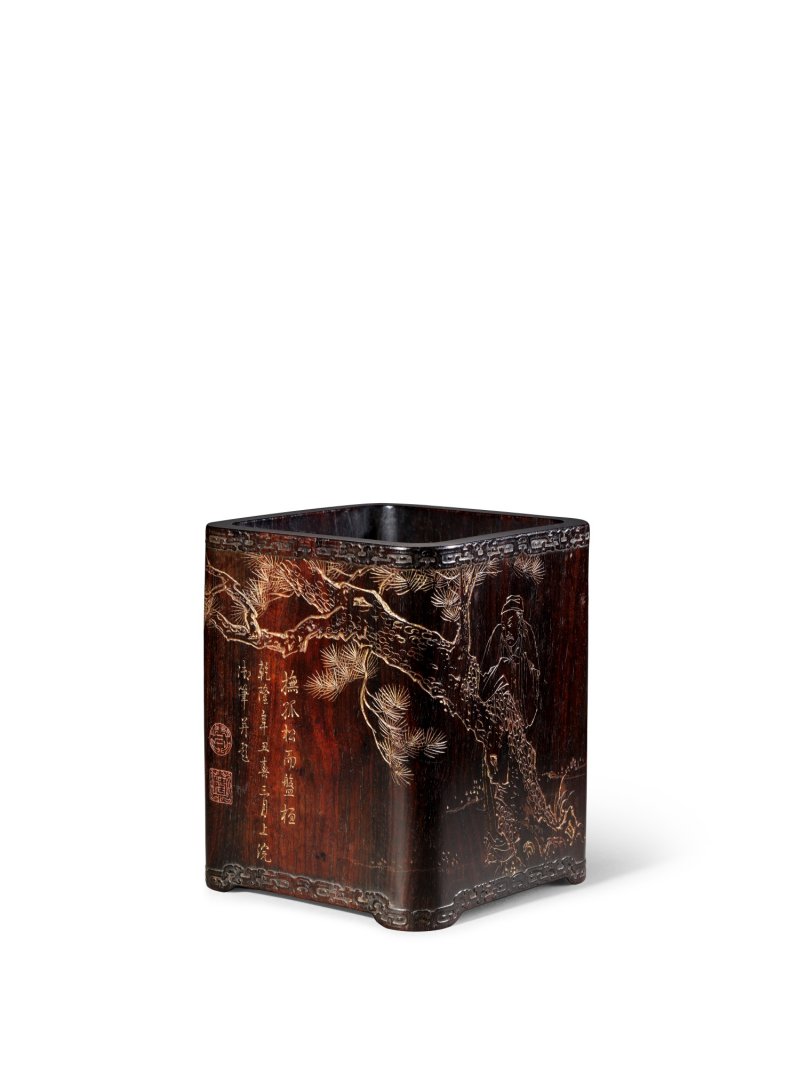

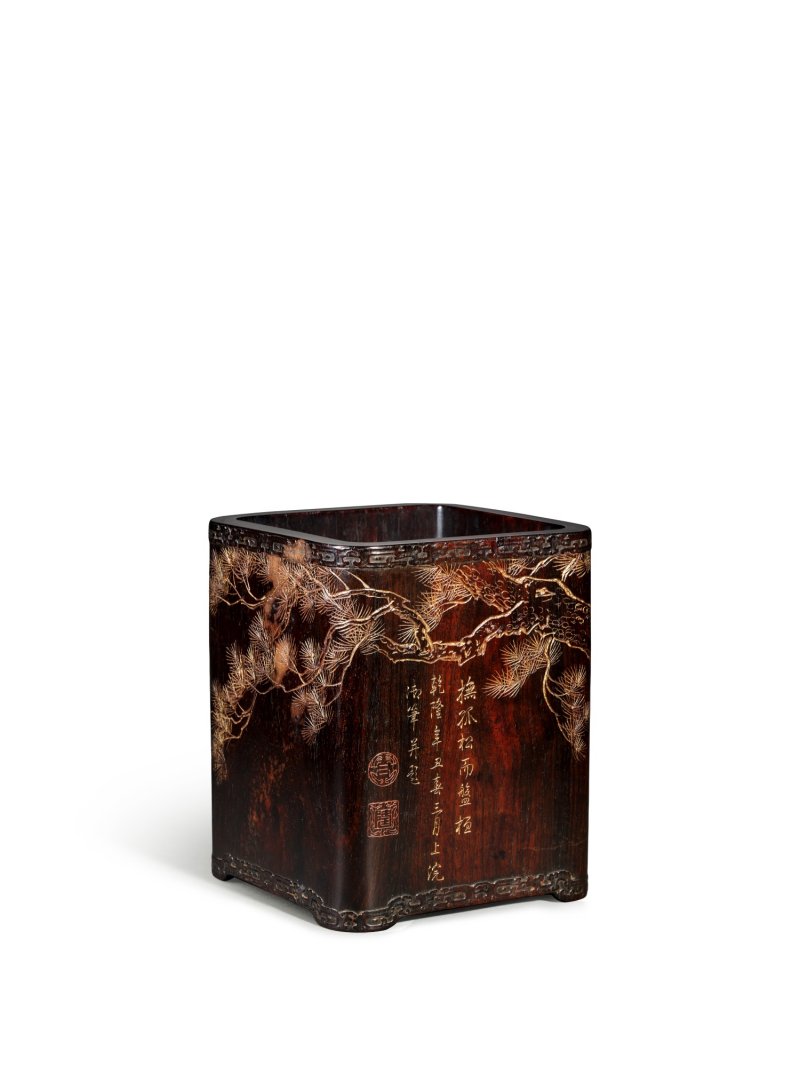
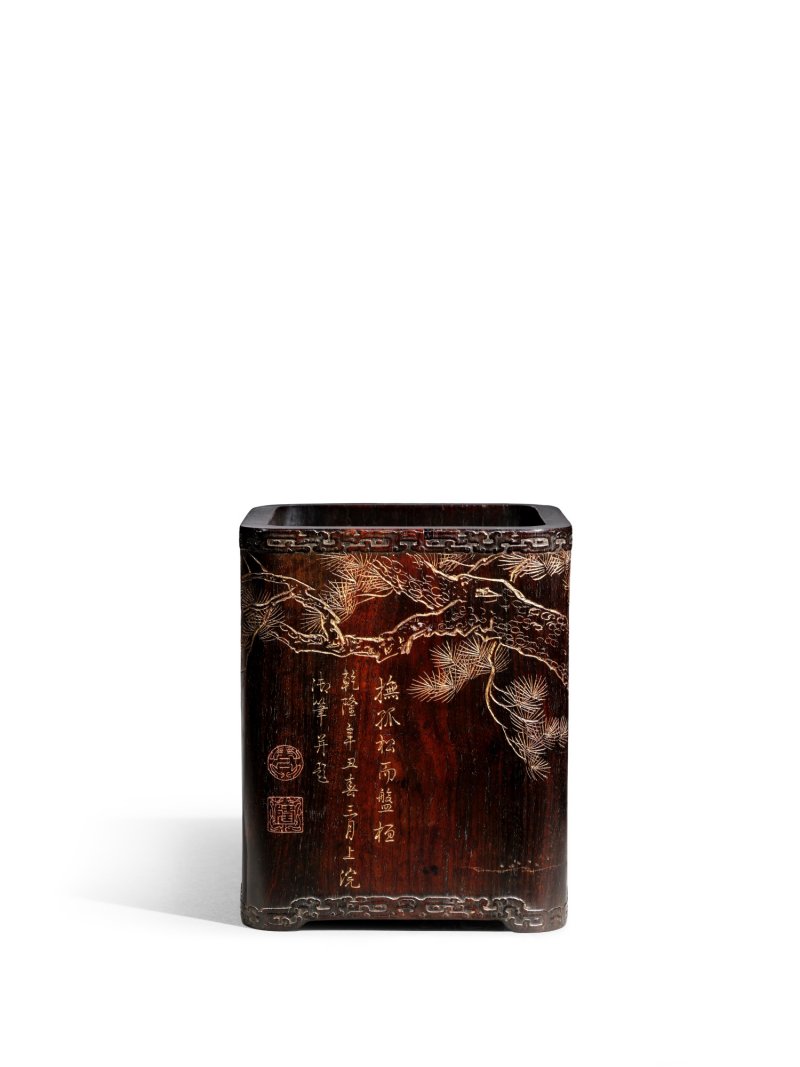
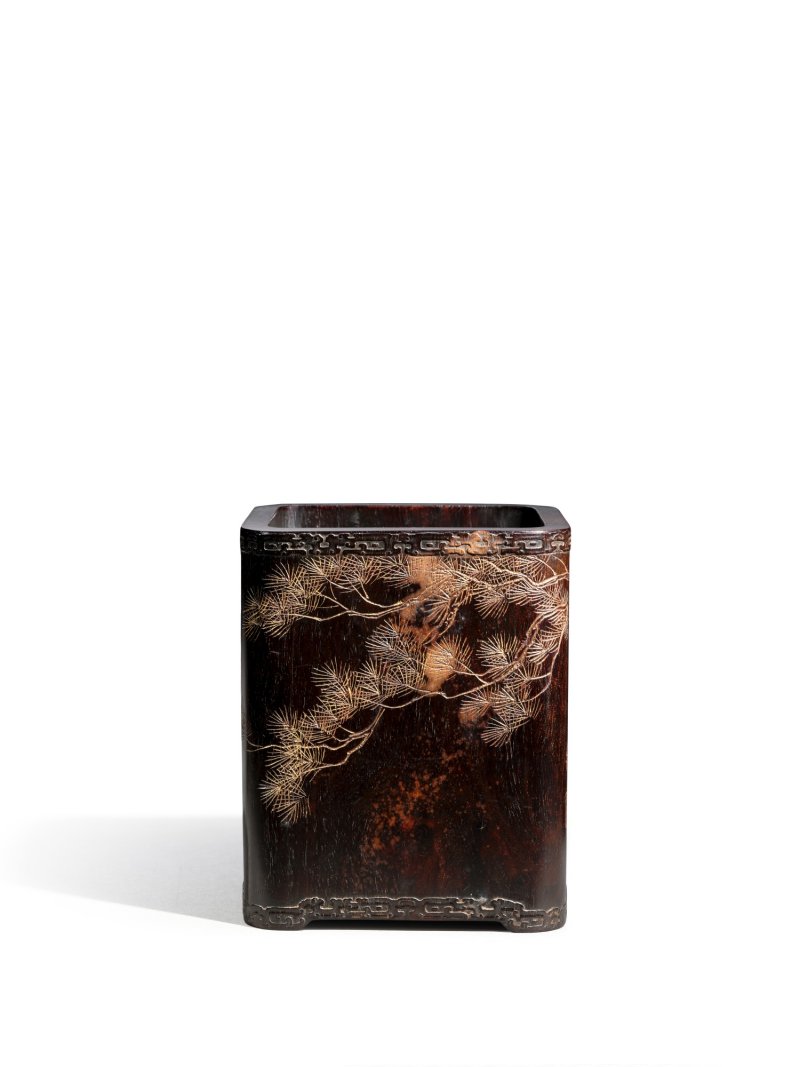
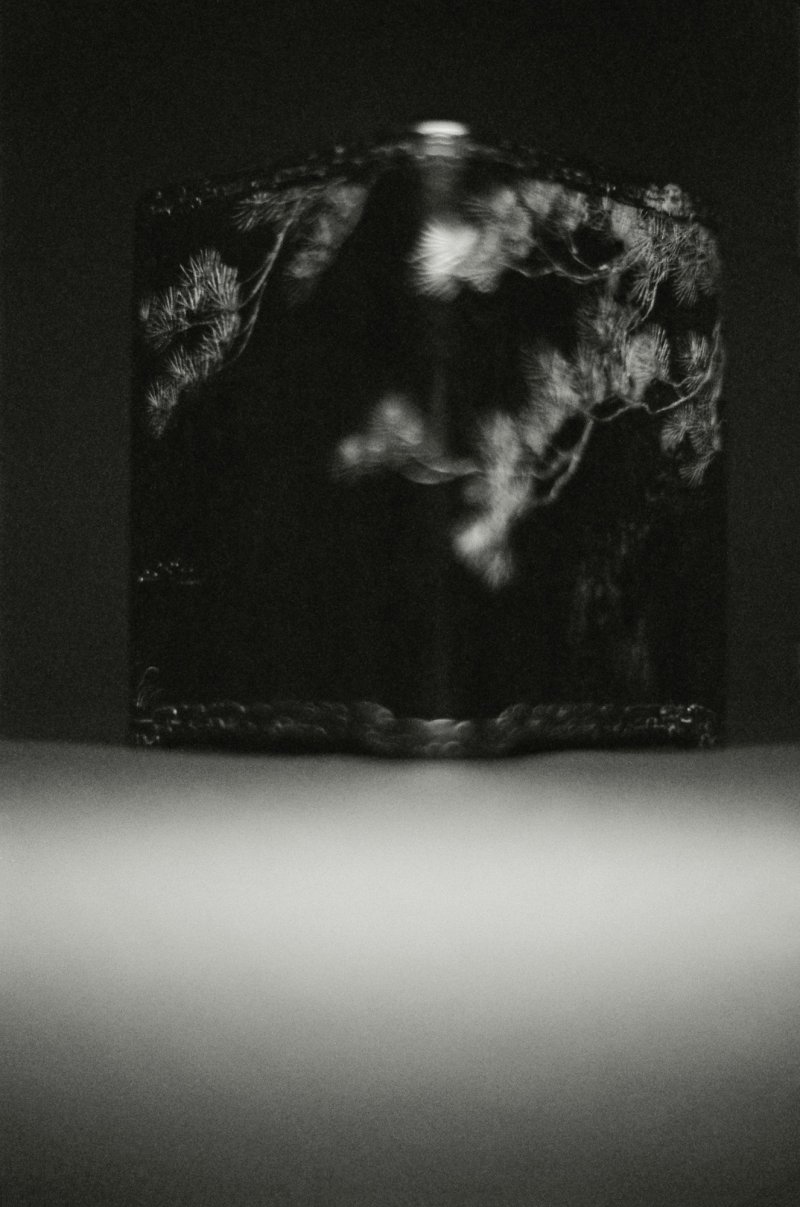
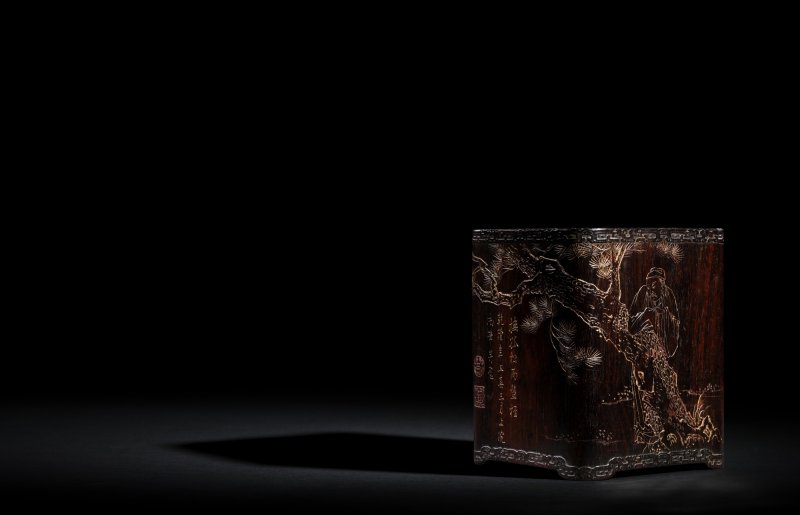
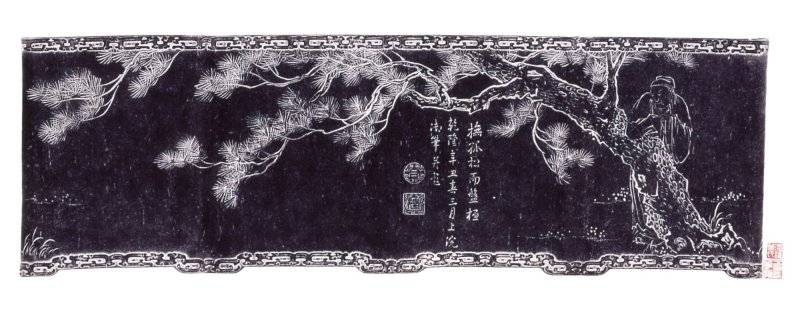
Lot 8066 An imperial gilt-inscribed zitan ‘pine’ brushpot with an imperial portrait of the Qianlong Emperor in Han-style robes, Qing dynasty, Qianlong period, dated to the spring of the xinchou year (1781) | 清乾隆 御題紫檀填金撫松御容圖方筆筒 《乾隆辛丑春三月上浣御筆并題》款
落槌价
预展中
成交价
预展中
| 拍卖公司 | 苏富比 |
|---|---|
| 拍卖时间 | 2026年10月30日 |
拍品信息
拍品名称
An imperial gilt-inscribed zitan ‘pine’ brushpot with an imperial portrait of the Qianlong Emperor in Han-style robes, Qing dynasty, Qianlong period, dated to the spring of the xinchou year (1781) | 清乾隆 御題紫檀填金撫松御容圖方筆筒 《乾隆辛丑春三月上浣御筆并題》款
起拍价
HKD 10,000,000
估值区间
10,000,000 - 20,000,000 HKD
尺寸
未知
品相
如欲了解本拍品狀況的更多資訊,請聯絡 Rubie.Fong@sothebys.com
更多信息
h. 14.2 cm
著录:Nicolas Chow, The Literati Aesthetic, Hong Kong, 2018, no. 24.
图录
说明:出版
仇國仕,《無盡意》,香港,2018年,編號24
An Imperial Vision: The Scholar and the Sovereign
This exquisite square zitan brushpot, meticulously embellished with the tianjin technique, showcases the Qianlong Emperor’s profound admiration for traditional Han Chinese literati culture and his refined imperial taste. Carved from precious zitan wood, the brushpot depicts a scholar resting by a pine tree. In the scene, an ancient pine twists robustly, while a scholar in flowing robes exudes a serene demeanour. Beside the scene is an imperial inscription: "Wandering and caressing the solitary pine. Inscribed and written by the imperial brush in the first ten days of the third month of the xinchou year of Qianlong [1781]." This line is derived from the famous masterpiece Guiqulaixi ci (The Return) by the Jin dynasty poet Tao Yuanming (365–427). This poem is recorded in volume 23 of the Yuzhi Tangshi (Imperial Anthology of Tang Poetry).
It is particularly noteworthy to trace the evolution of the Qianlong Emperor’s philosophical engagement with the motif of "caressing the solitary pine." On the painting Walking with a Staff in Pine Shade by Wen Zhengming (Palace Museum, Taipei, accession no. Guhua 00049700000), there is an imperial inscription from the spring of the bingyin year: "After Magistrate Tao returned, he wandered and caressed the solitary pine." At that time, it was the 11th year of Qianlong (1746), and the emperor was thirty-five years old (fig. 1). After thirty-five years of military and cultural achievements and extensive inspection tours, the seventy-one-year-old emperor returned from his western tour to Mount Wutai in the 46th year of his reign (1781) and inscribed this zitan brushpot with "Wandering and caressing the solitary pine." By embodying the Han scholar beneath the pine, Qianlong achieved a profound philosophical fusion of the sovereign and the hermit.
The motif of the scholar reclining beneath a pine tree decorating the brushpot is not merely a conventional decorative theme; rather, it serves as a three-dimensional manifestation of the emperor's carefully constructed dual persona. Inspired by the vast imperial collection, the Qianlong Emperor frequently commissioned court painters to recreate ancient masterpieces, substituting the original figures with his own visage. This allowed him to vicariously experience the realm of the painting's subjects. During his moments of respite from state affairs, he also left behind numerous inscriptions on paintings and calligraphy, reflecting his pursuit of the 'Three Perfections' (poetry, calligraphy, and painting) and the ideal union of these arts. This is essentially the concrete practice and aesthetic manifestation of Confucian thought in the realm of art. The core ideology of Confucianism emphasises personal cultivation, social responsibility, and the externalisation of inner virtue, which perfectly aligns with the artistic realm pursued by literati painters.
The academic discourse surrounding the Qianlong Emperor’s ‘portraits in Han-Chinese costume’ provides a crucial framework for understanding this brushpot. According to archival records, the painter Lu Can was commissioned to paint imperial portraits during the Qianlong reign, with eight portraits recorded. The depiction of Qianlong on this zitan brushpot bears a striking resemblance to his visage in the 1780 (the 45th year of his reign, at the age of seventy) version of the One or Two? (Shi yi shi er tu) portrait. Compare a version of this painting in the Palace Museum, Beijing (accession no. Gu 006491), which depicts the emperor in Han dress seated on a daybed, admiring his collection of antiquities (fig. 2). On the landscape screen behind him hangs a portrait with the exact same face as the seated emperor. Qianlong was so fond of this highly original composition that he commissioned court painters to create a total of five similar paintings. Using this 'picture within a picture' format to present an imperial portrait is entirely unique to Qianlong among all Chinese emperors; see The All Complete Qianlong: The Aesthetic Tastes of the Qing Emperor Gaozong, Taipei, 2013, fig. III-2.2.
As Professor Chen Pao-chen points out in her study of the Han-costume portraits of the Yongzheng and Qianlong emperors, the emperor's depiction in the flowing robes of a traditional Han scholar was entirely fictional, yet his facial features were highly realistic. Chen posits that while Qianlong strictly enforced Manchu sartorial codes in practical politics, he actively indulged in these 'painting games' within the realm of art. By transforming himself into a literatus well-versed in refined pursuits, Qianlong not only demonstrated his inclusive capacity to rule a multi-ethnic empire but also proclaimed to the world that he was the great synthesiser of Han Chinese refined culture and supreme taste. See Chen Pao-chen, 'On the Portraits of Emperors Yongzheng and Qianlong in Han-Chinese Costume', The Palace Museum Monthly of Chinese Art, 2010.
Furthermore, this brushpot resonates deeply with the emperor's cultural ambitions demonstrated during his Southern Inspection Tours. The emperor frequently carried ancient masterworks from the imperial collection in his luggage as 'pictorial guides'. Through the appreciation method of 'verifying against the actual scenery', the emperor sought to transcend the barriers of time and space through these artworks, closing the spiritual distance with past cultural giants and becoming their 'kindred spirit across the ages'. See Chiu Shih-hua, 'Inside his Luggage: The Appreciation and the Collection of Painting and Calligraphy of Emperor Qianlong during his Southern Inspection Tours', The Palace Museum Monthly of Chinese Art, 2015.
The physical presence of this brushpot on the emperor's desk is also closely related to his grand cultural vision. The Qianlong Emperor was extremely diligent in composing poetry and writing throughout his life, requiring a vast array of daily desk accessories; consequently, the inner court produced brushpots of incredibly diverse materials and decorations. In many of Qianlong's Han-costume portraits, the emperor is often depicted beside a stone table in the pine shade, accompanied by elegant scholarly items like a guqin, thereby aspiring to and imitating the leisurely life of ancient Han literati. See Ji Ruoxin, 'Looking at Emperor Qianlong through Artifacts', Emperor Qianlong's Cultural Enterprise, Palace Museum, Taipei, 2002.
This zitan brushpot is precisely a three-dimensional portrait in Han-Chinese costume. Crafted from the most prized imperial zitan wood and the tianjin technique, it carries the motif of the reclusive scholar most yearned for by Han literati, perfectly harmonising the absolute imperial power of a "Manchu sovereign" with the aesthetic ideals of a "Han literatus." This object is not merely a practical treasure for the imperial study, but an outstanding physical testament to the Qianlong Emperor forging himself as the orthodox inheritor of culture and communing spiritually with the ancients.
常见问题
这件An imperial gilt-inscribed zitan ‘pine’ brushpot with an imperial portrait of the Qianlong Emperor in Han-style robes, Qing dynasty, Qianlong period, dated to the spring of the xinchou year (1781) | 清乾隆 御題紫檀填金撫松御容圖方筆筒 《乾隆辛丑春三月上浣御筆并題》款的成交价是多少?
落槌价为 预展中。 成交价为 预展中。
拍品的品相状况如何?
如欲了解本拍品狀況的更多資訊,請聯絡 Rubie.Fong@sothebys.com
这件拍品被哪些著录书籍记载?
Nicolas Chow, The Literati Aesthetic, Hong Kong, 2018, no. 24.
图录
图录