

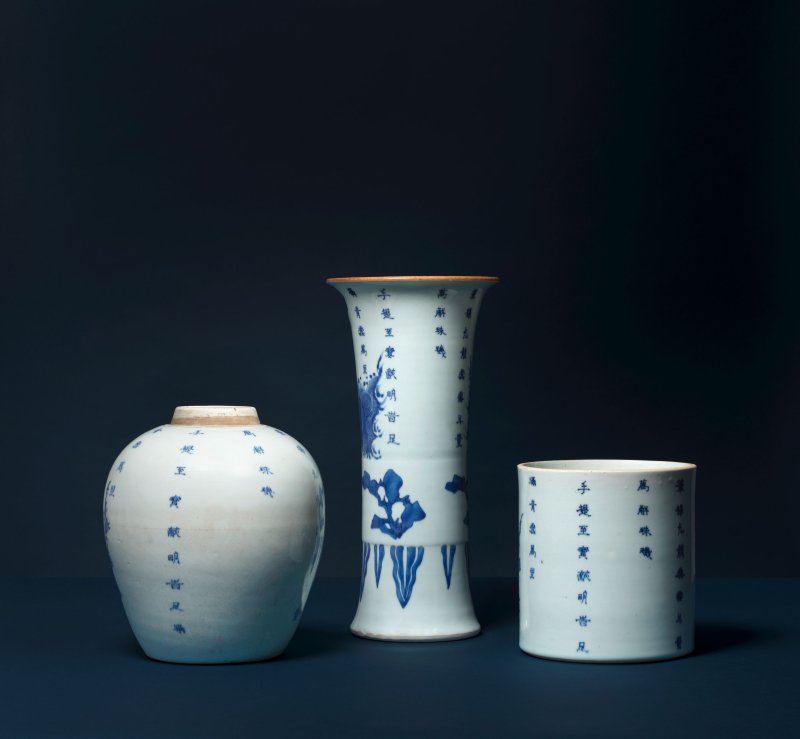
Lot 10 清順治 青花魁星點斗圖詩文罐 | A RARE BLUE AND WHITE 'KUI XING' JAR
落槌价
预展中
成交价
预展中
| 拍卖公司 | 邦瀚斯 |
|---|---|
| 拍卖时间 | 2026年11月05日 |
拍品信息
拍品名称
清順治 青花魁星點斗圖詩文罐 | A RARE BLUE AND WHITE 'KUI XING' JAR
年代
Shunzhi
起拍价
GBP 12,000
估值区间
GBP 12000 - 15000
尺寸
未知
品相
未知
更多信息
Shunzhi
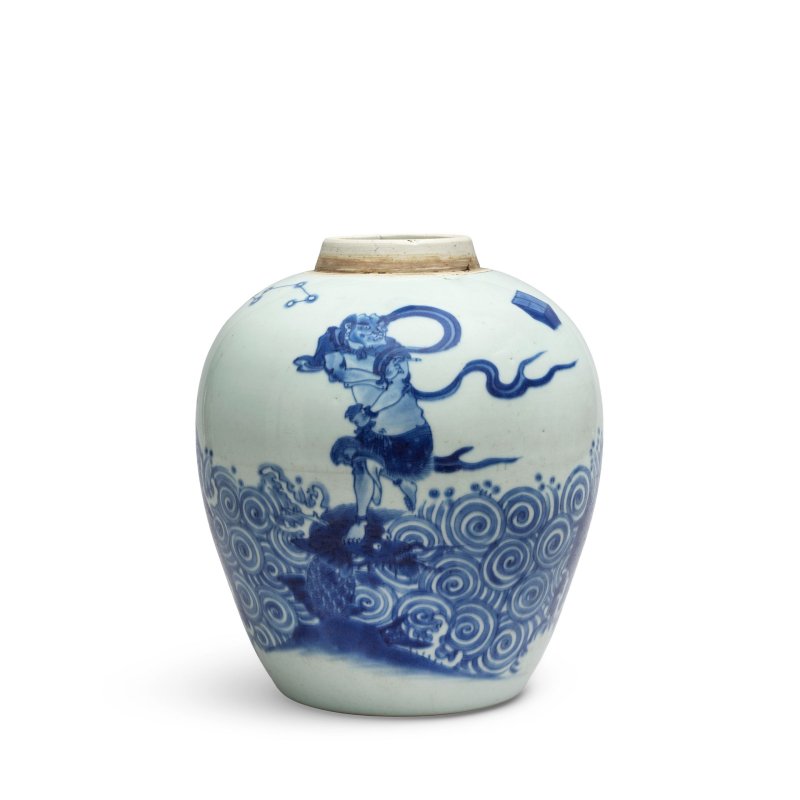
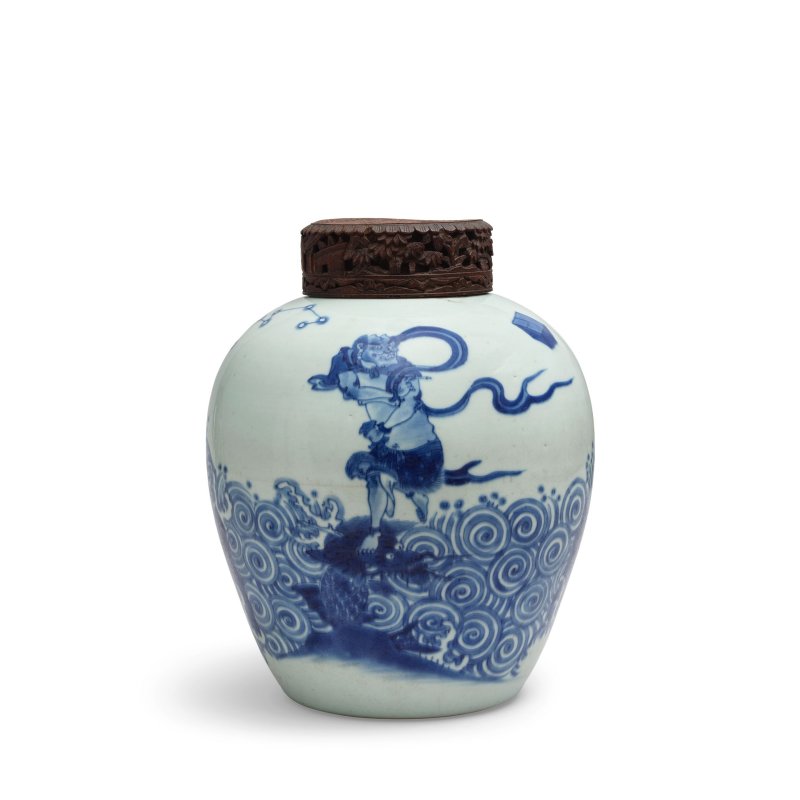
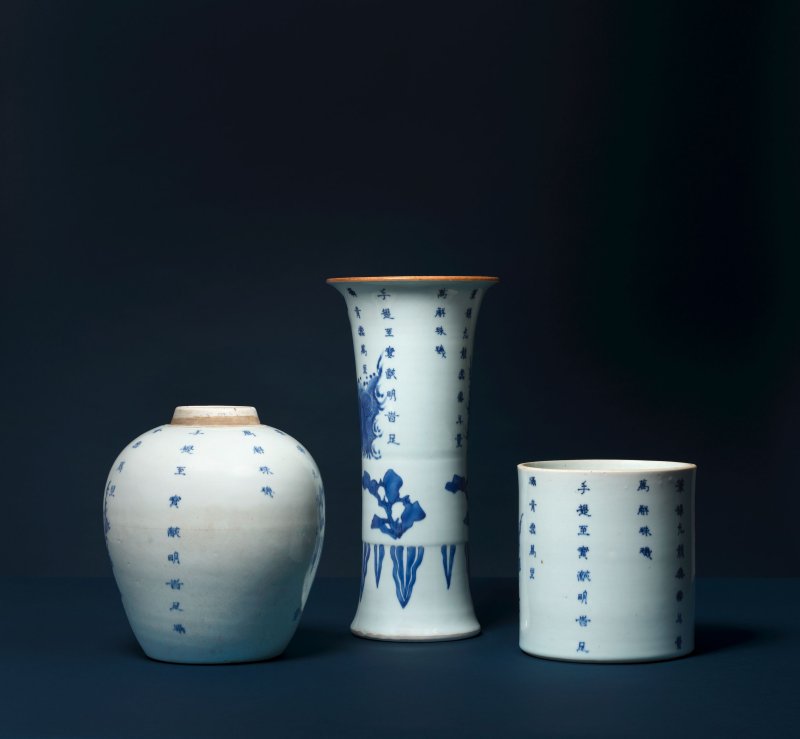
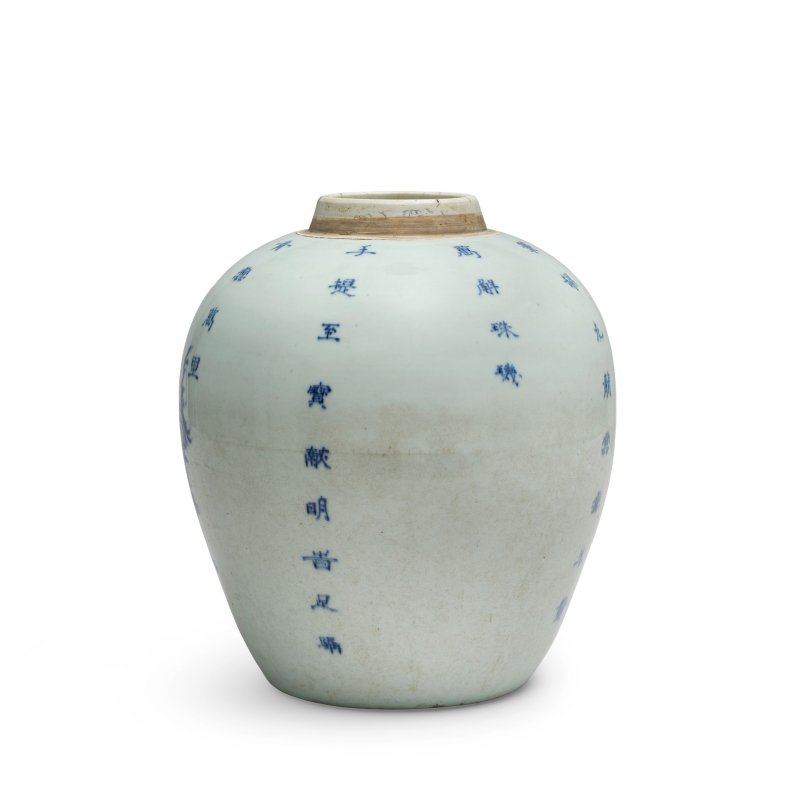
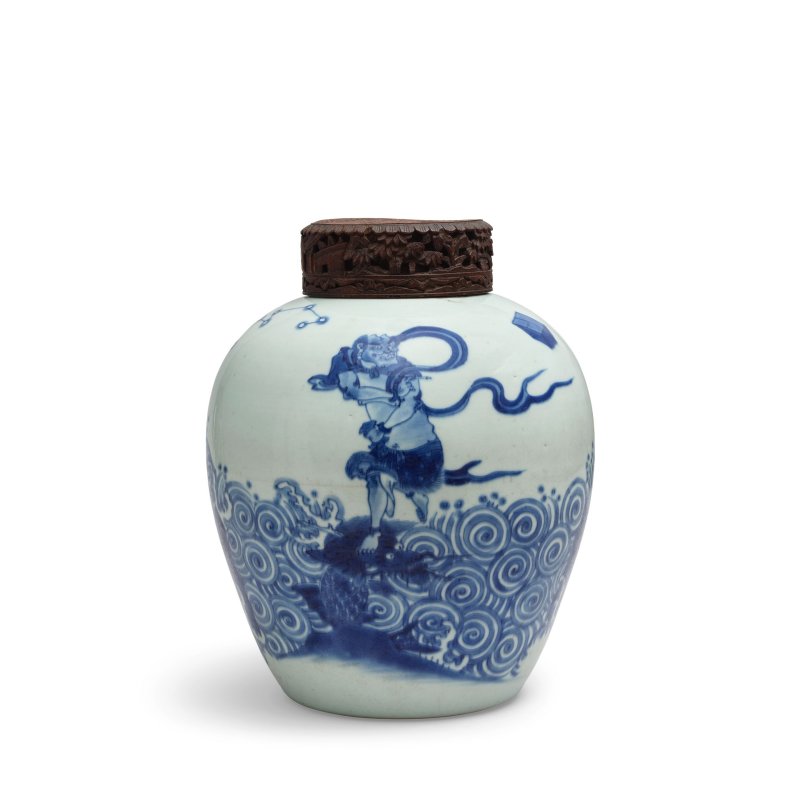
Robustly potted rising from a flat base to swelling shoulders surmounted by a tapering narrow mouth rim, boldly painted around the exterior with Kui Xing clad in animal fur tunic and billowing scarves, a brush in right hand and a silver ingot in his left, his left foot atop the mythical fish-dragon or ao, all amidst swirling waves, beneath the north star constellation and a dipper, all beside a twenty-five-character inscription, with carved bamboo cover. 26cm (10 1/4in) high. (2).
Footnotes
清順治 青花魁星點斗圖詩文罐
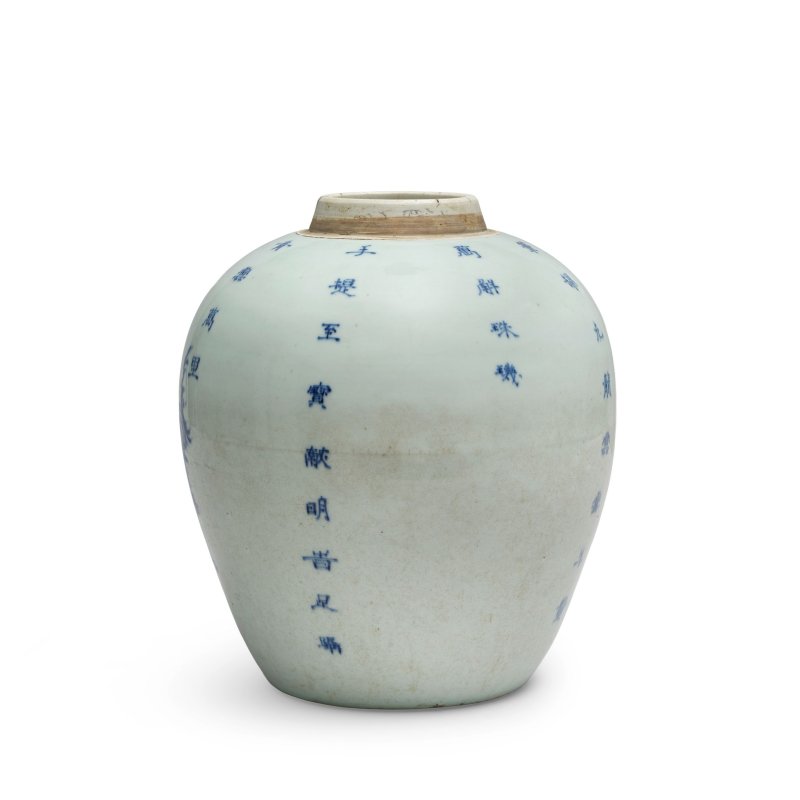
款識:筆掃九靝雲霧,斗量萬觚珠璣。手提至寶獻明時,足躡青雲萬里。
Provenance:
Jan van Beers Oriental Art, London
Acquired from the above on 5 December 2014
Published and Illustrated:
S.Marsh, Brushpots: A Collector's View, Hong Kong, 2020, pp.100-101
倫敦古董商Jan van Beers Oriental Art
從上處獲得于2014年12月5日
墨一閑,《筆筒淵鑒:收藏家的隨心所悟》,香港,2020年,第100-101頁
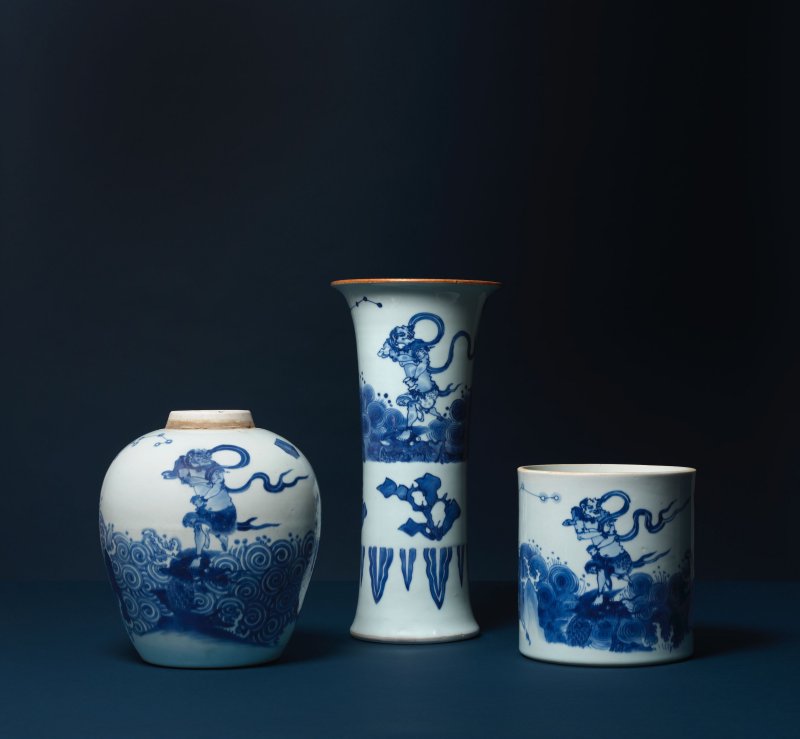
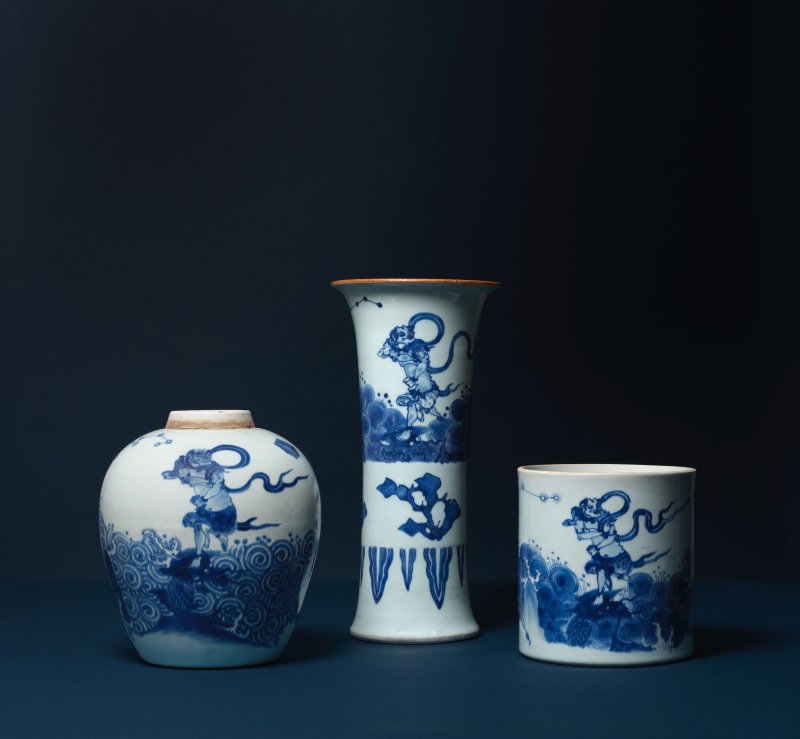
The present vessel belongs to a small group of highly distinctive Shunzhi period porcelains decorated with images of Kui Xing (魁星), the Daoist deity associated with literature, scholarly distinction, and success in the Imperial examinations. Accompanying the figure is a twenty-five-character poem, also found on Lots 9 and 11:
筆掃九靝雲霧,
斗量萬觚珠璣,
手提至寶獻明時,
足躡青雲萬里
Which may be translated:
The inscription is rich in examination imagery. The brush is endowed with the power to reach the celestial realm, whilst literary accomplishment is compared to pearls and jade of immeasurable worth. The final phrase, describing one who 'treads the blue clouds for ten thousand li', alludes to extraordinary advancement and success within the Imperial examination system. Together, text and image form a coherent visual programme celebrating scholarly achievement and official promotion.
Particularly noteworthy is the recurrence of both the poem and its distinctive calligraphy on related vessels (see also Lots 9 and 11). The inscriptions share an unusual archaic form of the character (時), meaning 'time' or 'moment', strongly suggesting the hand of a single specialist calligrapher or inscription writer. In , Michael Butler, Julia Curtis, and Stephen Little note (p.63) that Bai Qianshen identified this calligraphic hand as corresponding to that found on the celebrated 'Three Friends of Winter' vase dated 1653 in the Shanghai Museum.
For a further example of the subject, see a blue and white rolwagen, circa 1650, similarly decorated with Kui Xing and bearing the same inscription, illustrated by J.B.Curtis, , New York, 1995, pp.118–119.
Kui Xing occupied a special place in the aspirations of degree candidates. The character (魁) incorporates the radical for 'ghost' or 'demon' together with (斗), meaning a dipper, referring to the deity's association with the Big Dipper, represented on the present vessel by the square-form dipper floating above. According to legend, Kui Xing was a gifted scholar whose unattractive appearance prevented him from attaining examination success. After throwing himself into a river in despair, he was rescued by the mythical creature and subsequently transformed into the heavenly patron of scholars. Images of Kui Xing standing atop an therefore became enduring symbols of literary distinction, examination success, and advancement to high office.
Compare with a blue and white documentary Kui Xing vessel, dated to the Jiawu year, corresponding to 1654, and of the period, which was sold at Bonhams London, 3 November 2022, lot 3.
Robustly potted rising from a flat base to swelling shoulders surmounted by a tapering narrow mouth rim, boldly painted around the exterior with Kui Xing clad in animal fur tunic and billowing scarves, a brush in right hand and a silver ingot in his left, his left foot atop the mythical fish-dragon or ao, all amidst swirling waves, beneath the north star constellation and a dipper, all beside a twenty-five-character inscription, with carved bamboo cover. 26cm (10 1/4in) high. (2).
Footnotes
清順治 青花魁星點斗圖詩文罐
款識:筆掃九靝雲霧,斗量萬觚珠璣。手提至寶獻明時,足躡青雲萬里。
Provenance:
Jan van Beers Oriental Art, London
Acquired from the above on 5 December 2014
Published and Illustrated:
S.Marsh, Brushpots: A Collector's View, Hong Kong, 2020, pp.100-101
倫敦古董商Jan van Beers Oriental Art
從上處獲得于2014年12月5日
墨一閑,《筆筒淵鑒:收藏家的隨心所悟》,香港,2020年,第100-101頁
The present vessel belongs to a small group of highly distinctive Shunzhi period porcelains decorated with images of Kui Xing (魁星), the Daoist deity associated with literature, scholarly distinction, and success in the Imperial examinations. Accompanying the figure is a twenty-five-character poem, also found on Lots 9 and 11:
筆掃九靝雲霧,
斗量萬觚珠璣,
手提至寶獻明時,
足躡青雲萬里
Which may be translated:
The inscription is rich in examination imagery. The brush is endowed with the power to reach the celestial realm, whilst literary accomplishment is compared to pearls and jade of immeasurable worth. The final phrase, describing one who 'treads the blue clouds for ten thousand li', alludes to extraordinary advancement and success within the Imperial examination system. Together, text and image form a coherent visual programme celebrating scholarly achievement and official promotion.
Particularly noteworthy is the recurrence of both the poem and its distinctive calligraphy on related vessels (see also Lots 9 and 11). The inscriptions share an unusual archaic form of the character (時), meaning 'time' or 'moment', strongly suggesting the hand of a single specialist calligrapher or inscription writer. In , Michael Butler, Julia Curtis, and Stephen Little note (p.63) that Bai Qianshen identified this calligraphic hand as corresponding to that found on the celebrated 'Three Friends of Winter' vase dated 1653 in the Shanghai Museum.
For a further example of the subject, see a blue and white rolwagen, circa 1650, similarly decorated with Kui Xing and bearing the same inscription, illustrated by J.B.Curtis, , New York, 1995, pp.118–119.
Kui Xing occupied a special place in the aspirations of degree candidates. The character (魁) incorporates the radical for 'ghost' or 'demon' together with (斗), meaning a dipper, referring to the deity's association with the Big Dipper, represented on the present vessel by the square-form dipper floating above. According to legend, Kui Xing was a gifted scholar whose unattractive appearance prevented him from attaining examination success. After throwing himself into a river in despair, he was rescued by the mythical creature and subsequently transformed into the heavenly patron of scholars. Images of Kui Xing standing atop an therefore became enduring symbols of literary distinction, examination success, and advancement to high office.
Compare with a blue and white documentary Kui Xing vessel, dated to the Jiawu year, corresponding to 1654, and of the period, which was sold at Bonhams London, 3 November 2022, lot 3.
常见问题
这件清順治 青花魁星點斗圖詩文罐 | A RARE BLUE AND WHITE 'KUI XING' JAR的成交价是多少?
落槌价为 预展中。 成交价为 预展中。