
拍品信息
拍品名称
Li Zhu (Chinese, Late 15th-16th Century)
起拍价
未知
估值区间
$10,000 - $20,000
尺寸
Image 48 x 29 1/2 in., 122 x 75 cm.
品相
未知
更多信息
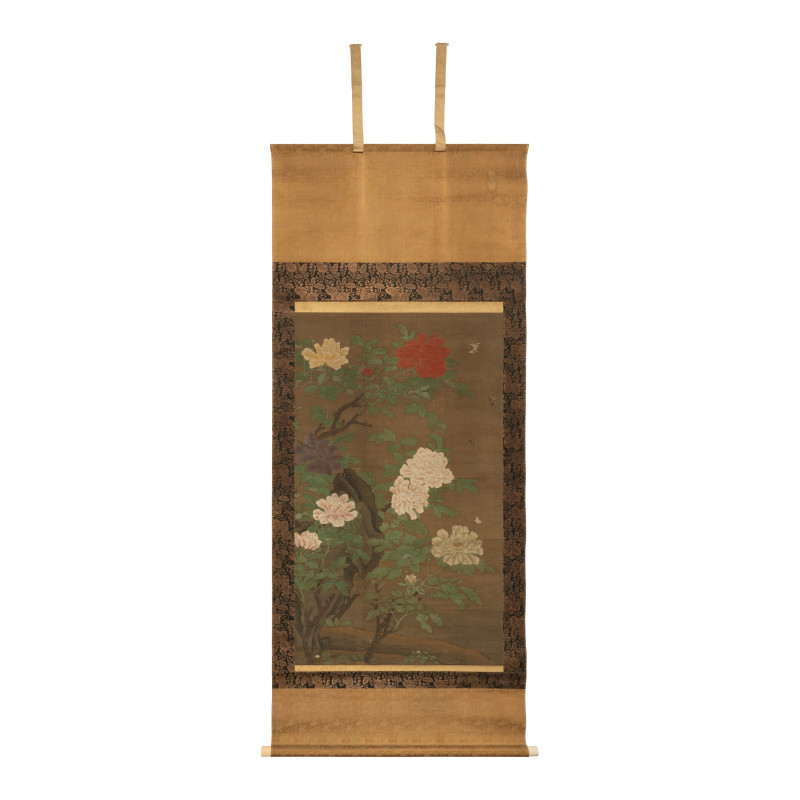
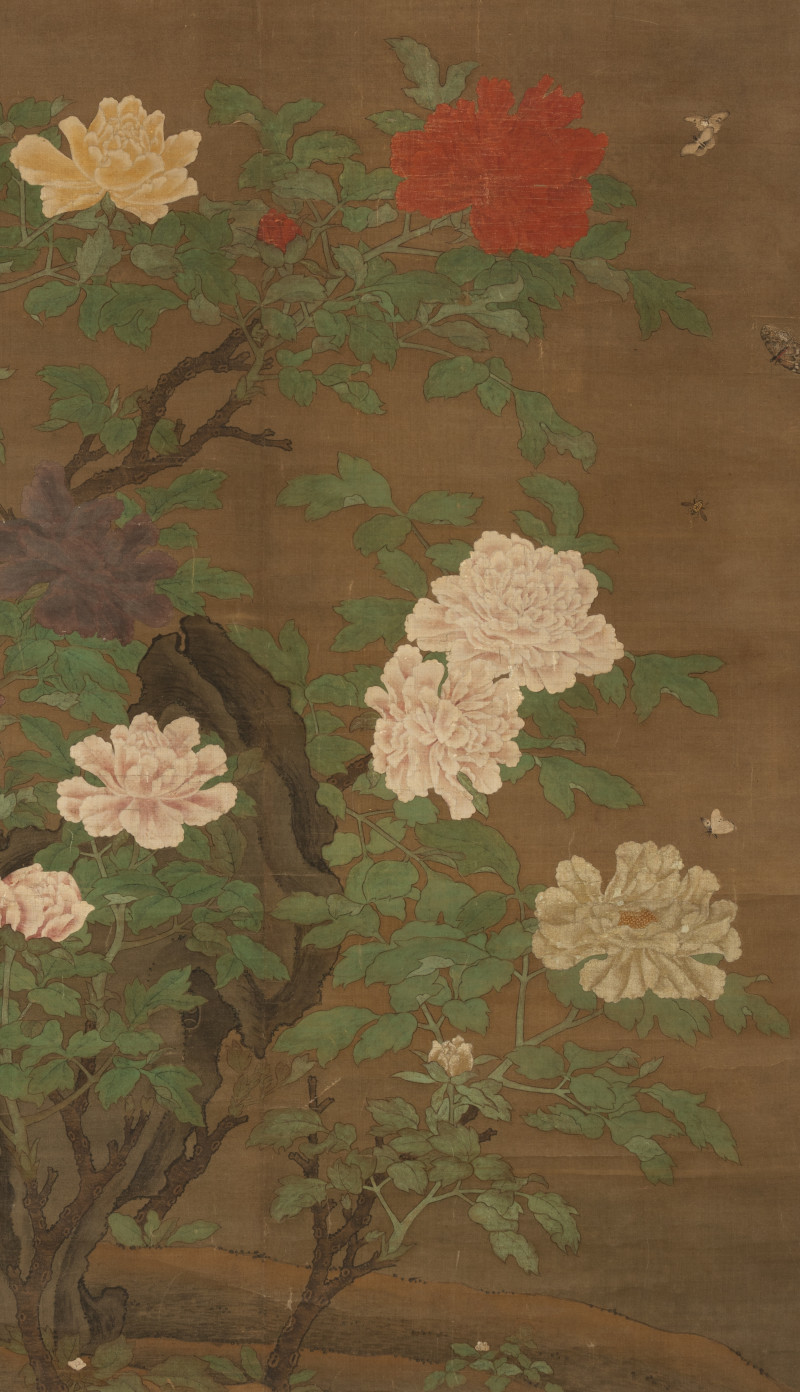
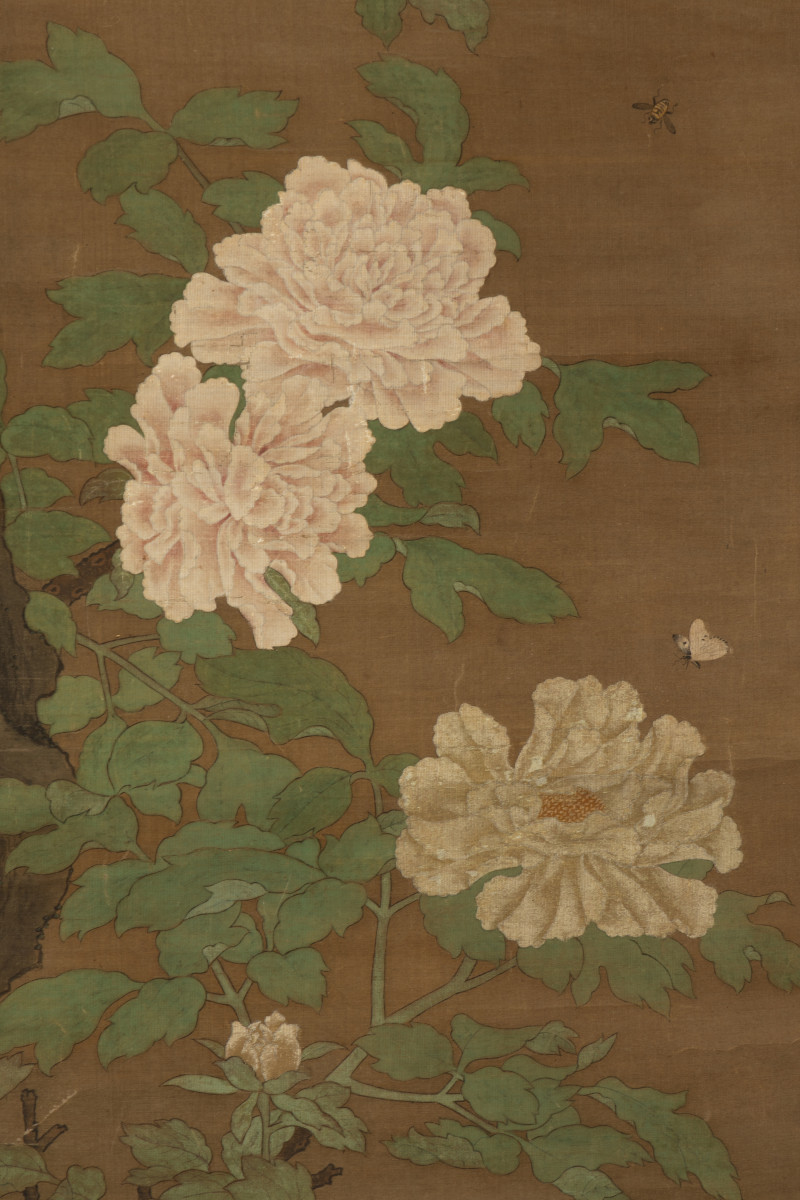
Peonies and Butterflies
Ink and color on silk, hanging scroll.
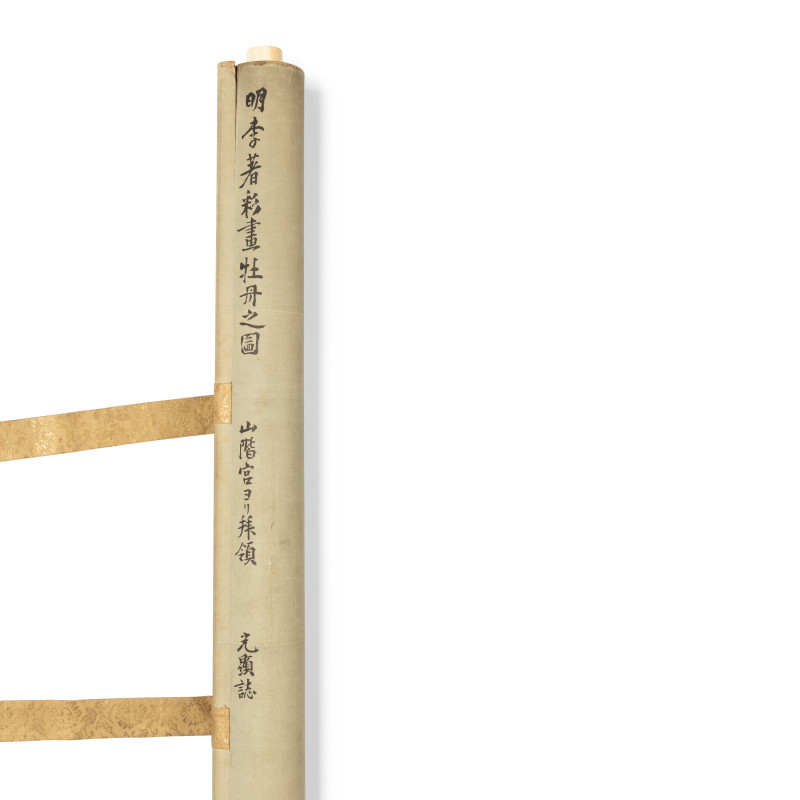
Titleslip: Received as a gift from Yamashina-no-miya (Prince Yamashina, 山階宮), recorded by Tanaka Mitsuaki (田中光顕, 1843–1939).
Note:
The inscription on the title slip was written in the hand of the recipient Tanaka Mitsuaki (田中光顕, 1843–1939), who used the honorific term hairyō (拜領) to record a gift graciously received from a social and political superior, Prince Yamashina (山階宮).
Tanaka, born in Kōchi and known by the pseudonym Seizan, rose from a samurai of the Tosa domain to the hereditary peerage, created a marquis in the 1880s and later a count in 1907. He served as Minister of the Imperial Household from 1898 to 1909. This position placed him in close and sustained contact with the imperial family and its collateral princely houses. The gift is recorded as coming from the Yamashina-no-miya (山階宮), one of the shinnōke, hereditary princely branches of the Japanese imperial family, formed in 1871 by Prince Akira, eldest son of Prince Fushimi Kuniye, as a collateral line eligible to succeed to the Chrysanthemum Throne should the main imperial line fail to produce an heir.
李著
(明正德-嘉靖年间)
牡丹蛺蝶圖
絹本設色,立軸
題簽:明李著彩畫牡丹之圖。山階宮ヨリ拜領,光顕誌。
注:
題簽墨書“山階宮ヨリ拜領,光顕誌”,意爲“蒙山階宮惠賜,光顕謹識”,乃受贈者本人田中光顕(1843–1939)親筆,“拜領”(謙敬地記錄領受尊貴者所賜之物)表明此畫得自日本皇族,即“山階宮”。
“山階宮”是伏見宮邦家親王庶長子晃親王於江戶時代末期所創立的宮家,也就是伏見宮的分家。共傳三代:初代晃親王生於文化十三年(1816),元治元年(1864)獲敕許還俗並受親王宣下,賜宮號山階宮,明治三十一年(1898)以八十三歲高齡辭世;第二代菊麿王為晃親王長子,曾任海軍大佐,並自費於筑波山興建氣象觀測所,明治四十一年(1908)以三十六歲之齡去世;第三代武彥王生於1898年,隨父從軍海軍,1923年與賀陽宮邦憲王之女佐紀子女王成婚,佐紀子女王於關東大地震中罹難,武彥王其後精神受創,1932年編入預備役,1947年因盟軍總司令部之命脫離皇籍,1987年病逝,無子嗣,山階宮直系遂告斷絕。
受贈者田中光顕原名濱田辰彌,通稱顯助,號青山,天保十四年(1843)生於土佐國高岡郡佐川村,早年投身尊王攘夷運動,加入土佐勤王黨,後脫藩追隨中岡慎太郎之陸援隊,並參與戊辰戰爭。明治維新後出仕新政府,曾隨岩倉使節團巡歷歐洲,歷任陸軍少將、初代內閣書記官長、警視總監、學習院院長等要職。明治二十年(1887)敘子爵,列入華族;明治三十一年(1898)出任宮內大臣,任職約十一年,與同鄉佐佐木高行、土方久元等人同為擁護天皇親政之宮廷政治家中堅;明治四十年(1907)月晉陞伯爵;1909年因收賄疑雲辭職,退出政界。晚年致力表彰維新烈士,蒐集志士遺墨遺物,分別捐贈茨城縣大洗町常陽明治記念館(今幕末與明治博物館)、東京都多摩市多摩聖蹟記念館,以及故鄉高知縣佐川之青山文庫。
田中光顕任宮內大臣期間(1898–1909),與皇族及各宮家往來密切,此作很可能在此期間受贈。至於惠賜者是晃親王還是菊麿王,因兩人於田中任職宮內大臣期間先後辭世(晃親王歿於1898年2月,菊麿王歿於1908年),暫無法確認。
本品委托方樂薩卓夫婦(樂薩卓博物館前主席)1980年代購自芝加哥古董商Chase Gilmore在自家藝廊舉辦的某駐日美軍軍官遺產專場。該軍官原籍芝加哥,駐日多年,去世後遺產由軍方運回芝城,家人委托古董商拍賣。
Property from Mr. and Mrs. John and Reva Lizzadro, Oak Brook, Illinois.
Provenance:
Ex. Collection of Yamashina-no-miya (Prince Yamashina, 山階宮), Tokyo, Japan.
Ex. Collection of Tanaka Mitsuaki (田中光顕, 1843–1939).
Chase Gilmore Galleries, Chicago, Illinois, Estate Auction of a Former Officer of the United States Forces Japan, in the 1980s.
Property from Mr. and Mrs. John and Reva Lizzadro, Oak Brook, Illinois.
For decades, John and Reva Lizzadro dedicated themselves to the study, preservation, and promotion of lapidary art. Together they led the Lizzadro Museum of Lapidary Art, first in Elmhurst and later in Oak Brook, Illinois, carrying forward the vision of John's father, Joseph F. Lizzadro (1898–1972), who founded the museum in 1962 to share his celebrated collection of jade and hardstone carvings with the public.
The family's collecting tradition began in the late 1930s, when Joseph Lizzadro, an Italian immigrant who rose from working in his father's Chicago cobbler shop to become Chairman of Meade Electric Company, acquired his first Chinese jade carving. He had intended to cut it into pieces for jewelry, but admiration for the original craftsman's skill persuaded him to preserve it intact. That moment marked the beginning of what would become one of America's finest collections of Chinese jade and hardstone carvings.
Reva joined the museum before John, and for many years the couple worked side by side, overseeing its collections, exhibitions, acquisitions, and educational programs. Their stewardship was deeply personal and remarkably hands-on, and under their leadership the museum's holdings expanded significantly while its reputation grew into one of the leading institutions in the United States devoted to lapidary art.
One of their greatest achievements came in 2018, when the Lizzadro Museum was entrusted with the Altar of the Green Jade Pagoda, gifted by the Oakland Museum of California following it deaccession from that collection.
Commissioned by the renowned Chinese jade collector and dealer Chang Wenti (1886-1961), the monumental work first captivated audiences at Chicago's Century of Progress Exposition in 1933 before touring extensively throughout the United States. Its arrival at the Lizzadro Museum marked a significant milestone in the institution's decades-long commitment to preserving and promoting Chinese lapidary art.
During their tenure, selected works from the museum were deaccessioned through a series of single-owner sales at Christie's New York in 2013, 2014, and 2018. The present collection comes from John and Reva Lizzadro's personal holdings, assembled over a lifetime spent collecting and studying the artistry of Chinese jade and hardstone carving.
來源:
山階宮親王家族舊藏,后贈予宮內大臣田中光顕(1843–1939)。
伊利諾伊州芝加哥市Chase Gilmore古董行1980年代某駐日美軍軍官遺產專場。
伊利諾伊州Oak Brook市樂薩卓夫婦藏。
芝加哥近郊的樂薩卓寶石工藝博物館由企業家約瑟夫·樂薩卓(1898-1972)建立,作爲子女中唯一對珠寶有興趣的兒子,約翰在1970年代加入博物館,太太麗芙比他更早,大學時就在博物館打工,是老樂薩卓鍾意的人才,後與約翰成婚。
老樂薩卓生於意大利,少時移民芝加哥,父親是鞋匠,定居后重操舊業,樂薩卓一邊讀書,一邊在鞋店幫忙。1916年,18嵗的他進入Meade電力公司,從小工做到董事會主席,標准美國夢。
工作之餘,老樂薩卓熱衷於寶石切割,蒐集了世界各地的礦石。1930年代末要在美國市面找到未經切割的玉料很不容易,玉雕卻有不少,而且價格相宜,吸引了不少愛好者購買后當作原石加工。老樂薩卓購得的第一件中國玉雕是一隻吊链瓶,原打算把吊瓶切開、改成首飾,但瓶子的雕工讓他大為讚歎、不忍下手,從此醉心玉雕,終生不渝。
藏品日豐,老樂薩卓希望將自己對寶石雕刻的熱愛發展為文化事業,與大眾分享。1962年11月,樂薩卓博物館開幕,至今仍是美國少數致力於寶石工藝的博物館之一。
約翰與麗芙是家族收藏與博物館事業的守護者(其他兄弟姐妹均在自家企業工作),二人多年並肩,對館藏、運營、展覽以及教育項目親力親為。在他們的主持下,博物館的學術與收藏地位亦日益提升。
該舘近年的大動作之一是買下麥當勞總部舊址,將博物館遷居到這片福地,隨即擊敗一衆大博物館,贏得舊金山奧克蘭博物館贈予的张文棣(1886-1961)翡翠寶塔。
該塔由上海商人张文棣主持雕成,原料是1922年從緬甸運來、驚動上海的重達九噸的翡翠原石,张以十萬大洋買下,召集150名工匠、耗時十年打造了这座翡翠壇城。以上海龙华塔为原型,底座三级,仿太和殿样式,千餘翠片层层插嵌。1933年亮相芝加哥萬國博覽會,震驚四座,後多地巡展。1939年旧金山因为金山大桥落成而舉辦万国博览会,再次受邀,时值抗战,海外华人捐款促其成行。
展覽結束後,國内環境動蕩,张家居留金山,张文棣去世后,家人将宝塔捐赠给奥克兰博物馆。1989年加州大地震,宝塔倒地,有所損壞。2018年,奥克兰博物馆難以維持高昂的維護費用,發出轉讓邀請,樂薩卓博物館以寶石工藝的特長和“希望寶塔回歸芝加哥”提案擊敗了三家大博物館,贏得捐贈。
該塔運回芝加哥時恰逢疫情,博物館被迫歇業,正好贏得了修復、組裝的時間。年逾七旬的樂薩卓夫婦與修復師一起動手,完成項目,不久退休,博物館交由子侄打理。
如今,年逾八旬的樂薩卓夫婦釋出所藏,有些繼承自家族,有些早年購入。博物館曾於2013、2014及2018年在紐約佳士得以專場形式上拍部分藏品,成果斐然,相信今次樂薩卓夫婦委托的藏品,也會取得不錯成果。
以下内容由AI翻译:
【名称】
明正德-嘉靖年间李著牡丹蛱蝶图(立轴)
【描述】
牡丹和蝴蝶
绢本设色,挂轴。
题签:收到山阶宫(Prince Yamashina, 山階宮)的礼物,由田中光顕(1843–1939)记录。
Ink and color on silk, hanging scroll.
Titleslip: Received as a gift from Yamashina-no-miya (Prince Yamashina, 山階宮), recorded by Tanaka Mitsuaki (田中光顕, 1843–1939).
Note:
The inscription on the title slip was written in the hand of the recipient Tanaka Mitsuaki (田中光顕, 1843–1939), who used the honorific term hairyō (拜領) to record a gift graciously received from a social and political superior, Prince Yamashina (山階宮).
Tanaka, born in Kōchi and known by the pseudonym Seizan, rose from a samurai of the Tosa domain to the hereditary peerage, created a marquis in the 1880s and later a count in 1907. He served as Minister of the Imperial Household from 1898 to 1909. This position placed him in close and sustained contact with the imperial family and its collateral princely houses. The gift is recorded as coming from the Yamashina-no-miya (山階宮), one of the shinnōke, hereditary princely branches of the Japanese imperial family, formed in 1871 by Prince Akira, eldest son of Prince Fushimi Kuniye, as a collateral line eligible to succeed to the Chrysanthemum Throne should the main imperial line fail to produce an heir.
李著
(明正德-嘉靖年间)
牡丹蛺蝶圖
絹本設色,立軸
題簽:明李著彩畫牡丹之圖。山階宮ヨリ拜領,光顕誌。
注:
題簽墨書“山階宮ヨリ拜領,光顕誌”,意爲“蒙山階宮惠賜,光顕謹識”,乃受贈者本人田中光顕(1843–1939)親筆,“拜領”(謙敬地記錄領受尊貴者所賜之物)表明此畫得自日本皇族,即“山階宮”。
“山階宮”是伏見宮邦家親王庶長子晃親王於江戶時代末期所創立的宮家,也就是伏見宮的分家。共傳三代:初代晃親王生於文化十三年(1816),元治元年(1864)獲敕許還俗並受親王宣下,賜宮號山階宮,明治三十一年(1898)以八十三歲高齡辭世;第二代菊麿王為晃親王長子,曾任海軍大佐,並自費於筑波山興建氣象觀測所,明治四十一年(1908)以三十六歲之齡去世;第三代武彥王生於1898年,隨父從軍海軍,1923年與賀陽宮邦憲王之女佐紀子女王成婚,佐紀子女王於關東大地震中罹難,武彥王其後精神受創,1932年編入預備役,1947年因盟軍總司令部之命脫離皇籍,1987年病逝,無子嗣,山階宮直系遂告斷絕。
受贈者田中光顕原名濱田辰彌,通稱顯助,號青山,天保十四年(1843)生於土佐國高岡郡佐川村,早年投身尊王攘夷運動,加入土佐勤王黨,後脫藩追隨中岡慎太郎之陸援隊,並參與戊辰戰爭。明治維新後出仕新政府,曾隨岩倉使節團巡歷歐洲,歷任陸軍少將、初代內閣書記官長、警視總監、學習院院長等要職。明治二十年(1887)敘子爵,列入華族;明治三十一年(1898)出任宮內大臣,任職約十一年,與同鄉佐佐木高行、土方久元等人同為擁護天皇親政之宮廷政治家中堅;明治四十年(1907)月晉陞伯爵;1909年因收賄疑雲辭職,退出政界。晚年致力表彰維新烈士,蒐集志士遺墨遺物,分別捐贈茨城縣大洗町常陽明治記念館(今幕末與明治博物館)、東京都多摩市多摩聖蹟記念館,以及故鄉高知縣佐川之青山文庫。
田中光顕任宮內大臣期間(1898–1909),與皇族及各宮家往來密切,此作很可能在此期間受贈。至於惠賜者是晃親王還是菊麿王,因兩人於田中任職宮內大臣期間先後辭世(晃親王歿於1898年2月,菊麿王歿於1908年),暫無法確認。
本品委托方樂薩卓夫婦(樂薩卓博物館前主席)1980年代購自芝加哥古董商Chase Gilmore在自家藝廊舉辦的某駐日美軍軍官遺產專場。該軍官原籍芝加哥,駐日多年,去世後遺產由軍方運回芝城,家人委托古董商拍賣。
Property from Mr. and Mrs. John and Reva Lizzadro, Oak Brook, Illinois.
Provenance:
Ex. Collection of Yamashina-no-miya (Prince Yamashina, 山階宮), Tokyo, Japan.
Ex. Collection of Tanaka Mitsuaki (田中光顕, 1843–1939).
Chase Gilmore Galleries, Chicago, Illinois, Estate Auction of a Former Officer of the United States Forces Japan, in the 1980s.
Property from Mr. and Mrs. John and Reva Lizzadro, Oak Brook, Illinois.
For decades, John and Reva Lizzadro dedicated themselves to the study, preservation, and promotion of lapidary art. Together they led the Lizzadro Museum of Lapidary Art, first in Elmhurst and later in Oak Brook, Illinois, carrying forward the vision of John's father, Joseph F. Lizzadro (1898–1972), who founded the museum in 1962 to share his celebrated collection of jade and hardstone carvings with the public.
The family's collecting tradition began in the late 1930s, when Joseph Lizzadro, an Italian immigrant who rose from working in his father's Chicago cobbler shop to become Chairman of Meade Electric Company, acquired his first Chinese jade carving. He had intended to cut it into pieces for jewelry, but admiration for the original craftsman's skill persuaded him to preserve it intact. That moment marked the beginning of what would become one of America's finest collections of Chinese jade and hardstone carvings.
Reva joined the museum before John, and for many years the couple worked side by side, overseeing its collections, exhibitions, acquisitions, and educational programs. Their stewardship was deeply personal and remarkably hands-on, and under their leadership the museum's holdings expanded significantly while its reputation grew into one of the leading institutions in the United States devoted to lapidary art.
One of their greatest achievements came in 2018, when the Lizzadro Museum was entrusted with the Altar of the Green Jade Pagoda, gifted by the Oakland Museum of California following it deaccession from that collection.
Commissioned by the renowned Chinese jade collector and dealer Chang Wenti (1886-1961), the monumental work first captivated audiences at Chicago's Century of Progress Exposition in 1933 before touring extensively throughout the United States. Its arrival at the Lizzadro Museum marked a significant milestone in the institution's decades-long commitment to preserving and promoting Chinese lapidary art.
During their tenure, selected works from the museum were deaccessioned through a series of single-owner sales at Christie's New York in 2013, 2014, and 2018. The present collection comes from John and Reva Lizzadro's personal holdings, assembled over a lifetime spent collecting and studying the artistry of Chinese jade and hardstone carving.
來源:
山階宮親王家族舊藏,后贈予宮內大臣田中光顕(1843–1939)。
伊利諾伊州芝加哥市Chase Gilmore古董行1980年代某駐日美軍軍官遺產專場。
伊利諾伊州Oak Brook市樂薩卓夫婦藏。
芝加哥近郊的樂薩卓寶石工藝博物館由企業家約瑟夫·樂薩卓(1898-1972)建立,作爲子女中唯一對珠寶有興趣的兒子,約翰在1970年代加入博物館,太太麗芙比他更早,大學時就在博物館打工,是老樂薩卓鍾意的人才,後與約翰成婚。
老樂薩卓生於意大利,少時移民芝加哥,父親是鞋匠,定居后重操舊業,樂薩卓一邊讀書,一邊在鞋店幫忙。1916年,18嵗的他進入Meade電力公司,從小工做到董事會主席,標准美國夢。
工作之餘,老樂薩卓熱衷於寶石切割,蒐集了世界各地的礦石。1930年代末要在美國市面找到未經切割的玉料很不容易,玉雕卻有不少,而且價格相宜,吸引了不少愛好者購買后當作原石加工。老樂薩卓購得的第一件中國玉雕是一隻吊链瓶,原打算把吊瓶切開、改成首飾,但瓶子的雕工讓他大為讚歎、不忍下手,從此醉心玉雕,終生不渝。
藏品日豐,老樂薩卓希望將自己對寶石雕刻的熱愛發展為文化事業,與大眾分享。1962年11月,樂薩卓博物館開幕,至今仍是美國少數致力於寶石工藝的博物館之一。
約翰與麗芙是家族收藏與博物館事業的守護者(其他兄弟姐妹均在自家企業工作),二人多年並肩,對館藏、運營、展覽以及教育項目親力親為。在他們的主持下,博物館的學術與收藏地位亦日益提升。
該舘近年的大動作之一是買下麥當勞總部舊址,將博物館遷居到這片福地,隨即擊敗一衆大博物館,贏得舊金山奧克蘭博物館贈予的张文棣(1886-1961)翡翠寶塔。
該塔由上海商人张文棣主持雕成,原料是1922年從緬甸運來、驚動上海的重達九噸的翡翠原石,张以十萬大洋買下,召集150名工匠、耗時十年打造了这座翡翠壇城。以上海龙华塔为原型,底座三级,仿太和殿样式,千餘翠片层层插嵌。1933年亮相芝加哥萬國博覽會,震驚四座,後多地巡展。1939年旧金山因为金山大桥落成而舉辦万国博览会,再次受邀,时值抗战,海外华人捐款促其成行。
展覽結束後,國内環境動蕩,张家居留金山,张文棣去世后,家人将宝塔捐赠给奥克兰博物馆。1989年加州大地震,宝塔倒地,有所損壞。2018年,奥克兰博物馆難以維持高昂的維護費用,發出轉讓邀請,樂薩卓博物館以寶石工藝的特長和“希望寶塔回歸芝加哥”提案擊敗了三家大博物館,贏得捐贈。
該塔運回芝加哥時恰逢疫情,博物館被迫歇業,正好贏得了修復、組裝的時間。年逾七旬的樂薩卓夫婦與修復師一起動手,完成項目,不久退休,博物館交由子侄打理。
如今,年逾八旬的樂薩卓夫婦釋出所藏,有些繼承自家族,有些早年購入。博物館曾於2013、2014及2018年在紐約佳士得以專場形式上拍部分藏品,成果斐然,相信今次樂薩卓夫婦委托的藏品,也會取得不錯成果。
以下内容由AI翻译:
【名称】
明正德-嘉靖年间李著牡丹蛱蝶图(立轴)
【描述】
牡丹和蝴蝶
绢本设色,挂轴。
题签:收到山阶宫(Prince Yamashina, 山階宮)的礼物,由田中光顕(1843–1939)记录。
常见问题
拍品的尺寸是多少?
Image 48 x 29 1/2 in., 122 x 75 cm.