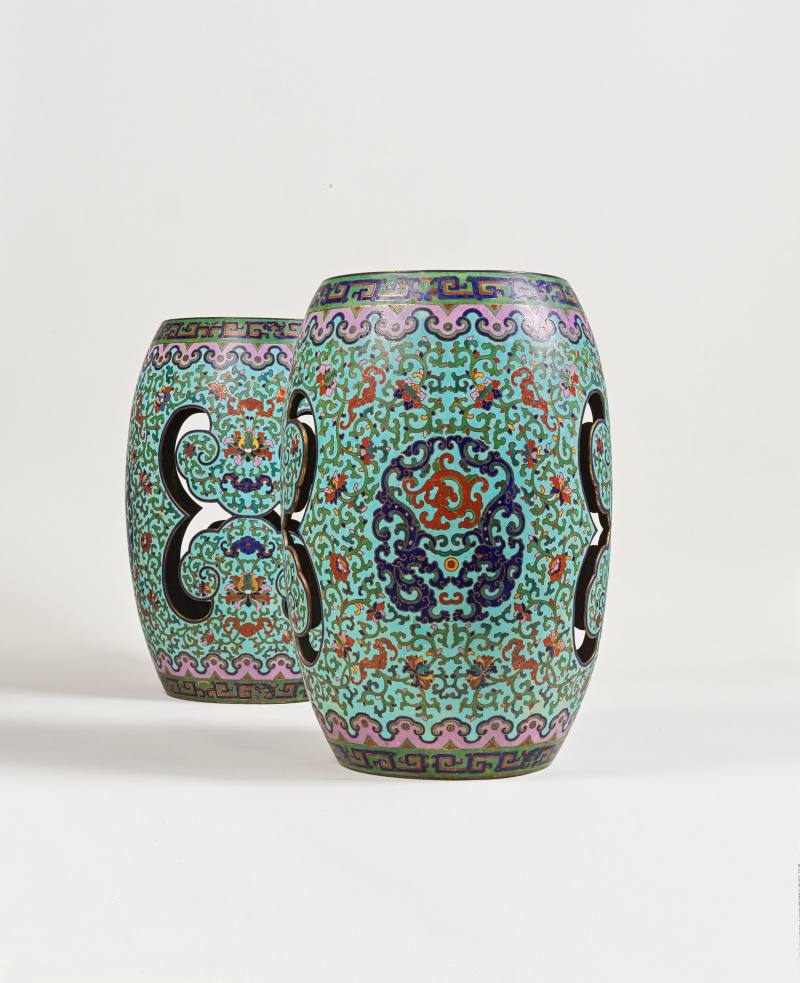

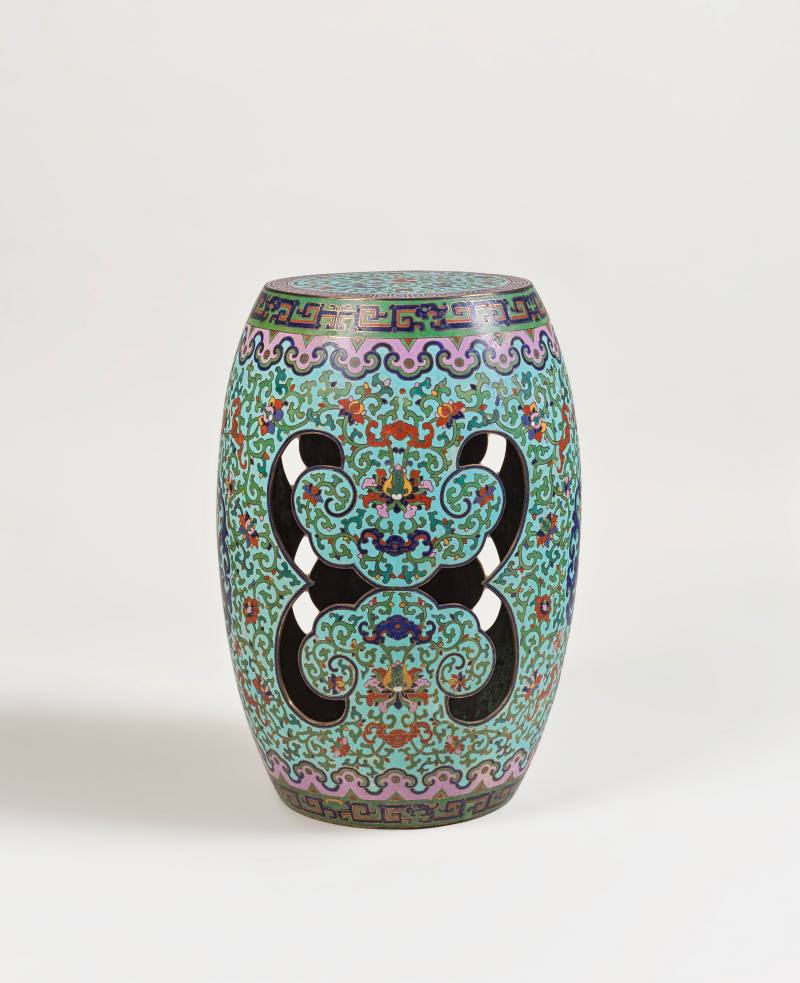
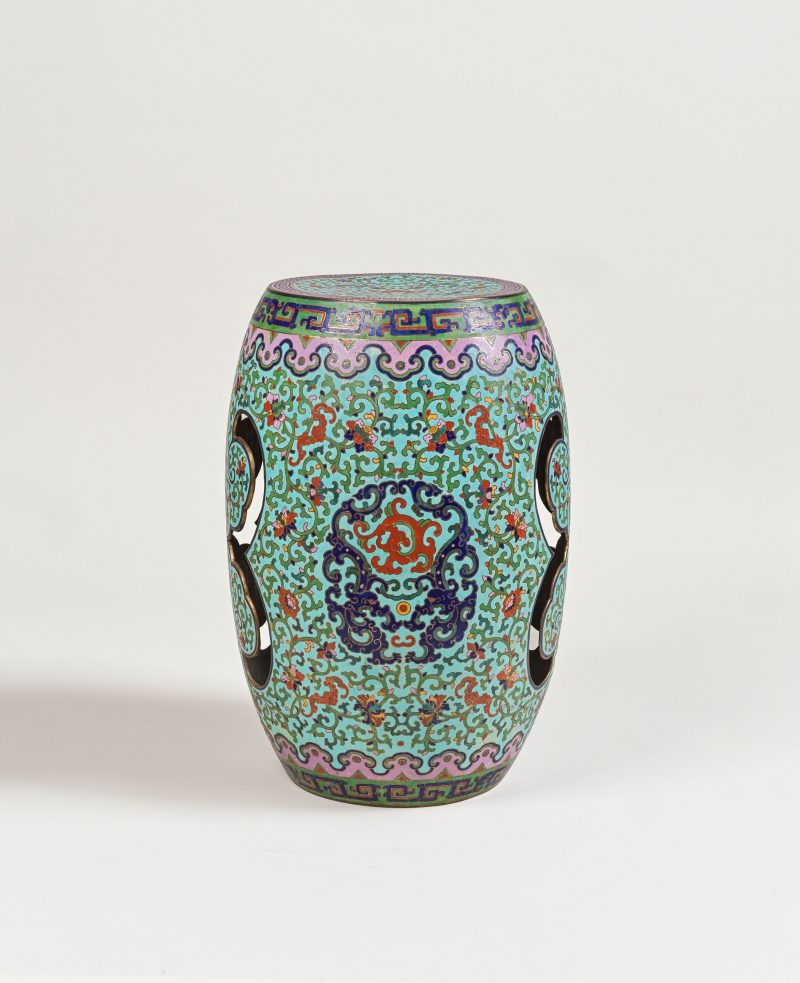
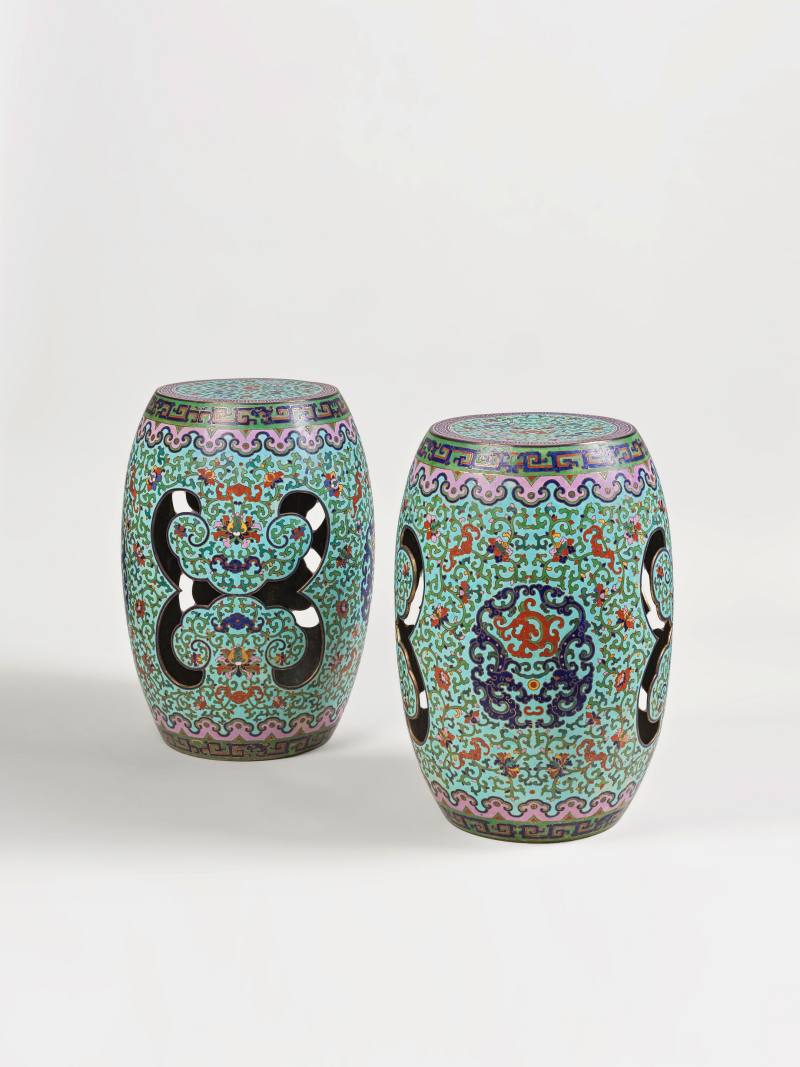
Lot 25 清乾隆 掐絲琺琅蓮蝠紋繡墩一對 | RARE PAIRE DE TABOURETS IMPÉRIAUX EN BRONZE DORÉ ET ÉMAUX CHAMPLEVÉS
落槌价
预展中
成交价
预展中
| 拍卖公司 | 邦瀚斯 |
|---|---|
| 拍卖时间 | 2026年12月10日 |
拍品信息
拍品名称
清乾隆 掐絲琺琅蓮蝠紋繡墩一對 | RARE PAIRE DE TABOURETS IMPÉRIAUX EN BRONZE DORÉ ET ÉMAUX CHAMPLEVÉS
年代
清乾隆
起拍价
未知
估值区间
EUR 120,000–150,000
尺寸
Each 53 cm (20 7/8 in.) high
品相
未知
更多信息
RARE PAIRE DE TABOURETS IMPÉRIAUX EN BRONZE DORÉ ET ÉMAUX CHAMPLEVÉS
Dynastie Qing, époque Qianlong (1736-1795)
A RARE PAIR OF IMPERIAL CHAMPLEVÉ ENAMEL GARDEN STOOLS
Qing Dynasty, Qianlong period
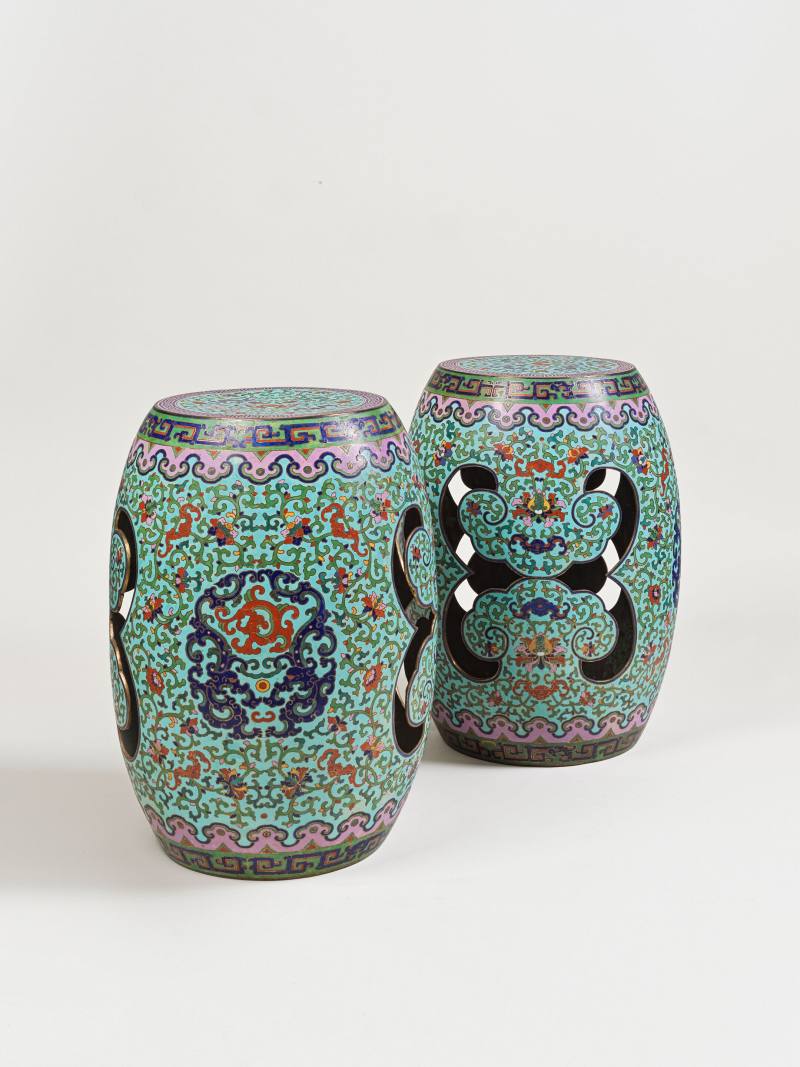
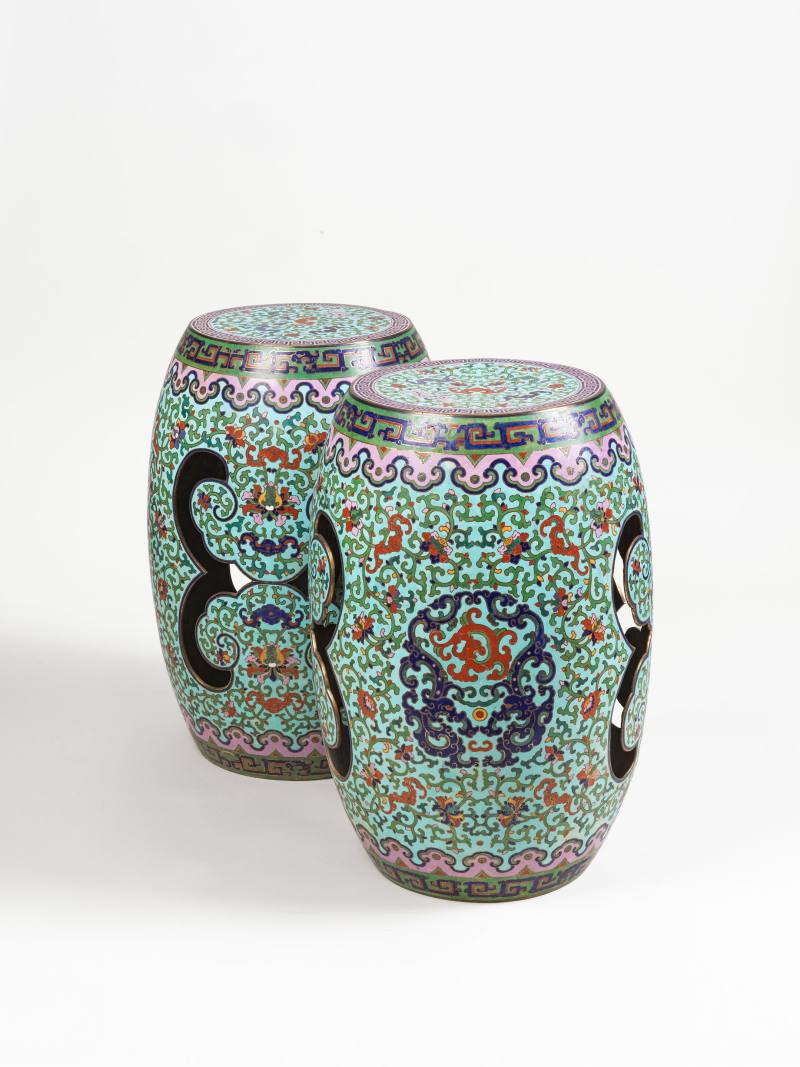
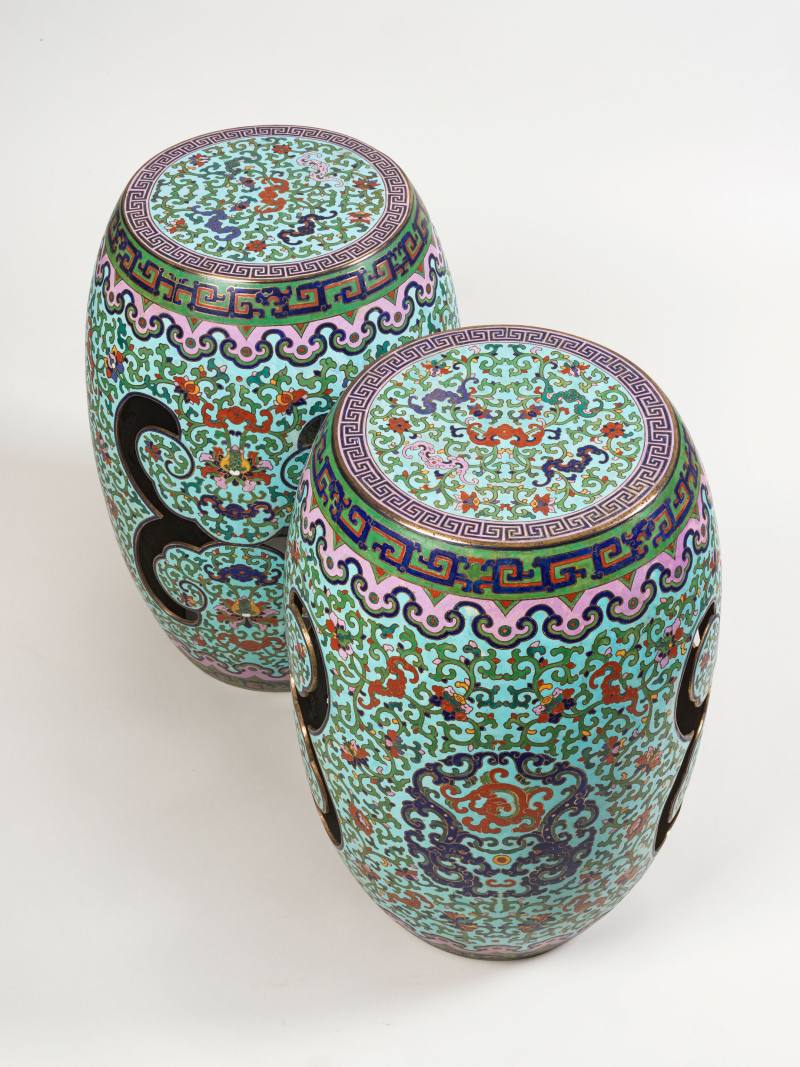
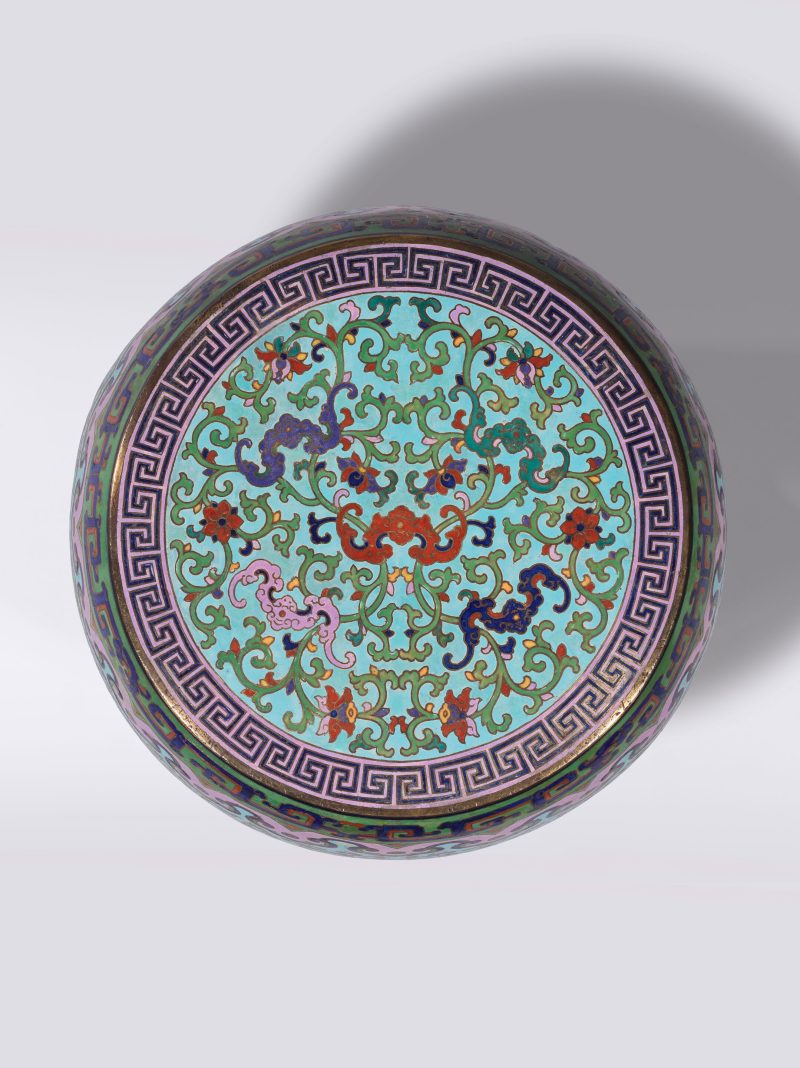
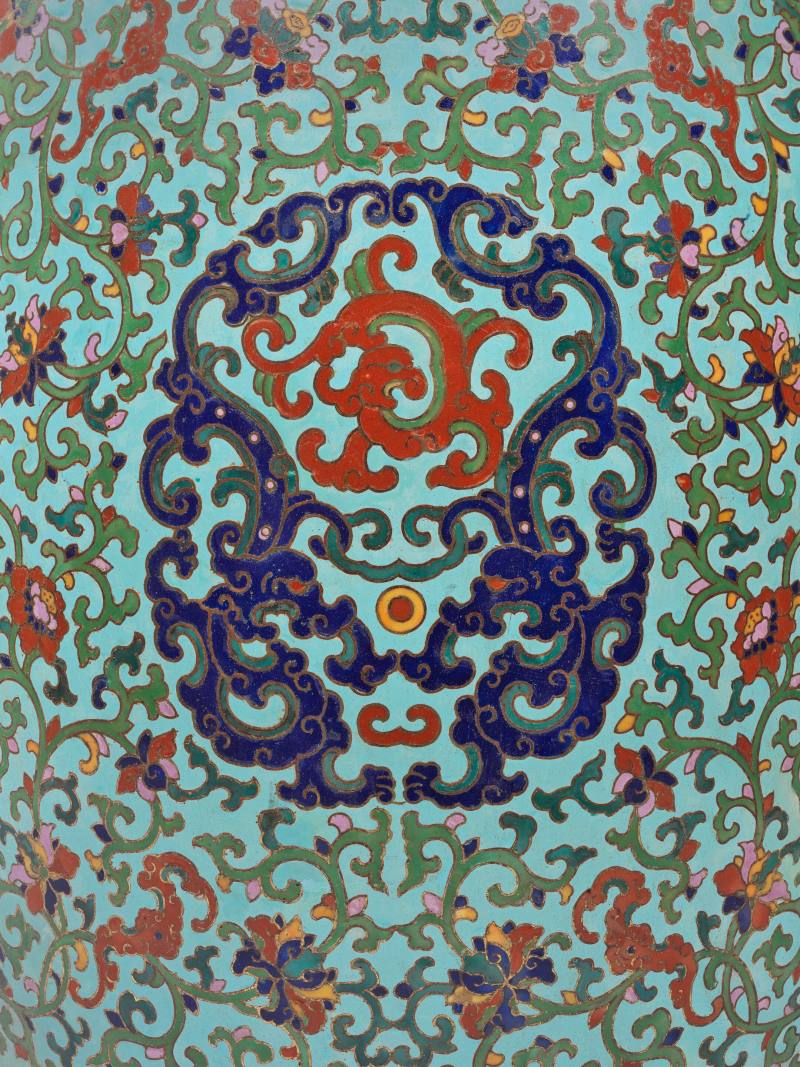
Each of barrel form, with gently rounded sides tapering to a flat base and rising to a flat top, the sides worked with two openwork motifs in the form of double ruyi-heads, alternating with two medallions comprising archaistic dragons circled by flying bats, all on a dense ground of large lotus blooms with leafy tendrils and flying bats, the foot and the top circled by a band of pink ruyi heads above and below a band of blue archaistic dragons, the flat top similarly decorated, all rendered in vibrant red, blue, green, yellow and pink enamels on a pale turquoise ground with gold detailing.
Each 53 cm (20 7/8 in.) high (2).
清乾隆 掐絲琺琅蓮蝠紋繡墩一對
Provenance:
Marcel Proust (1871–1922) (by repute), and thence by descent (by repute)
Bonhams Hong Kong, 3 December 2015, lot 61
Gisèle Croës Arts d'Extrême Orient, Brussels
來源:
Marcel Proust (1871–1922)(据傳),并由家人保存(据傳)
香港邦瀚斯,2015年12月3日,拍品編號61
Gisèle Croës Arts d'Extrême Orient,布魯塞爾
Valentin Louis Georges Eugène Marcel Proust (1871-1922) was a renowned French novelist, author of the famous seven-volume novel À la recherche du temps perdu, written between 1913 and 1927, based on Proust's personal life told from a psychological and allegorical point of view. He is considered by many to be one of the greatest authors of all time. Proust's father, Adrien Achille Proust (1834-1903), was a prominent pathologist and epidemiologist, dedicated to the research and study of the cholera disease. It is known that Proust senior dedicated his life to this medical field and travelled extensively to Asia. For his services, and his exceptional contribution to the understanding of how to control cholera, he was conferred the distinction of Commandeur de la Légion d'honneur in 1892.
This rare pair of stools belongs to a small group of champlevé enamelled pieces made by highly trained craftsmen in Guangdong as tributes for the Court of the Qianlong Emperor. From the mid-17th century on, enamelled objects were presented by European missionaries as gifts to the Qing Court where they quickly became a subject of deep fascination and veneration, along with other European novelties such as scientific instruments. Under the guidance of Jesuit artists, Chinese craftsmen were trained in the foreign technique of enamelling and workshops were set up in Canton and in Beijing. Here, objects made in porcelain, metal, glass, and other mediums decorated in painted, cloisonné and champlevé enamels were made for the Qing Court, some as Imperial commissions, others as tribute to the Qing Court. Chinese craftsmen quickly adopted and excelled in this foreign technique. They developed a distinctive colour scheme based on subtle colours such as the pale blue and pink contrasting with vibrant shades of dark blue, red, orange and green, often with fine gold detailing imitating the fine cloisons used in the cloisonné enamel technique. The champlevé enamelled designs produced in the Canton and Beijing workshops were of such fine quality that they were often mistaken for cloisonné enamel, as this pair of stools demonstrates.
A challenging technique, this type of décor was reserved for smaller objects and rarely appears on larger pieces, and suggests that larger pieces may have been made for one of the many halls, temples and residences of the Summer Palace, see, for instance, a cloisonné enamel garden seat with butterflies and flower design, mid-Qing dynasty, illustrated in Compendium of Collections in the Palace Museum: Enamels 4: Cloisonné in Qing Dynasty, Beijing, 2011, p.182, no.130. Another similar example with related openwork panels, Qianlong, is also in the Palace Museum, Beijing (acc.no.故00156558).
See also a pair of large champlevé enamel benches reputedly from the Summer Palace, sold separately, the first in Christie's London, 9 November 2004, lot 53, the second sold at Christie's Paris, 7 December 2007, lot 29. Compare also with a near identical pair of champlevé enamel barrel-form garden seats, dated to the Qianlong period, sold at Christie's Hong Kong, 28 May 2014, lot 3333. A cloisonné enamel pair of barrel-shaped seats with similar decoration from the Alfred Morrison collection, Fonthill heirlooms, was offered at Christie's London, 9 November 2004, lot 56.
以下内容由AI翻译:
【描述】
每件呈桶形,两侧微微圆润,逐渐收窄至平底和平顶,侧面饰有两组双如意头形镂空图案,交替排列着两个圆形图案,内有古朴的龙纹和飞翔的蝙蝠,背景为密集的大莲花和叶蔓以及飞翔的蝙蝠。足部和顶部均环饰一圈蓝色仿古龙纹,其上下各有一圈粉红色如意头纹。平顶同样装饰,所有图案均以淡绿松石色为底,用鲜艳的红、蓝、绿、黄和粉色珐琅彩绘制,并以金色勾勒细节。
这对罕见的绣墩属于一小批由广东技艺高超的工匠制作的錾胎珐琅器物,作为贡品献给乾隆皇帝的宫廷。从17世纪中叶开始,欧洲传教士将珐琅器物作为礼物献给清朝宫廷,这些器物迅速成为深受欢迎和崇敬的对象,与其他欧洲新奇物品如科学仪器一同受到重视。在耶稣会艺术家的指导下,中国工匠学习了外国的珐琅技术,并在广州和北京设立了作坊。在这里,制作了瓷器、金属、玻璃等材质的画珐琅、掐丝珐琅和錾胎珐琅器物,有的是皇家定制,有的是进贡给清朝宫廷。中国工匠很快掌握了这种外国技术,并发展出一种独特的色彩方案,以淡蓝色和粉色与鲜艳的深蓝、红、橙和绿色形成对比,通常伴有精细的金色细节,模仿掐丝珐琅技术中的细密铜丝。广州和北京作坊生产的錾胎珐琅设计质量如此之高,以至于常被误认为是掐丝珐琅,这对绣墩就是例证。
这种装饰技术难度较大,通常只用于较小的物件,很少出现在较大的物件上,这表明较大的物件可能是为颐和园的众多殿堂、寺庙和居所之一制作的,例如,一件中清时期的蝴蝶花卉纹掐丝珐琅花园座凳,见《故宫博物院藏品大系:珐琅4:清代掐丝珐琅》,北京,2011年,第182页,编号130。另一件类似的带有相关镂空面板的乾隆时期绣墩也收藏于北京故宫博物院(馆藏编号故00156558)。
另见一对据称来自颐和园的大錾胎珐琅长凳,分别售出,第一件于2004年11月9日在伦敦佳士得拍卖,拍品53号;第二件于2007年12月7日在巴黎佳士得拍卖,拍品29号。还有一对几乎相同的錾胎珐琅桶形花园座凳,年代定为乾隆时期,于2014年5月28日在香港佳士得拍卖,拍品3333号。一对来自阿尔弗雷德·莫里森收藏的福尔希尔遗产的类似装饰的掐丝珐琅桶形座凳,于2004年11月9日在伦敦佳士得拍卖,拍品56号。
常见问题
这件清乾隆 掐絲琺琅蓮蝠紋繡墩一對 | RARE PAIRE DE TABOURETS IMPÉRIAUX EN BRONZE DORÉ ET ÉMAUX CHAMPLEVÉS的成交价是多少?
落槌价为 预展中。 成交价为 预展中。
拍品的尺寸是多少?
Each 53 cm (20 7/8 in.) high