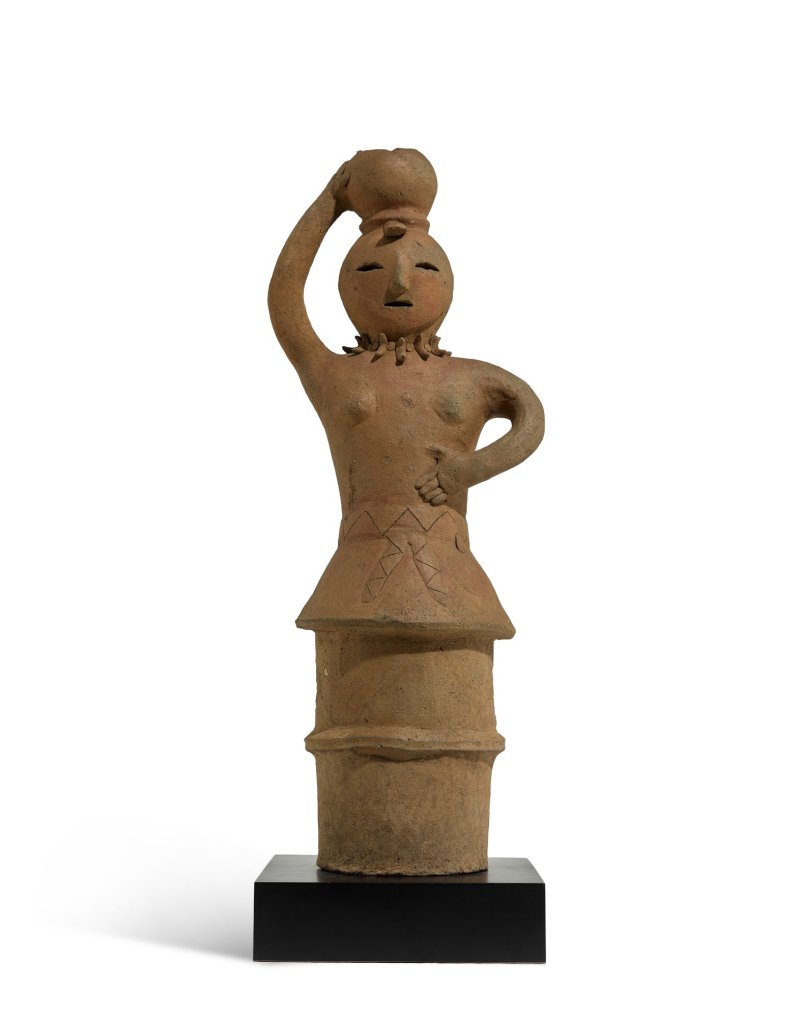

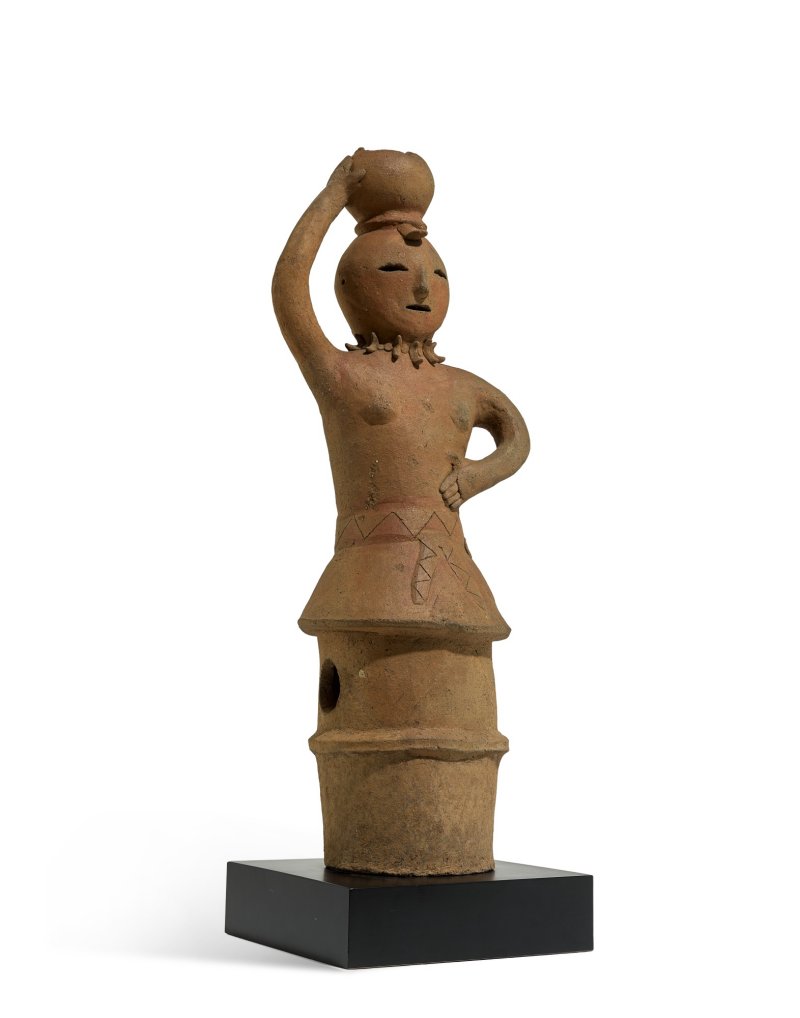
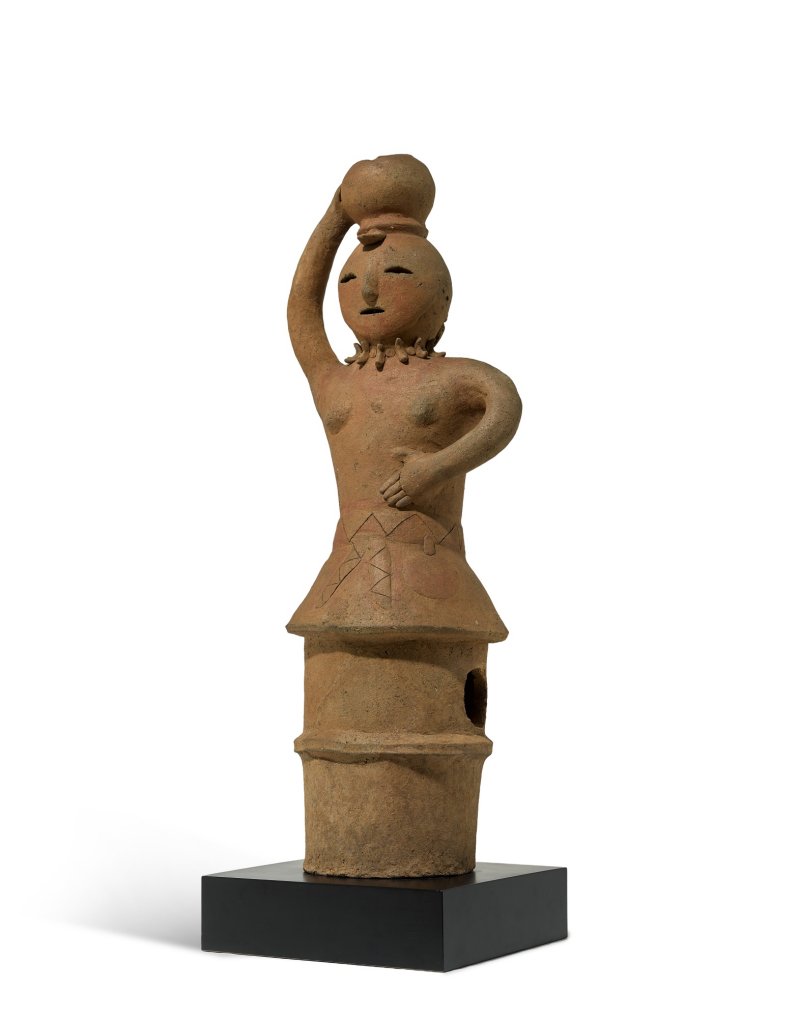
Lot 2005 A Haniwa earthenware figure of a woman, Late Kofun period, 5th – 6th century | 壺をのせる女性 埴輪 古墳時代 5~6世紀
落槌价
****
成交价
****
拍品信息
拍品名称
A Haniwa earthenware figure of a woman, Late Kofun period, 5th – 6th century | 壺をのせる女性 埴輪 古墳時代 5~6世紀
起拍价
HKD 200,000
估值区间
200,000 - 300,000 HKD
尺寸
未知
品相
There are some restored cracks around the cylindrical base, the rim of the jar with some chips and losses consistent with the age and nature of the object being excavated.
If a condition report is provided to assist you with assessing the condition of the lot, it is for guidance purposes only. Such condition report may not refer to all faults, restoration, alterations, or adaptations because Sotheby's is not a professional conservator or restorer but rather a condition report is a statement of subjective, qualified opinion genuinely held by Sotheby's. For these reasons, any such condition report is not an alternative to taking your own professional advice regarding the condition of the lot. Prospective buyers should also refer to the Guide for Buyers at Auction which includes important notices concerning the type of property in this sale.
If a condition report is provided to assist you with assessing the condition of the lot, it is for guidance purposes only. Such condition report may not refer to all faults, restoration, alterations, or adaptations because Sotheby's is not a professional conservator or restorer but rather a condition report is a statement of subjective, qualified opinion genuinely held by Sotheby's. For these reasons, any such condition report is not an alternative to taking your own professional advice regarding the condition of the lot. Prospective buyers should also refer to the Guide for Buyers at Auction which includes important notices concerning the type of property in this sale.
更多信息
of low-fired reddish clay, modelled as a woman carrying a jar on her head, the neck applied with a necklace of magatama, incised geometric pattern around the waste and sash, later wood stand
74 cm. high
来源:Excavated at Takasai-mura, Ibaraki Prefecture
Kochukyo Co., Ltd.
展览:Nihon no chokoku [Japanese Sculpture], The National Museum of Modern Art, Tokyo, 1956.
Nihon no bi haniwa [Haniwa: The Beauty of Japan], Bridgestone Museum of Art, Tokyo, 1958, cat. no. 27.
Dai junana-kai Tobi tokubetsu-ten [The 17th Tobi Special Exhibition], Tokyo Art Club, Tokyo, 2007, p. 100.
著录:Asahi shashin bukku [The Asahi Photography Book], vol. 28, Haniwa no utsukushisa [The Beauty of Haniwa], Tokyo, 1956, p. 24.
Kobayashi Tadashi ed., Masterpieces of the Okada Museum of Art, vol. 1, Tokyo, 2019, no. 53.
图录
说明:Haniwa, literally 'clay ring', take their name from the cylindrical forms placed in and around elite tomb mounds (kofun) from the fourth century onward. Alongside the introduction of high-fired Sue stoneware from Korea, haniwa represent the most distinctive ceramic production of the period and are modelled in forms ranging from human figures to horses, architecture and ships.
This figure of a woman balancing a sake jar on her head is thought to represent a female shaman or shrine attendant (miko). She wears a necklace of curved jewels known as magatama [lit. 'bent' or 'curved' gemstone], believed since the Final Jomon period (ca. 1000–300 B.C.) to hold protective and spiritual power. It is unknown what the distinctive form of the magatama represents – scholars debate whether it derived from the shape of a foetus, the fangs of an animal, the curvature of the moon, or perhaps the contours of the human soul. Traces of red pigment remain on the face, clothing and vessel.
Such haniwa figures are prized today for their accuracy of detail, providing evidence for women's dress, hairstyle and jewellery of the period, as well as the ritual practices they appear to record.
Excavated at Takasai-mura, Tsukuba-gun (present-day Takasai, Shimotsuma City), Ibaraki prefecture. This model was depicted in Yamaguchi Hoshun's (1893-1971) painting Utage (Feast) in the collection of the Museum of Modern Art, Kamakura & Hayama, 1960, and exhibited at the Third Shin-Nitten Exhibition in 1960.
來源
茨城県筑波郡高道祖村出土
壺中居,東京
展覽
《日本の彫刻 : 上代(埴輪・金銅仏・伎楽面)と現代》,東京国立近代美術館,東京,1956年
《日本の美 はにわ》,ブリヂストン美術館, 東京,1958年, 編號27
《第17回東美特別展》,東京美術倶樂部,東京,2007年,頁100
出版
《アサヒ写真ブック》卷28 埴輪の美しさ, 東京,1956年,頁24
小林忠編,《岡田美術館名品撰》,卷1,東京,2019年,編號53
埴輪,字面意思為「泥環」,得名於四世紀起放置在貴族陵墓(古墳)內外的圓筒形器物。伴隨源自朝鮮半島的高溫燒製須惠器的傳入,埴輪代表了該時期最具特色的陶瓷製品,其造型多樣,涵蓋人物、馬匹、建築及船隻等。
此件頭頂酒壺的女性埴輪,被認為是女巫或神職人員的化身。她佩戴著一串名為「勾玉」(字面意思為彎曲的寶石)的弧形珠飾項鍊,自繩文時代晚期(約公元前1000至300年)以來,勾玉便被認為具有護佑與精神能量。勾玉的獨特形狀究竟代表什麼,至今尚無定論。學者們對其起源仍有爭議,有認為源於胎兒形狀、動物獠牙、新月之弧度,抑或是人類靈魂之輪廓。其面部、衣物及壺上仍殘留有紅色顏料痕跡。
此類人物埴輪因其細節精準而備受今人珍視,為研究當時女性的服飾、髮型、珠寶以及其所記錄的祭祀儀式提供了實物佐證。
本品出土於茨城縣筑波郡高道祖村(今下妻市高道祖)。此埴輪曾入畫於山口蓬春(1893-1971年)1960年之畫作《宴》,作品現藏於神奈川縣立近代美術館,該畫作曾展出於1960年的第三屆新日展。¹
74 cm. high
来源:Excavated at Takasai-mura, Ibaraki Prefecture
Kochukyo Co., Ltd.
展览:Nihon no chokoku [Japanese Sculpture], The National Museum of Modern Art, Tokyo, 1956.
Nihon no bi haniwa [Haniwa: The Beauty of Japan], Bridgestone Museum of Art, Tokyo, 1958, cat. no. 27.
Dai junana-kai Tobi tokubetsu-ten [The 17th Tobi Special Exhibition], Tokyo Art Club, Tokyo, 2007, p. 100.
著录:Asahi shashin bukku [The Asahi Photography Book], vol. 28, Haniwa no utsukushisa [The Beauty of Haniwa], Tokyo, 1956, p. 24.
Kobayashi Tadashi ed., Masterpieces of the Okada Museum of Art, vol. 1, Tokyo, 2019, no. 53.
图录
说明:Haniwa, literally 'clay ring', take their name from the cylindrical forms placed in and around elite tomb mounds (kofun) from the fourth century onward. Alongside the introduction of high-fired Sue stoneware from Korea, haniwa represent the most distinctive ceramic production of the period and are modelled in forms ranging from human figures to horses, architecture and ships.
This figure of a woman balancing a sake jar on her head is thought to represent a female shaman or shrine attendant (miko). She wears a necklace of curved jewels known as magatama [lit. 'bent' or 'curved' gemstone], believed since the Final Jomon period (ca. 1000–300 B.C.) to hold protective and spiritual power. It is unknown what the distinctive form of the magatama represents – scholars debate whether it derived from the shape of a foetus, the fangs of an animal, the curvature of the moon, or perhaps the contours of the human soul. Traces of red pigment remain on the face, clothing and vessel.
Such haniwa figures are prized today for their accuracy of detail, providing evidence for women's dress, hairstyle and jewellery of the period, as well as the ritual practices they appear to record.
Excavated at Takasai-mura, Tsukuba-gun (present-day Takasai, Shimotsuma City), Ibaraki prefecture. This model was depicted in Yamaguchi Hoshun's (1893-1971) painting Utage (Feast) in the collection of the Museum of Modern Art, Kamakura & Hayama, 1960, and exhibited at the Third Shin-Nitten Exhibition in 1960.
來源
茨城県筑波郡高道祖村出土
壺中居,東京
展覽
《日本の彫刻 : 上代(埴輪・金銅仏・伎楽面)と現代》,東京国立近代美術館,東京,1956年
《日本の美 はにわ》,ブリヂストン美術館, 東京,1958年, 編號27
《第17回東美特別展》,東京美術倶樂部,東京,2007年,頁100
出版
《アサヒ写真ブック》卷28 埴輪の美しさ, 東京,1956年,頁24
小林忠編,《岡田美術館名品撰》,卷1,東京,2019年,編號53
埴輪,字面意思為「泥環」,得名於四世紀起放置在貴族陵墓(古墳)內外的圓筒形器物。伴隨源自朝鮮半島的高溫燒製須惠器的傳入,埴輪代表了該時期最具特色的陶瓷製品,其造型多樣,涵蓋人物、馬匹、建築及船隻等。
此件頭頂酒壺的女性埴輪,被認為是女巫或神職人員的化身。她佩戴著一串名為「勾玉」(字面意思為彎曲的寶石)的弧形珠飾項鍊,自繩文時代晚期(約公元前1000至300年)以來,勾玉便被認為具有護佑與精神能量。勾玉的獨特形狀究竟代表什麼,至今尚無定論。學者們對其起源仍有爭議,有認為源於胎兒形狀、動物獠牙、新月之弧度,抑或是人類靈魂之輪廓。其面部、衣物及壺上仍殘留有紅色顏料痕跡。
此類人物埴輪因其細節精準而備受今人珍視,為研究當時女性的服飾、髮型、珠寶以及其所記錄的祭祀儀式提供了實物佐證。
本品出土於茨城縣筑波郡高道祖村(今下妻市高道祖)。此埴輪曾入畫於山口蓬春(1893-1971年)1960年之畫作《宴》,作品現藏於神奈川縣立近代美術館,該畫作曾展出於1960年的第三屆新日展。¹
常见问题
拍品的品相状况如何?
There are some restored cracks around the cylindrical base, the rim of the jar with some chips and losses consistent with the age and nature of the object being excavated.
If a condition report is provided to assist you with assessing the condition of the lot, it is for guidance purposes only. Such condition report may not refer to all faults, restoration, alterations, or adaptations because Sotheby's is not a professional conservator or restorer but rather a condition report is a statement of subjective, qualified opinion genuinely held by Sotheby's. For these reasons, any such condition report is not an alternative to taking your own professional advice regarding the condition of the lot. Prospective buyers should also refer to the Guide for Buyers at Auction which includes important notices concerning the type of property in this sale.
If a condition report is provided to assist you with assessing the condition of the lot, it is for guidance purposes only. Such condition report may not refer to all faults, restoration, alterations, or adaptations because Sotheby's is not a professional conservator or restorer but rather a condition report is a statement of subjective, qualified opinion genuinely held by Sotheby's. For these reasons, any such condition report is not an alternative to taking your own professional advice regarding the condition of the lot. Prospective buyers should also refer to the Guide for Buyers at Auction which includes important notices concerning the type of property in this sale.
这件拍品的流传来源是什么?
Excavated at Takasai-mura, Ibaraki Prefecture
Kochukyo Co., Ltd.
Kochukyo Co., Ltd.
这件拍品曾在哪些展览中展出过?
Nihon no chokoku [Japanese Sculpture], The National Museum of Modern Art, Tokyo, 1956.
Nihon no bi haniwa [Haniwa: The Beauty of Japan], Bridgestone Museum of Art, Tokyo, 1958, cat. no. 27.
Dai junana-kai Tobi tokubetsu-ten [The 17th Tobi Special Exhibition], Tokyo Art Club, Tokyo, 2007, p. 100.
Nihon no bi haniwa [Haniwa: The Beauty of Japan], Bridgestone Museum of Art, Tokyo, 1958, cat. no. 27.
Dai junana-kai Tobi tokubetsu-ten [The 17th Tobi Special Exhibition], Tokyo Art Club, Tokyo, 2007, p. 100.
这件拍品被哪些著录书籍记载?
Asahi shashin bukku [The Asahi Photography Book], vol. 28, Haniwa no utsukushisa [The Beauty of Haniwa], Tokyo, 1956, p. 24.
Kobayashi Tadashi ed., Masterpieces of the Okada Museum of Art, vol. 1, Tokyo, 2019, no. 53.
图录
Kobayashi Tadashi ed., Masterpieces of the Okada Museum of Art, vol. 1, Tokyo, 2019, no. 53.
图录