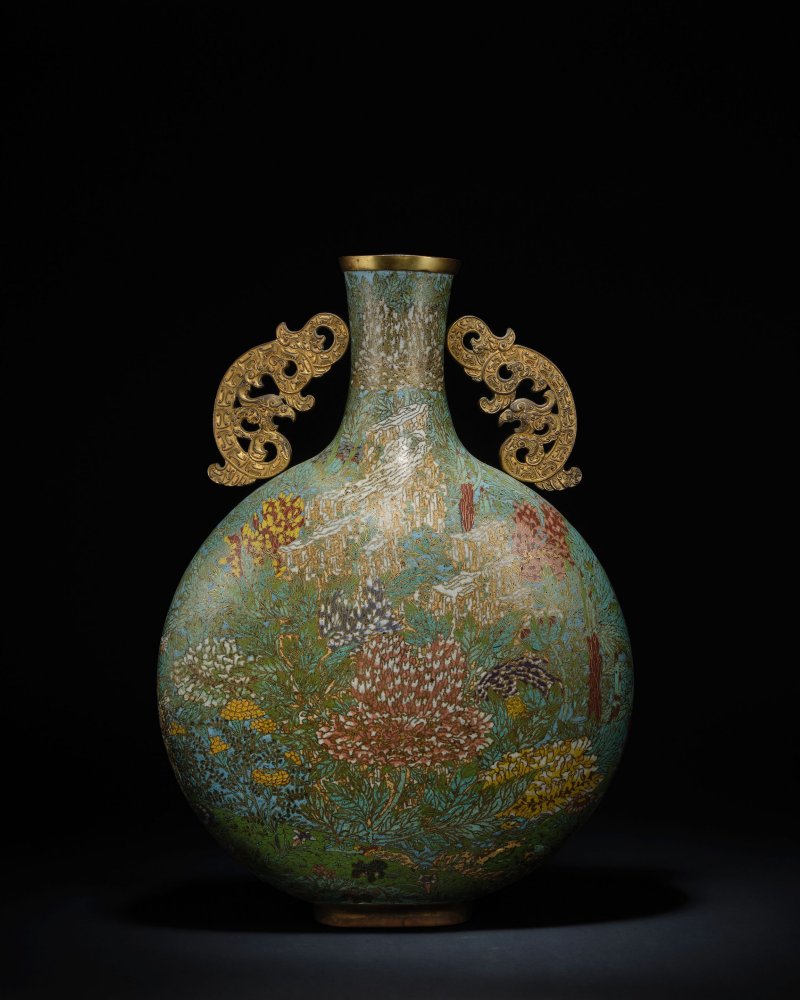

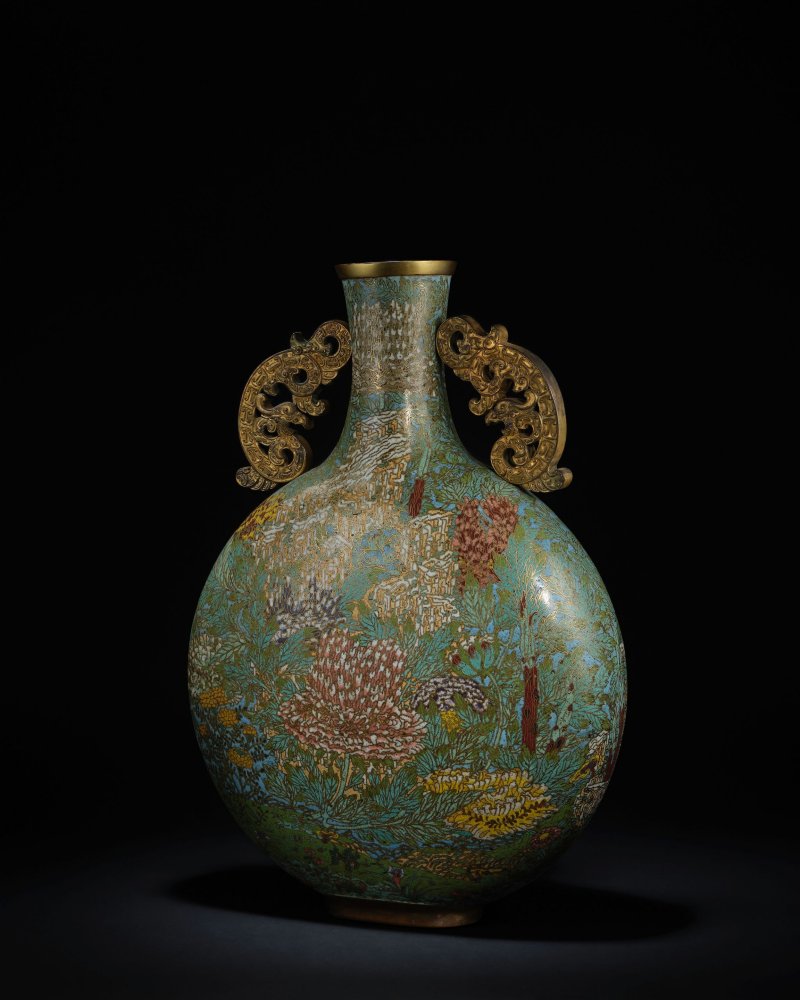
Lot 53 清乾隆 掐絲琺瑯秀石牡丹圖䕫鳳耳抱月瓶 | A LARGE CLOISONNÉ ENAMEL 'PEONY' PHOENIX-HANDLED MOONFLASK
落槌价
预展中
成交价
预展中
| 拍卖公司 | 邦瀚斯 |
|---|---|
| 拍卖时间 | 2026年10月28日 |
拍品信息
拍品名称
清乾隆 掐絲琺瑯秀石牡丹圖䕫鳳耳抱月瓶 | A LARGE CLOISONNÉ ENAMEL 'PEONY' PHOENIX-HANDLED MOONFLASK
年代
Qianlong
起拍价
HKD 800,000
估值区间
HKD 800000 - 1200000
尺寸
未知
品相
未知
更多信息
Qianlong
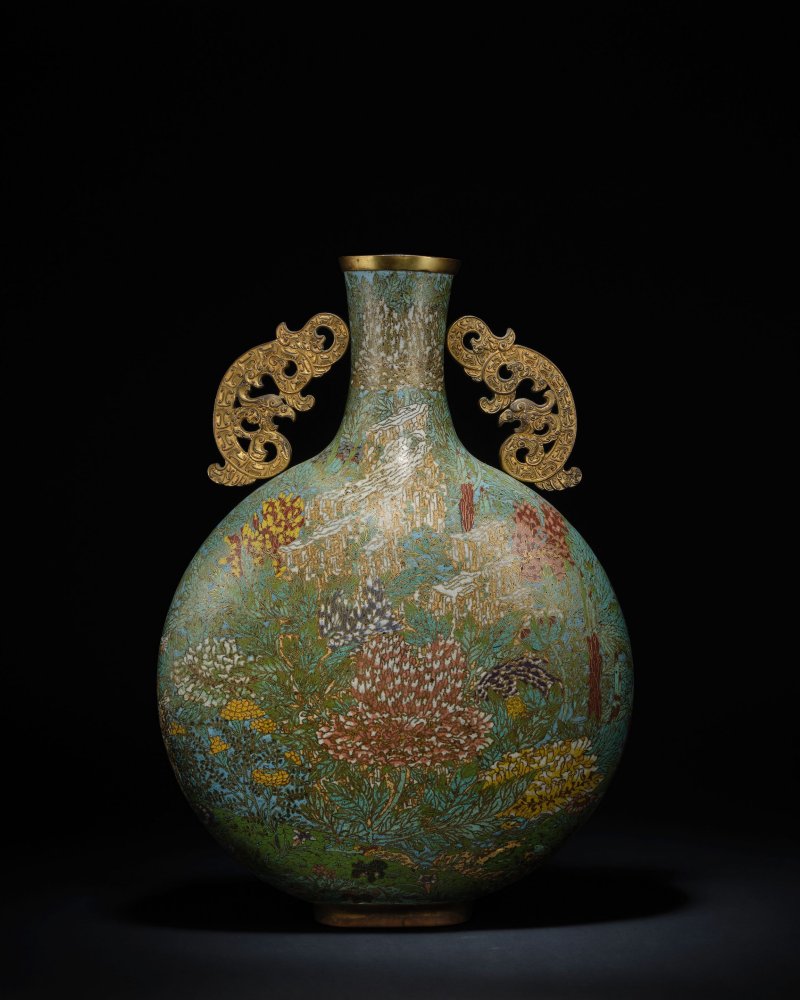
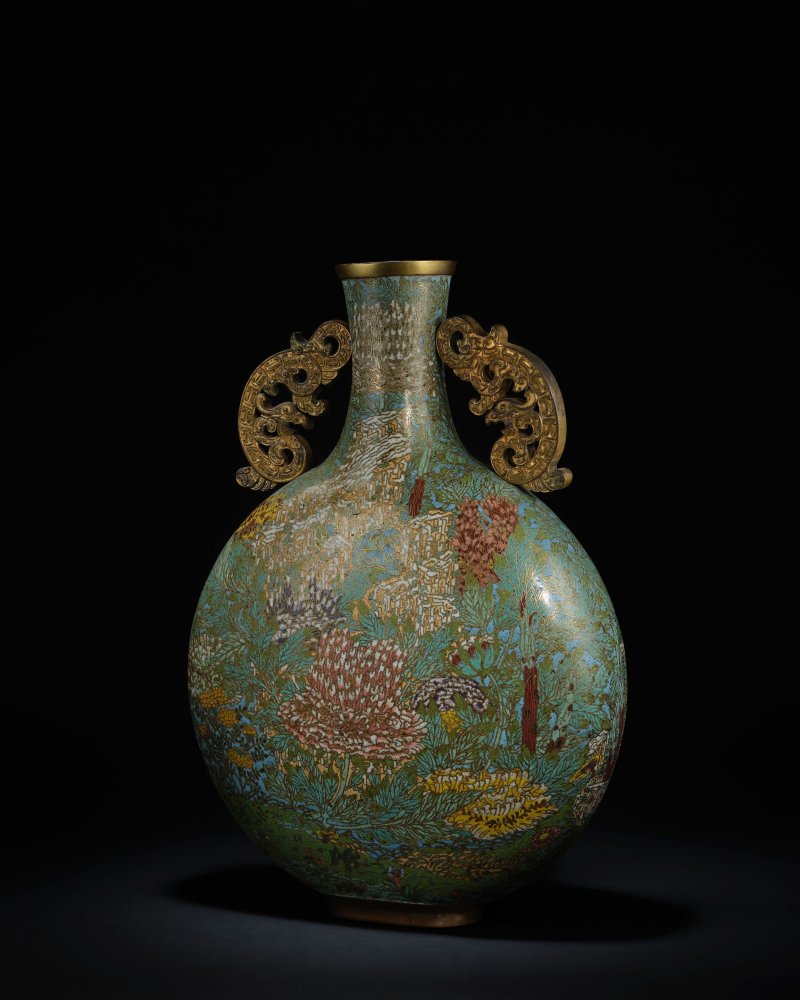
The flattened circular body supported on a short oval foot, surmounted by a tall cylindrical neck with a gilt-bronze rim, the sides applied with an elaborate pair of gilt-bronze handles formed as scrolling phoenixes, the exterior finely decorated in vivid enamels with luxuriant peony blooms amid dense foliage and rugged rockwork, set against a turquoise ground, fitted box.
58cm (22 7/8in) high. (2).
Footnotes
清乾隆 掐絲琺瑯秀石牡丹圖䕫鳳耳抱月瓶
Provenance:
Sotheby's London, 17 December 1996, lot 199
Barry Sainsbury, London
Christie's London, 20 November 2008, lot 507
An English private collection
Sotheby's London, 10 May 2017, lot 168
來源:
倫敦蘇富比,1996年12月17日,拍品編號199
Barry Sainsbury,倫敦
倫敦佳士得,2008年11月20日,拍品編號507
英國私人收藏
倫敦蘇富比,2017年5月10日,拍品編號168
Cloisonné enamel moonflasks of this form are rare. The broad, flattened body, with its two large circular faces, provided an excellent surface particularly suited to the arrangement of complex pictorial decoration. A related cloisonné enamel moonflask with peonies and rockwork within a large circular roundel against a pattern-ground, second quarter 18th century, is illustrated in , Phoenix, 1980, p.46. Compare also with two related cloisonné enamel moonflasks, Qianlong, illustrated in , Taipei, 1999, pp.150-151, decorated with a scene from the 'Ode on the Red Cliff', no.65, and a scene of Spring cultivation, no.66. See also a related cloisonné enamel moonflask, first half 18th century, with peonies, illustrated by H.Brinker and A.Lutz, , London, 1989, no.234.
The naturalistic treatment of the peonies on the present moonflask, with their carefully modulated tones and individually articulated petals, contrasts with the more stylised floral conventions commonly encountered in Qing dynasty cloisonné. Their painterly modelling recalls the increasing influence of Western pictorial techniques at the Qing Court during the 18th century, particularly the use of shading to suggest volume. Giuseppe Castiglione (1688-1766), the Italian Jesuit painter, was instrumental in introducing such techniques, combining European naturalism with established Chinese modes of painting. His depictions of peonies, notably in the Palace Museum, Taipei (acc.no.guhua000804), similarly employ gradations of light and colour to give the flowers and foliage a pronounced sense of volume. The present lot's naturalistic and volumetric treatment of the flowers may reflect the broader impact of this courtly synthesis of Chinese and Western pictorial practices.
Compare with a similar cloisonné enamel moonflask, Qianlong, from the Bulgari collection in Rome, which was sold at Christie's London, 7 November 2006, lot 117.
掐絲琺瑯抱月瓶,滿飾牡丹圖西風暗蘊,配上䕫鳳雙耳,慕古典麗。其器形雅致,卻殊不多見。藝匠巧用扁圓腹部如扇面,掐絲勾勒代筆墨,描繪牡丹秀石,枝葉繁茂。參考一清十八世紀下半葉牡丹秀石圖瓶,滿飾為地,圖見《Chinese Cloisonné: The Clague Collection》,鳳凰城,1980年,頁46。且可對比乾隆年間抱月瓶兩件,載於《明清琺瑯器展覽圖錄》,台北,1999年,頁150至151,赤壁圖瓶,編號65,春耕圖瓶,編號66。另有一清十八世紀上半葉掐絲琺瑯牡丹紋抱月瓶,載於 H.Brinker 及 A.Lutz,《Chinese Cloisonné: The Pierre Uldry Collection》,倫敦,1989年,編號234。尚可參考羅馬寶格麗舊藏清乾隆掐絲琺瑯抱月瓶,售於倫敦佳士得2006年11月7日,拍品編號117。
有別於清代掐絲琺瑯器上一般較刻板的牡丹圖,此瓶寫生自然,瓣葉不流於公式化,細膩入微,洋風暗露。西方寫生技巧,擅以色調深淺交代事物的立體。十八世紀傳入清宮,當中尤以意大利傳教士畫師郎世寧(1688-1766)影響力最深,他在宮廷畫院教授歐法,結合中國傳統,作品青出於藍,筆下《瓶花圖》中的牡丹,重瓣疊綻,葉嫩枝密,光影婉約,栩栩如生,現藏台北故宮博物院(故畫000804)。此掐絲琺瑯抱月瓶的藝匠,對花葉的光影處理細緻,或受當時宮廷中西合璧的美學風格啟發,成就如斯雅器。
The flattened circular body supported on a short oval foot, surmounted by a tall cylindrical neck with a gilt-bronze rim, the sides applied with an elaborate pair of gilt-bronze handles formed as scrolling phoenixes, the exterior finely decorated in vivid enamels with luxuriant peony blooms amid dense foliage and rugged rockwork, set against a turquoise ground, fitted box.
58cm (22 7/8in) high. (2).
Footnotes
清乾隆 掐絲琺瑯秀石牡丹圖䕫鳳耳抱月瓶
Provenance:
Sotheby's London, 17 December 1996, lot 199
Barry Sainsbury, London
Christie's London, 20 November 2008, lot 507
An English private collection
Sotheby's London, 10 May 2017, lot 168
來源:
倫敦蘇富比,1996年12月17日,拍品編號199
Barry Sainsbury,倫敦
倫敦佳士得,2008年11月20日,拍品編號507
英國私人收藏
倫敦蘇富比,2017年5月10日,拍品編號168
Cloisonné enamel moonflasks of this form are rare. The broad, flattened body, with its two large circular faces, provided an excellent surface particularly suited to the arrangement of complex pictorial decoration. A related cloisonné enamel moonflask with peonies and rockwork within a large circular roundel against a pattern-ground, second quarter 18th century, is illustrated in , Phoenix, 1980, p.46. Compare also with two related cloisonné enamel moonflasks, Qianlong, illustrated in , Taipei, 1999, pp.150-151, decorated with a scene from the 'Ode on the Red Cliff', no.65, and a scene of Spring cultivation, no.66. See also a related cloisonné enamel moonflask, first half 18th century, with peonies, illustrated by H.Brinker and A.Lutz, , London, 1989, no.234.
The naturalistic treatment of the peonies on the present moonflask, with their carefully modulated tones and individually articulated petals, contrasts with the more stylised floral conventions commonly encountered in Qing dynasty cloisonné. Their painterly modelling recalls the increasing influence of Western pictorial techniques at the Qing Court during the 18th century, particularly the use of shading to suggest volume. Giuseppe Castiglione (1688-1766), the Italian Jesuit painter, was instrumental in introducing such techniques, combining European naturalism with established Chinese modes of painting. His depictions of peonies, notably in the Palace Museum, Taipei (acc.no.guhua000804), similarly employ gradations of light and colour to give the flowers and foliage a pronounced sense of volume. The present lot's naturalistic and volumetric treatment of the flowers may reflect the broader impact of this courtly synthesis of Chinese and Western pictorial practices.
Compare with a similar cloisonné enamel moonflask, Qianlong, from the Bulgari collection in Rome, which was sold at Christie's London, 7 November 2006, lot 117.
掐絲琺瑯抱月瓶,滿飾牡丹圖西風暗蘊,配上䕫鳳雙耳,慕古典麗。其器形雅致,卻殊不多見。藝匠巧用扁圓腹部如扇面,掐絲勾勒代筆墨,描繪牡丹秀石,枝葉繁茂。參考一清十八世紀下半葉牡丹秀石圖瓶,滿飾為地,圖見《Chinese Cloisonné: The Clague Collection》,鳳凰城,1980年,頁46。且可對比乾隆年間抱月瓶兩件,載於《明清琺瑯器展覽圖錄》,台北,1999年,頁150至151,赤壁圖瓶,編號65,春耕圖瓶,編號66。另有一清十八世紀上半葉掐絲琺瑯牡丹紋抱月瓶,載於 H.Brinker 及 A.Lutz,《Chinese Cloisonné: The Pierre Uldry Collection》,倫敦,1989年,編號234。尚可參考羅馬寶格麗舊藏清乾隆掐絲琺瑯抱月瓶,售於倫敦佳士得2006年11月7日,拍品編號117。
有別於清代掐絲琺瑯器上一般較刻板的牡丹圖,此瓶寫生自然,瓣葉不流於公式化,細膩入微,洋風暗露。西方寫生技巧,擅以色調深淺交代事物的立體。十八世紀傳入清宮,當中尤以意大利傳教士畫師郎世寧(1688-1766)影響力最深,他在宮廷畫院教授歐法,結合中國傳統,作品青出於藍,筆下《瓶花圖》中的牡丹,重瓣疊綻,葉嫩枝密,光影婉約,栩栩如生,現藏台北故宮博物院(故畫000804)。此掐絲琺瑯抱月瓶的藝匠,對花葉的光影處理細緻,或受當時宮廷中西合璧的美學風格啟發,成就如斯雅器。
常见问题
这件清乾隆 掐絲琺瑯秀石牡丹圖䕫鳳耳抱月瓶 | A LARGE CLOISONNÉ ENAMEL 'PEONY' PHOENIX-HANDLED MOONFLASK的成交价是多少?
落槌价为 预展中。 成交价为 预展中。