
拍品信息
拍品名称
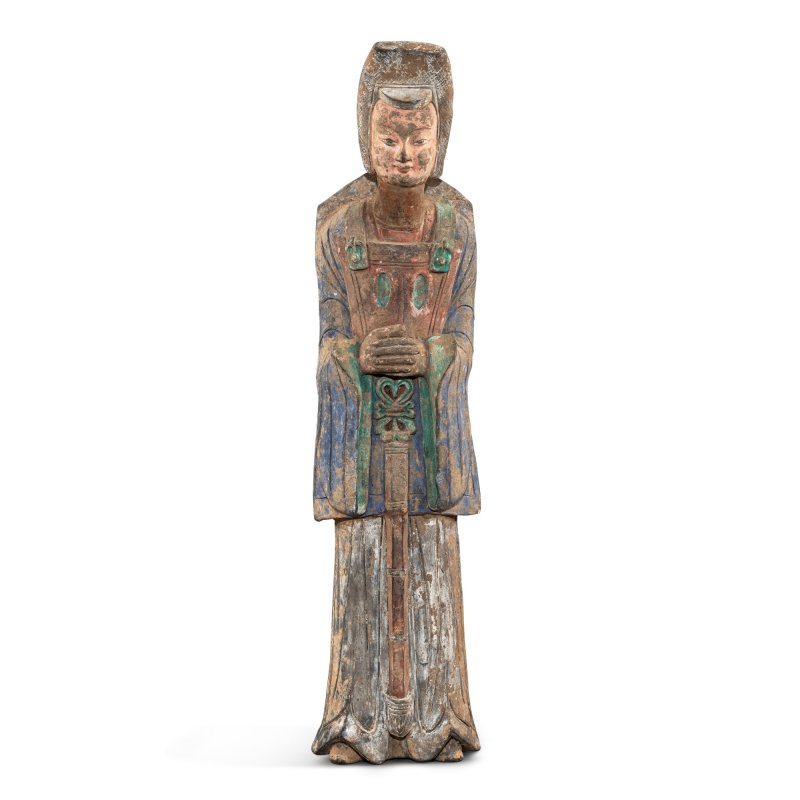
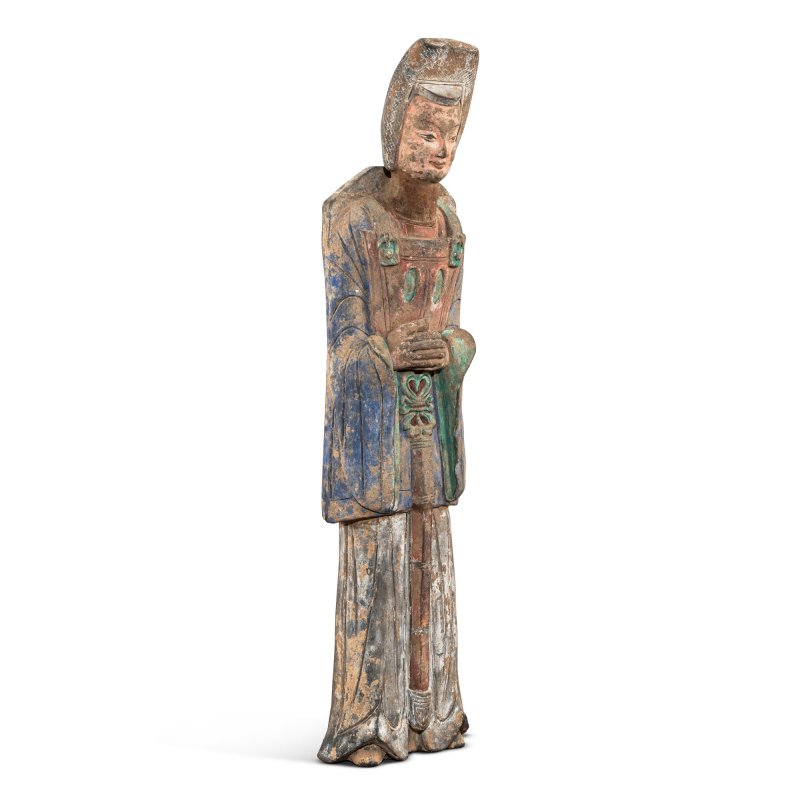
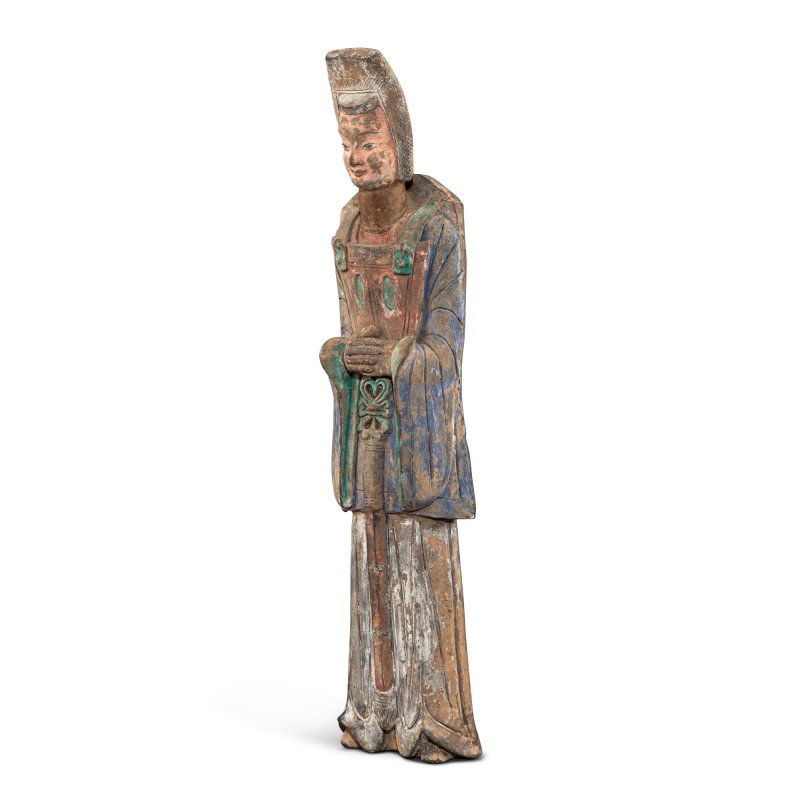
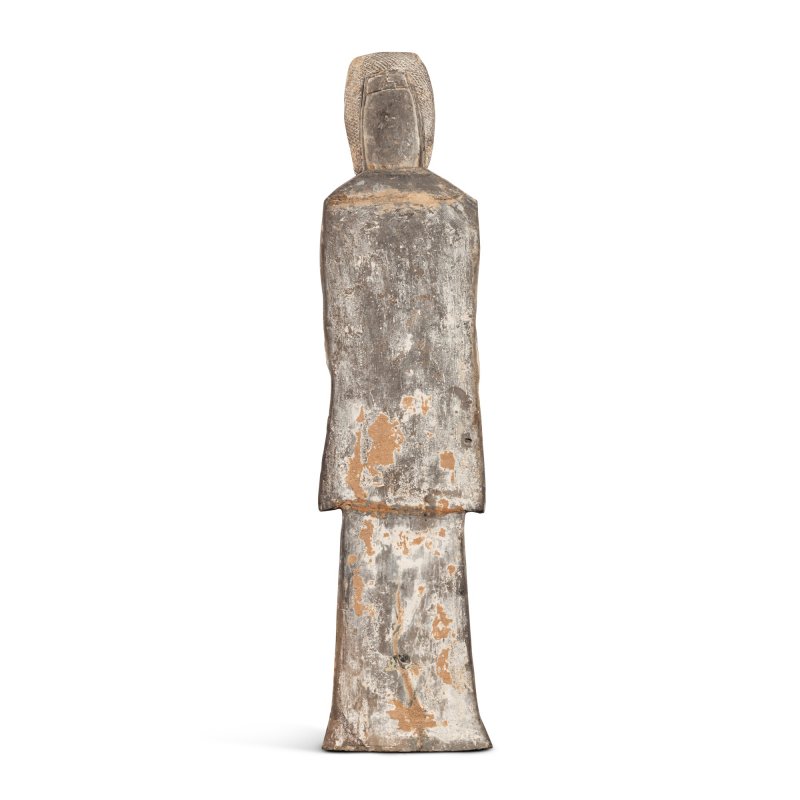
北魏 灰陶加彩文官立俑
起拍价
USD 12,000
估值区间
12,000 - 18,000 USD
尺寸
未知
品相
如欲了解本拍品狀況的更多資訊,請聯絡 Drew.Lerner@sothebys.com
更多信息
Height 23⅞ in., 60.5 cm
来源:史蒂芬•瓊肯三世(1978年逝)收藏
图录
说明:The present figure exemplifies the elegant sculptural tradition of the late Northern Wei dynasty, a period of profound cultural transformation following the transfer of the imperial capital from Datong to Luoyang in 494. During the late fifth and early sixth centuries, figural sculpture evolved from the more austere and stylized forms of the earlier Northern Wei into a mode characterized by greater naturalism, fuller modeling and increased attention to costume and individual presence, developments often attributed to the growing influence of Central Asian artistic traditions and the flourishing of Buddhist imagery at the new capital.
Standing erect in a formal pose, his hands concealed within the sleeves of his voluminous robes, the present figure conveys the dignity and authority of a high-ranking dignitary or court official. Particularly noteworthy is the tall headdress with projecting visor and distinctive side flaps or "ear muffs", a type associated with elite Northern Wei costume. Ezekiel Schloss notes that this form of hat was worn by both male and female members of the aristocracy; see Ancient Chinese Ceramic Sculpture, vol. I, Stamford, 1977, p. 155. Others have suggested that it may also denote military rank. Compare a ceramic head wearing a closely related headdress recovered from the Yongning Temple site at Luoyang and illustrated in China: Dawn of a Golden Age, 200-750 AD, The Metropolitan Museum of Art, New York, 2004, cat. no. 130d.
Compare a nearly identical figure to the present lot from the Minneapolis Institute of Arts, exhibited and illustrated in Art of the Six Dynasties, China Institute of America, New York, 1975, cat. no. 23. See another example from the collection of Russell M. Tyson (1867-1963), previously preserved in Art Institute of Chicago, Chicago, then sold in these rooms, 11th September 2019, lot 735.
来源:史蒂芬•瓊肯三世(1978年逝)收藏
图录
说明:The present figure exemplifies the elegant sculptural tradition of the late Northern Wei dynasty, a period of profound cultural transformation following the transfer of the imperial capital from Datong to Luoyang in 494. During the late fifth and early sixth centuries, figural sculpture evolved from the more austere and stylized forms of the earlier Northern Wei into a mode characterized by greater naturalism, fuller modeling and increased attention to costume and individual presence, developments often attributed to the growing influence of Central Asian artistic traditions and the flourishing of Buddhist imagery at the new capital.
Standing erect in a formal pose, his hands concealed within the sleeves of his voluminous robes, the present figure conveys the dignity and authority of a high-ranking dignitary or court official. Particularly noteworthy is the tall headdress with projecting visor and distinctive side flaps or "ear muffs", a type associated with elite Northern Wei costume. Ezekiel Schloss notes that this form of hat was worn by both male and female members of the aristocracy; see Ancient Chinese Ceramic Sculpture, vol. I, Stamford, 1977, p. 155. Others have suggested that it may also denote military rank. Compare a ceramic head wearing a closely related headdress recovered from the Yongning Temple site at Luoyang and illustrated in China: Dawn of a Golden Age, 200-750 AD, The Metropolitan Museum of Art, New York, 2004, cat. no. 130d.
Compare a nearly identical figure to the present lot from the Minneapolis Institute of Arts, exhibited and illustrated in Art of the Six Dynasties, China Institute of America, New York, 1975, cat. no. 23. See another example from the collection of Russell M. Tyson (1867-1963), previously preserved in Art Institute of Chicago, Chicago, then sold in these rooms, 11th September 2019, lot 735.
常见问题
拍品的品相状况如何?
如欲了解本拍品狀況的更多資訊,請聯絡 Drew.Lerner@sothebys.com
这件拍品的流传来源是什么?
史蒂芬•瓊肯三世(1978年逝)收藏
图录
图录