
拍品信息
拍品名称
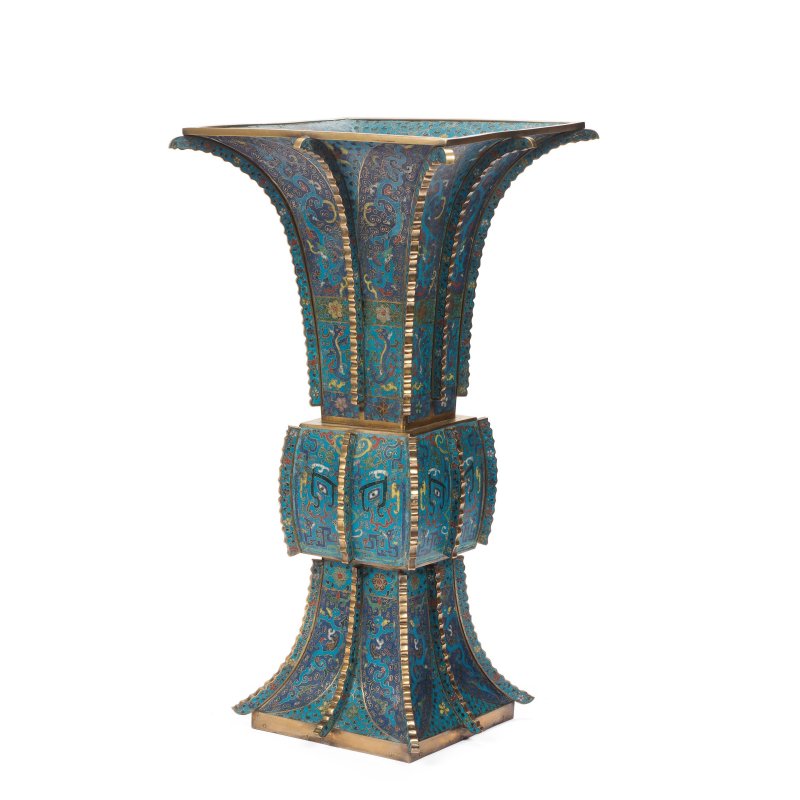
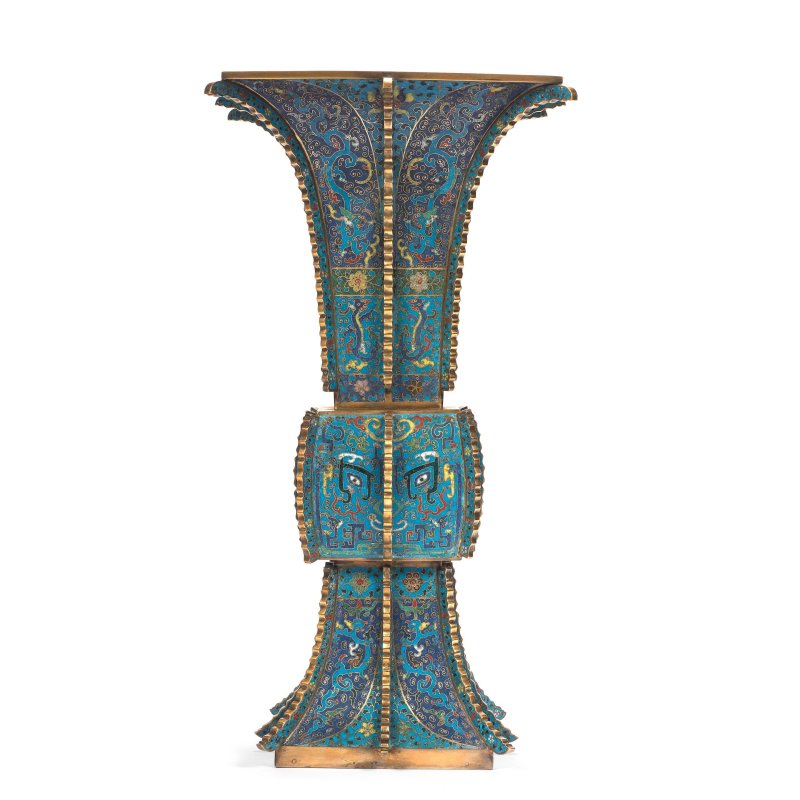
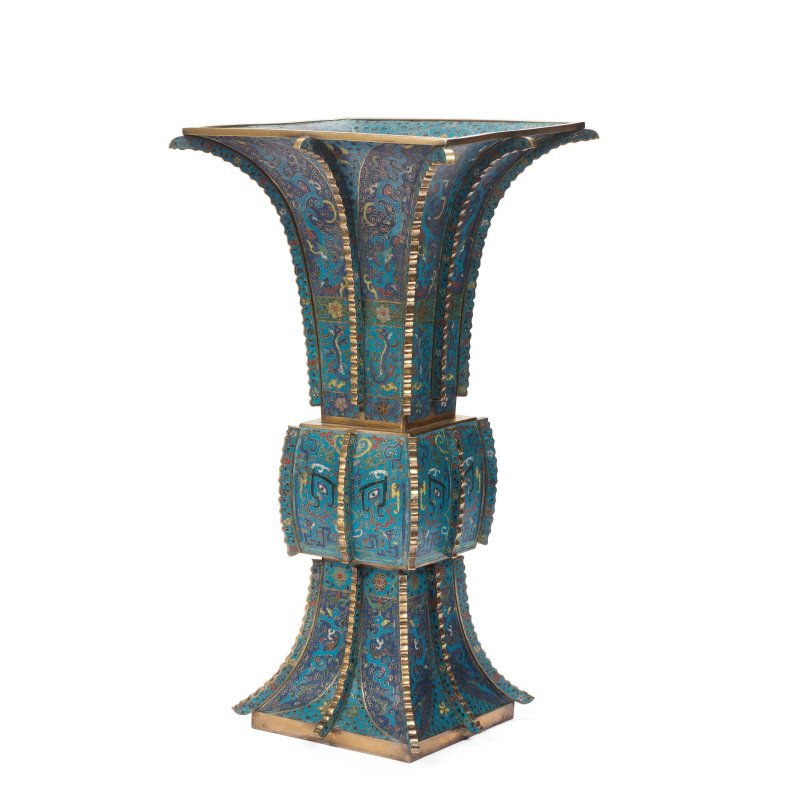
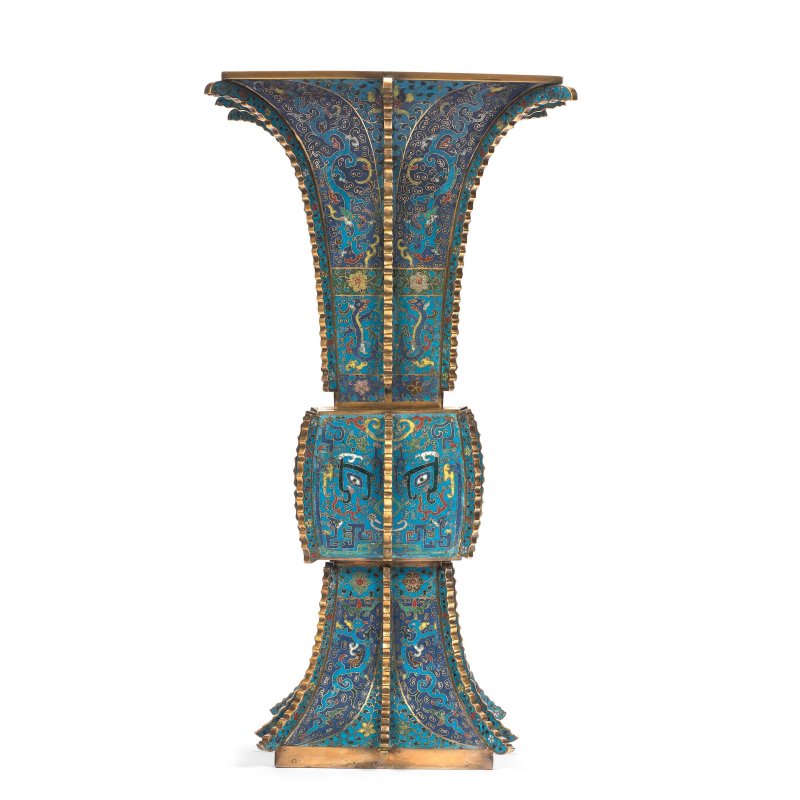
清康熙 銅胎掐絲琺瑯饕餮紋出戟方觚 | A LARGE GILT-BRONZE AND CLOISONNÉ ENAMEL VASE, FANGGU
年代
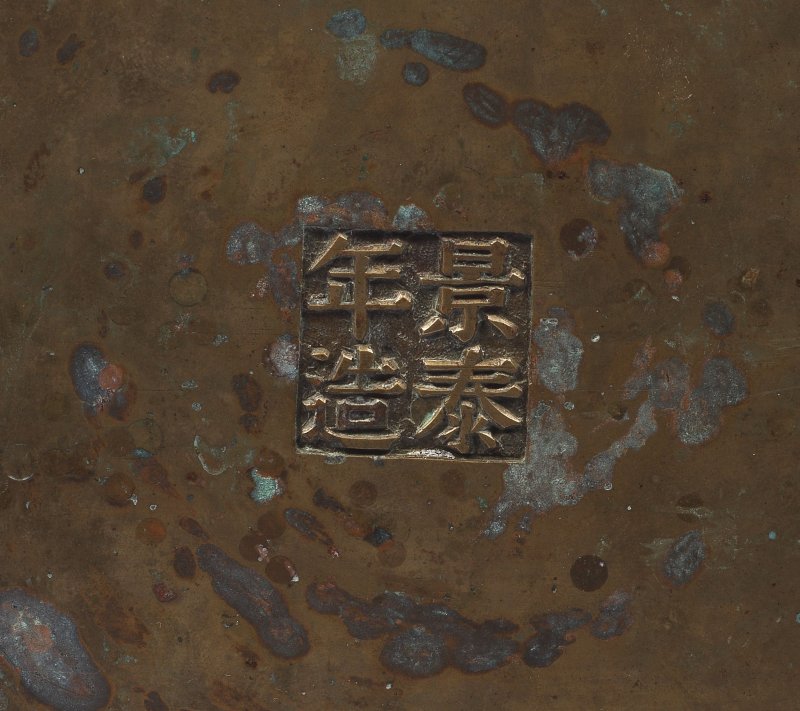
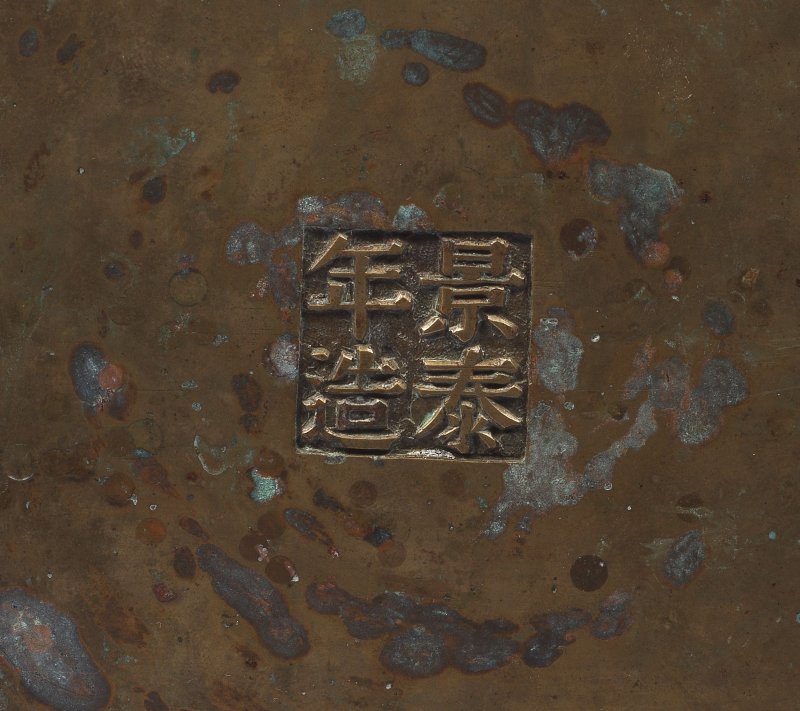
Jingtai four-character mark, Kangxi
起拍价
GBP 15,000
估值区间
GBP 15000 - 20000
尺寸
未知
品相
未知
更多信息
Jingtai four-character mark, Kangxi
Of square section and tall archaistic form, the neck and flaring foot each decorated with upright and pendant lappet bands enclosing a kui-dragon amid ruyi-head clouds, the neck further decorated with a panel enclosing a dragon above the mid-section, decorated with taotie masks, all against a turquoise ground, each face centred and edged by flanges, the sides of which are decorated with slender bands of floral sprays, the interior of the rim with a wide band of scrolling lotus. 52.5cm (20 3/4in) high.
Footnotes
清康熙 銅胎掐絲琺瑯饕餮紋出戟方觚
「景泰年造」楷書款
The present lot is modelled after an archaic bronze form, the fanggu, a ritual wine vessel originating in the Shang dynasty (c.1600–1046 BC). Its angular profile, flanged decoration and taotie patterns, reflect the enduring fascination with archaism that permeated Qing dynasty artistic production. From the late 17th century and early 18th century onwards, the Imperial Court actively encouraged the revival of ancient forms, with bronzes of the Shang and Zhou dynasties serving as direct models for works in porcelain, cloisonné enamel, and other media. Such pieces not only embodied a reverence for antiquity but also symbolised the continuity of ritual traditions and dynastic legitimacy.
See a similar cloisonné enamel vase, second half 17th century, illustrated in H.Brinker and A.Lutz, , Zurich, 1985, pl.178. See also related cloisonné enamel vases, early Qing dynasty, in the Qing Court Collection, illustrated in , Beijing, 2011, nos.36-39.
See a related but smaller cloisonné enamel vase, , 17th century, which was sold at Bonhams Hong Kong, 29 May 2023, lot 849.
Of square section and tall archaistic form, the neck and flaring foot each decorated with upright and pendant lappet bands enclosing a kui-dragon amid ruyi-head clouds, the neck further decorated with a panel enclosing a dragon above the mid-section, decorated with taotie masks, all against a turquoise ground, each face centred and edged by flanges, the sides of which are decorated with slender bands of floral sprays, the interior of the rim with a wide band of scrolling lotus. 52.5cm (20 3/4in) high.
Footnotes
清康熙 銅胎掐絲琺瑯饕餮紋出戟方觚
「景泰年造」楷書款
The present lot is modelled after an archaic bronze form, the fanggu, a ritual wine vessel originating in the Shang dynasty (c.1600–1046 BC). Its angular profile, flanged decoration and taotie patterns, reflect the enduring fascination with archaism that permeated Qing dynasty artistic production. From the late 17th century and early 18th century onwards, the Imperial Court actively encouraged the revival of ancient forms, with bronzes of the Shang and Zhou dynasties serving as direct models for works in porcelain, cloisonné enamel, and other media. Such pieces not only embodied a reverence for antiquity but also symbolised the continuity of ritual traditions and dynastic legitimacy.
See a similar cloisonné enamel vase, second half 17th century, illustrated in H.Brinker and A.Lutz, , Zurich, 1985, pl.178. See also related cloisonné enamel vases, early Qing dynasty, in the Qing Court Collection, illustrated in , Beijing, 2011, nos.36-39.
See a related but smaller cloisonné enamel vase, , 17th century, which was sold at Bonhams Hong Kong, 29 May 2023, lot 849.
常见问题
这件清康熙 銅胎掐絲琺瑯饕餮紋出戟方觚 | A LARGE GILT-BRONZE AND CLOISONNÉ ENAMEL VASE, FANGGU的成交价是多少?
落槌价为 预展中。 成交价为 预展中。


