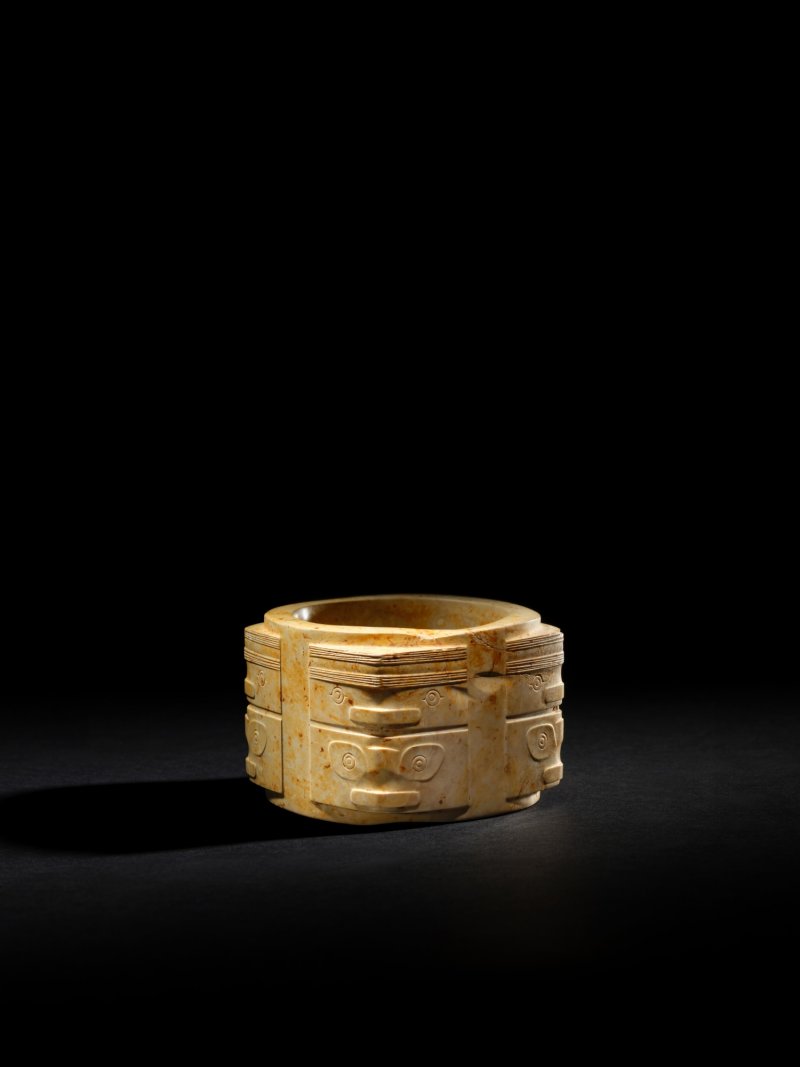

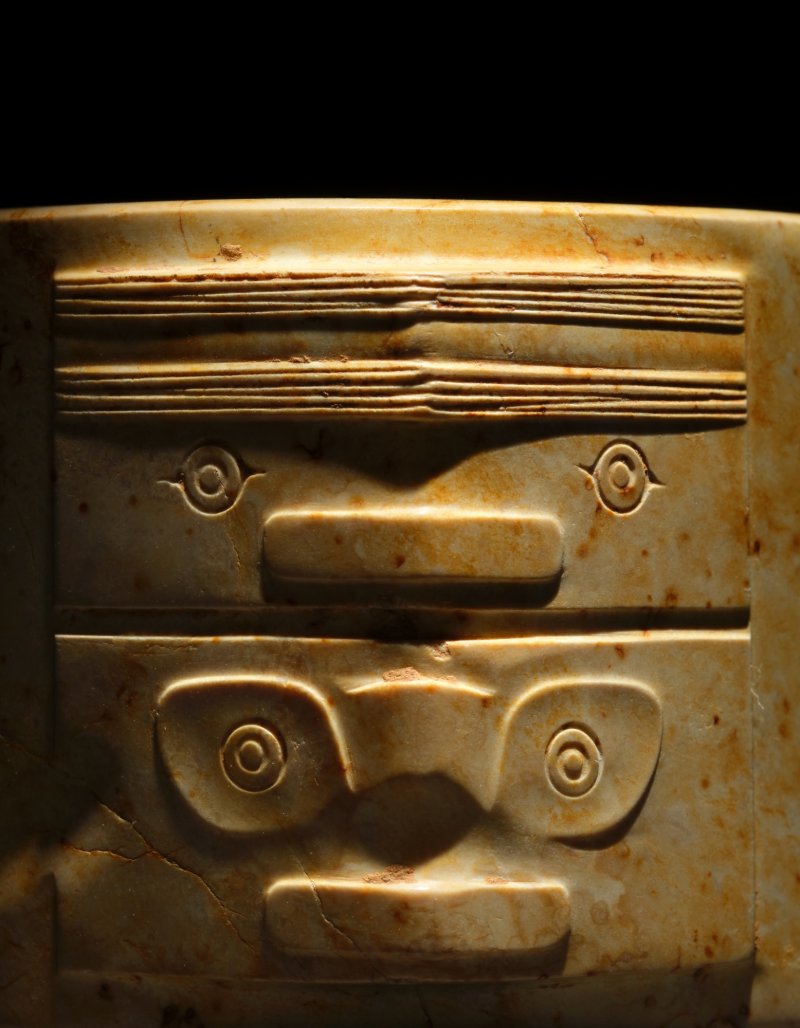
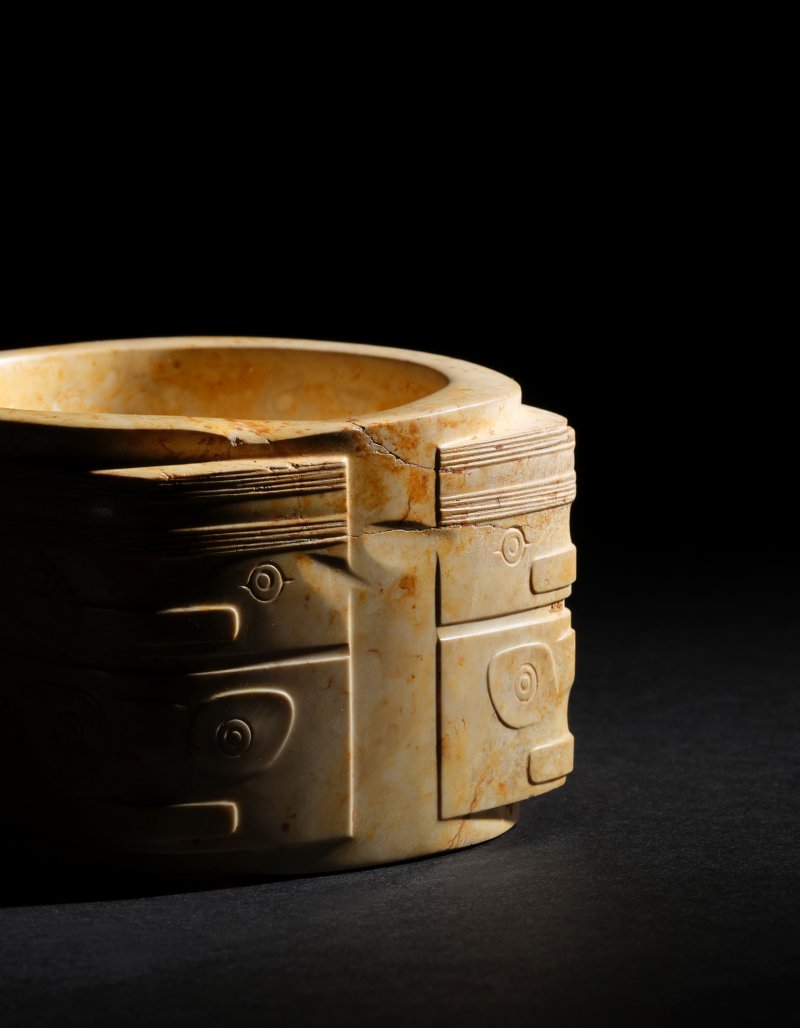
Lot 8060 A very rare archaic jade 'mask' cong, Neolithic period, Liangzhu culture | 新石器時代 良渚文化 神人紋玉琮
落槌价
预展中
成交价
预展中
| 拍卖公司 | 苏富比 |
|---|---|
| 拍卖时间 | 2026年10月30日 |
拍品信息
拍品名称
A very rare archaic jade 'mask' cong, Neolithic period, Liangzhu culture | 新石器時代 良渚文化 神人紋玉琮
起拍价
HKD 3,000,000
估值区间
3,000,000 - 6,000,000 HKD
尺寸
未知
品相
如欲了解本拍品狀況的更多資訊,請聯絡 Rubie.Fong@sothebys.com
更多信息
w. 9 cm
来源:An Asian private collection, acquired on 11th March 1991.
图录
说明:來源
亞洲私人收藏,購於1991年3月11日
The Liangzhu culture in the Yangtze River Delta, which flourished from the late 4th to the end of the 3rd millennium BC, was one of the most prominent Neolithic Chinese civilisations. Among the large variety of Liangzhu artefacts, cong – tubular jades with a central perforation – stand out as the most iconic emblem of this culture. Reserved for the highest and most prestigious ranks in society, these objects were hewn from precious stone and are replete with religious significance that has long fascinated scholars and connoisseurs alike.
Typical of Liangzhu culture cong, a shape invented and developed from a circular bracelet by the Neolithic communities in southeast China, the present thick-walled square cylinder is decorated with stylised masks neatly arranged on each of the four corners. While their initial function and the precise meaning of their iconography may have been lost following the decline of the Liangzhu culture, the visual impact and magnificence of Liangzhu cong have never been forgotten. By the composition of the Rites of Zhou in the Eastern Zhou or Han dynasty, the cong continued to be considered an invaluable part of ritual practices, reimagined through the formal lens of royal ceremonies, with a yellow cong used to worship Earth and a green bi to worship Heaven. By the later imperial dynasties, this religious association had largely given way to a profound aesthetic appreciation. From Song dynasty vases produced in ceramic and bronze imitating the form, to archaic jade cong in the Qing Court misinterpreted by the Qianlong Emperor (r. 1736-1795) as carriage pole ornaments, the importance of jade cong like the present example in the history of Chinese art cannot be overstated.
For comparable examples of early cong with related mask motifs, see a bracelet-form cong preserved in the British Museum, London (accession no. 2022,3034.53), illustrated in Jessica Rawson, Chinese Jades from Neolithic to Qing, British Museum, London, 1995, cat. no. 3:1. Further examples excavated from the elite funerary context of the Fanshan site in Zhejiang province are illustrated in Gu Fang, The Complete Collection of Jades Unearthed in China, vol. 8: Zhejiang, Beijing, 2005, pp. 70-71, 76, and 77. In the auction market, compare a closely related cong from the Peony Collection, illustrated in Roger Keverne, ed., Jade, London, 1990, p. 73, fig. 39, and sold at Bonhams Hong Kong, 29th May 2018, lot 4; and another sold at Christie’s Hong Kong, 30th May 2018, lot 3080.
長江三角洲之良渚文化,繁榮於公元前四千紀晚期至三千紀末,乃中國新石器時代最重要之文明之一。在眾多良渚玉器中,內圓外方之玉琮無疑是該文化最具代表性之標誌。玉琮專為當時社會最高階層而製,選用珍貴玉石雕琢而成,蘊含深厚的宗教意義,數百年來一直令無數藏家、鑑賞家及學者為之著迷。
本品呈厚壁方柱體,四角齊整雕琢神人獸面紋,為典型良渚文化玉琮形制。此器形源於中國東南沿海新石器時代先民所佩戴之圓形玉鐲。儘管玉琮之原始功能與紋飾之確切含義隨良渚文化之衰落而湮沒於歷史長河,然其視覺震撼與宏偉氣度卻從未被世人遺忘。至東周或漢代《周禮》成書之時,玉琮仍被視為聯繫天地之重器,惟已納入王朝禮制之框架而獲重新詮釋,正所謂「蒼璧禮天,黃琮禮地」。及至後世封建王朝,其宗教意味漸淡,轉而成為純粹的審美與藝術追求。從宋代官窯及青銅器對玉琮形制之仿摹,至清代乾隆帝(1736-1795年在位)將清宮舊藏之高古玉琮誤認為車輦抬竿上之飾件,足見如本品般之玉琮在中國藝術史上之地位實不可估量。
比較早期帶有相近面紋之玉琮例子,可參考倫敦大英博物館所藏一件鐲形玉琮(館藏編號 2022,3034.53),著錄於 Jessica Rawson,《Chinese Jades from Neolithic to Qing》,大英博物館,倫敦,1995年,編號3:1。浙江反山貴族墓葬遺址亦出土多件相關作例,見古方,《中國出土玉器全集·卷8:浙江》,北京,2005年,頁70-71、76及77。拍賣市場中,可參考牡丹堂珍藏一件極為相近之玉琮,著錄於 Roger Keverne 編,《Jade》,倫敦,1990年,頁73,圖39,後售於香港邦瀚斯2018年5月29日,編號4;另有一例售於香港佳士得2018年5月30日,編號3080。
常见问题
这件A very rare archaic jade 'mask' cong, Neolithic period, Liangzhu culture | 新石器時代 良渚文化 神人紋玉琮的成交价是多少?
落槌价为 预展中。 成交价为 预展中。
拍品的品相状况如何?
如欲了解本拍品狀況的更多資訊,請聯絡 Rubie.Fong@sothebys.com
这件拍品的流传来源是什么?
An Asian private collection, acquired on 11th March 1991.
图录
图录