
拍品信息
拍品名称
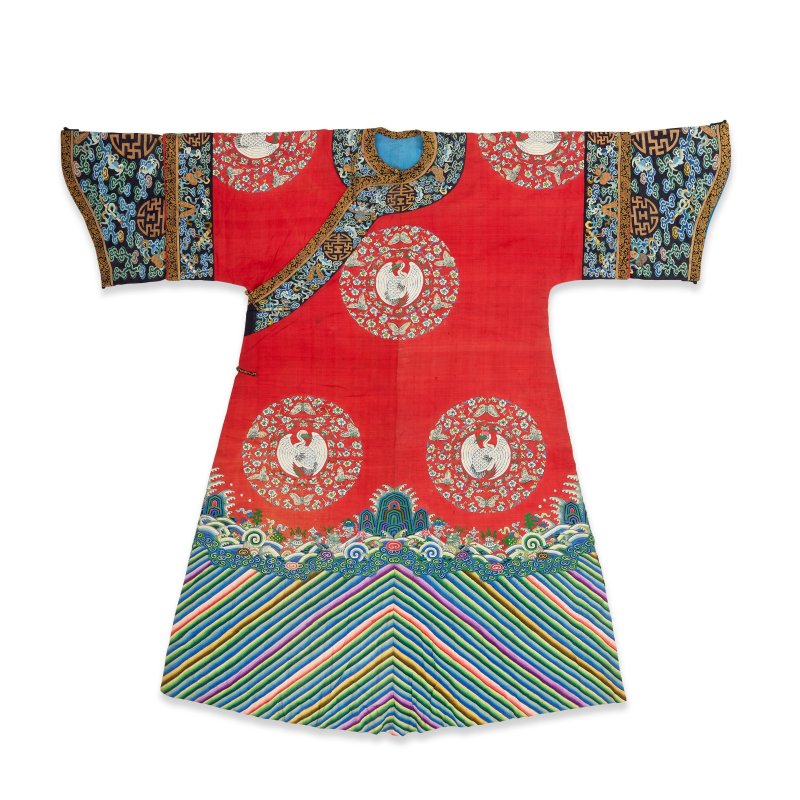
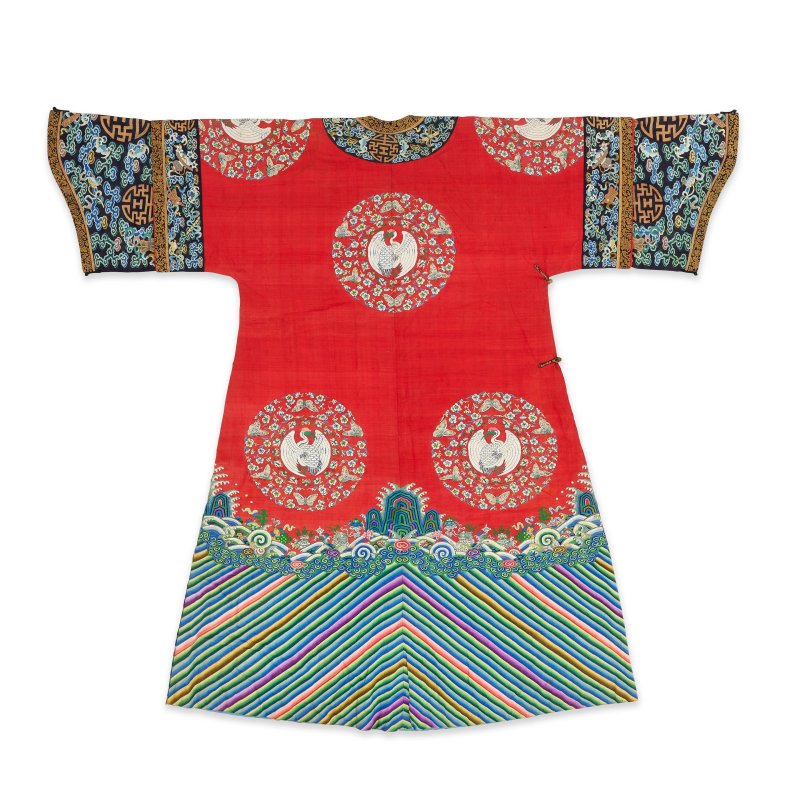
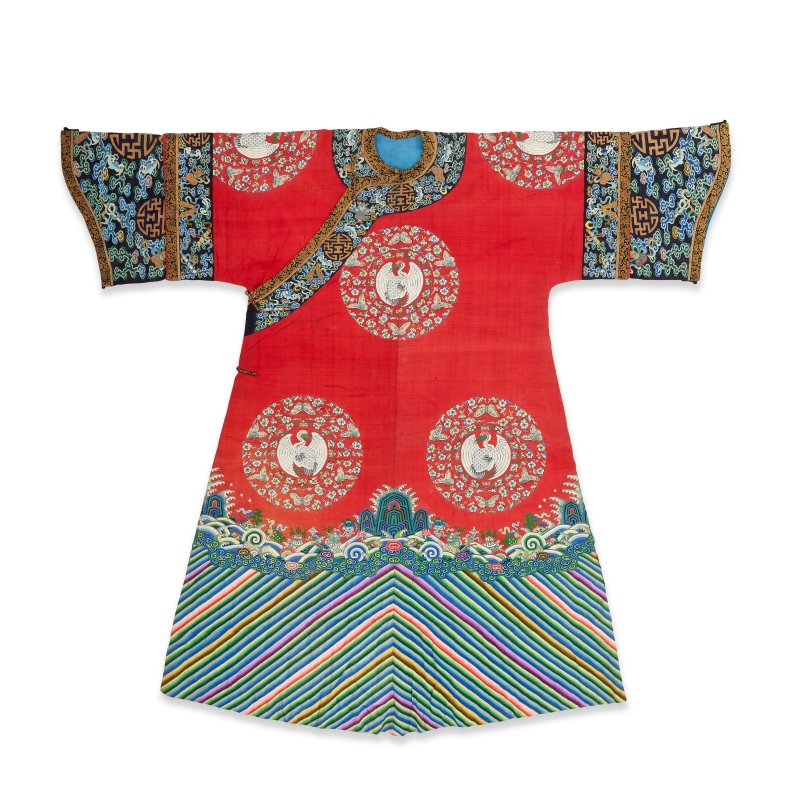
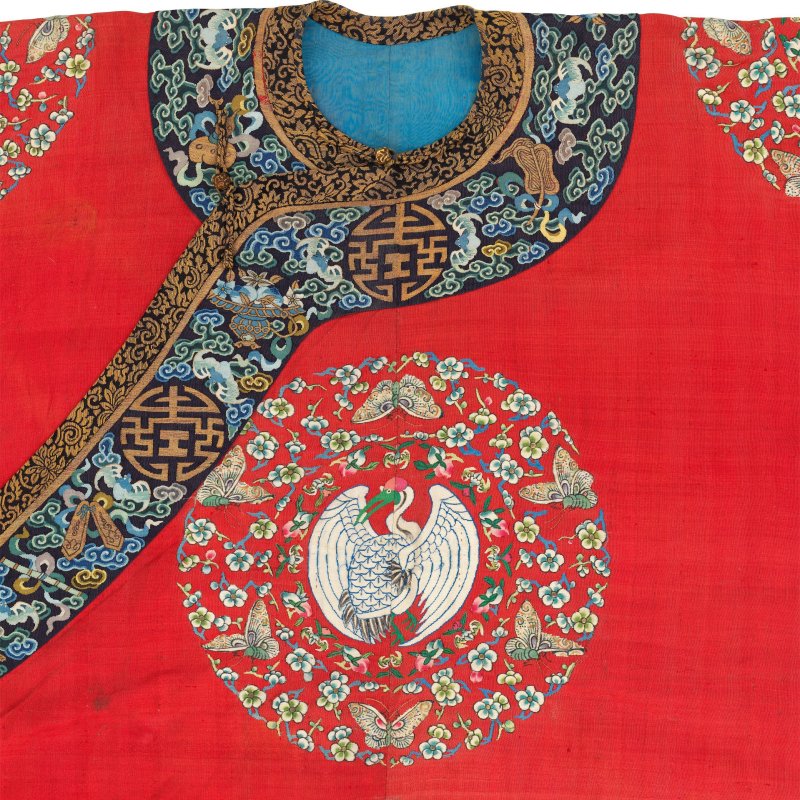
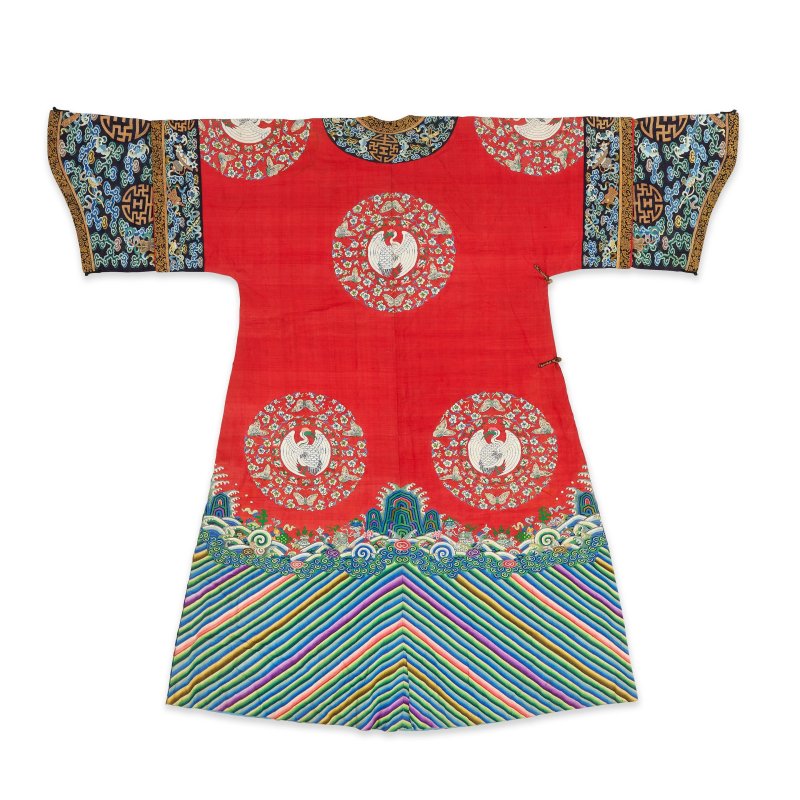
清晚期 紅地緙絲團鶴紋袍 | A RED-GROUND KESI 'CRANE ROUNDELS' ROBE
年代
Late Qing Dynasty
起拍价
GBP 6,000
估值区间
GBP 6000 - 8000
尺寸
未知
品相
未知
更多信息
Late Qing Dynasty
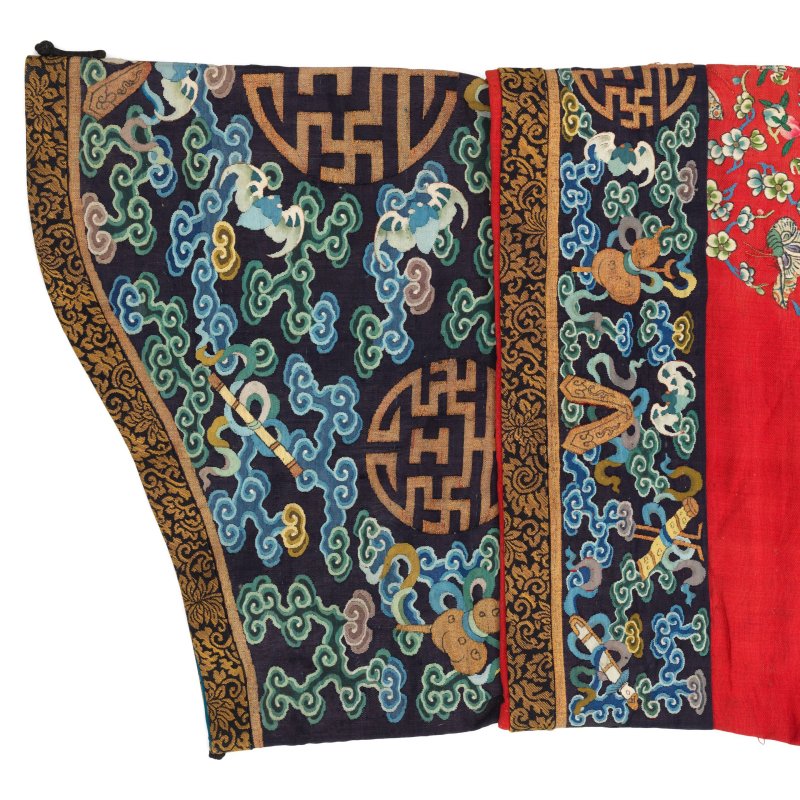
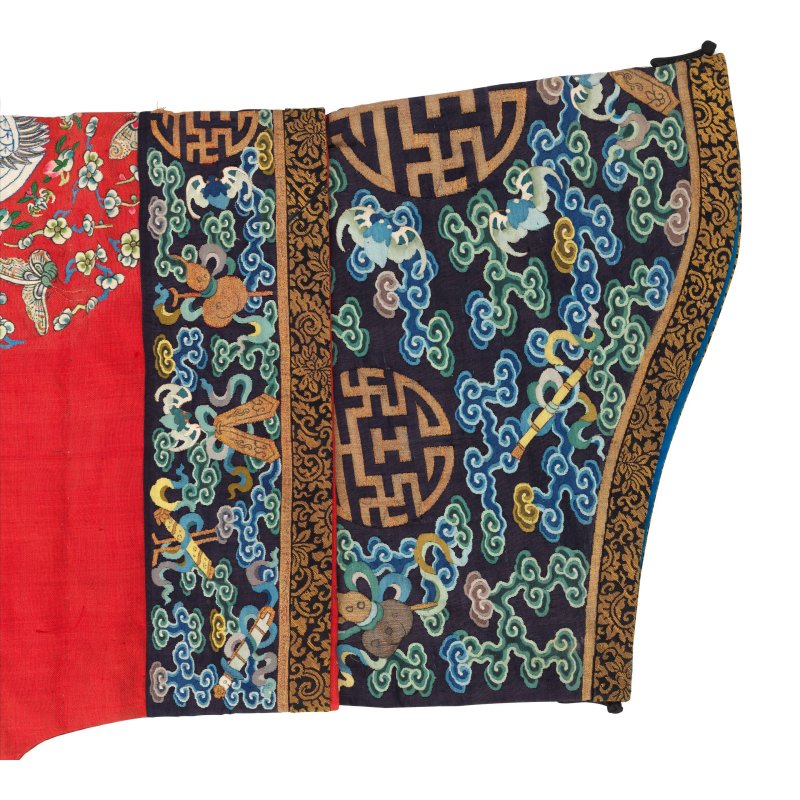
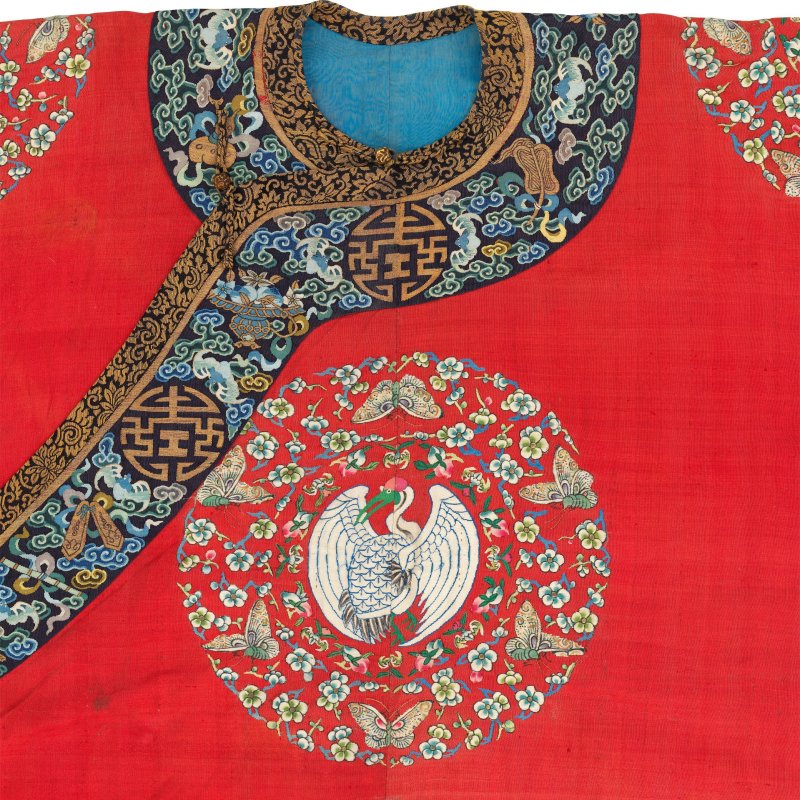
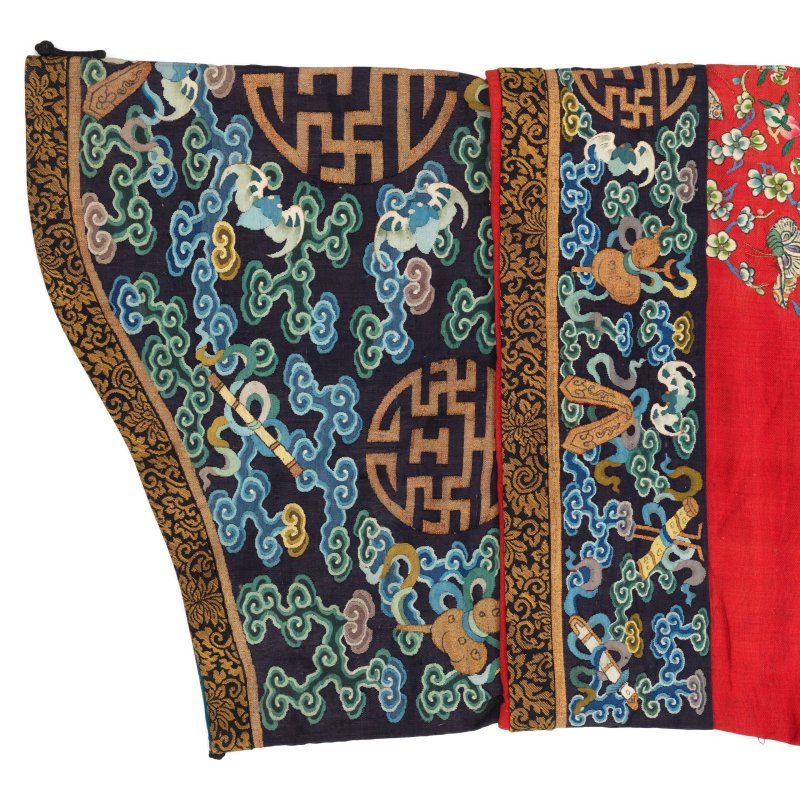
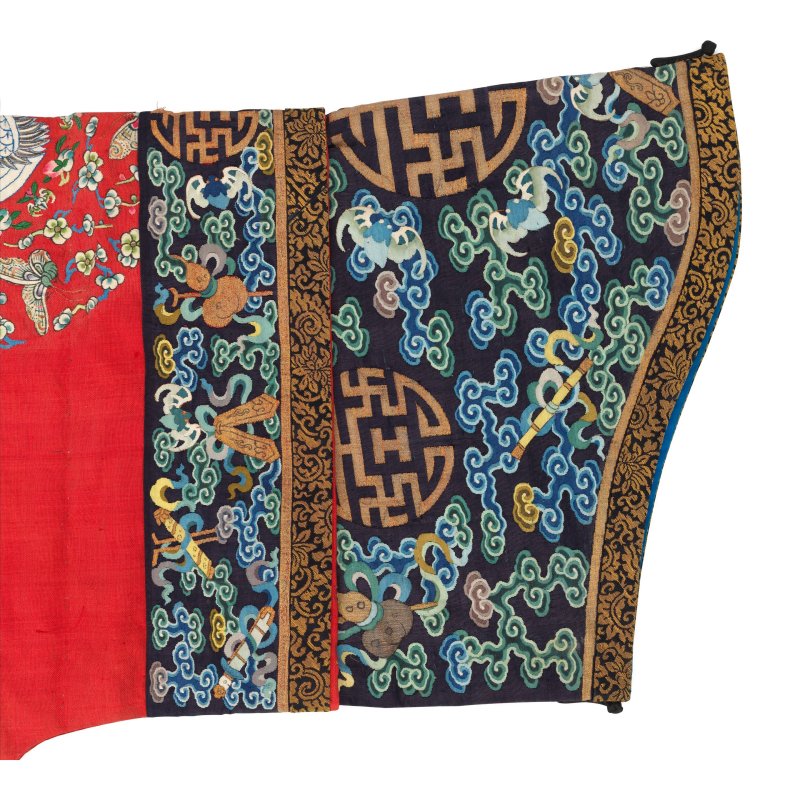
Embroidered on the front and back with eight medallions, each enclosing a crane amidst peaches, prunus blossoms, and butterflies in shades of white, blue, pink and green, reserved on a vivid red ground, all above a terrestrial diagram and wide lishui border at the hem, the cuffs and collar decorated with the 'Eight Daoist Emblems' (anbaxian), lingzhi clouds and shou roundels against a black ground.
160.5cm (63 1/4in) wide.
Footnotes
清晚期 紅地緙絲團鶴紋袍
The present lot brings together a rich compound of auspicious motifs. In Ming and Qing official dress, the crane motif was originally used for the rank badges of first-rank civil officials. In civilian dress and women's garments, however, the roundel enclosing a crane was employed primarily as an auspicious symbol, expressing wishes for health, longevity, and good fortune. The Daoist emblems adorning the collar and cuffs are known as the 'Eight Hidden Immortals' (暗八仙 anbaxian), referring to the attributes traditionally associated with the Eight Immortals. As the Eight Immortals themselves are symbolised through their implements rather than being depicted directly, the decoration is hence termed as 'hidden'.
See a similar red-ground woman's robe decorated with crane medallions, 19th century, in the collection of the Metropolitan Museum of Art, New York (acc.no.49.32.125). See also a similar woman's -woven silk robe, late 19th century, which was sold at Bonhams San Francisco, 21 June 2011, lot 8244. Compare also with a related embroidered red silk woman's informal robe decorated with crane roundels, late Qing dynasty, which was sold at Christie's New York, 23 March 2018, lot 986.
Embroidered on the front and back with eight medallions, each enclosing a crane amidst peaches, prunus blossoms, and butterflies in shades of white, blue, pink and green, reserved on a vivid red ground, all above a terrestrial diagram and wide lishui border at the hem, the cuffs and collar decorated with the 'Eight Daoist Emblems' (anbaxian), lingzhi clouds and shou roundels against a black ground.
160.5cm (63 1/4in) wide.
Footnotes
清晚期 紅地緙絲團鶴紋袍
The present lot brings together a rich compound of auspicious motifs. In Ming and Qing official dress, the crane motif was originally used for the rank badges of first-rank civil officials. In civilian dress and women's garments, however, the roundel enclosing a crane was employed primarily as an auspicious symbol, expressing wishes for health, longevity, and good fortune. The Daoist emblems adorning the collar and cuffs are known as the 'Eight Hidden Immortals' (暗八仙 anbaxian), referring to the attributes traditionally associated with the Eight Immortals. As the Eight Immortals themselves are symbolised through their implements rather than being depicted directly, the decoration is hence termed as 'hidden'.
See a similar red-ground woman's robe decorated with crane medallions, 19th century, in the collection of the Metropolitan Museum of Art, New York (acc.no.49.32.125). See also a similar woman's -woven silk robe, late 19th century, which was sold at Bonhams San Francisco, 21 June 2011, lot 8244. Compare also with a related embroidered red silk woman's informal robe decorated with crane roundels, late Qing dynasty, which was sold at Christie's New York, 23 March 2018, lot 986.
常见问题
这件清晚期 紅地緙絲團鶴紋袍 | A RED-GROUND KESI 'CRANE ROUNDELS' ROBE的成交价是多少?
落槌价为 预展中。 成交价为 预展中。


