
拍品信息
拍品名称
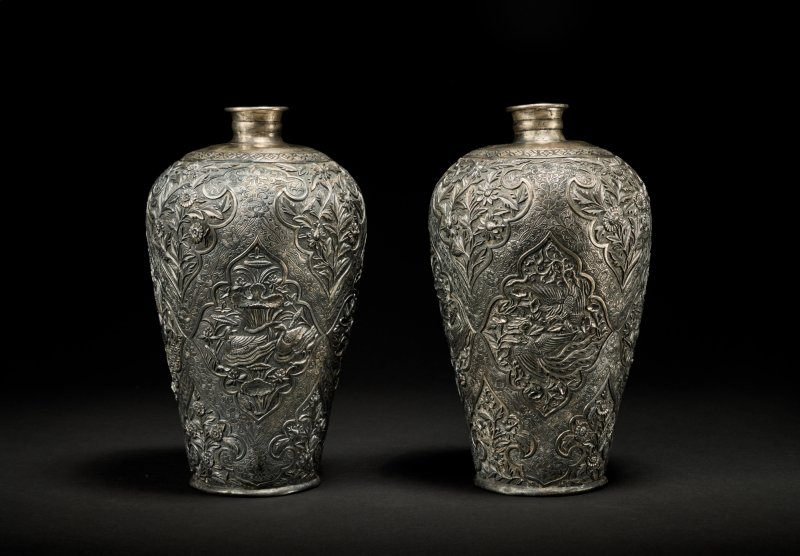
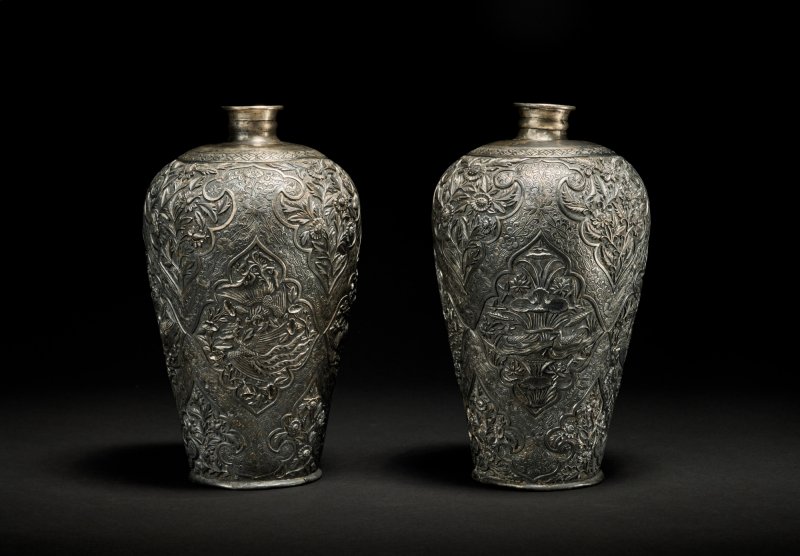
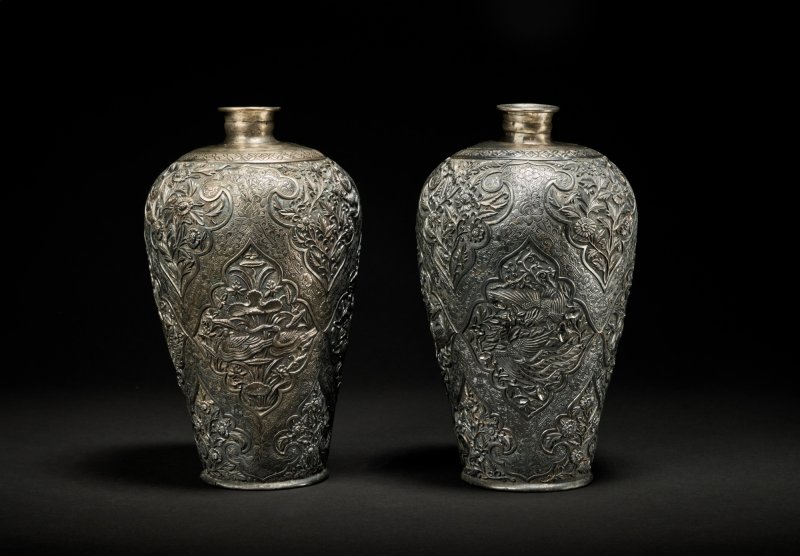
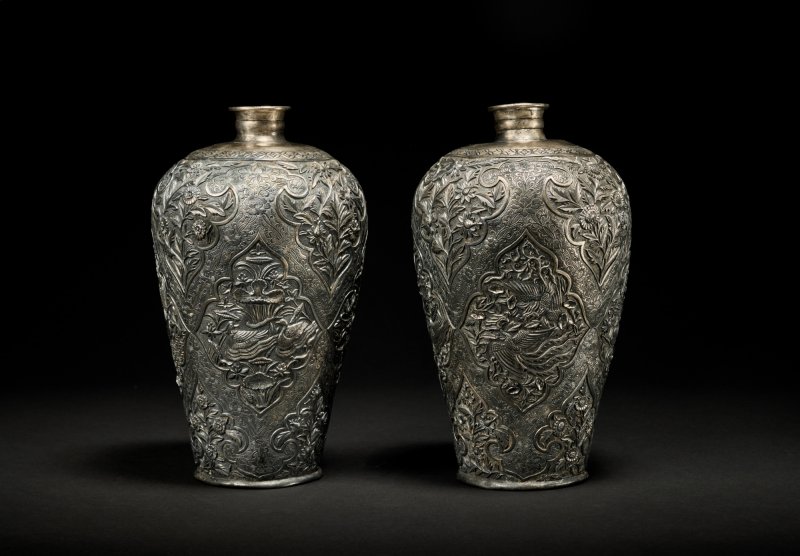
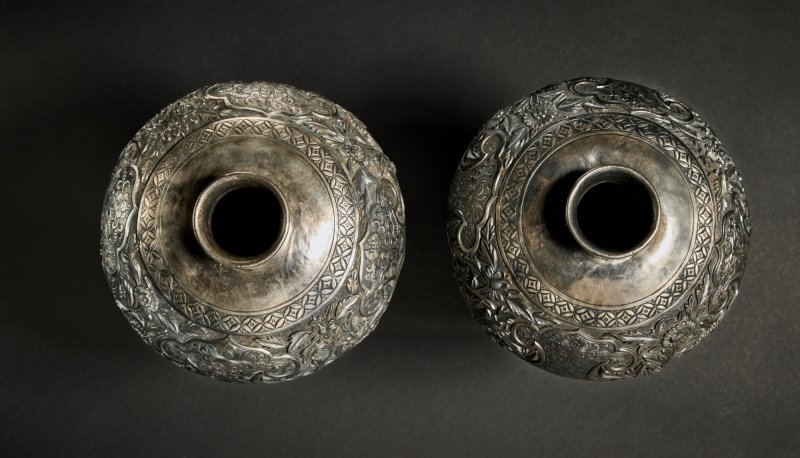
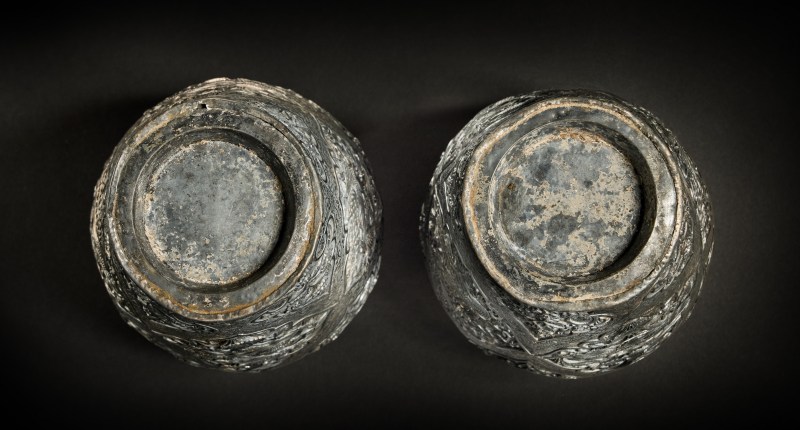
元 銀鳳凰鴛鴦紋梅瓶一對
起拍价
USD 200,000
估值区间
200,000 - 300,000 USD
尺寸
未知
品相
如欲了解本拍品狀況的更多資訊,請聯絡 Drew.Lerner@sothebys.com
更多信息
(2)
Height 11⅜ in., 29 cm
图录
说明:Swirling with life – from pairs of mandarin ducks to floral sprays and the regal phoenix – the present pair of meiping appear to be among the finest examples of Yuan silverwork ever to come to market.
Though produced in comparatively small numbers compared with the height of silversmithing during the Tang dynasty, the silver wares of the Yuan dynasty appear to be among the most sumptuously decorated and complex of the China’s silverworking traditions. Unlike gold which had long been worked by smiths across the Mongolian steppe, silver appears to have been a largely domestic Chinese pursuit, and produced in particularly large quantities around the prosperous Jiangnan region of southeast China.
Some gold and silver works from this period appear to represent completely novel designs, perhaps inspired by local vernacular design. Compare, for example, the three famous ‘raft cups’ of smith Zhu Bishan once preserved in the Qing imperial collection; or the sumptuously decorated gold dish composed of joined ruyi forms, uncovered in 1959 from the tomb of Lü Shimeng in Wu county, Jiangsu, which bears a resemblance to the present vases in its combination of repoussé and chased decoration and ruyi designs. The dish, now preserved in the Nanjing Museum, was included in The World of Khubilai Khan. Chinese Art in the Yuan Dynasty, Metropolitan Museum of Art, New York, 2010 and illustrated in James C. Watt’s catalogue accompanying the exhibition, fig. 336.
More characteristic of the age, however, are the iconic silver wares of the Yuan dynasty which seem to imitate prestigious wares in other media – particularly lacquer and ceramics. Further examples of this type include selections from the large hoard at Hefei, Anhui, including: a plain silver yuhuchun vase (ibid., fig. 330) and spouted bowl (ibid., fig. 331) in imitation of stoneware forms and a lobed box and cover (ibid., fig. 332) in imitation of lacquer; the latter of a twin-phoenix design not dissimilar to the present. Compare also a handful of attested silver meiping of closely related form to the present but in imitation of tixi lacquer, including one from the collection of Robert Ellsworth, sold at Christie’s New York, 20th March 2015, lot 736 and two from J. J. Lally, sold at Bonhams New York, 20th March 2023, lot 41, attributed to the Southern Song dynasty.
Of all known imitation wares, however, those inspired by blue-and-white porcelain appear to be among the most elusive and remarkable — the present being no exception. In form and decoration, the present pair of meiping bear an almost like-for-like resemblance with octagonal blue-and-white examples produced at the porcelain kilns of Jingdezhen. From the ruyi bands descending from the shoulders and rising from the feet to the ogival cartouches with pairs of phoenixes and ducks, these vases are a triumph of Yuan porcelain eternalized in silver. For porcelain prototypes of this design, compare the famous Lange vase of phoenix design, published extensively and later sold from the Frederick Mayer Collection at Christie’s London, 24th June 1974, lot 77; and another of mandarin duck design in the Topkapi Saray Museum, Istanbul, illustrated in Regina Krahl, Chinese Ceramics in the Topkapi Saray Museum Istanbul, vol. II, London, 1986, col. pl. 575, no. TKS 15/1398.
A particularly closely related parcel-gilt yuhuchunping, also in the New York exhibition (fig. 312), is particularly notable in its similar adherence to porcelain designs. Decorated with historical figures in similar ogival cartouches and surrounded with ruyi bands, this vase – now in the Dexing Municipal Museum – was uncovered from the Dexing Hoard in Jiangxi; less than eighty miles from the kilns of Jingdezhen from whence it — and the present pair — sought inspiration.
Height 11⅜ in., 29 cm
图录
说明:Swirling with life – from pairs of mandarin ducks to floral sprays and the regal phoenix – the present pair of meiping appear to be among the finest examples of Yuan silverwork ever to come to market.
Though produced in comparatively small numbers compared with the height of silversmithing during the Tang dynasty, the silver wares of the Yuan dynasty appear to be among the most sumptuously decorated and complex of the China’s silverworking traditions. Unlike gold which had long been worked by smiths across the Mongolian steppe, silver appears to have been a largely domestic Chinese pursuit, and produced in particularly large quantities around the prosperous Jiangnan region of southeast China.
Some gold and silver works from this period appear to represent completely novel designs, perhaps inspired by local vernacular design. Compare, for example, the three famous ‘raft cups’ of smith Zhu Bishan once preserved in the Qing imperial collection; or the sumptuously decorated gold dish composed of joined ruyi forms, uncovered in 1959 from the tomb of Lü Shimeng in Wu county, Jiangsu, which bears a resemblance to the present vases in its combination of repoussé and chased decoration and ruyi designs. The dish, now preserved in the Nanjing Museum, was included in The World of Khubilai Khan. Chinese Art in the Yuan Dynasty, Metropolitan Museum of Art, New York, 2010 and illustrated in James C. Watt’s catalogue accompanying the exhibition, fig. 336.
More characteristic of the age, however, are the iconic silver wares of the Yuan dynasty which seem to imitate prestigious wares in other media – particularly lacquer and ceramics. Further examples of this type include selections from the large hoard at Hefei, Anhui, including: a plain silver yuhuchun vase (ibid., fig. 330) and spouted bowl (ibid., fig. 331) in imitation of stoneware forms and a lobed box and cover (ibid., fig. 332) in imitation of lacquer; the latter of a twin-phoenix design not dissimilar to the present. Compare also a handful of attested silver meiping of closely related form to the present but in imitation of tixi lacquer, including one from the collection of Robert Ellsworth, sold at Christie’s New York, 20th March 2015, lot 736 and two from J. J. Lally, sold at Bonhams New York, 20th March 2023, lot 41, attributed to the Southern Song dynasty.
Of all known imitation wares, however, those inspired by blue-and-white porcelain appear to be among the most elusive and remarkable — the present being no exception. In form and decoration, the present pair of meiping bear an almost like-for-like resemblance with octagonal blue-and-white examples produced at the porcelain kilns of Jingdezhen. From the ruyi bands descending from the shoulders and rising from the feet to the ogival cartouches with pairs of phoenixes and ducks, these vases are a triumph of Yuan porcelain eternalized in silver. For porcelain prototypes of this design, compare the famous Lange vase of phoenix design, published extensively and later sold from the Frederick Mayer Collection at Christie’s London, 24th June 1974, lot 77; and another of mandarin duck design in the Topkapi Saray Museum, Istanbul, illustrated in Regina Krahl, Chinese Ceramics in the Topkapi Saray Museum Istanbul, vol. II, London, 1986, col. pl. 575, no. TKS 15/1398.
A particularly closely related parcel-gilt yuhuchunping, also in the New York exhibition (fig. 312), is particularly notable in its similar adherence to porcelain designs. Decorated with historical figures in similar ogival cartouches and surrounded with ruyi bands, this vase – now in the Dexing Municipal Museum – was uncovered from the Dexing Hoard in Jiangxi; less than eighty miles from the kilns of Jingdezhen from whence it — and the present pair — sought inspiration.
常见问题
拍品的品相状况如何?
如欲了解本拍品狀況的更多資訊,請聯絡 Drew.Lerner@sothebys.com