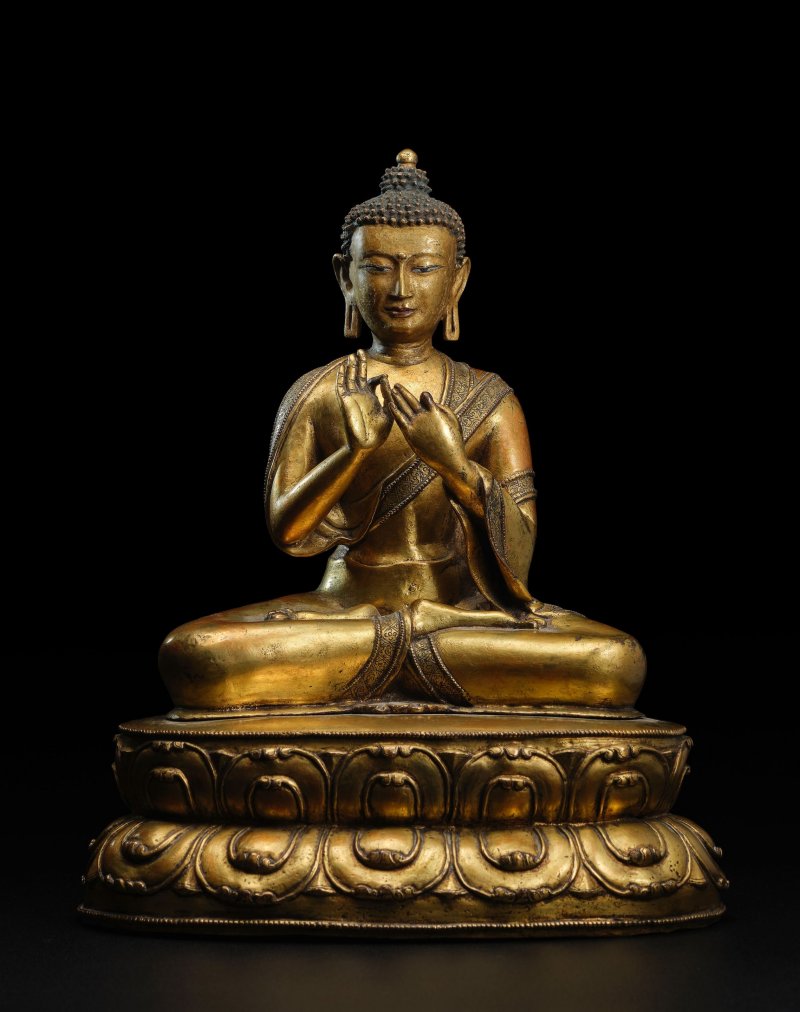

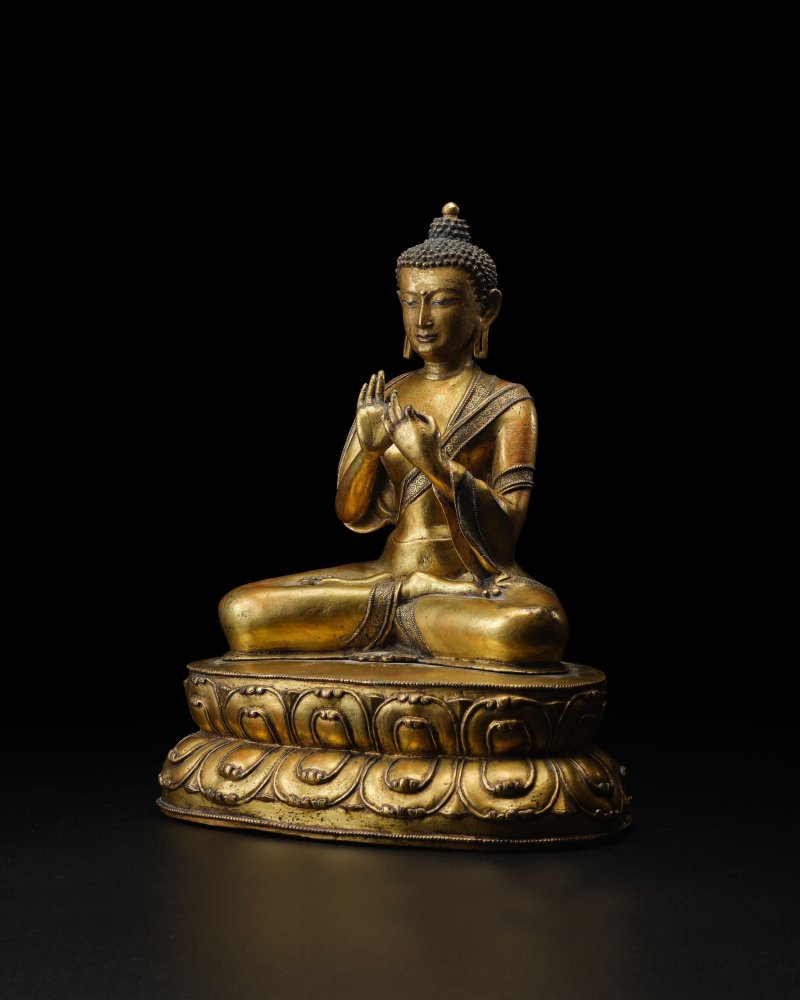
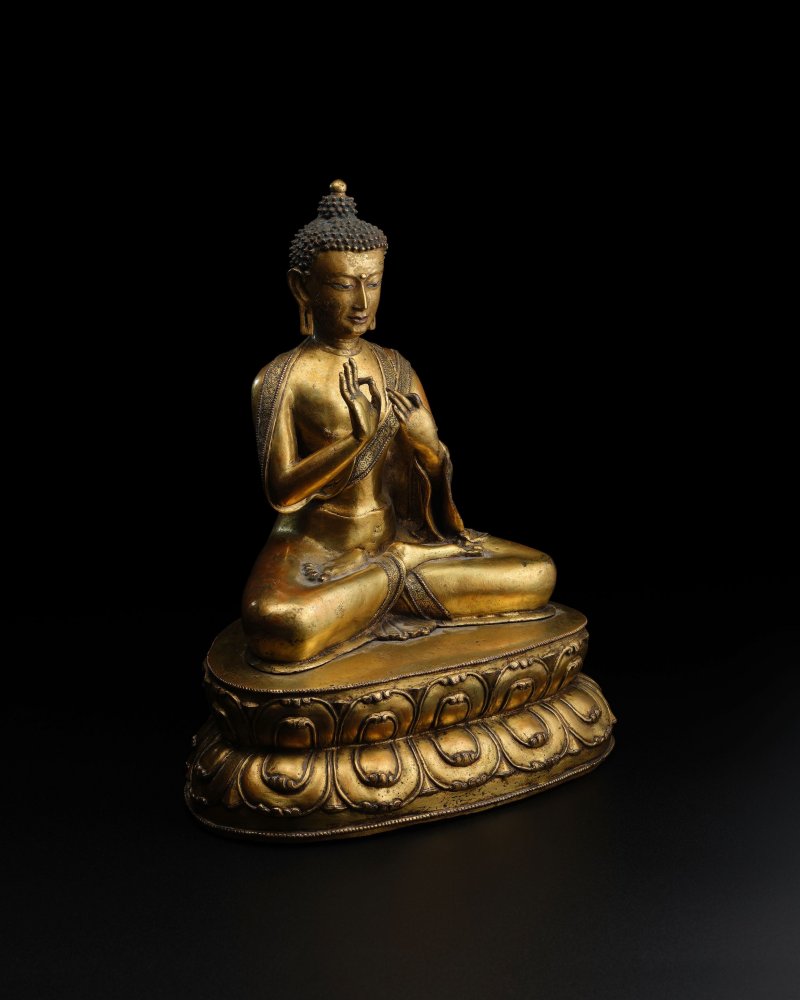
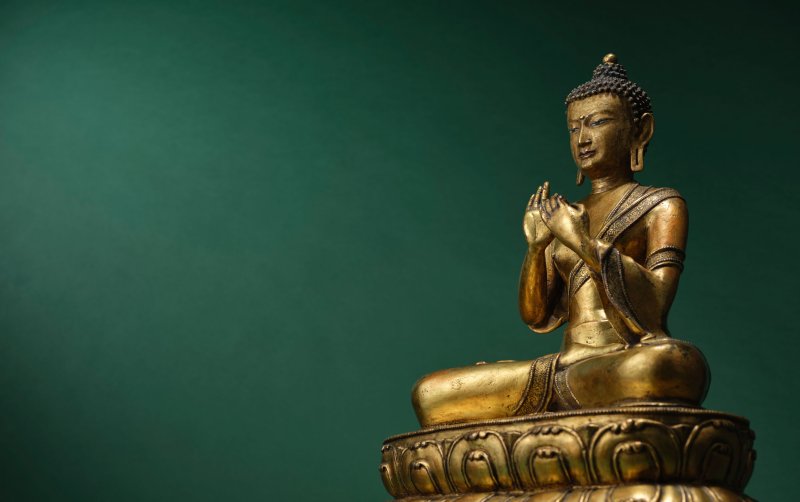
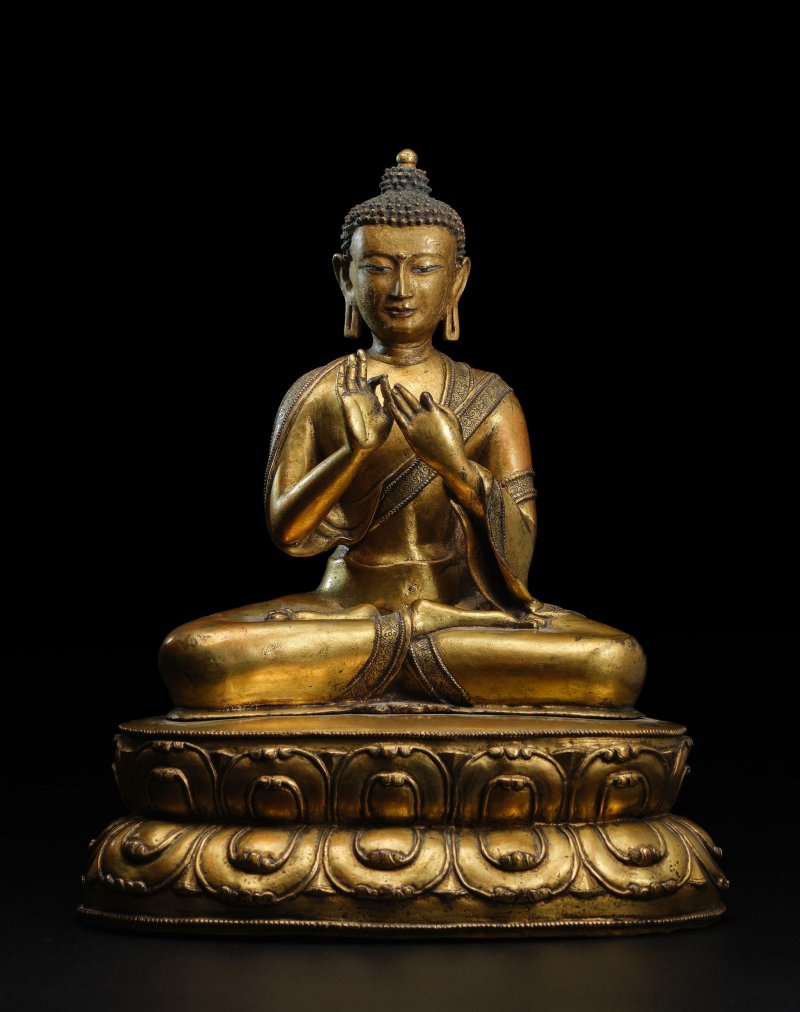
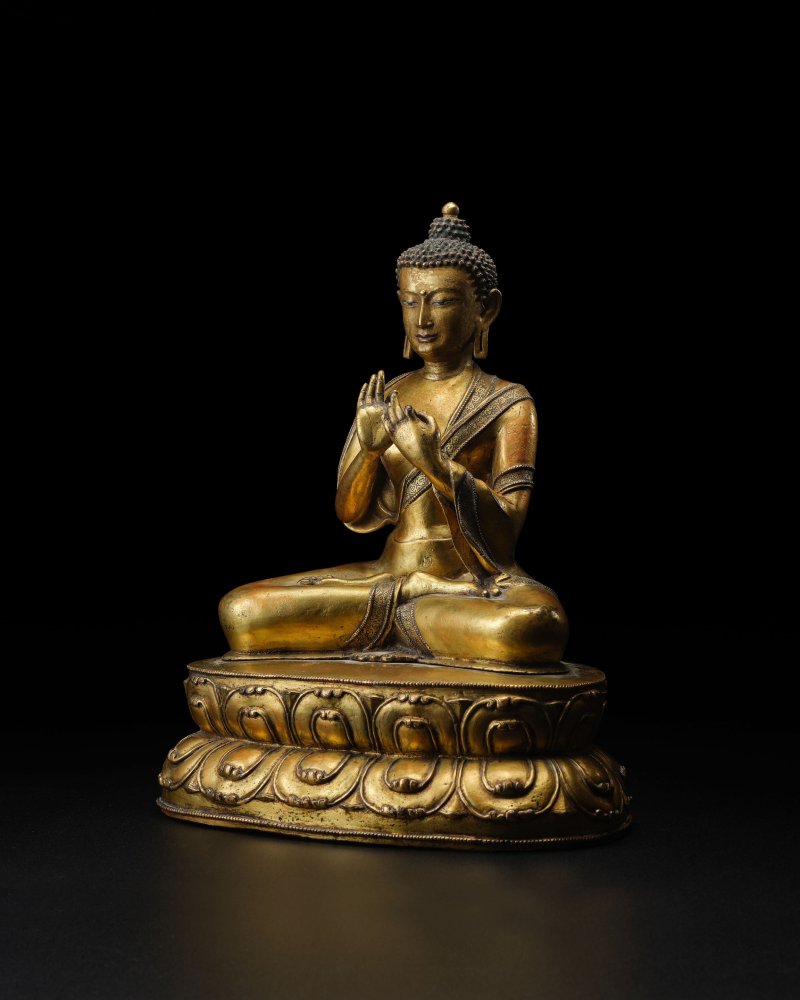
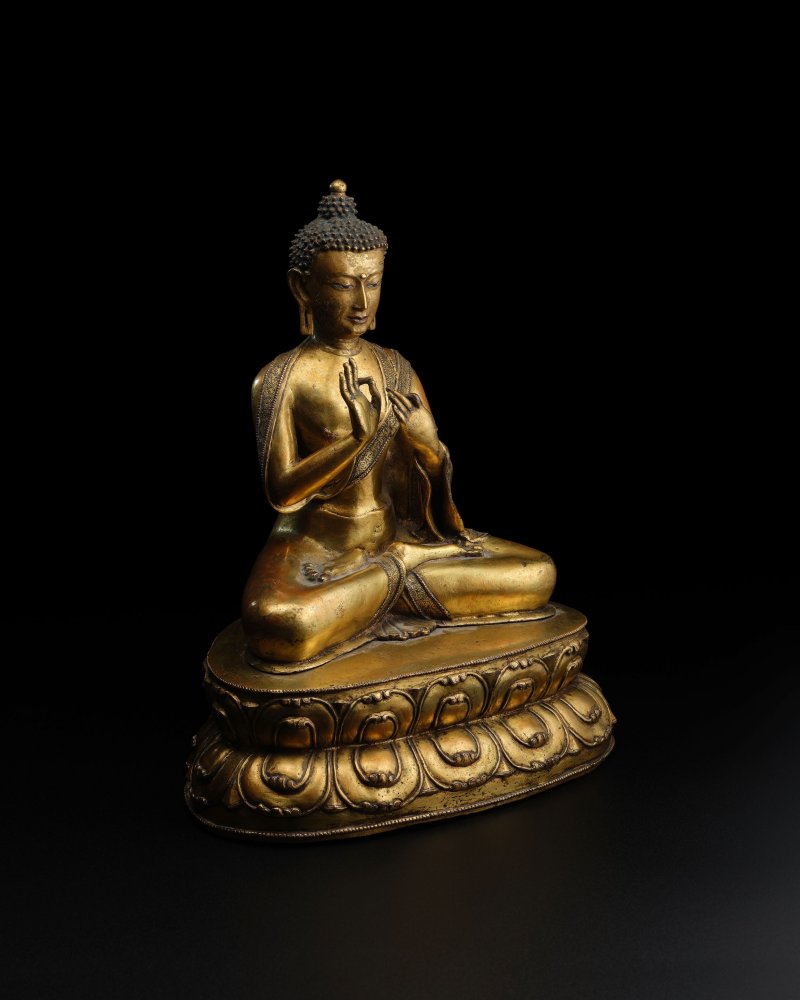
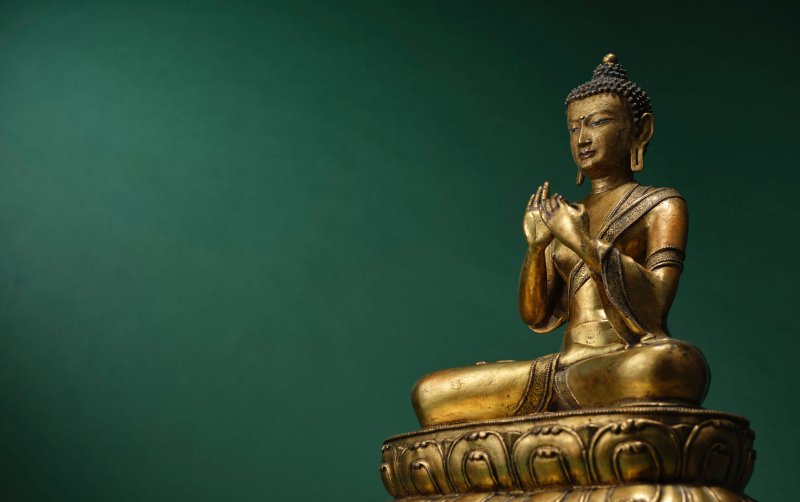
Lot 805 西藏 十六世紀 銅鎏金燃燈佛像 | A GILT COPPER ALLOY FIGURE OF DIPANKARA
落槌价
预展中
成交价
预展中
| 拍卖公司 | 邦瀚斯 |
|---|---|
| 拍卖时间 | 2026年10月29日 |
拍品信息
拍品名称
西藏 十六世紀 銅鎏金燃燈佛像 | A GILT COPPER ALLOY FIGURE OF DIPANKARA
年代
TIBET, 16TH CENTURY
起拍价
HKD 1,200,000
估值区间
HKD 1200000 - 1800000
尺寸
未知
品相
未知
更多信息
TIBET, 16TH CENTURY
Himalayan Art Resources item no. 8868
31.5 cm (12 3/8 in.) high
Footnotes
西藏 十六世紀 銅鎏金燃燈佛像
Published
Meinrad Maria Grewenig & Eberhard Rist (eds.), Buddha: 2000 Years of Buddhist Art, 232 Masterpieces, Völklingen, 2016, pp. 30-31 & 478-479, no. 212.
Exhibited
Buddha: 2000 Years of Buddhist Art, 232 Masterpieces, Völklingen, 24 June 2016 — 19 February 2017.
Provenance
Koller Auktionen, Zürich, June 1978, lot 36
Swiss Private Collection
Koller Auktionen, Zürich, 29-30 October 2014, lot 115
Private Collection, Hong Kong
Cast in a lustrous copper alloy and generously gilded, this substantial bronze represents Dipankara, one of the most revered Buddhas of antiquity and the pivotal predecessor of Shakyamuni Buddha. According to Buddhist tradition, it was Dipankara before whom the brahmin ascetic Sumedha spread his hair and received the prophecy that he would one day become the Buddha Gautama. This encounter marks the moment at which Sumedha's future Buddhahood was formally recognized, inaugurating the career that would ultimately culminate in his awakening as Shakyamuni Buddha.
Dipankara is depicted here in the adamantine posture () upon a double-lotus throne, his hands raised before the chest in the gesture of turning the wheel of the dharma (). The monastic robe falls in cascading, ornamented folds across both shoulders, its hems and borders finely chased. The figure presents a serene and contemplative face, gently arched brows that merge into a straight nose, and a soft smile conveying a gentle spiritual presence. The body is powerfully conceived—wide shoulders narrowing to a compressed waist, the chest swelling with a taut fullness—a muscular idiom that reflects the enduring influence of Newar modelling within Tibetan workshops.
As the Buddha who foretold the awakening of Shakyamuni, Dipankara came to symbolize the continuity of Buddhahood and the transmission of the Dharma across successive ages. Dipankara enjoyed particular prominence in Tibet from the 15th through 17th centuries, a devotion inseparable from the towering reputation of the 11th-century Bengali master Atisha Dipankara Shrijnana (982-1054), whose mission to Tibet gave rise to the Kadam tradition. Although separated by centuries, the two figures were linked by more than a shared name. Atisha was revered as one of the great renewers of Buddhism in Tibet, and his teachings were preserved first through the Kadam school and later through the ascendant Gelug order, which traced a substantial portion of its spiritual heritage to him. As his cult and reputation continued to grow, so too did the symbolic resonance of the Buddha Dipankara, the ancient "Lamp-Bearer" who had foretold the future enlightenment of Shakyamuni. For Tibetan devotees, the association was especially compelling: one Dipankara inaugurated the career of the historical Buddha across cosmic time, while the other helped re-establish the Dharma in Tibet. The flourishing of Dipankara imagery between the 15th and 17th centuries may thus be understood not merely as devotion to a Buddha of the distant past, but also as a reflection of the enduring veneration accorded to Atisha and the traditions that claimed him as their spiritual forebear.
Frequently paired with Shakyamuni and Maitreya, Dipankara completes the Buddhas of the Three Times (), representing the Buddhas of the past, present, and future respectively. Such sculptural triads were conceived at scale for monastic assembly halls, and the present figure's size and presence argue for precisely this kind of installation. The enduring popularity of the cult is reflected in monumental images across Inner Asia, including the colossal enthroned Dipankara that presides over the Western Temple at Erdene Zuu Monastery in Mongolia's Orkhon Valley (fig. 1).
The lotus pedestal offers important evidence for dating the present bronze to the 16th century. Its broad, fleshy petals, distinguished by thickened tri-lobed tips and crisply incised margins, belong to a sculptural vocabulary that recurs across a recognizable group of Central Tibetan works. The closest parallel is the portrait of Drakpa Gyaltsen (1147–1216), one of the Five Venerable Founding Masters of the Sakya order, formerly in the Jules Speelman Collection (Bonhams, Paris, 11 June 2024, lot 18; fig 2), which shares the circular base with unfurling petals. That portrait belongs to a dispersed Sakya lineage set that also includes Virupa (Heller, , 1999, p. 164, no. 89); Damarupa (Zhang, ed., , 2017, pp. 124 and 260, no. 22); Drogmi Lotsawa Shakya Yeshe (Museum Rietberg, Zurich, BA 226); Sachen Kunga Nyingpo (, May–June 1998, advertisement); Sonam Tsemo (Huang, , 2016, p. 5); Sakya Pandita (Rubin Museum of Art, New York, HAR 65460); and Chogyal Phagpa (Christie's, New York, 15 September 2015, lot 91). The shared vocabulary of the base points to a common workshop tradition, if not a common hand.
The sculpture's quality is equally apparent in details that were never intended to attract immediate attention. The beaded hem is incised throughout with lozenges centered on floral rosettes, while at the reverse the sculptor has modelled the fabric folded forward upon itself, a small naturalistic flourish executed in a place few worshippers would ever see. Such touches are revealing. They speak to a commission that was lavish not only in its generous use of metal but also in the extraordinary care and artistic ambition invested in its execution.
For the figures listed in this essay, please refer to our printed or digital catalogue.
Himalayan Art Resources item no. 8868
31.5 cm (12 3/8 in.) high
Footnotes
西藏 十六世紀 銅鎏金燃燈佛像
Published
Meinrad Maria Grewenig & Eberhard Rist (eds.), Buddha: 2000 Years of Buddhist Art, 232 Masterpieces, Völklingen, 2016, pp. 30-31 & 478-479, no. 212.
Exhibited
Buddha: 2000 Years of Buddhist Art, 232 Masterpieces, Völklingen, 24 June 2016 — 19 February 2017.
Provenance
Koller Auktionen, Zürich, June 1978, lot 36
Swiss Private Collection
Koller Auktionen, Zürich, 29-30 October 2014, lot 115
Private Collection, Hong Kong
Cast in a lustrous copper alloy and generously gilded, this substantial bronze represents Dipankara, one of the most revered Buddhas of antiquity and the pivotal predecessor of Shakyamuni Buddha. According to Buddhist tradition, it was Dipankara before whom the brahmin ascetic Sumedha spread his hair and received the prophecy that he would one day become the Buddha Gautama. This encounter marks the moment at which Sumedha's future Buddhahood was formally recognized, inaugurating the career that would ultimately culminate in his awakening as Shakyamuni Buddha.
Dipankara is depicted here in the adamantine posture () upon a double-lotus throne, his hands raised before the chest in the gesture of turning the wheel of the dharma (). The monastic robe falls in cascading, ornamented folds across both shoulders, its hems and borders finely chased. The figure presents a serene and contemplative face, gently arched brows that merge into a straight nose, and a soft smile conveying a gentle spiritual presence. The body is powerfully conceived—wide shoulders narrowing to a compressed waist, the chest swelling with a taut fullness—a muscular idiom that reflects the enduring influence of Newar modelling within Tibetan workshops.
As the Buddha who foretold the awakening of Shakyamuni, Dipankara came to symbolize the continuity of Buddhahood and the transmission of the Dharma across successive ages. Dipankara enjoyed particular prominence in Tibet from the 15th through 17th centuries, a devotion inseparable from the towering reputation of the 11th-century Bengali master Atisha Dipankara Shrijnana (982-1054), whose mission to Tibet gave rise to the Kadam tradition. Although separated by centuries, the two figures were linked by more than a shared name. Atisha was revered as one of the great renewers of Buddhism in Tibet, and his teachings were preserved first through the Kadam school and later through the ascendant Gelug order, which traced a substantial portion of its spiritual heritage to him. As his cult and reputation continued to grow, so too did the symbolic resonance of the Buddha Dipankara, the ancient "Lamp-Bearer" who had foretold the future enlightenment of Shakyamuni. For Tibetan devotees, the association was especially compelling: one Dipankara inaugurated the career of the historical Buddha across cosmic time, while the other helped re-establish the Dharma in Tibet. The flourishing of Dipankara imagery between the 15th and 17th centuries may thus be understood not merely as devotion to a Buddha of the distant past, but also as a reflection of the enduring veneration accorded to Atisha and the traditions that claimed him as their spiritual forebear.
Frequently paired with Shakyamuni and Maitreya, Dipankara completes the Buddhas of the Three Times (), representing the Buddhas of the past, present, and future respectively. Such sculptural triads were conceived at scale for monastic assembly halls, and the present figure's size and presence argue for precisely this kind of installation. The enduring popularity of the cult is reflected in monumental images across Inner Asia, including the colossal enthroned Dipankara that presides over the Western Temple at Erdene Zuu Monastery in Mongolia's Orkhon Valley (fig. 1).
The lotus pedestal offers important evidence for dating the present bronze to the 16th century. Its broad, fleshy petals, distinguished by thickened tri-lobed tips and crisply incised margins, belong to a sculptural vocabulary that recurs across a recognizable group of Central Tibetan works. The closest parallel is the portrait of Drakpa Gyaltsen (1147–1216), one of the Five Venerable Founding Masters of the Sakya order, formerly in the Jules Speelman Collection (Bonhams, Paris, 11 June 2024, lot 18; fig 2), which shares the circular base with unfurling petals. That portrait belongs to a dispersed Sakya lineage set that also includes Virupa (Heller, , 1999, p. 164, no. 89); Damarupa (Zhang, ed., , 2017, pp. 124 and 260, no. 22); Drogmi Lotsawa Shakya Yeshe (Museum Rietberg, Zurich, BA 226); Sachen Kunga Nyingpo (, May–June 1998, advertisement); Sonam Tsemo (Huang, , 2016, p. 5); Sakya Pandita (Rubin Museum of Art, New York, HAR 65460); and Chogyal Phagpa (Christie's, New York, 15 September 2015, lot 91). The shared vocabulary of the base points to a common workshop tradition, if not a common hand.
The sculpture's quality is equally apparent in details that were never intended to attract immediate attention. The beaded hem is incised throughout with lozenges centered on floral rosettes, while at the reverse the sculptor has modelled the fabric folded forward upon itself, a small naturalistic flourish executed in a place few worshippers would ever see. Such touches are revealing. They speak to a commission that was lavish not only in its generous use of metal but also in the extraordinary care and artistic ambition invested in its execution.
For the figures listed in this essay, please refer to our printed or digital catalogue.
常见问题
这件西藏 十六世紀 銅鎏金燃燈佛像 | A GILT COPPER ALLOY FIGURE OF DIPANKARA的成交价是多少?
落槌价为 预展中。 成交价为 预展中。